
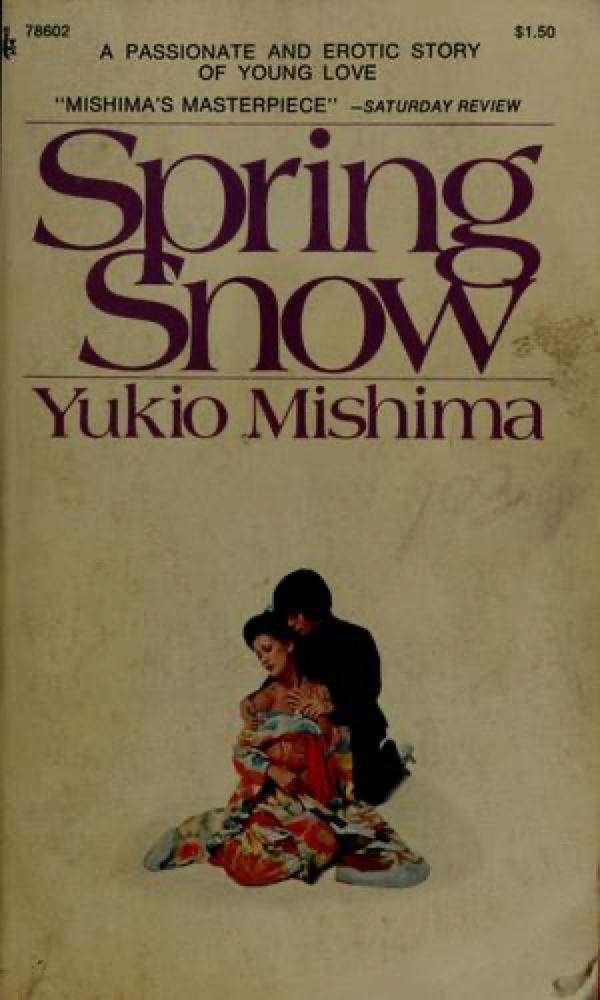
 Spring Snow
Quotes from the Book
None of the things in life - like love or faith - was arrived at by thinking; indeed, one could almost define the things that mattered as the ones that came as suddenly as thunder.
23
As I wandered around the room, with Sachiko by my side, I began to think how much we need space in those we love, space enough to accommodate growth and possibility. Knowledge must leave room for mystery; intimacy, taken too far, was the death of imagination. Keeping some little distance from her was, I thought, a way of keeping an open space, a silence for the imagination to fill. "At the same time that we are earnest to explore and learn all things," Thoreau had written, "we require that all things be mysterious and unexplainable.
10
If you are not happy, act the happy man. Happiness will come later. If you are in despair, act as though you believe. Faith will come afterwards.
10
When you're hurrying around too quickly," he had said, "there's a part of the world you can't see. If, for example, you're taking a wrong direction in your life, it's only when you stop and look at things clearly that you can revise your direction and take a more proper course. Then message of Zen is that in order to find ourselves, we've got to learn to stop.
8
And just as it is common to hear how, when one is in love, anything one sees reminds one of that love—our feelings remake the world in a secular equivalent of the faith that sees the hand of God in everything—so I began to find that when one is thinking on a theme, everything seems to reflect on it. Suddenly, everything I saw or read, in this girlish city of temples, seemed to take me back to the theme of the lady and the monk.
3
The ultimate purpose of Zen," I remembered the röshi telling me, "is not in the going away from the world but in the coming back. Zen is not just a matter of gaining enlightenment; it's a matter of acting in a world of love and compassion.
2
Marriage she clearly regarded as a businesslike proposition - a matter of domestic deals and daily accounts in which emotions where as irrelevant as love songs in a resume, now, though, as the Heian courtiers had it, and find all the sensations she kept so neatly in her head, of "First love" and "True love" and even "Lost love".
1
What avails monastic aspirations when, as Mark had said, religious geniuses were born and not made? Could not renouncing the world be a form of self-indulgence? Was not monasticism, in the end, as much an act of cowardice as courage?
1
To do what I want, and not to do what I won't - this is why I entered such a life.
1
As I wandered back in the dying light, lit up with a sense of rapture and of calm, I remembered the line of the poet Shinsho, 'No matter what road I'm traveling, I'm going home.
I thought back then to what the abbot of Tofukuji had said, explaining how even a businessman or journalist had something to gain from a night in a monastery, and a taste of stillness. One had to learn how not to spend time, he had suggested. 'When you're hurrying around too quickly,' he had said, 'there's a part of the world you can't see. If, for example, you're taking a wrong direction in your life, it's only when you stop and look at things clearly that you can revise your direction and take a more proper course. The message of Zen is that in order to find ourselves, we've got to learn to stop.
Don't worry, Sachiko,' I said with glib assurance, not even really persuading myself. 'Worry doesn't help; it only clouds or distorts. If you can solve a problem, there's no need to worry; and if you can't, there's nothing gained by worry. Just stay calm, and there's nothing you can't do.
The words we could not share left us more room for ourselves.
the Japanese word for 'spinach,' she said, was a homonym for their word for 'secret love'. Thus, ever since the Heian period, giving someone a present wrapped in a bag of spinach-green had been the most eloquent way of giving him one's heart.
Autumn seemed much deeper than spring, as sadness is deeper than brief joy, or memory than hope
As it is common to hear now, when one is in love, anything one sees reminds one of that love - our feelings remake the world in a secular equivalent of the faith that sees the hand of God in everything - so I began to find that when one is thinking on a theme, everything seems to reflect on it.
As I read deeper in the Zen poets, I soon stumbled upon Ikkyū, the fifteenth-century sword-wielding monk of Daitokuji, who had entered a temple at the age of six and gone on to express his contempt for the corrupt monasteries of his time in famously controversial poems. Like the Sixth Dalai Lama, in his way, Ikkyū had been a patron - and a laureate - of the local taverns, and of the pretty girls he had found therein; and like his Tibetan counterpart, or John Donne in our own tradition, he had deliberately conflated the terms of earthly love with those of devotion to the Absolute. The very name he gave himself, "Crazy Cloud", had played subversively on the fact that "cloud water" was a traditional term for monks, who wandered without trace, yet "cloud rain" was a conventional idiom for the act of love. His image of the "red thread" ran through the austere surroundings of his poems as shockingly as the scarlet peonies of Akiko. And in his refusal to kowtow to convention, the maverick monk had turned every certainty on its head: whores, he said, could be like ideal monks - since they inhabited the ideal Zen state of "no min" - while monks, in selling themselves for gold brocade, were scarcely different from whores. Many of his verses trembled with this ambiguity. One couplet, taken one way, was translated as "Making distinctions between good and evil, the monk's skill lies in knowing the essential condition of the Buddha and the Devil"; taken another way, it meant: "That girl is no good, this one will do; the monk's skill is in having the appetite of a devilish Buddha.
In sumi-e, he said, as in haiku or in any Zen training, the aim was to develop a discipline so sure and a spirit so true that one could afford to be utterly spontaneous; to get into such a state of deliberateness that as soon as one put pen to paper, one would produce something powerful and true.
In sumi-e, he said, as in haiku aur in any Zen training, the aim was to develop a discipline so sure and a spirit so true that one could afford to be atleast spontaneous; to get into such a state of deliberateness that as soon as one put pen to paper, one would produce something powerful and true.
both characters had given up what they held dearest, the very basis of their lives — their premises — for a woman, and then had found in her a kind of saving grace. They had opened themselves up and, in the opening, found a transformation. In the pretty pun of C. S. Lewis, they had been “surprised by joy.
Watch on YouTube
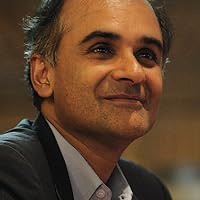
About Pico Iyer
We have collected 20 quotes from 1 book by Pico Iyer on BookQuoters.
More about the author →About the book
When Pico Iyer decided to go to Kyoto and live in a monastery, he did so to learn about Zen Buddhism from the inside, to get to know Kyoto, one of the loveliest old cities in the world, and to find out something about Japanese culture today -- not the world of businessmen and production lines, but the traditional world of changing seasons and the silence of temples, of the images woven through literature, of the lunar Japan that still lives on behind the rising sun of geopolitical power.
All this he did. And then he met Sachiko.
Vivacious, attractive, thoroughly educated, speaking English enthusiastically if eccentrically, the wife of a Japanese "salaryman" who seldom left the office before 10 P.M., Sachiko was as conversant with tea ceremony and classical Japanese literature as with rock music, Goethe, and Vivaldi. With the lightness of touch that made Video Night in Kathmandu so capt
Book details
- First published
- 1991
- Author
- Pico Iyer
- Genre
- Nonfiction
- Goodreads rating
- 3.80 (3k ratings)
Keep reading
Spring Snow
 The Zahir
 The Three-Cornered World
 In Love with the World: A Monk's Journey Through the Bardos of Living and Dying
 Cloud of Sparrows
 Zen Flesh, Zen Bones: A Collection of Zen and Pre-Zen Writings
 The Narrow Road to the Deep North and Other Travel Sketches
 Now Is the Time to Open Your Heart
 Living Beautifully with Uncertainty and Change
 Brida
Brida
 Awakening the Buddha Within
 Hippie
 Breakfast with Buddha
 In Search of Lost Time
 Swann's Way
 Oblomov
 The Emperor's Soul
 Siddhartha
 The Wise Heart: A Guide to the Universal Teachings of Buddhist Psychology
 Sacred Journey of the Peaceful Warrior
 This Is Happiness
 The Story of My Life
 Selected Stories
 Outline
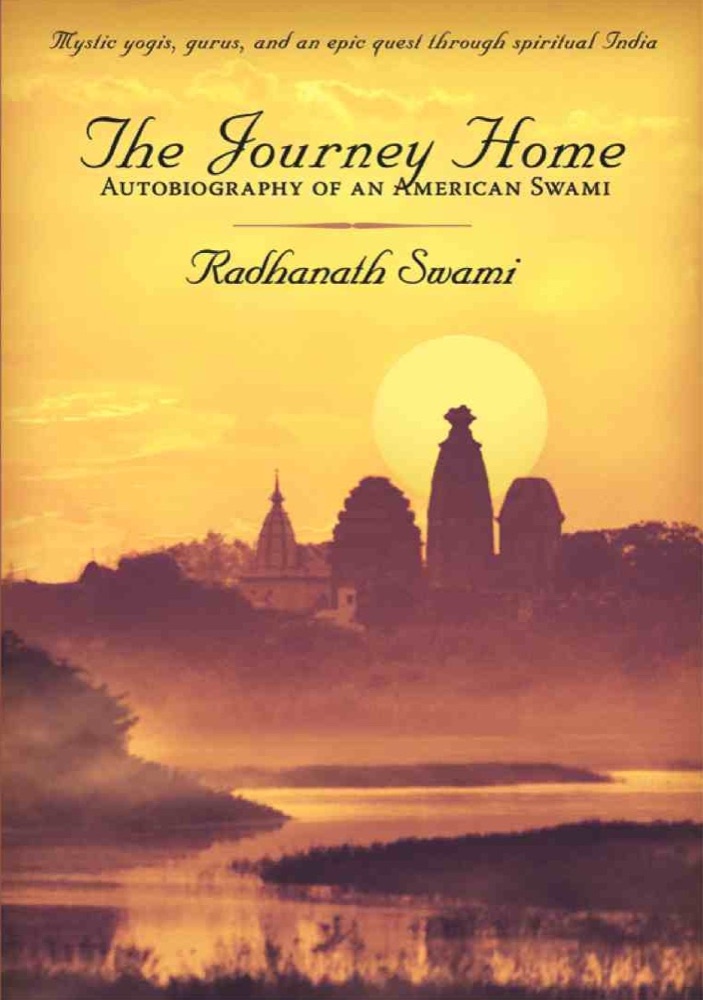 The Journey Home
 The Glass Bead Game
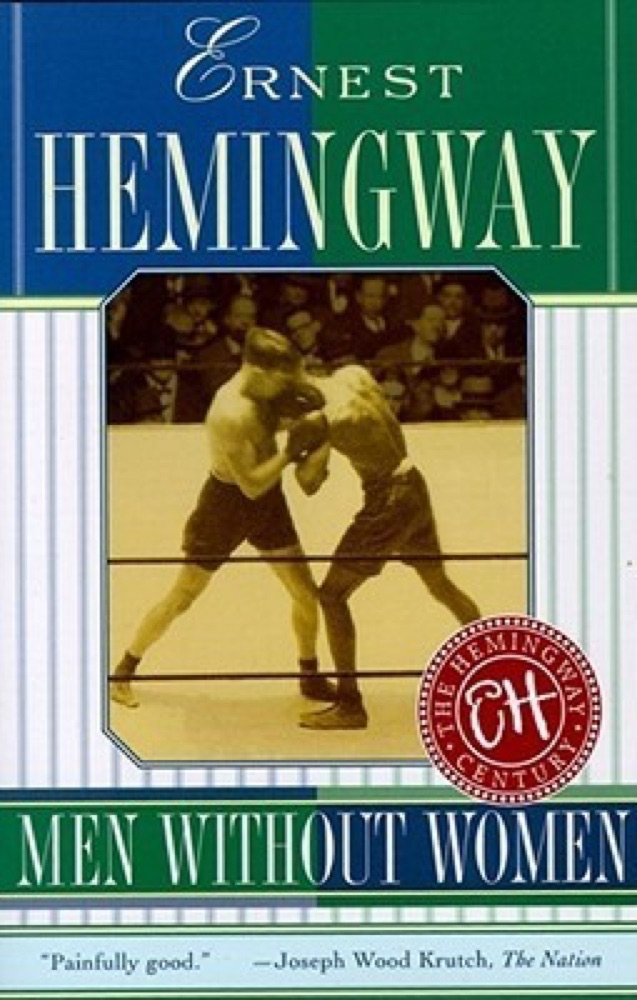 Men Without Women
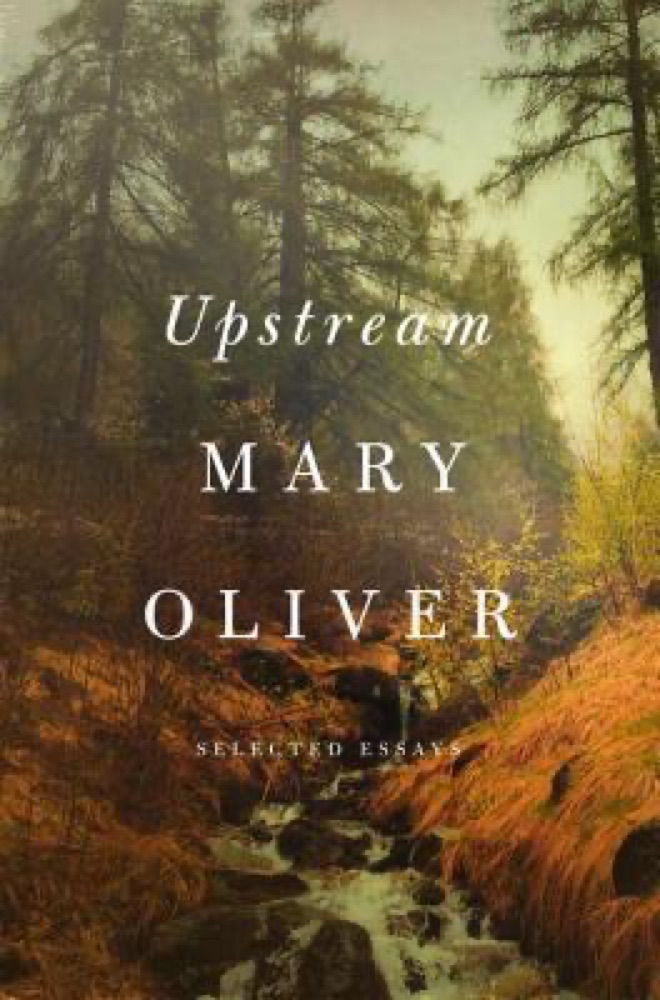 Upstream: Selected Essays
 Narcissus and Goldmund
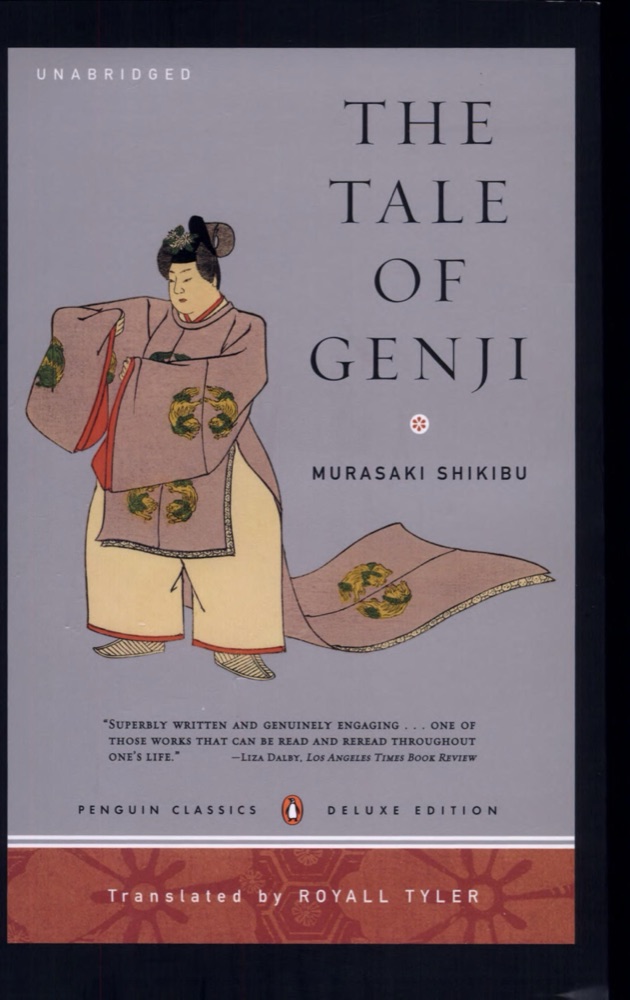 The Tale of Genji
 Confessions of a Mask
 A Book of Simple Living
 A Room with a View
 Journal of a Solitude
 The Way of Zen
 Big Sur and the Oranges of Hieronymus Bosch
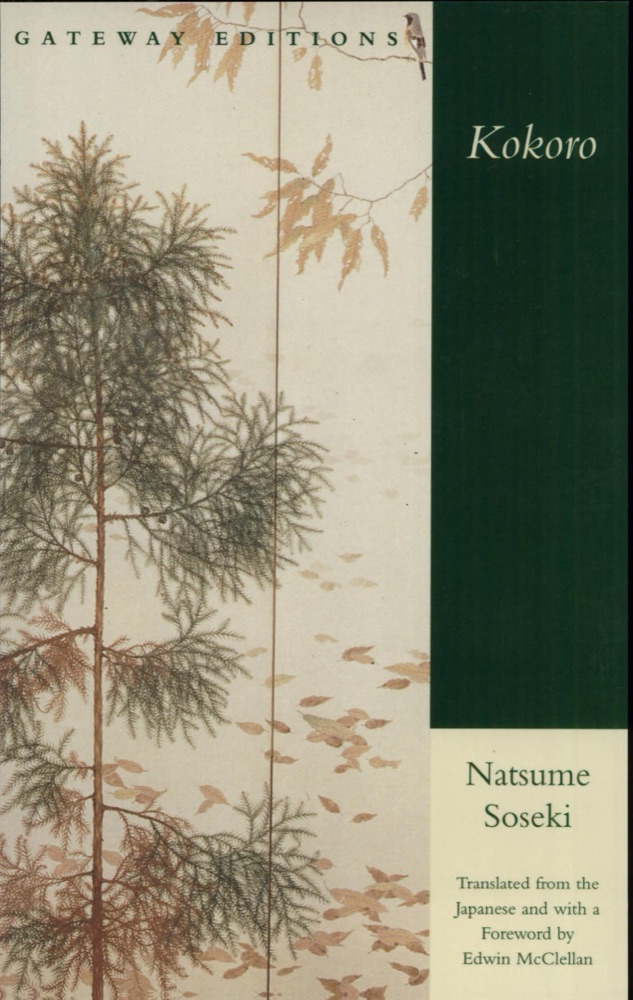 Kokoro
 Dead-End Memories: Stories
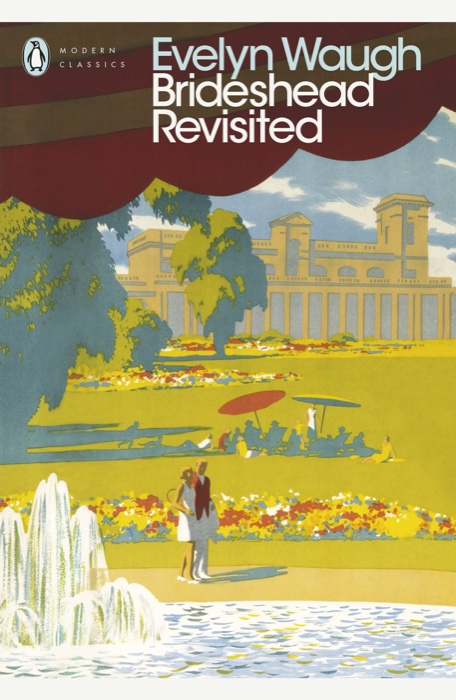 Brideshead Revisited: The Sacred and Profane Memories of Captain Charles Ryder
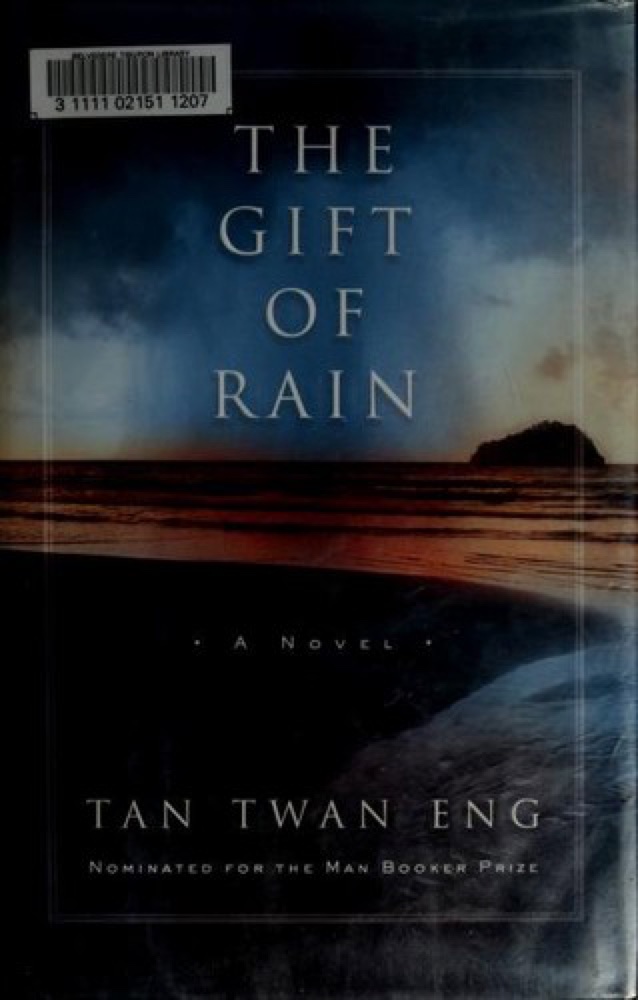 The Gift of Rain
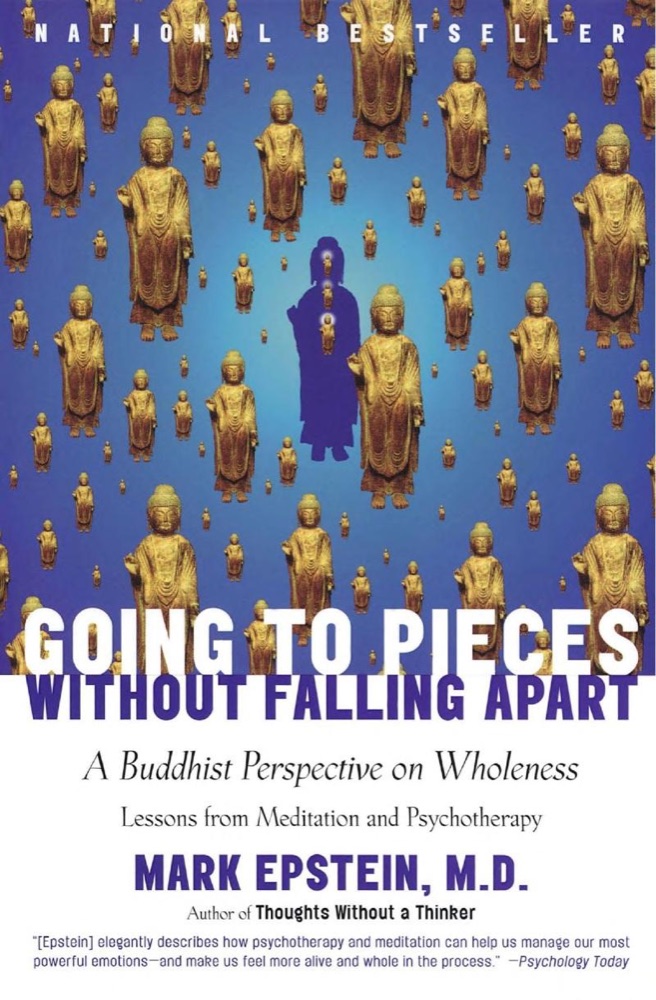 Going to Pieces without Falling Apart: A Buddhist Perspective on Wholeness
 The Scent of Water
 Sexing the Cherry
 Tibetan Peach Pie
 Surprised by Joy: The Shape of My Early Life
 Arch of Triumph
 The Secret Piano: From Mao's Labor Camps to Bach's Goldberg Variations
 The Weight of Ink
 The Tibetan Book of Living and Dying
 Four Seasons in Japan
 A Joseph Campbell Companion: Reflections on the Art of Living
 Asymmetry
 Winter Hours: Prose, Prose Poems, and Poems
 A Soldier of the Great War
 Fugitive Pieces
 A Sudden Light
 Doctor Zhivago
 My Friends
 The Spiral Staircase: My Climb Out of Darkness
 Knife: Meditations After an Attempted Murder