
 Rework
Quotes from the Book
It boils down to this: you aren’t allowed to tell them what their problem is, and in return, they aren’t allowed to tell you what to build. They own the problem, you own the solution.
12
Trying to learn from customer conversations is like excavating a delicate archaeological site. The truth is down there somewhere, but it’s fragile. While each blow with your shovel gets you closer to the truth, you’re liable to smash it into a million little pieces if you use too blunt an instrument.
10
Rule of thumb: You should be terrified of at least one of the questions you’re asking in every conversation.
6
The world’s most deadly fluff is: “I would definitely buy that.” It just sounds so concrete. As a founder, you desperately want to believe it’s money in the bank. But folks are wildly optimistic about what they would do in the future. They’re always more positive, excited, and willing to pay in the imagined future than they are once it arrives.
4
The only thing people love talking about more than themselves is their problems. By taking an interest in the problems and minutia of their day, you’re already more interesting than 99% of the people they’ve ever met.
3
Do you think it's a good idea?" Awful question! Here’s the thing: only the market can tell if your idea is good. Everything else is just opinion. Unless you’re talking to a deep industry expert, this is self-indulgent noise with a high risk of false positives.
2
While using generics, people describe themselves as who they want to be, not who they actually are. You need to get specific to bring out the edge cases.
2
The framing format I like has five key elements. You’re an entrepreneur trying to solve horrible problem X, usher in wonderful vision Y, or fix stagnant industry Z. Don’t mention your idea. Frame expectations by mentioning what stage you’re at and, if it’s true, that you don’t have anything to sell. Show weakness and give them a chance to help by mentioning the specific problem that you’re looking for answers on. This will also clarify that you’re not a time waster. Put them on a pedestal by showing how much they, in particular, can help. Explicitly ask for help. Or, in shorter form: Vision / Framing / Weakness / Pedestal / Ask
2
Every time you talk to someone, you should be asking at least one question which has the potential to destroy your currently imagined business.
2
When you hear a request, it’s your job to understand the motivations which led to it. You do that by digging around the question to find the root cause. Why do they bother doing it this way? Why do they want the feature? How are they currently coping without the feature? Dig.
2
Rule of thumb: People stop lying when you ask them for money.
2
The Mom Test: 1. Talk about their life instead of your idea 2. Ask about specifics in the past instead of generics or opinions about the future 3. Talk less and listen more
2
We go through the futile process of asking for opinions and fish for compliments because we crave approval. We want to believe that the support and sign-off of someone we respect means our venture will succeed. But really, that person’s opinion doesn’t matter. They have no idea if the business is going to work. Only the market knows. You’re searching for the truth, not trying to be right. And you want to do it as quickly and cheaply as possible. Learning that your beliefs are wrong is frustrating, but it’s progress. It’s bringing you ever closer to the truth of a real problem and a good market. The worst thing you can do is ignore the bad news while searching for some tiny grain of validation to celebrate. You want the truth, not a gold star.
2
Zooming in too quickly on a super-specific problem before you understand the rest of the customers life can irreparably confuse your learnings.
1
Don’t spend a week prepping for meetings; spend an hour and then go talk to people. Anything more is stalling. Don’t spend months doing full-time customer conversations before beginning to move on a product. Spend a week, maybe two. Get your bearings and then give them something to commit to.
1
Talk about their life instead of your idea Ask about specifics in the past instead of generics or opinions about the future Talk less and listen more It’s called The Mom Test because it leads to questions that even your mom can’t lie to you about.
1
Long story short, that person is a complainer, not a customer.
1
Rule of thumb: Anyone will say your idea is great if you're annoying enough about it.
Don’t fall into the trap of only talking to the most senior or important people you can find. You want to talk to people who are representative of your customers, not the ones who sound impressive on your status report.
Willpower is a finite resource. The way to overcome difficult situations isn’t to power through, but rather to change your circumstances to require less willpower.
Unfortunately, we've missed the elephant, which is that the poorest schools may not have the budgets available to pay us what we need to sustain and grow a business.
Common wisdom is that you price your product in terms of value to the customer rather than cost to you.
You should be terrified of at least one of the questions you’re asking in every conversation.
One of the reasons we avoid important questions is because asking them is scary. It can bring us to the unsettling realisation that our beloved idea is fundamentally flawed. Or that the major client is never going to buy. Although this sort of news seems unfortunate, we need to learn to love it.
for unpleasant tasks, you should imagine what you would have someone else do if you were delegating it. Then do that.
search out the world-rocking scary questions you’ve been unintentionally shrinking from. The best way to find them is with thought experiments. Imagine that the company has failed and ask why that happened. Then imagine it as a huge success and ask what had to be true to get there. Find ways to learn about those critical pieces. You can tell it’s an important question when its answer could completely change (or disprove) your business.
in shorter form: Vision / Framing / Weakness / Pedestal / Ask The mnemonic is “Very Few Wizards Properly Ask [for help].” Here’s what it might look like before you have a product: Hey Pete, I'm trying to make desk & office rental less of a pain for new businesses (vision). We’re just starting out and don’t have anything to sell, but want to make sure we’re building something that actually helps (framing). I’ve only ever come at it from the tenant’s side and I’m having a hard time understanding how it all works from the landlord’s perspective (weakness). You’ve been renting out desks for a while and could really help me cut through the fog (pedestal).
Watch on YouTube
About Rob Fitzpatrick
We have collected 27 quotes from 1 book by Rob Fitzpatrick on BookQuoters.
More about the author →About the book
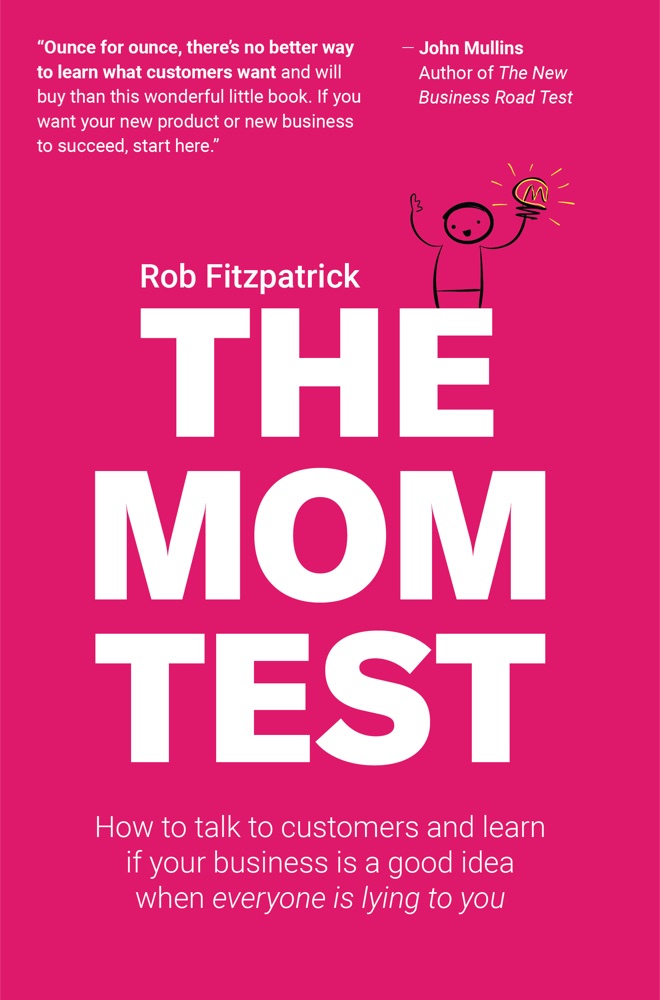
The Mom Test is a quick, practical guide that will save you time, money, and heartbreak. They say you shouldn't ask your mom whether your business is a good idea, because she loves you and will lie to you. This is technically true, but it misses the point. You shouldn't ask anyone if your business is a good idea. It's a bad question and everyone will lie to you at least a little . As a matter of fact, it's not their responsibility to tell you the truth. It's your responsibility to find it and it's worth doing right .Talking to customers is one of the foundational skills of both Customer Development and Lean Startup. We all know we're supposed to do it, but nobody seems willing to admit that it's easy to screw up and hard to do right. This book is going to show you how customer conversations go wrong and how you can do better.
Book details
- First published
- 2013
- Author
- Rob Fitzpatrick
- Genre
- Nonfiction
- Goodreads rating
- 4.36 (14k ratings)
Keep reading
Rework
 Lean Analytics: Use Data to Build a Better Startup Faster
 The Art of Thinking Clearly
 The Art of the Start: The Time-Tested, Battle-Hardened Guide for Anyone Starting Anything
 Amp It Up: Leading for Hypergrowth by Raising Expectations, Increasing Urgency, and Elevating Intensity
 How to Be Successful without Hurting Men's Feelings: Non-threatening Leadership Strategies for Women
 The 1-Page Marketing Plan: Get New Customers, Make More Money, And Stand out From The Crowd
 The Hard Thing About Hard Things: Building a Business When There Are No Easy Answers―Straight Talk on the Challenges of Entrepreneurship
 The $100 Startup: Reinvent the Way You Make a Living, Do What You Love, and Create a New Future
 Getting More: How to Negotiate to Achieve Your Goals in the Real World
 Think Like a Freak
 EntreLeadership: 20 Years of Practical Business Wisdom from the Trenches
 Managing Humans: Biting and Humorous Tales of a Software Engineering Manager
 The Catalyst: How to Change Anyone's Mind
 Radical Candor: Be a Kickass Boss Without Losing Your Humanity
 To Sell is Human: The Surprising Truth About Moving Others
 Founders at Work: Stories of Startups' Early Days
 Selling the Invisible: A Field Guide to Modern Marketing
 Made to Stick: Why Some Ideas Survive and Others Die
 Excellent Advice for Living: Wisdom I Wish I'd Known Earlier
 The E-myth Revisited
 Influence Is Your Superpower: The Science of Winning Hearts, Sparking Change, and Making Good Things Happen
 Pour Your Heart Into It: How Starbucks Built a Company One Cup at a Time
 The Art of Asking; or, How I Learned to Stop Worrying and Let People Help
 The Last Lecture
 Crucial Conversations: Tools for Talking When Stakes are High
 Principles: Life and Work
 Ignore Everybody: and 39 Other Keys to Creativity
 If I Understood You, Would I Have This Look on My Face?: My Adventures in the Art and Science of Relating and Communicating
 Show Your Work!: 10 Ways to Share Your Creativity and Get Discovered
 Creativity, Inc.: Overcoming the Unseen Forces That Stand in the Way of True Inspiration
 QBQ! The Question Behind the Question: Practicing Personal Accountability in Work and in Life
 Gunn's Golden Rules: Life's Little Lessons for Making It Work
 Difficult Conversations: How to Discuss What Matters Most
 Do Over: Rescue Monday, Reinvent Your Work, and Never Get Stuck
 Getting Real: The Smarter, Faster, Easier Way to Build a Web Application
 Be Your Future Self Now: The Science of Intentional Transformation
 Leave Your Mark
 Tribe Of Mentors: Transformative Wisdom From Icons and Innovators to Help You Navigate Life's Challenges
 Chaos Monkeys: Obscene Fortune and Random Failure in Silicon Valley
 Your Next Five Moves: Master the Art of Business Strategy
 Running Lean: Iterate from Plan A to a Plan That Works
 #Girlboss
 Choose Yourself: Be Happy, Make Millions, Live the Dream
 Invent and Wander: The Collected Writings of Jeff Bezos
 The Millionaire Fastlane: Crack the Code to Wealth and Live Rich for a Lifetime!
 Rules
Rules
 Smarter Faster Better: The Secrets of Being Productive in Life and Business
 The Startup of You: Adapt to the Future, Invest in Yourself, and Transform Your Career
 The Ride of a Lifetime: Lessons Learned from 15 Years as CEO of the Walt Disney Company
 How to Fail at Almost Everything and Still Win Big: Kind of the Story of My Life
 Hackers & Painters: Big Ideas from the Computer Age
 How To Get Rich
 It Worked for Me: In Life and Leadership
 Bossypants
 Rich Dad Poor Dad
 Don't Make Me Think, Revisited: A Common Sense Approach to Web Usability
 Zero to One: Notes on Startups, or How to Build the Future
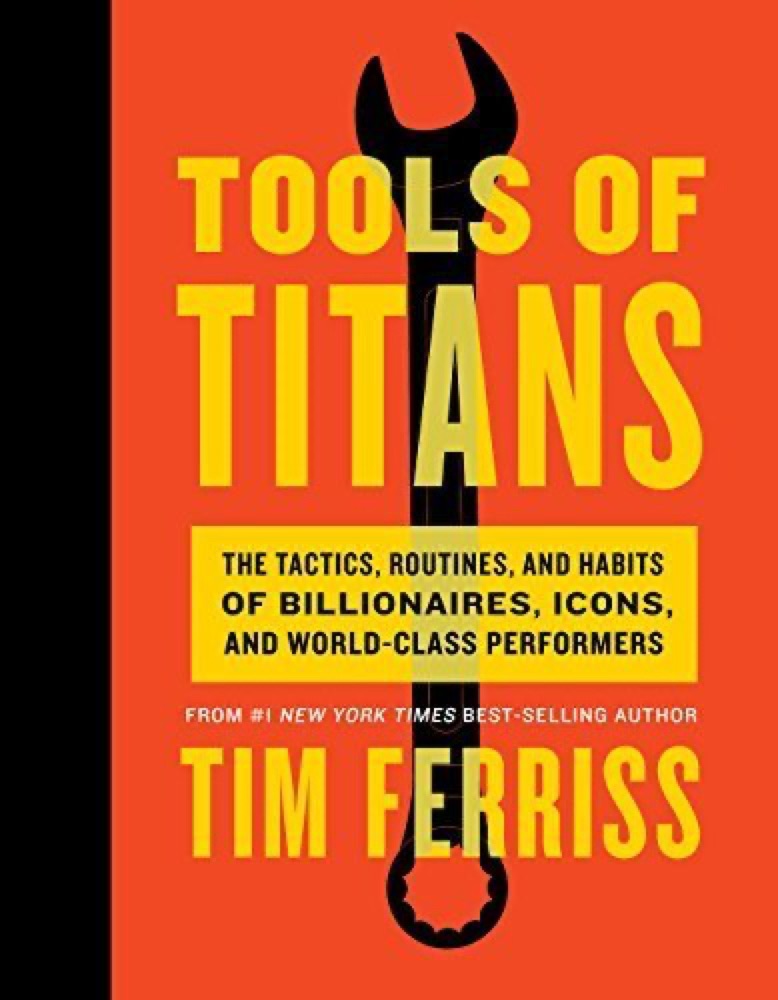 Tools of Titans: The Tactics, Routines, and Habits of Billionaires, Icons, and World-Class Performers
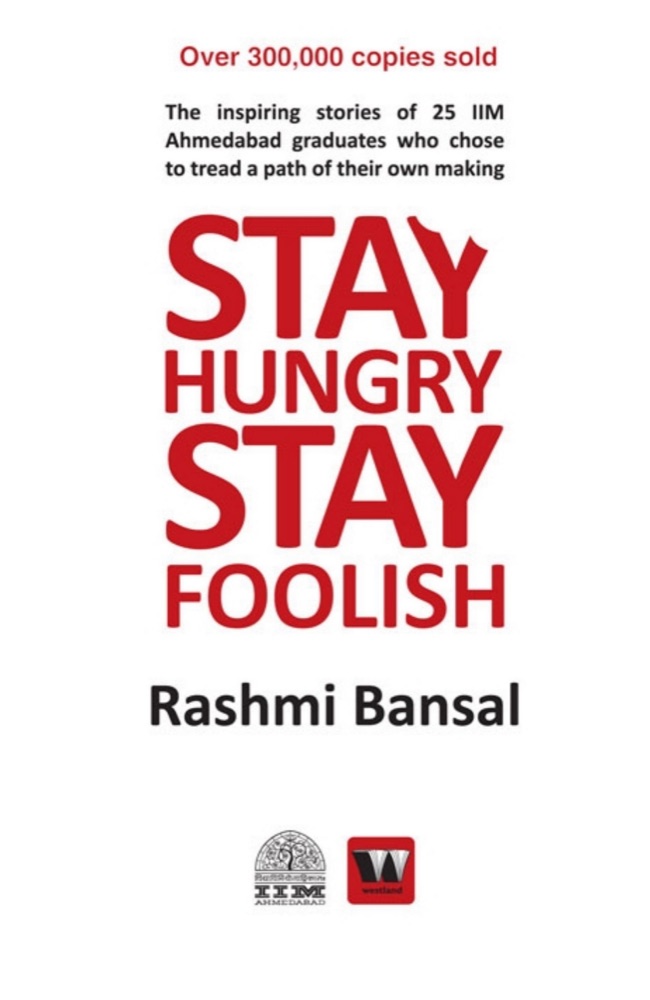 Stay Hungry Stay Foolish