
 Running Lean: Iterate from Plan A to a Plan That Works
Quotes from the Book
The only way to win is to learn faster than anyone else.
We must learn what customers really want, not what they say they want or what we think they should want.
Reading is good, action is better.
A startup is a human institution designed to create a new product or service under conditions of extreme uncertainty.
As you consider building your own minimum viable product, let this simple rule suffice: remove any feature, process, or effort that does not contribute directly to the learning you seek.
The big question of our time is not Can it be built? but Should it be built? This places us in an unusual historical moment: our future prosperity depends on the quality of our collective imaginations.
Build-Measure-Learn feedback loop is at the core of the Lean Startup model.
Innovation is a bottoms-up, decentralized, and unpredictable thing, but that doesn’t mean it cannot be managed.
The lesson of the MVP is that any additional work beyond what was required to start learning is waste, no matter how important it might have seemed at the time.
if you cannot fail, you cannot learn.
When blame inevitably arises, the most senior people in the room should repeat this mantra: if a mistake happens, shame on us for making it so easy to make that mistake.
This is one of the most important lessons of the scientific method: if you cannot fail, you cannot learn.
Customers don’t care how much time something takes to build. They care only if it serves their needs.
Metcalfe’s law: the value of a network as a whole is proportional to the square of the number of participants. In other words, the more people in the network, the more valuable the network.
In the Lean Startup model, an experiment is more than just a theoretical inquiry; it is also a first product.
Leadership requires creating conditions that enable employees to do the kinds of experimentation that entrepreneurship requires.
You cannot be sure you really understand any part of any business problem unless you go and see for yourself firsthand. It is unacceptable to take anything for granted or to rely on the reports of others.
The point is not to find the average customer but to find early adopters: the customers who feel the need for the product most acutely. Those customers tend to be more forgiving of mistakes and are especially eager to give feedback.
The ability to learn faster from customers is the essential competitive advantage that startups must possess.
Success is not delivering a feature; success is learning how to solve the customer’s problem.
Entrepreneurs are everywhere. You don’t have to work in a garage to be in a startup. The concept of entrepreneurship includes anyone who works within my definition of a startup: a human institution designed to create new products and services under conditions of extreme uncertainty. That means entrepreneurs are everywhere and the Lean Startup approach can work in any size company, even a very large enterprise, in any sector or industry. 2. Entrepreneurship is management. A startup is an institution, not just a product, and so it requires a new kind of management specifically geared to its context of extreme uncertainty. In fact, as I will argue later, I believe “entrepreneur” should be considered a job title in all modern companies that depend on innovation for their future growth. 3. Validated learning. Startups exist not just to make stuff, make money, or even serve customers. They exist to learn how to build a sustainable business. This learning can be validated scientifically by running frequent experiments that allow entrepreneurs to test each element of their vision. 4. Build-Measure-Learn. The fundamental activity of a startup is to turn ideas into products, measure how customers respond, and then learn whether to pivot or persevere. All successful startup processes should be geared to accelerate that feedback loop. 5. Innovation accounting. To improve entrepreneurial outcomes and hold innovators accountable, we need to focus on the boring stuff: how to measure progress, how to set up milestones, and how to prioritize work. This requires a new kind of accounting designed for startups—and the people who hold them accountable.
What if we found ourselves building something that nobody wanted? In that case what did it matter if we did it on time and on budget?
If we do not know who the customer is, we do not know what quality is.
entrepreneurship should be considered a viable career path for innovators inside large organizations.
Ask most entrepreneurs who have decided to pivot and they will tell you that they wish they had made the decision sooner.
Failure is a prerequisite to learning.
All innovation begins with vision. It’s what happens next that is critical.
After more than ten years as an entrepreneur, I came to reject that line of thinking. I have learned from both my own successes and failures and those of many others that it’s the boring stuff that matters the most. Startup success is not a consequence of good genes or being in the right place at the right time. Startup success can be engineered by following the right process, which means it can be learned, which means it can be taught.
Anything those customers experience from their interaction with a company should be considered part of that company’s product.
8
there is no bigger destroyer of creative potential than the misguided decision to persevere.
7
It is insufficient to exhort workers to try harder. Our current problems are caused by trying too hard—at the wrong things.
6
Did you know?
- The book's central framework is the Build-Measure-Learn feedback loop.
- It popularized the concepts of the minimum viable product (MVP) and the 'pivot.'
- It has sold more than one million copies and been translated into over thirty languages.
- It debuted at #2 on The New York Times Best Seller list in the Hardcover Advice & Misc. category in 2011.
- The methodology draws on lean manufacturing and agile development principles.
- Eric Ries developed many of the ideas while co-founding and serving as CTO of IMVU.
About Eric Ries
Eric Ries is an American entrepreneur and the creator of the Lean Startup methodology. He co-founded and served as CTO of IMVU and authored the influential blog Startup Lessons Learned.
More about the author →About the book
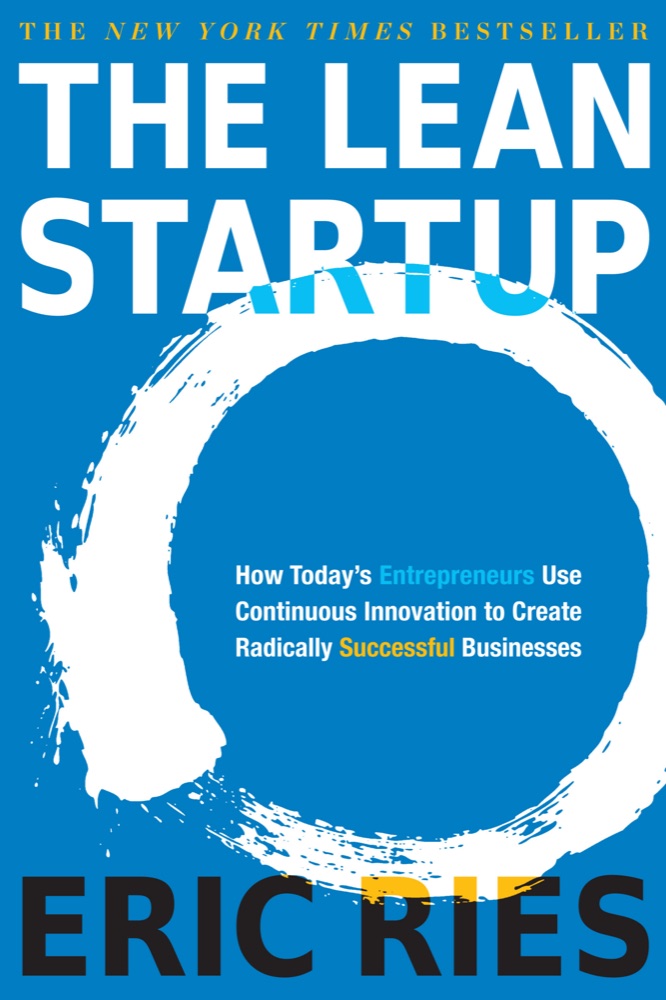
The Lean Startup: How Today's Entrepreneurs Use Continuous Innovation to Create Radically Successful Businesses is a 2011 business book by entrepreneur Eric Ries. It argues that most new ventures fail for preventable reasons, and offers a methodology for building companies under conditions of extreme uncertainty by treating a startup as a series of experiments rather than a fixed plan to be executed.
At the book's core is the idea of 'validated learning'—using scientific experimentation to discover what customers actually want—organized around a Build-Measure-Learn feedback loop. Ries draws on lean manufacturing and agile development to advocate rapid prototyping, minimum viable products, testing leap-of-faith assumptions, innovation accounting, and deciding when to pivot or persevere, all aimed at shortening product development cycles and avoiding wasted effort.
The book became a foundational text in modern entrepreneurship, selling over a million copies, being translated into more than thirty languages, and debuting at #2 on The New York Times Best Seller list. Its vocabulary—'MVP,' 'pivot,' 'Build-Measure-Learn'—entered common startup usage, and its methods were adopted by organizations ranging from small startups to large firms like General Electric, though academics have noted limits to how well experimentation applies to novel technologies.
Book details
- First published
- 2011
- Length
- 336 pages
- Reading time
- 6 hours
- Author
- Eric Ries
- Genre
- Nonfiction
- Goodreads rating
- 4.11 (371k ratings)
If you liked this, read…
- 1The Startup Owner's ManualSteve Blank's practical guide to customer development, a direct influence on Lean Startup thinking.
- 2Zero to OnePeter Thiel's contrarian take on building startups and creating new markets.
- 3Running LeanAsh Maurya's hands-on playbook applying Lean Startup principles step by step.
Keep reading
Running Lean: Iterate from Plan A to a Plan That Works
 Zero to One: Notes on Startups, or How to Build the Future
 Lean Analytics: Use Data to Build a Better Startup Faster
 The Innovator's Solution: Creating and Sustaining Successful Growth
 Creativity, Inc.: Overcoming the Unseen Forces That Stand in the Way of True Inspiration
 The Hard Thing About Hard Things: Building a Business When There Are No Easy Answers―Straight Talk on the Challenges of Entrepreneurship
 The Art of the Start: The Time-Tested, Battle-Hardened Guide for Anyone Starting Anything
 Founders at Work: Stories of Startups' Early Days
 The E-myth Revisited
 Built to Last: Successful Habits of Visionary Companies
 Amp It Up: Leading for Hypergrowth by Raising Expectations, Increasing Urgency, and Elevating Intensity
 Things a Little Bird Told Me: Confessions of the Creative Mind
 Adapt: Why Success Always Starts with Failure
 The Monk and the Riddle: The Education of a Silicon Valley Entrepreneur
 Right Kind of Wrong: The Science of Failing Well
 Vision to Reality: Stop Working, Start Living
 The Startup of You: Adapt to the Future, Invest in Yourself, and Transform Your Career
 Blue Ocean Strategy: How to Create Uncontested Market Space and Make the Competition Irrelevant
 Innovation and Entrepreneurship
 Rework
 Making Ideas Happen: Overcoming the Obstacles Between Vision and Reality
 The 1-Page Marketing Plan: Get New Customers, Make More Money, And Stand out From The Crowd
 Measure What Matters
 Hit Refresh: The Quest to Rediscover Microsoft's Soul and Imagine a Better Future for Everyone
 Smartcuts: How Hackers, Innovators, and Icons Accelerate Success
 The Fifth Discipline: The Art & Practice of The Learning Organization
 Winning
 Pour Your Heart Into It: How Starbucks Built a Company One Cup at a Time
 Chaos Monkeys: Obscene Fortune and Random Failure in Silicon Valley
 Good to Great: Why Some Companies Make the Leap... and Others Don't
 The $100 Startup: Reinvent the Way You Make a Living, Do What You Love, and Create a New Future
 Managing Humans: Biting and Humorous Tales of a Software Engineering Manager
 The Art of Startup Fundraising
 Originals: How Non-Conformists Move the World
 Accelerate: Building and Scaling High Performing Technology Organizations
 The Essential Drucker
 Hackers & Painters: Big Ideas from the Computer Age
 Invent and Wander: The Collected Writings of Jeff Bezos
 Software Engineering at Google: Lessons Learned from Programming Over Time
 The Ride of a Lifetime: Lessons Learned from 15 Years as CEO of the Walt Disney Company
 The Accidental Creative: How to Be Brilliant at a Moment's Notice
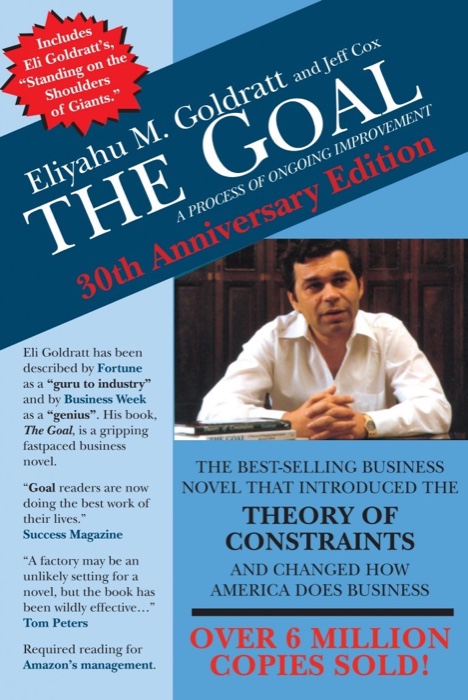 The Goal: A Process of Ongoing Improvement
 The Win Without Pitching Manifesto
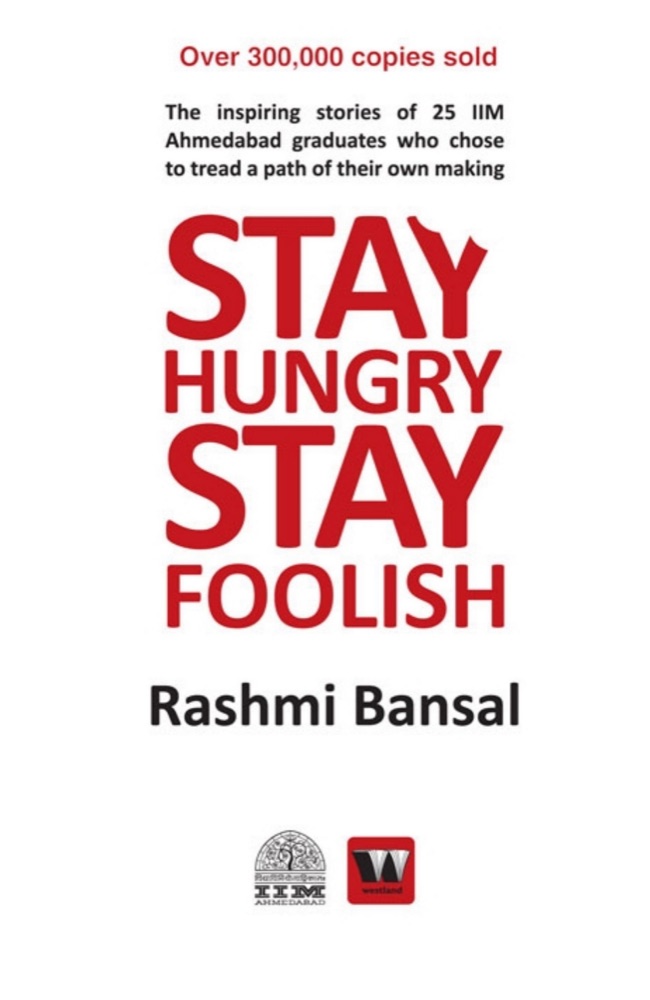 Stay Hungry Stay Foolish
 It's Not How Good You Are, It's How Good You Want To Be
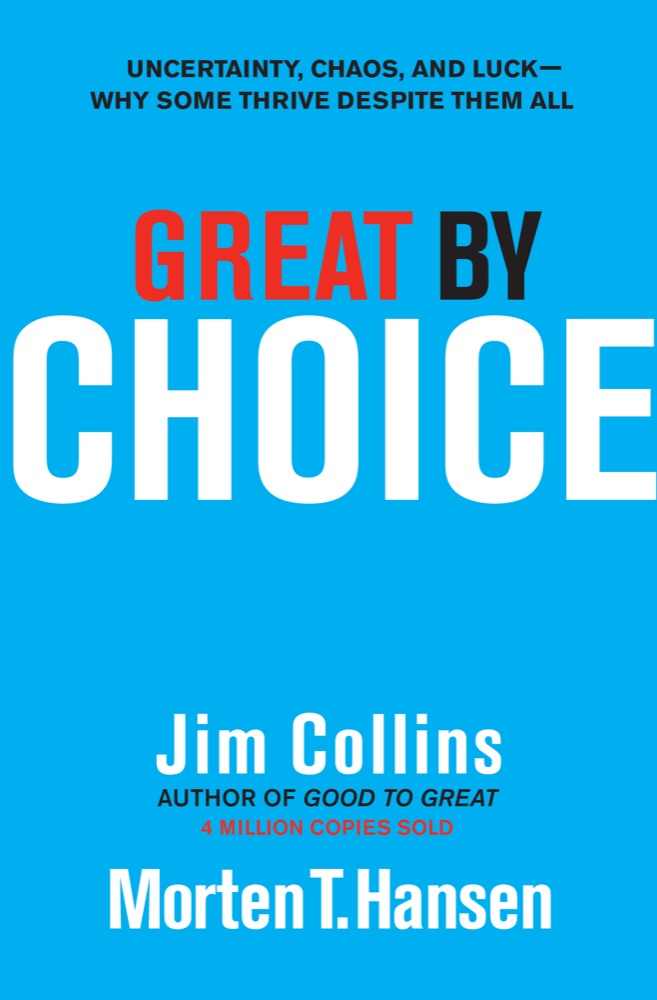 Great by Choice: Uncertainty, Chaos, and Luck—Why Some Thrive Despite Them All
 The 80/20 Principle: The Secret to Achieving More with Less
 EntreLeadership: 20 Years of Practical Business Wisdom from the Trenches
 Range: Why Generalists Triumph in a Specialized World
 Selling the Invisible: A Field Guide to Modern Marketing
 Getting There: A Book of Mentors
 Black Box Thinking: Why Some People Never Learn from Their Mistakes - But Some Do
 The Dip: A Little Book That Teaches You When to Quit (and When to Stick)
 Peopleware: Productive Projects and Teams
 Delivering Happiness: A Path to Profits, Passion, and Purpose
 HBR's 10 Must Reads on Strategy
 The Pragmatic Programmer: From Journeyman to Master
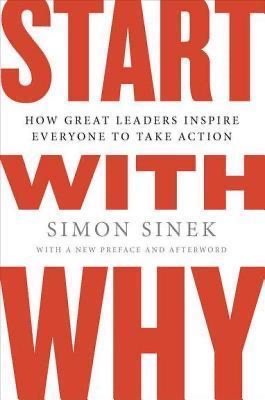 Start with Why: How Great Leaders Inspire Everyone to Take Action
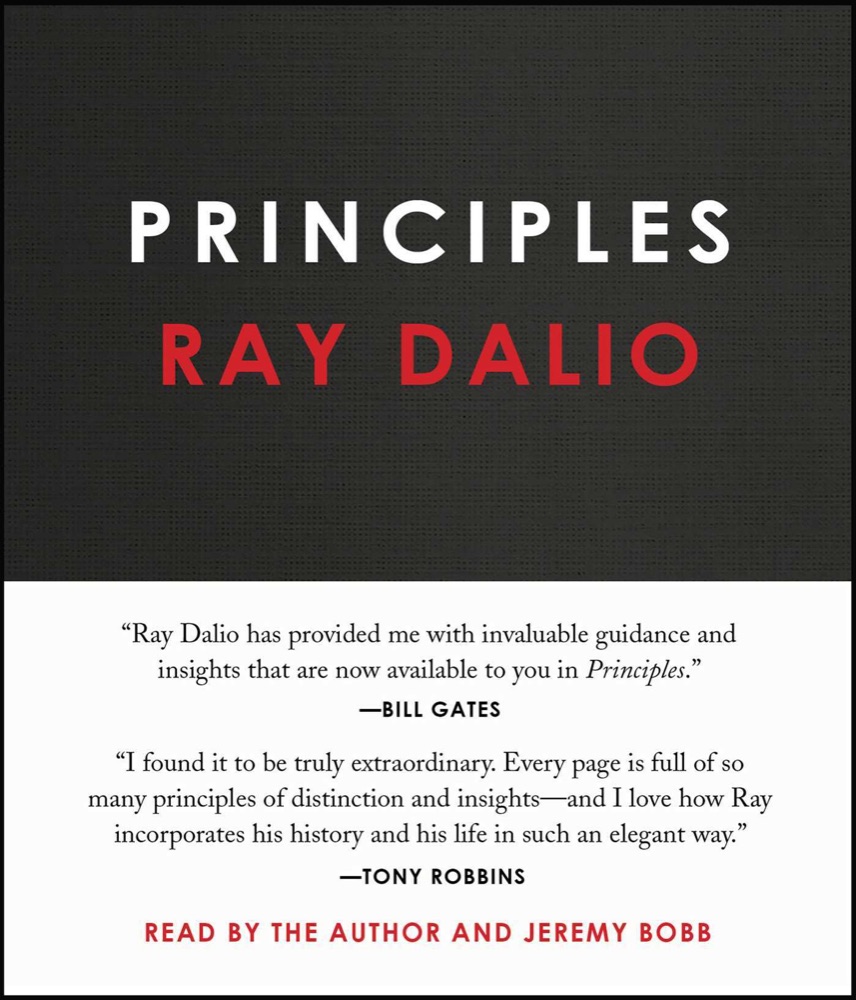 Principles: Life and Work
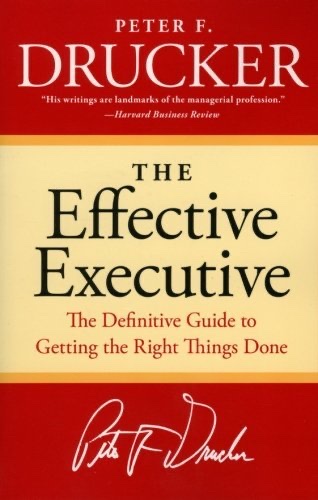 The Effective Executive: The Definitive Guide to Getting the Right Things Done