
 Six Pillars of Self-Esteem
Quotes from the Book
A healthy feeling of inferiority is not something that comes from comparing oneself to others; it comes from one’s comparison with one’s ideal self.
190
Do Not Live to Satisfy the Expectations of Others
170
It’s that you are disliked by someone. It is proof that you are exercising your freedom and living in freedom, and a sign that you are living in accordance with your own principles.
163
The courage to be happy also includes the courage to be disliked. When you have gained that courage, your interpersonal relationships will all at once change into things of lightness.
136
If one really has a feeling of contribution, one will no longer have any need for recognition from others. Because one will already have the real awareness that “I am of use to someone,” without needing to go out of one’s way to be acknowledged by others. In other words, a person who is obsessed with the desire for recognition does not have any community feeling yet, and has not managed to engage in self-acceptance, confidence in others, or contribution to others.
104
Your unhappiness cannot be blamed on your past or your environment. And it isn’t that you lack competence. You just lack courage. One might say you are lacking in the courage to be happy.
97
No matter what has occurred in your life up to this point, it should have no bearing at all on how you live from now on.’ That you, living in the here and now, are the one who determines your own life.
82
We cannot alter objective facts. But subjective interpretations can be altered as much as one likes. And we are inhabitants of a subjective world.
80
I have a young friend who dreams of becoming a novelist, but he never seems to be able to complete his work. According to him, his job keeps him too busy, and he can never find enough time to write novels, and that's why he can't complete work and enter it for writing awards. But is that the real reason? No! It's actually that he wants to leave the possibility of "I can do it if I try" open, by not committing to anything. He doesn't want to expose his work to criticism, and he certainly doesn't want to face the reality that he might produce an inferior piece of writing and face rejection. He wants to live inside that realm of possibilities, where he can say that he could do it if he only had the time, or that he could write if he just had the proper environment, and that he really does have the talent for it. In another five or ten years, he will probably start using another excuses like "I'm not young anymore" or "I've got a family to think about now
76
Your life is not something that someone gives you, but something you choose yourself, and you are the one who decides how you live.
73
No experience is in itself a cause of our success or failure. We do not suffer from the shock of our experiences—the so-called trauma—but instead we make out of them whatever suits our purposes. We are not determined by our experiences, but the meaning we give them is self-determining.
73
If one really has confidence in oneself, one doesn’t feel the need to boast. It’s because one’s feeling of inferiority is strong that one boasts. One feels the need to flaunt one’s superiority all the more. There’s the fear that if one doesn’t do that, not a single person will accept one “the way I am.” This is a full-blown superiority complex.
61
A way of living in which one is constantly troubled by how one is seen by others is a self-centered lifestyle in which one’s sole concern is with the “I.
50
Loneliness is having other people and society and community around you, and having a deep sense of being excluded from them.
48
Unless one is unconcerned by other people’s judgments, has no fear of being disliked by other people, and pays the cost that one might never be recognized, one will never be able to follow through in one’s own way of living. That is to say, one will not be able to be free.
48
You are the only one who can change yourself.
43
None of us live in an objective world, but instead in a subjective world that we ourselves have given meaning to. The world you see is different from the one I see, and it’s impossible to share your world with anyone else.
42
Three things are needed at this point: “self-acceptance,” “confidence in others,” and “contribution to others.
42
Why is it that people seek recognition from others? In many cases, it is due to the influence of reward-and-punishment education.
37
One has to stand on one’s own two feet, and take one’s own steps forward with the tasks of interpersonal relations. One needs to think not, What will this person give me? but rather, What can I give to this person? That is commitment to the community.
36
All you can do in regard to your own life is choose the best path that you believe in.
34
Suppose you have placed “doubt” at the foundation of your interpersonal relations. That you live your life doubting other people—doubting your friends and even your family and those you love. What sort of relationship could possibly arise from that? The other person will detect the doubt in your eyes in an instant. He or she will have an instinctive understanding that “this person does not have confidence in me.” Do you think one would be able to build some kind of positive relationship from that point? It is precisely because we lay a foundation of unconditional confidence that it is possible for us to build a deep relationship.
33
We do not lack ability. We just lack courage. It all comes down to courage.
31
Being praised essentially means that one is receiving judgment from another person as 'good.' And the measure of what is good or bad about that act is that person's yardstick. If receiving praise is what one is after, one will have no choice but to adapt to that person's yardstick and put the brakes on one's own freedom.
30
But as long as one continues to use one’s misfortune to one’s advantage in order to be ‘special’, one will always need that misfortune.
29
PHILOSOPHER: To quote Adler again: ‘The important thing is not what one is born with, but what use one makes of that equipment.
29
Children who have not been taught to confront challenges will try to avoid all challenges.
28
The reason that so many people don’t really feel happy while they’re building up their success in the eyes of society is that they are living in competition.
28
YOUTH: Have you become free from all forms of competition? PHILOSOPHER: Of course. I do not think about gaining status or honour, and I live my life as an outsider philosopher without any connection whatsoever to worldly competition. YOUTH: Does that mean you dropped out of competition? That you somehow accepted defeat? PHILOSOPHER: No. I withdrew from places that are preoccupied with winning and losing. When one is trying to be oneself, competition will inevitably get in the way.
20
Look, no matter how much you want to be Y, you cannot be reborn as him. You are not Y. It's okay for you to be you. However, I am not saying it's fine to be 'just as you are'. If you are unable to really feel happy, then it's clear that things aren't right just as they are. You've got to put one foot in front of the other, and not stop.
20
Did you know?
- The book is structured entirely as a dialogue between a philosopher and a young man held over five nights.
- It is based on the ideas of Alfred Adler, a contemporary of Freud and Jung and a founder of individual psychology.
- Originally published in Japanese in 2013, it became a phenomenon across Japan, South Korea and other parts of Asia before its 2018 English release.
- It has sold well over ten million copies worldwide.
- A follow-up volume, The Courage to Be Happy, continues the same dialogue format.
- The English edition is subtitled The Japanese Phenomenon That Shows You How to Change Your Life and Achieve Real Happiness.
About Ichiro Kishimi
Ichiro Kishimi is a Japanese philosopher and writer, born in Kyoto in 1956, who has long studied and written on Alfred Adler's psychology alongside classical Western philosophy. His co-author, Fumitake Koga, is an award-winning Japanese professional writer who encountered Adlerian psychology through Kishimi's work.
More about the author →About the book
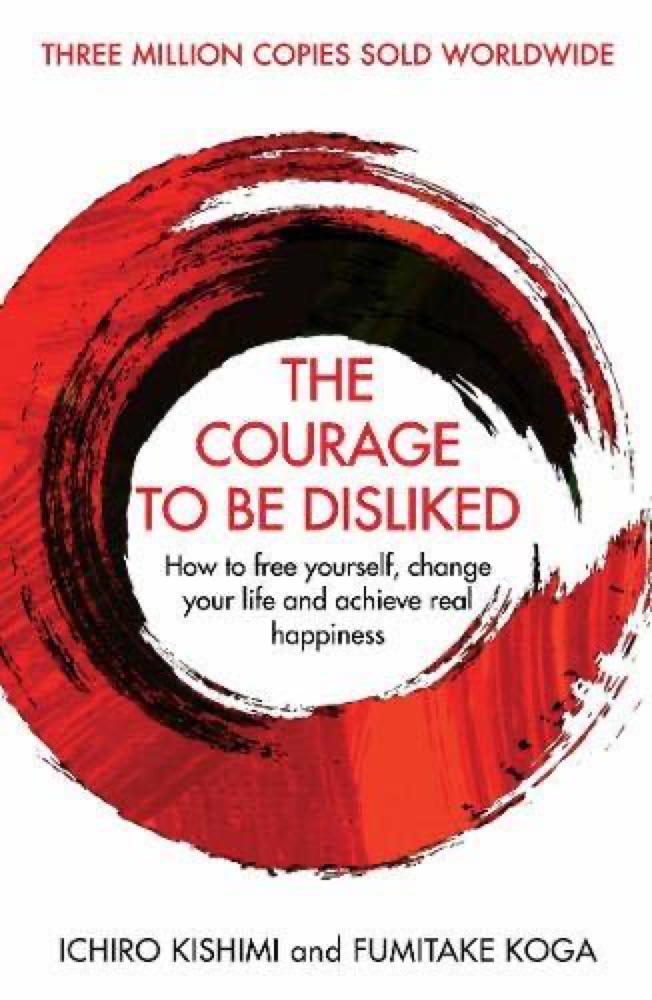
The Courage to Be Disliked is a self-help book by Japanese authors Ichiro Kishimi and Fumitake Koga that presents the ideas of psychologist Alfred Adler through an extended Socratic dialogue. Over the course of five conversations, a skeptical young man challenges a philosopher, who argues that people are not determined by their past or their traumas but are instead free to choose how they live in the present.
Drawing on Adlerian psychology, the book develops themes of personal freedom, the rejection of determinism, and what it calls the separation of tasks, the idea that we should distinguish our own concerns from those that belong to others. It contends that the desire for recognition and the fear of being disliked trap people in lives shaped by other people's expectations, and that genuine happiness comes from accepting oneself and contributing to others without seeking approval.
First published in Japan by Diamond Inc. in 2013, the book became a major bestseller across Asia before its English translation appeared in 2018. It has sold many millions of copies worldwide and enjoyed renewed popularity through online recommendations, becoming one of the best-known popular introductions to Adlerian thought.
Book details
- First published
- 2013
- Length
- 288 pages
- Reading time
- 5 hours
- Author
- Ichiro Kishimi
- Genre
- Nonfiction
- Goodreads rating
- 3.90 (154k ratings)
Critical reception
- The book was an international bestseller, selling many millions of copies after its 2013 Japanese release and 2018 English translation.
- It holds an average rating of about 3.9 stars across more than 150,000 ratings on Goodreads.
- Critics and readers have praised its accessible dialogue format while some have debated the strong claims of Adlerian psychology it presents.
Series & reading order
- 1 The Courage to Be Disliked
- 2 The Courage to Be Happy
If you liked this, read…
- 1Man's Search for Meaning by Viktor E. FranklAnother concise classic arguing that we retain freedom to choose our attitude regardless of circumstances.
- 2The Subtle Art of Not Giving a F*ck by Mark MansonA modern self-help take on caring less about others' approval and choosing your own values.
- 3The Four Agreements by Don Miguel RuizA short, principle-driven guide to freeing yourself from others' opinions and self-imposed limits.
Keep reading
Six Pillars of Self-Esteem
 Your Erroneous Zones: Step-By-Step Advice for Escaping the Trap of Negative Thinking and Taking Control of Your Life
 You Learn by Living: Eleven Keys for a More Fulfilling Life
 The Art of Living: The Classical Manual on Virtue, Happiness and Effectiveness
 101 Essays That Will Change The Way You Think
 Be a People Person
 The Tools: Transform Your Problems into Courage, Confidence, and Creativity
 Ego Is the Enemy
 The Art of Being
 The Things You Can See Only When You Slow Down: How to Be Calm in a Busy World
 Be Water, My Friend: The Teachings of Bruce Lee
 Will
Will
 The 7 Habits Of Highly Effective Teens
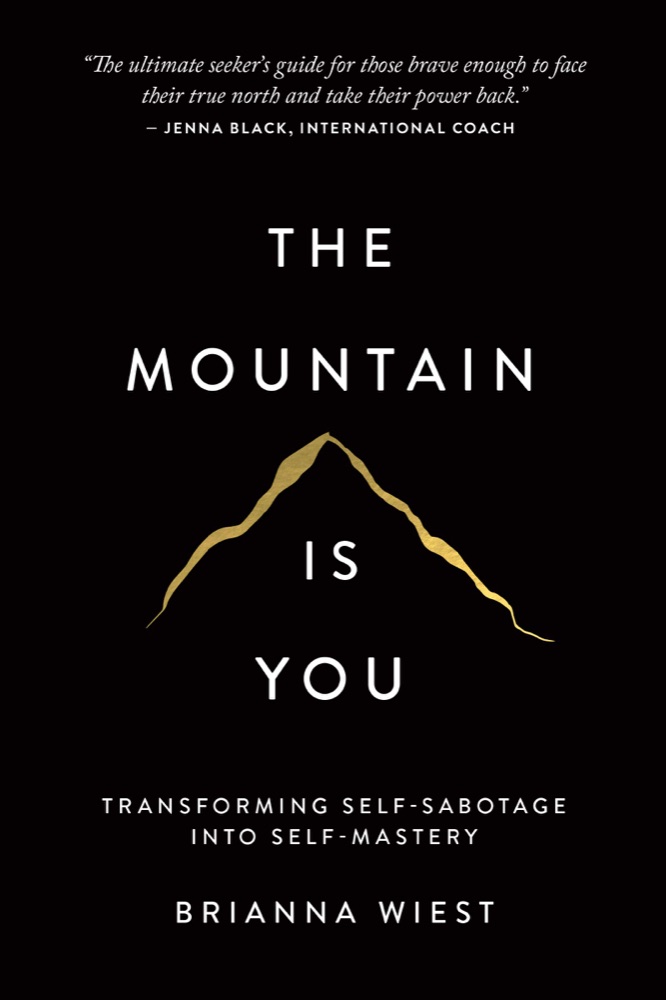 The Mountain Is You: Transforming Self-Sabotage Into Self-Mastery
 Psycho-Cybernetics
 Maximum Achievement: Strategies and Skills That Will Unlock Your Hidden Powers to Succeed
 Mind Platter
 Toward a Psychology of Being
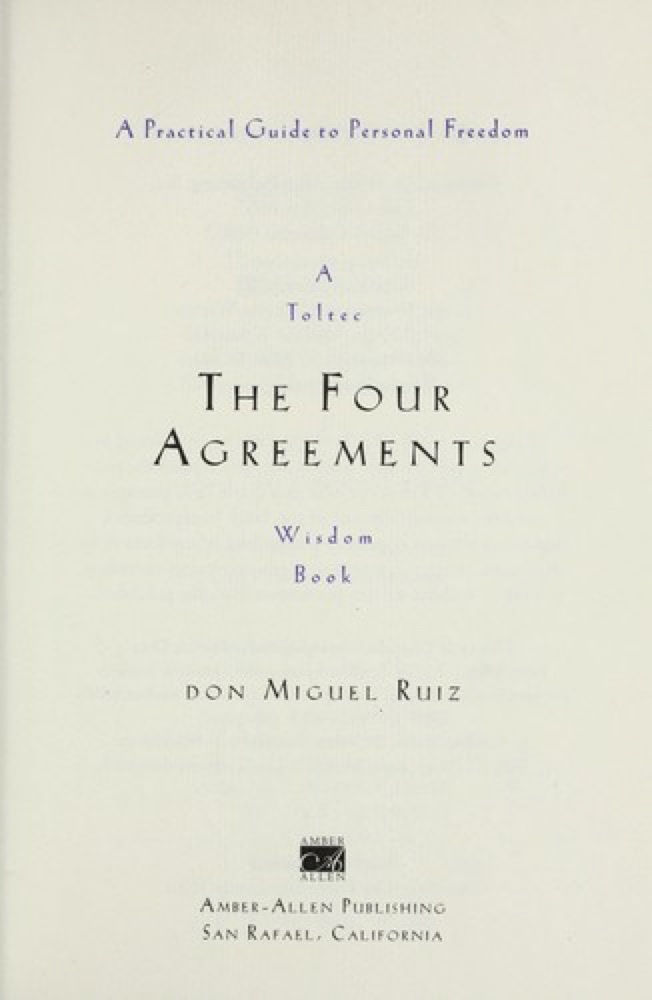 The Four Agreements: A Practical Guide to Personal Freedom
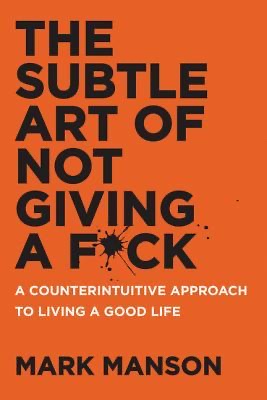 The Subtle Art of Not Giving a F*ck: A Counterintuitive Approach to Living a Good Life
 Discourses and Selected Writings
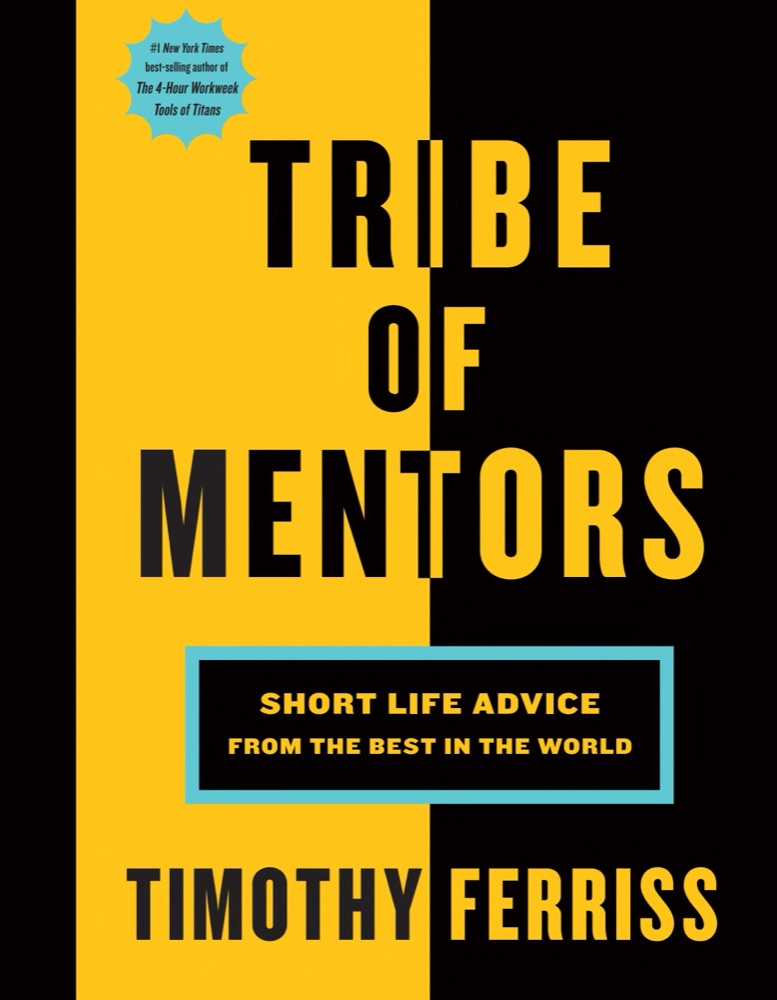 Tribe Of Mentors: Transformative Wisdom From Icons and Innovators to Help You Navigate Life's Challenges
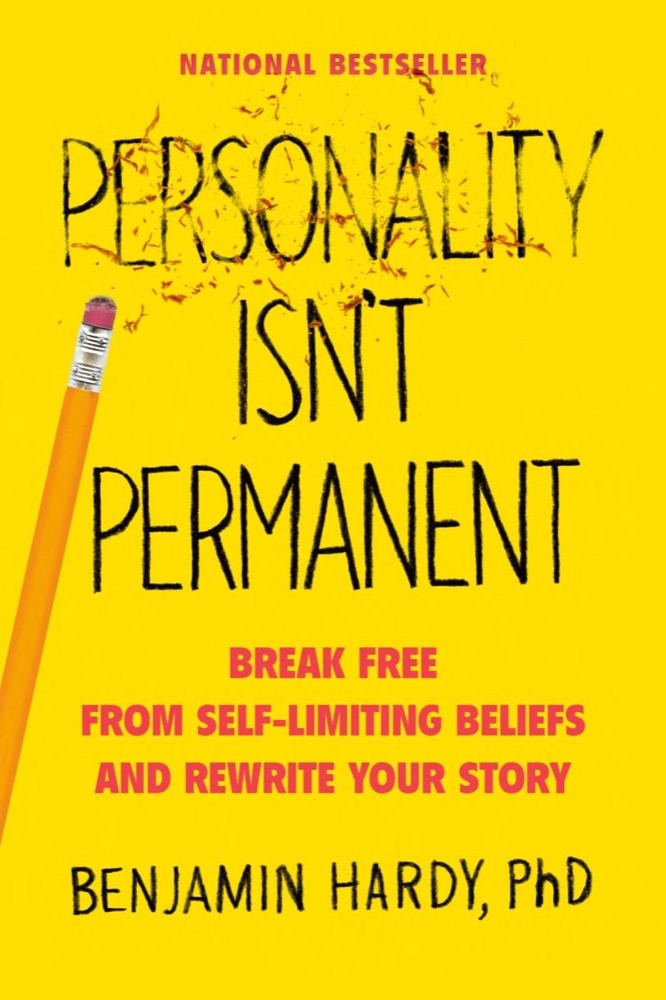 Personality Isn't Permanent: Break Free from Self-Limiting Beliefs and Rewrite Your Story
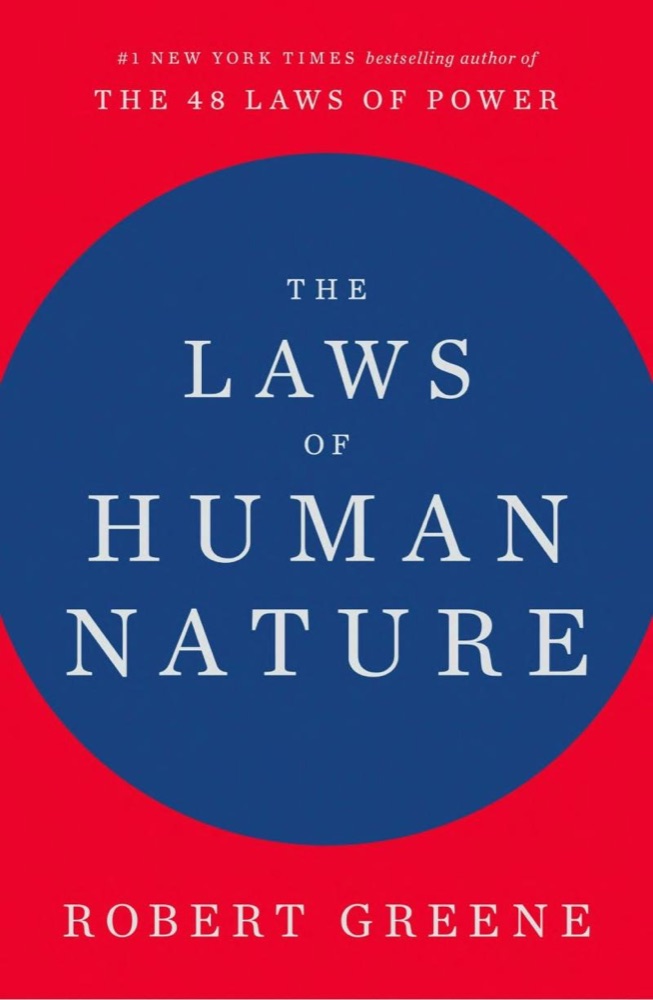 The Laws of Human Nature
 Girl, Stop Apologizing: A Shame-Free Plan for Embracing and Achieving Your Goals
 How Do You Live?
 The Traveler's Gift: Seven Decisions that Determine Personal Success
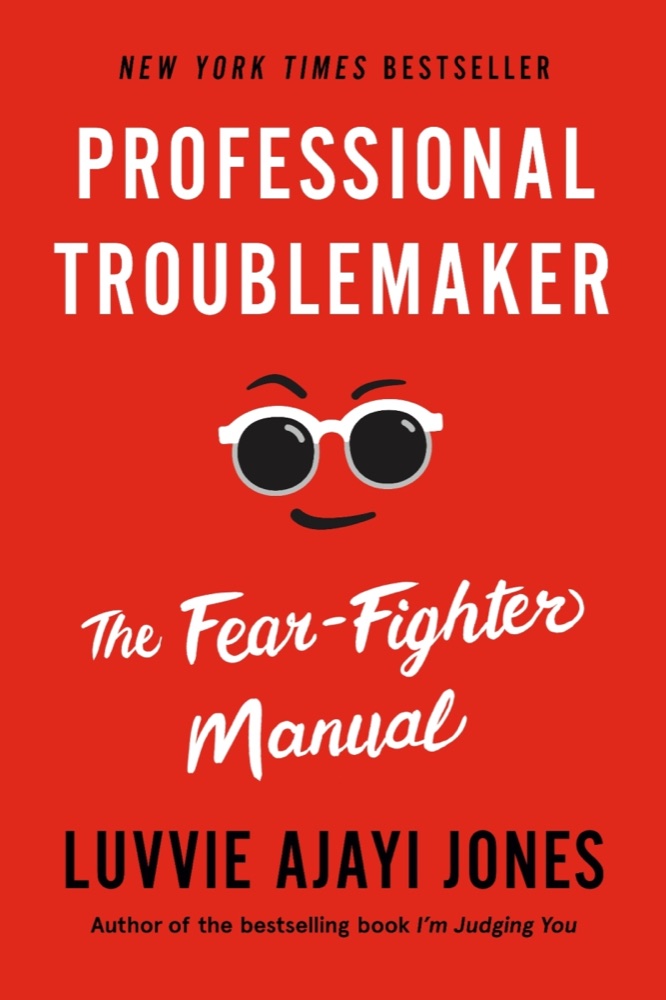 Professional Troublemaker: The Fear-Fighter Manual
 12 Rules for Life: An Antidote to Chaos
 Choose Yourself: Be Happy, Make Millions, Live the Dream
 Letters from a Stoic
 Buy Yourself the Damn Flowers: The Self-Love Guide to Growing, Healing and Learning to Put Yourself First
 The 7 Habits of Highly Effective People: Personal Workbook
 This Is How: Proven Aid in Overcoming Shyness, Molestation, Fatness, Spinsterhood, Grief, Disease, Lushery, Decrepitude & More. For Young and Old Alike.
 The School of Life: An Emotional Education
 Selfie: How the West Became Self-Obsessed
 We Were Three
 Awaken The Giant Within
 The 50th Law
 How to Be Free: An Ancient Guide to the Stoic Life
 I Can't Make This Up: Life Lessons
 When Nietzsche Wept
 How I Found Freedom in an Unfree World: A Handbook for Personal Liberty
 Living on Your Own Terms: What Is Real Rebellion?
 The Comfort Book
 How to Use Your Enemies
 Resilience: Hard-Won Wisdom for Living a Better Life
 Think and Grow Rich
 If You Meet the Buddha on the Road, Kill Him! The Pilgrimage of Psychotherapy Patients
 Brave Enough
 You Are a Badass: How to Stop Doubting Your Greatness and Start Living an Awesome Life
 Love for Imperfect Things: How to Accept Yourself in a World Striving for Perfection
 How to Stop Worrying and Start Living
 On Confidence
 Very Good Lives: The Fringe Benefits of Failure and the Importance of Imagination
 The Winner Stands Alone
 Orbiting the Giant Hairball: A Corporate Fool's Guide to Surviving with Grace