
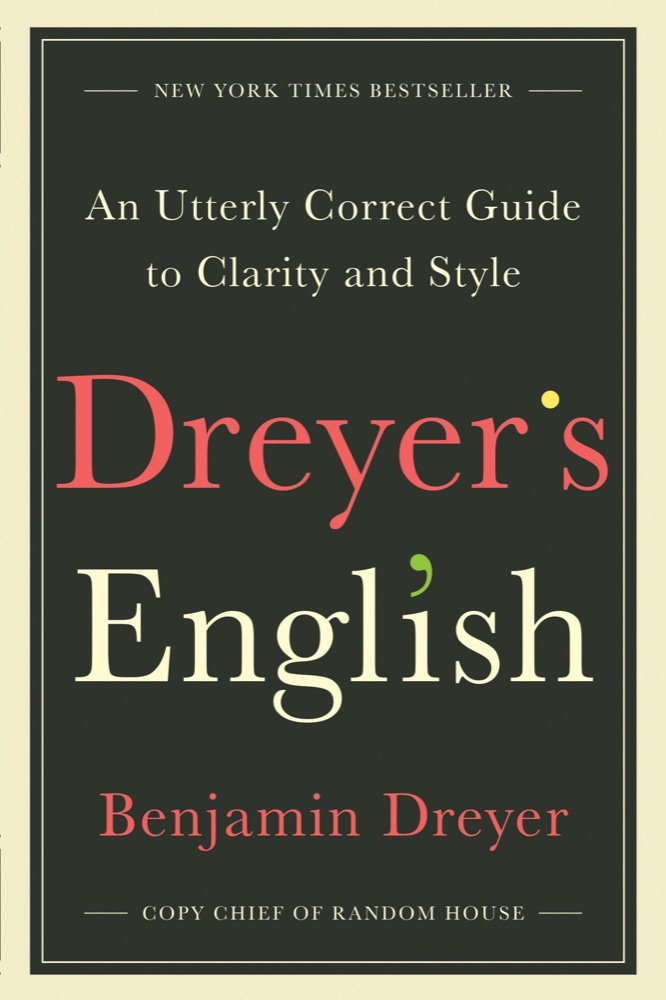
 Dreyer's English: An Utterly Correct Guide to Clarity and Style
Quotes from the Book
Verbose is not a synonym for literary.
7
Ernest Hemingway once advised prose artists to 'Write hard and clear about what hurts.
2
In French printer's jargon, cliche (which mimicked the sound of a mold striking molten metal) was a synonym for stereotype, which in turn evolved from the Greek for "solid impression." A stereotype was a printing plate that duplicated typography and that was used by the printer in lieu of the original. So a cliche is a word or phrase used over and over again in lieu of the original.
2
You can disguise its aggressiveness all you want with veils of subordinate clauses and qualifiers and tentative subjunctives, with ellipses and evasion—with the whole manner of intimating rather than claiming, of alluding rather than stating—but there’s no getting around the fact that setting words on paper is the tactic of a secret bully, an invasion, an imposition of the writer’s sensibility on the reader’s most private space.
2
Language offers us a surprising, savage terrain full of pockets and peaks. Shakespeare invented words like crazy. Mark Twain wrote in dialect. Muhammad Ali rapped in rhythmic sentences. Junot Diaz mixes Spanish into his sentences like rum into fruit juice. Nicki Minaj spices her lyrics with slang.
1
Political language is designed to make lies sound truthful and murder respectable, and to give an appearance of solidity to pure wind,” wrote George Orwell in “Politics and the English Language.” Orwell
1
Voice is the je ne sais quoi of spirited writing. It separates brochure from brilliance, memo from memoir, a ship’s log from The Old Man and the Sea.…The writer leaves us with a sense that we are listening to a skilled raconteur rather than passing our eyes over ink on paper.
Ernest Hemingway once advised prose artists to “Write hard and clear about what hurts.” It’s good advice. But to follow it, you must stop reading.
The art of sentence making comes down to experimentation, skill, and variety. Just because you can do the three-and-a-half-somersault tuck off the high board doesn’t mean you must ditch the gorgeous swan dive. Good sentences can be short and muscular, and they can be long and graceful.
Let’s never forget that we need to speak and write like human beings with hearts, and not like the tin woodsman in The Wizard of Oz or Hal in the movie 2001.
Understanding pitch, and being able to adjust it, is especially valuable in an era when information often trumps insight and the flow of data exceeds our capacity to distill–to make it ours and to make it matter. The computer makes it easy to spew out paragraphs; the Kindle, the iPhone, and the iPad make it easy to receive them. But we still need to craft our passages. We want narrators–not newsreaders. We desire stories–not brands, press releases, or tweets. We crave writing that is original, passionate, and personal.
The technically incorrect It’s me and That’s me have been part of our DNA since as long as English has been recorded. There’s something nice and low-key about them. Maybe we just crave a simple English equivalent of the French C’est moi.
Why do so many of us, when we sit down to write, sound like word processors rather than wordsmiths? Why do we spew the slogans of the consumer culture we work for, rather than sounding like the bards we want to be?
Entrepreneurs are, by definition, active types, so how is it that so much business writing sags with the passive voice? ...If you are using the passive voice to evade responsibility, start owning up. If you are using it out of habit or laziness, or because you just didn’t think about it, start thinking about it.
If all of this seems paradoxical, get used to it. Language is paradox.
The words must conjure the character of a place for readers who may never see it. This may seem like magic, or incomparable talent, but the inspiration starts with acute observation.
To find the right pitch is to be human, to have a sense of the street, while still reaching for the lofty. It means resisting the kind of language that suits cogs in a machine better than sentient beings.
To paraphrase Ezra Pound, don't imagine that the art of prose is any simpler than the art of music; spend as much time developing your craft as a pianist spends practicing scales. 'Let the neophyte know assonance and alliteration, rhyme immediate and delayed, simple and polyphonic, as a musician would expect to know harmony and counterpoint, Pound argued in his 1913 essay, 'A Few Don'ts.
The English critic George Saintsbury once compared the act of sentence making--the letting out and pulling in of clauses--to the letting out and pulling in of the slide of a trombone or the "draws" of a telescope.
heed Hugh Blair, a very emeritus Edinburgh professor whose advice from 1783 has stood the test of more than two centuries: "Remember . . . every Audience is ready to tire; and the moment they begin to tire, all our Eloquence goes for nothing. A loose and verbose manner never fails to disgust . . . better [to say] too little, than too much.
True prose stylists carry on an impassioned lifelong love affair with words, banishing mediocre ones like so many uninteresting suitors, burnishing the good ones till they shimmer. Be infatuated, be seduced, be obsessed.
Jordan, considered strictly as an athlete, is the Second Coming, and Reinsdorf, considered strictly as a mogul, is a second-rater. It’s as if Pat Robertson were making Jesus punch a time card.
We can twist poet Alexander Pope’s diktat—“the sound must seem an echo of the sense”—into a caveat for the novice writer: When sound doesn’t echo sense, the writing misfires.
The Spanish-born, Paris- and Oxford-educated writer Salvador de Madariaga waxed ecstatic about the beauty of English words in 1928: They are marvellous, those English monosyllables. Their fidelity is so perfect that one is tempted to think English words are the right and proper names which acts are meant to have, and all other words are pitiable failures. How could one improve upon splash, smash, ooze, shriek, slush, glide, squeak, coo? Is not the word sweet a kiss in itself, and what could suggest a more peremptory obstacle than stop?
We are born with a natural delight in the music of language. As infants we coo and babble and let consonants roll around in our mouths like mother’s milk. As young children, we invent words, mash syllables together, and delight in nonsensical lines. We let ourselves be lulled to sleep by the playful rhymes of Mem Fox (“It’s time for bed, little goose, little goose, / The stars are out and on the loose”). We seek out stories with fanciful sounds (“Quickberry / Quackberry / Pick me a blackberry”). We begin to sense the link between what’s on the surface, and what’s under it (“I meant no harm. I most truly did not. / But I had to grow bigger. So bigger I got. / I biggered my factory. I biggered my roads. / I biggered my wagons. I biggered the loads”). As we mature, our delight in the music of words goes a bit underground, but it’s still there. We repeat not just Chaucer’s prologue, but also advertising jingles. We let brand names like Chunky Monkey and SurveyMonkey tumble off our tongues. We appreciate the curt sentences of Hemingway as well as those that are long and loose and lyrical. We let ourselves be moved by the moral authority of Nelson Mandela. We follow the Dalai Lama on Facebook. We let Chris Christie voice our outrage after a hurricane, Barack Obama our sorrow after a massacre of children. Language remains an adventure, if sometimes a somewhat mysterious one: We are drawn to reliable narrators and find that metaphors lift us. We are transported by soaring vowels. The cadence of sentences acts on us like the rhythm of an ancient drum. The music of language leads us to meaning, to our own humanity.
Phrases can build grace into sentences. Taut declarations lend clarity, but too many of them can start to sound like a Dick-and-Jane story. A strategically placed phrase can turn a staccato burst into a more lyrical sentence. This is what we mean by “turning a phrase”—using our command of language and our mastery of the rhythms of a sentence to affect style as well as substance
If you’re a real grammar masochist—in other words, your eyes have not glazed over, and you are twitching for more—this box is for you. Some grammarians wax on about “restrictive” and “nonrestrictive” clauses, or “essential” and “nonessential” clauses. All these names just attempt to explain when to use that and when to use which. Just to reiterate: The information in a that clause is restrictive/essential—it is necessary to bake the cake that is the sentence. The information in a which clause is nonrestrictive/nonessential—it just ices the cake.
You’ll most likely find interjections at the beginning of a sentence, followed by a comma or an exclamation point: Ahem! Wake up—this is the last chapter on parts of speech.
If you write short, crisp sentences without any sinces or whens or althoughs, try stringing varied sentences together by using subordinate conjunctions. If you already rely on subordinate conjunctions, try rebalancing your sentences with ands and buts and fors and sos. Does the change of conjunctions change your style?
Watch on YouTube
About Constance Hale
We have collected 29 quotes from 1 book by Constance Hale on BookQuoters.
More about the author →About the book
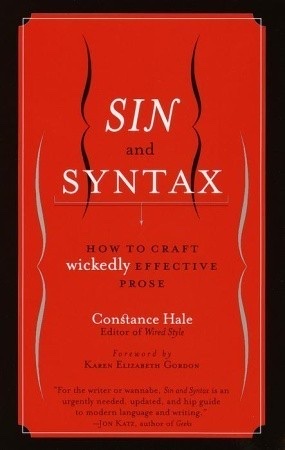
Today’s writers need more spunk than whether it's the Great American e-mail, Madison Avenue advertising, or Grammy Award-winning rap lyrics, memorable writing must jump off the page. Copy veteran Constance Hale is on a mission to make creative communication, both the lyrical and the unlawful, an option for everyone.
With its crisp, witty tone, Sin and Syntax covers grammar’s ground rules while revealing countless unconventional syntax secrets (such as how to use—Gasp!—interjections or when to pepper your prose with slang) that make for sinfully good writing. Discover how
*Distinguish between words that are “pearls” and words that are “potatoes”
* Avoid “couch potato thinking” and “commitment phobia” when choosing verbs
* Use literary devices such as onomatopoeia, alliteration, and metaphor (and understand what you're doing)
Everyone needs to know how to write stylish prose—students
Book details
- First published
- 1999
- Author
- Constance Hale
- Genre
- Nonfiction
- Goodreads rating
- 3.94 (2k ratings)
Keep reading
Dreyer's English: An Utterly Correct Guide to Clarity and Style
 The Elements of Style
 Writing Tools: 50 Essential Strategies for Every Writer
 The Elements of Eloquence: How to Turn the Perfect English Phrase
 Between You & Me: Confessions of a Comma Queen
 Several Short Sentences About Writing
 The Sense of Style: The Thinking Person's Guide to Writing in the 21st Century
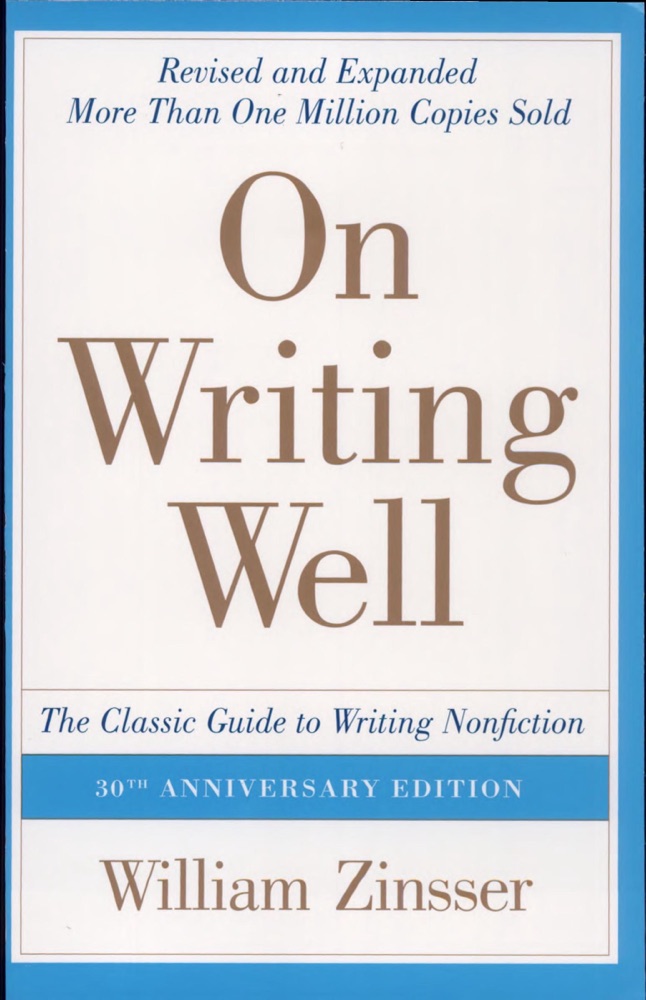 On Writing Well: The Classic Guide to Writing Nonfiction
 Reading Like a Writer: A Guide for People Who Love Books and for Those Who Want to Write Them
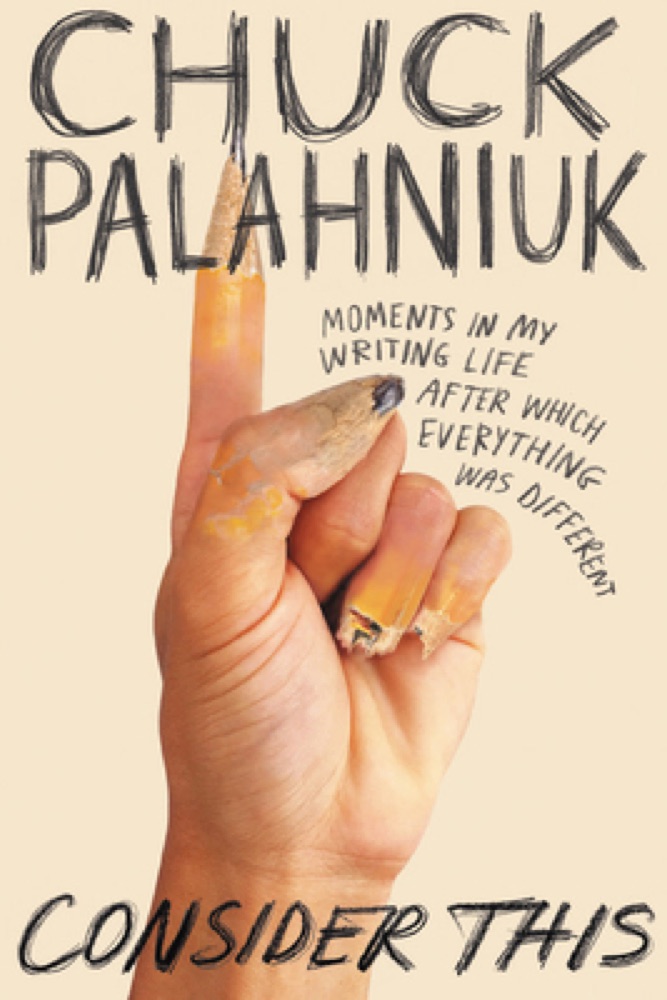 Consider This: Moments in My Writing Life After Which Everything Was Different
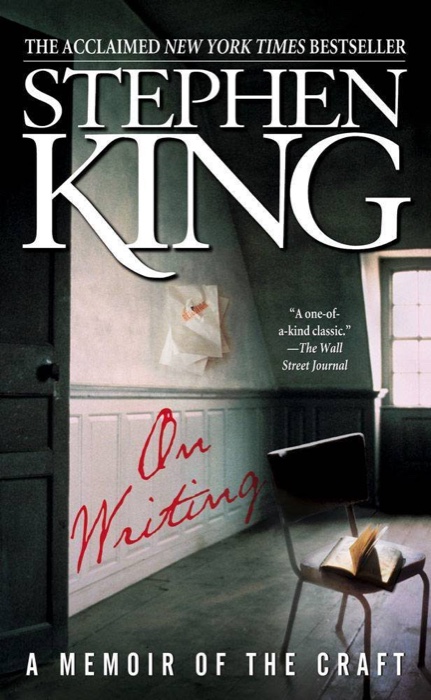 On Writing: A Memoir of the Craft
 Politics and the English Language
 Stein on Writing
 How Not to Write a Novel: 200 Classic Mistakes and How to Avoid Them—A Misstep-by-Misstep Guide
 Eats, Shoots & Leaves: The Zero Tolerance Approach to Punctuation
 On Writing
 Word by Word: The Secret Life of Dictionaries
 A Poetry Handbook
 The Language Instinct: How the Mind Creates Language
 The Anthologist
 Reality Hunger: A Manifesto
 The Triggering Town: Lectures and Essays on Poetry and Writing
 On Becoming a Novelist
 Because Internet: Understanding the New Rules of Language
 Babel-17
 The Mother Tongue: English and How It Got That Way
 Dæmon Voices
 Writing Down the Bones: Freeing the Writer Within
 The Getaway Car: A Practical Memoir About Writing and Life
 The Wave in the Mind: Talks and Essays on the Writer, the Reader and the Imagination
 Everyone on This Train Is a Suspect
 The Art of Fiction: Notes on Craft for Young Writers
 Death in the Afternoon
 Becoming a Writer
 Burning Questions: Essays and Occasional Pieces, 2004 to 2021
 The Unfolding of Language: An Evolutionary Tour of Mankind's Greatest Invention
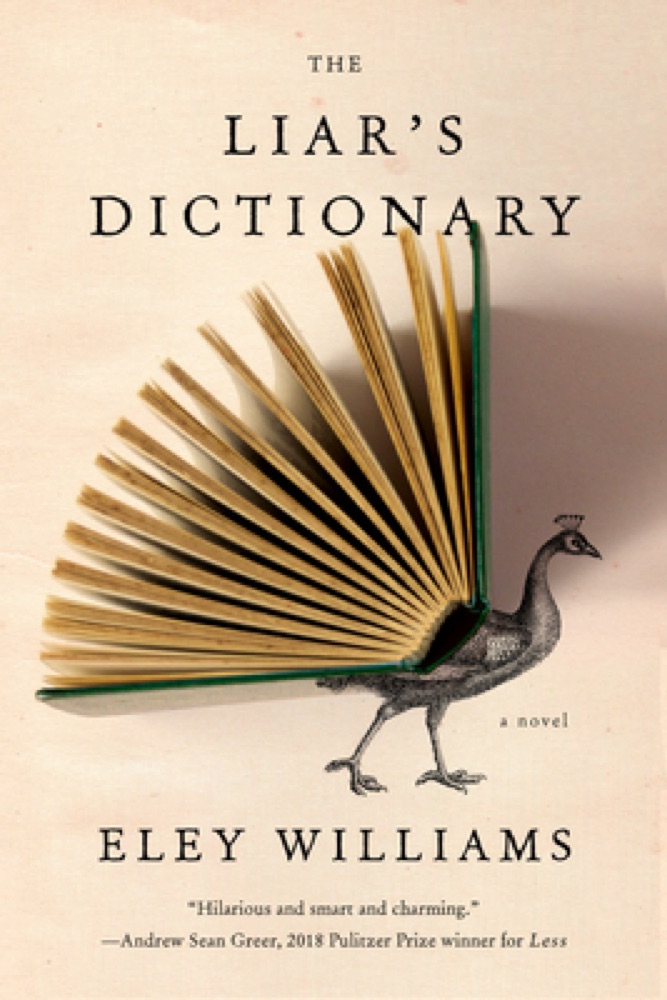 The Liar's Dictionary
 If You Want to Write: A Book about Art, Independence and Spirit
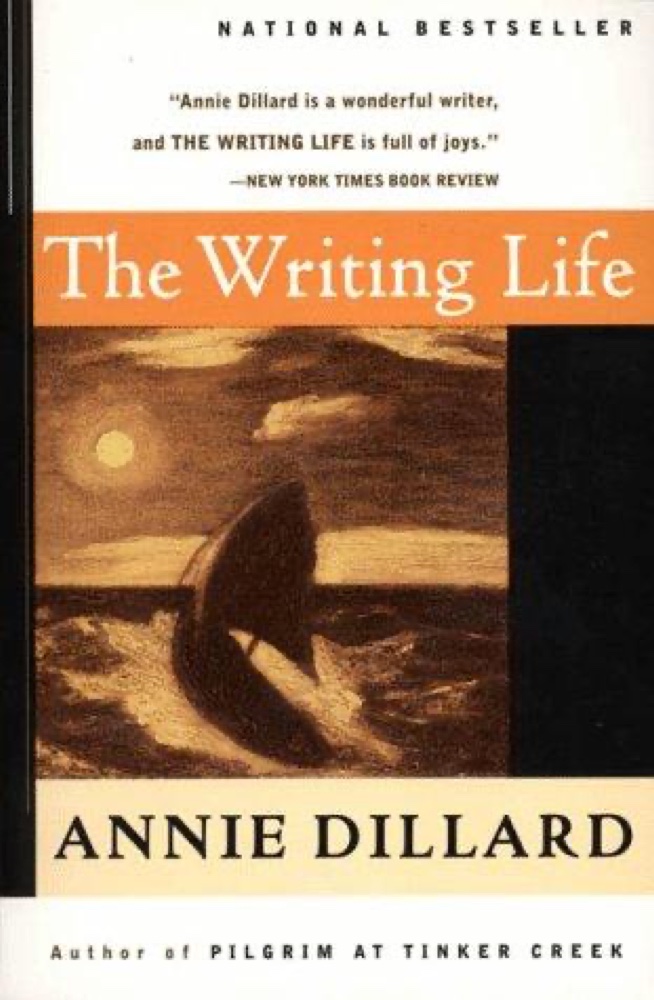 The Writing Life
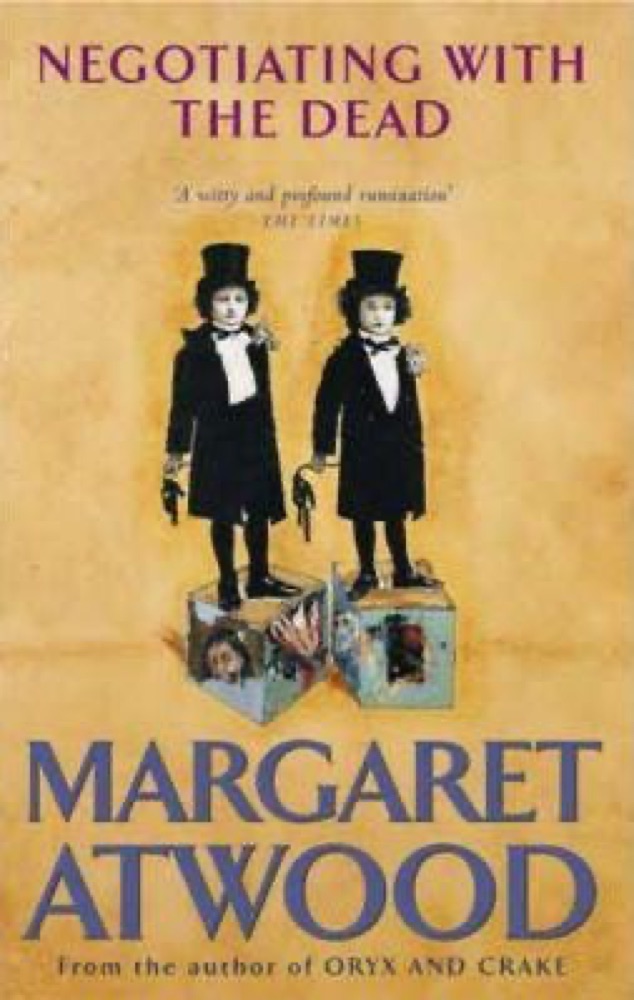 Negotiating with the Dead: A Writer on Writing
 Through the Language Glass: Why the World Looks Different in Other Languages
 How Fiction Works
 On Literature
 Flaubert's Parrot
 On Writing
 Both Flesh and Not: Essays
 The Stuff of Thought: Language as a Window into Human Nature
 Incidental Inventions
 Philosophical Investigations
 Novelist as a Vocation
 The Writing Class
 The Writer's Journey: Mythic Structure for Writers
 Bird by Bird
 The Word Exchange
 The Well of Lost Plots
 The Rhetoric & The Poetics of Aristotle
 Call If You Need Me: The Uncollected Fiction and Other Prose
 How to Read Literature
 Selected Non-Fictions
 How to Read a Book: The Classic Guide to Intelligent Reading