 Aspects of the Novel
Quotes from the Book
Literature differs from life in that life is amorphously full of detail, and rarely directs us toward it, wheras literature teaches us to notice. Literature makes us better noticers of life; we get to practice on life itself; which in turn makes us better readers of detail in literature; which in turn makes us better readers of life.
60
Life, then will, always contain an inevitable surplus, a margin of the gratuitous, a realm in which there is always more than we need: more things, more impressions, more memories, more habits, more words, more happiness, more unhappiness.
13
When I talk about free indirect style I am really talking about point of view, and when I talk about point of view I am really talking about the perception of detail, and when I talk about detail I'm really talking about character, and when I talk about character I am really talking about the real, which is at the bottom of my inquiries.
12
fiction is both artifice and verisimilitude, and that there is nothing difficult in holding together these two possibilities.
2
The sentence pulsates, moves in and out, toward the character and away from her—when we reach “huddled” we are reminded that an author allowed us to merge with his character, that the author’s magniloquent style is the envelope within which this generous contract is carried.
2
This morning a splendid dawn passed over our house on its way to Kansas. This morning Kansas rolled out of its sleep into a sunlight grandly announced, proclaimed throughout heaven—one more of the very finite number of days that this old prairie has been called Kansas, or Iowa. But it has all been one day, that first day. Light is constant, we just turn over in it. So every day is in fact the selfsame evening and morning. My grandfather’s grave turned into the light, and the dew on his weedy little mortality patch was glorious.
1
Convention is everywhere, and triumphs like old age: once you have reached a certain seniority, you either die of it, or with it.
But this will be unceasingly difficult: for the writer has to act as if the available novelistic methods are continuously about to turn into mere convention and so has to try to outwit that inevitable aging. Chekhov's challenge--'Ibsen just doesn't know life. In life it simply isn't like that'--is as radical now as it was a century ago, because forms must continually be broken. The true writer that free servant of life, is one who must always be acting as if life were a category beyond anything the novel had yet grasped; as if life itself were always on the verge of becoming conventional.
But how to push out? How to animate the static portrait? Ford Madox Ford, in his book Joseph Conrad: A Personal Remembrance, writes wonderfully about getting a character up and running—what he calls “getting a character in.” He says that Conrad himself “was never really satisfied that he had really and sufficiently got his characters in; he was never convinced that he had convinced the reader; this accounting for the great lengths of some of his books.” I like this idea, that some of Conrad’s novels are long because he couldn’t stop fiddling, page after page, with the verisimilitude of his characters—it raises the specter of an infinite novel. At least the apprentice writer, with his bundle of nerves, is in good company, then. Ford and Conrad loved a sentence from a Maupassant story, “La Reine Hortense”: “He was a gentleman with red whiskers who always went first through a doorway.” Ford comments: “That gentleman is so sufficiently got in that you need no more of him to understand how he will act. He has been ‘got in’ and can get to work at once.” Ford is right. Very few brushstrokes are needed to get a portrait walking, as it were; and—a corollary of this—that the reader can get as much from small, short-lived, even rather flat characters as from large, round, towering heroes and heroines. To my mind, Gurov, the adulterer in “The Lady with the Little Dog,” is as vivid, as rich, and as sustaining as Gatsby or Dreiser’s Hurstwood, or even Jane Eyre.
Fiction-making seems labored and obstructive because our age has a powerful “reality hunger,” to borrow the title of a manifesto by David Shields1, published in the same year as Heti’s novel. Shields argues against conventional fictional artifice in favor of what he calls “reality-based” art. “I find nearly all the moves the traditional novel makes unbelievably predictable, tired, contrived, and essentially purposeless,” he writes. He has no time for characters’ names, plot developments, blocks of dialogue,
In the same way, it often seems that James’s characters are not especially convincing as independently vivid authorial creations. But what makes them vivid is the force of James’s interest in them, his manner of pressing into their clay with his examining fingers: they are sites of human energy; they vibrate with James’s anxious concern for them. Take The Portrait of a Lady. It is very hard to say what Isabel Archer is like, exactly, and she seems to lack the definition, the depth if you like, of a heroine like Dorothea Brooke, in Middlemarch.
Iris Murdoch is the most poignant member of this second category, precisely because she spent her life trying to get into the first. In her literary and philosophical criticism, she again and again stresses that the creation of free and independent characters is the mark of the great novelist; yet her own characters never have this freedom. She knew it, too: “How soon one discovers that, however much one is in the ordinary sense ‘interested in other people,’ this interest has left one far short of possessing the knowledge required to create a character who is not oneself. It is impossible, it seems to me, not to see one’s failure here as a sort of spiritual failure.
He reflects fondly on the story of the ninety-seven-year-old John D. Rockefeller, who has a specially doctored version of The New York Times delivered every day, altered to contain only good news. “The world’s threats are universal, like the sun, but Ricardo Reis takes shelter under his own shadow.
I think that novels tend to fail not when the characters are not vivid or deep enough, but when the novel in question has failed to teach us how to adapt to its conventions, has failed to manage a specific hunger for its own characters, its own reality level.
Literature makes us better noticers of life; we get to practice on life itself; which in turn makes us better readers of detail in literature; which in turn makes us better readers of life. And so on and on. You have only to teach literature to realize that most young readers are poor noticers. I know from my own old books, wantonly annotated twenty years ago when I was a student, that I routinely un- derlined for approval details and images and metaphors that strike me now as common- place, while serenely missing things that now seem wonderful. We grow, as readers, and twenty-year-olds are relative virgins. They have not yet read enough literature to be taught by it how to read it.
In Antonioni’s film L’Eclisse, the luminous Monica Vitti visits the Rome stock exchange, where her fiancé, played by Alain Delon, works. Delon points out a fat man who has just lost 50 million lire. Intrigued, she follows the man. He orders a drink at a bar, barely touches it, then goes to a café, where he orders an acqua minerale, which he again barely touches. He is writing something on a piece of paper, and leaves it on the table. We imagine that it must be a set of furious, melancholy figures. Vitti approaches the table, and sees that it is a drawing of a flower …
This is merely another definition of dramatic irony: to see through a character’s eyes while being encouraged to see more than the character can see (an unreliability identical to the unreliable first-person narrator’s). 11
Even the apparently unreliable narrator is more often than not reliably unreliable. Think of Kazuo Ishiguro’s butler in The Remains of the Day, or of Bertie Wooster, or even of Humbert Humbert. We know that the narrator is being unreliable because the author is alerting us, through reliable manipulation, to that narrator’s unreliability. A process of authorial flagging is going on; the novel teaches us how to read its narrator. Unreliably
Convention itself, like metaphor itself, is not dead; but it is always dying.
Watch on YouTube
About James Wood
We have collected 19 quotes from 1 book by James Wood on BookQuoters.
More about the author →About the book
In the tradition of E. M. Forster's Aspects of the Novel and Milan Kundera's The Art of the Novel, How Fiction Works is a scintillating study of the magic of fiction--an analysis of its main elements and a celebration of its lasting power. Here one of the most prominent and stylish critics of our time looks into the machinery of storytelling to ask some fundamental questions: What do we mean when we say we "know" a fictional character? What constitutes a telling detail? When is a metaphor successful? Is Realism realistic? Why do some literary conventions become dated while others stay fresh?
James Wood ranges widely, from Homer to Make Way for Ducklings, from the Bible to John le Carré, and his book is both a study of the techniques of fiction-making and an alternative history of the novel. Playful and profound, How Fiction Works will be enlightening to writers, readers, and anyone el
Book details
- First published
- 2008
- Author
- James Wood
- Genre
- Nonfiction
- Goodreads rating
- 3.99 (8k ratings)
Keep reading
Aspects of the Novel
 The Art of Fiction: Notes on Craft for Young Writers
 The Art of the Novel
 Mystery and Manners: Occasional Prose
 Lectures on Literature
 How to Read Literature
 Reality Hunger: A Manifesto
 Stein on Writing
 On Becoming a Novelist
 Experience
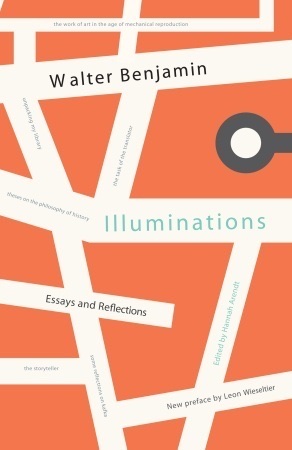 Illuminations: Essays and Reflections
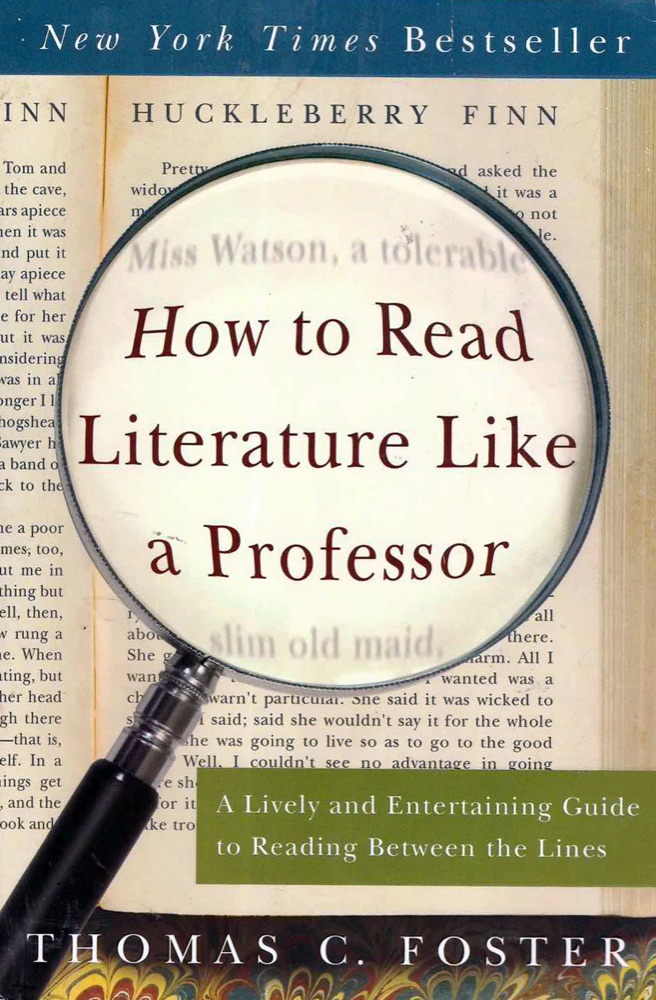 How to Read Literature Like a Professor
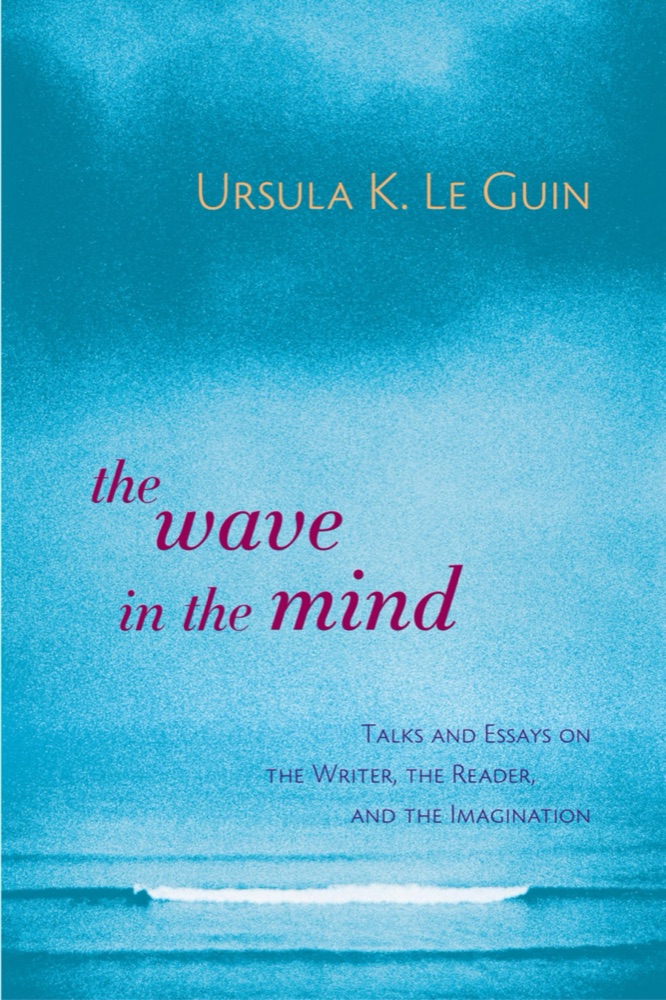 The Wave in the Mind: Talks and Essays on the Writer, the Reader and the Imagination
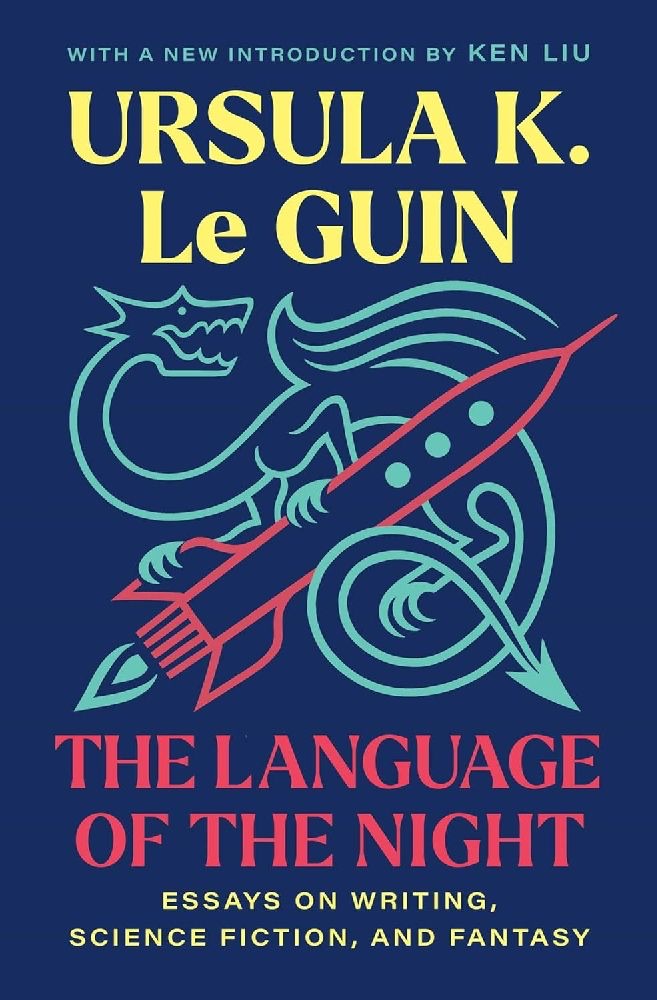 The Language of the Night: Essays on Writing, Science Fiction, and Fantasy
 Negotiating with the Dead: A Writer on Writing
 Reading Like a Writer: A Guide for People Who Love Books and for Those Who Want to Write Them
 Both Flesh and Not: Essays
 What We See When We Read
 Dæmon Voices
 The View from the Cheap Seats: Selected Nonfiction
 Novelist as a Vocation
 The Curtain: An Essay in Seven Parts
 Selected Non-Fictions
 An Experiment in Criticism
 Into the Woods: A Five Act Journey Into Story
 How Not to Write a Novel: 200 Classic Mistakes and How to Avoid Them—A Misstep-by-Misstep Guide
 The Sense of Style: The Thinking Person's Guide to Writing in the 21st Century
 The Well of Lost Plots
 Becoming a Writer
 The Writing Life
 The Summer Without Men
 Consider This: Moments in My Writing Life After Which Everything Was Different
 Nothing to Be Frightened Of
 Wonderbook: The Illustrated Guide to Creating Imaginative Fiction
 The Year of Reading Dangerously
 Death in the Afternoon
 In Other Worlds: SF and the Human Imagination
 Coventry: Essays
 The Unlikely Escape of Uriah Heep
 A Fisherman of the Inland Sea
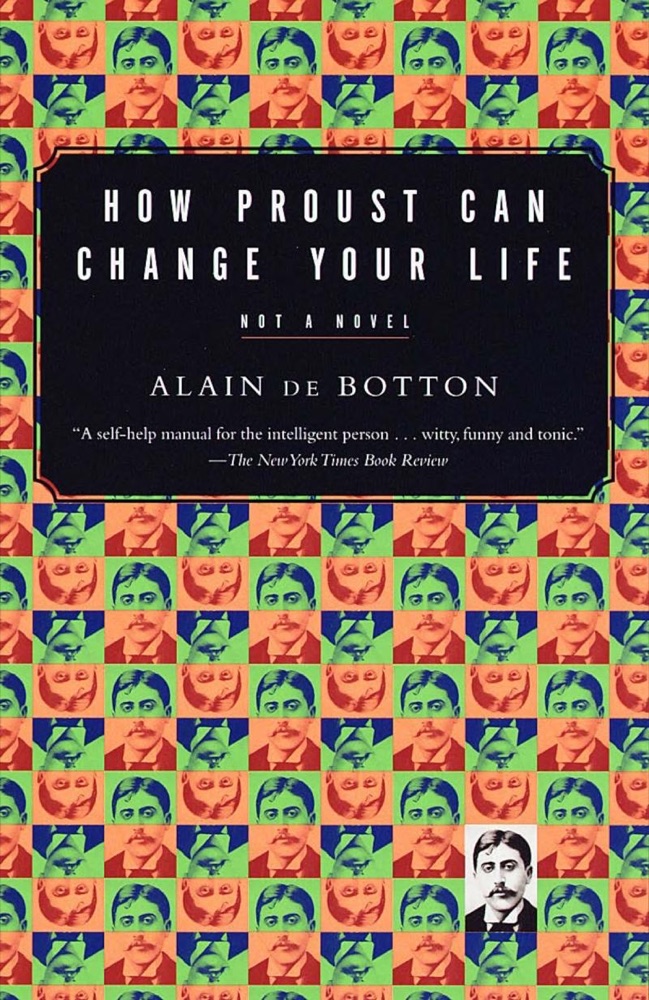 How Proust Can Change Your Life
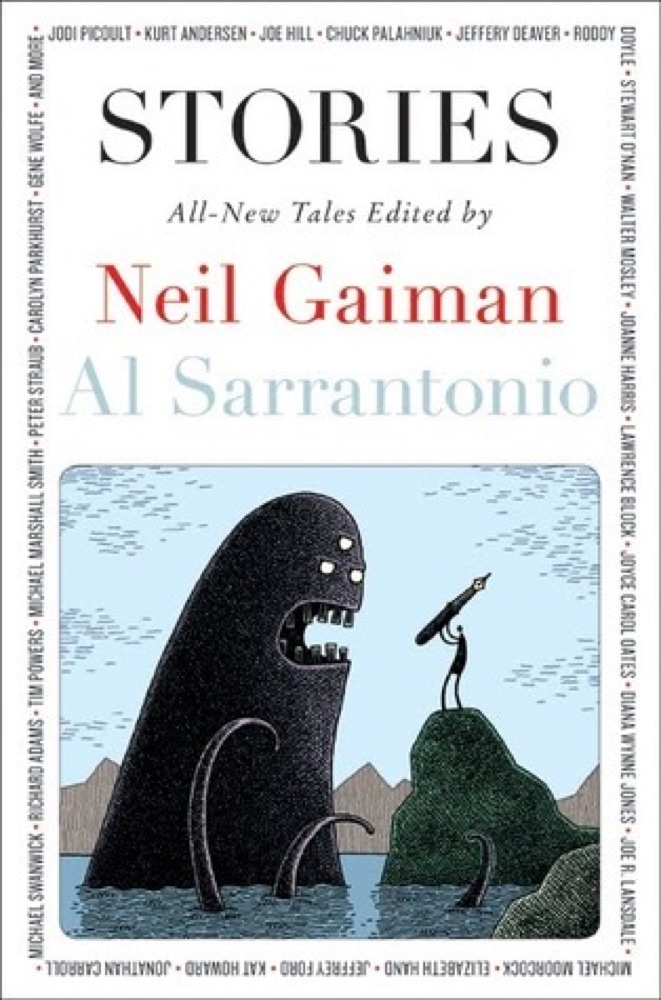 Stories: All-New Tales
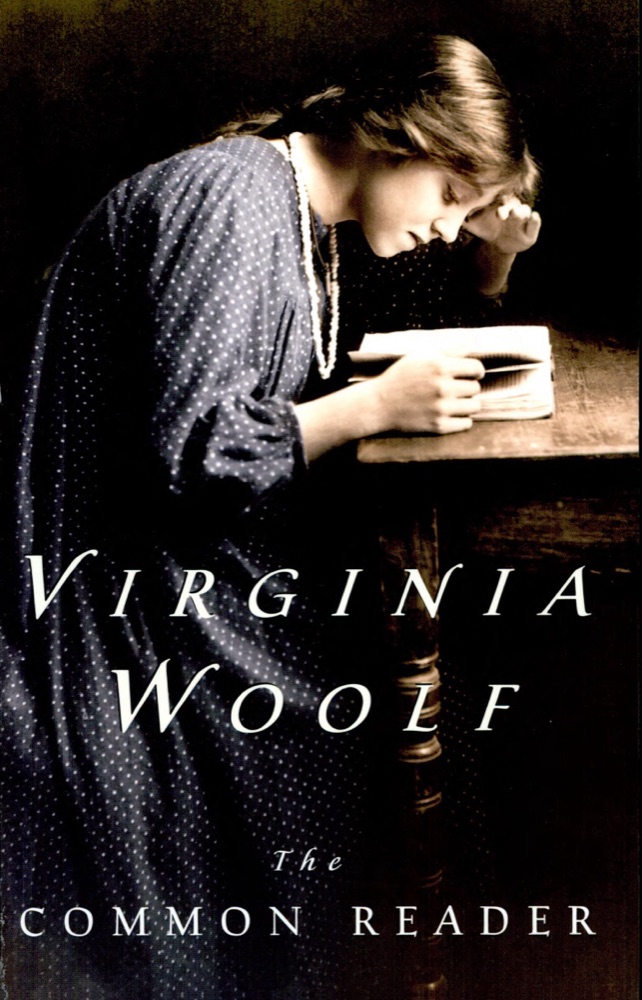 The Common Reader
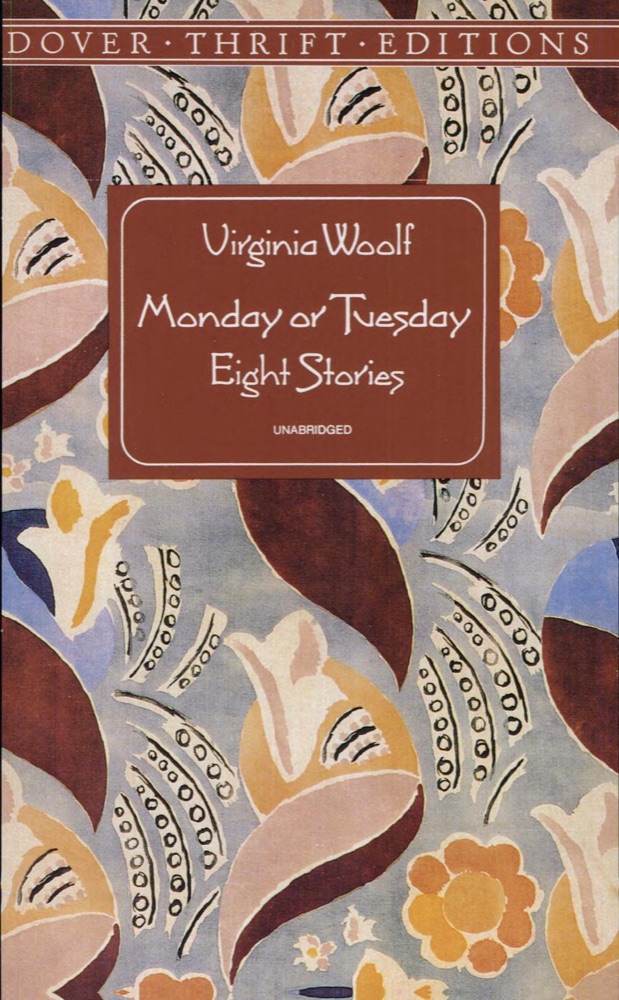 Monday or Tuesday
 The Triggering Town: Lectures and Essays on Poetry and Writing
 Flaubert's Parrot
 The Thirteenth Tale
 Cultural Amnesia: Necessary Memories from History and the Arts
 Call If You Need Me: The Uncollected Fiction and Other Prose
 Reading Lolita in Tehran: A Memoir in Books
 Story: Substance, Structure, Style, and the Principles of Screenwriting
 The Book of Form and Emptiness
 A Novel Bookstore
 The Abundance
 Flights
 Asymmetry
 Wired for Story: The Writer's Guide to Using Brain Science to Hook Readers from the Very First Sentence
 Dear Mr. M
 The Paper Menagerie and Other Stories