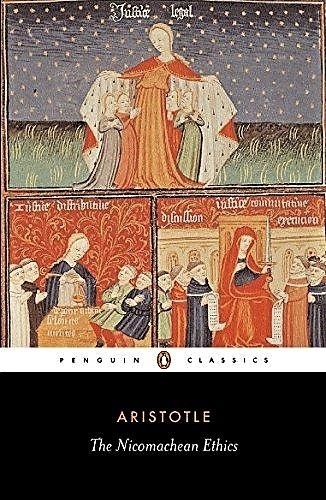
 The Nicomachean Ethics
Quotes from the Book
It is absurd to hold that a man should be ashamed of an inability to defend himself with his limbs, but not ashamed of an inability to defend himself with speech and reason; for the use of rational speech is more distinctive of a human being than the use of his limbs.
48
They are fond of fun and therefore witty, wit being well-bred insolence.
14
Again, it is absurd to hold that a man ought to be ashamed of being unable to defend himself with his limbs, but not of being unable to defend himself with speech and reason, when the use of rational speech is more distinctive of a human being than the use of his limbs. And if it be objected that one who uses such power of speech unjustly might do great harm, that is a charge which may be made in common against all good things except virtue, and above all against the things that are most useful, as strength, health, wealth, generalship. A man can confer the greatest of benefits by a right use of these, and inflict the greatest of injuries by using them wrongly.
14
It is a great thing, indeed, to make a proper use of the poetical forms, as also of compounds and strange words. But the greatest thing by far is to be a master of metaphor. It is the one thing that cannot be learnt from others; and it is also a sign of genius, since a good metaphor implies an intuitive perception of the similarity in dissimilars.
13
Even hackneyed and commonplace maxims are to be used, if they suit one's purpose: just because they are commonplace, every one seems to agree with them, and therefore they are taken for truth.
10
We shall learn the qualities of governments in the same way as we learn the qualities of individuals, since they are revealed in their deliberate acts of choice; and these are determined by the end that inspires them.
7
It is this simplicity that makes the uneducated more effective than the educated when addressing popular audiences—makes them, as the poets tell us, 'charm the crowd's ears more finely.' Educated men lay down broad general principles; uneducated men argue from common knowledge and draw obvious conclusions.
7
The tragic fear and pity may be aroused by the Spectacle; but they may also be aroused by the very structure and incidents of the play—which is the better way and shows the better poet. The Plot in fact should be so framed that even without seeing the things take place, he who simply hears the account of them shall be filled with horror and pity at the incidents; which is just the effect that the mere recital of the story in Oedipus would have on one. To produce this same effect by means of the Spectacle is less artistic, and requires extraneous aid.
7
Avoid the enthymeme form when you are trying to rouse feeling; for it will either kill the feeling or will itself fall flat: all simultaneous motions tend to cancel each other either completely or partially.
7
All terrible things are more terrible if they give us no chance of retrieving a blunder—either no chance at all, or only one that depends on our enemies and not ourselves. Those things are also worse which we cannot, or cannot easily, help. Speaking generally, anything causes us to feel fear that when it happens to, or threatens, others causes us to feel pity.
7
Equity bids us be merciful to the weakness of human nature; to think less about the laws than about the man who framed them, and less about what he said than about what he meant; not to consider the actions of the accused so much as his intentions; nor this or that detail so much as the whole story; to ask not what a man is now but what he has always or usually been.
6
Now since shame is a mental picture of disgrace, in which we shrink from the disgrace itself and not from its consequences, and we only care what opinion is held of us because of the people who form that opinion, it follows that the people before whom we feel shame are those whose opinion of us matters to us.
6
Well-drawn laws should themselves define all the points they possibly can and leave as few as may be to the decision of the judges.
5
If, however, the poetic end might have been as well or better attained without sacrifice of technical correctness in such matters, the impossibility is not to be justified, since the description should be, if it can, entirely free from error.
5
The maxim, as has been already said, is a general statement, and people love to hear stated in general terms what they already believe in some particular connexion: e.g. if a man happens to have bad neighbors or bad children, he will agree with any one who tells him 'Nothing is more annoying than having neighbors,' or, 'Nothing is more foolish than to be the parent of children.' The orator has therefore to guess the subjects on which his hearers really hold views already, and what those views are, and then must express, as general truths, these same views on these same subjects. This is one advantage of using maxims.
5
Some [jests] are becoming to a gentleman, others are not; see that you choose such as become you. Irony better befits a gentleman than buffoonery; the ironical man jokes to amuse himself, the buffoon to amuse other people.
5
The truth is that, just as in the other imitative arts one imitation is always of one thing, so in poetry the story, as an imitation of action, must represent one action, a complete whole, with its several incidents so closely connected that the transposal or withdrawal of any one of them will disjoin and dislocate the whole. For that which makes no perceptible difference by its presence or absence is no real part of the whole.
5
Fame means being respected by everybody, or having some quality that is desired by all men, or by most, or by the good, or by the wise.
5
For there are two reasons why human beings face danger calmly: they may have no experience of it, or they may have means to deal with it: thus when in danger at sea people may feel confident about what will happen either because they have no experience of bad weather, or because their experience gives them the means of dealing with it.
5
Now if you have proofs to bring forward, bring them forward, and your moral discourse as well; if you have no enthymemes, then fall back upon moral discourse: after all, it is more fitting for a good man to display himself as an honest fellow than as a subtle reasoner.
5
We maintain, therefore, that the first essential, the life and soul, so to speak, of Tragedy is the Plot; and that the Characters come second—compare the parallel in painting, where the most beautiful colours laid on without order will not give one the same pleasure as a simple black-and-white sketch of a portrait.
5
These are the three things—volume of sound, modulation of pitch, and rhythm—that a speaker bears in mind. It is those who do bear them in mind who usually win prizes in the dramatic contests; and just as in drama the actors now count for more than the poets, so it is in the contests of public life, owing to the defects of our political institutions.
4
Watch on YouTube
About Aristotle
We have collected 146 quotes from 6 books by Aristotle on BookQuoters.
More about the author →
About the book
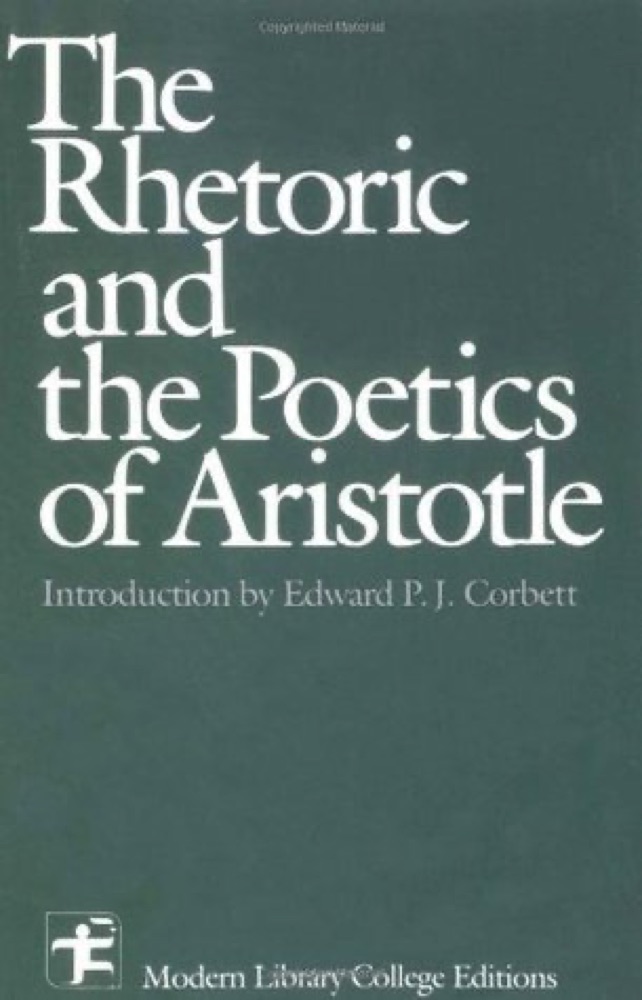
Translated by Rhys Roberts and Ingram Bywater, Introduction by Edward P.J. Corbett
Book details
- First published
- 1984
- Author
- Aristotle
- Genre
- Philosophy
- Goodreads rating
- 4.00 (2k ratings)
Keep reading
 A Treatise of Human Nature
 Poetics
 The Wisdom of Life
 Gorgias
 Phaedrus
 The Art of Rhetoric
 Daybreak: Thoughts on the Prejudices of Morality
 Heretics
 Emile or On Education
 An Essay Concerning Human Understanding
 The Will to Power
 The Art of Public Speaking
 The Elements of Eloquence: How to Turn the Perfect English Phrase
 An Enquiry Concerning Human Understanding
 Basic Writings of Nietzsche
 The Essays of Ralph Waldo Emerson
 The Abolition of Man
 Philosophical Dictionary
 Ethics
 Flaubert's Parrot
 Erewhon
 How to Read Literature
 The Complete Essays
 Essays
 Complete Works
 From Dawn to Decadence: 500 Years of Western Cultural Life, 1500 to the Present
 The Theory of Moral Sentiments
 Maldoror and the Complete Works
 The Greek Way
 History of the Peloponnesian War
 After Virtue
 A Philosophical Enquiry into the Origin of Our Ideas of the Sublime and Beautiful
 Leviathan
 Pensées
 The Art of Always Being Right
 The Consolations of Philosophy
 Introductory Lectures on Psychoanalysis
 The Essential Writings of Ralph Waldo Emerson
 What's Wrong with the World
 Discourse on Method and Meditations on First Philosophy
 Aspects of the Novel
 The Common Reader
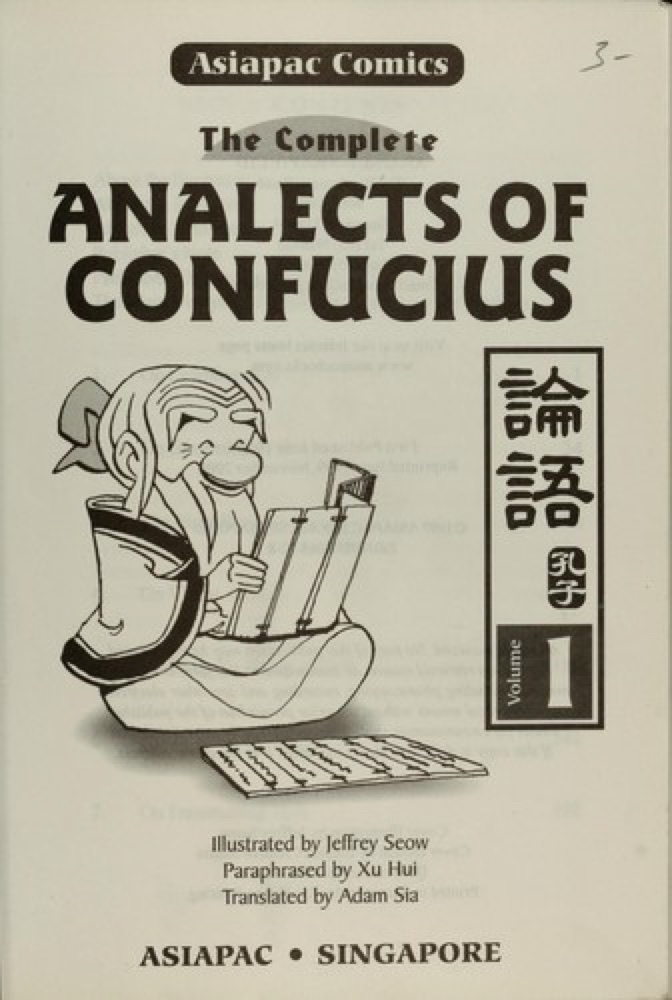 The Analects
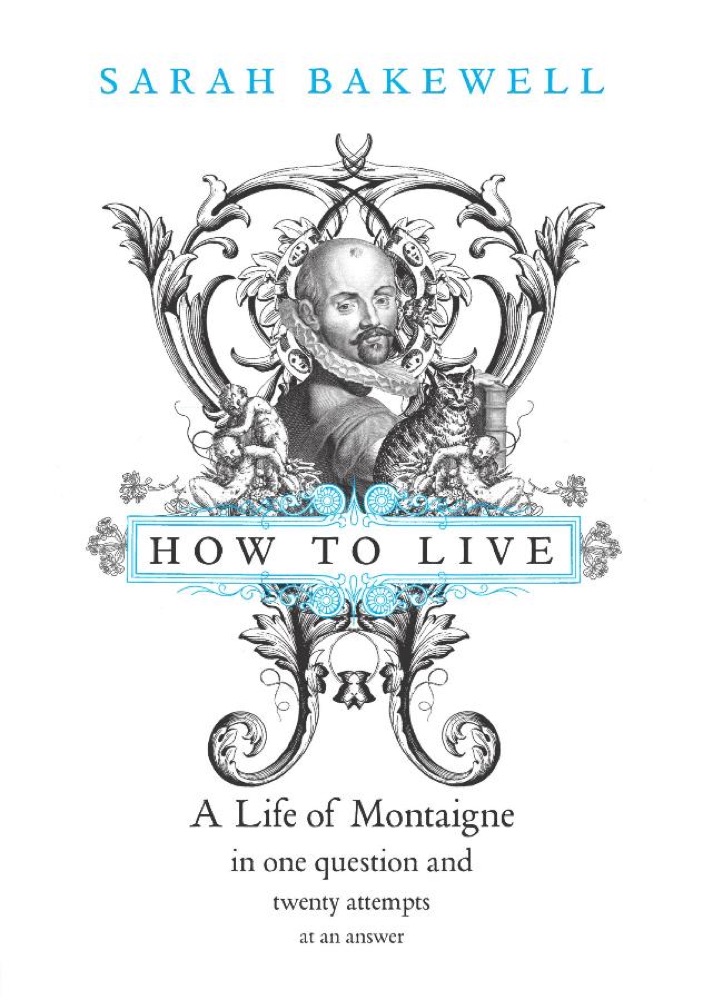 How to Live: A Life of Montaigne in One Question and Twenty Attempts at an Answer
 The Story of My Experiments With Truth
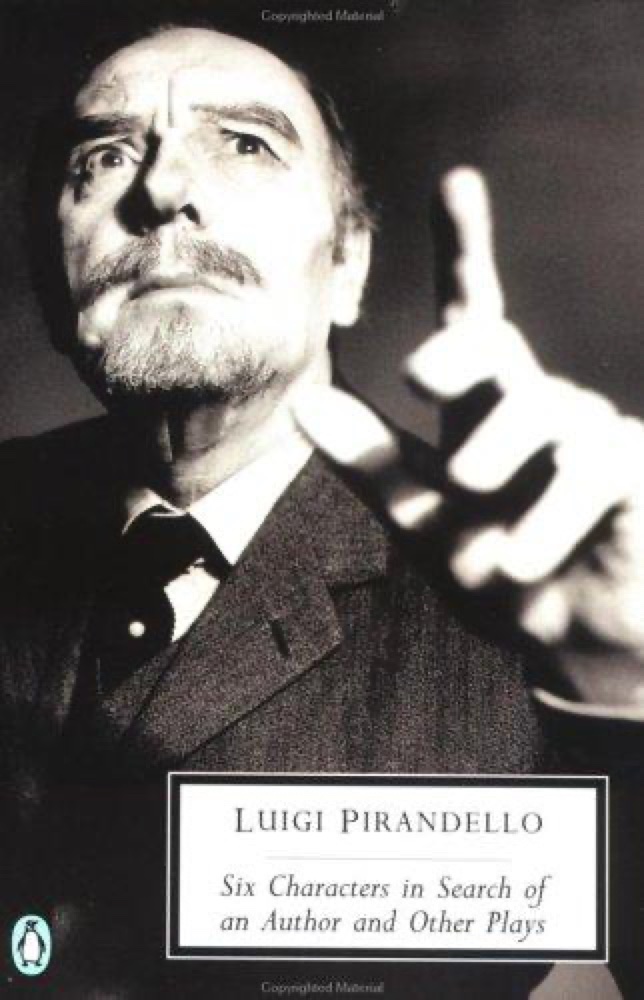 Six Characters in Search of an Author
 Children of Dune
 Self-Reliance: An Excerpt from Collected Essays, First Series
 Death in the Afternoon
 An Enquiry Concerning the Principles of Morals
 Critique of Pure Reason
 Dæmon Voices
 The World as Will and Representation, Vol 1
 The History of Tom Jones, a Foundling
 Daniel Deronda
 The Magic Mountain
 The Varieties of Religious Experience
 The Story of Philosophy: The Lives and Opinions of the World's Greatest Philosophers
 On Liberty
 Complete Works of Oscar Wilde