
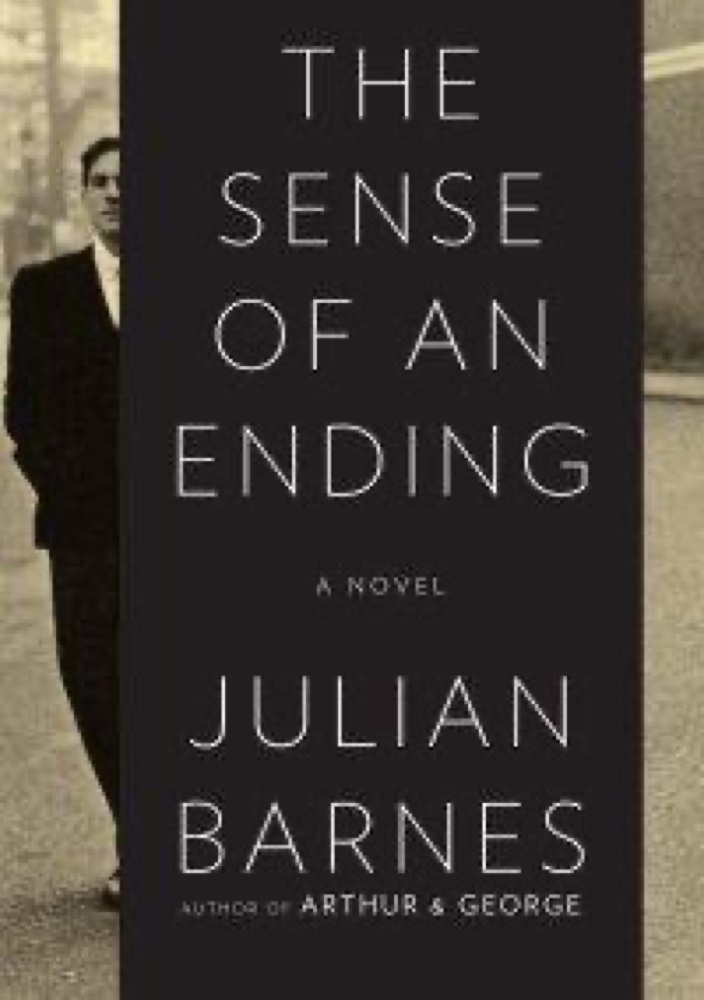
 The Sense of an Ending
Quotes from the Book
When we fall in love, we hope - both egotistically and altruistically - that we shall be finally, truly seen: judged and approved. Of course, love does not always bring approval: being seen may just as well lead to a thumbs-down and a season in hell.
123
Memory is identity....You are what you have done; what you have done is in your memory; what you remember defines who you are; when you forget your life you cease to be, even before your death.
58
We live, we die, we are remembered, we are forgotten.
50
The writer has little control over personal temperament, none over historical moment, and is only partly in charge of his or her own aesthetic.
18
For me, death is the one appalling fact which defines life; unless you are constantly aware of it, you cannot begin to understand what life is about; unless you know and feel that the days of wine and roses are limited, that the wine will madeirize and the roses turn brown in their stinking water before all are thrown out for ever- including the jug- there is no context to such pleasures and interests as come your way on the road to the grave.
16
Our lack of originality is something we usefully forget as we hunch over our—to us—ever-fascinating lives. My friend M., leaving his wife for a younger woman, used to complain, “People tell me it’s a cliché. But it doesn’t feel like a cliché to me.” Yet it was, and is. As all our lives would prove, if we could see them from a greater distance—from the viewpoint, say, of that higher creature imagined by Einstein.
11
I used to believe, when I was 'just' a reader, that writers, because they wrote books where truth was found, because they described the world, because they saw into the human heart, because they grasped both the particular and the general and were able to re-create both in free yet structured forms, because they understood, must therefore be more sensitive- also less vain, less selfish- than other people. Then I became a writer, and started meeting other writers, and studied them, and concluded that the only difference between them and other people, the only, single way in which they were better, was that they were better writers. They might indeed be sensitive, perceptive, wise, generalizing and particularizing- but only at their desks and in their books. When they venture out into the world, they regularly behave as if they have left all their comprehension of human behaviour stuck in their typescripts. It's not just writers either. How wise are philosophers in their private lives?
9
I've never written a book, except my first, without at some point considering that I might die before it was completed. This is all part of the superstition, the folklore, the mania of the business, the fetishistic fuss.....Dying in the middle of a wo(rd), or three-fifths of the way through a nov(el). My friend the nov(el)ist Brian Moore used to fear this as well, though for an extra reason: "Because some bastard will come along and finish it for you." Here is a novelist's would-you-rather. Would you rather die in the middle of a book, and have some bastard finish it for you, or leave behind a work in progress that not a single bastard in the whole world was remotely interested in finishing?
9
Memory is identity. I have believed this since – oh, since I can remember. You are what you have done; what you have done is in your memory; what you remember defines who you are; when you forget your life you cease to be, even before your death.
7
But art and religion will always shadow one another through the abstract nouns they both invoke: truth, seriousness, imagination, sympathy, morality, transcendence.
7
The notion of redefining the deity into something that works for you is grotesque.
6
The mechanism of natural selection depends on the survival, not of the strongest, nor the most intelligent, but of the most adaptable.
5
To die from 'a draining away of one's strength caused by extreme old age' was in Montaigne's day a 'rare, singular and extraordinary death.' Nowadays we assume it as our right.
4
People say of death, “There’s nothing to be frightened of.” They say it quickly, casually. Now let’s say it again, slowly, with re-emphasis. “There’s NOTHING to be frightened of.” Jules Renard: “The word that is most true, most exact, most filled with meaning, is the word ‘nothing.
3
Grandpa, in his male armchair, deaf aid occasionally whistling and pipe making a hubble-bubble noise as he sucked on it, would shake his head over DAILY EXPRESS, which described to him a world where truth and justice were constantly imperilled by the Communist Threat. In her softer, female armchair - in the red corner - Grandma would tut-tut away over DAILY WORKER, which described to her a world where truth and justice, in their updated versions, were constantly imperilled by Capitalism and Imperialism.
3
This was a typical statement from my mother: lucid, opinionated, explicitly impatient of opposing views. Her dominance of the family, and her certainties about the world, made things usefully clear in childhood, restrictive in adolescence, and grindingly repetitive in adulthood.
2
If I call myself an atheist at twenty, and an agnostic at fifty and sixty, it isn't because I have acquired more knowledge in the meantime: just more awareness of ignorance.
2
One small revenge might be to die and show no signs of having died.
2
These different kinds of truthfulness will be fully apparent to the young writer, and their joining together a matter of anxiety. For the older writer, memory and the imagination begin to seem less and less distinguishable. This is not because the imagined world is really much closer to the writer’s life than he or she cares to admit (a common error among those who anatomize fiction) but for exactly the opposite reason: that memory itself comes to seem much closer to an act of the imagination than ever before. My brother distrusts most memories. I do not mistrust them, rather I trust them as workings of the imagination, as containing imaginative as opposed to naturalistic truth.
2
I don't believe in God, but I miss him
1
yet death has an obstinate way of denying us the solutions we imagine for ourselves.
1
Fiction and life are different; with fiction, the writer does the hard work for us. Fictional characters are easier to 'see,' given a competent novelist--and a competent reader. They are placed at a certain distance, moved this way and that, posed to catch the light, turned to reveal their depth; irony, that infrared camera for filming in the dark, shows them when they are not aware that anyone is looking. But life is different. The better you know someone, the less well you often see them (and the less well they can therefore be transferred into fiction). They may be so close as to be out of focus, and there is no operating novelist to dispel the blur.
1
When asked What The Novel Does, I tend to answer, 'It tells beautiful, shapely lies which enclose hard, exact truths.
1
And so, wisely no doubt, I left philosophy to my brother, and returned to literature, which did, and still does, tell us best what the world consists of. It can also tell us how best to live in that world, thought it does so most effectively when appearing not to do so.
1
We live as if nature and nurture were equal parents when the evidence suggests that nature has both the whip hand and the whip.
1
We live broadly according to the tenets of a religion we no longer believe in. We live as if we are creatures of pure free will when philosophers and evolutionary biologists tell us this is largely a fiction. We live as if the memory were a well-built and efficiently staffed left-luggage office. We live as if the soul - or spirit, or individuality, or personality - were an identifiable and locatable entity rather than a story the brain tells itself. We live as if nature and nurture were equal parents when the evidence suggests that nature has both the whip hand and the whip.
1
One of Montaigne’s key instances is the story of Pomponius Atticus, a correspondent of Cicero’s. When Atticus fell ill, and medical attempts to prolong his existence merely prolonged his pain, he decided that the best solution was to starve himself to death. No need to petition a court in those days, citing the terminal deterioration in your “quality of life”: Atticus, being a Free Ancient, merely informed his friends and family of his intention, then refused food and waited for the end. In this, he was much confounded. Miraculously
1
People say of death, 'There’s nothing to be frightened of.' They say it quickly, casually. Now let’s say it again, slowly, with re-emphasis. 'There’s NOTHING to be frightened of.' Jules Renard: “The word that is most true, most exact, most filled with meaning, is the word "nothing"'.
1
Watch on YouTube
About Julian Barnes
We have collected 269 quotes from 12 books by Julian Barnes on BookQuoters.
More about the author →More by Julian Barnes
All books by Julian Barnes →

About the book
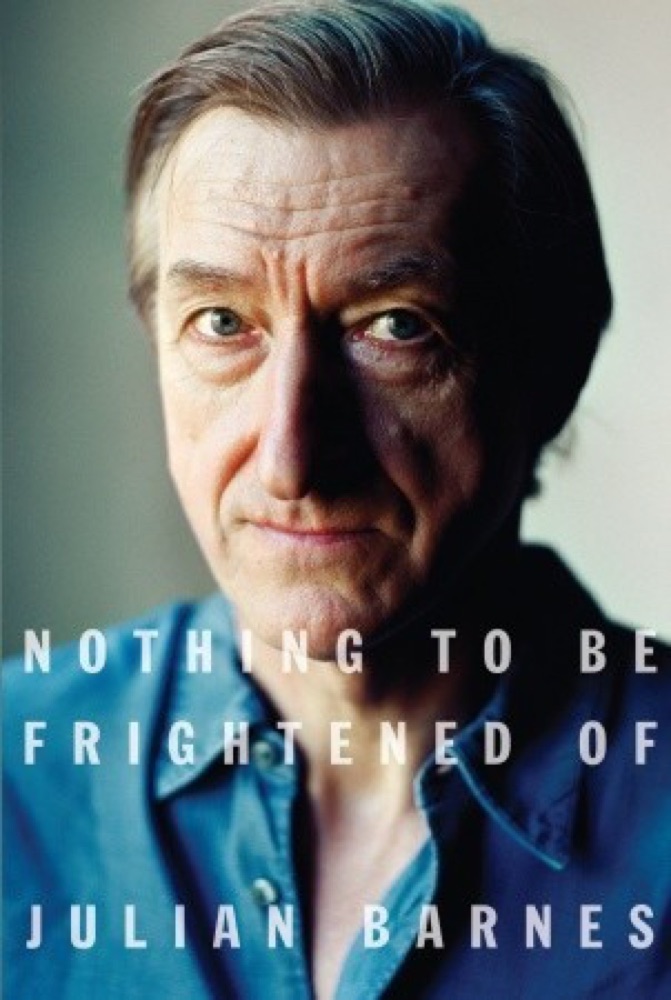
Two years after the best-selling Arthur & George, Julian Barnes gives us a memoir on mortality that touches on faith and science and family as well as a rich array of exemplary figures who over the centuries have confronted the same questions he now poses about the most basic fact of life: its inevitable extinction.If the fear of death is “the most rational thing in the world,” how does one contend with it? An atheist at twenty, an agnostic at sixty, Barnes looks into the various arguments for and against and with God, and at the bloodline whose archivist, following his parents’ death, he has become—another realm of mystery, wherein a drawer of mementos and his own memories (not to mention those of his philosopher brother) often fail to connect. There are other ancestors, too: the writers—“most of them dead, and quite a few of them French"—who are his daily companions, supplemented by co
Book details
- First published
- 2008
- Author
- Julian Barnes
- Genre
- Nonfiction
- Goodreads rating
- 3.81 (5k ratings)
Keep reading
 Nutshell
 Genesis
 The Fall
 Drive Your Plow Over the Bones of the Dead
 No Time To Spare: Thinking About What Matters
 Gnomon
 Mortality
 The Varieties of Religious Experience
 The Myth of Sisyphus
 Flaubert's Parrot
 The Secret History
 The Book of Laughter and Forgetting
 Empire of Silence
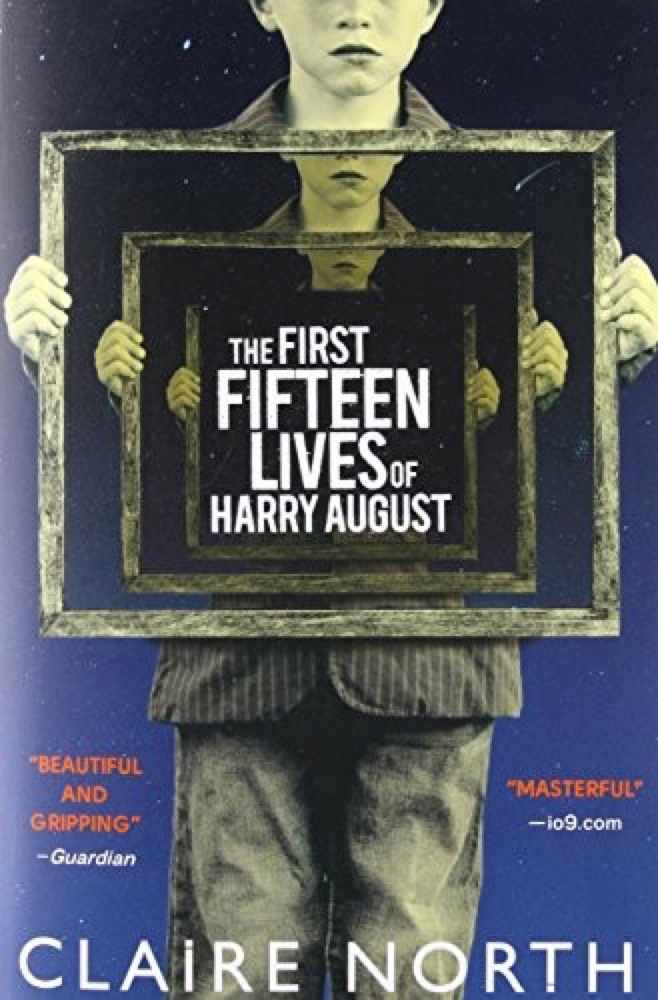 The First Fifteen Lives of Harry August
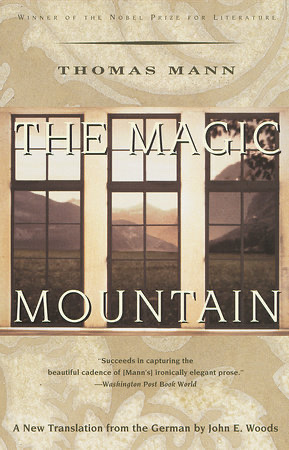 The Magic Mountain
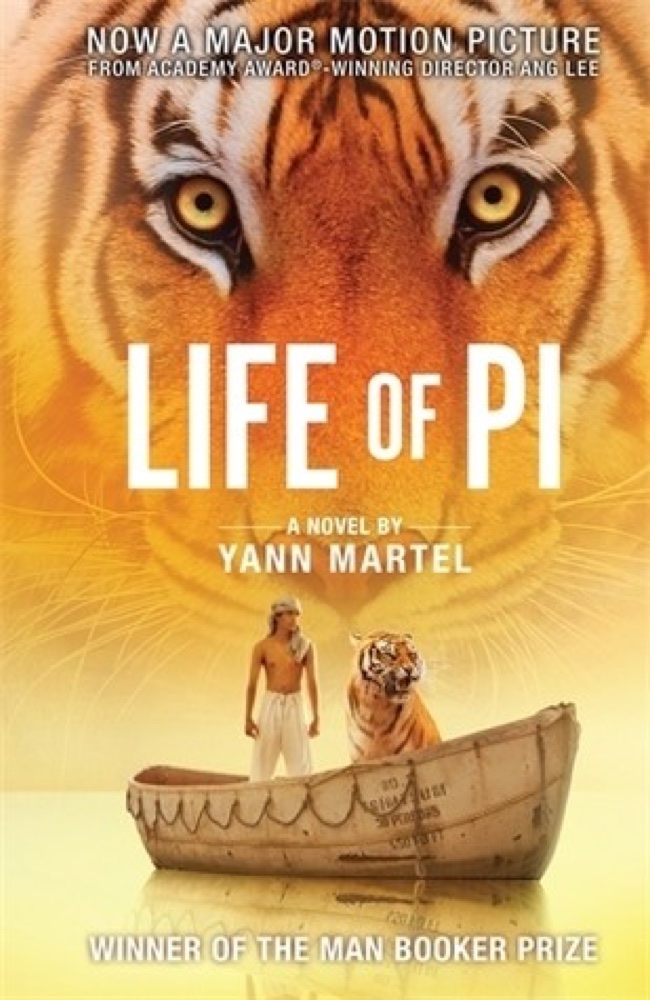 Life of Pi
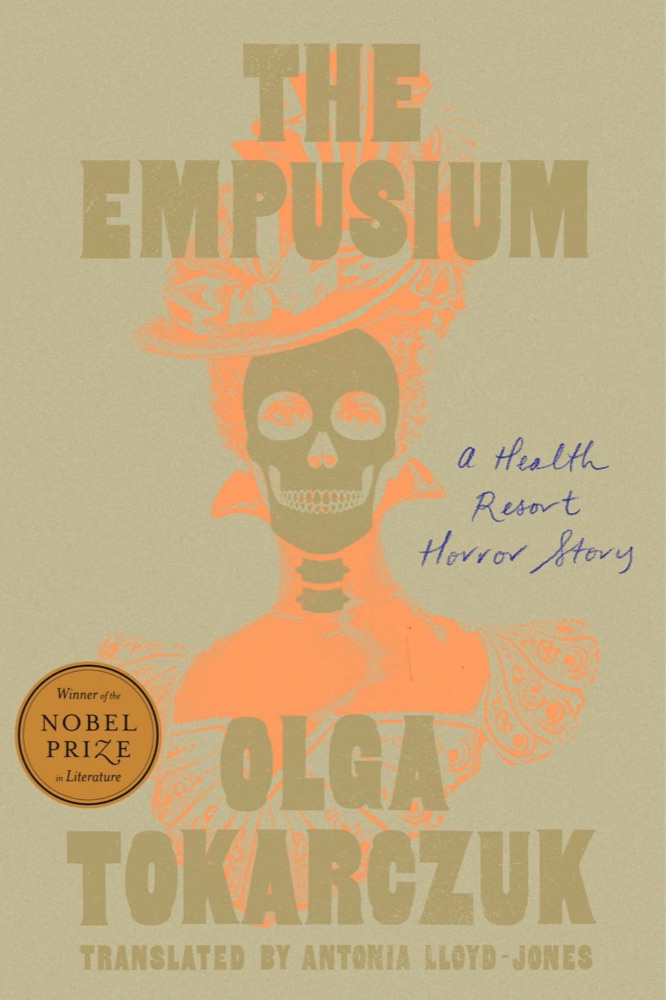 The Empusium
 The Left Hand of Darkness
 Trust
Trust
 Asymmetry
 My Friends
 Complete Works of Oscar Wilde
 Experience
 When I Was a Child I Read Books
 The Conspiracy Against the Human Race
 Daniel Deronda
 The World as Will and Representation, Vol 1
 Two Years Eight Months and Twenty-Eight Nights
 The Abundance
 In Search of Lost Time
 The Gay Science
 When Women Were Dragons
 The Gone-Away World
 The Fall of Babel
 Arm of the Sphinx
 Flights
 The Wisdom of Insecurity: A Message for an Age of Anxiety
 These Precious Days: Essays
 Absalom, Absalom!
 Mystery and Manners: Occasional Prose
 How to Live: A Life of Montaigne in One Question and Twenty Attempts at an Answer
![Departure[s]](/i/book/g/43/departure-s.jpg) Departure[s]
Departure[s]
 Blueberries: Essays Concerning Understanding
 Living with a Wild God: A Nonbeliever's Search for the Truth about Everything
 The Summer Without Men
 Daybreak: Thoughts on the Prejudices of Morality
 The High Mountains of Portugal
 A Luminous Republic
 The Book That Broke the World
 American Pastoral
 Reading Lolita in Tehran: A Memoir in Books
 Myths to Live By
 The Everlasting Man
 The Story of the Lost Child
 The Pale King
 Eyeless in Gaza
 The Ides of March
 Untimely Meditations
 Pet Sematary
 The Wave in the Mind: Talks and Essays on the Writer, the Reader and the Imagination