
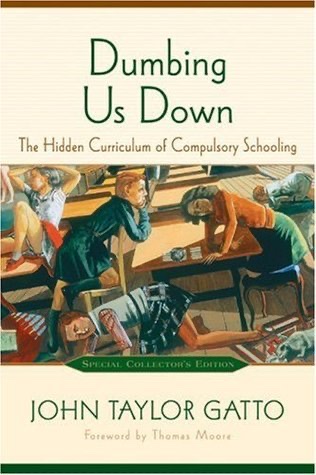
 Dumbing Us Down: The Hidden Curriculum of Compulsory Education
Quotes from the Book
Can teachers successfully educate children to think for themselves if teachers are not treated as professionals who think for themselves?
53
Our schools will not improve if we continue to focus only on reading and mathematics while ignoring the other studies that are essential elements of a good education. Schools that expect nothing more of their students than mastery of basic skills will not produce graduates who are ready for college or the modern workplace. *** Our schools will not improve if we value only what tests measure. The tests we have now provide useful information about students' progress in reading and mathematics, but they cannot measure what matters most in education....What is tested may ultimately be less important that what is untested... *** Our schools will not improve if we continue to close neighborhood schools in the name of reform. Neighborhood schools are often the anchors of their communities, a steady presence that helps to cement the bond of community among neighbors. *** Our schools cannot improve if charter schools siphon away the most motivated students and their families in the poorest communities from the regular public schools. *** Our schools will not improve if we continue to drive away experienced principals and replace them with neophytes who have taken a leadership training course but have little or no experience as teachers. *** Our schools cannot be improved if we ignore the disadvantages associated with poverty that affect children's ability to learn. Children who have grown up in poverty need extra resources, including preschool and medical care.
23
Testing is not a substitute for curriculum and instruction. Good education cannot be achieved by a strategy of testing children, shaming educators, and closing schools.
13
Congress and state legislatures should not tell teachers how to teach, any more than they should tell surgeons how to perform operations.
10
Going to school is not the same as going shopping. Parents should not be burdened with locating a suitable school for their child. They should be able to take their child to the neighborhood public school as a matter of course and expect that it has well-educated teachers and a sound educational program.
8
American Education has a long history of infatuation with fads and ill-considered ideas. The current obsession with making our schools work like a business may be the worst of them, for it threatens to destroy public education. Who will Stand up to the tycoons and politicians and tell them so?
8
One problem with test-based accountability, as currently defined and used, is that it removes all responsibility from students and their families for the students' academic performance. NCLB neglected to acknowledge that students share in the responsibility for their academic performance and that they are merely passive recipients of their teachers' influence.
7
Accountability makes no sense when it undermines the larger goals of education.
6
What should we think of someone who never admits error, never entertains doubt but adheres unflinchingly to the same ideas all his life, regardless of new evidence? Doubt and skepticism are signs of rationality. When we are too certain of our opinions, we run the risk of ignoring any evidence that conflicts with our views. It is doubt that shows we are still thinking, still willing to reexamine hardened beliefs when confronted with new facts and new evidence.
6
Without knowledge and understanding, one tends to become a passive spectator rather than an active participant in the great decisions of our time.
5
You can't lead your troops if your troops do not trust you.
5
A historian tries to understand what happened, why it happened, what was the context, who did what, and what assumptions led them to act as they did. A historian customarily displays a certain diffidence about trying to influence events, knowing that unanticipated developments often lead to unintended consequences.
3
The foundations demand that public schools and teachers be held accountable for performance, but they themselves are accountable to no one. If their plans fail, no sanctions are levied against them. They are bastions of unaccountability.
3
There is something fundamentally antidemocratic about relinquishing control of the public education policy agenda to private foundations run by society's wealthiest people; when the wealthiest of these foundations are joined in common purpose, they represent an unusually powerful force that is beyond the reach of democratic institutions.
3
What matters most is for the school, the district, and the state to be able to say that more students have reached "proficiency." This sort of fraud ignores the students' interests while promoting the interests of adults who take credit for nonexistent improvements.
3
If we continue on the present course, with big foundations and the federal government investing heavily in opening more charter schools, the result is predictable. Charter schools in urban centers will enroll the motivated children of the poor, while the regular public schools will become schools of last resort for those who never applied or were rejected.
2
As we seek to reform our schools, we must take care to do no harm.
But the market, with its great strengths, is not the appropriate mechanism to supply services that should be distributed equally to people in every neighborhood in every city and town in the nation without regard to their ability to pay or their political power. The market is not the right mechanism to supply police protection or fire protection, nor is it the right mechanism to supply public education.
Challenge your self to read what your children are forced to endure, and then ask why we expect that textbooks - written and negotiated line by line to placate politically active interest groups in Texas and California - are up to the task of supplying a first-rate curriculum.
Not everything that matters can be quantified. What is tested may ultimately be less important than what is untested, such as a student's ability to seek alternative explanations, to raise questions, to pursue knowledge on his own, and to think differently. If we do not treasure our individualists, we will lose the spirit of innovation, inquiry, imagination, and dissent that has contributed powerfully to the success of our society in many different fields of endeavor.
Nor is it wise to entrust our schools to inexperienced teachers, principals, and superintendents. Education is too important to relinquish to the vagaries of the market and the good intentions of amateurs. American education has a long history of infatuation with fads and ill-considered ideas. The current obsession with making our schools work like a business may be the worst of them, for it is threatening to destroy public education. Who will stand up to the tycoons and politicians and tell them so?
But the problem with the marketplaces that it dissolves communities and replaces them with consumers. Going to school is not the same as going shopping. Parents should not be burdened with locating a suitable school for their child. They should be able to take their child to the neighborhood public school as a matter of course and expect that it has well-educated teachers and a sound educational program.
Do we need neighborhood public schools? I believe we do ... For more than a century, they have been an essential element of our democratic institutions. We abandon them at our peril.
The state put a Broad-trained superintendent, Randy Ward, in charge of the Oakland schools ... Ward embraced the small schools but went further; his school reform plan aimed to turn the district into a marketplace of school choice while overhauling the bureaucracy. He closed low-performing schools and opened charter schools. He attracted $26 million in grants from the Broad Foundation, the Gates Foundation, the Dell Foundation, and corporations based in Oakland.
While I have never been a member of any union, I was a friend of Albert Shanker, president of the American Federation of Teachers, whom I met after my history of the New York City schools was published. His successor, Sandra Feldman, was also my friend, and I am friends with her successor, Randi Weingarten, who was elected AFT president in 2008.
The other article was by Lois Weiner, a professor who prepared urban teachers at New Jersey City University. Weiner was a parent activist at P.S. 3 in District 2, which she described as a highly progressive alternative school with an unusual degree of parent involvement. She claims that district administrators were stifling teachers and parents at P.S.3 by mandating "constructivist" materials and specific instructional strategies ... She [Weiner] continued, "The degree of micromanagement is astounding." Those who challenged the district office's mandates, she said, risked getting an unsatisfactory rating or being fired. Weiner contended that "opposition from parents is building against the new math curriculum," which was supposed to be field-tested with control groups, but instead was mandated for every classroom." Teachers were expressly prohibited from using other math textbooks or materials, and some were clandestinely "photocopying pages of now-banned workbooks.
If she [English literature teacher Mrs. Ratliff] had been evaluated by the grades she gave, she would have been in deep trouble., because she did not award many A grades. An observer might have concluded that she was a very ineffective teacher who had no measurable gains to show for her work.
The trouble with test-based accountability is that it imposes serious consequences on children, educators, and schools on the basis of scores that may reflect measurement error, statistical error, random variation, or a host of environmental factors or student attributes. None of us would want to be evaluated - with our reputation and livelihood on the line - solely on the basis of an instrument that is prone to error and ambiguity. The tests now in use are not adequate by themselves to the task of gauging the quality of schools or teachers ... they must be used with awareness of their limitations and variability. They were not designed to capture the most important dimensions of education, for which we do not have measures.
In the NCLB era, when the ultimate penalty for a low-performing school was to close it, punitive accountability achieved a certain luster, at least among the media and politicians ... Closing schools should be considered a last step and a rare one. It disrupts lives and communities, especially those of children and their families. It destroys established institutions, in the hope that something better is likely to arise out of the ashes of the old, now-defunct school ... It teaches students that institutions and adults they once trusted can be tossed aside like squeezed lemons, and that data of questionable validity can be deployed [used] to ruin people's lives.
Perhaps the greatest obstacle to systemic reform was that it required numerous stakeholders - textbook publishers, test publishers, schools of education, and so on - to change, which turned out to be an insurmountable political obstacle.
Watch on YouTube
About Diane Ravitch
We have collected 30 quotes from 1 book by Diane Ravitch on BookQuoters.
More about the author →About the book
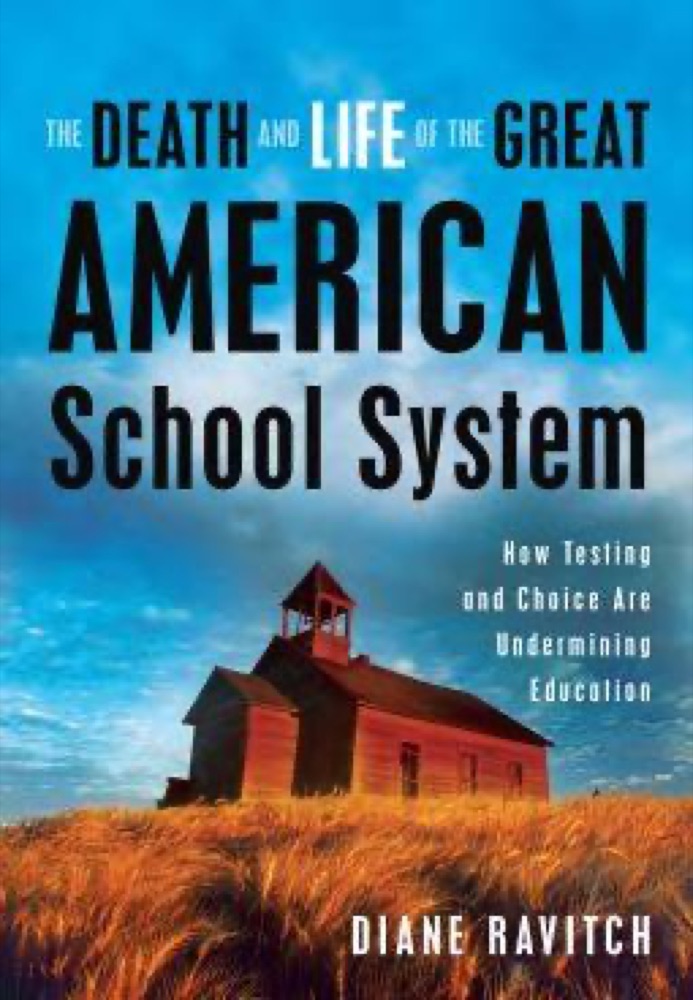
A passionate plea to preserve and renew public education, The Death and Life of the Great American School System is a radical change of heart from one of America’s best-known education experts. Diane Ravitch—former assistant secretary of education and a leader in the drive to create a national curriculum—examines her career in education reform and repudiates positions that she once staunchly advocated. Drawing on over forty years of research and experience, Ravitch critiques today’s most popular ideas for restructuring schools, including privatization, standardized testing, punitive accountability, and the feckless multiplication of charter schools. She shows conclusively why the business model is not an appropriate way to improve schools. Using examples from major cities like New York, Philadelphia, Chicago, Denver, and San Diego, Ravitch makes the case that public education today is in
Book details
- First published
- 2010
- Author
- Diane Ravitch
- Genre
- Nonfiction
- Goodreads rating
- 4.05 (6k ratings)
Keep reading
Dumbing Us Down: The Hidden Curriculum of Compulsory Education
 Deschooling Society
 Creative Schools: The Grassroots Revolution That's Transforming Education
 The Smartest Kids in the World: And How They Got That Way
 Free to Choose: A Personal Statement
 The Core
 The Shame of the Nation
 How Children Fail
 The Case Against Education: Why the Education System Is a Waste of Time and Money
 Free to Learn: Why Unleashing the Instinct to Play Will Make Our Children Happier, More Self-Reliant, and Better Students for Life
 I'd Like to Apologize to Every Teacher I Ever Had: My Year as a Rookie Teacher at Northeast High
 The Vanishing American Adult: Our Coming-of-Age Crisis—and How to Rebuild a Culture of Self-Reliance
 Excellent Sheep: The Miseducation of the American Elite and the Way to a Meaningful Life
 We Make the Road by Walking: Conversations on Education and Social Change
 The Lost Tools of Learning
 Not for Profit: Why Democracy Needs the Humanities
 Punished by Rewards: The Trouble with Gold Stars, Incentive Plans, A's, Praise and Other Bribes
 Experience and Education
 Coming Apart: The State of White America, 1960-2010
 Teach Like a PIRATE: Increase Student Engagement, Boost Your Creativity, and Transform Your Life as an Educator
 Twilight of the Elites: America After Meritocracy
 Cultivating Genius: An Equity Framework for Culturally and Historically Responsive Literacy
 Behold a Pale Horse
 Power Systems: Conversations on Global Democratic Uprisings and the New Challenges to U.S. Empire
 The Element: How Finding Your Passion Changes Everything
 Summerhill: A Radical Approach to Child Rearing
 Independent Study
 Our Kids: The American Dream in Crisis
 Stones Into Schools: Promoting Peace With Books, Not Bombs, in Afghanistan and Pakistan
 A People's History of the United States
 Walden Two
 One Nation: What We Can All Do to Save America's Future
 Educating Esmé: Diary of a Teacher's First Year
 The Truths We Hold: An American Journey
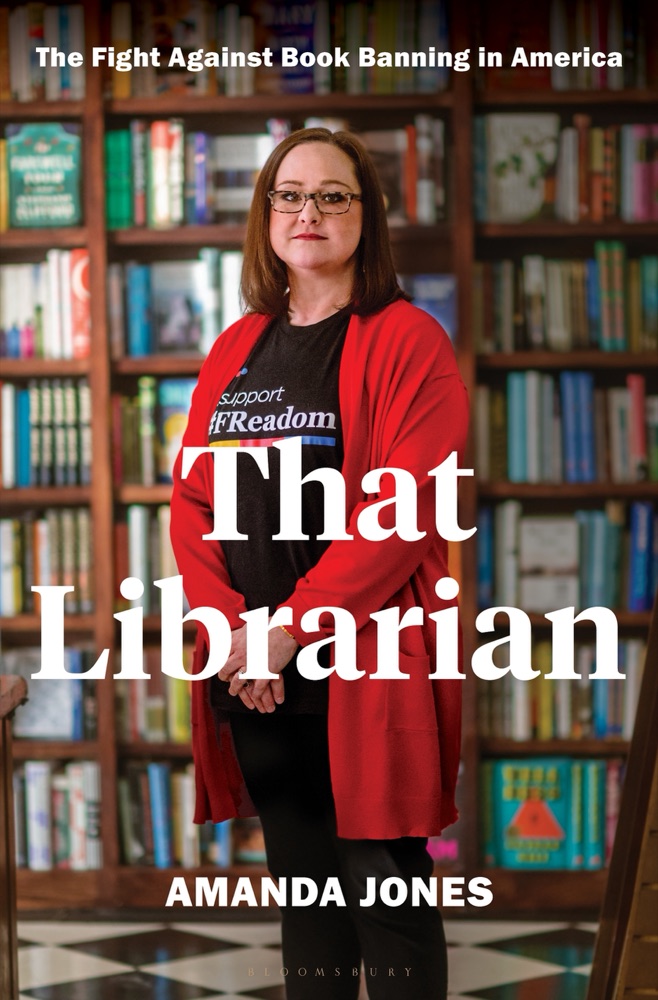 That Librarian: The Fight Against Book Banning in America
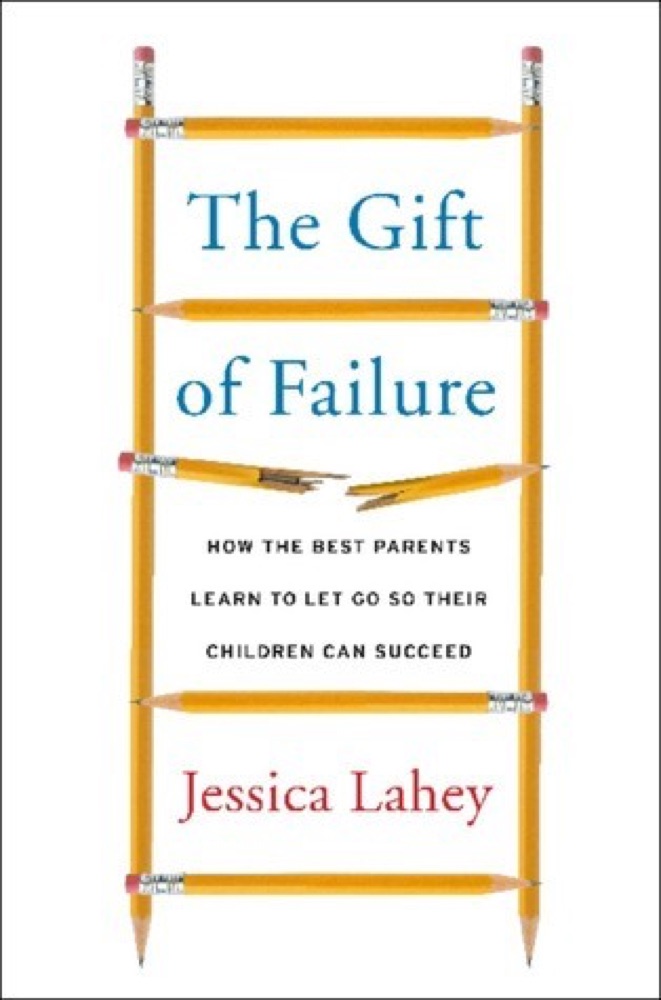 The Gift of Failure: How the Best Parents Learn to Let Go So Their Children Can Succeed
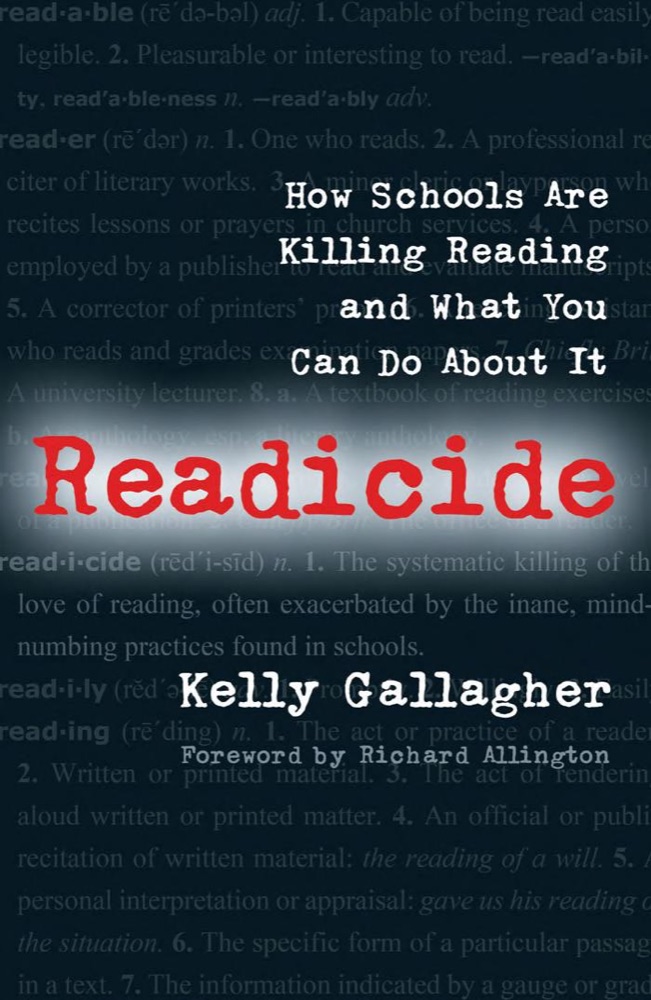 Readicide: How Schools Are Killing Reading and What You Can Do About It
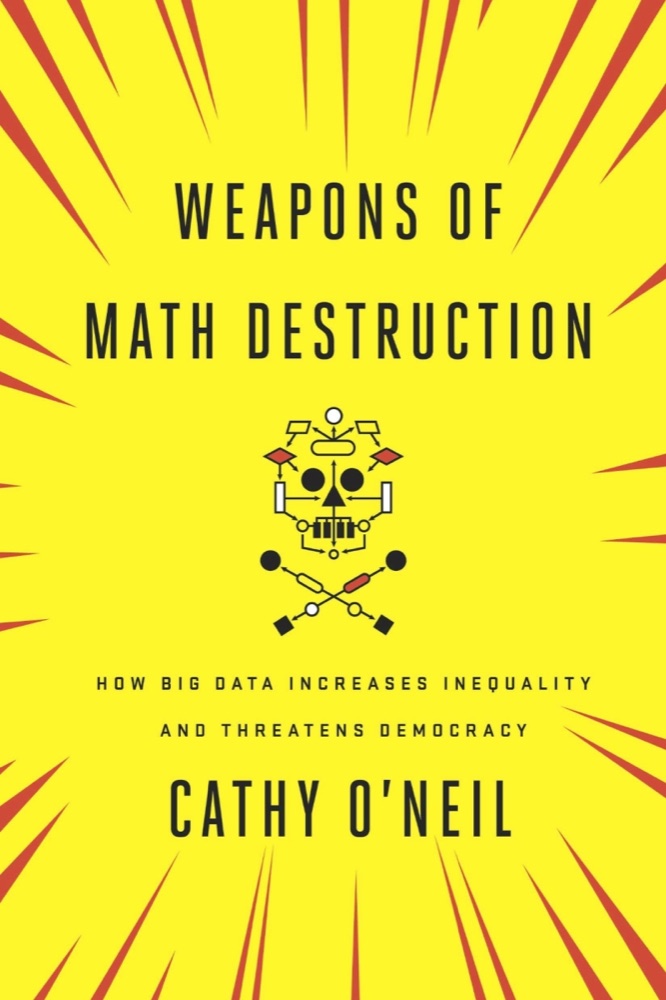 Weapons of Math Destruction: How Big Data Increases Inequality and Threatens Democracy
 What the Eyes Don't See: A Story of Crisis, Resistance, and Hope in an American City
 The Coddling of the American Mind: How Good Intentions and Bad Ideas Are Setting up a Generation for Failure
 The Brave Learner: Finding Everyday Magic in Homeschool, Learning, and Life
 The View From Flyover Country: Essays by Sarah Kendzior
 The World Is Flat: A Brief History of the Twenty-first Century
 Understanding Power: The Indispensable Chomsky
 Kids These Days: Human Capital and the Making of Millennials
 Wealth, Poverty and Politics: An International Perspective
 How to Raise an Adult: Break Free of the Overparenting Trap and Prepare Your Kid for Success
 Shop Class as Soulcraft: An Inquiry Into the Value of Work
 A Fighting Chance
 The American Spirit: Who We Are and What We Stand For
 The Absorbent Mind
 Persist
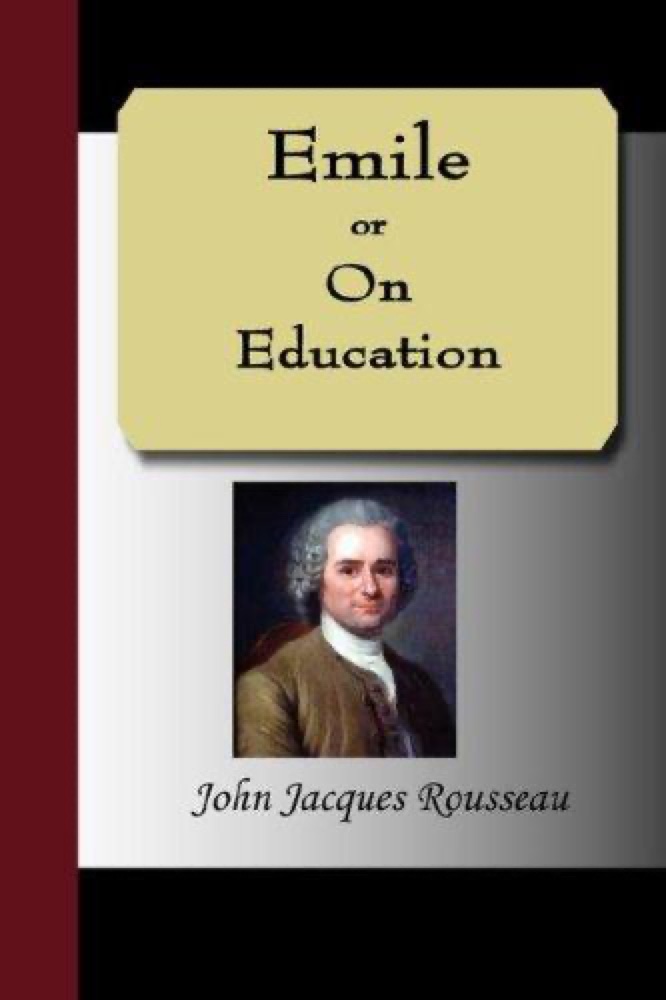 Emile or On Education
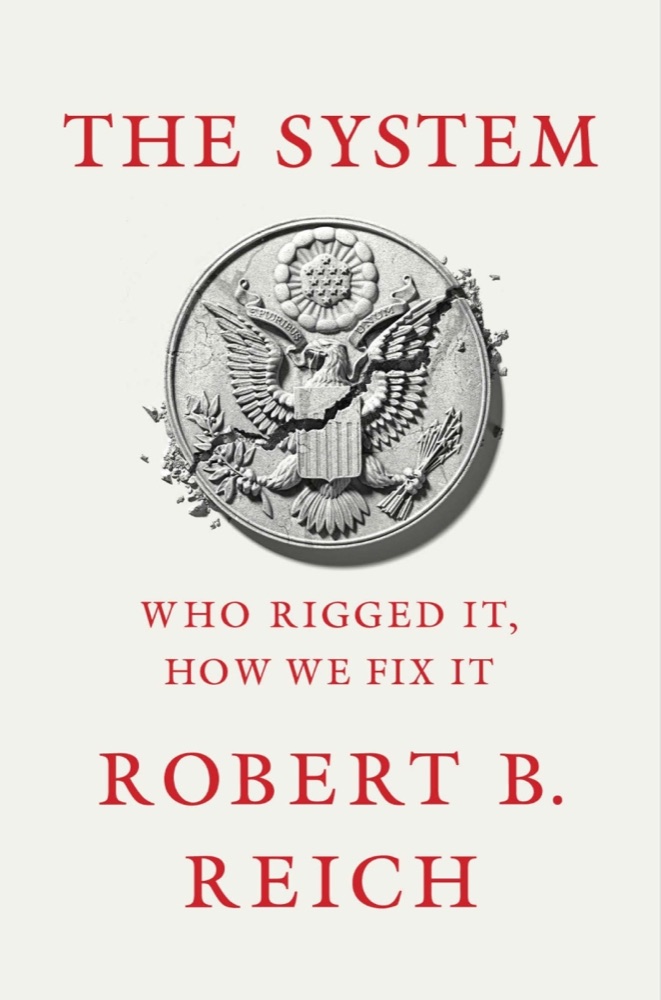 The System: Who Rigged It, How We Fix It
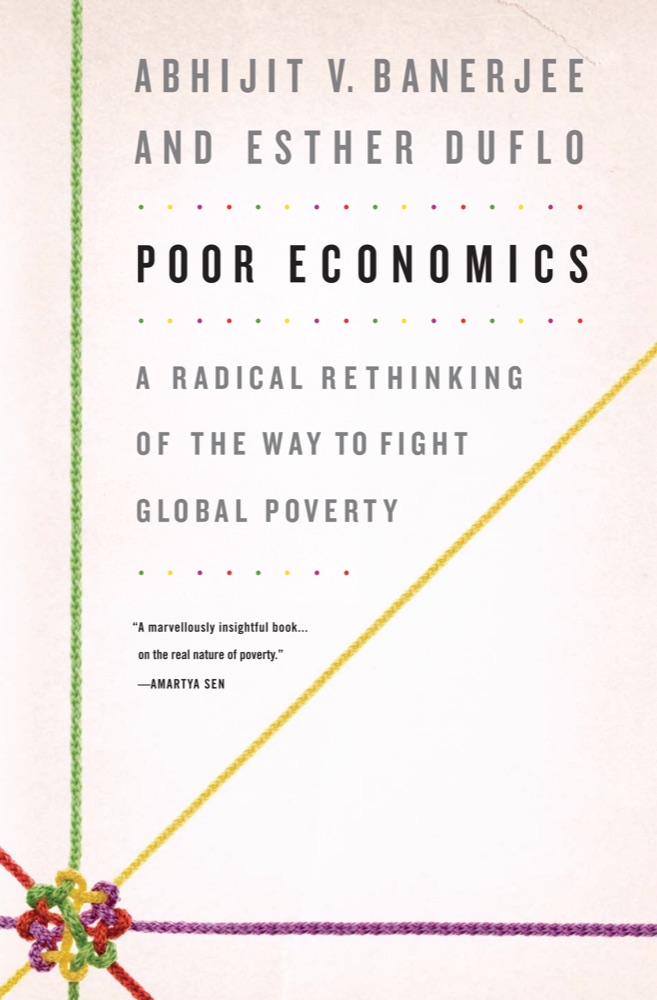 Poor Economics: A Radical Rethinking of the Way to Fight Global Poverty
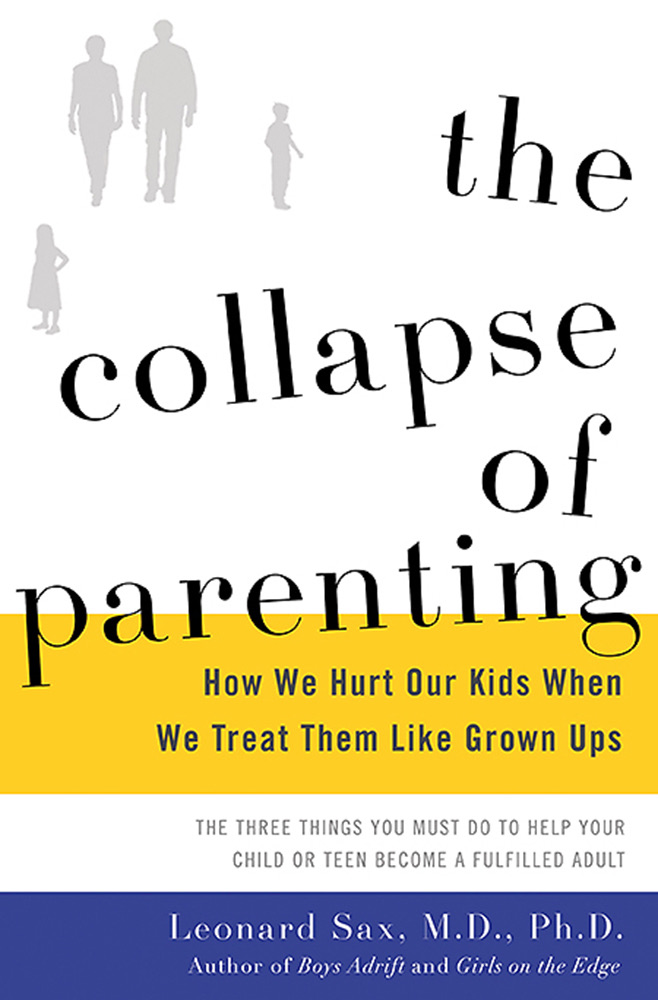 The Collapse of Parenting: How We Hurt Our Kids When We Treat Them Like Grown-Ups
 This Is What Inequality Looks Like
 The Audacity of Hope: Thoughts on Reclaiming the American Dream
 Elite Capture: How the Powerful Took Over Identity Politics
 Occupy