
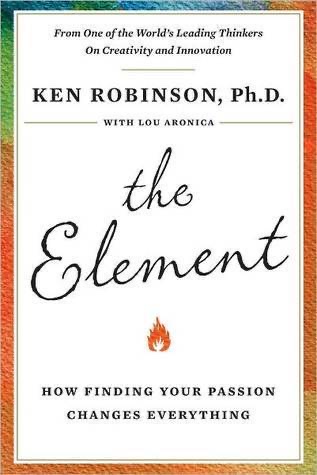
 The Element: How Finding Your Passion Changes Everything
Quotes from the Book
One problem with the systems of assessment that use letters and grades is that they are usually light on description and heavy on comparison. Students are sometimes given grades without really knowing what they mean, and teachers sometimes give grades without being completely sure why. A second problem is that a single letter or number cannot convey the complexities of the process that it is meant to summarize. And some outcomes cannot be adequately expressed in this way at all. As the noted educator Elliot Eisner once put it, “Not everything important is measurable and not everything measurable is important.
13
When children aren’t given the space to struggle through things on their own, they don’t learn to problem-solve very well. They don’t learn to be confident in their own abilities, and it can affect their self-esteem.
11
a system that sets people against each other fundamentally misunderstands the dynamics that drive achievement. Education thrives on partnership and collaboration—within schools, between schools, and with other groups and organizations.
8
Personalization means teachers taking account of these differences in how they teach different students. It also means allowing for flexibility within the curriculum so that in addition to what all students need to learn in common, there are opportunities for them to pursue their individual interests and strengths as well.
6
Learning in and about the arts is essential to intellectual development.
6
Educating children by age group assumes that the most important thing they have in common is their date of manufacture.
6
It’s often said that we have to save the planet. I’m not so sure. The Earth has been around for almost five billion years, and it has another five billion years to run before it crashes into the sun. As far as we know, modern human beings like us emerged less than two hundred thousand years ago. If you imagine the whole history of the Earth as one year, we showed up at less than one minute to midnight on December 31. The danger is not to the planet, but to the conditions of our own survival on it. The Earth may well conclude that it tried humanity and is not impressed. Bacteria are much less trouble, which may be why they’ve survived for billions of years.
5
As I see it, the aims of education are to enable students to understand the world around them and the talents within them so that they can become fulfilled individuals and active, compassionate citizens.
5
Because when enough people move, that is a movement. And if the movement has enough energy, that is a revolution. And in education, that’s exactly what we need.
5
Many schools are organized as they are because they always have been, not because they must be.
5
We all love stories, even if they’re not true. As we grow up, one of the ways we learn about the world is through the stories we hear. Some are about particular events and personalities within our personal circles of family and friends. Some are part of the larger cultures we belong to—the myths, fables, and fairy tales about our own ways of life that have captivated people for generations. In stories that are told often, the line between fact and myth can become so blurred that we easily mistake one for the other. This is true of a story that many people believe about education, even though it’s not real and never really was. It goes like this: Young children go to elementary school mainly to learn the basic skills of reading, writing, and mathematics. These skills are essential so they can do well academically in high school. If they go on to higher education and graduate with a good degree, they’ll find a well-paid job and the country will prosper too.
4
Communication is not only about words and numbers. Some thoughts can’t be properly expressed in these ways at all. We also think in sounds and images, in movement and gesture, which gives rise to our capacities for music, visual arts, dance, and theater in all their variations.
4
The students who feel alienated by current systems of standardization and testing may walk out the door, and it’s left to them and others to pay the price in unemployment benefits and other social programs. These problems are not accidental by-products of standardized education; they are a structural feature of these systems. They were designed to process people according to particular conceptions of talent and economic need and were bound to produce winners and losers in just those terms. And they do. Many of these “externalities” could be avoided if education genuinely gave all students the same opportunities to explore their real capabilities and create their best lives.
3
expert teachers fulfill four main roles: they engage, enable, expect, and empower. ENGAGE
2
I’m fully aware of the intense political pressures bearing down on education. The policies through which these pressures exert themselves must be challenged and changed. Part of my appeal (as it were) is to policymakers themselves to embrace the need for radical change. But revolutions don’t wait for legislation. They emerge from what people do at the ground level. Education doesn’t happen in the committee rooms of the legislatures or in the rhetoric of politicians. It’s what goes on between learners and teachers in actual schools. If you’re a teacher, for your students you are the system. If you’re a school principal, for your community you are the system. If you’re a policymaker, for the schools you control you are the system.
2
the main role of a school’s principal is not command and control, it is climate control.
2
Compassion is more than empathy; it is the living expression of the Golden Rule, to treat others as you would have them treat you. Compassion is the practice of empathy.
2
what people contribute to the world around them has everything to do with how they engage with the world within them.
2
I’ve said that education is a living process that can best be compared to agriculture. Gardeners know that they don’t make plants grow.
2
As in typical factories, high schools and higher education in particular are organized around the division of labor. In high schools, the day is usually segmented into regular chunks of time. When the bell rings, everyone changes task (and often rooms) and starts doing something else instead. Teachers specialize in particular subjects and move through the day from class to class in separate segments.
1
Whatever the reason for it, dropping out is a symptom of a deeper problem in the system as a whole, not the problem itself. If you were running a business and every year you lost more than a third of your customers, you might start to wonder if the real problem was them or your business.
1
As humanity becomes more numerous and interwoven, living respectfully with diversity is not just an ethical choice, it is a practical imperative. There
1
If you design a system to do something specific, don't be surprised if it does it. If you run an education system based on standardization and conformity that suppresses individuality, imagination, and creativity, don't be surprised it that's what it does.
1
The key to raising achievement is to recognize that teaching and learning is a relationship.
1
Many of the jobs that current systems of education were designed for are fast disappearing.
1
When it comes to assessment, the traditional model of assessment is assessment for learning. What people like to talk about now is that the twenty-first-century model is assessment of learning. But if assessment is merely the way we are able to determine how much learning has occurred, then the ultimate goal is assessment as learning, where assessment occurs in real time and is the process by which people reflect on their own thinking and diagnose how they’ve changed. There are schools that do this. There’s a remarkable school in New Hampshire that, for them, the thing that matters the most is that people who graduate from their school have seventeen specific habits of mind and work—everything from collaboration and leadership to curiosity and wonder. They’ve developed these really thoughtful behavioral rubrics that break down each of those habits by subskills.
1
All around the world, there are many great schools, wonderful teachers, and inspiring leaders who are working creatively to provide students with the kinds of personalized, compassionate, and community-oriented education they need.
1
Benjamin Franklin, the American statesman and polymath, knew that a balanced, liberal education for all was essential for the proper flourishing of the American dream.
1
The changes that are needed in schools will take root more readily if local and national policies actually support them.
1
We have found that many of our students who were not successful before coming to Boston Arts Academy find their way to engaging with school through the arts, because school isn’t just another thing that they hate and are bad at.
1
Watch on YouTube
About Ken Robinson
We have collected 87 quotes from 3 books by Ken Robinson on BookQuoters.
More about the author →More by Ken Robinson
The Element: How Finding Your Passion Changes Everything
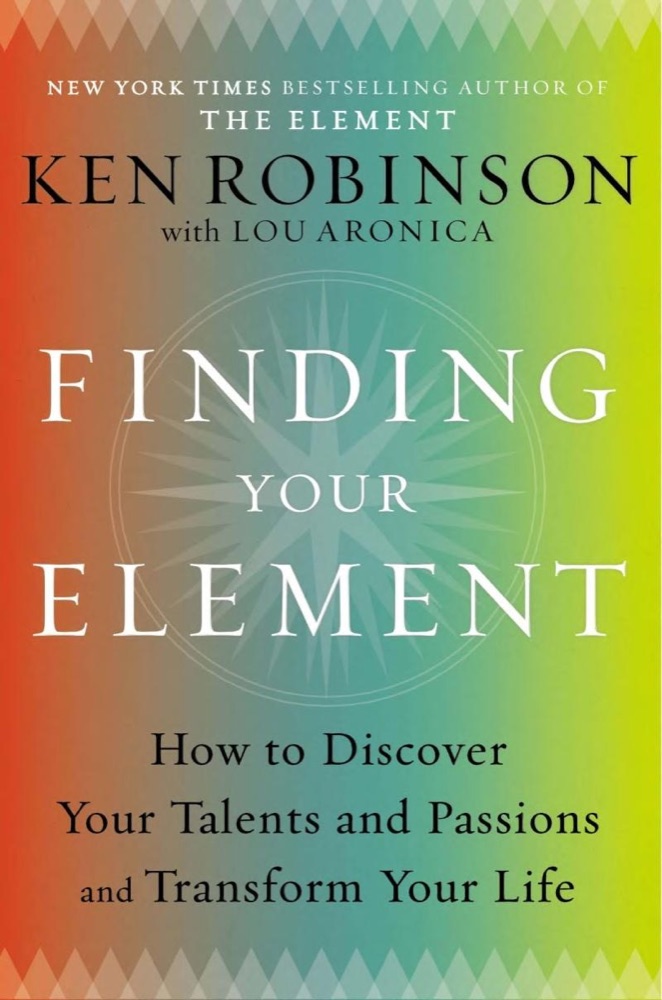 Finding Your Element: How to Discover Your Talents and Passions and Transform Your Life
About the book
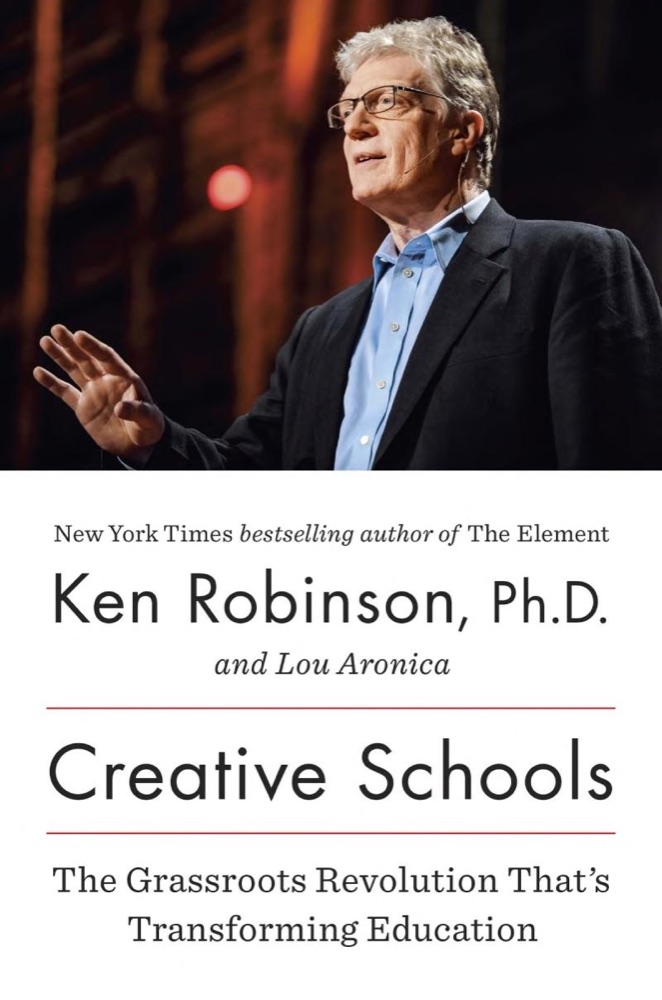
A revolutionary reappraisal of how to educate our children and young people by the New York Times bestselling author of The Element and Finding Your Element Ken Robinson is one of the world’s most influential voices in education, and his 2006 TED Talk on the subject is the most viewed in the organization’s history. Now, the internationally recognized leader on creativity and human potential focuses on one of the most critical issues of our time: how to transform the nation’s troubled educational system. At a time when standardized testing businesses are raking in huge profits, when many schools are struggling, and students and educators everywhere are suffering under the strain, Robinson points the way forward. He argues for an end to our outmoded industrial educational system and proposes a highly personalized, organic approach that draws on today’s unprecedented technological and pro
Book details
- First published
- 2015
- Author
- Ken Robinson
- Genre
- Nonfiction
- Goodreads rating
- 4.10 (4k ratings)
Keep reading
 The Core
The Element: How Finding Your Passion Changes Everything
The Core
The Element: How Finding Your Passion Changes Everything
 Dumbing Us Down: The Hidden Curriculum of Compulsory Education
 Deschooling Society
 The Death and Life of the Great American School System: How Testing and Choice Are Undermining Education
 Teach Like a PIRATE: Increase Student Engagement, Boost Your Creativity, and Transform Your Life as an Educator
 Experience and Education
 The Smartest Kids in the World: And How They Got That Way
 The Brave Learner: Finding Everyday Magic in Homeschool, Learning, and Life
 Cultivating Genius: An Equity Framework for Culturally and Historically Responsive Literacy
 Excellent Sheep: The Miseducation of the American Elite and the Way to a Meaningful Life
 The Vanishing American Adult: Our Coming-of-Age Crisis—and How to Rebuild a Culture of Self-Reliance
 Free to Learn: Why Unleashing the Instinct to Play Will Make Our Children Happier, More Self-Reliant, and Better Students for Life
 We Make the Road by Walking: Conversations on Education and Social Change
 Not for Profit: Why Democracy Needs the Humanities
 The Lost Tools of Learning
 The Absorbent Mind
 The Social Animal: The Hidden Sources of Love, Character, and Achievement
 I'd Like to Apologize to Every Teacher I Ever Had: My Year as a Rookie Teacher at Northeast High
 The Case Against Education: Why the Education System Is a Waste of Time and Money
 Walking on Water: Reading, Writing, and Revolution
 How Children Fail
 The World Is Flat: A Brief History of the Twenty-first Century
 Letters from an Astrophysicist
 Range: Why Generalists Triumph in a Specialized World
 Punished by Rewards: The Trouble with Gold Stars, Incentive Plans, A's, Praise and Other Bribes
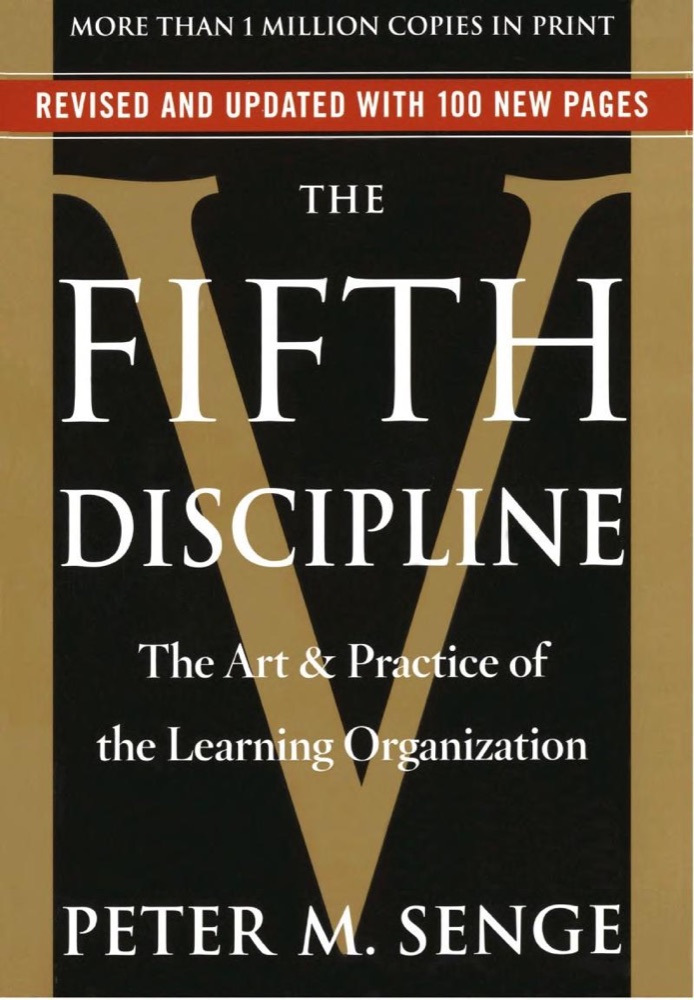 The Fifth Discipline: The Art & Practice of The Learning Organization
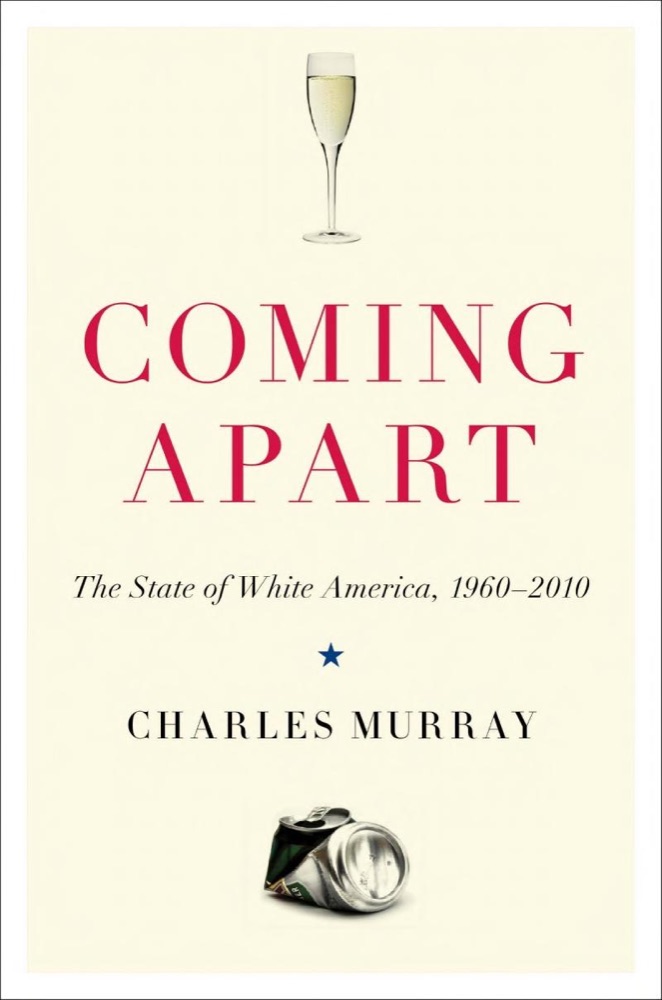 Coming Apart: The State of White America, 1960-2010
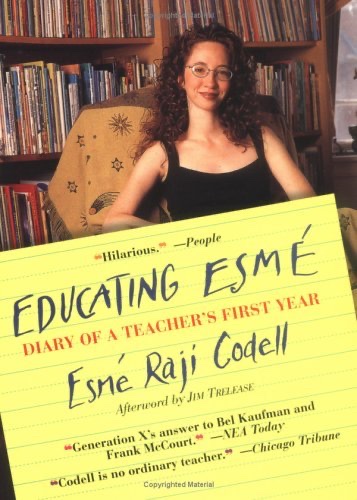 Educating Esmé: Diary of a Teacher's First Year
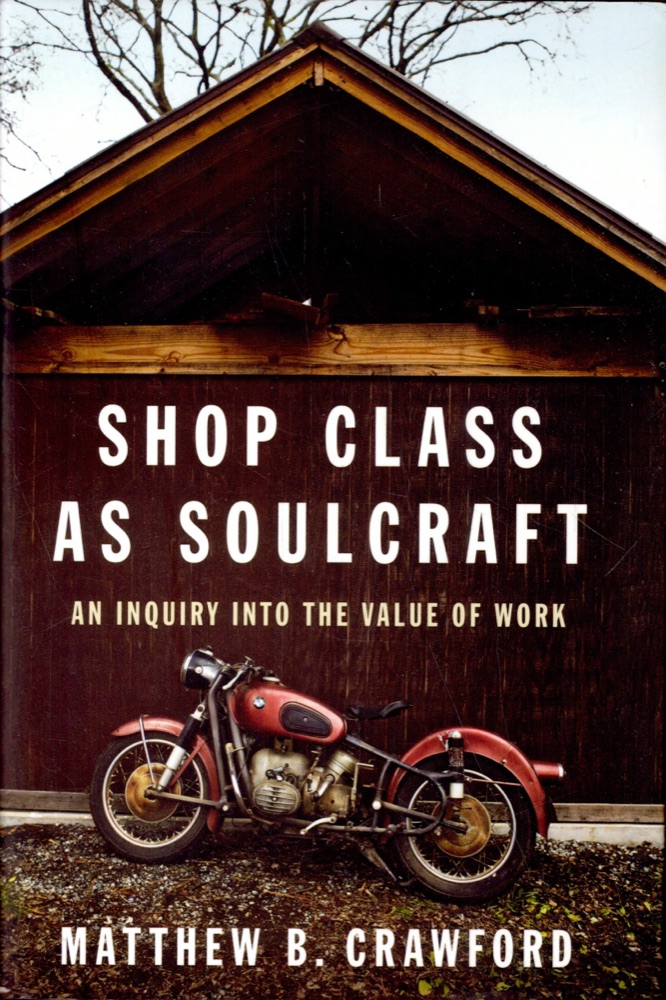 Shop Class as Soulcraft: An Inquiry Into the Value of Work
 Stones Into Schools: Promoting Peace With Books, Not Bombs, in Afghanistan and Pakistan
 The Tipping Point: How Little Things Can Make a Big Difference
 Education of a Wandering Man: A Memoir
 The Art of Creative Thinking
 The Geeks Shall Inherit the Earth: Popularity, Quirk Theory and Why Outsiders Thrive After High School
 Mastery
 This Is What Inequality Looks Like
 Emile or On Education
 Summerhill: A Radical Approach to Child Rearing
 Readicide: How Schools Are Killing Reading and What You Can Do About It
 A Whole New Mind: Why Right-Brainers Will Rule the Future
 Creativity: Flow and the Psychology of Discovery and Invention
 How to Raise an Adult: Break Free of the Overparenting Trap and Prepare Your Kid for Success
 Drive: The Surprising Truth About What Motivates Us
 How Children Learn
 Smartcuts: How Hackers, Innovators, and Icons Accelerate Success
 The Read-Aloud Handbook
 A Mind for Numbers: How to Excel at Math and Science
 Outliers: The Story of Success
 What the Dog Saw and Other Adventures
 The Elephant in the Brain: Hidden Motives in Everyday Life
 Originals: How Non-Conformists Move the World
 The 7 Habits of Highly Effective People: Personal Workbook
 Kids These Days: Human Capital and the Making of Millennials
 Walden Two
 Peak: Secrets from the New Science of Expertise
 The Shame of the Nation
 A Beautiful Day in the Neighborhood: The Poetry of Mister Rogers
 Revolution from Within: A Book of Self-Esteem