 Art as Experience
Quotes from the Book
The most important attitude that can be formed is that of desire to go on learning.
65
We always live at the time we live and not at some other time, and only by extracting at each present time the full meaning of each present experience are we prepared for doing the same thing in the future.
39
There is no such thing as educational value in the abstract. The notion that some subjects and methods and that acquaintance with certain facts and truths possess educational value in and of themselves is the reason why traditional education reduced the material of education so largely to a diet of predigested materials.
38
Collateral learning in the way of formation of enduring attitudes, of likes and dislikes, may be and often is much more important than the spelling lesson or lesson in geography or history that is learned. For these attitudes are fundamentally what count in the future. The most important attitude that can be formed is that of desire to go on learning. If impetus in this direction is weakened instead of being intensified, something much more than mere lack of preparation takes place. The pupil is actually robbed of native capacities which otherwise would enable him [sic] to cope with the circumstances that he meets in the course of his life. We often see persons who have had little schooling and in whose case the absence of set schooling proves to be a positive asset. They have at least retained their native common sense and power of judgement, and its exercise in the actual conditions of living has given them the precious gift of ability to learn from the experiences they have.
7
Preparation" is a treacherous idea. In a certain sense every experience should do something to prepare a person for later experiences of a deeper and more expansive quality. That is the very meaning of growth, continuity, reconstruction of experience. But it is a mistake to suppose that the mere acquisition of a certain amount of arithmetic, geography, history, etc., which is taught and studied because it may be useful at some time in the future, has this effect, and it is a mistake to suppose that acquisition of skills in reading and figuring will automatically constitute preparation for their right and effective use under conditions very unlike those in which they were acquired.
6
It is [the teacher's] business to be on the alert to see what attitudes and habitual tendencies are being created. In this direction he[sic] must, if he is an educator, be able to judge what attitudes are actually conducive to continued growth and what are detrimental. He must, in addition, have that sympathetic understanding of individuals as individuals which gives him an idea of what is actually going on in the minds of those who are learning.
6
A genuine purpose always starts with an impulse. Obstruction of the immediate execution of an impulse converts it into a desire. Nevertheless neither impulse nor desire is itself a purpose. A purpose is an end-view. That is, it involves foresight of the consequences which will result from acting upon impulse.
3
The scientific method is the only authentic means at our command for getting at the significance of our everyday experiences of the world in which we live...scientific method provides a working pattern of the way in which and conditions under which experiences are used to lead ever onward and outward.
3
A single course of studies for all progressive schools is out of the question; it would mean abandoning the fundamental principle of connection with life-experiences.
2
There is, I think, no point in the philosophy of progressive education which is sounder than its emphasis upon the importance of the participation of the learner in the formation of the purposes which direct his [sic] activities in the learning process, just as there is no defect in traditional education greater than its failure to secure the active cooperation of the pupil in construction of the purposes involved in his studying.
2
As an individual passes from one situation to another, his [sic] world, his environment, expands or contracts. He does not find himself living in another world but in a different part or aspect of one and the same world. What he has learned in the way of knowledge and skill in one situation becomes an instrument of understanding and dealing effectively with the situations which follow. The process goes on as long as life and learning continue. Otherwise the course of experience is disorderly, since the individual factor that enters into making an experience is split. A divided world, a world whose parts and aspects do not hang together, is at once a sign and a cause of a divided personality. When the splitting-up reaches a certain point we call the person insane. A fully integrated personality, on the other hand, exists only when successive experiences are integrated with one another. It can be built up only as a world of related objects is constructed.
2
The lesson for progressive education is that it requires in an urgent degree, a degree more pressing than was incumbent upon former innovators, a philosophy of education based upon a philosophy of experience. I remarked incidentally that the philosophy in question is, to paraphrase the saying of Lincoln about democracy, one of education of, by and for experience. No one of these words, of, by, or for, names anything which is self-evident. Each of them is a challenge to discover and put into operation a principle of order and organization which follows from understanding what educative experience signifies.
2
For thinking is stoppage of the immediate manifestation of impulse until that impulse has been brought into connection with other possible tendencies to action so that a more comprehensive and coherent plan of activity is formed.
The non-social character of the traditional school is seen in the fact that it erected silence into one of its prime virtues.
On the other hand, if an experience arouses curiosity, strengthens initiative, and sets up desires and purposes that are sufficiently intense to carry a person over dead places in the future, continuity works in a very different way. Every experience is a moving force.
Just because traditional education was a matter of routine in which the plans and programs were handed down from the past, it does not follow that progressive education is a matter of planless improvisation.
Strait-jacket and chain-gang procedures had to be done away with if there was to a chance for growth of individuals in the intellectual springs of freedom without which there is no assurance of genuine and continued normal growth.
Traditional education tended to ignore the importance of personal impulse and desire as moving springs. But this is no reason why progressive education should identify impulse and desire with purpose and thereby pass lightly over the need for careful observation, for wide range of information, and for judgment is students are to share in the formation of the purposes which activate them
Watch on YouTube
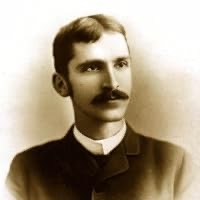
About John Dewey
We have collected 28 quotes from 2 books by John Dewey on BookQuoters.
More about the author →More by John Dewey
Art as Experience
About the book
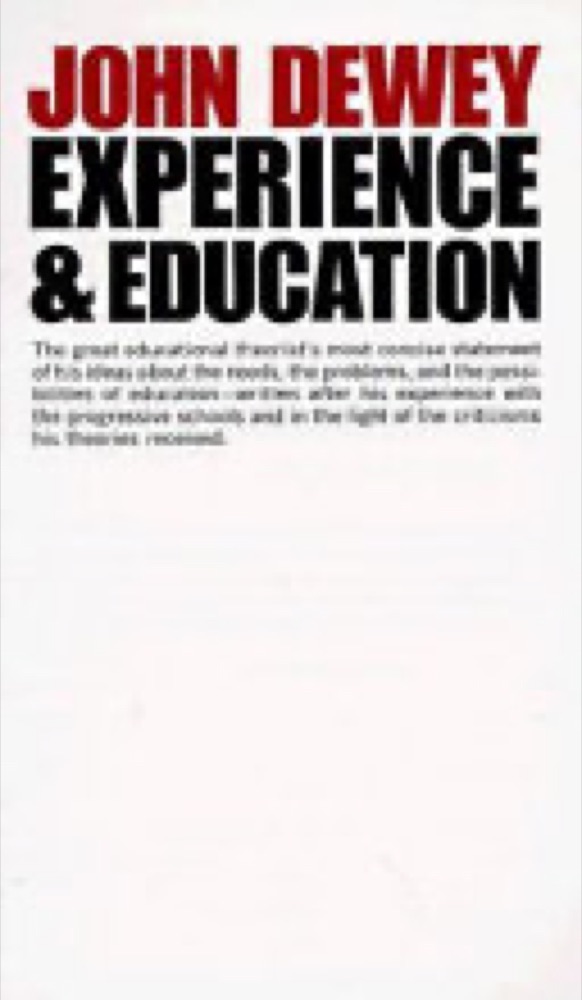
Experience and Education is the best concise statement on education ever published by John Dewey, the man acknowledged to be the pre-eminent educational theorist of the twentieth century. Written more than two decades after Democracy and Education (Dewey's most comprehensive statement of his position in educational philosophy), this book demonstrates how Dewey reformulated his ideas as a result of his intervening experience with the progressive schools and in the light of the criticisms his theories had received.
Analyzing both "traditional" and "progressive" education, Dr. Dewey here insists that neither the old nor the new education is adequate and that each is miseducative because neither of them applies the principles of a carefully developed philosophy of experience. Many pages of this volume illustrate Dr. Dewey's ideas for a philosophy of experience and its relation to educatio
Book details
- First published
- 1938
- Author
- John Dewey
- Genre
- Philosophy
- Goodreads rating
- 3.88 (4k ratings)
Keep reading
 Creative Schools: The Grassroots Revolution That's Transforming Education
 Deschooling Society
 The Element: How Finding Your Passion Changes Everything
 The Lost Tools of Learning
 Dumbing Us Down: The Hidden Curriculum of Compulsory Education
 The Core
 The Vanishing American Adult: Our Coming-of-Age Crisis—and How to Rebuild a Culture of Self-Reliance
 Emile or On Education
 The Absorbent Mind
 Excellent Sheep: The Miseducation of the American Elite and the Way to a Meaningful Life
 Shop Class as Soulcraft: An Inquiry Into the Value of Work
 The Social Animal: The Hidden Sources of Love, Character, and Achievement
 Education of a Wandering Man: A Memoir
 We Make the Road by Walking: Conversations on Education and Social Change
 Total Freedom: The Essential Krishnamurti
 Mastery
 Finding Flow: The Psychology of Engagement with Everyday Life
 You Learn by Living: Eleven Keys for a More Fulfilling Life
 The Closing of the American Mind
 The Abolition of Man
 The Education of Henry Adams
 Free to Learn: Why Unleashing the Instinct to Play Will Make Our Children Happier, More Self-Reliant, and Better Students for Life
 Think on These Things
 The Intellectual Life: Its Spirit, Conditions, Methods
 Psych: The Story of the Human Mind
 Flow: The Psychology of Optimal Experience
 How to Know Higher Worlds: A Modern Path of Initiation
 The Fifth Discipline: The Art & Practice of The Learning Organization
 Against Method
 Creativity: Flow and the Psychology of Discovery and Invention
 Think: A Compelling Introduction to Philosophy
 The Master and His Emissary: The Divided Brain and the Making of the Western World
 Truth and Method
 Walden Two
 Summerhill: A Radical Approach to Child Rearing
 The Age of Absurdity: Why Modern Life makes it Hard to be Happy
 Teach Like a PIRATE: Increase Student Engagement, Boost Your Creativity, and Transform Your Life as an Educator
 Not for Profit: Why Democracy Needs the Humanities
 How to Read a Book: The Classic Guide to Intelligent Reading
 How to Take Smart Notes
 An Appetite for Wonder: The Making of a Scientist
 Twilight of the Idols
 Untimely Meditations
 Striking Thoughts: Bruce Lee's Wisdom for Daily Living
 Walking on Water: Reading, Writing, and Revolution
 The Republic
 Selections from the Prison Notebooks
 The 7 Habits of Highly Effective People: Personal Workbook
 The Sociological Imagination
 A Circle of Quiet
 The Discovery of India
 The Way of Zen
 The Ascent of Man
 An Enquiry Concerning Human Understanding
 From Dawn to Decadence: 500 Years of Western Cultural Life, 1500 to the Present
 A Brief History of Thought: A Philosophical Guide to Living
 The Second Mountain
 Children of Dune
 An Essay Concerning Human Understanding
 The Medium is the Massage