
 The Closing of the American Mind
Quotes from the Book
Knowledge is no guarantee of good behavior, but ignorance is a virtual guarantee of bad behavior.
67
Another problem with people who fail to examine themselves is that they often prove all too easily influenced.
30
Play teaches people to be capable of living with others without control; it connects the experiences of vulnerability and surprise to curiosity and wonder, rather than to crippling anxiety. How
20
The presence of the other, which can be very threatening, becomes, in play, a delightful source of curiosity, and this curiosity contributes toward the development of healthy attitudes in friendship, love, and, later, political life. Winnicott
15
This tradition argues that education is not just about the passive assimilation of facts and cultural traditions, but about challenging the mind to become active, competent, and thoughtfully critical in a complex world. This model of education supplanted an older one in which children sat still at desks all day and simply absorbed, and then regurgitated, the material that was brought their way.
10
Disgust soon begins to do real damage, however, in connection with the basic narcissism of human children. One effective way to distance oneself thoroughly from one’s own animality is to project the properties of animality—bad smell, ooziness, sliminess—onto some group of people, and then to treat those people as contaminating or defiling, turning them into an underclass, and, in effect, a boundary, or a buffer zone, between the anxious person and the feared and stigmatized properties of animality.
2
A central part of disgust’s pathology, we said, is the bifurcation of the world into the “pure” and the “impure”—the construction of a “we” who are without flaw and a “they” who are dirty, evil, and contaminating. Much bad thinking about international politics shows the traces of this pathology, as people prove all too ready to think about some group of others as black and sullied, while they themselves are on the side of the angels. We now notice that this very deep-seated human tendency is nourished by many time-honored modes of storytelling to children, which suggest that the world will be set right when some ugly and disgusting witch or monster is killed, or even cooked in her own oven.
1
What makes majorities try, so ubiquitously, to denigrate or stigmatize minorities? Whatever these forces are, it is ultimately against them that true education for responsible national and global citizenship must fight. And it must fight using whatever resources the human personality contains that help democracy prevail against hierarchy.
1
The ability to think well about political issues affecting the nation, to examine, reflect, argue, and debate, deferring to neither tradition nor authority • The ability to recognize fellow citizens as people with equal rights, even though they may be different in race, religion, gender, and sexuality: to look at them with respect, as ends, not just as tools to be manipulated for one’s own profit • The ability to have concern for the lives of others, to grasp what policies of many types mean for the opportunities and experiences of one’s fellow citizens, of many types, and for people outside one’s own nation • The ability to imagine well a variety of complex issues affecting the story of a human life as it unfolds: to think about childhood, adolescence, family relationships, illness, death, and much more in a way informed by an understanding of a wide range of human stories, not just by aggregate data • The ability to judge political leaders critically, but with an informed and realistic sense of the possibilities available to them • The ability to think about the good of the nation as a whole, not just that of one’s own local group • The ability to see one’s own nation, in turn, as a part of a complicated world order in which issues of many kinds require intelligent transnational deliberation for their resolution This is only a sketch, but it is at least a beginning in articulating what we need.
1
What about the arts and literature, so often valued by democratic educators? An education for economic growth will, first of all, have contempt for these parts of a child’s training, because they don’t look like they lead to personal or national economic advancement. For this reason, all over the world, programs in arts and the humanities, at all levels, are being cut away, in favor of the cultivation of the technical.
1
When we meet in society, if we have not learned to see both self and other in that way, imagining in one another inner faculties of thought and emotion, democracy is bound to fail, because democracy is built upon respect and concern, and these in turn are built upon the ability to see other people as human beings, not simply as objects.
1
Thirsty for national profit, nations, and their systems of education, are heedlessly discarding skills that are needed to keep democracies alive. If this trend continues, nations all over the world will soon be producing generations of useful machines, rather than complete citizens who can think for themselves, criticize tradition, and understand the significance of another person’s sufferings and achievements.
1
Critical thinking builds corporate cultures of accountability in which critical voices are not silenced. And a trained imagination is essential for innovation, a key to any healthy economy: no nation can thrive on the basis of yesterday’s skills learned by rote.
1
Not For Profit focuses on citizenship. I argue that the humanities and arts provide skills that are essential to keep democracy healthy.
1
The ability to detect fallacy is one of the things that makes democratic life decent.
1
Meanwhile, children learn from the adult societies around them, which typically direct this “projective disgust” onto one or more concrete subordinate groups—African Americans, Jews, women, homosexuals, poor people, lower castes in the Indian caste hierarchy.
the political struggle for freedom and equality must first of all be a struggle within each person, as compassion and respect contend against fear, greed, and narcissistic aggression.
Thinking falsely that our own society is pure within can only breed aggression toward outsiders and blindness about aggression toward insiders.
Such myths of purity, however, are misleading and pernicious.
To think about education for democratic citizenship, we have to think about what democratic nations are, and what they strive for.
The battle for responsible democracy and alert citizenship is always difficult and uncertain. But it is both urgent and winnable, and the humanities are a large part of winning it.
Striking confirmation of Rubenstein’s argument comes from the fact that Singapore and China, two nations that, to say the least, do not aim at the cultivation of critical and independent democratic citizenship, have recently conducted education reforms that foreground the arts and humanities, explicitly in order to encourage innovation and solid corporate cultures. Of course they then must contain those disciplines, preventing them from spilling over into a demand for open political debate, and this they aggressively do.
Watch on YouTube
About Martha C. Nussbaum
We have collected 22 quotes from 1 book by Martha C. Nussbaum on BookQuoters.
More about the author →About the book
In this short and powerful book, celebrated philosopher Martha Nussbaum makes a passionate case for the importance of the liberal arts at all levels of education. Historically, the humanities have been central to education because they have rightly been seen as essential for creating competent democratic citizens. But recently, Nussbaum argues, thinking about the aims of education has gone disturbingly awry both in the United States and abroad. Anxiously focused on national economic growth, we increasingly treat education as though its primary goal were to teach students to be economically productive rather than to think critically and become knowledgeable and empathetic citizens. This shortsighted focus on profitable skills has eroded our ability to criticize authority, reduced our sympathy with the marginalized and different, and damaged our competence to deal with complex global probl
Book details
- First published
- 2010
- Author
- Martha C. Nussbaum
- Genre
- Philosophy
- Goodreads rating
- 3.63 (2k ratings)
Keep reading
The Closing of the American Mind
 Parasitic Mind: How Infectious Ideas Are Killing Common Sense
 Empire of Illusion: The End of Literacy and the Triumph of Spectacle
 The Coddling of the American Mind: How Good Intentions and Bad Ideas Are Setting up a Generation for Failure
 The Blank Slate: The Modern Denial of Human Nature
 The Vanishing American Adult: Our Coming-of-Age Crisis—and How to Rebuild a Culture of Self-Reliance
 From Dawn to Decadence: 500 Years of Western Cultural Life, 1500 to the Present
 Death of the Liberal Class
 The Social Animal: The Hidden Sources of Love, Character, and Achievement
 Enlightenment Now: The Case for Reason, Science, Humanism, and Progress
 You Can't Be Neutral on a Moving Train: A Personal History of Our Times
 Humankind: A Hopeful History
 What's Our Problem?: A Self-Help Book for Societies
 Brave New World Revisited
 The Audacity of Hope: Thoughts on Reclaiming the American Dream
 Pedagogy of the Oppressed
 Coming Apart: The State of White America, 1960-2010
 Behold a Pale Horse
 A People's History of the United States
 Ill Fares the Land
 Emile or On Education
 Elite Capture: How the Powerful Took Over Identity Politics
 What Unites Us: Reflections on Patriotism
 Anti-Intellectualism in American Life
 The Message
 Walden Two
 Endgame, Vol. 1: The Problem of Civilization
 The Righteous Mind: Why Good People Are Divided by Politics and Religion
 The Element: How Finding Your Passion Changes Everything
 Excellent Sheep: The Miseducation of the American Elite and the Way to a Meaningful Life
 Revolution from Within: A Book of Self-Esteem
 This Is What Inequality Looks Like
 The Argumentative Indian: Writings on Indian History, Culture and Identity
 Amusing Ourselves to Death: Public Discourse in the Age of Show Business
 Creative Schools: The Grassroots Revolution That's Transforming Education
 A Hunter-Gatherer's Guide to the 21st Century: Evolution and the Challenges of Modern Life
 Deschooling Society
 The Culture of Make Believe
 Life at the Bottom: The Worldview That Makes the Underclass
 The Lessons of History
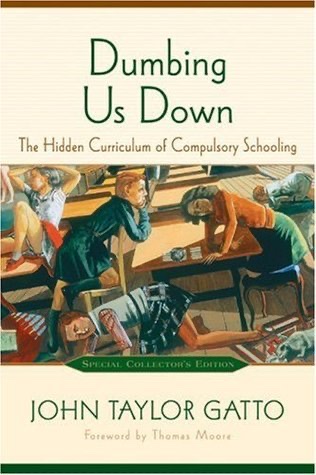 Dumbing Us Down: The Hidden Curriculum of Compulsory Education
 The Republic
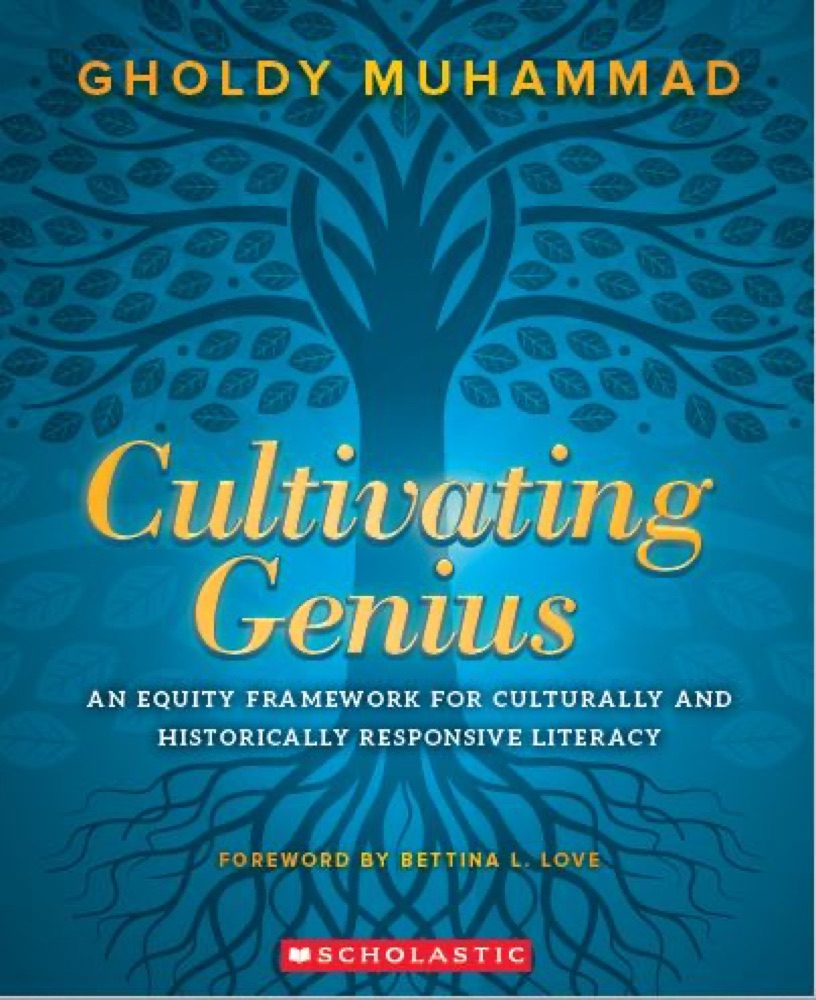 Cultivating Genius: An Equity Framework for Culturally and Historically Responsive Literacy
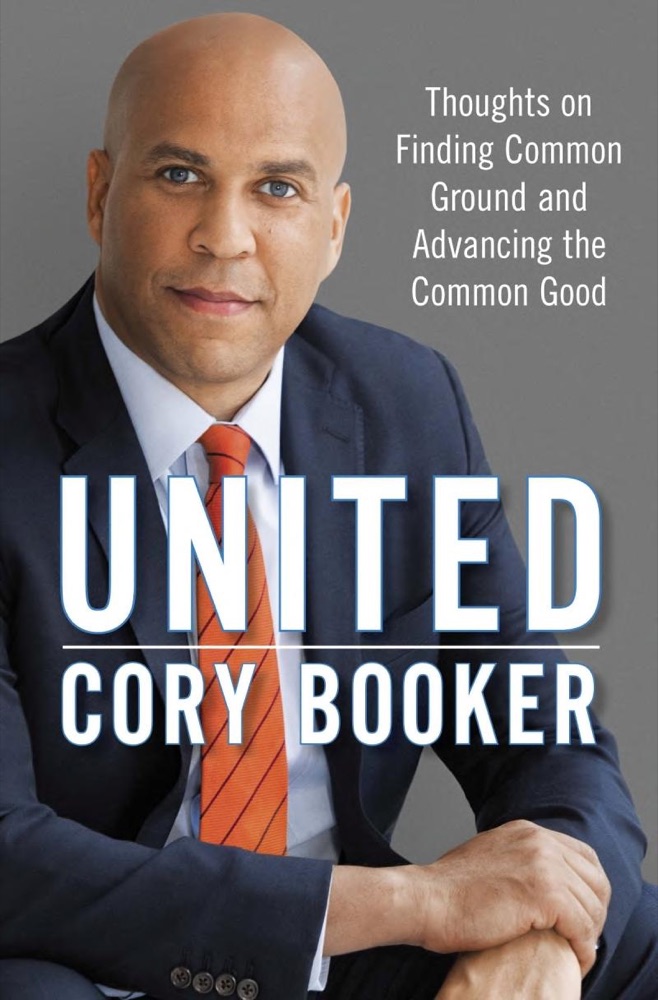 United: Thoughts on Finding Common Ground and Advancing the Common Good
 The Abolition of Man
 Genesis
 The Elephant in the Brain: Hidden Motives in Everyday Life
 Justice: What's the Right Thing to Do?
 Let Us Dream: The Path to a Better Future
 Across That Bridge: A Vision for Change and the Future of America
 The View From Flyover Country: Essays by Sarah Kendzior
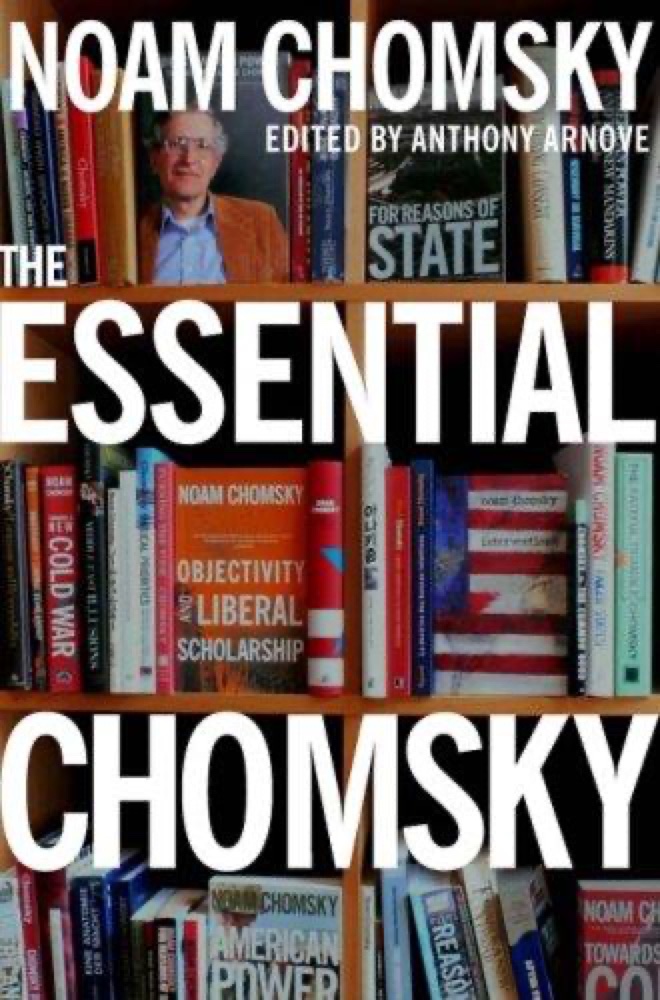 The Essential Chomsky
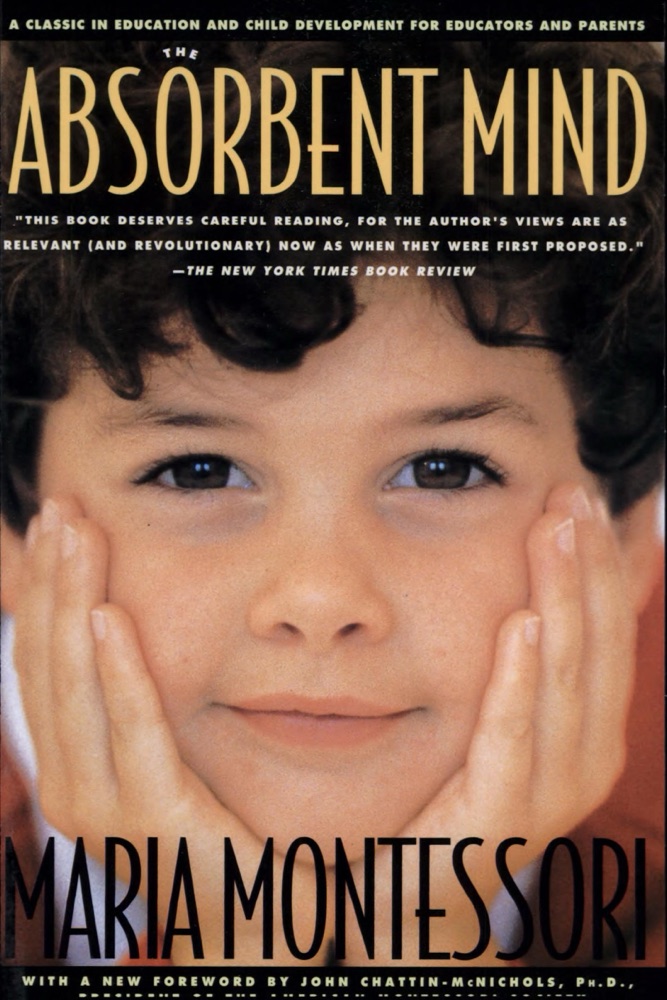 The Absorbent Mind
 After Virtue
 Independent Study
 The Source of Self-Regard: Selected Essays, Speeches, and Meditations
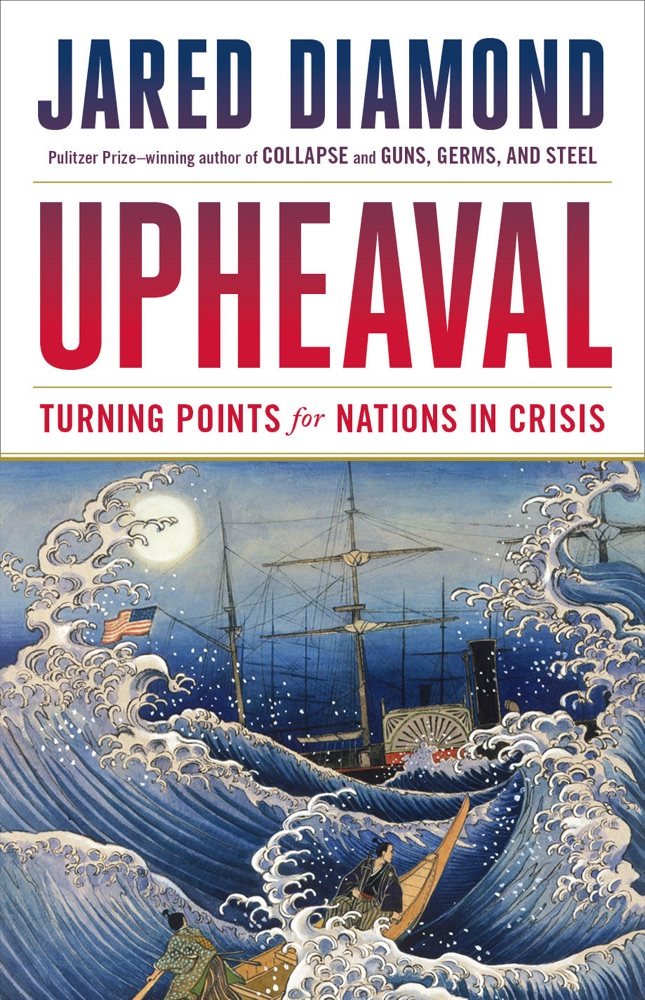 Upheaval: Turning Points for Nations in Crisis
 One Nation: What We Can All Do to Save America's Future
 Small Is Beautiful: Economics as if People Mattered
 Democracy in America