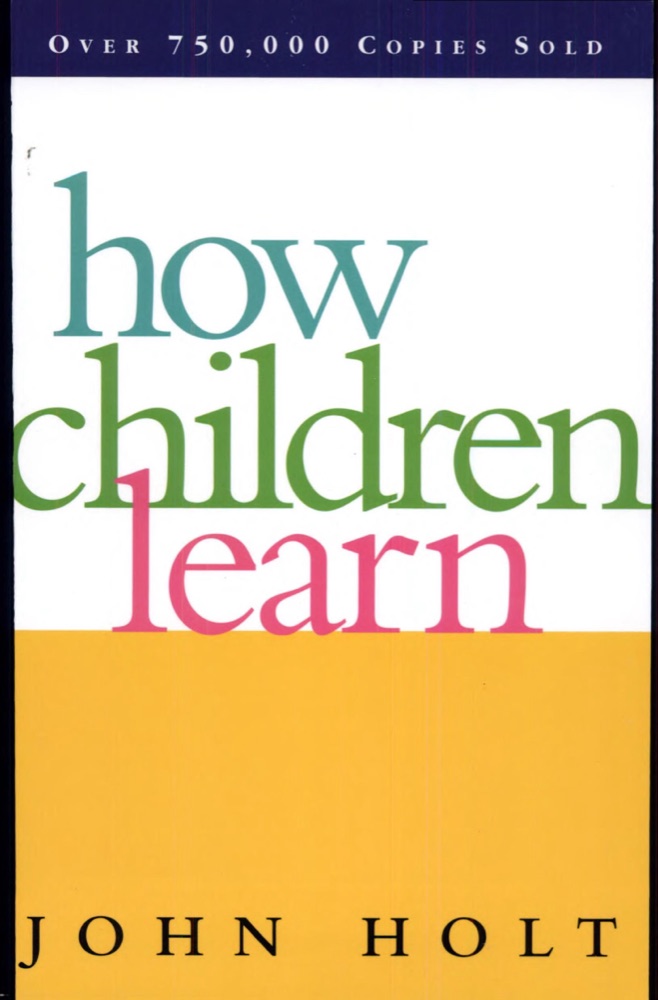
 How Children Learn
Quotes from the Book
This idea that children won't learn without outside rewards and penalties, or in the debased jargon of the behaviorists, "positive and negative reinforcements," usually becomes a self-fulfilling prophecy. If we treat children long enough as if that were true, they will come to believe it is true. So many people have said to me, "If we didn't make children do things, they wouldn't do anything." Even worse, they say, "If I weren't made to do things, I wouldn't do anything." It is the creed of a slave.
55
For many years I have been asking myself why intelligent children act unintelligently at school. The simple answer is, "Because they're scared." I used to suspect that children's defeatism had something to do with their bad work in school, but I thought I could clear it away with hearty cries of "Onward! You can do it!" What I now see for the first time is the mechanism by which fear destroys intelligence, the way it affects a child's whole way of looking at, thinking about, and dealing with life. So we have two problems, not one: to stop children from being afraid, and then to break them of the bad thinking habits into which their fears have driven them. What is most surprising of all is how much fear there is in school. Why is so little said about it. Perhaps most people do not recognize fear in children when they see it. They can read the grossest signs of fear; they know what the trouble is when a child clings howling to his mother; but the subtler signs of fear escaping them. It is these signs, in children's faces, voices, and gestures, in their movements and ways of working, that tell me plainly that most children in school are scared most of the time, many of them very scared. Like good soldiers, they control their fears, live with them, and adjust themselves to them. But the trouble is, and here is a vital difference between school and war, that the adjustments children make to their fears are almost wholly bad, destructive of their intelligence and capacity. The scared fighter may be the best fighter, but the scared learner is always a poor learner.
40
The idea of painless, nonthreatening coercion is an illusion. Fear is the inseparable companion of coercion, and its inescapable consequence. If you think it your duty to make children do what you want, whether they will or not, then it follows inexorably that you must make them afraid of what will happen to them if they don’t do what you want. You can do this in the old-fashioned way, openly and avowedly, with the threat of harsh words, infringement of liberty, or physical punishment. Or you can do it in the modern way, subtly, smoothly, quietly, by withholding the acceptance and approval which you and others have trained the children to depend on; or by making them feel that some retribution awaits them in the future, too vague to imagine but too implacable to escape.
27
Fear, boredom, and resistance--they all go to make what we call stupid children.
21
It is not the teacher's proper task to be constantly testing and checking the understanding of the learner. That's the learner's task, and only the learner can do it. The teacher's job is to answer questions when learners ask them, or to try to help learners understand better when they ask for that help.
20
When children are very young, they have natural curiosities about the world and explore them, trying diligently to figure out what is real. As they become "producers " they fall away from exploration and start fishing for the right answers with little thought. They believe they must always be right, so they quickly forget mistakes and how these mistakes were made. They believe that the only good response from the teacher is "yes," and that a "no" is defeat.
18
I doubt very much if it is possible to teach anyone to understand anything, that is to say, to see how various parts of it relate to all the other parts, to have a model of the structure in one's mind. We can give other people names, and lists, but we cannot give them our mental structures; they must build their own.
13
Someone asked the other day, "Why do we go to school?" Pat, with vigor unusual in her, said, "So when we grow up we won't be stupid." These children equate stupidity with ignorance. Is this what they mean when they call themselves stupid? Is this one of the reasons why they are so ashamed of not knowing something? If so, have we, perhaps un-knowingly, taught them to feel this way? We should clear up this distinction, show them that it is possible to know very few facts, but make very good use of them. Conversely, one can know many facts and still act stupidly. The learned fool is by no means rare in this country.
13
Of all I saw and learned this past half year, one thing stands out. What goes on in the class is not what teachers think-- certainly not what I had always thought. For years now I have worked with a picture in mind of what my class was like. This reality, which I felt I knew, was partly physical, partly mental or spiritual. In other words, I thought I knew, in general, what the students were doing, and also what they were thinking and feeling. I see now that my picture of reality was almost wholly false. Why didn’t I see this before?
9
The true test of intelligence is not how much we know how to do, but how we behave when we don't know what to do
7
We ask children to do for most of a day what few adults are able to do for even an hour. How many of us, attending, say, a lecture that doesn’t interest us, can keep our minds from wandering? Hardly any.
7
Not long after the book came out I found myself being driven to a meeting by a professor of electrical engineering in the graduate school I of MIT. He said that after reading the book he realized that his graduate students were using on him, and had used for the ten years and more he had been teaching there, all the evasive strategies I described in the book — mumble, guess-and-look, take a wild guess and see what happens, get the teacher to answer his own questions, etc. But as I later realized, these are the games that all humans play when others are sitting in judgment on them.
7
We don't have to make human beings smart. They are born smart. All we have to do is stop doing the things that made them stupid.
3
We act as if we thought this tool of language were perfect, and children had only to learn to use it correctly--i.e., as we do. In fact, it is in many ways a most imperfect tool. If we were more aware of its imperfections, of the many ways in which it does not fit the universe it attempts to describe, of the paradoxes and contradictions built into it, then we could warn the children, help them see where words and experience did not fit together,
1
We tell children here to think about the meaning of what they are doing. We say this is the sure way to the right answer. But it may lead instead into one of the paradoxes and contradictions of which elementary math is full.
1
Incompetence has one other advantage. Not only does it reduce what others expect and demand of you, it reduces what you expect or even hope for yourself. When you set out to fail, one thing is certain-you can't be disappointed. As the old saying goes, you can't fall out of bed when you sleep on the door.
1
Do children really need so much praise? When a child, after a long struggle, finally does the cube puzzle, does he need to be told that he has done well? Doesn't he know, without being told, that he has accomplished something? In fact, when we praise him, are we not perhaps horning in on his accomplishment, stealing a little of his glory, edging our way into the limelight, praising ourselves for having helped to turn out such a smart child? Is not most adult praise of children a kind of self-praise? I think of that marvelous composition that Nat wrote about the dining room in his house. I find now, to my horror, that in thinking with satisfaction about that comp, I am really congratulating myself for my part in it. What a clever boy this is! And what a clever man am I for helping to make him so!
Pleasant experiences don’t make up for painful ones. No child, once painfully burned, would agree to be burned again, however enticing the reward. For all our talk and good intentions, there is much more stick than carrot in school, and while this remains so, children are going to adopt a strategy aimed above all else at staying out of trouble. How can we foster a joyous, alert, wholehearted participation in life if we build all our schooling around the holiness of getting 'right answers'?
Watch on YouTube
About John C. Holt
We have collected 34 quotes from 2 books by John C. Holt on BookQuoters.
More about the author →More by John C. Holt
How Children Learn
About the book
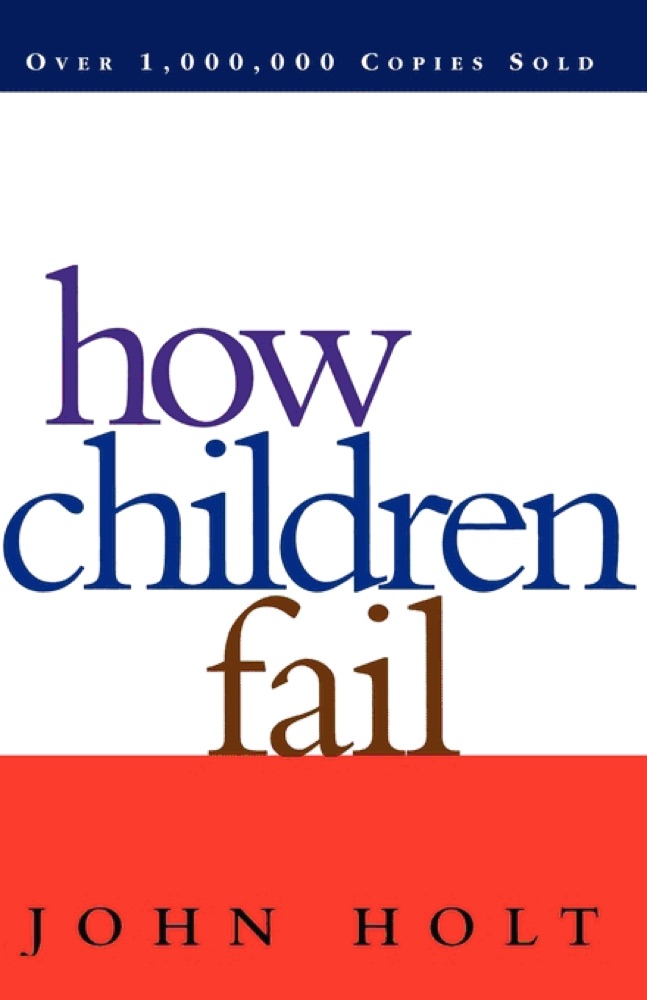
First published in the mid 1960s, How Children Fail began an education reform movement that continues today. In his 1982 edition, John Holt added new insights into how children investigate the world, into the perennial problems of classroom learning, grading, testing, and into the role of the trust and authority in every learning situation. His understanding of children, the clarity of his thought, and his deep affection for children have made both How Children Fail and its companion volume, How Children Learn, enduring classics.
Book details
- First published
- 1964
- Author
- John C. Holt
- Genre
- Nonfiction
- Goodreads rating
- 4.23 (2k ratings)
Keep reading
 Free to Learn: Why Unleashing the Instinct to Play Will Make Our Children Happier, More Self-Reliant, and Better Students for Life
How Children Learn
Free to Learn: Why Unleashing the Instinct to Play Will Make Our Children Happier, More Self-Reliant, and Better Students for Life
How Children Learn
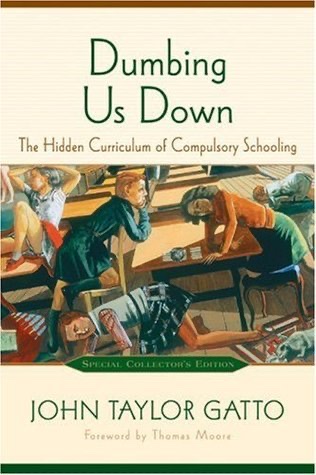 Dumbing Us Down: The Hidden Curriculum of Compulsory Education
 The Smartest Kids in the World: And How They Got That Way
 Punished by Rewards: The Trouble with Gold Stars, Incentive Plans, A's, Praise and Other Bribes
 How We Learn: Why Brains Learn Better Than Any Machine . . . for Now
 The Vanishing American Adult: Our Coming-of-Age Crisis—and How to Rebuild a Culture of Self-Reliance
 Emile or On Education
 The Element: How Finding Your Passion Changes Everything
 The Lost Tools of Learning
 The Social Animal: The Hidden Sources of Love, Character, and Achievement
 The Absorbent Mind
 The Collapse of Parenting: How We Hurt Our Kids When We Treat Them Like Grown-Ups
 The Core
 The Gift of Failure: How the Best Parents Learn to Let Go So Their Children Can Succeed
 The Brave Learner: Finding Everyday Magic in Homeschool, Learning, and Life
 We Make the Road by Walking: Conversations on Education and Social Change
 Black Box Thinking: Why Some People Never Learn from Their Mistakes - But Some Do
 Summerhill: A Radical Approach to Child Rearing
 The Elephant in the Brain: Hidden Motives in Everyday Life
 The Art of Thinking Clearly
 How to Raise an Adult: Break Free of the Overparenting Trap and Prepare Your Kid for Success
 Educating Esmé: Diary of a Teacher's First Year
 An Appetite for Wonder: The Making of a Scientist
 All Joy and No Fun: The Paradox of Modern Parenthood
 Walden Two
 How to Talk So Little Kids Will Listen: A Survival Guide to Life with Children Ages 2-7
 Excellent Sheep: The Miseducation of the American Elite and the Way to a Meaningful Life
 A Language Older Than Words
 My Ishmael
 Impro: Improvisation and the Theatre
 A Circle of Quiet
 The Demon-Haunted World: Science as a Candle in the Dark
 Antifragile: Things That Gain from Disorder
 How We Decide
 How to Read a Book: The Classic Guide to Intelligent Reading
 Simplicity Parenting: Using the Extraordinary Power of Less to Raise Calmer, Happier, and More Secure Kids
 Think Again: The Power of Knowing What You Don't Know
 Creative Schools: The Grassroots Revolution That's Transforming Education
 You Are Now Less Dumb: How to Conquer Mob Mentality, How to Buy Happiness, and All the Other Ways to Outsmart Yourself
 Psych: The Story of the Human Mind
 Deschooling Society
 The Boy Who Was Raised as a Dog: And Other Stories from a Child Psychiatrist's Notebook
 Ten Things Every Child with Autism Wishes You Knew
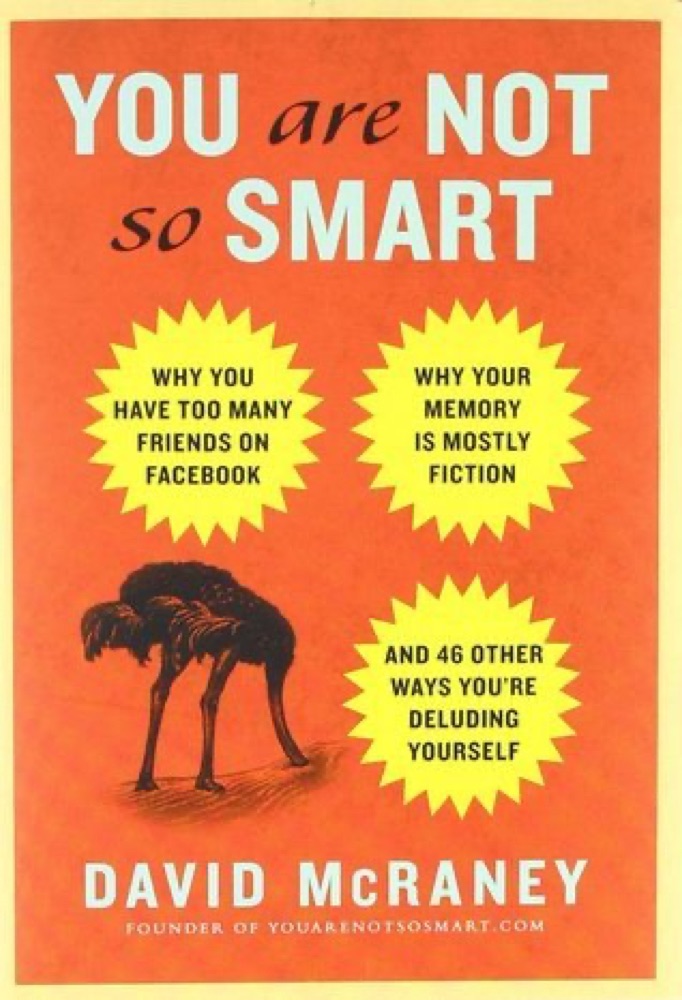 You Are Not So Smart
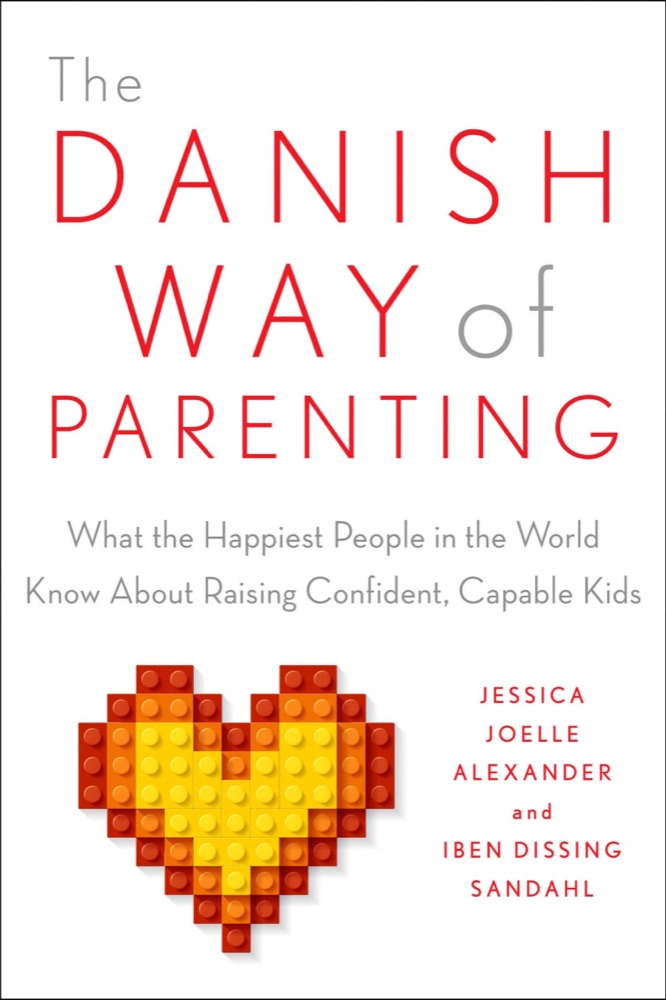 The Danish Way of Parenting: What the Happiest People in the World Know About Raising Confident, Capable Kids
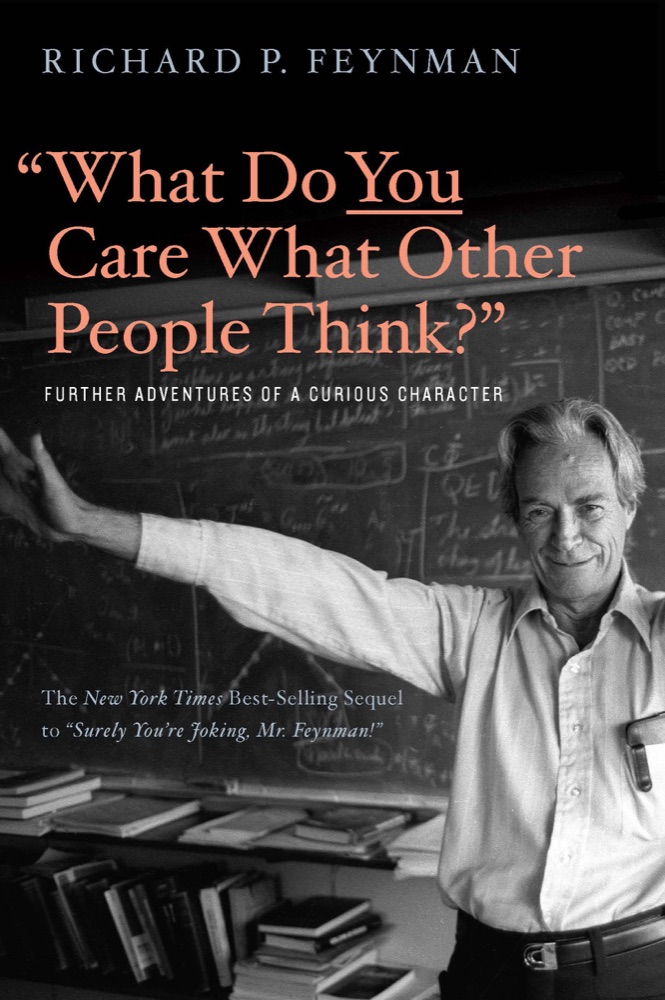 What Do You Care What Other People Think?
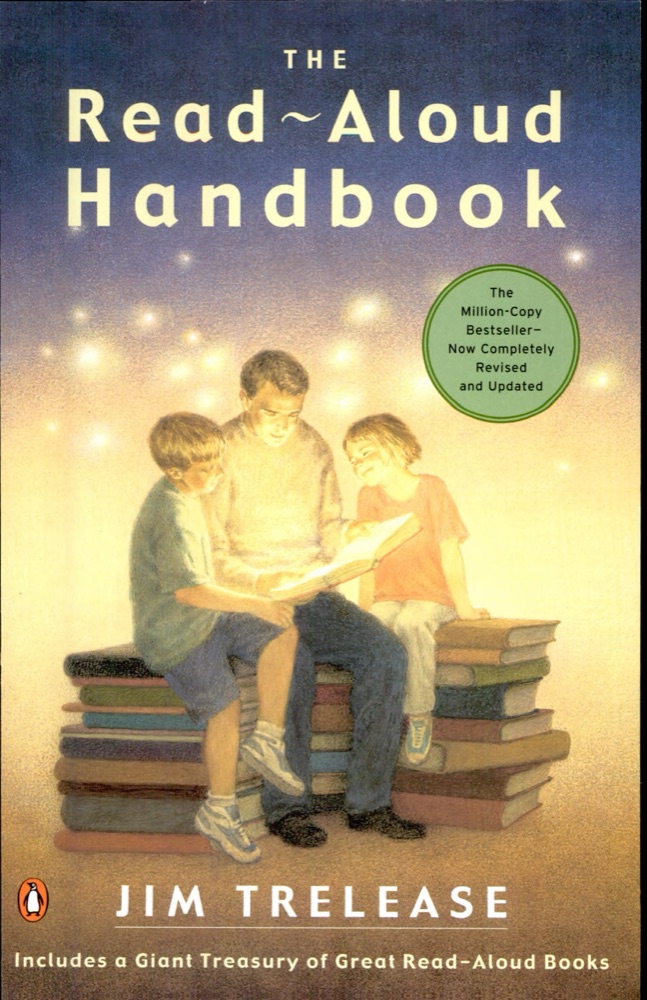 The Read-Aloud Handbook
 Letters from an Astrophysicist
 Think on These Things
 Between Parent and Child
 What the Dog Saw and Other Adventures
 The Coddling of the American Mind: How Good Intentions and Bad Ideas Are Setting up a Generation for Failure
 The Wave in the Mind: Talks and Essays on the Writer, the Reader and the Imagination
 The Awakened Family: A Revolution in Parenting
 Walking on Water: Reading, Writing, and Revolution
 The Death and Life of the Great American School System: How Testing and Choice Are Undermining Education
 Montessori from the Start: The Child at Home, from Birth to Age Three
 How the Mind Works