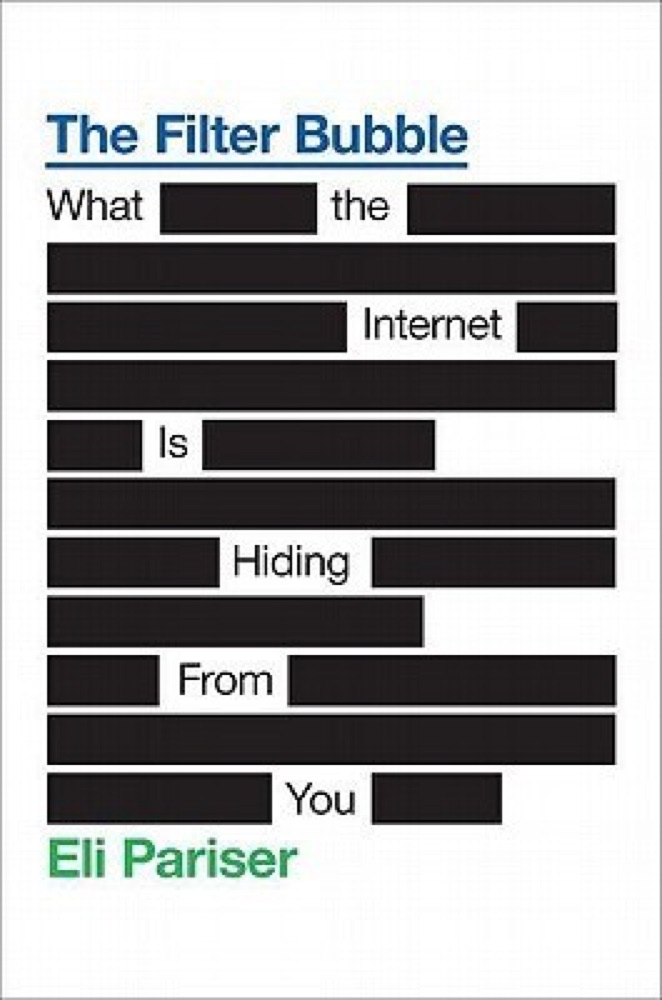

 You Are Not a Gadget
Quotes from the Book
Personalization is based on a bargain. In exchange for the service of filtering, you hand large companies an enormous amount of data about your daily life--much of which you might not trust your friends with.
12
A world constructed from the familiar is the world in which there's nothing to learn.
8
Your computer monitor is a kind a one-way mirror, reflecting your own interests while algorithmic observers watch what you click.
8
The filter bubble tends to dramatically amplify confirmation bias—in a way, it’s designed to. Consuming information that conforms to our ideas of the world is easy and pleasurable; consuming information that challenges us to think in new ways or question our assumptions is frustrating and difficult. This is why partisans of one political stripe tend not to consume the media of another. As a result, an information environment built on click signals will favor content that supports our existing notions about the world over content that challenges them.
7
If you’re not paying for something, you’re not the customer; you’re the product being sold. —Andrew Lewis, under the alias Blue_beetle, on the Web site MetaFilter
6
Google is great at helping us find what we know we want, but not at finding what we don't know we want.
4
What was once an anonymous medium where anyone could be anyone—where, in the words of the famous New Yorker cartoon, nobody knows you’re a dog—is now a tool for soliciting and analyzing our personal data. According to one Wall Street Journal study, the top fifty Internet sites, from CNN to Yahoo to MSN, install an average of 64 data-laden cookies and personal tracking beacons each. Search for a word like “depression” on Dictionary.com, and the site installs up to 223 tracking cookies and beacons on your computer so that other Web sites can target you with antidepressants. Share an article about cooking on ABC News, and you may be chased around the Web by ads for Teflon-coated pots. Open—even for an instant—a page listing signs that your spouse may be cheating and prepare to be haunted with DNA paternity-test ads. The new Internet doesn’t just know you’re a dog; it knows your breed and wants to sell you a bowl of premium kibble.
4
1973 Fair Information Practices: - You should know who has your personal data, what data they have, and how it is used. - You should be able to prevent information collected about you for one purpose from being used for others. - You should be able to correct inaccurate information about you. - Your data should be secure. ..while it's illegal to use Brad Pitt's image to sell a watch without his permission, Facebook is free to use your name to sell one to your friends.
4
The Google self and the Facebook self, in other words, are pretty different people. There's a big difference between "you are what you click" and "you are what you share.
3
A squirrel dying in front of your house may be more relevant to your interests right now than people dying in Africa. —Mark Zuckerberg, Facebook founder
3
The algorithms that orchestrate our ads are starting to orchestrate our lives.
3
The most serious political problem posed by filter bubbles is that they make it increasingly difficult to have a public argument.
2
One of the best ways to understand how filters shape our individual experience is to think in terms of our information diet. As sociologist danah boyd said in a speech at the 2009 Web 2.0 Expo: Our bodies are programmed to consume fat and sugars because they’re rare in nature.... In the same way, we’re biologically programmed to be attentive to things that stimulate: content that is gross, violent, or sexual and that gossip which is humiliating, embarrassing, or offensive. If we’re not careful, we’re going to develop the psychological equivalent of obesity. We’ll find ourselves consuming content that is least beneficial for ourselves or society as a whole.
2
Our brains tread a tightrope between learning too much from the past and incorporating too much new information from the present. The ability to walk this line – to adjust to the demands of different environments and modalities – is one of human cognition's most astonishing traits. Artificial intelligence has yet to come anywhere close.
2
In a personalized world, important but complex or unpleasant issues are less likely to come to our attention at all.
2
Personalization filters serve a kind of invisible autopropaganda, indoctrinating us with our own ideas, amplifying our desire for things that are familiar in leaving us oblivious to the dangers lurking in the dark territory of the unknown.
2
But what’s troubling about this shift toward personalization is that it’s largely invisible to users and, as a result, out of our control. We are not even aware that we’re seeing increasingly divergent images of the Internet. The Internet may know who we are, but we don’t know who it thinks we are or how it’s using that information. Technology designed to give us more control over our lives is actually taking control away.
1
In a provocative article in Wired, editor-in-chief Chris Anderson argued that huge databases render scientific theory itself obsolete. Why spend time formulating human-language hypotheses, after all, when you can quickly analyze trillions of bits of data and find the clusters and correlations? He quotes Peter Norvig, Google’s research director: “All models are wrong, and increasingly you can succeed without them.
1
The personalized environment is very good at answering the questions we have but not at suggesting questions or problems that are out of our sight altogether. It brings to mind the famous Pablo Picasso quotation: “Computers are useless. They can only give you answers.
1
Partisans are more likely to consume news sources that confirm their ideological beliefs. People with more education are more likely to follow political news. Therefore, people with more education can actually become mis-educated.
1
When you read books on your Kindle, the data about which phrases you highlight, which pages you turn, and whether you read straight through or skip around are all fed back into Amazon’s servers and can be used to indicate what books you might like next. When you log in after a day reading Kindle e-books at the beach, Amazon is able to subtly customize its site to appeal to what you’ve read: If you’ve spent a lot of time with the latest James Patterson, but only glanced at that new diet guide, you might see more commercial thrillers and fewer health books.
1
Without sitting down next to a friend, it’s hard to tell how the version of Google or Yahoo News that you’re seeing differs from anyone else’s. But because the filter bubble distorts our perception of what’s important, true, and real, it’s critically important to render it visible.
1
Try to throw a rock through a virtual storefront, and you just get an error.
1
Personalized filters play to the most compulsive parts of you, creating "compulsive media" to get you to click things more.
1
It's a civic virtue to be exposed to things that appear to be outside your interest. In a complex world, almost everything affects you – that closes the loop on pecuniary self-interest. Customers are always right, but people aren't.
1
Eric Schmidt likes to point out that if you recorded all human communication from the dawn of time to 2003, it takes up about five billion gigabytes of storage space. Now were creating that much data every two days
1
Democracy requires citizens to see things from one another's point of view, but instead were more and more enclosed in our own bubbles. Democracy requires a reliance on shared facts; instead were being offered parallel but separate universes.
1
By constantly moving the flashlight of your attention to the perimeter of your understanding, you enlarge your sense of the world.
1
Because of the economies of scale in data, the cloud giants are increasingly powerful. And because they’re so susceptible to regulation, these companies have a vested interest in keeping government entities happy. When the Justice Department requested billions of search records from AOL, Yahoo, and MSN in 2006, the three companies quickly complied. (Google, to its credit, opted to fight the request.) Stephen Arnold, an IT expert who worked at consulting firm Booz Allen Hamilton, says that Google at one point housed three officers of “an unnamed intelligence agency” at its headquarters in Mountain View. And Google and the CIA have invested together in a firm called Recorded Future, which focuses on using data connections to predict future real-world events.
1
Watch on YouTube
About Eli Pariser
We have collected 29 quotes from 1 book by Eli Pariser on BookQuoters.
More about the author →About the book
An eye-opening account of how the hidden rise of personalization on the Internet is controlling - and limiting - the information we consume.
In December 2009, Google began customizing its search results for each user. Instead of giving you the most broadly popular result, Google now tries to predict what you are most likely to click on. According to MoveOn.org board president Eli Pariser, Google's change in policy is symptomatic of the most significant shift to take place on the Web in recent years - the rise of personalization. In this groundbreaking investigation of the new hidden Web, Pariser uncovers how this growing trend threatens to control how we consume and share information as a society-and reveals what we can do about it.
Though the phenomenon has gone largely undetected until now, personalized filters are sweeping the Web, creating individual universes of information fo
Book details
- First published
- 2011
- Author
- Eli Pariser
- Genre
- Nonfiction
- Goodreads rating
- 3.79 (6k ratings)
Keep reading
You Are Not a Gadget
 Trust Me, I'm Lying: Confessions of a Media Manipulator
 Permanent Record
 Who Owns the Future?
 Dataclysm: Who We Are
 Distrust That Particular Flavor
 The Attention Merchants: The Epic Scramble to Get Inside Our Heads
 Algorithms of Oppression: How Search Engines Reinforce Racism
 Don't Make Me Think, Revisited: A Common Sense Approach to Web Usability
 Hooked: How to Build Habit-Forming Products
 No Filter: The Inside Story of Instagram
 Weapons of Math Destruction: How Big Data Increases Inequality and Threatens Democracy
 Hit Makers: The Science of Popularity in an Age of Distraction
 What's Our Problem?: A Self-Help Book for Societies
 The Most Human Human: What Talking with Computers Teaches Us About What It Means to Be Alive
 The Age of Magical Overthinking: Notes on Modern Irrationality
 The World Is Flat: A Brief History of the Twenty-first Century
 Stolen Focus: Why You Can't Pay Attention— and How to Think Deeply Again
 In the Beginning...Was the Command Line
 The Tipping Point: How Little Things Can Make a Big Difference
 You Are Not So Smart
 The Signal and the Noise: Why So Many Predictions Fail—But Some Don't
 Hackers & Painters: Big Ideas from the Computer Age
 Algorithms to Live By: The Computer Science of Human Decisions
 The Black Swan: The Impact of the Highly Improbable
 The Art of Thinking Clearly
 How to Break Up with Your Phone: The 30-Day Plan to Take Back Your Life
 The Circle
 The Influencing Machine: Brooke Gladstone on the Media
 The Information: A History, a Theory, a Flood
 Curious: The Desire to Know and Why Your Future Depends On It
 The Elephant in the Brain: Hidden Motives in Everyday Life
 Rationality: From AI to Zombies
 21 Lessons for the 21st Century
 Technopoly: The Surrender of Culture to Technology
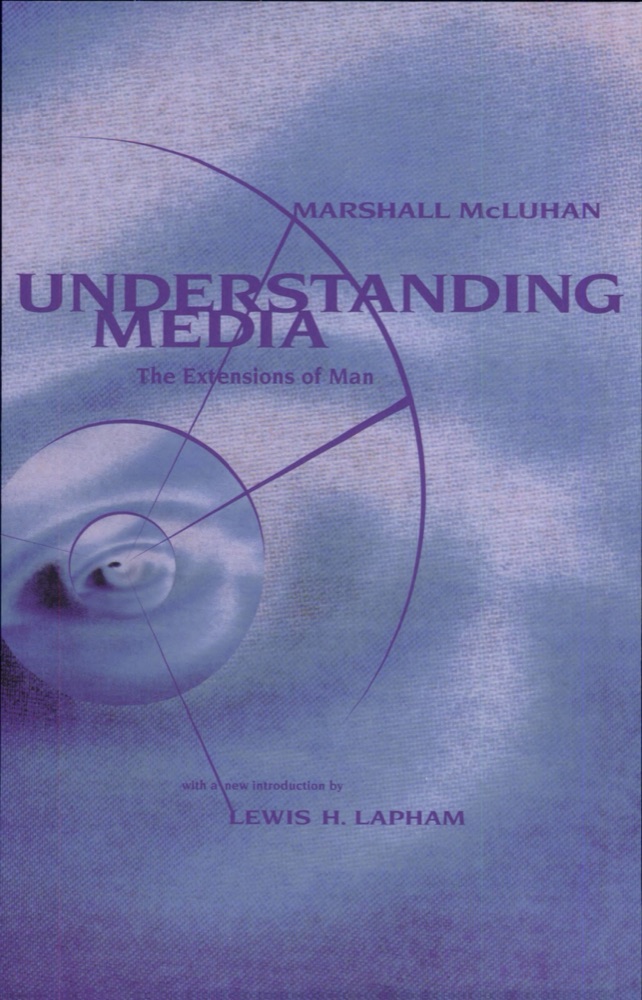 Understanding Media: The Extensions of Man
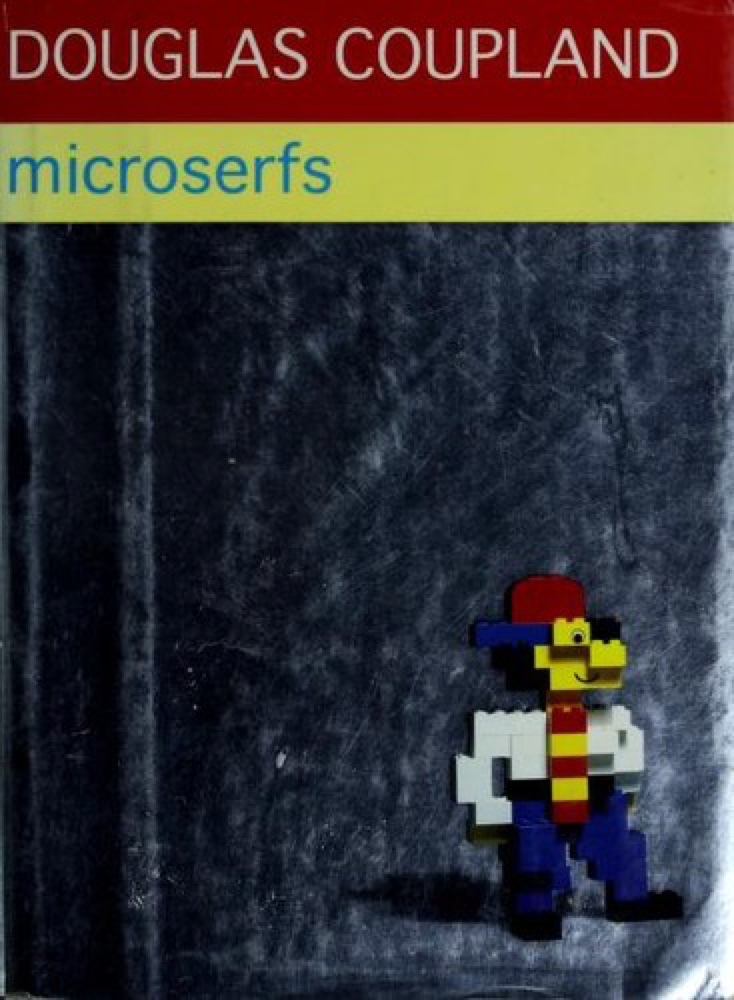 Microserfs
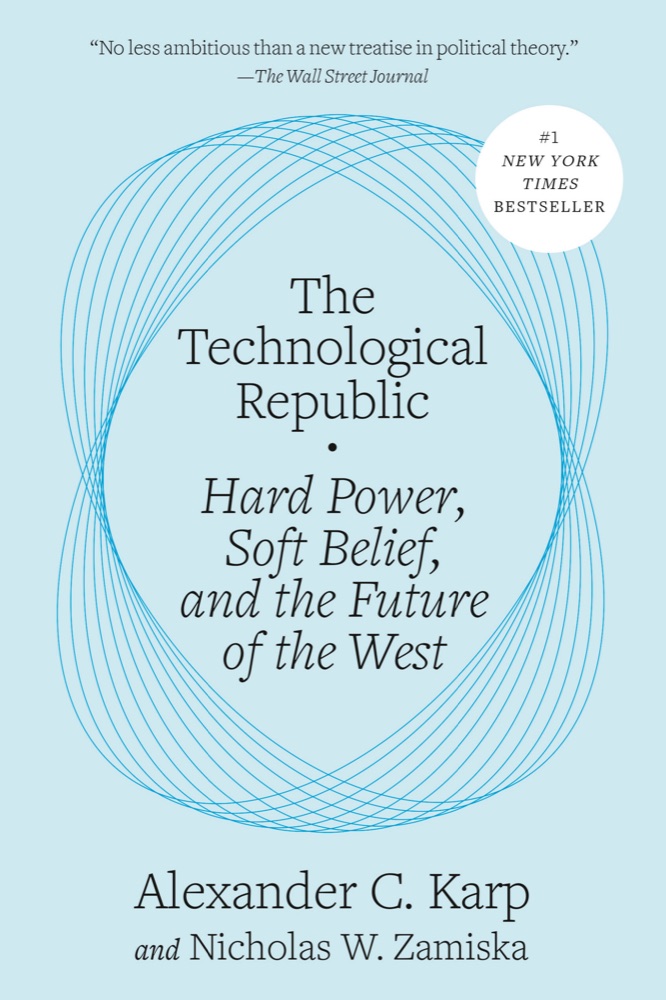 The Technological Republic: Hard Power, Soft Belief, and the Future of the West
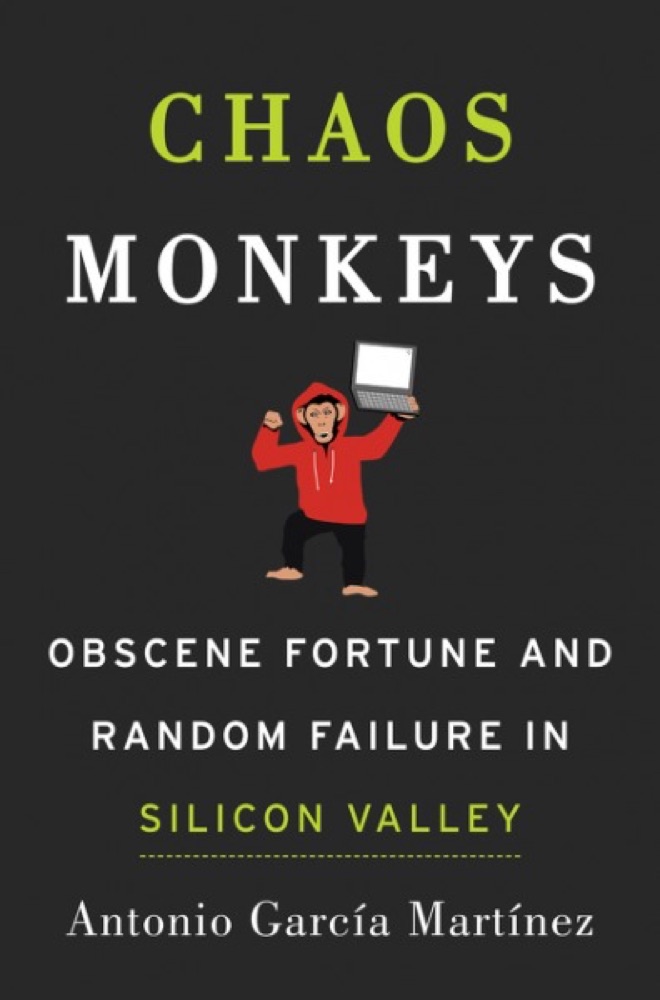 Chaos Monkeys: Obscene Fortune and Random Failure in Silicon Valley
 Irresistible: The Rise of Addictive Technology and the Business of Keeping Us Hooked
 Here Comes Everybody: The Power of Organizing Without Organizations
 Made to Stick: Why Some Ideas Survive and Others Die
 Genome
 The Lost World
 Amusing Ourselves to Death: Public Discourse in the Age of Show Business
 You Are Now Less Dumb: How to Conquer Mob Mentality, How to Buy Happiness, and All the Other Ways to Outsmart Yourself
 Eating the Dinosaur
 I Hate the Internet
 The Organized Mind: Thinking Straight in the Age of Information Overload
 Predictably Irrational: The Hidden Forces That Shape Our Decisions
 Antifragile: Things That Gain from Disorder
 Revenge of the Tipping Point
 Trick Mirror: Reflections on Self-Delusion
 Emotional Design: Why We Love (or Hate) Everyday Things
 Think Like a Freak
 The Price of Tomorrow: Why Deflation is the Key to an Abundant Future
 Because Internet: Understanding the New Rules of Language
 Echopraxia
 A Hunter-Gatherer's Guide to the 21st Century: Evolution and the Challenges of Modern Life
 Homo Deus: A History of Tomorrow