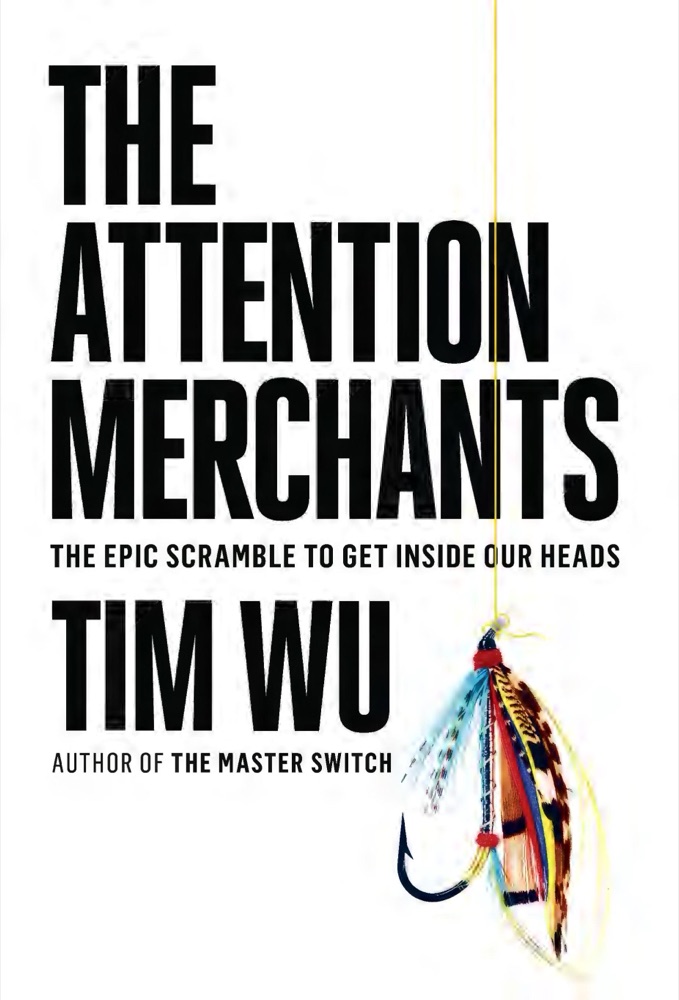

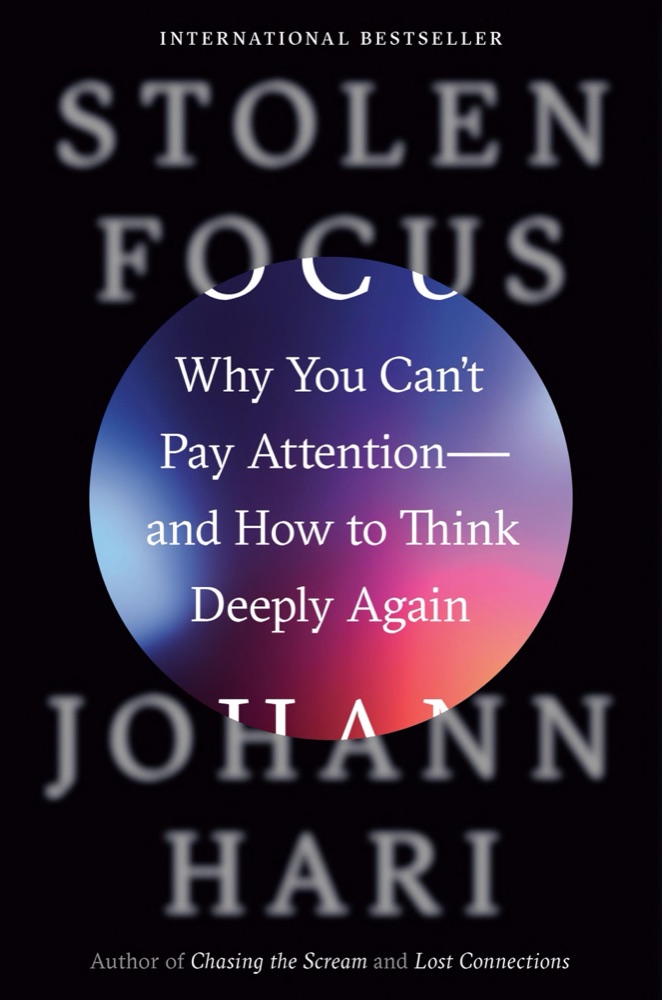
 Stolen Focus: Why You Can't Pay Attention— and How to Think Deeply Again
Quotes from the Book
As William James observed, we must reflect that, when we reach the end of our days, our life experience will equal what we have paid attention to, whether by choice or default. We are at risk, without quite fully realizing it, of living lives that are less our own than we imagine.
52
It is no coincidence that ours is a time afflicted by a widespread sense of attentional crisis, at least in the West - one captured by the phrase ''homo distractus,'' a species of ever shorter attention span known for compulsively checking his devices.
9
When an online service is free, you're not the customer. You're the product.
8
We've already seen the attention merchant's basic modus operandi: draw attention with apparently free stuff and then resell it. but a consequence of that model is a total dependence on gaining and holding attention. This means that under competition, the race will naturally run to the bottom; attention will almost invariably gravitate to the more garish, lurid, outrageous alternative, whatever stimulus may more likely engage what cognitive scientists call our ''automatic'' attention as opposed to our ''controlled'' attention, the kind we direct with intent. The race to a bottomless bottom, appealing to what one might call the audience's baser instincts, poses a fundamental, continual dilemma for the attention merchant-just how far will he go to get his harvest? If the history of attention capture teaches us anything, it is that the limits are often theoretical, and when real, rarely self-imposed.
8
The only communications truly without influence are those that one learns to ignore or never hears at all; this is why Jacques Ellul argued that it is only the disconnected—rural dwellers or the urban poor—who are truly immune to propaganda, while intellectuals, who read everything, insist on having opinions, and think themselves immune to propaganda are, in fact, easy to manipulate.
7
It is a common enough mid-career urge: having taken care of life's immediate needs, some of us yearn to chase villains, right wrongs, fight on the side of the angels.
7
The Church was the one institution whose mission depended on galvanizing attention; and through its daily and weekly offices, as well as its sometimes central role in education, that is exactly what it managed to do. At the dawn of the attention industries, then, religion was still, in a very real sense, the incumbent operation, the only large-scale human endeavor designed to capture attention and use it.
6
When we speak of living environments and their effects on us, then, we are often speaking too broadly—of the city, the countryside, and so on. Our most immediate environment is actually formed by what holds our attention from moment to moment, whether having received or taken it. As William James once put it, “My experience is what I agree to attend to.
5
Sometimes the crowd is right; often it is wrong. It remains for science to read the balance.
4
For how we spend the brutally limited resource of our attention will determine those lives to a degree most of us may prefer not to think about. As William James observed, we must reflect that, when we reach the end of our days, our life experience will equal what we have paid attention to, whether by choice or default. We are at risk, without quite fully realizing it, of living lives that are less our own than we imagine. The
4
For all our secular rationalism and technological advances, potential for surrender to the charms of magical thinking remains embedded in the human psyche, awaiting only the advertiser to awaken it.
4
Every time you find your attention captured by a poster, your awareness, and perhaps something more, has, if only for a moment, been appropriated without your consent.
4
In retrospect, the word “remote control” was ultimately a misnomer. What it finally did was to empower the more impulsive circuits of the brain in their conflict with the executive faculties, the parts with which we think we control ourselves and act rationally. It did this by making it almost effortless, practically nonvolitional, to redirect our attention—the brain had only to send one simple command to the finger in response to a cascade of involuntary cues. In fact, in the course of sustained channel surfing, the voluntary aspect of attention control may disappear entirely. The channel surfer is then in a mental state not unlike that of a newborn or a reptile. Having thus surrendered, the mind is simply jumping about and following whatever grabs it. All this leads to a highly counterintuitive point: technologies designed to increase our control over our attention will sometimes have the very opposite effect. They open us up to a stream of instinctive selections, and tiny rewards, the sum of which may be no reward at all. And despite the complaints of the advertising industry, a state of distracted wandering was not really a bad one for the attention merchants; it was far better than being ignored.
3
It would no doubt be shocking to reckon the macroeconomic price of all our time spent with the attention merchants, if only to alert us to the drag on our own productivity quotient, the economist’s measure of all our efforts. At bottom, whether we acknowledge it or not, the attention merchants have come to play an important part in setting the course of our lives and consequently the future of the human race, insofar as that future will be nothing more than the running total of our individual mental states. Does that sound like exaggeration? It was William James, the fount of American Pragmatism, who, having lived and died before the flowering of the attention industry, held that our life experience would ultimately amount to whatever we had paid attention to. At stake, then, is something akin to how one’s life is lived. That, if nothing else, ought to compel a greater scrutiny of the countless bargains to which we routinely submit, and, even more important, lead us to consider the necessity, at times, of not dealing at all. If we desire a future that avoids the enslavement of the propaganda state as well as the narcosis of the consumer and celebrity culture, we must first acknowledge the preciousness of our attention and resolve not to part with it as cheaply or unthinkingly as we so often have. And then we must act, individually and collectively, to make our attention our own again, and so reclaim ownership of the very experience of living.
3
It is shocking how little it has been necessary to defend the sheer reach of the attention merchant into the entirety of our lived experience. Formerly the state of technology imposed its own limits, but at a time when these limits have been effectively eliminated, it is for us to ask some fundamental questions: Do we draw any lines between the private and the commercial? If so, what times and spaces should we consider as too valuable, personal, or sacrosanct for the usual onslaught?
3
choices may be the cornerstone of individual freedom but, as the history of humanity shows, the urge to surrender to something larger and to transcend the self can be just as urgent, if not more so. The greatest propagandists and advertisers have always understood this.
2
any and all information that one consumes - pays attention to - will have some influence, even if just forcing a reaction. That idea, in turn, has a very radical implication, for it suggests that sometimes we overestimate our own capacity for truly independent thought.
2
What Lippmann took from the war—as he explained in his 1922 classic Public Opinion—was the gap between the true complexity of the world and the narratives the public uses to understand it—the rough “stereotypes” (a word he coined in his book). When it came to the war, he believed that the “consent” of the governed had been, in his phrase, “manufactured.
2
Industries, unlike organisms, have no organic limits on their own growth; they are constantly in search of new markets, or of new ways to exploit old ones more effectively; as Karl Marx unsympathetically observed, they ''nestle everywhere, settle everywhere, establish connexions everywhere.
2
The most basic dividing line is likely between transitory and sustained attention, the former quick, superficial, and often involuntarily provoked; the latter, deep, long-lasting, and voluntary. What matters for present purposes is that selling us things relies mainly on the former—on which the attention merchant thrives—but our happiness depends on balancing the two.
1
Walter Lippmann, a progressive journalist, co-founder of The New Republic, and a power within the Wilson administration, had been among those who pressured Wilson to take the nation to war. During the war he worked at the Creel Committee, and witnessed firsthand its power to whip the country into a fanatical assent. Despite his own initial support for the war, the ease with which the Creel Committee had succeeded turned him into something of a lifelong cynic. What Lippmann took from the war—as he explained in his 1922 classic Public Opinion—was the gap between the true complexity of the world and the narratives the public uses to understand it—the rough “stereotypes” (a word he coined in his book). When it came to the war, he believed that the “consent” of the governed had been, in his phrase, “manufactured.” Hence, as he wrote, “It is no longer possible…to believe in the original dogma of democracy; that the knowledge needed for the management of human affairs comes up spontaneously from the human heart. Where we act on that theory we expose ourselves to self-deception, and to forms of persuasion that we cannot verify.
1
It is easy to ascribe the success of such hokum to the gullibility of another age, until we stop to reflect that the techniques successfully used to sell patent medicine are still routinely used today. The lotions and potions of our times inevitably promise youthfulness, health, or weight loss, thanks to exotic ingredients like antioxidants, amino acids, miracle fruits like the pomegranate and açaí berry, extracted ketones, or biofactors. There is scarcely a shampoo or lotion for sale that does not promise an extraordinary result owing to essence of coconut, or rosemary extracts, or another botanical. As devotees of technology we are, if anything, more susceptible to the supposed degree of difference afforded by some ingenious proprietary innovation, like the “air” in Nike’s sports shoes, triple reverse osmosis in some brands of water, or the gold-plating of audio component cables. For all our secular rationalism and technological advances, potential for surrender to the charms of magical thinking remains embedded in the human psyche, awaiting only the advertiser to awaken it.
1
My experience is what I agree to attend to.
1
the lasting power of attentional habits is never to be underestimated
1
In 1956, two psychologists, Donald Horton and Richard Wohl, would conclude that television’s representation of celebrities was carefully constructed to create an “illusion of intimacy”—to make viewers believe that they actually were developing a relationship with the famous people on TV. Certain techniques particular to variety but also the chat shows produced this effect: recourse to small talk, the use of first names, and close-ups, among others, acted to close the gap between the audience and the guests, engendering the sense in the viewer of being “part of a circle of friends.” The two coined the term “para-social interaction” to describe this “intimacy at a distance.
1
We can usefully think of the mass-produced poster as an early screen—though a static version, to be sure—the phenomenon now so ubiquitous in our lives. The
1
Every instant of every day we are bombarded by information. In fact, all complex organisms, especially those with brains, suffer from information overload. Our eyes and ears receive lights and sounds (respectively) across the spectrums of visible and audible wavelengths; our skin and the rest of our innervated parts send their own messages of sore muscles or cold feet. All told, every second, our senses transmit an estimated 11 million bits of information to our poor brains, as if a giant fiber-optic cable were plugged directly into them, firing information at full bore. In light of this, it is rather incredible that we are even capable of boredom.
1
As one might gather from a painting of him scowling in a tall stovepipe hat, Day saw himself as a businessman, not a journalist. ''He needed a newspaper not to reform, not to arouse, but to push the printing business of Benjamin H. Day.'' Day's idea was to try selling a paper for a penny - the going price for many everyday items, like soap or brushes. At that price, he felt sure he could capture a much larger audience than his 6-cent rivals. But what made the prospect risky, potentially even suicidal, was that Day would then be selling his paper at a loss. What day was contemplating was a break with the traditional strategy for making profit: selling at a price higher than the cost of production. He would instead rely on a different but historically significant business model: reselling the attention of his audience, or advertising. What Day understood-more firmly, more clearly than anyone before him-was that while his readers may have thought themselves his customers, they were in fact his product.
1
the gap between the true complexity of the world and the narratives the public uses to understand it—the rough “stereotypes” (a word he coined in his book).
Watch on YouTube
About Tim Wu
We have collected 29 quotes from 1 book by Tim Wu on BookQuoters.
More about the author →About the book
Feeling attention challenged? Even assaulted? American business depends on it. In nearly every moment of our waking lives, we face a barrage of messaging, advertising enticements, branding, sponsored social media, and other efforts to harvest our attention. Few moments or spaces of our day remain uncultivated by the "attention merchants," contributing to the distracted, unfocused tenor of our times.
Tim Wu argues that this condition is not simply the byproduct of recent technological innovations but the result of more than a century's growth and expansion in the industries that feed on human attention. From the pre-Madison Avenue birth of advertising to the explosion of the mobile web; from AOL and the invention of email to the attention monopolies of Google and Facebook; from Ed Sullivan to celebritypower brandslike Oprah Winfrey, Kim Kardashian and Donald Trump, the basic business
Book details
- First published
- 2016
- Author
- Tim Wu
- Genre
- Nonfiction
- Goodreads rating
- 4.07 (5k ratings)
The buzz
- The New York TimesReview in The New York Timesprofessional review (via Book Marks)
- The Washington PostReview in The Washington Postprofessional review (via Book Marks)
- The Wall Street JournalReview in The Wall Street Journalprofessional review (via Book Marks)
- The GuardianReview in The Guardianprofessional review (via Book Marks)
- The Boston GlobeReview in The Boston Globeprofessional review (via Book Marks)
- SfgateReview in Sfgateprofessional review (via Book Marks)
Keep reading
Stolen Focus: Why You Can't Pay Attention— and How to Think Deeply Again
 Amusing Ourselves to Death: Public Discourse in the Age of Show Business
 Understanding Media: The Extensions of Man
 The Age of Magical Overthinking: Notes on Modern Irrationality
 The Medium is the Massage
 Hit Makers: The Science of Popularity in an Age of Distraction
 Distrust That Particular Flavor
 The Social Animal: The Hidden Sources of Love, Character, and Achievement
 Shop Class as Soulcraft: An Inquiry Into the Value of Work
 The Black Swan: The Impact of the Highly Improbable
 You Are Not a Gadget
 The Pleasures and Sorrows of Work
 Trust Me, I'm Lying: Confessions of a Media Manipulator
 Mastery
 The Organized Mind: Thinking Straight in the Age of Information Overload
 The Art of Thinking Clearly
 Brave New World Revisited
 The Influencing Machine: Brooke Gladstone on the Media
 The Master and His Emissary: The Divided Brain and the Making of the Western World
 Stumbling on Happiness
 Made to Stick: Why Some Ideas Survive and Others Die
 The Shockwave Rider
 Predictably Irrational: The Hidden Forces That Shape Our Decisions
 Status Anxiety
 The Tipping Point: How Little Things Can Make a Big Difference
 Homo Deus: A History of Tomorrow
 A Language Older Than Words
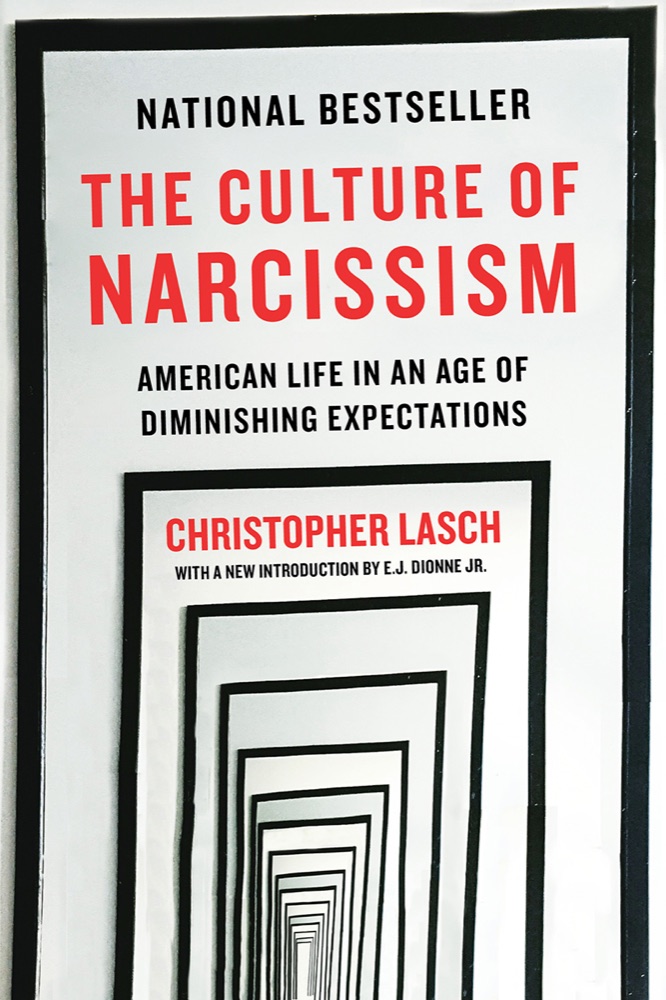 The Culture of Narcissism: American Life in An Age of Diminishing Expectations
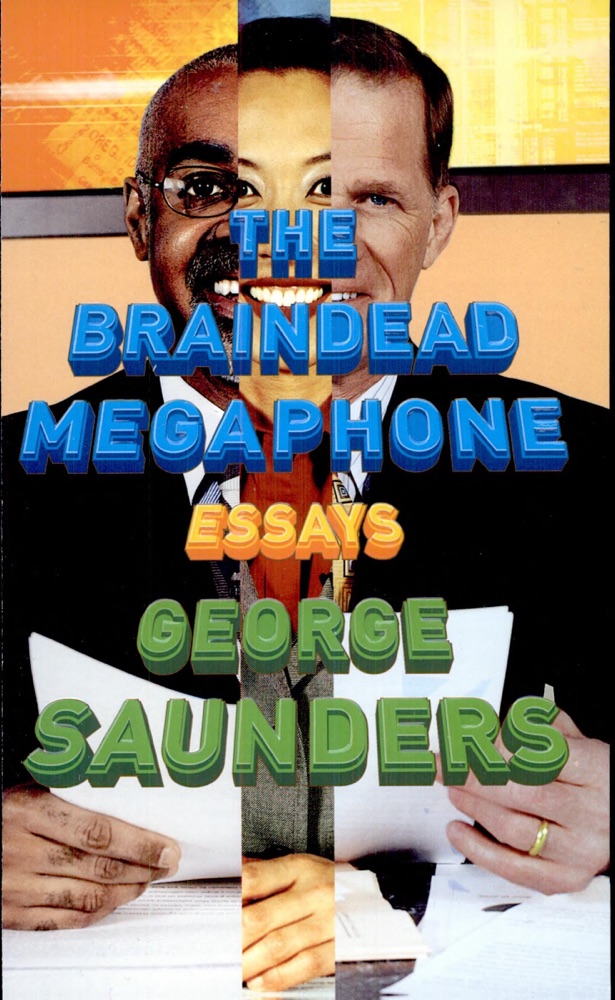 The Braindead Megaphone
 Who Owns the Future?
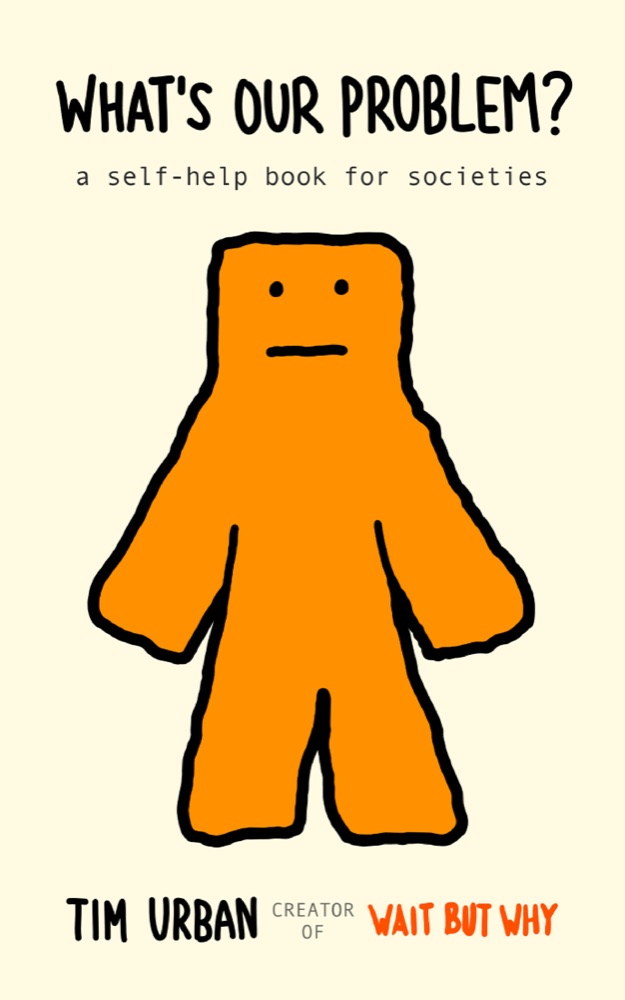 What's Our Problem?: A Self-Help Book for Societies
 The Doors of Perception & Heaven and Hell
 Influence: The Psychology of Persuasion
 You Are Not So Smart
 Revolution
 Curious: The Desire to Know and Why Your Future Depends On It
 The World Is Flat: A Brief History of the Twenty-first Century
 From Dawn to Decadence: 500 Years of Western Cultural Life, 1500 to the Present
 Fall; or, Dodge in Hell
 The Technological Republic: Hard Power, Soft Belief, and the Future of the West
 Finding Flow: The Psychology of Engagement with Everyday Life
 The Blank Slate: The Modern Denial of Human Nature
 The Freedom Manifesto
 Walden Two
 Irresistible: The Rise of Addictive Technology and the Business of Keeping Us Hooked
 Humankind: A Hopeful History
 The Tenth Insight: Holding the Vision
 The Undoing Project: A Friendship That Changed Our Minds
 Blink: The Power of Thinking Without Thinking
 Eating the Dinosaur
 The Price of Tomorrow: Why Deflation is the Key to an Abundant Future
 Creativity: Flow and the Psychology of Discovery and Invention
 The Celestine Prophecy
 What the Dog Saw and Other Adventures
 The State of the Art
 Behold a Pale Horse
 The Candy House
 The Atrocity Exhibition
 Trick Mirror: Reflections on Self-Delusion
 Children of Dune