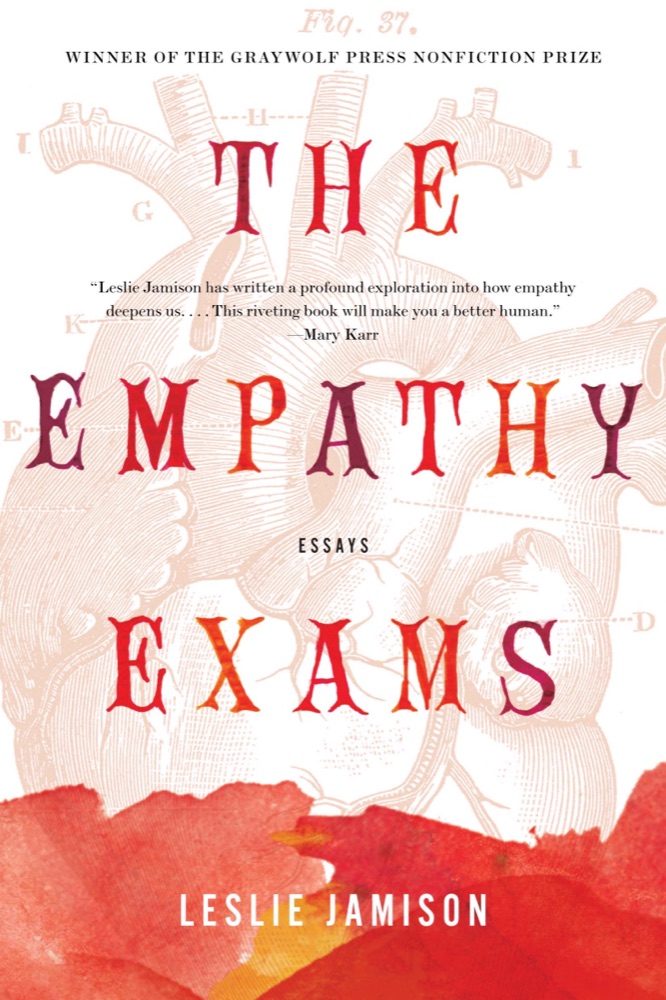

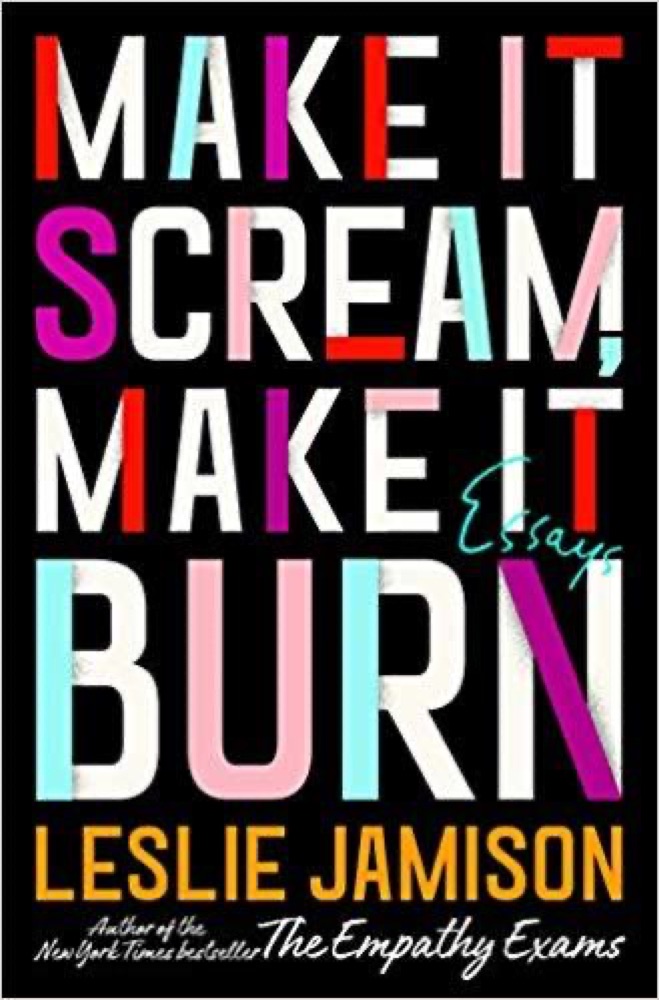
 Make It Scream, Make It Burn
Quotes from the Book
Empathy isn’t just listening, it’s asking the questions whose answers need to be listened to. Empathy requires inquiry as much as imagination. Empathy requires knowing you know nothing. Empathy means acknowledging a horizon of context that extends perpetually beyond what you can see.
117
Empathy isn't just something that happens to us - a meteor shower of synapses firing across the brain - it's also a choice we make: to pay attention, to extend ourselves. It's made of exertion, that dowdier cousin of impulse. Sometimes we care for another because we know we should, or because it's asked for, but this doesn't make our caring hollow. This confession of effort chafes against the notion that empathy should always rise unbidden, that genuine means the same thing as unwilled, that intentionality is the enemy of love. But I believe in intention and I believe in work. I believe in waking up in the middle of the night and packing our bags and leaving our worst selves for our better ones.
73
Empathy comes from the Greek empatheia - em (into) and pathos (feeling) - a penetration, a kind of travel. It suggests you enter another person's pain as you'd enter another country, through immigration and customs, border crossing by way of query: What grows where you are? What are the laws? What animals graze there?
41
When bad things happened to other people, I imagined them happening to me. I didn’t know if this was empathy or theft.
30
No trauma has discrete edges. Trauma bleeds. Out of wounds and across boundaries.
29
How do we represent female pain without producing a culture in which this pain has been fetishized to the point of fantasy or imperative?
19
The pain is what you make of it. You have to find something in it that yields. I understood my guiding imperative as: keep bleeding, but find some love in the blood.
19
Empathy requires knowing that you know nothing.
18
Sure, some news is bigger news than other news. War is bigger news than a girl having mixed feelings about the way some guy fucked her and didn't call. But I don't believe in a finite economy of empathy; I happen to think that paying attention yields as much as it taxes.
17
Pain without cause is a pain we can't trust. We assume it's been chosen or fabricated.
15
confession of effort chafes against the notion that empathy should always rise unbidden, that genuine means the same thing as unwilled, that intentionality is the enemy of love. But I believe in intention and I believe in work. I believe in waking up in the middle of the night and packing our bags and leaving our worst selves for our better ones.
13
Bad movies and bad writing and easy cliches still manage to make us feel things toward each other. Part of me is disgusted by this. Part of me celebrates it.
11
Empathy isn't just listening, it's asking the questions whose answers need to be listened to.
11
Metaphors are tiny saviors leading the way out of sentimentality, small disciples of Pound, urging "Say it new! Say it new!" It's hard for emotion to feel flat if its language is suitably novel, to feel excessive if its rendering is suitably opaque. Metaphors translate emotion into surprising and sublime language, but they also help us deflect and diffuse the glare of revelation.
10
Empathy isn’t just remembering to say that must really be hard—it’s figuring out how to bring difficulty into the light so it can be seen at all. Empathy isn’t just listening, it’s asking the questions whose answers need to be listened to. Empathy requires inquiry as much as imagination. Empathy requires knowing you know nothing. Empathy means acknowledging a horizon of context that extends perpetually beyond what you can see:
9
This is the grand fiction of tourism, that bringing our bodies somewhere draws that place closer to us, or we to it. It's a quick fix of empathy.
9
We care in order to be cared for. We care because we are porous. The feelings of others matter, they are like matter: they carry weight, exert gravitational pull.
8
We want our wounds to speak for themselves, but usually we end up having to speak for them.
7
Girl gets; girl gets; girl gets. Not that she is granted things but that things keep happening to her, until they don’t—until she starts doing unto others as they have done, hurting everyone who ever hurt her, moving the world with her mind, conducting its objects like an orchestra.
7
We like who we become in response to injustice: it makes it easy to choose a side. Our capacity to care, to get angry, is called forth like some muscle we weren't entirely aware we had.
7
Imagining someone else's pain with too much surety can be as damaging as failing to imagine it.
7
I needed people to deliver my feelings back to me in a form that was legible. Which is a superlative kind of empathy to seek, or to supply: an empathy that rearticulates more clearly what it's shown.
6
She is going through something large and she shouldn't be afraid to confess its size, shouldn't be afraid she's 'making too big a deal of it.' She shouldn't be afraid of not feeling enough because the feelings will keep coming--different ones--for years. I would tell her that commonality doesn't inoculate against hurt.
5
Empathy is always perched precariously between gift and invasion.
5
I think dismissing female pain as overly familiar or somehow out-of-date--twice-told, thrice-told, 1,001-nights-told--masks deeper accusations: that suffering women are playing victim, going weak, or choosing self-indulgence over bravery. I think dismissing wounds offers a convenient excuse: no need to struggle with the listening or telling anymore. Plug it up. Like somehow our task is to inhabit the jaded aftermath of terminal self-awareness once the story of all pain has already been told.
5
This is part of what we disdain about sweeteners, the fact that we can taste without consequences. Our capitalist ethos loves a certain kind of inscription—insisting we can read tallies of sloth and discipline inscribed across the body itself—and artificial sweeteners threaten this legibility. They offer a way to cheat the arithmetic of indulgence and bodily consequence, just like sentimentality offers feeling without the price of complication.
5
Bolivian women sewed their lips shut for days. They threaded needles through their skin to stop their speech, to show what good speaking had done them.
5
Pain that gets performed is still pain.
4
Watch on YouTube
About Leslie Jamison
We have collected 57 quotes from 2 books by Leslie Jamison on BookQuoters.
More about the author →More by Leslie Jamison
Make It Scream, Make It Burn
About the book
From personal loss to phantom diseases, The Empathy Exams is a bold and brilliant collection; winner of the Graywolf Press Nonfiction Prize.
Beginning with her experience as a medical actor who was paid to act out symptoms for medical students to diagnose, Leslie Jamison’s visceral and revealing essays ask essential questions about our basic understanding of others: How should we care about each other? How can we feel another’s pain, especially when pain can be assumed, distorted, or performed? Is empathy a tool by which to test or even grade each other? By confronting pain—real and imagined, her own and others’—Jamison uncovers a personal and cultural urgency to feel. She draws from her own experiences of illness and bodily injury to engage in an exploration that extends far beyond her life, spanning wide-ranging territory—from poverty tourism to phantom diseases, street violence to
Book details
- First published
- 2014
- Author
- Leslie Jamison
- Genre
- Nonfiction
- Goodreads rating
- 3.67 (16k ratings)
Keep reading
 Atlas of the Heart: Mapping Meaningful Connection and the Language of Human Experience
 In Shock: My Journey from Death to Recovery and the Redemptive Power of Hope
 In The Blood
Make It Scream, Make It Burn
In The Blood
Make It Scream, Make It Burn
 All Is Not Forgotten
 On Connection
 Regarding the Pain of Others
 See No Stranger: A Memoir and Manifesto of Revolutionary Love
 Tell Me More: Stories About the 12 Hardest Things I'm Learning to Say
 Maybe You Should Talk to Someone: A Therapist, Her Therapist, and Our Lives Revealed
 Nonviolent Communication: A Language of Life
 The Trauma Cleaner: One Woman's Extraordinary Life in the Business of Death, Decay, and Disaster
 The Examined Life: How We Lose and Find Ourselves
 We Learn Nothing
 Bittersweet: How Sorrow and Longing Make Us Whole
 Social Intelligence: The New Science of Human Relationships
 The Silent Patient
 In the Dream House
 A Mind Spread Out on the Ground
 Grief Is for People
 Anthropology of an American Girl
 In an Unspoken Voice: How the Body Releases Trauma and Restores Goodness
 Kitchen Table Wisdom: Stories that Heal
 We Can Do Hard Things: Answers to Life's 20 Questions
 Drive Your Plow Over the Bones of the Dead
 The Wisdom of Your Body: Finding Healing, Wholeness, and Connection through Embodied Living
 In the Realm of Hungry Ghosts: Close Encounters with Addiction
 Any Ordinary Day
 The Storyteller
 Good Morning, Monster: A Therapist Shares Five Heroic Stories of Emotional Recovery
 Yumi and the Nightmare Painter
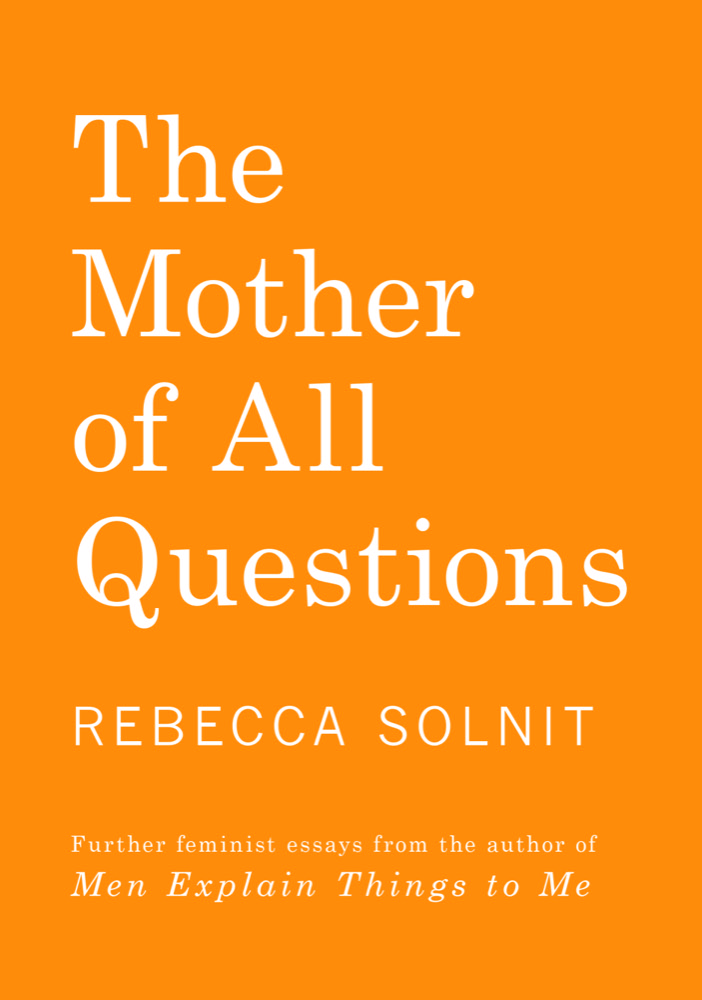 The Mother of All Questions
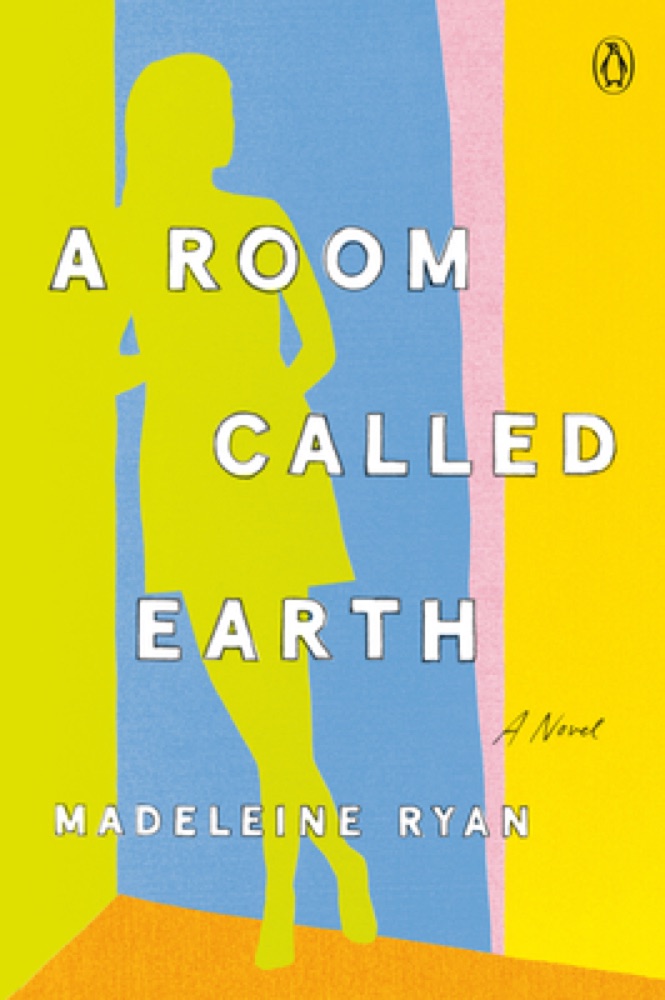 A Room Called Earth
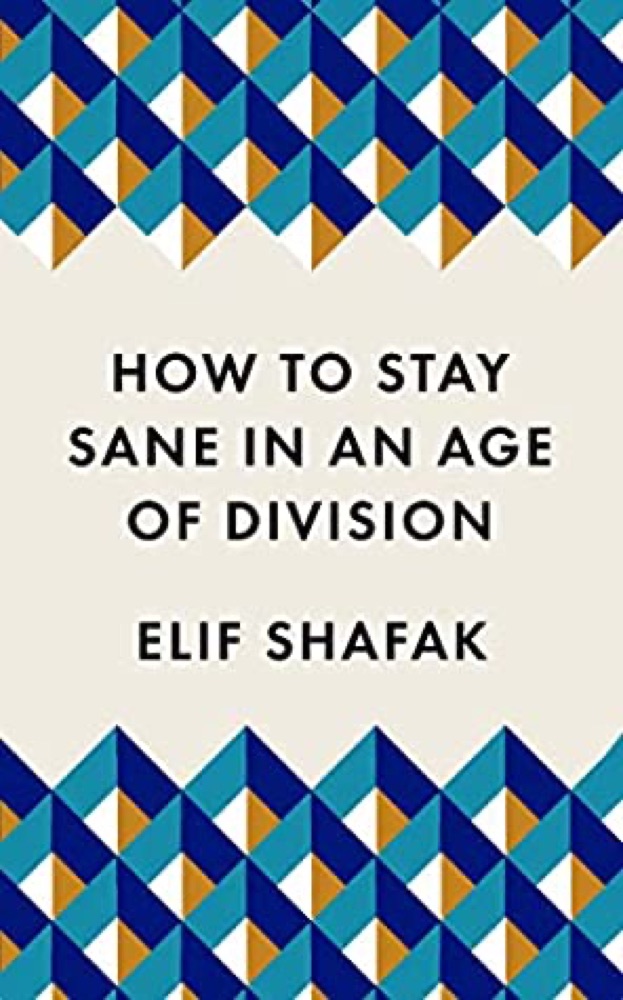 How to Stay Sane in an Age of Division
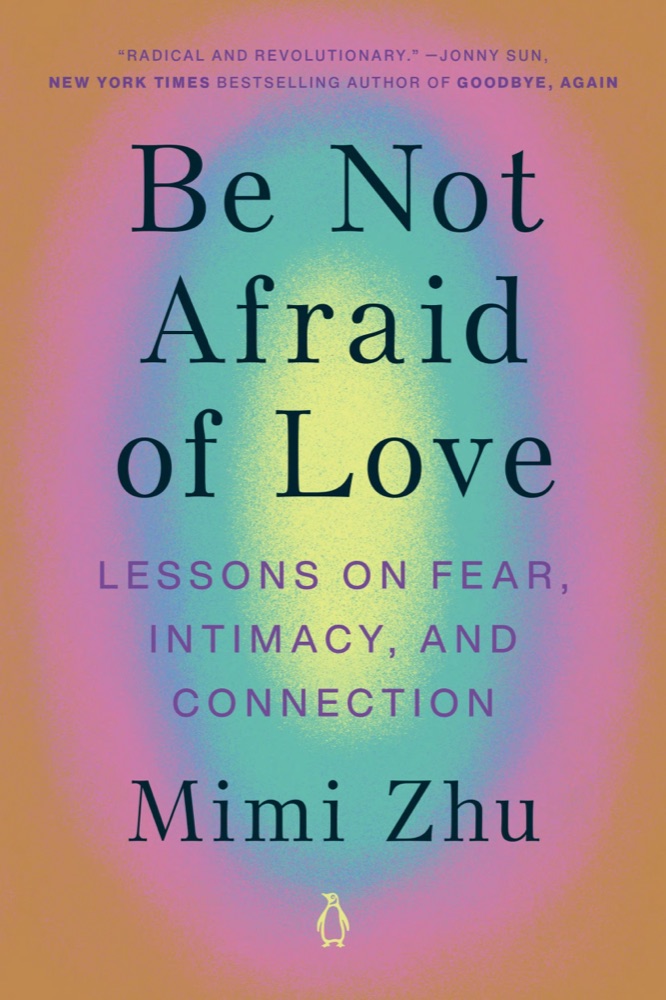 Be Not Afraid of Love: Lessons on Fear, Intimacy, and Connection
 The Argonauts
 The School of Life: An Emotional Education
 Piercing: A Novel
 Citizen: An American Lyric
 Children of the Mind
 Imagine Me Gone
 What It Takes to Heal: How Transforming Ourselves Can Change the World
 The Source of Self-Regard: Selected Essays, Speeches, and Meditations
 Stitches: A Handbook on Meaning, Hope, and Repair
 Thin Girls
 Mama's Last Hug: Animal Emotions and What They Tell Us about Ourselves
 Almond
 The Friend
 Sister Outsider: Essays and Speeches
 Carry On, Warrior: Thoughts on Life Unarmed
 Brief Interviews with Hideous Men
 Stories of Your Life and Others
 Between Two Kingdoms: A Memoir of a Life Interrupted
![It's Not OK to Feel Blue [and other lies]](/i/book/g/ed/its-not-ok-to-feel-blue-and-other-lies.jpg) It's Not OK to Feel Blue [and other lies]
It's Not OK to Feel Blue [and other lies]
 Managing Expectations: A Memoir in Essays – A Poignant Collection of Personal Stories on Acting, Failure, and Motherhood's Joy
 A Language Older Than Words
 The Science of Evil: On Empathy and the Origins of Cruelty
 Marrow
 Infinite Jest