
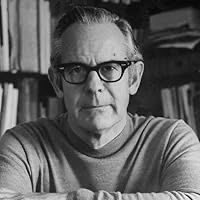
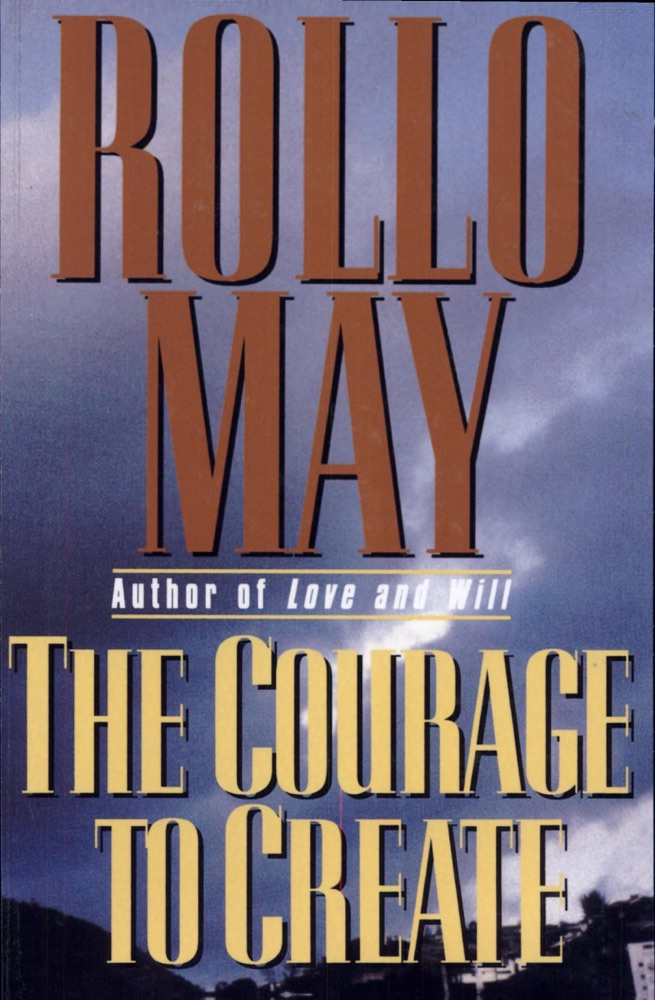
 The Courage to Create
Quotes from the Book
Depression is the inability to construct a future.
85
It is dangerous to know, but it is more dangerous not to know.
61
The poet, like the lover, is a menace on the assembly line.
55
When inward life dries up, when feeling decreases and apathy increases, when one cannot affect or even genuinely touch another person, violence flares up as a daimonic necessity for contact, a mad drive forcing touch in the most direct way possible.
36
But there comes a point (and this is the challenge facing modern technological Western man) when the cult of technique destroys feeling, undermines passion, and blots out individual identity. The technologically efficient lover...has lost the power to be carried away; he knows only too well what he is doing. At this point, technology diminishes consciousness and demolishes eros. Tools are no longer an enlargement of consciousness but a substitute for it and, indeed, tend to repress and truncate it.
21
For death is always in the shadow of the delight of love. In faint adumbration there is present the dread, haunting question, Will this new relationship destroy us?...The world is annihilated; how can we know whether it will ever be built up again? We give, and give up, our own center; how shall we know that we will get it back?... This...has something in common with the ecstasy of the mystic in his union with God: just as he can never be //sure// God is there, so love carries us to that intensity of consciousness in which we no longer have any guarantee of security.
17
The two persons, longing, as all individuals do, to overcome the separateness and isolation to which we all are heir as individuals, can participate in a relationship that, for the moment, is not made up of two isolated, individual experiences, but a genuine union.
15
However one may interpret this culturally, the upshot is the same: people carry within them a great number of wishes to which they react passively and which they hide. Stoicism, in our day, is not strength to overcome wishes, but to hide them. To a patient who, let us say, is interminably rationalizing and justifying this and that, balancing one thing against another as though life were a tremendous market place where all the business is done on paper and tickertape and there are never any goods, I sometimes have the inclination in psychotherapy to shout out, “Don't you ever want anything?” But I don't cry out, for it is not difficult to see that on some level the patient does want a good deal; the trouble is he has formulated and reformulated it, until it is the “rattling of dry bones,” as Eliot puts it. Tendencies have become endemic in our culture for our denial of wishes to be rationalized and accepted with the belief that this denial of the wish will result in its being fulfilled. And whether the reader would disagree with me on this or that detail, our psychological problem is the same: it is necessary for us to help the patient achieve some emotional viability and honesty by bringing out his wishes and his capacity to wish. This is not the end of therapy but it is an essential starting point.
6
Eros is the center of the vitality of a culture--its heart and soul.
5
comes from the Greek word diabolos; "diabolic" is the term in contemporary English. Diabolos, interestingly enough, literally means "to tear apart" (dia-bollein). Now it is fascinating to note that this diabolic is the antonym of "symbolic." The later comes from sym-bollein, which means "to throw together," to unite. There lie in these words tremendous implications with respect to an ontology of good and evil. The symbolic is that which draws together, ties, integrates the individual in himself and with his group; the diabolic, in contrast, is that which disintegrates and tears apart. Both of these are present in the daimonic.
4
The future does not consist of simply a state of time which is going to occur, but contains the element, “I will make it so.” Power is potentiality, and potentiality points toward the future: is something to be realized. The future is the tense in which we promise ourselves, we give a promissory note, we put ourselves on the line. Nietzsche's statement, “Man is the only animal who can make promises,” is related to our capacity to posit ourselves in the future. We are reminded here also of William James's fiat, “Let it be so.” The hopelessness of many patients, which may be expressed in depression, despair, feelings of “I can't,” and related helplessness, can be usefully seen, from one point of view, as the inability to see or construct a future.
3
Anxiety (loneliness or “abandonment anxiety” being its most painful form) overcomes the person to the extent that he loses orientation in the objective world. To lose the world is to lose one's self, and vice versa; self and world are correlates. The function of anxiety is to destroy the self-world relationship, i.e., to disorient the victim in space and time and, so long as this disorientation lasts, the person remains in the state of anxiety. Anxiety overwhelms the person precisely because of the preservation of this disorientation. Now if the person can reorient himself—as happens, one hopes, in psychotherapy—and again relate himself to the world directly, experientially, with his senses alive, he overcomes the anxiety. My slightly anthropomorphic terminology comes out of my work as a therapist and is not out of place here. Though the patient and I are entirely aware of the symbolic nature of this (anxiety doesn’t do anything, just as libido or sex drives don’t), it is often helpful for the patient to see himself as struggling against an “adversary.” For then, instead of waiting forever for the therapy to analyze away the anxiety, he can help in his own treatment by taking practical steps when he experiences anxiety such as stopping and asking just what it was that occurred in reality or in his fantasies that preceded the disorientation which cued off the anxiety. He is not only opening the doors of his closet where the ghosts hide, but he often can also then take steps to reorient himself in his practical life by making new human relationships and finding new work which interests him.
3
I recall a discussion with a highly-respected psychotherapist colleague and friend on the significance of the tragedy of Romeo and Juliet. My friend stated that the trouble with Romeo and Juliet was that they hadn't had adequate counseling. If they had had, they would not have committed suicide. Taken aback, I protested that I didn't think that was Shakespeare's point at all, and that Shakespeare, as well as the other classical writers who have created and molded the literature which speaks to us age after age, is in this drama picturing how sexual love can grasp a man and woman and hurl them into heights and depths—the simultaneous presence of which we call tragic. But my friend insisted that tragedy was a negative state and we, with our scientific enlightenment, had superseded it—or at least ought to at the earliest possible moment. I argued with him, as I do here, that to see the tragic in merely negative terms is a profound misunderstanding. Far from being a negation of life and love, the tragic is an ennobling and deepening aspect of our experience of sexuality and love. An appreciation of the tragic not only can help us avoid some egregious oversimplifications in life, but it can specifically protect us against the danger that sex and love will be banalized also in psychotherapy.
3
Whatever happens in the external world, human love and grief, pity and compassion are what matter. These emotions transcend even death.
2
We can no longer postpone the challenging question, How does one know that among the bedlam of voices which beset us all, one is really hearing his daimon? Inner 'voices'—experienced as actual or metaphorical ones—are notoriously untrustworthy; they can tell one anything. Many people hear voices, but there are few Joans of Arc. How about our schizophrenic patients who are instructed by their voices to bomb New York?
2
If my devils are to leave me, I am afraid my angels will take flight as well." — Rainer Maria Rilke (On withdrawing from psychotherapy, Letter 74)
2
What is love? He is neither mortal nor immortal, but a mean between the two. He is a great spirit (daimon) and like all spirits he is intermediate between the divine and the mortal. He is the mediator who spans the chasm which divides men and gods, and therefore in him all is bound together. — Diotima (quoted by Socrates)
2
The dispersion of the daimonic by means of impersonality has serious and destructive effects. In New York City, it is not regarded as strange that the anonymous human beings secluded in single-room occupancies are so often connected with violent crime and drug addiction. Not that the anonymous individual in New York is alone: he sees thousands of other people every day, and he knows all the famous personalities as they come, via TV, into his single room. He knows their names, their smiles, their idiosyncrasies; they bandy about in a “we're-all-friends-together” mood on the screen which invites him to join them and subtly assumes that he does join them. He knows them all. But he himself is never known. His smile is unseen; his idiosyncrasies are important to no-body; his name is unknown. He remains a foreigner pushed on and off the subway by tens of thousands of other anonymous foreigners. There is a deeply depersonalizing tragedy involved in this. The most severe punishment Yahweh could inflict on his people was to blot out their name. “Their names,” Yahweh proclaims, “shall be wiped out of the book of the living.” This anonymous man's never being known, this aloneness, is transformed into loneliness, which may then become daimonic possession. For his self-doubts—“I don't really exist since I can't affect anyone” —eat away at his innards; he lives and breathes and walks in a loneliness which is subtle and insidious. It is not surprising that he gets a gun and trains it on some passer-by—also anonymous to him. And it is not surprising that the young men in the streets, who are only anonymous digits in their society, should gang together in violent attacks to make sure their assertion is felt. Loneliness and its stepchild, alienation, can become forms of demon possession. Surrendering ourselves to the impersonal daimonic pushes us into an anonymity which is also impersonal; we serve nature’s gross purposes on the lowest common denominator, which often means with violence.
2
Our patients predict the culture by living out consciously what the masses of people are able to keep unconscious for the time being. The neurotic is cast by destiny into a Cassandra role. In vain does Cassandra, sitting on the steps of the palace at Mycenae when Agamemnon brings her back from Troy, cry, “Oh for the nightingale’s pure song and a fate like hers!” She knows, in her ill-starred life, that “the pain flooding the song of sorrow is [hers] alone,” and that she must predict the doom she sees will occur there. The Mycenaeans speak of her as mad, but they also believe she does speak the truth, and that she has a special power to anticipate events. Today, the person with psychological problems bears the burdens of the conflicts of the times in his blood, and is fated to predict in his actions and struggles the issues which will later erupt on all sides in the society. The first and clearest demonstration of this thesis is seen in the sexual problems which Freud found in his Victorian patients in the two decades before World War I. These sexual topics‒even down to the words‒were entirely denied and repressed by the accepted society at the time. But the problems burst violently forth into endemic form two decades later after World War II. In the 1920's, everybody was preoccupied with sex and its functions. Not by the furthest stretch of the imagination can anyone argue that Freud "caused" this emergence. He rather reflected and interpreted, through the data revealed by his patients, the underlying conflicts of the society, which the “normal” members could and did succeed in repressing for the time being. Neurotic problems are the language of the unconscious emerging into social awareness. A second, more minor example is seen in the great amount of hostility which was found in patients in the 1930's. This was written about by Horney, among others, and it emerged more broadly and openly as a conscious phenomenon in our society a decade later. A third major example may be seen in the problem of anxiety. In the late 1930's and early 1940's, some therapists, including myself, were impressed by the fact that in many of our patients anxiety was appearing not merely as a symptom of repression or pathology, but as a generalized character state. My research on anxiety, and that of Hobart Mowrer and others, began in the early 1940's. In those days very little concern had been shown in this country for anxiety other than as a symptom of pathology. I recall arguing in the late 1940's, in my doctoral orals, for the concept of normal anxiety, and my professors heard me with respectful silence but with considerable frowning. Predictive as the artists are, the poet W. H. Auden published his Age of Anxiety in 1947, and just after that Bernstein wrote his symphony on that theme. Camus was then writing (1947) about this “century of fear,” and Kafka already had created powerful vignettes of the coming age of anxiety in his novels, most of them as yet untranslated. The formulations of the scientific establishment, as is normal, lagged behind what our patients were trying to tell us. Thus, at the annual convention of the American Psychopathological Association in 1949 on the theme “Anxiety,” the concept of normal anxiety, presented in a paper by me, was still denied by most of the psychiatrists and psychologists present. But in the 1950's a radical change became evident; everyone was talking about anxiety and there were conferences on the problem on every hand. Now the concept of "normal" anxiety gradually became accepted in the psychiatric literature. Everybody, normal as well as neurotic, seemed aware that he was living in the “age of anxiety.” What had been presented by the artists and had appeared in our patients in the late 30's and 40's was now endemic in the land.
2
This is [our] true predicament: together with the fear of man we have lost the love of man, the affirmation of man, the will to man." — Friedrich Nietzsche
1
The denied part of you is the source of hostility and aggression, but when you can, through consciousness, integrate it into your self-system, it becomes the source of energy and spirit which enlivens you.
1
Only when we have seen and foreseen what we dread shall we be rewarded by that dazzling, unforeseen wing-footed wanderer. We could not find him if he were not in some sense of our being, and yet of our being but as water with fire, a noise with silence. He is of all things the most difficult, for that only which comes easily can never be a portion of our being." — W.B. Yeats
1
The day when a woman enjoys her first love cuts her in two. The man is the same after his first love as he was before. The woman is from the day of her first love another. That continues so all through life. The man spends a night by a woman and goes away. His life and body are always the same. The woman conceives. As a mother she is another person than the woman without child. She carries the fruit of the night nine months long in her body. Something grows. Something grows into her life that never again departs from it. She is a mother. She is and remains a mother even though her child die, though all her children die. For at one time she carried the child under her heart. And it does not go out of her heart ever again. Not even when it is dead. All this a man does not know. He does not know the difference before love and after love, before motherhood and after motherhood. Only a woman can know that and speak of that. She must always be maiden and always be mother. Before every love she is maiden, after every love she is mother." — An Abyssinian Noblewoman
1
The confrontation with death—and the reprieve from it—makes everything look so precious, so sacred, so beautiful that I feel more strongly than ever the impulse to love it, to embrace it, and to let myself be overwhelmed by it. My river has never looked so beautiful. Death, and its ever present possibility makes love, passionate love, more possible. I wonder if we could love passionately, if ecstasy would be possible at all, if we knew we'd never die." — Abraham Maslow
1
Beloved Pan, and all ye other gods who haunt this place, give me beauty in the inward soul; and may the outward and inward man be at one. May I reckon the wise to be the wealthy, and may I have such a quantity of gold as none but the temperate can carry. — Socrates
1
Eros is the drive for union and reproduction in the biological realm. Even in the birds and animals, we see the "desire of procreation," and they are "in agony when they take the infection of love, which begins with the desire of union." Human beings are changing all the time—hair, flesh, bones, blood, and the whole body are always changing. Which is true not only of the body, but also of the soul, whose habits, tempers, opinions, desires, pleasures, pains, fears, never remain the same. Now in all this change, what binds the diversity together? It is eros, the power in us yearning for wholeness, the drive to give meaning and pattern to our variegation, and integration to counter our disintegrative trends. It is a dimension of experience which is psychological and emotional as well as biological. This is eros.
1
Eros, the god of love, emerged to create the earth. Before, all was silent, bare, and motionless. Now all was life, joy, and motion. — Early Greek Myth
1
In such an age of radical transition, the individual is driven back into his own consciousness. When the foundations of love and will have been shaken and all but destroyed, we cannot escape the necessity of pushing below the surface and searching within our own consciousness and within the 'collective unarticulated consciousness' of our society for the sources of love and will. I use the term 'source' as the French speak of the 'source' of a river—the springs from which the water originally comes. If we can find the sources from which love and will spring, we may be able to discover the new forms which these essential experiences need in order to become viable in the new age into which we are moving. In this sense, our quest, like every such exploration, is a moral quest, for we are seeking the bases on which a morality for a new age can be founded. Every sensitive person finds himself in Stephen Dedalus' position: 'I go forth... to forge in the smithy of my soul the uncreated conscience of my race.
1
The new basis for care is shown by the interest of psychologists and philosophers in emphasizing feeling as the basis of human existence. We now need to establish feeling as a legitimate aspect of our way of relating to reality. When William James says, “Feeling is everything,” he means not that there is nothing more than feeling, but that everything starts there. Feeling commits one, ties one to the object, and ensures action. But in the decades after James made this "existentialist" statement, feeling became demoted and was disparaged as merely subjective. Reason or, more accurately, technical reason was the guide to the way issues were to be settled. We said “I feel” as a synonym for “I vaguely believe” when we didn't know—little realizing that we cannot know except as we feel.
1
In a Vietnamese village, as reported in a recent TV program, gas bombs had been thrown into holes and huts to drive out of hiding any remaining Viet Cong. Only women and children came out of the holes. One child, about two, routed out with his mother, sat on her lap looking up at a large Negro marine. The side of the child's face was dirty with the smoke and soot from the smoke bomb; he had been crying. He looked up with an expression of bewilderment, now beyond crying, not knowing what to make of such a world. But the camera shifted immediately to the black American marine looking down at the child, commanding and somewhat hideous in his battle uniform. He had exactly the same expression: bewilderment, his eyes wide as he stared down at the child, his mouth slightly ajar; but his stare did not move, remaining fixed on that child. What should he make of a world in which he does this? While the announcer of the program rattled on about how the gas is harmful for only ten minutes and then leaves no deleterious effects, the cameraman kept his camera focused on the face of the marine. Was the marine recalling that he too had once been a child in some Southern state, driven from caves and huts where he had been playing, recognizing that he too was of a race held to be 'inferior'? That he too was once a child in a world at which he could only look out and up, a world causing pain for reasons no child can begin to fathom? Does he see himself in this child, see his bewilderment as a black child?
Watch on YouTube
About Rollo May
We have collected 89 quotes from 3 books by Rollo May on BookQuoters.
More about the author →More by Rollo May
The Courage to Create
 Man's Search for Himself
About the book
The heart of the human dilemma, according to Rollo May, is the failure to understand the real meaning of love and will, their source and interrelation. Bringing fresh insight to these concepts, May shows how we can attain a deeper consciousness.
Book details
- First published
- 1969
- Author
- Rollo May
- Genre
- Nonfiction
- Goodreads rating
- 4.13 (3k ratings)
Keep reading
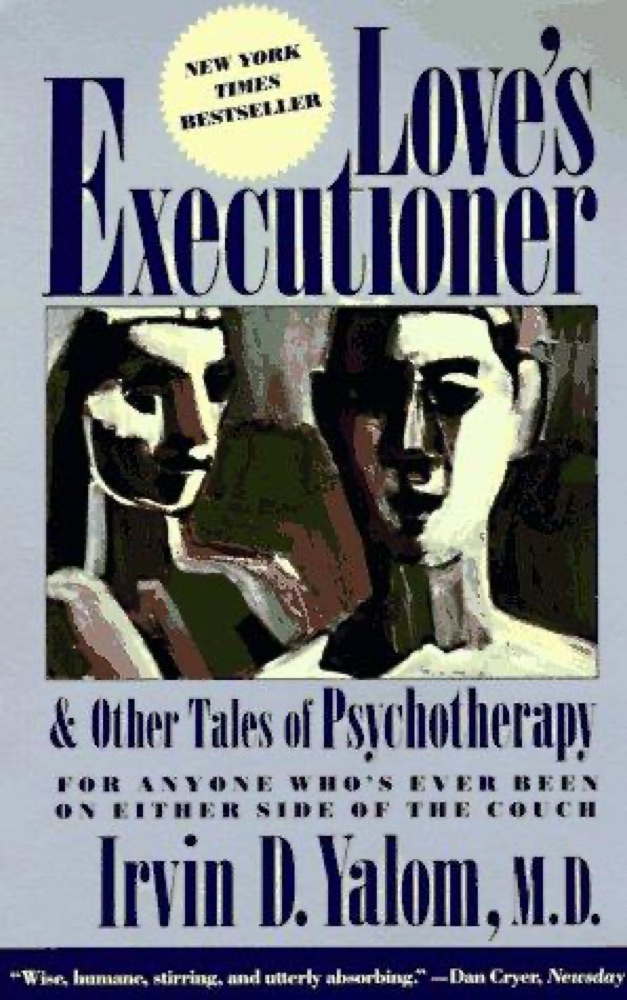 Love's Executioner and Other Tales of Psychotherapy
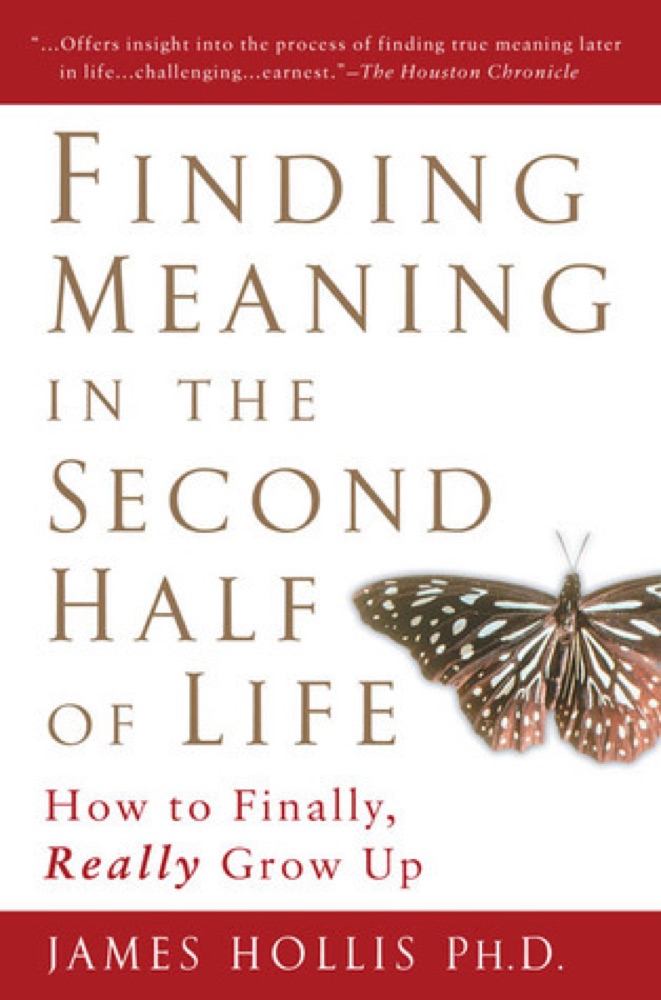 Finding Meaning in the Second Half of Life: How to Finally, Really Grow Up
 Man and His Symbols
 The Unbearable Lightness of Being
 Identity
 When Nietzsche Wept
 Gravity and Grace
 Man's Search for Ultimate Meaning
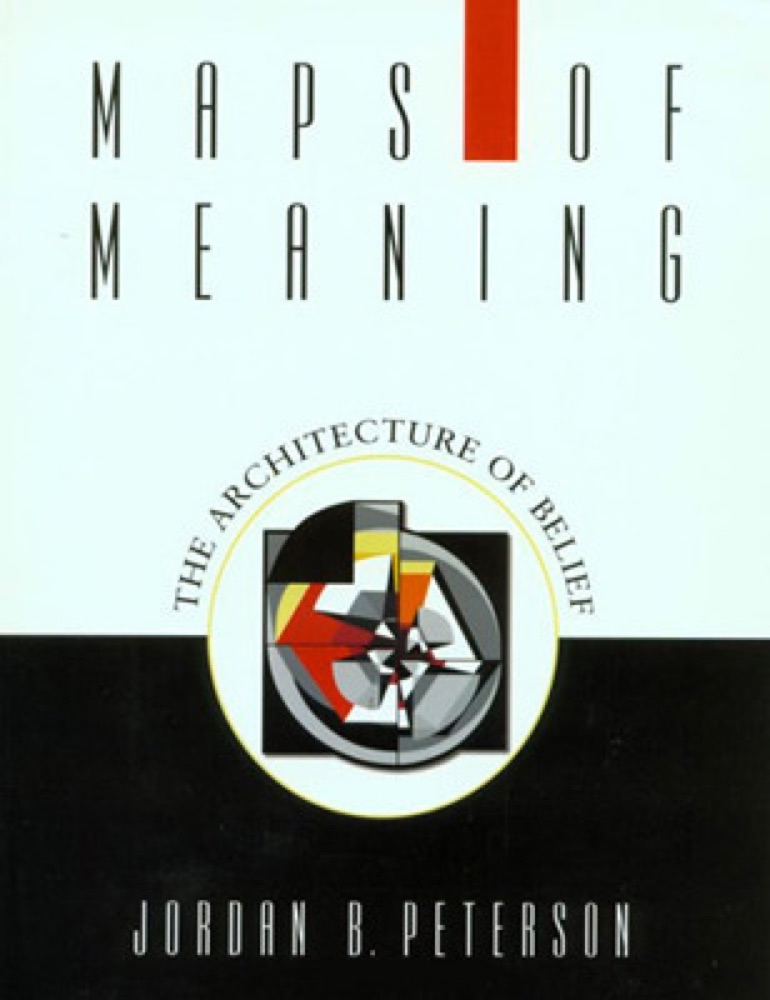 Maps of Meaning: The Architecture of Belief
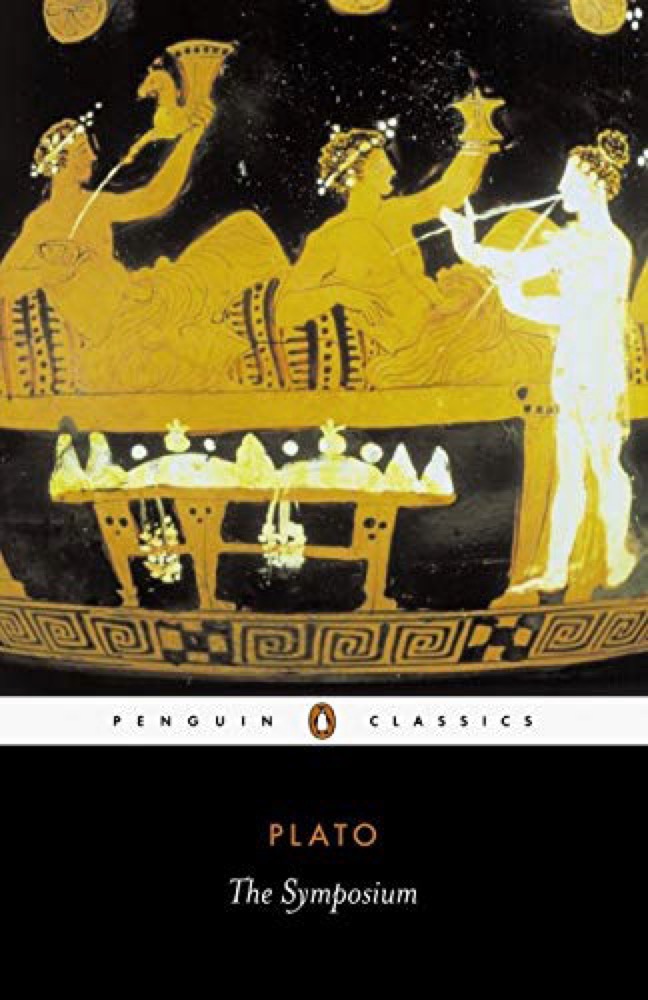 The Symposium
 The Mountain Shadow
 The Will to Power
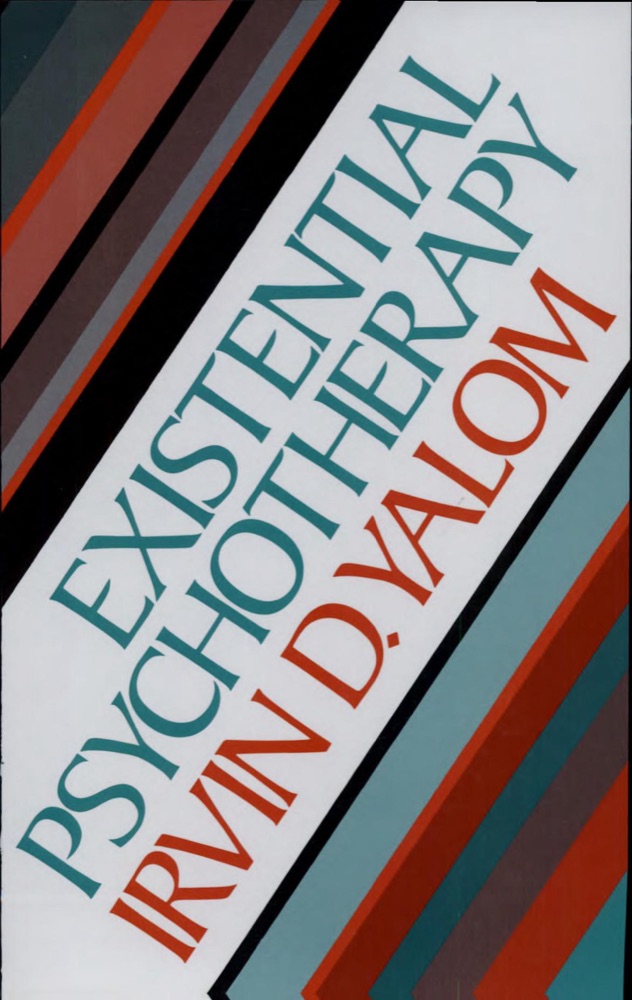 Existential Psychotherapy
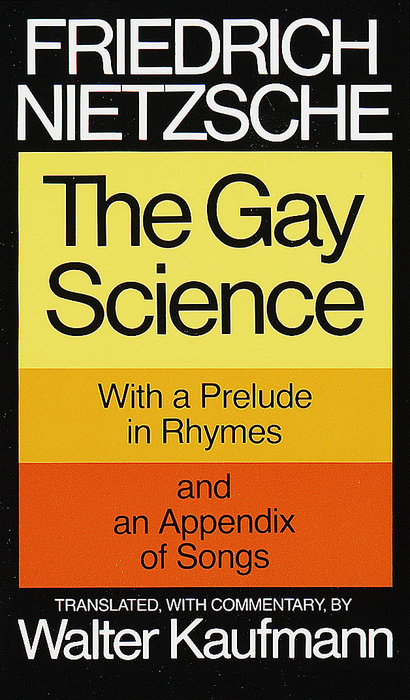 The Gay Science
 Messages from the Masters: Tapping into the Power of Love
 See No Stranger: A Memoir and Manifesto of Revolutionary Love
 The Brothers Karamazov
 A General Theory of Love
 Myths to Live By
 Twilight of the Idols/The Anti-Christ
 The Art of Loving
 Sexus
Sexus
 The Myth of Sisyphus and Other Essays
 Works of Love
 The Varieties of Religious Experience
 Modern Man in Search of a Soul
 A Return to Love: Reflections on the Principles of "A Course in Miracles"
 The Wisdom of Insecurity: A Message for an Age of Anxiety
 Eros the Bittersweet
 On Love
 The Book: On the Taboo Against Knowing Who You Are
 The World as Will and Representation, Vol 1
 Love, Freedom, and Aloneness: The Koan of Relationships
 The Myth of Sisyphus
 The Perennial Philosophy
 The Wise Heart: A Guide to the Universal Teachings of Buddhist Psychology
 Either/Or: A Fragment of Life
 Care of the Soul: A Guide for Cultivating Depth and Sacredness in Everyday Life
 The Consolations of Philosophy
 Levels of Life
 The Book of Laughter and Forgetting
 Arch of Triumph
 A Lover's Discourse: Fragments
 Anam Cara: A Book of Celtic Wisdom
 The Passion
 The Glass Bead Game
 The Sane Society
 A Luminous Republic
 Just Above My Head
 He: Understanding Masculine Psychology
 The Power of Myth
 Figuring
 The Soul's Code: In Search of Character and Calling
 In Search of Lost Time
 Toward a Psychology of Being
 The Way to Love: The Last Meditations of Anthony de Mello
 Doctor Zhivago
 The Devil in the Flesh