
 Quiet: The Power of Introverts in a World That Can't Stop Talking
Quotes from the Book
[INTJs and INFJs] Are willing to concede that the impossible takes a little longer—but not much
26
Introverted feeling types have a wealth of warmth and enthusiasm, but they may not show it until they know someone well. They wear their warm side inside, like a fur-lined coat.
17
For many Extraverts, "hell at a party" is "not being able to get in." Many introverts see it as "being there.
17
The best-adjusted people are the ‘psychologically patriotic,’ who are glad to be what they are.
16
If you are the intuitive, you need to observe the following rules: First, say explicitly, at the start, what you are talking about. (Otherwise, you are requiring your sensing listeners to hold what you say in mind until they can figure out what you are referring to, which they seldom think is worth doing.) Second, finish your sentences; you know what the rest of the sentence is, but your listeners do not. Third, give notice when changing the subject. And last, don’t switch back and forth between subjects. Your listeners cannot see the parentheses. Finish one point and move explicitly to the next.
15
It follows that these people [INTJs] cannot be successfully coerced. They will not even be told anything without their permission, but they will accept an offer of facts, opinions, or theories, for free consideration;
13
Conventional measures of mental ability, such as intelligence tests and scholarship, show some of the very highest records belong to INFP and INFJ types, who relegate thinking to last place or next to last. The preference for thinking appears to have far less intellectual effect than the preference for intuition, even in some technical fields, such as scientific research, where its influence was expected to be most important.
11
They [INTJs] are likely, however, to organize themselves out of a job. They cannot continually reorganize the same thing, and a finished product has no more interest. Thus, they need successive new assignments, with bigger and better problems, to stretch their powers.
7
Intuitives tend to define intelligence as “quickness of understanding” and so prejudge the case in their own favor, for intuition is very quick.
6
Whereas the intuitive children like to learn by insight, the sensing children prefer to learn by familiarization.
5
They [sensing types] will not skim in reading, and they hate to have people skim in conversation. Believing that matters inferred are not as reliable as matters explicitly stated, they are annoyed when you leave things to their imagination. (Intuitives are often annoyed—if not actually bored—when you do not.)
5
The satisfaction earned by the striving can be whatever furnishes the strongest incentive to the child, for example, extra pleasures or possessions for a sensing child, special freedoms or opportunities for an intuitive, new dignity or authority for a thinker, and more praise or companionship for a feeling type.
4
In teaching, the other main problem related to type is the students’ interest. Intuitives and sensing types differ greatly in what they find interesting in any subject even if they like, that is, are interested in, the same subjects. Intuitives like the principle, the theory, the why. Sensing types like the practical application, the what and the how.
4
The sensing person has faith in the actual, the intuitive in the possible. As each concentrates accordingly, they seldom look at anything from the same angle. The difference in viewpoint becomes acute, often exasperating, when the person with sensing has authority over the intuitive and the intuitive comes up with a blazing idea. The intuitive tends to present the idea in rough form—suitable for another intuitive—and expects the sensing listener to concentrate on the main point and ignore the sketchy details. The sensing person’s natural reaction is to concentrate on what is missing, decide that the idea cannot work (and of course it cannot in that form), and flatly turn it down. One idea is wasted, one intuitive is frustrated, and one sensing executive has to deal with a resentful subordinate.
4
No type has everything. The introverts and thinkers, though likely to arrive at the most profound decisions, may have the most difficulty in getting their conclusions accepted. The opposite types are best at communicating, but not as adept at determining the truths to be communicated.
4
The sensing types are not in such close communication with their unconscious. They do not trust an answer that suddenly appears. They do not think it prudent to pounce. They tend to define intelligence as “soundness of understanding,” a sure and solid agreement of conclusions with facts; and how is that possible until the facts have been considered?
4
Extraverted thinkers tend to exaggerate for the sake of emphasis, and the victim will be too outraged by the unfair overstatement to pay attention to the part that is true.
3
the thinker’s natural process is inappropriate when used in personal relations with feeling types, because it includes a readiness to criticize. Criticism is of great value when thinkers apply it to their own conduct or conclusions, but it has a destructive effect upon feeling types, who need a harmonious climate.
3
In order to come to a conclusion, people use the judging attitude and have to shut off perception for the time being.
2
Among the NF people, the introverts (INF) work out their insights slowly and carefully, searching for eternal verities. The extraverts (ENF) have an urge to communicate and put their inspirations into practice. If the extraverts’ results are more extensive, the introverts’ may be more profound.
2
The introvert’s main interests are in the inner world of concepts and ideas, while the extravert is more involved with the outer world of people and things.
2
the presentation of a good idea can usually be designed to suit the listener’s interests. Sensing types, who take facts more seriously than possibilities, want an explicit statement of the problem before they consider possible solutions. Intuitives want the prospect of an interesting possibility before they look at the facts. Thinkers demand that a statement have a beginning, a logically arranged and concise sequence of points, and an end—especially an end. And feeling types are mainly interested in matters that directly affect people.
2
they [thinkers] can remember how feeling types respond to sympathy and appreciation; a little of either will greatly tone down a necessary criticism, but the thinker must express the sympathy or appreciation first.
2
Unless thinkers carry their respect for cause and effect into the field of human relations, they may not have much awareness of people.
2
Finally, although extraverts certainly have more worldly wisdom and a better sense of expediency, introverts have a corresponding advantage in unworldly wisdom. They are closer to the eternal truths. The contrast is especially apparent when an extravert and an introvert are brought up side by side in the same family. The introvert child is often able to grasp and accept a moral principle—“yours and mine,” for example—in its abstract form. The extravert child is usually unimpressed by the abstract principle, and usually must experience it; then, having learned the hard way what others think, the extravert has a basis for conduct.
2
THE CONDUCT OF extraverts is based on the outer situation. If they are thinkers, they tend to criticize or analyze or organize it; feeling types may champion it, protest against it, or try to mitigate it; sensing types may enjoy it, use it, or good naturedly put up with it; and intuitives tend to try to change it.
2
Those people who prefer intuition are so engrossed in pursuing the possibilities it presents that they seldom look very intently at the actualities. For instance, readers who prefer sensing will tend to confine their attention to what is said here on the page. Readers who prefer intuition are likely to read between and beyond the lines to the possibilities that come to mind.
1
Perceiving is here understood to include the processes of becoming aware of things, people, occurrences, and ideas. Judging includes the processes of coming to conclusions about what has been perceived. Together, perception and judgment, which make up a large portion of people’s total mental activity, govern much of their outer behavior, because perception—by definition—determines what people see in a situation, and their judgment determines what they decide to do about it. Thus, it is reasonable that basic differences in perception or judgment should result in corresponding differences in behavior.
1
All too often, others with whom we come in contact do not reason as we reason, or do not value the things we value, or are not interested in what interests us.
1
Perception without judgment is spineless; judgment with no perception is blind. Introversion lacking any extraversion is impractical; extraversion with no introversion is superficial.
1
Watch on YouTube
About Isabel Briggs Myers
About the book
Like a thumbprint, personality type provides an instant snapshot of a person's uniqueness. Drawing on concepts originated by Carl Jung, this book distinguishes four categories of personality styles and shows how these qualities determine the way you perceive the world and come to conclusions about what you've seen. It then explains what they mean for your success in school, at a job, in a career and in your personal relationships. For more than 60 years, the Myers-Briggs Type Indicator (MBTI) tool has been the most widely used instrument in the world for determining personality type, and for more than 25 years, Gifts Differing has been the preeminent source for understanding it.
Book details
- First published
- 1980
- Author
- Isabel Briggs Myers
- Genre
- Nonfiction
- Goodreads rating
- 4.07 (4k ratings)
Keep reading
Quiet: The Power of Introverts in a World That Can't Stop Talking
 The Social Animal: The Hidden Sources of Love, Character, and Achievement
 Surrounded by Idiots
 The Elephant in the Brain: Hidden Motives in Everyday Life
 How to Know a Person: The Art of Seeing Others Deeply and Being Deeply Seen
 Think Again: The Power of Knowing What You Don't Know
 Please Understand Me II: Temperament, Character, Intelligence
 The Laws of Human Nature
 Blink: The Power of Thinking Without Thinking
 Social Intelligence: The New Science of Human Relationships
 Emotional Intelligence: Why It Can Matter More Than IQ
 How the Mind Works
 Emotional Design: Why We Love (or Hate) Everyday Things
 If I Understood You, Would I Have This Look on My Face?: My Adventures in the Art and Science of Relating and Communicating
 Mastery
 The Age of Magical Overthinking: Notes on Modern Irrationality
 Thinking, Fast and Slow
 The Stuff of Thought: Language as a Window into Human Nature
 The Complete Enneagram: 27 Paths to Greater Self-Knowledge
 Mindwise: How We Understand What Others Think, Believe, Feel, and Want
 The Master and His Emissary: The Divided Brain and the Making of the Western World
 Creativity: Flow and the Psychology of Discovery and Invention
 Curious: The Desire to Know and Why Your Future Depends On It
 The Undoing Project: A Friendship That Changed Our Minds
 Emotional Intelligence 2.0: With Access Code
 Psych: The Story of the Human Mind
 The 7 Habits of Highly Effective People: Personal Workbook
 The Highly Sensitive Person: How to Thrive When the World Overwhelms You
 Antifragile: Things That Gain from Disorder
 How to Stay Sane
 The Art of Thinking Clearly
 Think: A Compelling Introduction to Philosophy
 How We Decide
 Intuition: Knowing Beyond Logic
 Atlas of the Heart: Mapping Meaningful Connection and the Language of Human Experience
 A Whole New Mind: Why Right-Brainers Will Rule the Future
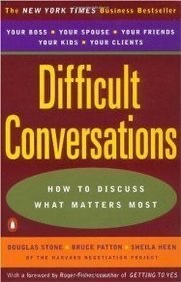 Difficult Conversations: How to Discuss What Matters Most
 Solitude: A Return to the Self
 Range: Why Generalists Triumph in a Specialized World
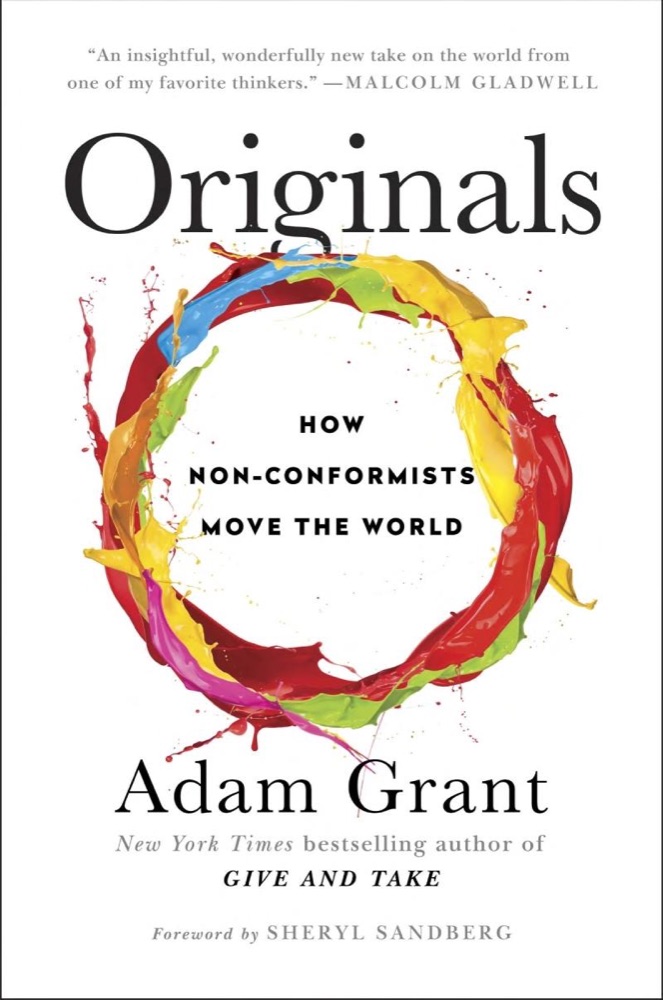 Originals: How Non-Conformists Move the World
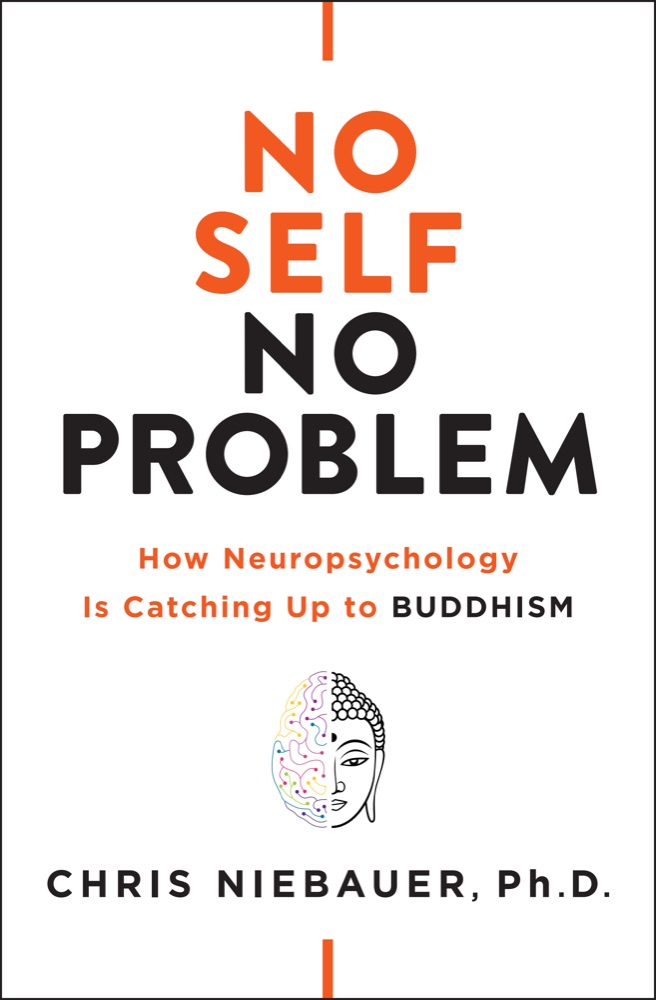 No Self, No Problem: How Neuropsychology Is Catching Up to Buddhism
 Shop Class as Soulcraft: An Inquiry Into the Value of Work
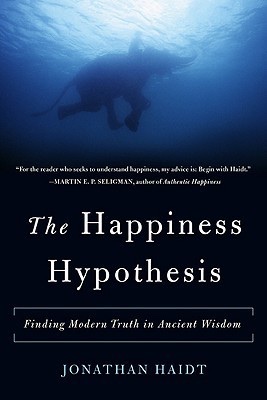 The Happiness Hypothesis: Finding Modern Truth in Ancient Wisdom
 The Black Swan: The Impact of the Highly Improbable
 Stumbling on Happiness
 Descartes' Error: Emotion, Reason and the Human Brain
 The Fourth Way
 Think Like a Freak
 Impro: Improvisation and the Theatre
 In Sheep's Clothing: Understanding and Dealing With Manipulative People
 Getting More: How to Negotiate to Achieve Your Goals in the Real World
 On Becoming a Person: A Therapist's View of Psychotherapy
 Maps of Meaning: The Architecture of Belief
 The Relationship Cure: A 5 Step Guide to Strengthening Your Marriage, Family, and Friendships
 The Art of Being
 An Enquiry Concerning Human Understanding
 Figuring