
 Bittersweet: How Sorrow and Longing Make Us Whole
Quotes from the Book
Introverts, in contrast, may have strong social skills and enjoy parties and business meetings, but after a while wish they were home in their pajamas. They prefer to devote their social energies to close friends, colleagues, and family. They listen more than they talk, think before they speak, and often feel as if they express themselves better in writing than in conversation. They tend to dislike conflict. Many have a horror of small talk, but enjoy deep discussions.
There's zero correlation between being the best talker and having the best ideas.
Spend your free time the way you like, not the way you think you're supposed to.
The highly sensitive [introverted] tend to be philosophical or spiritual in their orientation, rather than materialistic or hedonistic. They dislike small talk. They often describe themselves as creative or intuitive. They dream vividly, and can often recall their dreams the next day. They love music, nature, art, physical beauty. They feel exceptionally strong emotions--sometimes acute bouts of joy, but also sorrow, melancholy, and fear. Highly sensitive people also process information about their environments--both physical and emotional--unusually deeply. They tend to notice subtleties that others miss--another person's shift in mood, say, or a lightbulb burning a touch too brightly.
Don't think of introversion as something that needs to be cured.
Or at school you might have been prodded to come “out of your shell”—that noxious expression which fails to appreciate that some animals naturally carry shelter everywhere they go, and that some humans are just the same.
The secret to life is to put yourself in the right lighting. For some, it's a Broadway spotlight; for others, a lamplit desk. Use your natural powers -- of persistence, concentration, and insight -- to do work you love and work that matters. Solve problems. make art, think deeply.
Introversion- along with its cousins sensitivity, seriousness, and shyness- is now a second-class personality trait, somewhere between a disappointment and a pathology. Introverts living in the Extrovert Ideal are like women in a man's world, discounted because of a trait that goes to the core of who they are. Extroversion is an enormously appealing personality style, but we've turned it into an oppressive standard to which most of us feel we must conform.
So stay true to your own nature. If you like to do things in a slow and steady way, don't let others make you feel as if you have to race. If you enjoy depth, don't force yourself to seek breadth. If you prefer single-tasking to multi-tasking, stick to your guns. Being relatively unmoved by rewards gives you the incalculable power to go your own way.
We have two ears and one mouth and we should use them proportionally.
I worry that there are people who are put in positions of authority because they're good talkers, but they don't have good ideas. It's so easy to confuse schmoozing ability with talent. Someone seems like a good presenter, easy to get along with, and those traits are rewarded. Well, why is that? They're valuable traits, but we put too much of a premium on presenting and not enough on substance and critical thinking.
If you're an introvert, you also know that the bias against quiet can cause deep psychic pain. As a child you might have overheard your parents apologize for your shyness. Or at school you might have been prodded to come "out of your shell" -that noxious expression which fails to appreciate that some animals naturally carry shelter everywhere they go, and some humans are just the same.
Shyness is the fear of social disapproval or humiliation, while introversion is a preference for environments that are not overstimulating. Shyness is inherently painful; introversion is not.
Whoever you are, bear in mind that appearance is not reality. Some people act like extroverts, but the effort costs them energy, authenticity, and even physical health. Others seem aloof or self-contained, but their inner landscapes are rich and full of drama. So the next time you see a person with a composed face and a soft voice, remember that inside her mind she might be solving an equation, composing a sonnet, designing a hat. She might, that is, be deploying the powers of quiet.
The purpose of school should be to prepare kids for the rest of their lives, but too often what kids need to be prepared for is surviving the school day itself.
Spend your free time the way you like, not the way you think you're supposed to. Stay home on New Year's Eve if that's what makes you happy. Skip the committee meeting. Cross the street to avoid making aimless chitchat with random acquaintances. Read. Cook. Run. Write a story. Make a deal with yourself that you'll attend a set number of social events in exchange for not feeling guilty when you beg off.
It's not that there is no small talk...It's that it comes not at the beginning of conversations but at the end...Sensitive people...'enjoy small talk only after they've gone deep' says Strickland. 'When sensitive people are in environments that nurture their authenticity, they laugh and chitchat just as much as anyone else.
Evangelicalism has taken the Extrovert Ideal to its logical extreme...If you don't love Jesus out loud, then it must not be real love. It's not enough to forge your own spiritual connection to the divine; it must be displayed publicly.
We don't need giant personalities to transform companies. We need leaders who build not their own egos but the institutions they run.
It's as if they have thinner boundaries separating them from other people's emotions and from the tragedies and cruelties of the world.
We know from myths and fairy tales that there are many different kinds of powers in this world. One child is given a light saber, another a wizard's education. The trick is not to amass all the different kinds of power, but to use well the kind you've been granted.
We don’t ask why God chose as his prophet a stutterer with a public speaking phobia. But we should. The book of Exodus is short on explication, but its stories suggest that introversion plays yin to the yang of extroversion; that the medium is not always the message; and that people followed Moses because his words were thoughtful, not because he spoke them well.
I had always imagined Rosa Parks as a stately woman with a bold temperament, someone who could easily stand up to a busload of glowering passengers. But when she died in 2005 at the age of ninety-two, the flood of obituaries recalled her as soft-spoken, sweet, and small in stature. They said she was "timid and shy" but had "the courage of a lion." They were full of phrases like "radical humility" and "quiet fortitude.
Love is essential, gregariousness is optional.
Introverts need to trust their gut and share their ideas as powerfully as they can. This does not mean aping extroverts; ideas can be shared quietly, they can be communicated in writing, they can be packaged into highly produced lectures, they can be advanced by allies. The trick for introverts is to honor their own styles instead of allowing themselves to be swept up by prevailing norms.
Don't think of introversion as something that needs to be cured...Spend your free the way you like, not the way you think you're supposed to.
What if you love knowledge for its own sake, not necessarily as a blueprint to action? What if you wish there were more, not fewer reflective types in the world?
Indeed, your biggest challenge may be to fully harness your strengths. You may be so busy trying to appear like a zestful, reward-sensitive extrovert that you undervalue your own talents, or feel underestimated by those around you. But when you’re focused on a project that you care about, you probably find that your energy is boundless.
For example, highly sensitive people tend to be keen observers who look before they leap. They arrange their lives in ways that limit surprises. They're often sensitive to sights, sounds, smells, pain, coffee. They have difficulty when being observed (at work, say, or performing at a music recital) or judged for general worthiness (dating, job interviews). But there are new insights. The highly sensitive tend to be philosophical or spiritual in their orientation, rather than materialistic or hedonistic. They dislike small talk. They often describe themselves as creative or intuitive (just as Aron's husband had described her). They dream vividly, and can often recall their dreams the next day. They love music, nature, art, physical beauty. They feel exceptionally strong emotions -- sometimes acute bouts of joy, but also sorrow, melancholy, and fear. Highly sensitive people also process information about their environments -- both physical and emotional -- unusually deeply. They tend to notice subtleties that others miss -- another person's shift in mood, say, or a lightbulb burning a touch too brightly.
Did you know?
- The book took Susan Cain about seven years to research and write.
- Cain argues that at least one-third of the people we know are introverts.
- It distinguishes a twentieth-century shift from a "culture of character" to a "culture of personality."
- Cain's related TED talk on the power of introverts became one of the platform's most-watched talks.
- It reached the New York Times best-seller list and topped the 2012 Goodreads Choice Awards for nonfiction.
- A young-readers adaptation, "Quiet Power," was later published in 2016.
About Susan Cain
Susan Cain is an American writer and former corporate lawyer who studied at Princeton University and Harvard Law School before turning to writing about introversion and psychology. "Quiet" was her first book, and its accompanying TED talk became one of the most-viewed of all time.
More about the author →More by Susan Cain
Bittersweet: How Sorrow and Longing Make Us Whole
 Quiet Power: The Secret Strengths of Introverts
About the book
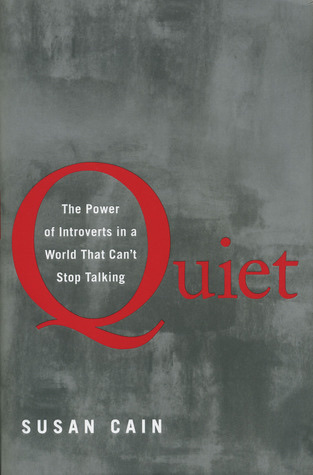
"Quiet: The Power of Introverts in a World That Can't Stop Talking" is Susan Cain's 2012 nonfiction study of introversion and the cultural forces that undervalue it. Drawing on psychology, neuroscience, business, and history, Cain argues that at least a third of people are introverts who tend to prefer listening, solitude, and focused work over group collaboration and constant socializing, yet live in institutions built around an "Extrovert Ideal." The book took roughly seven years to research and write.
A central thread is historical: Cain traces how twentieth-century America shifted from what she calls a "culture of character" to a "culture of personality," so that gregariousness and self-promotion came to be prized over quiet reflection. She examines how this bias shapes schools, open-plan offices, and group brainstorming, and questions the assumption that charisma equals leadership or good ideas. She also considers the partly innate, neurobiological basis of introversion, arguing that introverts are drawn to lower levels of stimulation, while allowing that people can act as "pseudo-extroverts" for goals they care about if they preserve restorative time alone.
The book became a major popular-psychology bestseller and cultural touchstone, reaching the New York Times best-seller list and winning the Goodreads Choice Award for best nonfiction of 2012. Paired with Cain's widely viewed TED talk, it helped spark broad public conversation about the strengths of introverts and prompted collaborations on workplace and office design. Reviewers largely praised its argument and evidence, while some critics found the writing earnest to a fault or its definition of introversion overly broad.
Book details
- First published
- 2012
- Length
- 333 pages
- Reading time
- 5 hours
- Author
- Susan Cain
- Genre
- Nonfiction
- Goodreads rating
- 4.07 (482k ratings) →
Movie & TV adaptations
- IMDb
If you liked this, read…
- 1Susan Cain: BittersweetCain's later book, again exploring an undervalued temperament and inner life.
- 2The Introvert Advantage by Marti Olsen LaneyA practical guide to thriving as an introvert, echoing Quiet's themes.
- 3Thinking, Fast and Slow by Daniel KahnemanPopular psychology grounded in research that reframes how the mind works.
Keep reading
Quiet Power: The Secret Strengths of Introverts
 The Introvert's Way: Living a Quiet Life in a Noisy World
 The Laws of Human Nature
 Introverts in the Church: Finding Our Place in an Extroverted Culture
 Surrounded by Idiots
 The Things You Can See Only When You Slow Down: How to Be Calm in a Busy World
 The Social Animal: The Hidden Sources of Love, Character, and Achievement
 The Highly Sensitive Person: How to Thrive When the World Overwhelms You
 The Fran Lebowitz Reader
 Social Intelligence: The New Science of Human Relationships
 The Elephant in the Brain: Hidden Motives in Everyday Life
 Mastery
 Be a People Person
 How to Know a Person: The Art of Seeing Others Deeply and Being Deeply Seen
 Maybe You Should Talk to Someone: A Therapist, Her Therapist, and Our Lives Revealed
 Excellent Advice for Living: Wisdom I Wish I'd Known Earlier
 The School of Life: An Emotional Education
 Dare to Lead
 Stillness Is the Key
 A Way of Being
 The 7 Habits of Highly Effective People: Personal Workbook
 Gifts Differing: Understanding Personality Type
 Stay Sexy & Don't Get Murdered: The Definitive How-To Guide
 A Circle of Quiet
 Radical Candor: Be a Kickass Boss Without Losing Your Humanity
 Orbiting the Giant Hairball: A Corporate Fool's Guide to Surviving with Grace
 Ego Is the Enemy
 The Element: How Finding Your Passion Changes Everything
 Presence: Bringing Your Boldest Self to Your Biggest Challenges
 Personality Isn't Permanent: Break Free from Self-Limiting Beliefs and Rewrite Your Story
 How to Win Friends & Influence People
 101 Essays That Will Change The Way You Think
 How to Be Interesting: In 10 Simple Steps
 Tribe Of Mentors: Transformative Wisdom From Icons and Innovators to Help You Navigate Life's Challenges
 Antifragile: Things That Gain from Disorder
 If I Understood You, Would I Have This Look on My Face?: My Adventures in the Art and Science of Relating and Communicating
 Impro: Improvisation and the Theatre
 The Art of Living: The Classical Manual on Virtue, Happiness and Effectiveness
 Party of One: The Loner's Manifesto
 Silence: In the Age of Noise
 Psycho-Cybernetics
 Let's Talk: ...About Making Your Life Exciting, Easier, And Exceptional
 Finding Flow: The Psychology of Engagement with Everyday Life
 The Light We Carry: Overcoming in Uncertain Times
 How to Be a Bawse: A Guide to Conquering Life
 Think Like a Freak
 Flow: The Psychology of Optimal Experience
 Emotional Intelligence 2.0: With Access Code
 A Room Called Earth
 The World According to Mister Rogers: Important Things to Remember
 The Happiness Hypothesis: Finding Modern Truth in Ancient Wisdom
 Show Your Work!: 10 Ways to Share Your Creativity and Get Discovered
 Professional Troublemaker: The Fear-Fighter Manual
 Different, Not Less: A Neurodivergent's Guide to Embracing Your True Self and Finding Your Happily Ever After
 Crucial Conversations: Tools for Talking When Stakes are High
 Adulting: How to Become a Grown-up in 468 Easy(ish) Steps
 Sorry I'm Late, I Didn't Want to Come: An Introvert's Year of Living Dangerously
 The Art of Thinking Clearly
 The Art of Asking; or, How I Learned to Stop Worrying and Let People Help
 On Connection