

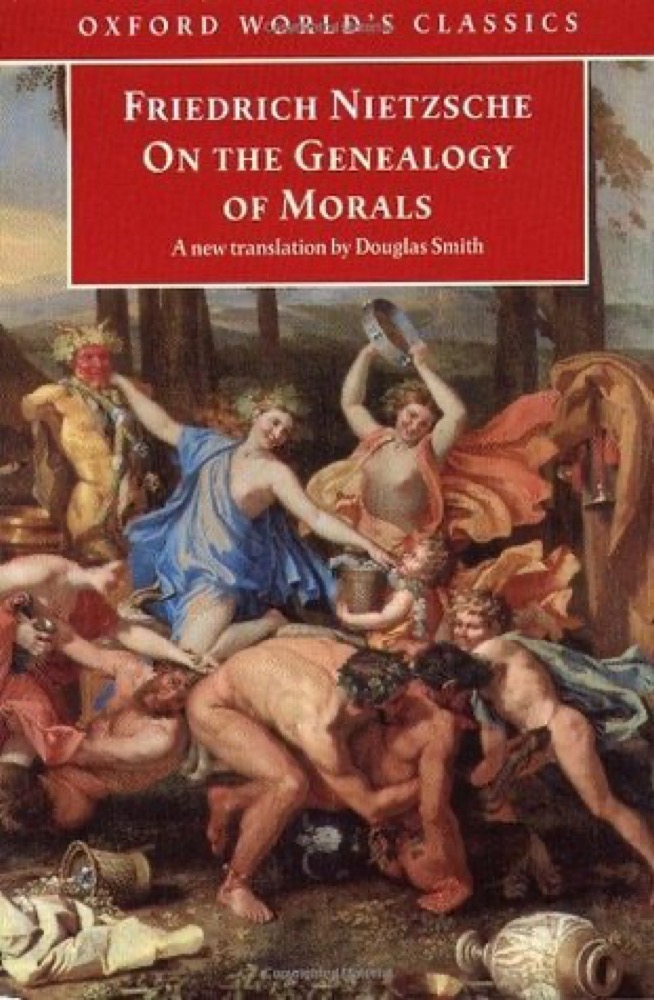
 On the Genealogy of Morals
Quotes from the Book
Without music, life would be a mistake.
74.6k
All truly great thoughts are conceived while walking.
1.7k
To learn to see- to accustom the eye to calmness, to patience, and to allow things to come up to it; to defer judgment, and to acquire the habit of approaching and grasping an individual case from all sides. This is the first preparatory schooling of intellectuality. One must not respond immediately to a stimulus; one must acquire a command of the obstructing and isolating instincts.
226
Freedom is the will to be responsible for ourselves.
158
One is fruitful only at the cost of being rich in contradictions.
107
I mistrust all systematizers and avoid them. the will to a system is a lack of integrity.
88
The desire for a strong faith is not the proof of a strong faith, rather the opposite. If one has it one may permit oneself the beautiful luxury of skepticism: one is secure enough, fixed enough for it.
70
if we possess a why of life we can put up with almost any how.
66
If you wish to strive for peace of soul and pleasure, then believe; if you wish to be a devotee of truth, then inquire.
57
Man does not strive for happiness; only the Englishman does that.
48
Which is it? Is man only a blunder of God? Or is God only a blunder of man?
47
My conception of freedom. — The value of a thing sometimes does not lie in that which one attains by it, but in what one pays for it — what it costs us. Liberal institutions cease to be liberal as soon as they are attained: later on, there are no worse and no more thorough injurers of freedom than liberal institutions.
45
For truth to tell, dancing in all its forms cannot be excluded from the curriculum of all noble education: dancing with the feet, with ideas, with words, and, need I add that one must also be able to dance with pen- that one must learn how to write
45
Do you want to go along with others? or go on ahead? or go off on your own?...you must know what you want and that you want. Fourth question for the conscience.
37
Only ideas won by walking have any value.
35
We no longer have a sufficiently high estimate of ourselves when we communicate. Our true experiences are not garrulous. They could not communicate themselves if they wanted to: they lack words. We have already grown beyond whatever we have words for. In all talking there lies a grain of contempt. Speech, it seems, was devised only for the average medium, communicable. The speaker has already vulgarized himself by speaking.
32
Even the most courageous among us only rarely has the courage to face what he already knows.
26
Are you one who looks on? or lends a hand? - or who looks away, sidles off?...Third question for the conscience.
26
When the anarchist, as the mouthpiece of the declining levels of society, insists on 'right,' 'justice,' 'equal rights' with such beautiful indignation, he is just acting under the pressure of his lack of culture, which cannot grasp why he really suffers, what he is poor in– in life. A drive to find causes is powerful in him: it must be somebody's fault that he's feeling bad . . . Even his 'beautiful indignation' does him good; all poor devils like to whine--it gives them a little thrill of power. Even complaints, the act of complaining, can give life the charm on account of which one can stand to live it: there is a subtle dose of revenge in every complaint; one blames those who are different for one's own feeling bad, and in certain circumstances even being bad, as if they were guilty of an injustice, a prohibited privilege. 'If I'm a lowlife, you should be one too': on this logic, revolutions are built.– Complaining is never good for anything; it comes from weakness. Whether one ascribes one's feeling bad to others or to oneself–the socialist does the former, the Christian, for example, the latter–makes no real difference. What is common to both and, let us add, what is unworthy, is that it should be someone's fault that one is suffering–in short, that the sufferer prescribes the honey of revenge as a cure for his own suffering.
24
Out of life's school of war: What does not destroy me, makes me stronger.
20
A man recovers best from his exceptional nature - his intellectuality - by giving his animal instincts a chance.
19
That is an artist as I love artists, modest in his needs: he really wants only two things, his bread and his art - panem et Circen.
18
The perfect woman indulges in literature just as she indulges in a small sin: as an experiment, in passing, looking around to see if anybody notices it — and to make sure that somebody does.
16
When one gives up the Christian faith, one pulls the right to Christian morality out from under one's feet... Christianity is a system, a whole view of things thought out together. By breaking one main concept out of it, the faith in God, one breaks the whole: nothing necessary remains in one's hands. Christianity presupposes that man does not know, cannot know, what is good for him, what evil: he believes in God, who alone knows it... it has truth only if God is the truth — it stands and falls with faith in God.
15
You run ahead? Are you doing it as a shepherd? Or as an exception? A third case would be as a fugitive. First question of conscience. Are you genuine? Or merely an actor? A representative? Or that which is represented? In the end, perhaps you are merely a copy of an actor. Second question of conscience. Are you one who looks on? Or one who lends a hand? Or one who looks away and walks off? Third question of conscience. Do you want to walk along? Or walk ahead? Or walk by yourself? One must know what one wants and that one wants. Fourth question of conscience.
13
To put up with people, to keep open house with one's heart — that is liberal, but that is merely liberal. One recognizes those hearts which are capable of noble hospitality by the many draped windows and closed shutters, they keep their best rooms empty. Why? Because they expect guests with whom one does not "put up.
12
My taste, which may be the opposite of a tolerant taste, is in this case very far from saying Yes indiscriminately: it does not like to say Yes; better to say No, but best of all to say nothing.
12
Christianity is the metaphysics of the hangman.
11
One must reach out and try to grasp this astonishing finesse, that the value of life cannot be estimated.
11
Watch on YouTube
About Friedrich Nietzsche
We have collected 526 quotes from 20 books by Friedrich Nietzsche on BookQuoters.
More about the author →More by Friedrich Nietzsche
All books by Friedrich Nietzsche →

About the book
Twilight of the Idols presents a vivid, compressed overview of many of Nietzsche’s mature ideas, including his attack on Plato’s Socrates and on the Platonic legacy in Western philosophy and culture. Polt provides a trustworthy rendering of Nietzsche’s text in contemporary American English, complete with notes prepared by the translator and Tracy Strong. An authoritative Introduction by Strong makes this an outstanding edition.
Book details
- First published
- 1889
- Author
- Friedrich Nietzsche
- Genre
- Philosophy
- Goodreads rating
- 3.95 (15k ratings)
Keep reading
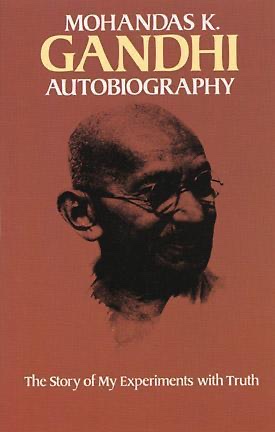 The Story of My Experiments With Truth
 Daybreak: Thoughts on the Prejudices of Morality
 The Gay Science
 The Varieties of Religious Experience
 The Will to Power
 Self-Reliance and Other Essays
 Self-Reliance: An Excerpt from Collected Essays, First Series
 Ethics
 The Myth of Sisyphus and Other Essays
 Heretics
 The Schopenhauer Cure
 The Complete Essays
 The Fall
 The Fountainhead
 Children of Dune
 The Myth of Sisyphus
 The Ego and Its Own
 The Intellectual Life: Its Spirit, Conditions, Methods
 The Wisdom of Life
 The Art of Being
 The Essential Writings of Ralph Waldo Emerson
 The Republic
 The Spinoza Problem
 When Nietzsche Wept
 The Man Without Qualities
 Surprised by Joy: The Shape of My Early Life
 Emile or On Education
 Atlas Shrugged
 The Nicomachean Ethics
 The Consolations of Philosophy
 The Socrates Express: In Search of Life Lessons from Dead Philosophers
 Man's Search for Meaning
 The Ethics of Ambiguity
 Notes from Underground
 East of Eden
 The Ides of March
 The Consolation of Philosophy
 The Closing of the American Mind
 Demian
 Discourses and Selected Writings
 An Essay Concerning Human Understanding
 Pensées
 Zeno's Conscience
 The Screwtape Letters
 Think: A Compelling Introduction to Philosophy
 The Abolition of Man
 Total Freedom: The Essential Krishnamurti
 The Adolescent
 The Story of Philosophy: The Lives and Opinions of the World's Greatest Philosophers
 The Perennial Philosophy
 The Magic Mountain
 De Profundis
 The Autobiography of Benjamin Franklin
 A Calendar of Wisdom: Daily Thoughts to Nourish the Soul
 Without Dogma
 How to Use Your Enemies
 The Razor's Edge
 Letters from a Stoic
 Eyeless in Gaza
 Freedom from the Known