
 Tenth of December
Quotes from the Book
Don't be afraid to be confused. Try to remain permanently confused. Anything is possible. Stay open, forever, so open it hurts, and then open up some more, until the day you die, world without end, amen.
2k
Humor is what happens when we're told the truth quicker and more directly than we're used to.
467
You know that feeling at the end of the day, when the anxiety of that-which-I-must-do falls away and, for maybe the first time that day, you see, with some clarity, the people you love and the ways you have, during that day, slightly ignored them, turned away from them to get back to what you were doing, blurted out some mildly hurtful thing, projected, instead of the deep love you really feel, a surge of defensiveness or self-protection or suspicion? That moment when you think, Oh God, what have I done with this day? And what am I doing with my life? And how must I change to avoid catastrophic end-of-life regrets? I feel like that now: tired of the Me I've always been, tired of making the same mistakes, repetitively stumbling after the same small ego strokes, being caught in the same loops of anxiety and defensiveness. At the end of my life, I know I won't be wishing I'd held more back, been less effusive, more often stood on ceremony, forgiven less, spent more days oblivious to the secret wishes and fears of the people around me... --"Buddha Boy
175
Huck [Finn] and Tom [Sawyer] represent two viable models of the American Character. They exist side by side in every American and every American action. America is, and always has been, undecided about whether it will be the United States of Tom or the United States of Huck. The United States of Tom looks at misery and says: Hey, I didn't do it. It looks at inequity and says: All my life I have busted my butt to get where I am, so don't come crying to me. Tom likes kings, codified nobility, unquestioned privilege. Huck likes people, fair play, spreading the truck around. Whereas Tom knows, Huck wonders. Whereas Huck hopes, Tom presumes. Whereas Huck cares, Tom denies. These two parts of the American Psyche have been at war since the beginning of the nation, and come to think of it, these two parts of the World Psyche have been at war since the beginning of the world, and the hope of the nation and of the world is to embrace the Huck part and send the Tom part back up the river, where it belongs.
78
My heart goes out to him. Sort of. Because empathy depends on how you've spent your day.
62
In a culture that is becoming ever more story-stupid, in which a representative of the Coca-Cola company can, with a straight face, pronounce, as he donates a collection of archival Coca-Cola commercials to the Library of Congress, that 'Coca-Cola has become an integral part of people's lives by helping to tell these stories,' it is perhaps not surprising that people have trouble teaching and receiving a novel as complex and flawed as Huck Finn, but it is even more urgent that we learn to look passionately and technically at stories, if only to protect ourselves from the false and manipulative ones being circulated among us.
61
What I regret most in my life are failures of kindness.
55
The generalizing writer is like the passionate drunk, stumbling into your house mumbling: I know I'm not being clear, exactly, but don't you kind of feel what I'm feeling?
49
What good the prophet in the wilderness may do is incremental and personal. It's good for us to hear someone speak the irrational truth. It's good for us when, in spite of all of the sober, pragmatic, and even correct arguments that war is sometimes necessary someone says: war is large-scale murder, us at our worst, the stupidest guy doing the cruelest thing to the weakest being.
41
It's a big world, and I really like it.
37
A culture's ability to understand the world and itself is critical to its survival. But today we are led into the arena of public debate by seers whose main gift is their ability to compel people to continue to watch them.
34
The mind is a machine that is constantly asking: What would I prefer? Close your eyes, refuse to move, and watch what your mind does. What it does is become discontent with That Which Is. A desire arises, you satisfy that desire, and another arises in its place. This wanting and rewanting is an endless cycle for which, turns out, there is already a name: samsara. Samsara is at the heart of the vast human carnival: greed, neurosis, mad ambition, adultery, crimes of passion, the hacking to death of a terrified man on a hillside in the name of A More Pure And Thus Perfect Nation--and all of this takes place because we believe we will be made happy once our desires have been satisfied. I know this. But still I'm full of desire... --"Buddha Boy
33
Now I began to understand art as a kind of black box the reader enters. He enters in one state of mind and exits in another. The writer gets no points just because what's inside the box bears some linear resemblance to "real life" -- he can put whatever he wants in there. What's important is that something undeniable and nontrivial happens to the reader between entry and exit.
30
Just before I doze off, I counsel myself grandiosely: Fuck concepts. Don't be afraid to be confused. Try to remain permanently confused. Anything is possible. Stay open, forever, so open it hurts, and then open up some more, until the day you die, world without end, amen.
19
Vonnegut's war was necessary. And yet it was massacre and screaming and confusion and blood and death. It was the mammoth projection outward of the confused inner life of men. In war, the sad tidy constructs we make to help us believe life is orderly and controllable are roughly thrown aside like the delusions they are. In war, love is outed as an insane, insupportable emotion, a kind of luxury emotion, because everywhere you look, someone beloved to someone is being slaughtered, by someone whose own beloved has been slaughtered, or will be, or could be.
19
As I walk through, a kind of amazed mantra starts running through my head: There is no end to the making and selling of things there is no end to the making and selling of things there is no end... Man, it occurs to me, is a joyful, buying-and-selling piece of work. I have been wrong, dead wrong, when I've decried consumerism. Consumerism is what we are. It is, in a sense, a holy impulse. A human being is someone who joyfully goes in pursuit of things, brings them home, then immediately starts planning how to get more.
17
At times, they're so Right and I'm so Left, we agree.
13
But if we define the Megaphone as the composite of the hundreds of voices we hear each day that come to us from people we don't know, via high-tech sources, it's clear that a significant and ascendant component of that voice has become bottom-dwelling, shrill, incurious, ranting, and agenda-driven. It strives to antagonize us, make us feel anxious, ineffective, and alone; convince us that the world is full of enemies and of people stupider and less agreeable than ourselves; is dedicated to the idea that, outside the sphere of our immediate experience, the world works in a different, more hostile, less knowable manner. This braindead tendency is viral and manifests intermittently; while it is the blood in the veins of some of our media figures, it flickers on and off in others.
13
We consider speech to be the result of thought (we have a thought, then select a sentence with which to express it), but thought also results from speech (as we grope, in words, toward meaning, we discover what we think).
11
By honing the sentences you used to describe the world, you changed the inflection of your mind, which changed your perceptions.
9
I have lunch, flirt with some local grandmothers, undercut my flirting by crotching myself on the corner of a table as I leave. -- "The Great Divider
9
Working with language is a means by which we can identify the bullshit within ourselves (and others).
8
The best stories proceed from a mysterious truth-seeking impulse that narrative has when revised extensively; they are complex and baffling and ambiguous; they tend to make us slower to act, rather than quicker. They make us more humble, cause us to empathize with people we don’t know, because they help us imagine these people, and when we imagine them—if the storytelling is good enough—we imagine them as being, essentially, like us. If the story is poor, or has an agenda, if it comes out of a paucity of imagination or is rushed, we imagine those other people as essentially unlike us: unknowable, inscrutable, incontrovertible.
8
The mind, it occurs to me, is an engine. There is an ambient mode in which the mind sits idling, before there is information. Some minds idle in a kind of dreading crouch, waiting to be offended. Others stand up straight, eyes slightly wide, expecting to be pleasantly surprised. Some minds, imagining the great What Is Out There, imagine it intends doom for them; others imagine there is something out there that may be suffering and in need of their help. Which is right? Neither. Both. Maybe all of our politics is simply neurology writ large. Maybe there are a finite number of idling modes. Maybe there are just two broad modes, and out of this fact comes our current division.
8
And next time we hear someone saying something like, 'We are pursuing this strategy because other strategies, when we had considered them, we concluded that, in terms of overall effectiveness, they were not sound strategies, which is why we enacted the one we are now embarked upon, which our enemies would like to see us fail, due to they hate freedom,' we will wait to see if the anchorperson cracks up, or chokes back a sob of disgust, and if he or she does not, we'll feel a bit insane, and therefore less confident, and therefore more passive.
8
In the beginning, there’s a blank mind. Then that mind gets an idea in it, and the trouble begins, because the mind mistakes the idea for the world. Mistaking the idea for the world, the mind formulates a theory and, having formulated a theory, feels inclined to act. Because the idea is always only an approximation of the world, whether that action will be catastrophic or beneficial depends on the distance between the idea and the world. Mass media’s job is to provide this simulacra of the world, upon which we build our ideas. There’s another name for this simulacra-building: storytelling. Megaphone Guy is a storyteller, but his stories are not so good. Or rather, his stories are limited. His stories have not had time to gestate—they go out too fast and to too broad an audience. Storytelling is a language-rich enterprise, but Megaphone Guy does not have time to generate powerful language. The best stories proceed from a mysterious truth-seeking impulse that narrative has when revised extensively; they are complex and baffling and ambiguous; they tend to make us slower to act, rather than quicker. They make us more humble, cause us to empathize with people we don’t know, because they help us imagine these people, and when we imagine them—if the storytelling is good enough—we imagine them as being, essentially, like us. If the story is poor, or has an agenda, if it comes out of a paucity of imagination or is rushed, we imagine those other people as essentially unlike us: unknowable, inscrutable, inconvertible. Our venture in Iraq was a literary failure, by which I mean a failure of imagination. A culture better at imagining richly, three-dimensionally, would have had a greater respect for war than we did, more awareness of the law of unintended consequences, more familiarity with the world’s tendency to throw aggressive energy back at the aggressor in ways he did not expect. A culture capable of imagining complexly is a humble culture. It acts, when it has to act, as late in the game as possible, and as cautiously, because it knows its own girth and the tight confines of the china shop it’s blundering into. And it knows that no matter how well-prepared it is—no matter how ruthlessly it has held its projections up to intelligent scrutiny—the place it is headed for is going to be very different from the place it imagined. The shortfall between the imagined and the real, multiplied by the violence of one’s intent, equals the evil one will do.
4
If at the moment when someone cuts us off in traffic or breaks our heart or begins bombing our ancestral village, we could withdraw from judging mode, and enter this other, more accepting mode, we could paradoxically, make ourselves more powerful. By resisting the urge to reduce, in order to subsequently destroy, we keep alive - if only for a few seconds more - the possibility of transformation. -The Thought Experiment
4
A culture capable of imagining complexly is a humble culture. It acts, when it has to act, as late in the game as possibl, and as cautiously, because it knows its girth and the tight confines of the china shop it's blundering into. And it knows that no matter how well prepared it is -- no matter how ruthlessly it has held its projections up to intelligent scrutiny -- the place it is headed for is going to very different from the place it imagined. The shortfall between the imagined and the real, multiplied by the violence of one's intent, equals the evil one will do.
4
The writer,' said Donald Barthelme, 'is one who, embarking upon a task, does not know what to do.' In this mode of not-knowing, the thick-torsoed, literal, and crew-cut mind is moved to the sidelines in favor of the swinging, perceptive, light-footed, tutu-wearing subconscious.
4
Watch on YouTube
About George Saunders
We have collected 219 quotes from 9 books by George Saunders on BookQuoters.
More about the author →More by George Saunders
All books by George Saunders →

About the book
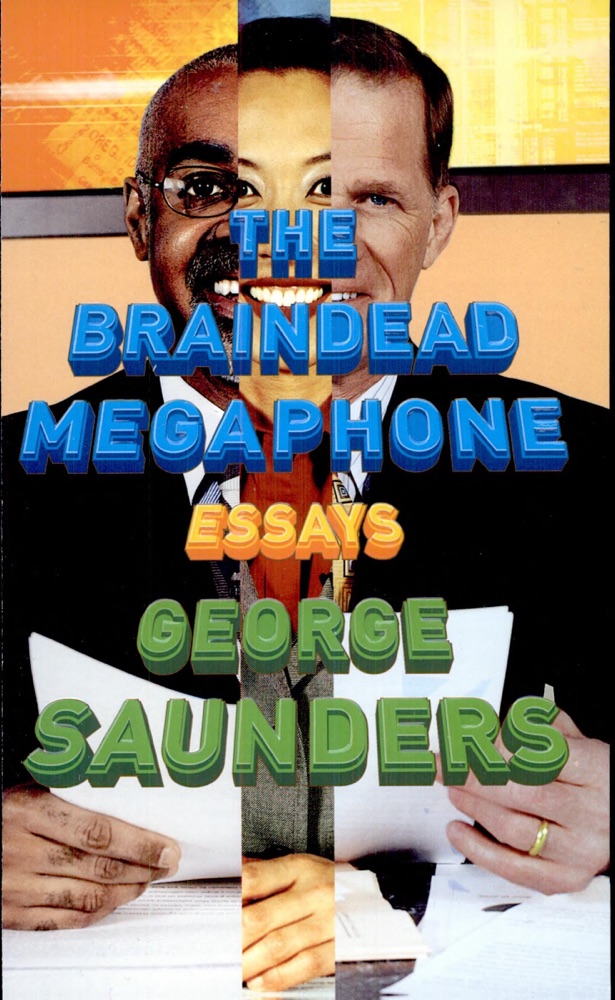
The breakout book from "the funniest writer in America"—not to mention an official Genius—a trade paperback original and his first nonfiction collection ever. George Saunders's first foray into nonfiction is composed of essays on literature, travel, and politics. At the core of this unique collection are Saunders's travel essays based on his trips to seek out the mysteries of the "Buddha Boy" of Nepal; to attempt to indulge in the extravagant pleasures of Dubai; and to join the exploits of the minutemen at the Mexican border. Saunders expertly navigates the works of Mark Twain, Kurt Vonnegut, and Esther Forbes, and leads the reader across the rocky political landscape of modern America. Emblazoned with his trademark wit and singular vision, Saunders's endeavor into the art of the essay is testament to his exceptional range and ability as a writer and thinker.
Book details
- First published
- 2007
- Author
- George Saunders
- Genre
- Nonfiction
- Goodreads rating
- 3.98 (6k ratings)
Keep reading
 Wampeters, Foma and Granfalloons
 Consider the Lobster and Other Essays
 Eating the Dinosaur
 The Golden Notebook
 When I Was a Child I Read Books
 No Time To Spare: Thinking About What Matters
 Drive Your Plow Over the Bones of the Dead
 Breakfast with Buddha
 A Language Older Than Words
 Infinite Jest
 Asymmetry
 In the Light of What We Know
 Letters to a Young Contrarian
 Girl with Curious Hair
 A Fisherman of the Inland Sea
 Knife: Meditations After an Attempted Murder
 The Source of Self-Regard: Selected Essays, Speeches, and Meditations
 Gnomon
 Dæmon Voices
 American Pastoral
 Mao II
 Make It Scream, Make It Burn
 Genesis
 Children of the Mind
 Villa Incognito
 The Wave in the Mind: Talks and Essays on the Writer, the Reader and the Imagination
 Two Years Eight Months and Twenty-Eight Nights
 The Argonauts
 Point Omega
 The Fall of Babel
 The Magic Mountain
 The Triggering Town: Lectures and Essays on Poetry and Writing
 Daniel Deronda
 Antkind
 Six Characters in Search of an Author
 The Golden House
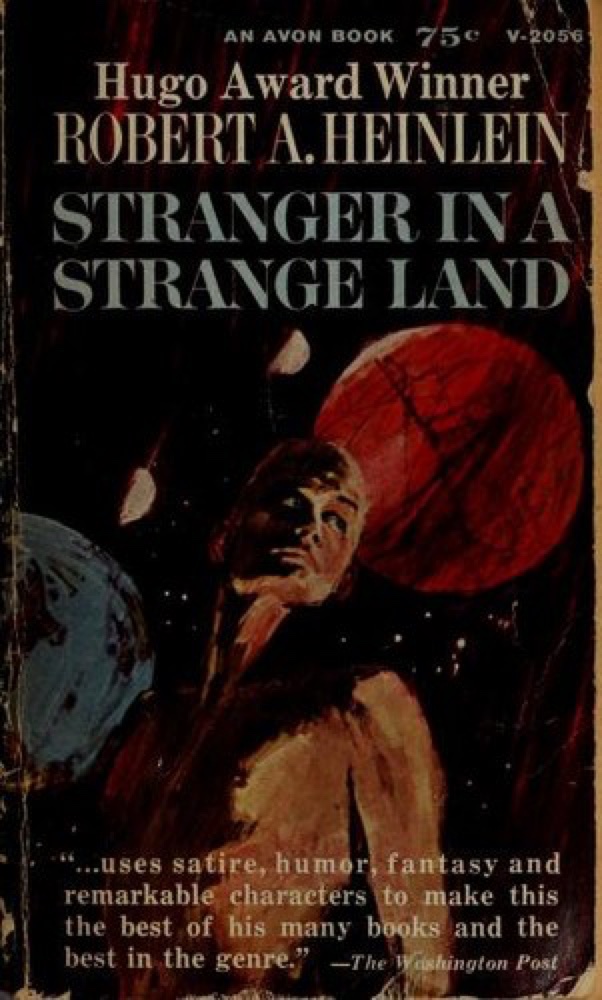 Stranger in a Strange Land
 A History of the World in 10½ Chapters
 Flaubert's Parrot
 Here for It; Or, How to Save Your Soul in America: Essays
 Underground: The Tokyo Gas Attack and the Japanese Psyche
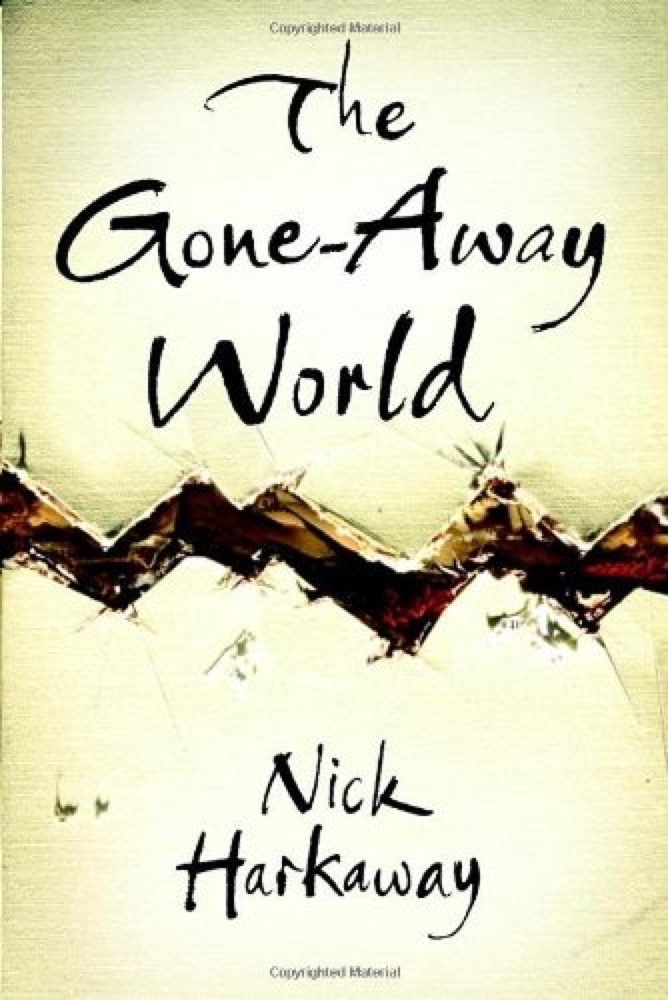 The Gone-Away World
 Foucault's Pendulum
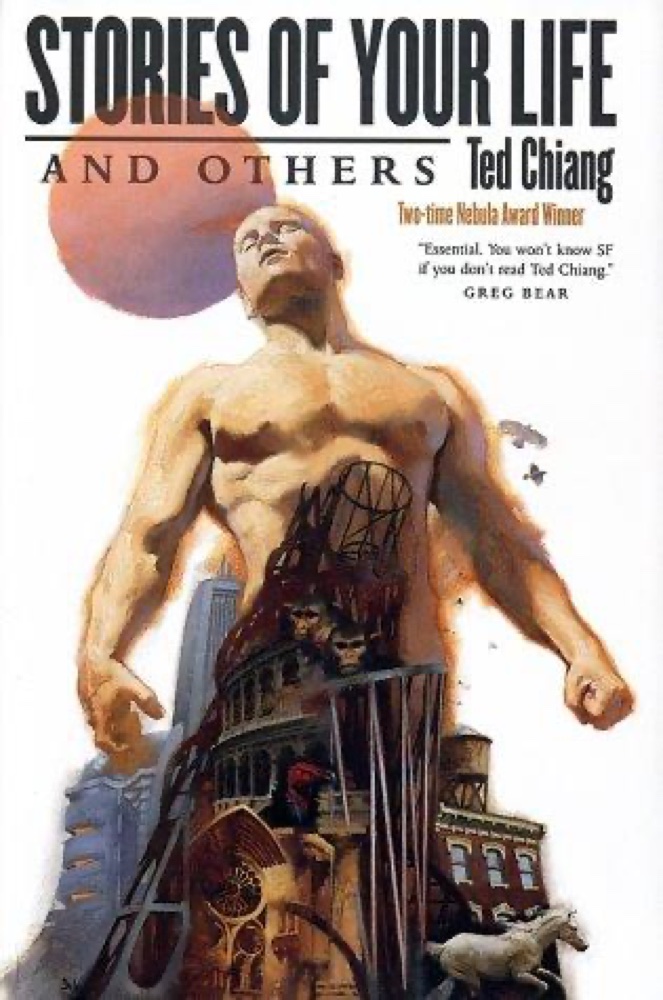 Stories of Your Life and Others
 The Names
 On Connection
 Speedboat
 A Circle of Quiet
 Hitch-22: A Memoir
 I. Asimov: A Memoir
 Surrender: 40 Songs, One Story
 The Man in the High Castle
 Sexus
Sexus
 The Manticore
 The Master and His Emissary: The Divided Brain and the Making of the Western World
 Psych: The Story of the Human Mind
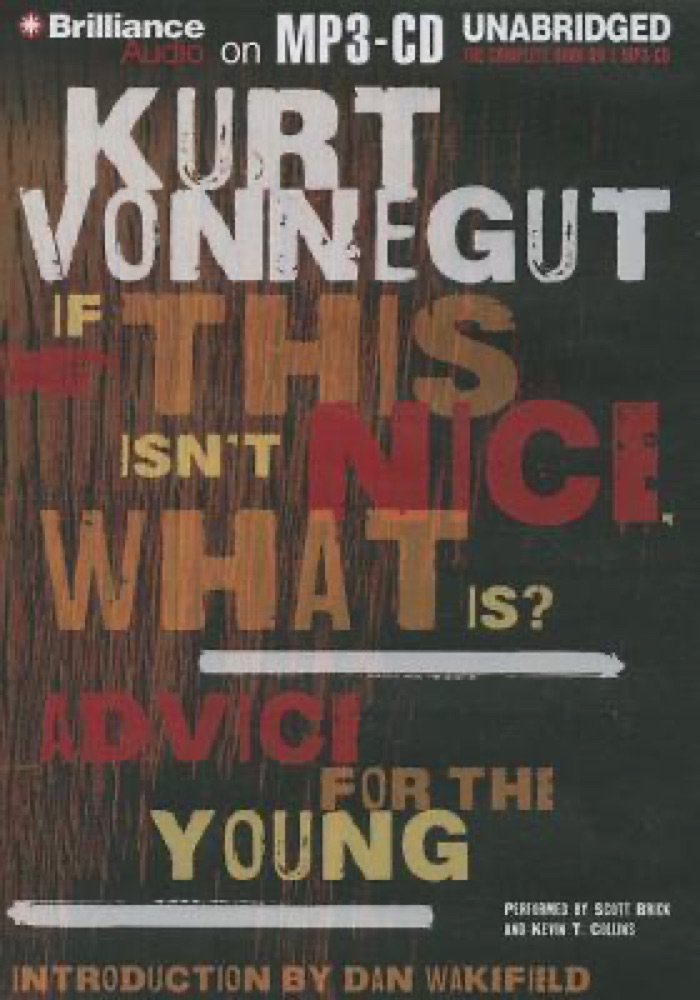 If This Isn't Nice, What Is?: Advice for the Young
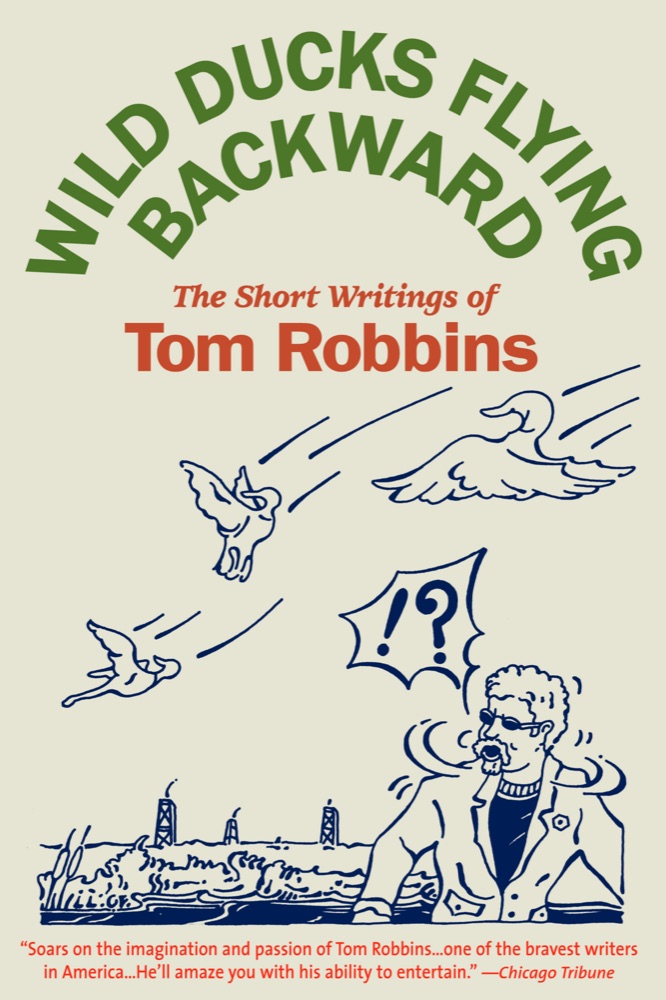 Wild Ducks Flying Backward
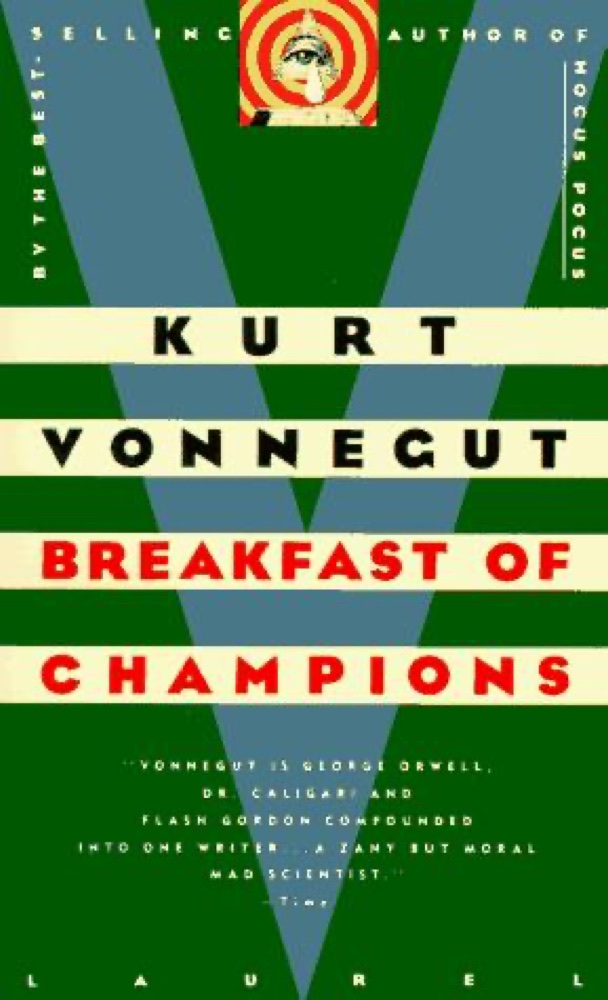 Breakfast of Champions
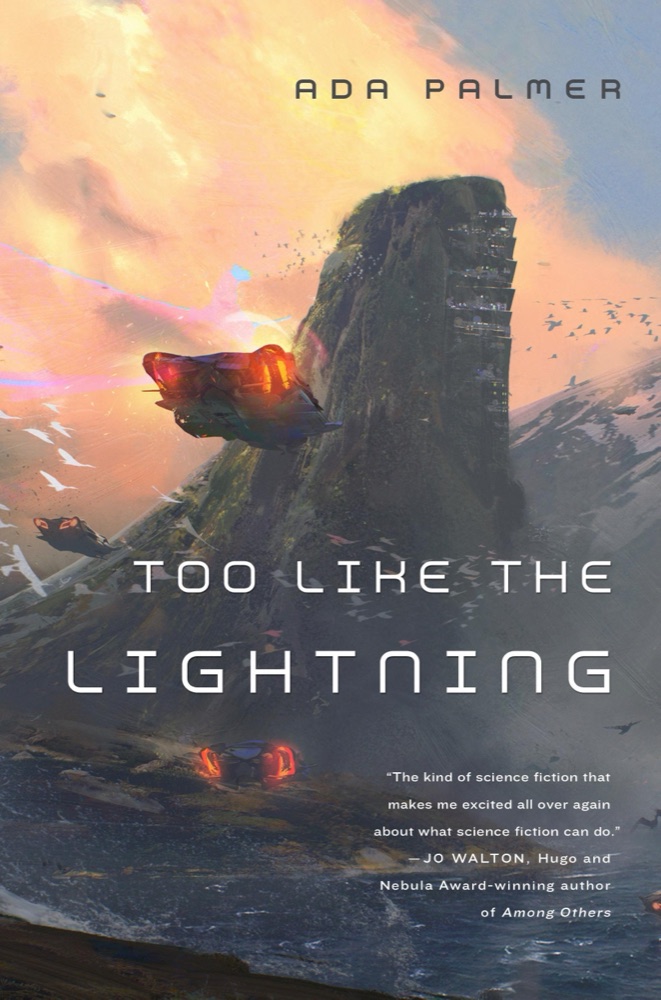 Too Like the Lightning