
 Quicksilver
Quotes from the Book
The living stayed home, haunting the world of the dead like ghosts.
14
I would say that the ability of people to agree on matters of fact not immediately visible—states of affairs removed from them in space and time—ramped up from a baseline of approximately zero to a pretty high level around the time of the scientific revolution and all that, and stayed there and became more globally distributed up through the Cronkite era, and then dropped to zero incredibly quickly when the Internet came along.
9
Identity” had been forever changed by the Internet; formerly it had meant “who you really are” but now it meant “any one of a number of persistent faces that you can present to the digital universe.
4
Corvallis sometimes thought back on the day, three decades ago, when Richard Forthrast had reached down and plucked him out of his programming job at Corporation 9592 and given him a new position, reporting directly to Richard. Corvallis had asked the usual questions about job title and job description. Richard had answered, simply, “Weird stuff.” When this proved unsatisfactory to the company’s ISO-compliant HR department, Richard had been forced to go downstairs and expand upon it. In a memorable, extemporaneous work of performance art in the middle of the HR department’s open-plan workspace, he had explained that work of a routine, predictable nature could and should be embodied in computer programs. If that proved too difficult, it should be outsourced to humans far away. If it was somehow too sensitive or complicated for outsourcing, then “you people” (meaning the employees of the HR department) needed to slice it and dice it into tasks that could be summed up in job descriptions and advertised on the open employment market. Floating above all of that, however, in a realm that was out of the scope of “you people,” was “weird stuff.” It was important that the company have people to work on “weird stuff.” As a matter of fact it was more important than anything else. But trying to explain “weird stuff” to “you people” was like explaining blue to someone who had been blind since birth, and so there was no point in even trying. About then, he’d been interrupted by a spate of urgent text messages from one of the company’s novelists, who had run aground on some desolate narrative shore and needed moral support, and so the discussion had gone no further. Someone had intervened and written a sufficiently vague job description for Corvallis and made up a job title that would make it possible for him to get the level of compensation he was expecting. So it had all worked out fine. And it made for a fun story to tell on the increasingly rare occasions when people were reminiscing about Dodge back in the old days. But the story was inconclusive in the sense that Dodge had been interrupted before he could really get to the essence of what “weird stuff” actually was and why it was so important. As time went on, however, Corvallis understood that this very inconclusiveness was really a fitting and proper part of the story.
3
What’s the point? The mass of people are so stupid, so gullible, because they want to be misled. There’s no way to make them not want it. You have to work with the human race as it exists, with all of its flaws. Getting them to see reason is a fool’s errand.
3
One of the funny things about it, in retrospect, was its slowness, the lack of any dramatic Moment When It Had Happened. It was a little bit like the world’s adoption of the Internet, which had started with a few nerds and within decades become so ubiquitous that no person under thirty could really grasp what life had been like before you could Google everything.
2
The tragedy—and the entire point—of being a parent was the moment when the story stopped being about you.
2
wallet card for people to keep in front of them during conversations like this one. One side of the card was solid red, with no words or images, and was meant to be displayed outward as a nonverbal signal that you disagreed and that you weren’t going to be drawn into a fake argument. The other side, facing the user, was a list of little reminders as to what was really going on: Speech is aggression Every utterance has a winner and a loser Curiosity is feigned Lying is performative Stupidity is power
1
So, this place Zelrijk-Aalberg straddles the border of Belgium
1
before that three-hundred-year run when there was a way for people to agree on facts—we had kings and warlords and rigid social hierarchy. During it, a lot of brainpower got unlocked and things got a lot better materially. A lot better. Now we’re back in a situation where the people who have the power and the money can get what they want by dictating what the mass of people ought to believe.
1
But one of the Miasma’s perversities was that it made otherwise sane people like him—people who had better things they could have been doing—devote energy to arguing with completely random fuckwits, many of whom probably didn’t even believe in their own arguments, some of whom weren’t even humans.
1
This Land was made wrong. All of his efforts to make it right only spread the wrongness about in new ways. It is left to souls like me to decide what to do about it; and though I cannot see all the answers, I can guess that adding more wrongness will not help matters.
1
If it weren’t for the obvious drawbacks, I would recommend that everyone go crazy at least once in their lifetime,” El said. “It’s the most fascinating thing I’ve ever done. Going about it mindfully requires diligent effort. A
1
At any rate the total number of persons at the table was not enormously larger than the number of categories, meaning that nearly everyone present was reacting in an altogether different way, and in most cases doing so rather strongly, leading to a pandemonium of fainting, screaming, knife waving, malicious glaring, furious remonstration, hand-clapping delight, dismay, judicious beard stroking, etc. to say nothing of secondary interactions, as when a knife waver collided with a screamer.
1
Eventually the visitors were treated to a thoroughly non-ironic dinner at an Applebee’s.
1
Yes. It’s really only since wireless networks got fast enough to stream pictures to portable devices that everything changed,” Enoch said, “and enabled each individual person to live twenty-four/ seven in their own personalized hallucination stream.
1
Speech is aggression Every utterance has a winner and a loser Curiosity is feigned Lying is performative Stupidity is power
1
Crazytown was repelled by facts and knowledge, as oil fled from water, but was fascinated by the absence of hard facts, since it provided vacant space in which to construct elaborate edifices of speculation.
1
The two forms became intermingled as they struggled and writhed at the brink; then, with the slowness of a great tree that has been cut through at the root, they toppled into the Chasm and disappeared.
1
Each of them encoding someone’s pet theory as to how the brain works. It’s no surprise you spent the whole summer just getting oriented.
In the Beginning . . . Was the Command Line.
David Deutsch’s The Fabric of Reality
Things are wrongly set up in the Land now, as anyone who has seen what we have lately seen would agree. Even if you can’t quite put your finger on it, I think you’d have to admit it’s not how a proper god would compose a world. It is not going to fix itself.
became noticeable but not directly relevant. At a certain point you began to see people around you getting injured or even killed by stray bits of shrapnel, but even if they were good friends of yours, you knew, in your grief and shock, that they were statistical aberrations. The more you kept marching, however, the more difficult it became to ignore the fact that you were drawing close to the surface.
It is a common preoccupation of people who think about the idea of heaven,” Jake said. “What exactly would it be like to live forever in a realm where physical constraints don’t apply? Where there is no evil, no pain, no want? Being an angel, living on a cloud, strumming a harp twenty-four/seven/forever—that could get old. Old enough that it might become indistinguishable from being in hell.
They could get it either by putting the relevant chemicals directly into their bodies or by partaking of some clickbait that had been algorithmically perfected to make brains generate the dopamine through psychological alchemy. It was not a way to live long or to prosper, but it was a way of being as ineradicable, now, as the ragweed that flourished in the roadside ditches.
It was all a matter of other souls and their ability to perceive the changes that he was wreaking upon the world. Alone, he had the freedom to make changes at will. And with as little effort as it took to imagine the desired result. When other souls were watching, however, it became much more difficult. He guessed it was because any changes that he made, for example in raising a tower, were wreaking concomitant changes in the minds of all the souls that were perceiving it. And souls it seemed were powerful things in their own right with a kind of inertia about them, not easily moved. Particularly when all of them had to be moved in a kind of unison, all agreeing as to the shape of what was being made despite seeing it from many different points of views, as if all things in the world were webbed together by bands that had to stretch or break in order for change to occur, and those bands were woven by the perceptions of souls.
Suppose all of that comes to pass, Sophia, and you get that job and embark on that career. Twenty years from now, how will you know if you have succeeded?
Watch on YouTube
About Neal Stephenson
We have collected 355 quotes from 14 books by Neal Stephenson on BookQuoters.
More about the author →
About the book
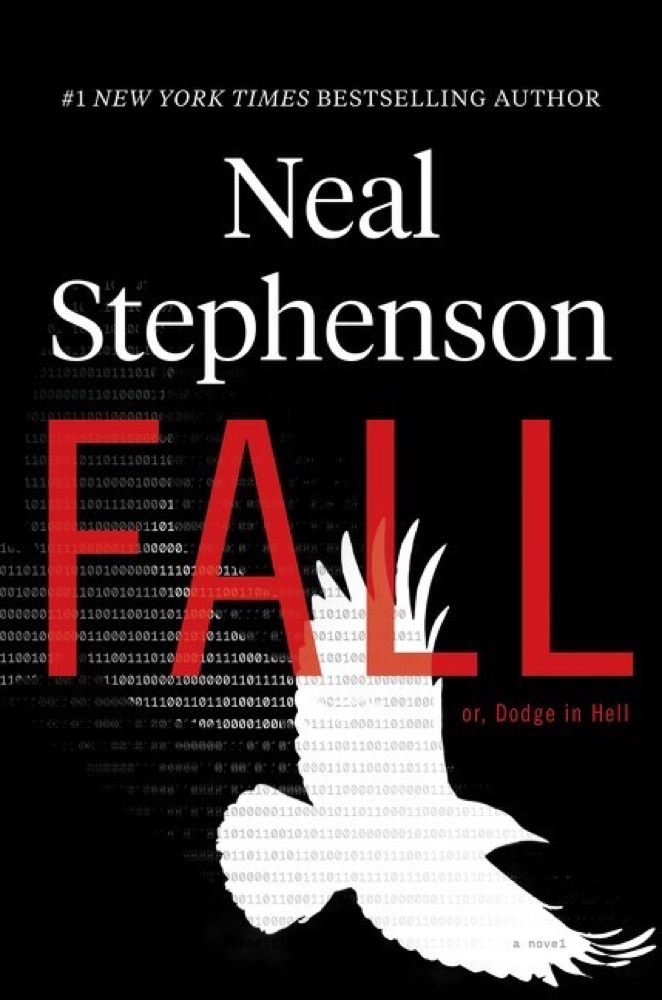
The #1 New York Times bestselling author of Seveneves, Anathem, Reamde, and Cryptonomicon returns with a wildly inventive and entertaining science fiction thriller—Paradise Lost by way of Phillip K. Dick—that unfolds in the near future, in parallel worlds.In his youth, Richard “Dodge” Forthrast founded Corporation 9592, a gaming company that made him a multibillionaire. Now in his middle years, Dodge appreciates his comfortable, unencumbered life, managing his myriad business interests, and spending time with his beloved niece Zula and her young daughter, Sophia. One beautiful autumn day, while he undergoes a routine medical procedure, something goes irrevocably wrong. Dodge is pronounced brain dead and put on life support, leaving his stunned family and close friends with difficult decisions. Long ago, when a much younger Dodge drew up his will, he directed that his body be given to a c
Book details
- First published
- 2019
- Author
- Neal Stephenson
- Genre
- Science Fiction
- Goodreads rating
- 3.59 (20k ratings)
The buzz
- The New York TimesReview in The New York Timesprofessional review (via Book Marks)
- The Wall Street JournalReview in The Wall Street Journalprofessional review (via Book Marks)
- The GuardianReview in The Guardianprofessional review (via Book Marks)
- NPRReview in NPRprofessional review (via Book Marks)
- SlateReview in Slateprofessional review (via Book Marks)
- VoxReview in Voxprofessional review (via Book Marks)
Keep reading
 Red Mars
 Wanderers
 The Ultimate Hitchhiker's Guide
 The Star Fraction
Quicksilver
The Star Fraction
Quicksilver
 The Future
 The Gone-Away World
 Skinny Legs and All
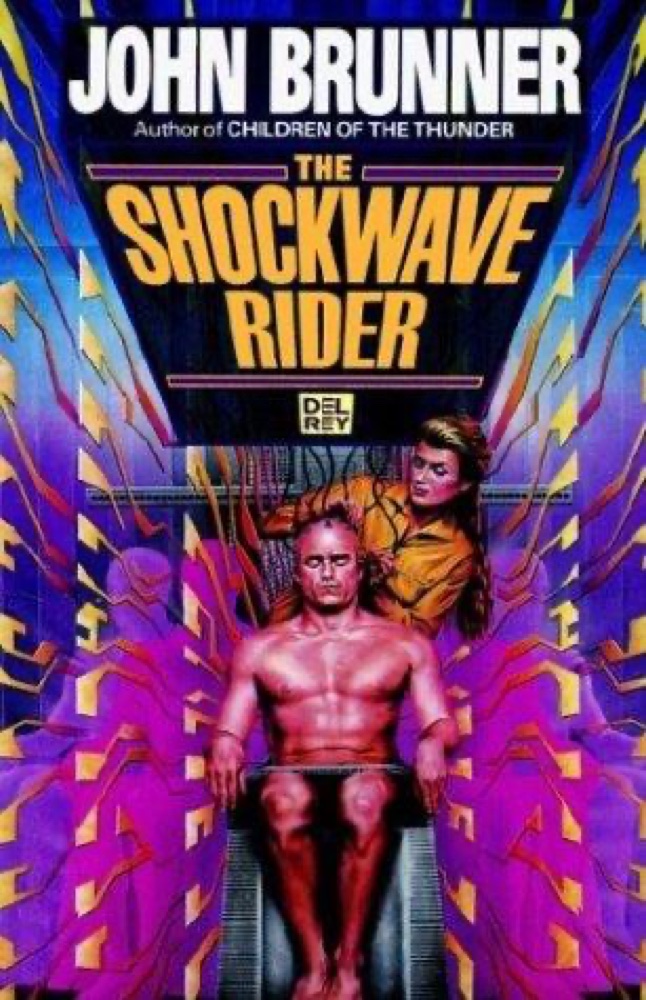 The Shockwave Rider
 No One Is Talking About This
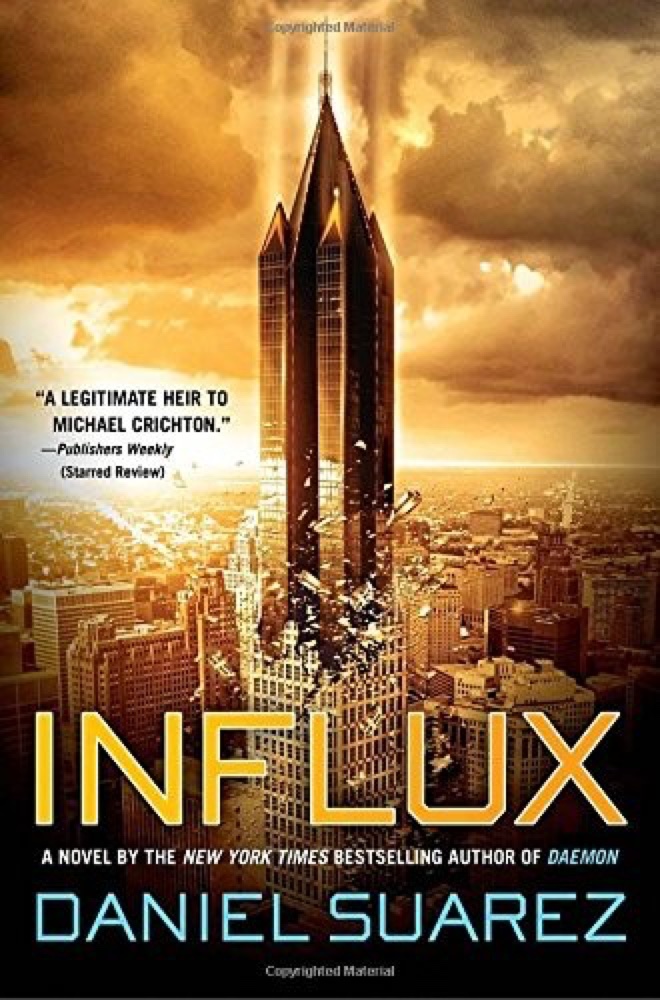 Influx
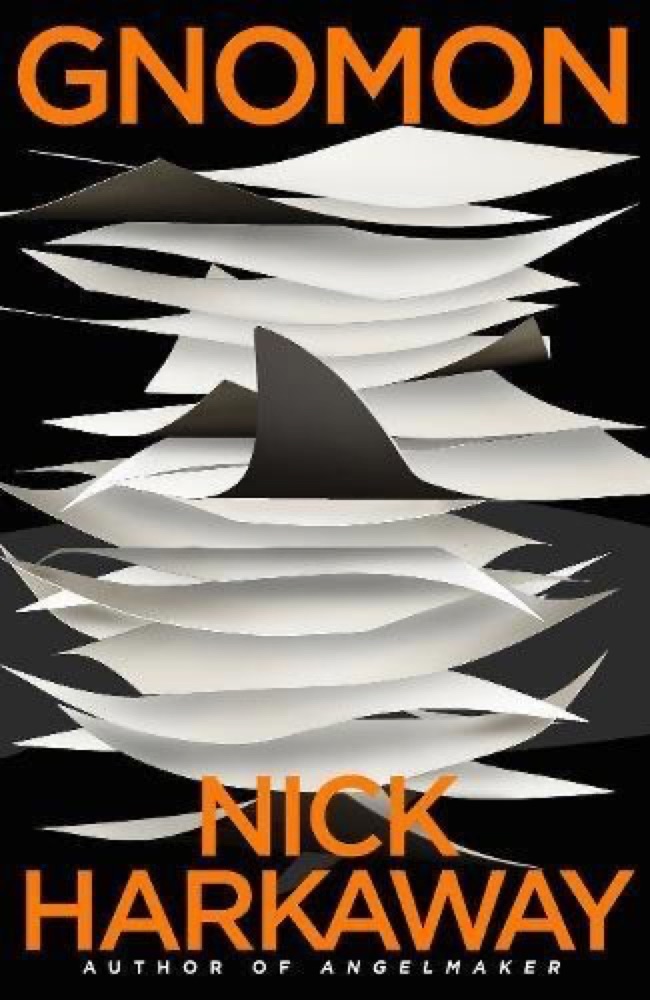 Gnomon
 Blackfish City
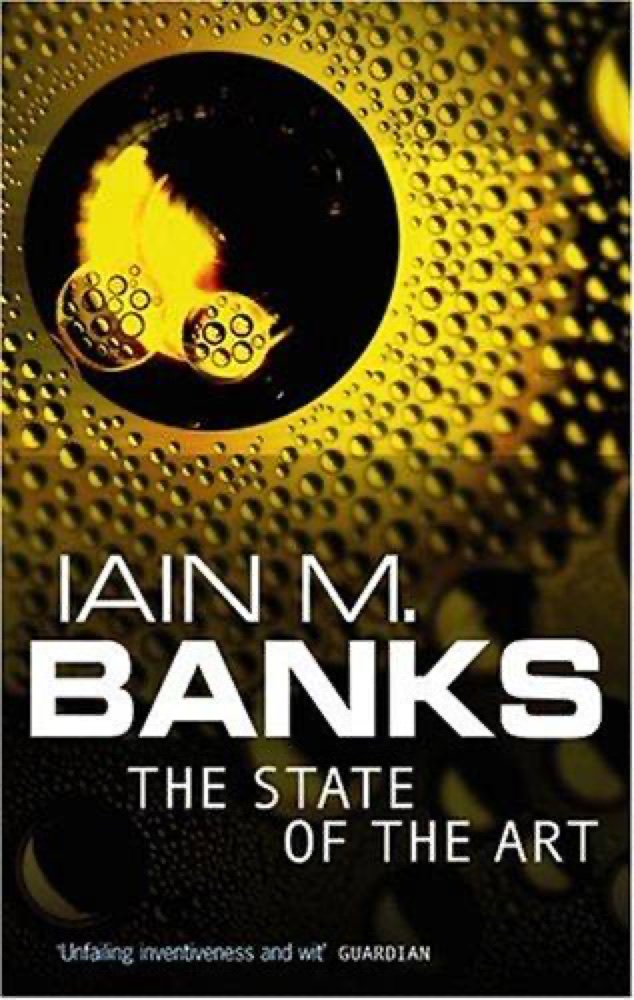 The State of the Art
 The Fifth Science
 Purity
 The Water Knife
 Maelstrom
 Authority
 Radio Free Albemuth
 Tiamat's Wrath
 Green Mars
 Orient
 Consider Phlebas
 Anathem
 All the Birds in the Sky
 Songs of Distant Earth
 Galatea 2.2
 Too Like the Lightning
 Schismatrix Plus
 Creation Lake
 Bleeding Edge
 Villa Incognito
 Reamde
 That Hideous Strength
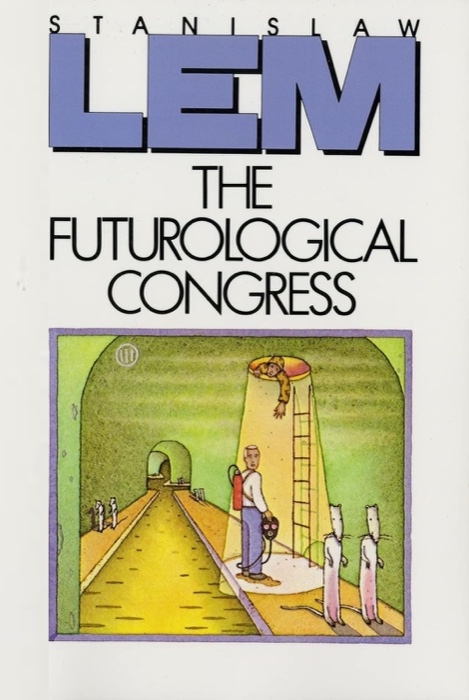 The Futurological Congress: From the Memoirs of Ijon Tichy
 The Atopia Chronicles
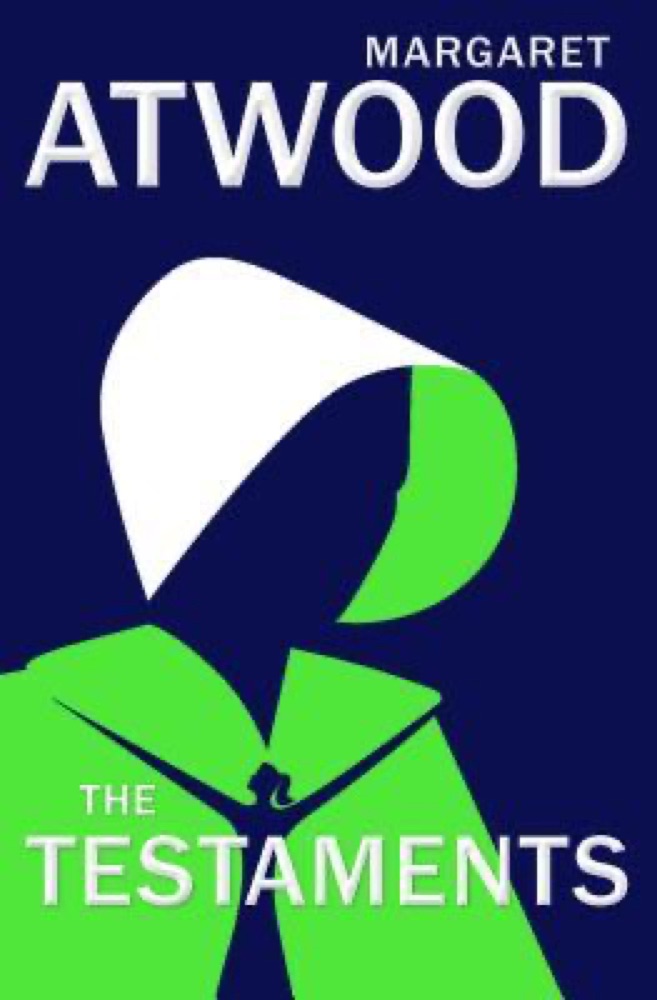 The Testaments
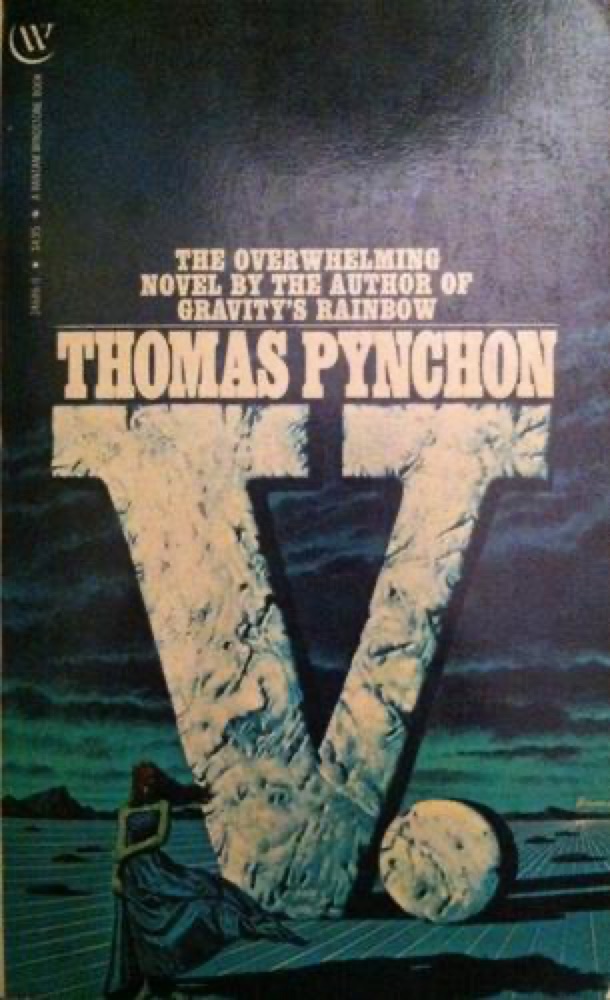 V.
V.
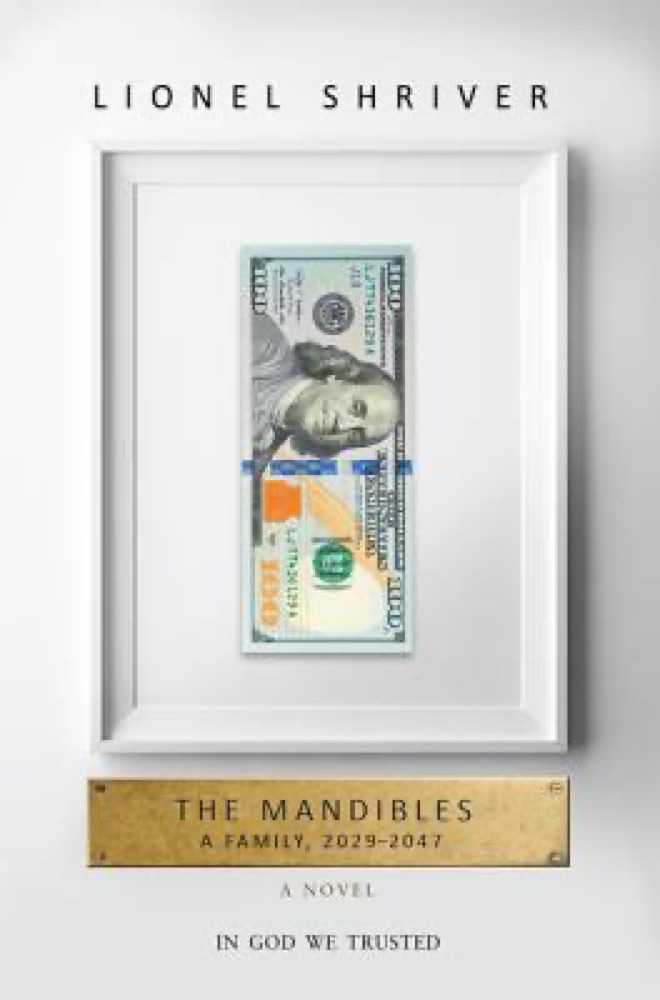 The Mandibles: A Family, 2029–2047
 The Fall of Babel
 The Empusium
 The Golden House
 Point Omega
 Breakfast of Champions
 Genesis
 Service Model
 Against the Day
 New York 2140
 Sourcery
 Babylon's Ashes
 Hocus Pocus
 Arcadia
 We All Looked Up
 Moving Pictures
 Thirteen
 Living with a Wild God: A Nonbeliever's Search for the Truth about Everything
 Selected Stories of Philip K. Dick
 Alien Clay
 Nova
Nova