 The Parisian
Quotes from the Book
The present onslaught leaves no space for mourning, since mourning requires an afterwards, but only for repeated shock and the ebb and flow of grief. We who are not there, witnessing from afar, in what ways are we mutilating ourselves when we dissociate to cope? To remain human at this juncture is to remain in agony. Let us remain there: it is the more honest place from which to speak.
17
And yet the pressure is again on Palestinians to tell the human story that will educate and enlighten others and so allow for the conversion of the repentant Westerner, who might then descend onto the stage if not as a hero then perhaps as some kind of deus ex machina.
11
How many Palestinians, asked Omar Barghouti, need to die for one soldier to have their epiphany?
10
The otherness that comes at you from the world has been inside you all along.
9
Empires have fallen. The Berlin Wall fell, political apartheid in South Africa did end, and although in neither of these cases were these putative conclusions by any means the end of the story, they are testaments to the fact that, under the force of coordinated international and local action, Israeli apartheid will also end. The question is, when and how? Where in the narrative do we now stand?
8
To recognise something is, then, to perceive clearly what on some level you have known all along, but that perhaps you did not want to know.
7
Perhaps a writer doesn’t need to have a clear sense of what her text will do in the world. Perhaps a writer can relax a bit. Perhaps it’s enough to ask a question, and hope, perhaps, to glimpse the meaning of that question in retrospect.
6
Palestinianism was for Said a condition of chronic exile, exile as agony but also as ethical position. To remain aloof from the group while honouring one’s organic ties to it; to exist between loneliness and alignment, remaining always a bit of a stranger; to resist the resolution of the narrative, the closing of the circle; to keep looking, to not feel too at home.
4
In today’s crisis of climate destruction, there will be moments – maybe they are happening right now, maybe they happened recently – that will later be narrated as turning points, when the devastating knowledge hits home to a greater and greater number that we are treating the earth as a slave, and that this exploitation is profoundly unethical. We are still seeking a language for this ethics.
4
What I learned through writing this book is that literary anagnorisis feels most truthful when it is not redemptive: when it instead stages a troubling encounter with limitation or wrongness. This is the most I think we can hope for from novels: not revelation, not the dawning of knowledge, but the exposure of its limit. To realize you have been wrong about something is, I believe, to experience the otherness of the world coming at you. It is to be thrown off-center. When this is done well in literature, the readerly experience is deeply pleasurable. Terence Cave argues in his book on the subject that it is the reader herself who craves the tragic reversal, because fictions have a capacity “to astonish us, upset us, change our perceptions in ways inaccessible to other uses of language.
3
Once Palestinian voices began to reach wider audiences in the West, the story was quickly cast as a war of two opposing narratives, rather than a holistic and variegated history of European racism and empire and the ensuing and ongoing history of American empire, and the concomitant struggles for self-determination by colonised peoples, from Haiti to Algeria to Vietnam.
3
As I write this, a ceasefire has still not been called. I wonder what reality you now live in. From the point in time at which you read this, what do you say of the moment I am in? How large is the gulf between us?
2
It is a novel horror in human history to watch a genocidal war on our phones. For men, women, and children, scholars, artists, and journalists to live-tweet the moments before they are killed.
2
The flow of history always exceeds the narrative frames we impose on it.
2
Cultural recognition of difference can form the basis of just societies, but recognition that remains solely that—a form of acknowledgement without economic and political redistribution—is an act of language that leaves out the plot of history, where a word tries to stand in for material reparations through the smoke and mirrors of discourse and ceremony.
1
Maggie Nelson, in The Art of Cruelty, punctures the high-minded moralism of art that seeks, through depicting suffering, to move an audience to do something about it. “Having a strong reaction is not the same thing as having an understanding,” she writes, “and neither is the same thing as taking an action.” It’s true that emotion and understanding are not the same as action, but you might say that understanding is necessary for someone to act.
1
It’s one thing to see shifts on an individual level, but quite another to see them on an institutional or governmental one. To induce a person’s change of heart is different from challenging the tremendous force of collective denial.
1
Individual moments of recognition are repeatedly overwhelmed by the energy of a political establishment that tells the onlooker: this is not what it looks like. It is too complicated to understand. Look away.
The word epiphany itself comes from the Koine Greek word ἐπιφάνεια, epipháneia, meaning manifestation or appearance, derived from the verb φαίνειν, phainein, meaning to appear. It is usually applied in Ancient Greek contexts to three things: the first is dawn, the second is the appearance of an enemy army, and the third is the manifestation of a deity. The third one is obviously what led to its use in the Bible and subsequently provided the meaning that the Catholic-born James Joyce subverted, detheologizing it in his writing. But it’s the first two—dawn, and the appearance of the enemy army—that are interesting to me, because they suggest something appearing beyond the horizon, beyond the field of vision that your subject position allows, with the revelation of threat and light.
In his essay on Shatila, Genet speaks extensively of the beauty of the Palestinians, who remind him of the beauty of the Algerians when they rose against the French. He describes it as “a laughing insolence goaded by past unhappiness, systems and men responsible for unhappiness and shame, above all a laughing insolence which realizes that, freed of shame, growth is easy.” The Palestinians in Gaza are beautiful. The way they care for each other in the face of death puts the rest of us to shame.
The Israeli government would like to destroy Palestine, but they are mistaken if they think this is really possible. Palestine is in Haifa. Palestine is in Jerusalem. Palestine is in Gaza and Palestine is in the Mediterranean Sea and Palestine is alive in the refugee camps, from Shatila to Yarmouk. Palestine is even alive and well in New York. Do they really believe they can obliterate the Palestinian will to life?
The rhetorical dehumanization of Palestinians since the beginning of the Zionist movement in the nineteenth century, entering the North American mainstream in the sixties, has long nurtured Israeli—and Western—public consent for the Zionist project.
Somewhere recently humanity seems to have crossed an invisible line, and on this side naked power combined with the will to profit threaten to overwhelm the collective interests of our species.
Why do Americans pay billions of tax dollars annually to a foreign war machine, deployed on a captive civilian population? If the United States and the United Kingdom both voted against the Palestinian right to self-determination should we interpret this to mean that the most powerful nations in the Anglosphere if not the Global North at large believe that Palestinians must remain a colonized and dispersed people forever? That Palestine must never be free, but must remain subject to Israeli apartheid from the Jordan River to the Mediterranean Sea? That Palestinians must remain subjected to daily violence, impoverishment in refugee camps, and permanent political alienation? The powers and principles that govern the world, hardly in hiding, reveal themselves now in three dimensions and technicolor.
To induce a person's change of heart is different from challenging the tremendous force of collective denial.
The Israeli state as a Jewish democracy to which Palestinian Arabs have always posed a demographic threat was a state born from European empire, cast in the mold of other European settler colonial projects, and it was both fueled and justified by a history of European racism and antisemitism.
The war over words originates in the West's familiarity with the fact that hate speech is the first seemingly innocuous step on the road to genocide.
The powers and principles that govern the world, hardly in hiding, reveal themselves now in three dimensions and technicolor.
Did you know?
- The book is built on the Edward W. Said Memorial Lecture, delivered at Columbia University on September 28, 2023, nine days before October 7.
- The 2023 lecture commemorated the 20th anniversary of Edward Said's death.
- Hammad pairs the lecture text with an afterword she wrote in the early weeks of 2024.
- A central organizing idea is anagnorisis, the classical narrative concept of a recognition scene or turning point.
- The lecture was first published in The Paris Review before appearing in book form.
Watch on YouTube
About Isabella Hammad
More by Isabella Hammad
The Parisian
About the book
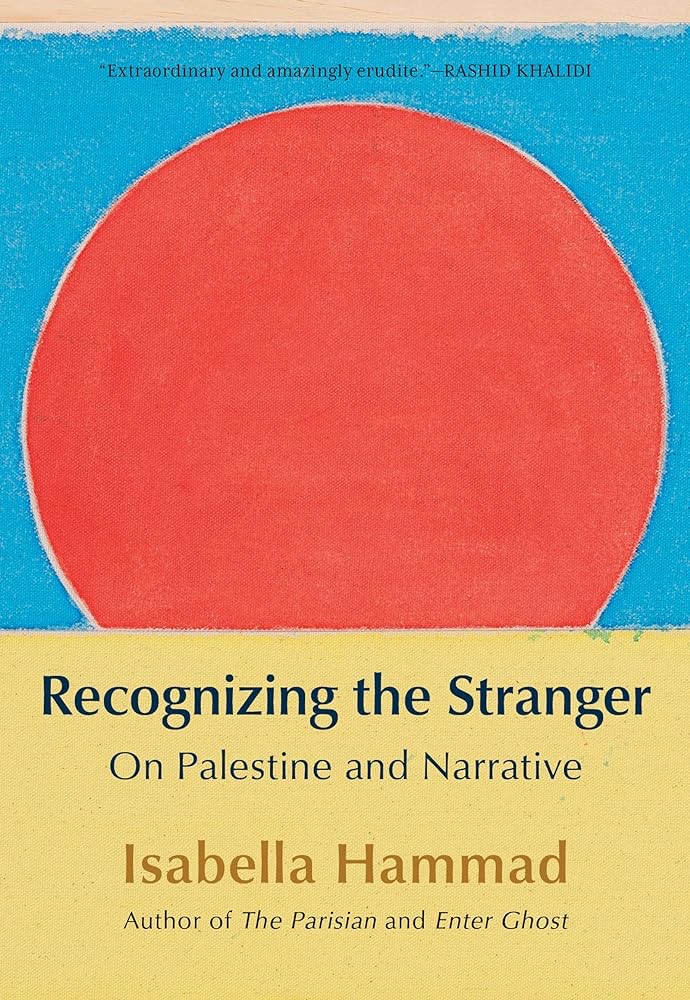
"Recognizing the Stranger: On Palestine and Narrative" is a short work of literary and political criticism built around the Edward W. Said Memorial Lecture that novelist Isabella Hammad delivered at Columbia University on September 28, 2023, just nine days before October 7. Taking Said as a point of departure, Hammad reflects on the middle of narratives, the turning points and recognition scenes, what classical poetics calls anagnorisis, when a character suddenly perceives a truth that reorders their world. From that literary idea she moves outward to ask how Palestinian experience is narrated, who is granted recognition, and what role the writer occupies in the political sphere.
The book pairs the lecture with an afterword Hammad wrote in the early weeks of 2024, so the same questions are revisited in the shadow of the war on Gaza. Its central concerns are the relationship between aesthetics and ethics, between words and actions, and the unstable boundary between self and other, the familiar and the stranger. Working in the spirit of Said's humanism, Hammad reaches for narrative forms capable of holding Palestinian lived experience rather than flattening it.
Published in 2024 by Grove Atlantic's Black Cat imprint, the essay drew attention as a literary intervention into a moment of acute crisis and was longlisted for the National Book Critics Circle Award for Criticism. Reviewers noted its blend of scholarly close reading and moral urgency, and it was widely cited as one of the most discussed nonfiction works addressing Palestine that year.
Book details
- First published
- 2024
- Length
- 96 pages
- Reading time
- 1 hour
- Author
- Isabella Hammad
- Genre
- Nonfiction
- Goodreads rating
- 4.60 (4k ratings)
Critical reception
- Longlisted for the National Book Critics Circle Award for Criticism.
- Kirkus Reviews called it "simultaneously scholarly and righteously impassioned."
- The Nation published a feature engaging closely with the book's idea of recognition and anagnorisis.
The buzz
- Kirkus ReviewsRecognizing the Stranger2024Capsule review calling it scholarly and righteously impassioned
- The NationIsabella Hammad and the Politics of Recognition2024Feature on Hammad's use of anagnorisis and the limits of recognition
Keep reading
 Perfect Victims and the Politics of Appeal
 The Message
 One Day, Everyone Will Have Always Been Against This
 On Palestine
 Doppelganger: A Trip into the Mirror World
 My Promised Land: The Triumph and Tragedy of Israel
 The Question of Palestine
 Arguably: Selected Essays
 We Wish to Inform You That Tomorrow We Will Be Killed with Our Families
 The Source of Self-Regard: Selected Essays, Speeches, and Meditations
 The War on the West: An Instant NYT Bestselling History of the Modern World
 Apeirogon
 Regarding the Pain of Others
 No Name in the Street
 The Strange Death of Europe: Immigration, Identity, Islam
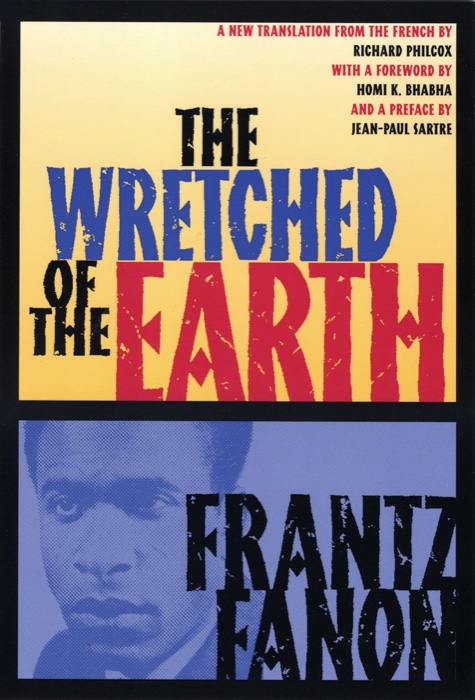 The Wretched of the Earth
 In the Light of What We Know
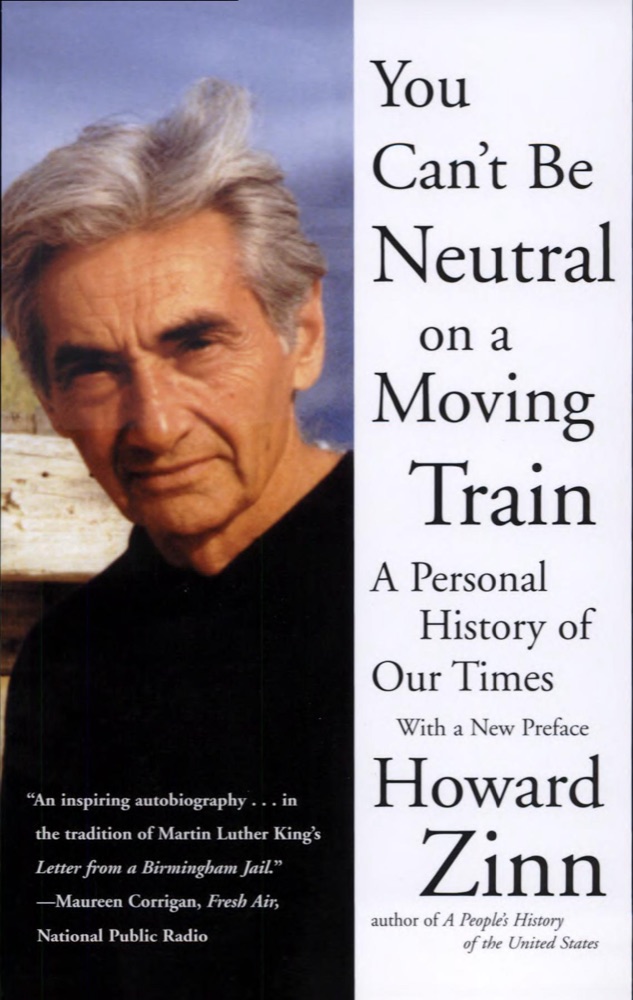 You Can't Be Neutral on a Moving Train: A Personal History of Our Times
 The Devil Finds Work: Essays
 Genesis
 Anthills of the Savannah
 When I Was a Child I Read Books
 Resistance, Rebellion and Death: Essays
 The Coming Insurrection
 Culture and Imperialism
 The Postcard
 I Shall Not Hate: A Gaza Doctor's Journey on the Road to Peace and Human Dignity
 From Beirut to Jerusalem
 Notes from No Man's Land
 A People's History of the United States
 The Golden House
 Gnomon
 Seven Surrenders
 Things I've Been Silent About
 Between the World and Me
 The Book of Joan
 Where Do We Go from Here: Chaos or Community?
 Too Like the Lightning
 Minor Detail
 The Better Angels of Our Nature: Why Violence Has Declined
 Hitch-22: A Memoir
 Whose Story Is This? Old Conflicts, New Chapters
 Notes of a Native Son
 Infidel
 Let Us Dream: The Path to a Better Future
 The State of the Art
 Children of Dune
 The Biggest Secret: The Book That Will Change the World
 Just Us: An American Conversation
 From Dawn to Decadence: 500 Years of Western Cultural Life, 1500 to the Present
 The Book That Broke the World
 What's Left?
 The Years of Rice and Salt
 A Language Older Than Words
 Radio Free Albemuth
 Creation Lake
 Across That Bridge: A Vision for Change and the Future of America
 Two Years Eight Months and Twenty-Eight Nights
 The Braindead Megaphone
 If This Is a Man / The Truce