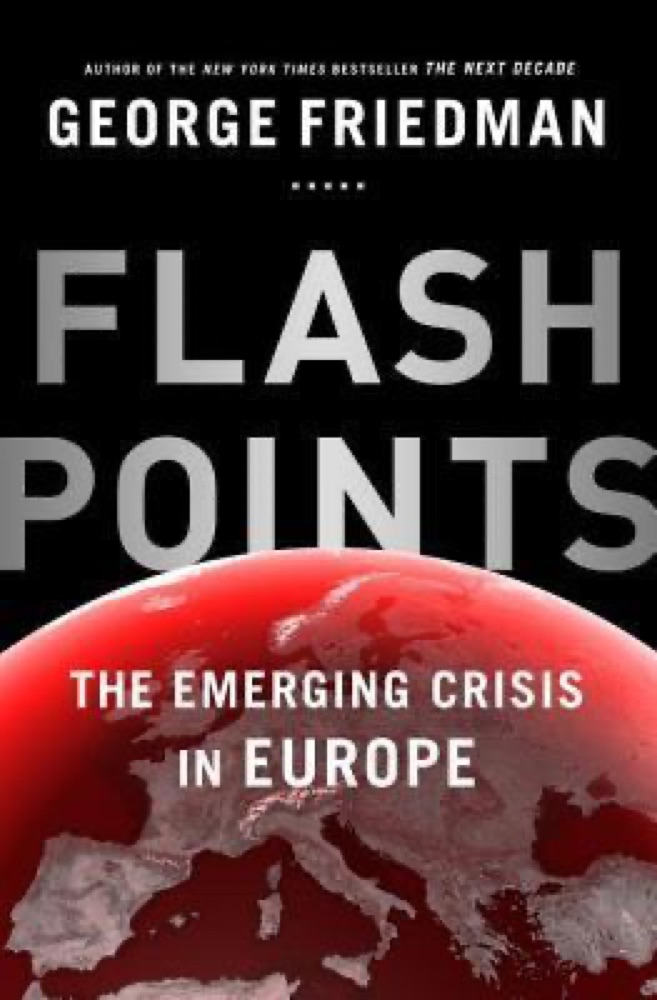
 Flashpoints: The Emerging Crisis in Europe
Quotes from the Book
It is indeed the duty of historians to stress the contrast between the standards of the past and the standards of the present. Some fulfil that duty on purpose, others by accident.
14
Culture is something that must grow. You cannot build a tree; you can only plant it, and care for it, and wait for it to mature . . .
5
Theorists of propaganda have identified five basic rules: 1. The rule of simplification: reducing all data to a simple confrontation between ‘Good and Bad’, ‘Friend and Foe’. 2. The rule of disfiguration: discrediting the opposition by crude smears and parodies. 3. The rule of transfusion: manipulating the consensus values of the target audience for one’s own ends. 4. The rule of unanimity: presenting one’s viewpoint as if it were the unanimous opinion of all right-thinking people: drawing the doubting individual into agreement by the appeal of star-performers, by social pressure, and by ‘psychological contagion’. 5. The rule of orchestration: endlessly repeating the same messages in different variations and combinations.
4
Reconstructing the past is rather like translating poetry. It can be done, but never exactly.
4
Only a Christian culture could have produced a Voltaire or a Nietzsche. I do not believe that the culture of Europe could survive the complete disappearance of the Christian Faith.
4
To make his point, Ivan staged a sensational demonstration. Some time before Christmas he had arrested two Lithuanians employed in the Moscow Kremlin. He charged them with plotting to poison him. The accusations against Jan Lukhomski and Maciej the Pole did not sound very credible; but their guilt or innocence was hardly relevant. They were held in an open cage on the frozen Moskva River for all the world to see; and on the eve of the departure of Ivan’s envoy to Lithuania, they were burned alive in their cage.50 As the ice melted under the fierce heat of the fire and the heavy iron cage sank beneath the water, taking its carbonized occupants down in a great hiss of steam, one could have well imagined that something was being said about Lithuania’s political future.
3
The title 'Lord of All-Rus' did not possess much basis either in history or in current reality. It came into the same category as that whereby the kings of England laid claim to France. In the 1490s, two-and-a-half centuries after all traces of a united Kyivan Rus' had been destroyed, it had the same degree of credibility that the king of France might have enjoyed if, in his struggle with the German Empire, he had proclaimed himself 'Lord of all the Franks'.
2
By 1939 the Gulag was the largest employer in Europe.
2
We have survived the “Death of God” and the “Death of Man”. We will surely survive “the Death of History” . . . and the death of post-modernism.
2
Marcus Aurelius had a marvellous sense of who, and where, he was: As the Emperor Antoninus, Rome is my city and my country; but as a man, I am a citizen of the world . . . Asia and Europe are mere corners of the globe, the Great Ocean a mere drop of water, Mount Athos is a grain of sand in the universe. The present instant of time is only a point compared to eternity. All things here are diminutive, subject to change and decay; yet all things proceed from . . . the one Intelligent Cause.
2
The big question about the hunter-gatherers, therefore, does not seem to be ‘How did they progress towards the higher level of an agricultural and politicised society?’ but ‘What persuaded them to abandon the secure, well-provided and psychologically liberating advantages of their primordial lifestyle?’.
2
Wcześniej czy później dekonstrukcjonistów zdekonstruują ich własne metody. "Przeżyliśmy Śmierć Boga i Śmierć Człowieka. Z pewnością przeżyjemy także Śmierć Historii... i Śmierć Postmodernizmu.
2
There are shades of barbarism in twentieth-century Europe which would once have amazed the most barbarous of barbarians. At a time when the instruments of constructive change had outstripped anything previously known, Europeans acquiesced in a string of conflicts which destroyed more human beings than all past convulsions put together.
1
Contrary to some expectations. Europe's brush with modern power revived its Christian culture. The 'Railway Age' was also the age of muscular Christianity.
1
For more than five hundred years the cardinal problem in defining Europe has centred on the inclusion or exclusion of Russia.
1
Nothing better illustrated the realities of the Soviet collapse than the fate of Sergei Krikalyev, a Soviet cosmonaut who was fired into space in May 1991. He was still circling the earth at the end of the year for want of a decision to bring him back. He had left a Soviet Union that was still a superpower; he would return to a world from which the Soviet Union had disappeared. His controllers at the Baikonur Space Centre found themselves in the independent republic of Kazakhstan.
1
The most obvious fact of the Soviet collapse is that it happened through natural causes. The Soviet Union was not, like ancient Rome, invaded by barbarians or, like the Polish Commonwealth, partitioned by rapacious neighbours, or, like the Habsburg Empire, overwhelmed by the strains of a great war. It was not, like the Nazi Reich, defeated in a fight to the death. It died because it had to, because the grotesque organs of its internal structure were incapable of providing the essentials of life. In a nuclear age, it could not, like its tsarist predecessor, solve its internal problems by expansion. Nor could it suck more benefit from the nations whom it had captured. It could not tolerate the partnership with China which once promised a global future for communism; it could not stand the oxygen of reform; so it imploded. It was struck down by the political equivalent of a coronary, more massive than anything that history affords.
1
Discord among the ex-Soviet nationalities was fuelling an ugly brand of Russian nationalism. Voices in Moscow called for the re-conquest of Russia’s ‘near abroad’. For after Abkhazia, there waited several further targets for Russian intervention, including Tatarstan and Chechenia, and other non-Russian lands within the Russian Federation. Sooner or later, Russia would be forced to choose between its new-style democracy and its old-style imperialism.
1
An ambassador’, quipped Sir Henry Wootton, ‘is an honest man sent to lie abroad for the good of his country.
1
Arguably, the only fruit of the Crusades kept by the Christians was the apricot.
1
The title ‘Lord of All-Rus'’ did not possess much basis either in history or in current reality. It came into the same category as that whereby the kings of England laid claim to France. In the 1490s, two-and-a-half centuries after all traces of a united Kievan Rus' had been destroyed, it had the same degree of credibility that the king of France might have enjoyed if, in his struggle with the German Empire, he had proclaimed himself ‘Lord of all the Franks’. By that time, it conflicted with the separate identity that the ‘Ruthenes’ of Lithuania had assumed from the ‘Russians’ of Moscow. Indeed, it all seemed sufficiently unreal for the Lithuanians to accept it as a small price to pay for Ivan’s good humour. They were not to know it, but they were conceding the ideological cornerstone of territorial ambitions that would be pursued for 500 years.
1
The debased coinage of his reign bore his initials, ICR: Iohannes Casimirus Rex. These were taken to stand for Initium Calamitatum Reipublicae, the Beginning of the Republic’s Catastrophes.
1
By the seventeenth century the thaler had become a unit of currency all over central Europe. It had also been copied in Habsburg Spain, whose taleros or ‘pieces of eight’ circulated throughout the Americas. They were known in English as ‘dollars’.
1
Grain prices in France, for example, where the supply of coin was relatively scarce, were over seven times higher in 1600 than in 1500.
1
And now I say unto Thee, take care and take heed, pious Tsar: all the empires of Christendom are united in thine. For two Romes have fallen, and the Third exists; and there will not be a fourth.
1
The city of Florence stood in the centre of the squalls and sun-shafts of late medieval Italy. Nurtured on the wool of its beautiful Apennine contado, it grew in the thirteenth century into a thriving community of perhaps 100,000 turbulent souls. Its gold coin, the florin, became standard currency far beyond Italy.
1
The dirham or dirhem was a coin of pure silver weighing 2.97 grammes, and worth one-tenth of a dinar. It was minted both in North Africa and in Central Asia under various dynasties. It was standard currency in Eastern Europe in the era before local mints existed. Hoards of dirhams have been found all over European Russia, Ukraine, Byelorussia, the Baltic States, Sweden, and northern Poland. The largest of them contained over 50,000 coins. Buried by their owners in times of insecurity, they sometimes remained uncollected until found by modern archaeologists and treasure-hunters.
1
The Muslim Era of Hegira, which marks the flight of the Prophet from Mecca, corresponds to Friday, 16 July AD 622.
1
So long as men slaughter animals,’ the master said, ‘they won’t stop killing each other.’1 [KONOPIПTE]
1
Although the rival cereals of rye, barley,oats, buckwheat and millet have continued to exist in Europe, the triumphal march of king wheat was uncontestable
1
Watch on YouTube
About Norman Davies
We have collected 30 quotes from 1 book by Norman Davies on BookQuoters.
More about the author →About the book
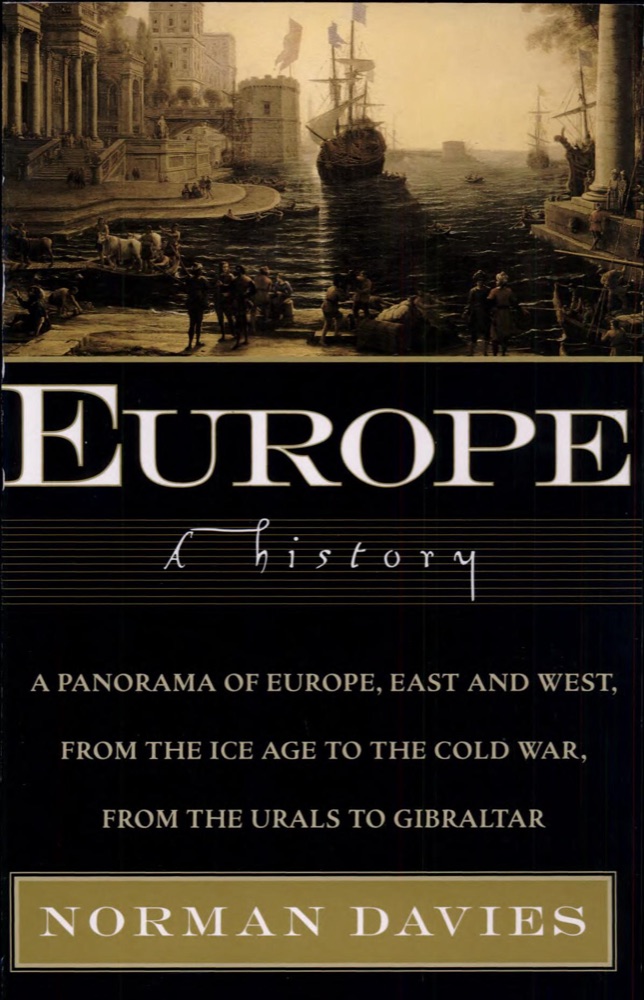
From the Ice Age to the Cold War, from Reykjavik to the Volga, from Minos to Margaret Thatcher, Norman Davies here tells the entire story of Europe in a single volume. It is the most ambitious history of the continent ever undertaken.
Book details
- First published
- 1996
- Author
- Norman Davies
- Genre
- History
- Goodreads rating
- 4.21 (5k ratings)
Keep reading
Flashpoints: The Emerging Crisis in Europe
 Postwar: A History of Europe Since 1945
 Imperium
 A History of the World in 100 Objects
 The Strange Death of Europe: Immigration, Identity, Islam
 Civilization: The West and the Rest
 Modern Times: The World from the Twenties to the Nineties
 Children of Ash and Elm: A History of the Vikings
 The New Penguin History of The World
 A Distant Mirror: The Calamitous 14th Century
 Border: A Journey to the Edge of Europe
 The Age of Revolution, 1789–1848
 Prisoners of Geography: Ten Maps That Tell You Everything You Need to Know About Global Politics
 The Revenge Of Geography: What the Map Tells Us About Coming Conflicts and the Battle Against Fate
 The Next 100 Years: A Forecast for the 21st Century
 How the Irish Saved Civilization
 Danubia: A Personal History of Habsburg Europe
 The Dawn of Everything: A New History of Humanity
 From Dawn to Decadence: 500 Years of Western Cultural Life, 1500 to the Present
 A Short History of Russia: Tracing Russia's Path Through History, from Its Wars and Conquests, Royal Dynasties, Revolutions into the Modern Era Under Putin―a Concise Exploration of a Complex Nation
 The Histories
 Guns, Germs, and Steel: The Fates of Human Societies
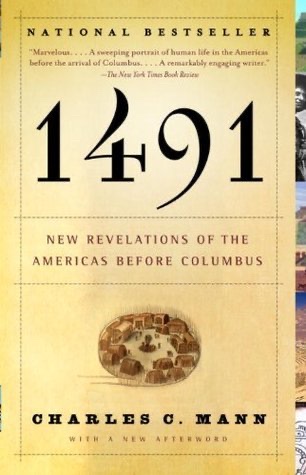 1491: New Revelations of the Americas Before Columbus
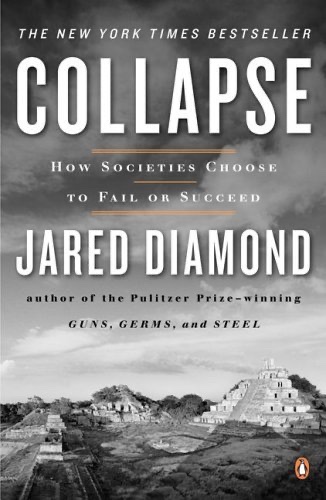 Collapse: How Societies Choose to Fail or Succeed
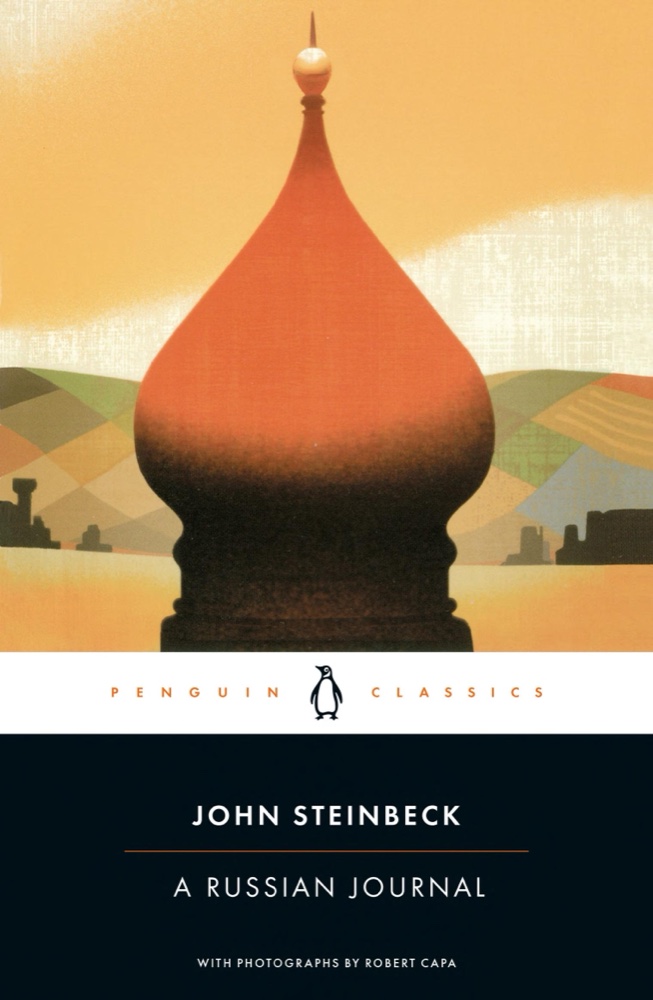 A Russian Journal
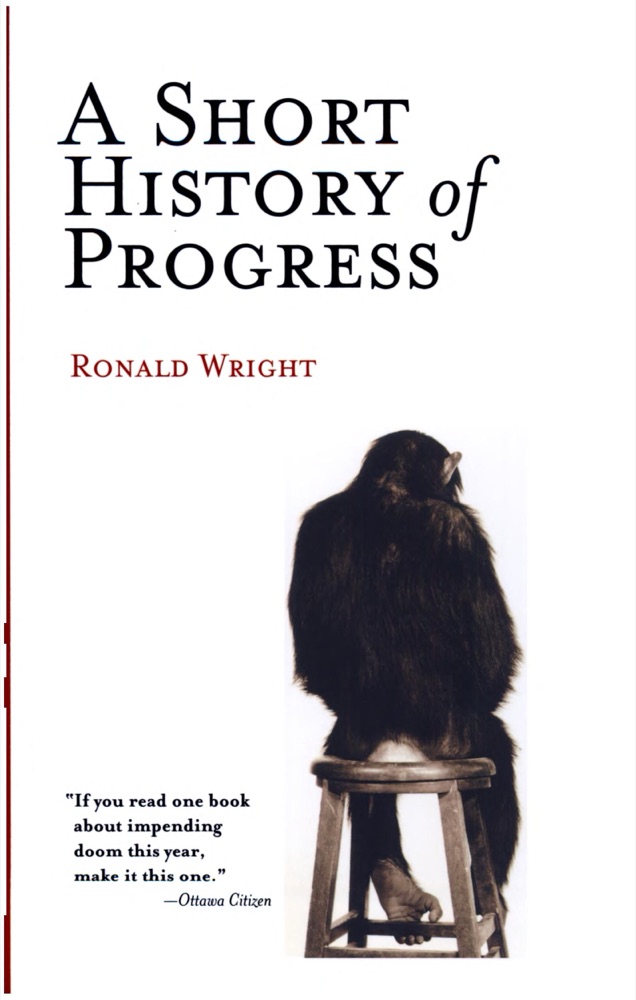 A Short History of Progress
 Upheaval: Turning Points for Nations in Crisis
 Caesar and Christ
 Bloodlands: Europe Between Hitler and Stalin
 Ten Days that Shook the World
 Unruly: The Ridiculous History of England's Kings and Queens
 Everything Flows
 History of the Russian Revolution
 Destiny Disrupted: A History of the World Through Islamic Eyes
 The Will to Battle
 River of Smoke
 How Should We Then Live? The Rise and Decline of Western Thought and Culture
 The Dogs of Riga
 The Wizard and the Prophet: Two Remarkable Scientists and Their Dueling Visions to Shape Tomorrow's World
 The Winds of War
 Café Europa: Life After Communism
 Defying Hitler
 Koba the Dread: Laughter and the Twenty Million
 The Shadow of the Sun
 The Everlasting Man
 The Muqaddimah: An Introduction to History
 Magicians of the Gods: The Forgotten Wisdom of Earth's Lost Civilization
 The Futurological Congress: From the Memoirs of Ijon Tichy
 SPQR: A History of Ancient Rome
 The Crusades: The Authoritative History of the War for the Holy Land
 The Prague Cemetery
 The Lessons of History
 The Gulag Archipelago 1918-1956
 The Fall of the Roman Empire: A New History of Rome and the Barbarians
 The Twelve Chairs
 The Old Regime and the French Revolution
 Travels with Herodotus
 Closing the Ring
 In the Shadow of the Sword: The Birth of Islam and the Rise of the Global Arab Empire
 The Darkening Age: The Christian Destruction of the Classical World