
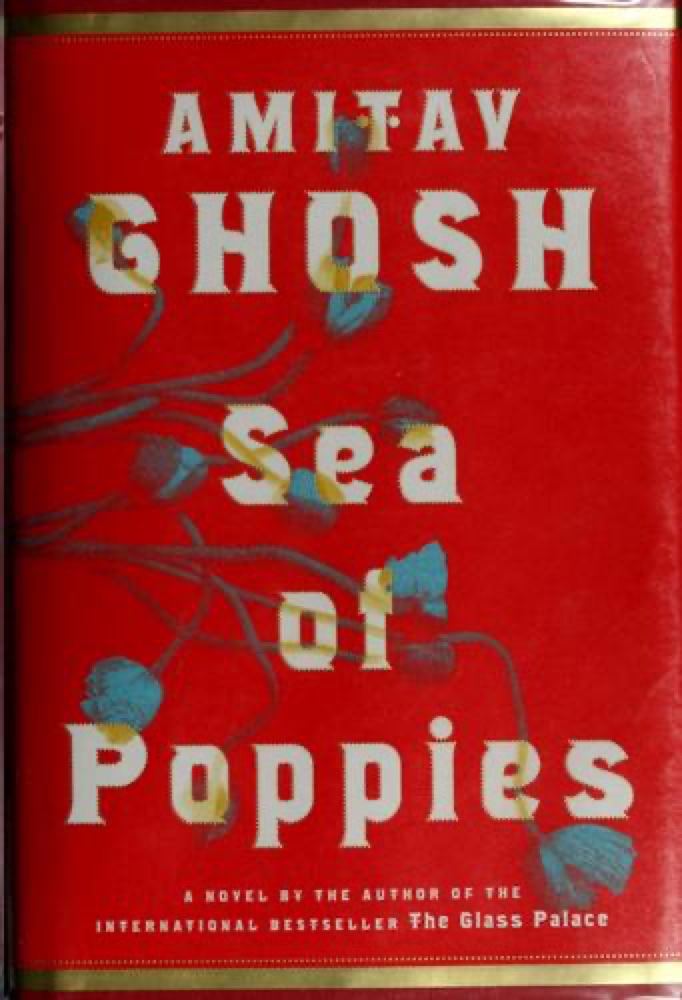
 Sea of Poppies
Quotes from the Book
it is a grave error to imagine that the world is not preparing for the disrupted planet of the future. It’s just that it’s not preparing by taking mitigatory measures or by reducing emissions: instead, it is preparing for a new geopolitical struggle for dominance.
5
As far back as 1992, the Union of Concerned Scientists warned that humanity faced a stark choice between spending its resources on war and violence, or on preventing catastrophic environmental damage. The report was signed by 1,700 scientists, including the majority of Nobel Prize winners in the sciences.17 In 2017 the warning was reissued, and this time it was signed by more than 15,000 scientists: it concluded that the state of the world was even worse than before. The first UCS report attracted a good deal of attention; the second one passed almost unnoticed.
2
The end of the world is seen, as Tennyson puts it, as the “far-off event” that allows Man to realize his true self, as pure Spirit, disencumbered of all fleshly and earthly ties. These ideas may appear deranged, but they continue to constitute a vital substrate of contemporary imaginaries. Signs of this substrate are everywhere around us: in the evangelical Christian idea of the “Rapture”; in the apocalyptic visions of ecofascists; in the dreams of those who yearn for a world “cleansed” of humanity; and in the fantasies of the billionaires who, having grown tired of this surly Earth and its sullen inhabitants, aspire to create a tamer version of it by terraforming some other planet.20 Their dream may be wrapped in futuristic cladding, but it is in fact nothing but an atavistic yearning to put in motion once again the processes of terraforming by which settler-colonials turned large parts of the Earth into “neo-Europes.
2
The planet will never come alive for you unless your songs and stories give life to all the beings, seen and unseen, that inhabit a living Earth—Gaia.
1
This is a way of thinking about the past in which space and time echo each other, and it is by no means particular to the Bandanese. Indeed, this form of thought may well have found its fullest elaboration on the other side of the planet, among the Indigenous peoples of North America, whose spiritual lives and understanding of history were always tied to specific landscapes. In the words of the great Native American thinker Vine Deloria Jr., a shared feature of Indigenous North American spiritual traditions is that they all “have a sacred center at a particular place, be it a river, a mountain, a plateau, valley, or other natural feature. . . . Regardless of what subsequently happens to the people, the sacred lands remain as permanent fixtures in their cultural or religious understanding.”12 Developing this argument, Deloria contrasts modes of thought that take their orientation from terrestrial spaces with those that privilege time. For the latter, the crucial question in relation to any event is “when did it happen?” For the former, it is “where did it happen?” The first question shapes the possible answers in a determinate way, locating the event within a particular historical period. The second question shapes the possible answers in a completely different way, because it accords a degree of agency to the landscape itself, and all that lies within it, including the entire range of nonhuman beings. The result, in Deloria’s words, is that “the [Indian] tribes confront and interact with a particular land along with its life forms. The task or role of the tribal religions is to relate the community of people to each and every facet of creation as they have experienced it.” For many Indigenous groups, landscapes remain as vividly alive today as they ever were. “For Indian men and women,” writes the anthropologist Peter Basso, of the Western Apache of Arizona, “the past lies embedded in features of the earth—in canyons and lakes, mountains and arroyos, rocks and vacant fields—which together endow their lands with multiple forms of significance that reach into their lives and shape the ways they think.”13 Stories about the past, built around familiar landmarks, inform every aspect of Apache life. Through these stories features of the landscape speak to people just as loudly as the human voices that historians bring to life from documentary sources.
1
In addition, tastes had begun to change in Europe. Anxieties about sexuality led to the shunning of dietary items that were thought to overstimulate the body and create propensities for the “solitary vice.”2 The poet Percy Bysshe Shelley denounced spices as well as the spice trade as “harmful to the moral fibre” of the body and the nation.3 Upper-class Europeans, who had once relished spicy food, now began to take pride in the blandness of their cuisine.
1
THE PREVALENCE OF the word “New” in maps of the Americas and Australia points to one of the most important aspects of European expansion: ecological and topographic transformation.
1
E. B. Du Bois, the thinkers of this tradition have repeatedly shown that colonial conquest, slavery, and race were essential to the emergence of capitalism as a system.
Why not focus on "policy outcomes" instead? Why bother with relics of the past? Why does history matter? Removing a statue, some critics say, will change nothing. What they don't see, is that the struggles over the statues are battles over meaning, and to change the meaning of something, is to change everything - precisely because humans are not brutes.
This is the great burden that now rests upon writers, artists, filmmakers, and everyone else who is involved in the telling of stories: to us falls the task of imaginatively restoring agency and voice to nonhumans. As with all the most important artistic endeavors in human history, this is a task that is at once aesthetic and political—and because of the magnitude of the crisis that besets the planet, it is now freighted with the most pressing moral urgency.
furious growth of Covid- 19 cases in those parts of the US where many people regarded masking as an infringement of their individual liberties suggests that it is morbid individualism that turns crises into tragedies.
is morbid individualism that turns crises into tragedies.
Watch on YouTube
About Amitav Ghosh
We have collected 128 quotes from 7 books by Amitav Ghosh on BookQuoters.
More about the author →More by Amitav Ghosh
All books by Amitav Ghosh →


About the book
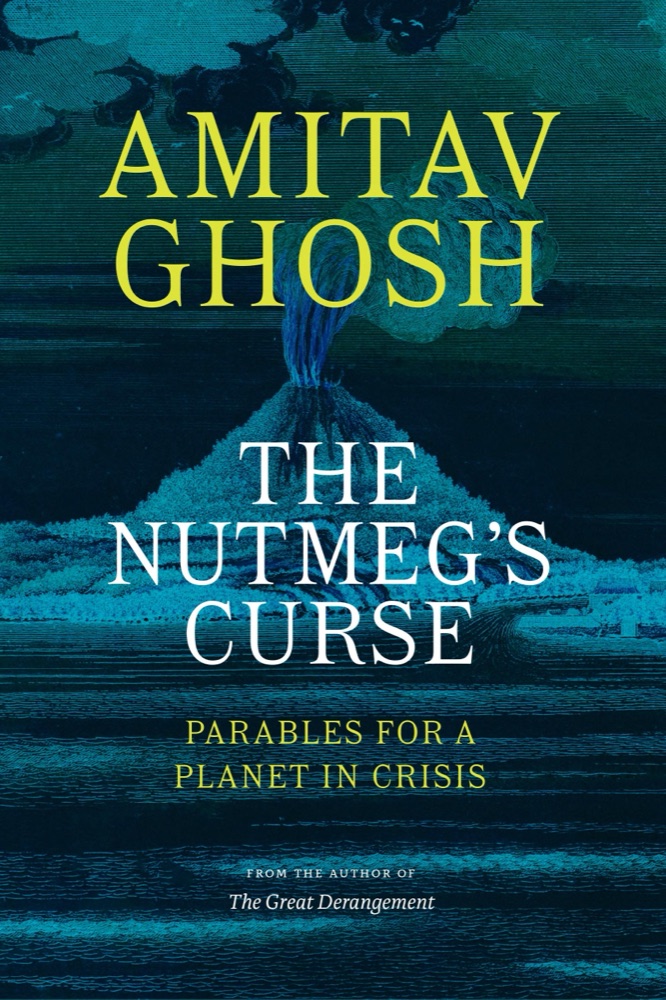
In this ambitious successor to The Great Derangement, acclaimed writer Amitav Ghosh finds the origins of our contemporary climate crisis in Western colonialism’s violent exploitation of human life and the natural environment.
A powerful work of history, essay, testimony, and polemic, Amitav Ghosh’s new book traces our contemporary planetary crisis back to the discovery of the New World and the sea route to the Indian Ocean. The Nutmeg’s Curse argues that the dynamics of climate change today are rooted in a centuries-old geopolitical order constructed by Western colonialism. At the center of Ghosh’s narrative is the now-ubiquitous spice nutmeg. The history of the nutmeg is one of conquest and exploitation—of both human life and the natural environment. In Ghosh’s hands, the story of the nutmeg becomes a parable for our environmental crisis, revealing the ways human history has always be
Book details
- First published
- 2021
- Author
- Amitav Ghosh
- Genre
- Nonfiction
- Goodreads rating
- 4.20 (4k ratings)
The buzz
- FreepressjournalReview in Freepressjournalprofessional review (via Book Marks)
- BooklistReview in Booklistprofessional review (via Book Marks)
- SydneyreviewofbooksReview in Sydneyreviewofbooksprofessional review (via Book Marks)
- TribuneindiaReview in Tribuneindiaprofessional review (via Book Marks)
- FtReview in Ftprofessional review (via Book Marks)
- ThehinduReview in Thehinduprofessional review (via Book Marks)
Keep reading
 On Fire: The Case for the Green New Deal
 The Wizard and the Prophet: Two Remarkable Scientists and Their Dueling Visions to Shape Tomorrow's World
 A Short History of Progress
 The Mushroom at the End of the World: On the Possibility of Life in Capitalist Ruins
 Collapse: How Societies Choose to Fail or Succeed
 Endgame, Vol. 1: The Problem of Civilization
 The Ghost Map: The Story of London's Most Terrifying Epidemic - and How It Changed Science, Cities, and the Modern World
 The Social Conquest of Earth
 The Wayfinders: Why Ancient Wisdom Matters in the Modern World
 Falter: Has the Human Game Begun to Play Itself Out?
 Under a White Sky: The Nature of the Future
 All We Can Save: Truth, Courage, and Solutions for the Climate Crisis
 Feral: Rewilding the Land, the Sea and Human Life
 Billions & Billions: Thoughts on Life and Death at the Brink of the Millennium
 The Ministry for the Future
 Homo Deus: A History of Tomorrow
 Enlightenment Now: The Case for Reason, Science, Humanism, and Progress
 Civilized to Death: What Was Lost on the Way to Modernity
 The Dawn of Everything: A New History of Humanity
 The Strange Death of Europe: Immigration, Identity, Islam
 Guns, Germs, and Steel: The Fates of Human Societies
 Straw Dogs: Thoughts on Humans and Other Animals
 Food of the Gods: The Search for the Original Tree of Knowledge
 The Lost City of the Monkey God
 The Wretched of the Earth
 A History of the World in 100 Objects
 The Coming Insurrection
 The World Without Us
 Civilization: The West and the Rest
 Culture and Imperialism
 Shadows of Forgotten Ancestors
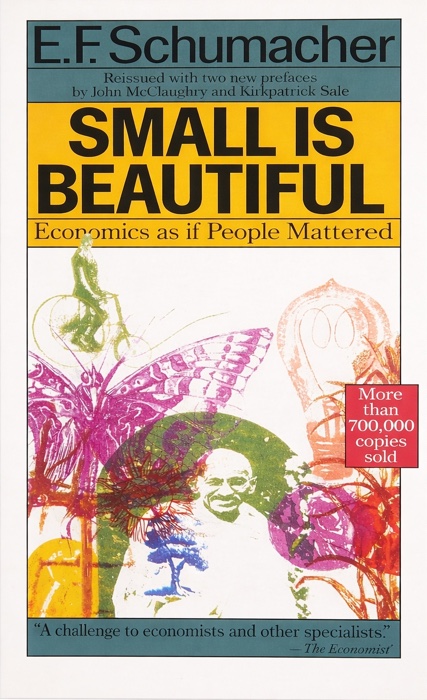 Small Is Beautiful: Economics as if People Mattered
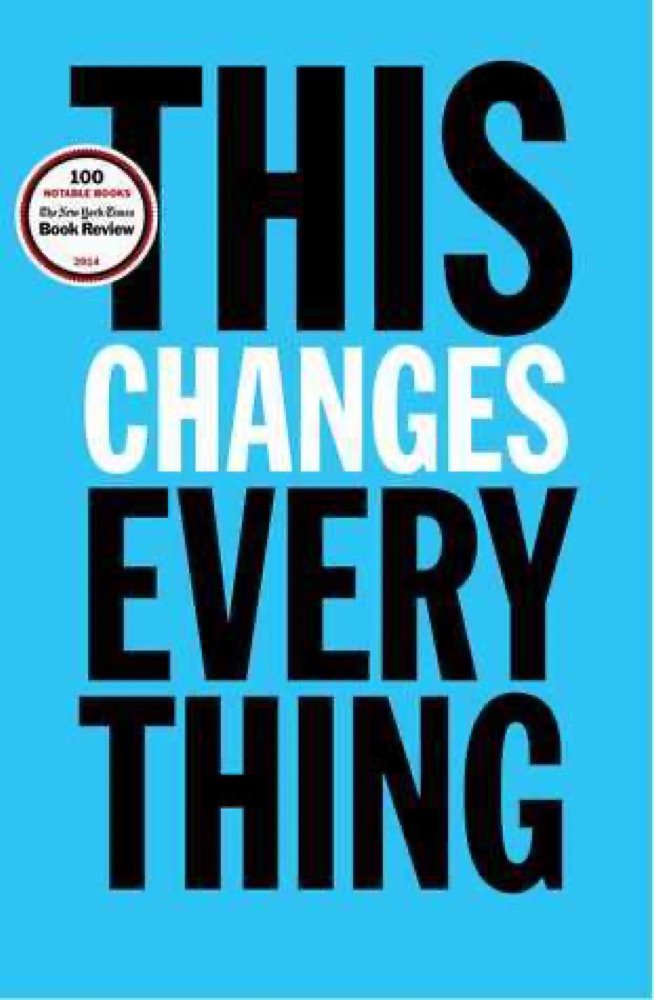 This Changes Everything: Capitalism vs. The Climate
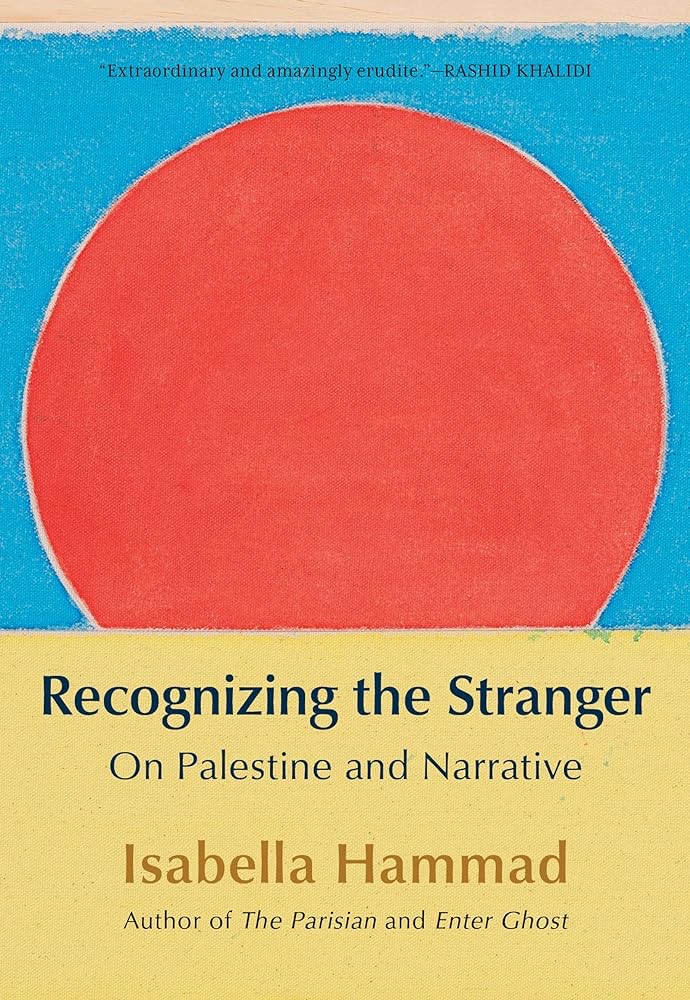 Recognizing the Stranger: On Palestine and Narrative
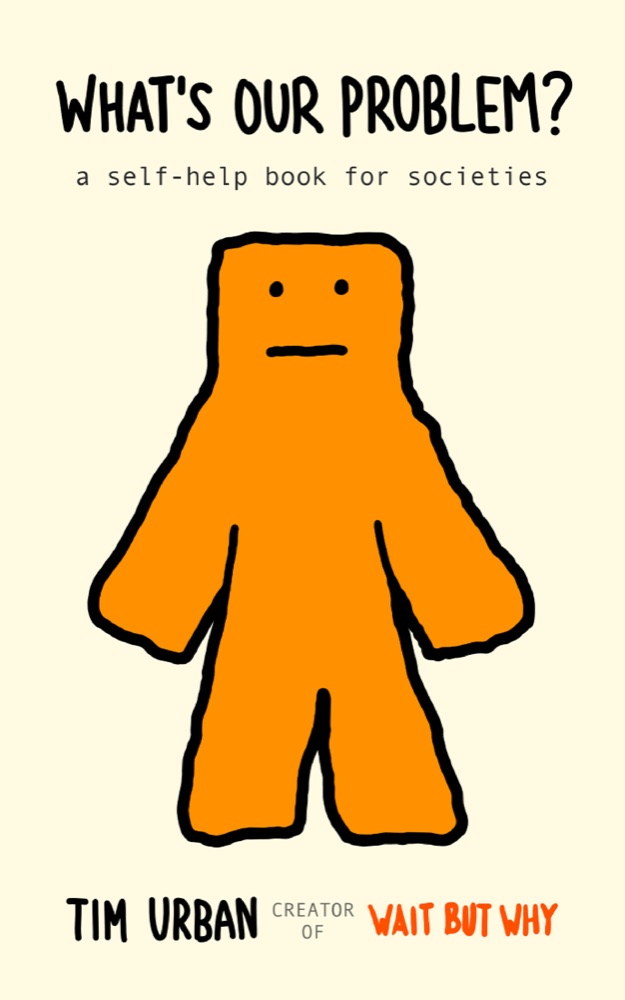 What's Our Problem?: A Self-Help Book for Societies
 The Story of More: How We Got to Climate Change and Where to Go from Here
 From Dawn to Decadence: 500 Years of Western Cultural Life, 1500 to the Present
 Upheaval: Turning Points for Nations in Crisis
 Sapiens: A Brief History of Humankind
 1491: New Revelations of the Americas Before Columbus
 Humankind: A Hopeful History
 Open Veins of Latin America: Five Centuries of the Pillage of a Continent
 Imperium
 The War on the West: An Instant NYT Bestselling History of the Modern World
 The World-Ending Fire: The Essential Wendell Berry
 Underland: A Deep Time Journey
 The New Penguin History of The World
 Ishmael: An Adventure of the Mind and Spirit
 The Culture of Make Believe
 Brave New World Revisited
 The Evolution of Everything: How New Ideas Emerge
 A Life on Our Planet: My Witness Statement and a Vision for the Future
 The Occult
 The Lost World
 World Order
 Hope in the Dark: The Untold History of People Power
 Ill Fares the Land
 The Fifth Science
 The Art of the Commonplace: The Agrarian Essays
 What White People Can Do Next: From Allyship to Coalition – An Empowering Guide to Interrogating Whiteness and Creating Justice