
 Myth America: Historians Take On the Biggest Legends and Lies About Our Past
Quotes from the Book
Clinton was Reagan's greatest achievement. He carried forward the Republican agenda by combining a postindustrial fatalism—regulation wasn't possible, austerity was unavoidable, budgets had to be balanced, crime was a condition of culture, not economic policy—with a folksy postmodern optimism.
3
Maybe after Trump is gone, what is understood as the political “center” can be reestablished. But it seems doubtful. Politics appears to be moving in two opposite directions. One way, nativism beckons; Donald Trump, for now, is its standard-bearer. The other way, socialism calls to younger voters who, burdened by debt and confronting a bleak labor market, are embracing social rights in numbers never before seen. Coming generations will face a stark choice—a choice long deferred by the emotive power of frontier universalism but set forth in vivid relief by recent events: the choice between barbarism and socialism, or at least social democracy.
3
That wall might or might not be built. But even if it remains only in its phantasmagorical, budgetary stage, a perpetual negotiating chip between Congress and the White House, the promise of a two-thousand-mile-long, thirty-foot-high ribbon of concrete and steel running along the United States’ southern border serves its purpose. It’s America’s new myth, a monument to the final closing of the frontier. It is a symbol of a nation that used to believe that it had escaped history, or at least strode atop history, but now finds itself trapped by history, and of a people who used to think they were captains of the future, but now are prisoners of the past.
1
But in a nation like the United States, founded on a mythical belief in a kind of species immunity—less an American exceptionalism than exemptionism, an insistence that the nation was exempt from nature, society, history, even death—the realization that it can’t go on forever is bound to be traumatic. This ideal of freedom as infinity was only made possible through the domination of African Americans, Mexican Americans, Mexicans, and Native Americans, as slave and cheap labor transformed stolen land into capital, cutting the tethers and launching the U.S. economy into the stratosphere. And now, as we fall back to a wasted earth, the very existence of people of color functions as an unwanted memento mori, a reminder of limits, evidence that history imposes burdens and life contracts social obligations.
1
But today the frontier is closed, the safety valve shut. Whatever metaphor one wants to use, the country has lived past the end of its myth. Where the frontier symbolized perennial rebirth, a culture in springtime, those eight prototypes in Otay Mesa loom like tombstones. After centuries of fleeing forward across the blood meridian, all the things that expansion was supposed to preserve have been destroyed, and all the things it was meant to destroy have been preserved. Instead of peace, there’s endless war. Instead of a critical, resilient, and progressive citizenry, a conspiratorial nihilism, rejecting reason and dreading change, has taken hold. Factionalism congealed and won a national election.
1
The slave-holders of the South,” Adams wrote in his diary, “have bought the cooperation of the Western country by the bribe of the Western Lands.”3 Now, he warned, a fight with Mexico over Texas would deepen the nation’s habituation to racist wars, leading to the point where racism and war would be the only thing that gave the republic meaning.
1
Most every other industrial nation in the world has pursued "free trade" policies similar to those enacted by the United States since its farm crisis, some combination of outsourcing, privatization, and financial liberalization. But no other wealthy nation has experienced the kind of alienation, inequality, public health crises, and violence that have become routine in the United States. That's because, as part of the post-Vietnam restoration, the United States didn't just restructure but also launched an assault on the social institutions—especially public services and unions—that might have moderated the effects of the restructuring.
1
The Confederate flag stopped flying as the pennant of reconciliation, the joining of the southern military tradition to northern establishment might to spread Americanism abroad. It now was the banner of those who felt that the establishment had sacrificed that tradition, "stabbed it in the back." The battle flag became the banner not of a specific Lost Cause but of all of white supremacy's lost causes.
1
The Jacksonian consensus was powerful. It unleashed market capitalism by stealing Indian property and celebrated a minimal state, even as it increased the capacity of that state to push the frontier forward. During the first half of the nineteenth century, until Abraham Lincoln's election in 1860, a series of Jackson's successors continued to unite slavers and settlers under a banner of freedom defined as freedom from restraint—freedom from restraints on slaving, freedom from restraints on dispossessing, freedom from restraints on moving west.
1
The war in the Philippines gave English a successor word to “frontier,” used to refer to remoteness: “boondocks,” from the Tagalog, “a distant, unpopulated place,” adopted by U.S. soldiers fighting a shadowy war against hit-and-run enemies. Its usage was expanded in World War II and then shortened in Vietnam to “boonies.
1
Extend the sphere," Madison wrote, and, "you take in a greater variety of parties and interests," and you make it difficult for either a mob majority or a tyrannical minority to unite "to invade the rights of other citizens." Whatever one's take on any of the debates of the day (especially the debate over slavery), and whatever one's philosophical understanding of the relationship of republicanism to land, commerce, finance, and labor, most agreed on practicalities. Also wanted to remove Spain from the Mississippi; also wanted the capacities to pacify hostile native Americans and put down rebellions of poor people; and all wanted Great Britain to get out of the way of their commerce. All wanted "room enough," as Thomas Jefferson would put it in his 1800 inaugural address, to be protected from Europe's "exterminating havoc." Expansion became the answer to every question, the solution to all problems, especially those two caused by expansion.
1
Many worried that the public was increasingly confusing freedom with debauched egoism. “A new competitiveness was abroad in the land,” Wood says, “and people seemed to be almost at war with one another.”4 It was a season of “inward and outward revolution, when new depths seem to be broken up in the soul, when new wants are unfolded in multitudes, and a new and undefined good is thirsted for,” as the theologian William Ellery Channing described his times.
1
Many historians still consider Jackson’s two terms (1829–1837) the fulfillment of the promise of the American Revolution’s anti-aristocratic aspirations, a moment of boisterous egalitarianism in which restless white workers armed with the vote became a political force.21 “A
1
Expansion would break up society “into a greater variety of interests and pursuits of passions, which check each other.” The amalgamation of power would be prevented, making it unnecessary to take government action, either to regulate concentrated wealth or to repress movements organized in opposition to concentrated wealth. “Extend the sphere,
1
The frontier was, ultimately, a mirage, an ideological relic of a now-exhausted universalism that promised, either naïvely or dishonestly, that a limitless world meant that nations didn’t have to be organized around lines of domination. All could benefit; all could rise and share in the earth’s riches. The wall, in contrast, is a monument to disenchantment, to a kind of brutal geopolitical realism: racism was never transcended; there’s not enough to go around; the global economy will have winners and losers; not all can sit at the table; and government policies should be organized around accepting these truths.
The frontier was closed, as Clare Boothe Luce wrote half a century earlier, resources were finite, and political systems should be based on an acceptance of those facts.
The United States too had crowded cities and hungry workers, fighting efforts to subordinate their lives to mechanical routine. But instead of waging class war upward—on aristocrats and owners—they waged race war outward, on the frontier. ’Prenticeboys didn’t head to the barricades to fight the gentry but rather joined with the gentry to go west and fight Indians and Mexicans.
Loss in Vietnam radicalized a generation of veterans, pushing many into the ranks of white-supremacist groups. Ronald Reagan, as the standard bearer of an ascendant New Right, effectively tapped into this radicalization, which helped lift him to victory in his 1980 presidential campaign. Once he was in office, Reagan's re-escalation of the Cold War allowed him to contain the radicalization, preventing it from spilling over (too much) into domestic politics. Anti-communist campaigns in Central America—a region Reagan called "our southern frontier"—were especially helpful in focusing militancy outward. But Reagan's Central American wars (which comprised support for the Contras in Nicaragua and death squads in El Salvador, Guatemala, and Honduras) generated millions of refugees, many, perhaps most, of whom fled to the United States. As they came over the border, they inflamed the same constituencies that Reagan had mobilized to wage the wars that had turned them into refugees in the first place.
For King well understood that while war made progress possible, it also threatened progress, activating the backlashers, revanchists, and racists who run through U.S. history. The War of 1898 opened the military to more African Americans, giving them a mechanism to claim a place in the nation. The same year also witnessed, in Wilmington, North Carolina, white soldiers returning home and slaughtering African Americans, driving them from public office. For all that war turns reform into a transactional arrangement (some suffragists, for instance, traded their support for Woodrow Wilson's war in exchange for his support for their right to vote), and for all that war worked as a safety valve (helping to vent extremism outward), it also created the aggressive, security- and order-obsessed political culture King criticized.
In examining the postwar backlash against New Deal internationalism, the opposition between race and class—that is, the question of whether backlashers were motivated by racial hatred or by desire to defend the economic hierarchy—doesn't hold up. Those who feared internationalism as a stalking horse for greater equality made little distinction between the threat of desegregation and the threat of social rights.
Having lost the national debate when it came to restricting Mexicans, and fearing they were losing the larger struggle in defense of Anglo-Saxonism, white supremacists took control of the newly established U.S. Border Patrol and turned it into a vanguard of race vigilantism. . . The Juárez-El Paso bridge became something like a stage, or a gauntlet; as Mexicans crossed, they were showered with spit and racial epithets by federal employees of the U.S. government. Border patrol agents beat, shot, and hung migrants with regularity. . . Migrants had no rights, which gave the patrol absolute impunity.
The overseas frontier—wars in Cuba, the Dominican Republic, the Philippines, Nicaragua, and Haiti—acted as a prism, refracting the color line abroad back home. In each military occupation and prolonged counterinsurgency they fought, southerners could replay the dissonance of the Confederacy again and again. They could fight in the name of the loftiest ideals—liberty, valor, self-sacrifice, camaraderie—while putting down people of color.
it crystallizes a number of uniquely American ideals about the relationship between the economy, rights, and sovereignty: Labor mixed with nature creates property. Property creates virtue. Private property-based virtue exists prior to the state. And the state's only legitimate function is to protect virtue, not create virtue. It's a sleight of hand, this sequence, for, as Turner wrote in his notes, "government came before." But it was, and remains, a powerful move, one that premises the virtue of freedom as existing independently of the state and restricts the role of the state to only guarding virtue. That premise makes possible the ongoing refusal of the United States to accept the legitimacy of social or economic rights.
Anglo society moved forward not as a uniform front against Native Americans but more fluidly, as if it were poured into the interstices separating Indian nations and communities.
Taking Texas, Adams feared, would lock in the worldview that Jackson represented. The country was already fighting what Adams considered a perpetual war on Native Americans, a crusade that Jacksonians used to create a racist solidarity among whites and to beat back demands for a more robust state capable of addressing social problems.
Never before in history could so many white men consider themselves so free. Jacksonian settlers moved across the frontier, continuing to win a greater liberty by putting down people of color, and then continuing to define their liberty in opposition to the people of color they put down.
Yet when [Thomas Jefferson] discussed the effects of his policy toward Native Americans, about the violence heaped on them when various legal and market mechanisms failed to convince them to part with their land, he lapsed into passive voices and hapless tenses. Even after he gave precise instructions for how to lock Native Americans into predatory debt, followed by a threat of destruction, Jefferson, upon contemplating the consequences, acted as if he stood impotent before history, as if he and the government he brought into the world were not the means of the destruction.
Having been born into a large litter and raised, as one republican put it, in a shared New World household, Spanish American nations were socialized at an early age. The United States, in contrast, was created lonely and raised thinking it was one of a kind.
In other words, the United States won independence from Great Britain in a revolutionary war that was, among other reasons, fought to deny Great Britain the right to establish a western border; then, once independence was recognized by the Treaty of Paris establishing a western border, the United States cited earlier grants issued by Great Britain to hop-skip over that border.
Watch on YouTube
About Greg Grandin
We have collected 29 quotes from 1 book by Greg Grandin on BookQuoters.
More about the author →About the book
From a Pulitzer Prize winner, a new and eye-opening interpretation of the meaning of the frontier, from early westward expansion to Trump's border wall.Ever since this nation's inception, the idea of an open and ever-expanding frontier has been central to American identity. Symbolizing a future of endless promise, it was the foundation of the United States' belief in itself as an exceptional nation--democratic, individualistic, forward-looking. Today, though, America has a new symbol: the border wall.
In The End of the Myth, acclaimed historian Greg Grandin explores the meaning of the frontier throughout the full sweep of U.S. history--from the American Revolution to the War of 1898, the New Deal to the election of 2016. For centuries, he shows, America's constant expansion--fighting wars and opening markets--served as a "gate of escape," helping to deflect domestic political and econ
Book details
- First published
- 2019
- Author
- Greg Grandin
- Genre
- History
- Goodreads rating
- 4.29 (3k ratings)
The buzz
- The New York TimesReview in The New York Timesprofessional review (via Book Marks)
- The New YorkerReview in The New Yorkerprofessional review (via Book Marks)
- The GuardianReview in The Guardianprofessional review (via Book Marks)
- Los Angeles TimesReview in Los Angeles Timesprofessional review (via Book Marks)
- Kirkus ReviewsReview in Kirkus Reviewsprofessional review (via Book Marks)
- LA Review of BooksReview in LA Review of Booksprofessional review (via Book Marks)
Keep reading
Myth America: Historians Take On the Biggest Legends and Lies About Our Past
 We Were Eight Years in Power: An American Tragedy
 Black Reconstruction in America 1860-1880
 White Trash: The 400-Year Untold History of Class in America
 Stony the Road: Reconstruction, White Supremacy, and the Rise of Jim Crow
 The Soul of America: The Battle for Our Better Angels
 An Indigenous Peoples' History of the United States
 Battle Cry of Freedom
 The Warmth of Other Suns: The Epic Story of America's Great Migration
 These Truths: A History of the United States
 A People's History of the United States
 The 1619 Project: A New Origin Story
 The Radicalism of the American Revolution
 America: The Farewell Tour
 Where Do We Go from Here: Chaos or Community?
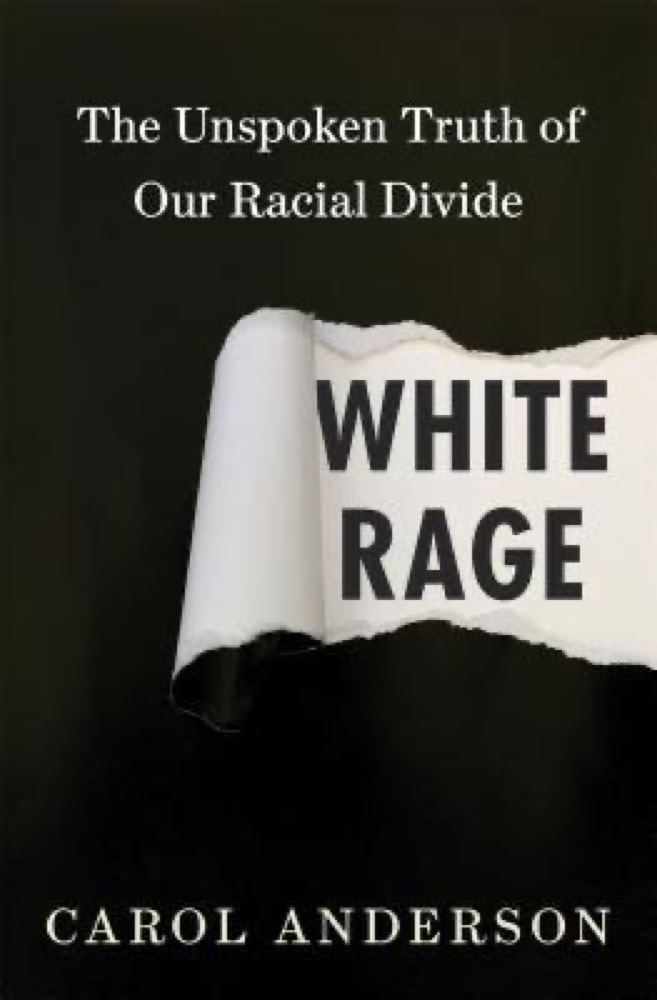 White Rage: The Unspoken Truth of Our Racial Divide
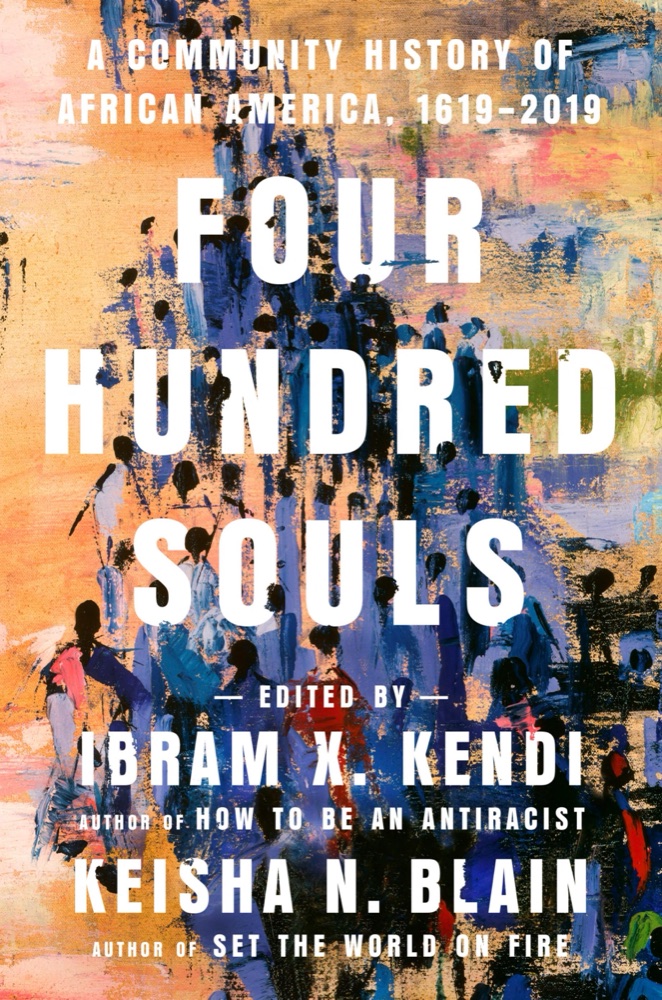 Four Hundred Souls: A Community History of African America, 1619-2019
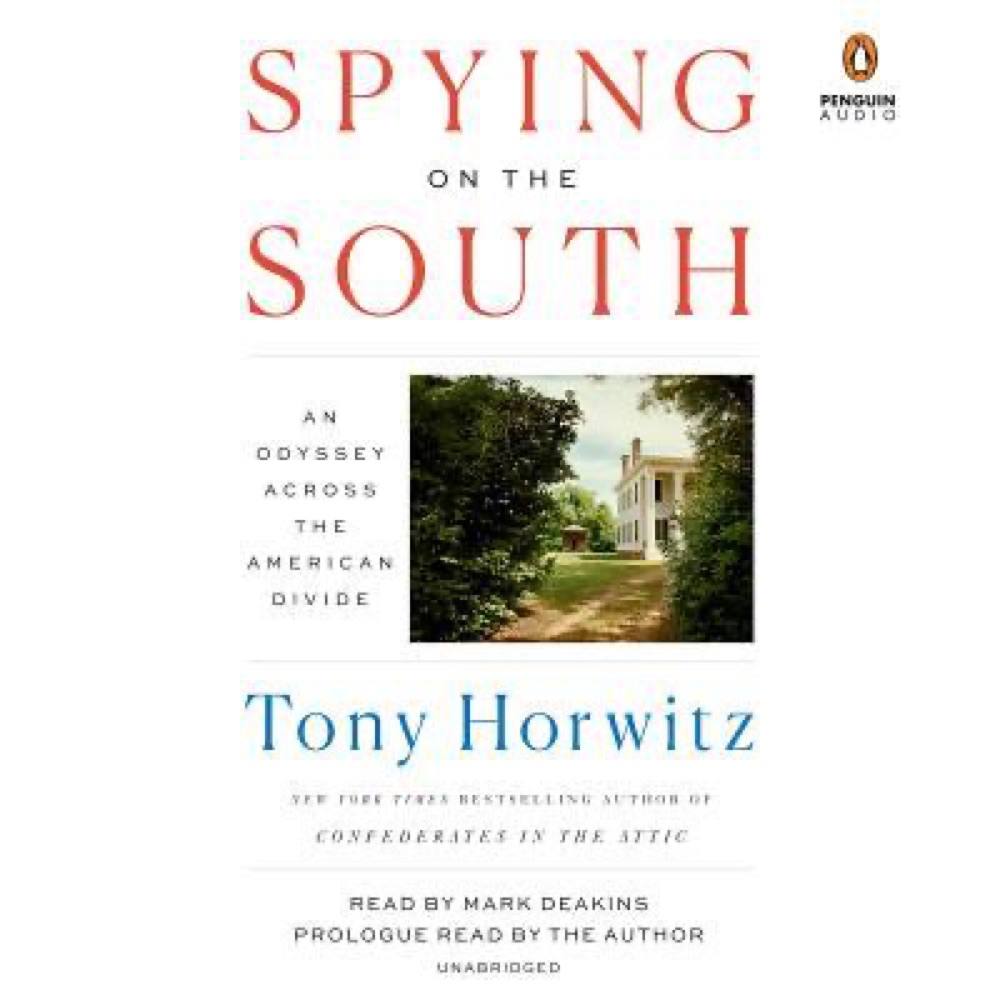 Spying on the South: An Odyssey Across the American Divide
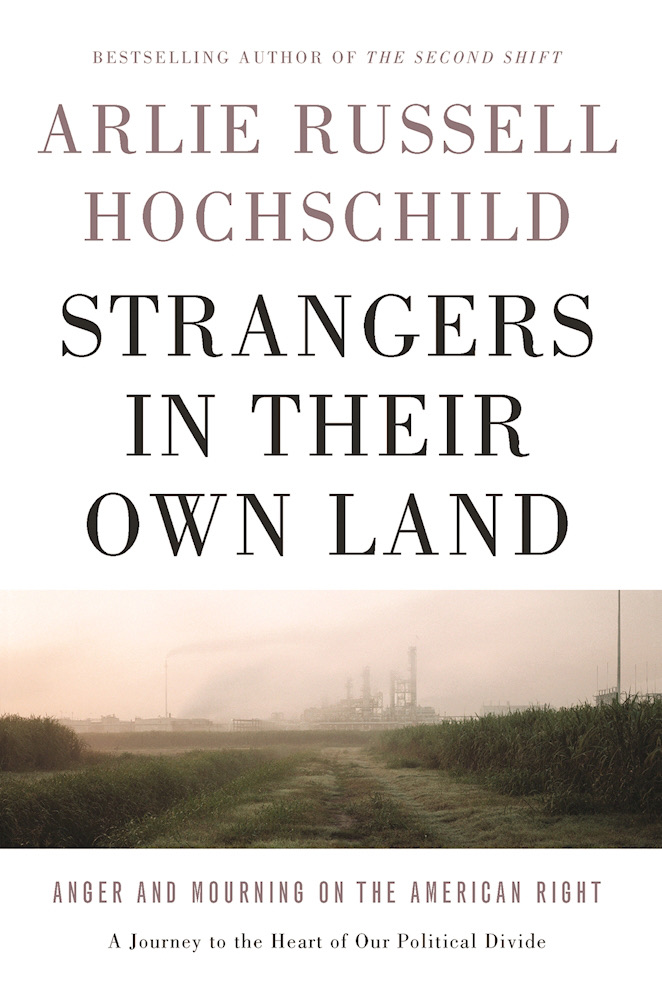 Strangers in Their Own Land: Anger and Mourning on the American Right
 The Disuniting of America: Reflections on a Multicultural Society
 Power Systems: Conversations on Global Democratic Uprisings and the New Challenges to U.S. Empire
 The Untold History of The United States
 The Small and the Mighty: Twelve Unsung Americans Who Changed the Course of History, from the Founding to the Civil Rights Movement
 We Gon' Be Alright: Notes on Race and Resegregation
 The Reactionary Mind: Conservatism from Edmund Burke to Sarah Palin
 The Hemingses of Monticello: An American Family
 Simple Justice: The History of Brown v. Board of Education and Black America's Struggle for Equality
 The Half Has Never Been Told: Slavery and the Making of American Capitalism
 The Inconvenient Indian: A Curious Account of Native People in North America
 Black AF History: The Un-Whitewashed Story of America
 Begin Again: James Baldwin's America and Its Urgent Lessons for Our Own
 A Colony in a Nation
 April 1865: The Month That Saved America
 Why We Can't Wait
 What Unites Us: Reflections on Patriotism
 Deer Hunting with Jesus: Dispatches from America's Class War
 Upheaval: Turning Points for Nations in Crisis
 Founding Brothers: The Revolutionary Generation
 Evil Geniuses: The Unmaking of America
 The Audacity of Hope: Thoughts on Reclaiming the American Dream
 The Sum of Us: What Racism Costs Everyone and How We Can Prosper Together
 The Black Jacobins: Toussaint L'Ouverture and the San Domingo Revolution
 Identity: The Demand for Dignity and the Politics of Resentment
 American Colossus: The Triumph of Capitalism, 1865-1900
 Flashpoints: The Emerging Crisis in Europe
 The Path to Power
 Undaunted Courage: The Pioneering First Mission to Explore America's Wild Frontier
 Conspirators' Hierarchy: The Story of the Committee of 300
 The Revenge Of Geography: What the Map Tells Us About Coming Conflicts and the Battle Against Fate
 The First Salute : View of the American Revolution
 On Tyranny: Twenty Lessons from the Twentieth Century
 No Name in the Street
 Ill Fares the Land
 Revolutionary Summer: The Birth of American Independence
 Nixonland: The Rise of a President and the Fracturing of America
 The Dawn of Everything: A New History of Humanity
 Becoming Madam Secretary
 One Nation: What We Can All Do to Save America's Future
 The Invisible Bridge: The Fall of Nixon and the Rise of Reagan
 The World As It Is: Inside the Obama White House