
 Capital in the Twenty-First Century
Quotes from the Book
Paradoxically, the sources available today (in the era of big data) are less precise than those that were available a century ago due to the internationalization of wealth, the proliferation of tax havens, and above all, lack of political will to enforce financial transparency, so it is quite possible that we are underestimating the level of wealth inequality in recent decades.
7
Inequality is neither economic nor technological; it is ideological and political. This is no doubt the most striking conclusion to emerge from the historical approach I take in this book. In other words, the market and competition, profits and wages, capital and debt, skilled and unskilled workers, natives and aliens, tax havens and competitiveness—none of these things exist as such. All are social and historical constructs, which depend entirely on the legal, fiscal, educational, and political systems that people choose to adopt and the conceptual definitions they choose to work with.
4
Billionaires think that anything goes, are enamored of geoengineering, and detest nothing so much as simple but unpleasant solutions (such as paying taxes and living quietly).
3
The reality is that extreme inequality recurs again and again; to deal with it, societies need institutions capable of periodically redefining and redistributing property rights. The refusal to do so in as transparent and peaceful a manner as possible only increases the likelihood of more violent but less effective remedies.
3
We should not overestimate the extent of the diffusion of ownership that has taken place over the past two centuries: the egalitarian ownership society—or even, more modestly, a society in which the poorest half of the population owns more than a token share of the wealth—has yet to be invented.
3
In practice, the term “populism” has become the ultimate weapon in the hands of the objectively privileged social classes, a means to dismiss out of hand any criticism of their preferred political choices and policies. Gone is the need for any debate about novel social and fiscal arrangements or alternative ways of organizing globalization. It is enough to brand dissenters as “populists” to end all discussion with a clear conscience and foreclose debate.
3
Consider, for example, the unrivaled ability of the United States to impose staggering sanctions on foreign firms as well as dissuasive commercial and financial embargoes on governments deemed to be insufficiently cooperative—an ability not unrelated to US global military dominance.
2
In particular, journalists and citizens all too often bow to the expertise of economists, limited though it is, and hesitate to express opinions about wages and profits, taxes and debts, trade and capital. But if the people are to be sovereign—as democracy says they should be—these subjects are not optional. Their complexity is such that it is unjustifiable to abandon them to a small caste of experts. The contrary is true. Precisely because they are so complex, only broad collective deliberation, based on reason and on the past history and experience of every citizen, can lead to progress toward resolving these issues. Ultimately, this book has only one goal: to enable citizens to reclaim possession of economic and historical knowledge.
1
A just society is one that allows all of its members access to the widest possible range of fundamental goods. Fundamental goods include education, health, the right to vote, and more generally to participate as fully as possible in the various forms of social, cultural, economic, civic, and political life. A just society organizes socioeconomic relations, property rights, and the distribution of income and wealth in such a way as to allow its least advantaged members to enjoy the highest possible life conditions. A just society in no way requires absolute uniformity or equality. To the extent that income and wealth inequalities are the result of different aspirations and distinct life choices or permit improvement of the standard of living and expansion of the opportunities available to the disadvantaged, they may be considered just. But this must be demonstrated, not assumed, and this argument cannot be invoked to justify any degree of inequality whatsoever, as it too often is.
1
The whole history of inequality regimes shows that what makes historical change possible is above all the existence of social and political mobilizations for change and concrete experimentation with alternative arrangements.
1
One of the most important lessons of this book is the following: ideas and ideologies count in history, but unless they are set against the logic of events, with due attention to historical experimentation and concrete institutional practices (to say nothing of potentially violent crises), they are useless.
1
Meritocratic discourse generally glorifies the winners in the economic system while stigmatizing the losers for their supposed lack of merit,
1
Every society has no choice but to make sense of its inequalities,
1
the level of inequality is above all society’s ideological, political, and institutional capacity to justify and structure inequality and not the level of wealth or development as such.
1
We find the same pattern in virtually every region of the world: the identity cleavage deepened and conflicts over boundaries intensified while the wealth cleavage weakened and criticism of wealth became muted.
1
In Destiny and Desire (2008),
1
In 2014, the rate of access to higher education (percentage of individuals age 19–21 enrolled in a college, university, or other institution of higher education) was barely 30 percent for children of the poorest 10 percent in the United States and 90 percent for the richest 10 percent.
Change comes when the short-term logic of events, intersects with the long term evolution of ideas.
At this stage, I will simply insist on a conclusion we have encountered before: namely, that it is impossible to understand the structure of inequality today without taking into account the heavy inegalitarian legacy of slavery and colonialism.
Alternation between parties is normal in a democracy, and these Democratic victories were in part a consequence of the voters’ natural fatigue with the Republicans, who had also been tarnished by various financial scandals, as often happens to parties in power.
For Finley, there were very few true slave societies: Athens and Rome in antiquity and then Brazil, the southern United States, and the West Indies in the eighteenth and nineteenth centuries. In these cases, slaves may have represented from 30 to 50 percent of the total population (or even more in the West Indies).
Between 1880 and 1914 the world was in perpetual flux. The automobile, the electric light, the trans-Atlantic steamship, the telegraph, and radio—all were invented in the space of a few decades. The economic and social consequences of those inventions were surely as important as those of Facebook, Amazon, and Uber. The point is crucial, because it shows that the hyper-inegalitarianism of the prewar era was not a consequence of a bygone era with little or no similarity to today’s world. In fact, the Belle Époque resembles today’s world in many ways, even if essential differences remain.
inequality in these regions has always been high: they never experienced a relatively egalitarian “social-democratic” phase (much less a communist one).
South Africa, Brazil, and the Middle East stand at the frontier of modern inequality, with top decile shares of 55–65 percent.
If this book has been able to awaken the reader’s interest in new questions and enlighten her with knowledge she did not previously possess, my goal will have been fully achieved.
The history of all hitherto existing societies is the history of the struggle of ideologies and the quest for justice.
History is the product of crises;
All human societies need to justify their inequalities.
Political-ideological transformation depends above all on the balance of power of the contending groups and their relative capacity for mobilization,
Without a credible new universalistic and egalitarian narrative, it is all too likely that the challenges of rising inequality, immigration, and climate change will precipitate a retreat into identitarian* nationalist politics based on fears of a “great replacement” of one population by another. We saw this in Europe in the first half of the twentieth century, and it seems to be happening again in various parts of the world in the first decades of the twenty-first century.
Watch on YouTube
About Thomas Piketty
We have collected 68 quotes from 3 books by Thomas Piketty on BookQuoters.
More about the author →More by Thomas Piketty
Capital in the Twenty-First Century
 A Brief History of Equality
About the book
The epic successor to one of the most important books of the century: at once a retelling of global history, a scathing critique of contemporary politics, and a bold proposal for a new and fairer economic system.
Thomas Piketty's bestselling Capital in the Twenty-First Century galvanized global debate about inequality. In this audacious follow-up, Piketty challenges us to revolutionize how we think about politics, ideology, and history. He exposes the ideas that have sustained inequality for the past millennium, reveals why the shallow politics of right and left are failing us today, and outlines the structure of a fairer economic system.
Our economy, Piketty observes, is not a natural fact. Markets, profits, and capital are all historical constructs that depend on choices. Piketty explores the material and ideological interactions of conflicting social groups that have given us sl
Book details
- First published
- 2019
- Author
- Thomas Piketty
- Genre
- Nonfiction
- Goodreads rating
- 4.27 (3k ratings)
The buzz
- The New York TimesReview in The New York Timesprofessional review (via Book Marks)
- The New YorkerReview in The New Yorkerprofessional review (via Book Marks)
- Kirkus ReviewsReview in Kirkus Reviewsprofessional review (via Book Marks)
- Publishers WeeklyReview in Publishers Weeklyprofessional review (via Book Marks)
- LrbReview in Lrbprofessional review (via Book Marks)
- FtReview in Ftprofessional review (via Book Marks)
Keep reading
Capital in the Twenty-First Century
A Brief History of Equality
 Wealth, Poverty and Politics: An International Perspective
 Ill Fares the Land
 The Lessons of History
 Political Order and Political Decay: From the Industrial Revolution to the Globalization of Democracy
 Twilight of the Elites: America After Meritocracy
 Why Nations Fail: The Origins of Power, Prosperity, and Poverty
 Occupy
 Identity: The Demand for Dignity and the Politics of Resentment
 The Evolution of Everything: How New Ideas Emerge
 First As Tragedy, Then As Farce
 Elite Capture: How the Powerful Took Over Identity Politics
 The End of History and the Last Man
 The Great Transformation: The Political and Economic Origins of Our Time
 Power and Progress: Our Thousand-Year Struggle Over Technology and Prosperity
 The Spirit Level: Why More Equal Societies Almost Always Do Better
 Capitalism, Socialism and Democracy
 The System: Who Rigged It, How We Fix It
 Human Action: A Treatise on Economics
 The Road to Serfdom
 The Tyranny of Merit: What's Become of the Common Good?
 Four Futures: Life After Capitalism
 The World Is Flat: A Brief History of the Twenty-first Century
 Small Is Beautiful: Economics as if People Mattered
 Twilight of Democracy: The Seductive Lure of Authoritarianism
 The Dawn of Everything: A New History of Humanity
 23 Things They Don't Tell You About Capitalism
 Principles for Dealing with the Changing World Order: Why Nations Succeed and Fail
 Why Marx Was Right
 Capitalism: The Unknown Ideal
 The Shock Doctrine: The Rise of Disaster Capitalism
 The Constitution of Liberty
 What White People Can Do Next: From Allyship to Coalition – An Empowering Guide to Interrogating Whiteness and Creating Justice
 Upheaval: Turning Points for Nations in Crisis
 A People's History of the United States
 Black Rednecks and White Liberals
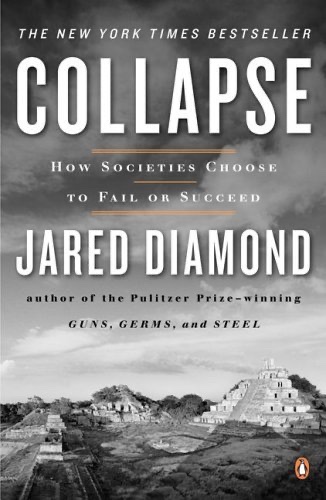 Collapse: How Societies Choose to Fail or Succeed
 Capitalism: A Ghost Story
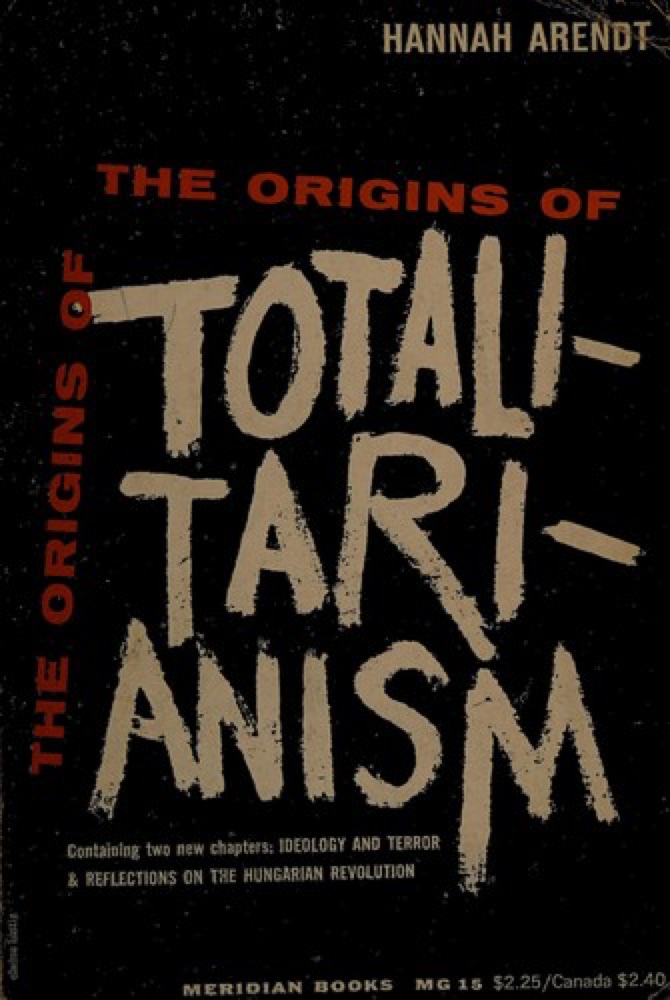 The Origins of Totalitarianism
 A Conflict of Visions: Ideological Origins of Political Struggles
 The Rational Optimist: How Prosperity Evolves
 A Theory of Justice
 One-Dimensional Man: Studies in the Ideology of Advanced Industrial Society
 India Unbound: The Social and Economic Revolution from Independence to the Global Information Age
 World Order
 The Machiavellians: Defenders of Freedom
 This Is What Inequality Looks Like
 Imperialism: The Highest Stage of Capitalism
 Civilization: The West and the Rest
 Utopia for Realists: How We Can Build the Ideal World
 Talking to My Daughter About the Economy: or, How Capitalism Works—and How It Fails
 Vulture Capitalism: Corporate Crimes, Backdoor Bailouts, and the Death of Freedom
 Seeing Like a State: How Certain Schemes to Improve the Human Condition Have Failed
 The Fatal Conceit: The Errors of Socialism
 Free to Choose: A Personal Statement
 The Wretched of the Earth
 The Audacity of Hope: Thoughts on Reclaiming the American Dream
 Death of the Liberal Class
 The Strange Death of Europe: Immigration, Identity, Islam