
 Feral: Rewilding the Land, the Sea and Human Life
Quotes from the Book
our loyalties are to the aesthetics, not the evidence. We are seduced by the way things look, and overlook the way they function. But beauty is seldom truth, and truth is seldom beauty.
1
Another paper calculates that if a magic switch were thrown, causing the entire world to shift to a plant-based diet, and the land now occupied by livestock were rewilded, the carbon drawn down from the atmosphere by recovering ecosystems would be equivalent to all the world’s fossil fuel emissions from the previous sixteen years.[218] This drawdown could make the difference between our likely failure to prevent more than 1.5°C of global heating, and success.
1
I doubt I'm the only one in this field exasperated by people who claim that their variety of farming is the best of all possible systems in the best of all possible worlds. I've seen farmers who set out with high ideals gradually becoming hucksters, overlooking the drawbacks of their practice, exaggerating the advantages, subordinating their intellects to their interests. The people I'm drawn to are those, like Tolly, with a capacity for self-correction, who recognize the flaws in what they do and seek to address them.
[Agribusiness Conglomerates'] growth relies on ripping down circuit breaking, back-up systems, and modularity, and streamlining a system whose major nodes are already too big and whose links are already too strong. It's an accelerating cycle that inexorably destabilizes the system.
Scientists at Germany's Max Planck Institute have found that as much as 40 percent of the rainfall in parts of East Africa appears to be caused by farmers watering their fields in India, Pakistan, and Bangladesh, between 4,000 and 6,000 kilometers away.
After the Civil War battle at Shiloh, Tennessee, in 1862, thousands of injured soldiers were left lying in the mud, in some cases for two days and two nights, as the number of casualties on both sides was so great that it overwhelmed their armies' capacity to retrieve and treat them. Many died from their injuries and the consequent infections. But at night, some of the injured men noticed a strange blue glow emanating from their wounds. Their ghostly penumbra could be seen from a distance. Field surgeons observed that the soldiers who luminesced healed more quickly and had a higher survival rate than those who didn't. They called it the Angel's Glow. An explanation for the Angel's Glow was proposed 139 years later, when a seventeen-year-old high-school student, William Martin, acting on a hunch, persuaded his friend Jonathan Curtis to help him investigate. Their paper, which won a national science prize, argued that the soldiers appear to have been attacked by insect-eating nematodes in the soil contaminating their wounds. The nematodes regurgitated their bacteria, and the antibiotics these microbes produce are likely to have destroyed the other pathogens infecting the wounds. Because the luminous bacteria have evolved to infect insects, whose body temperature is lower than that of humans, the students speculated that only hypothermic soldiers were inoculated. When they were brought in for treatment, and warmed up, the bacteria that had saved them died, preventing complications. (A related species, adapted to mammalian temperatures, causes severe infections.)
Human breast milk contains sugars called oligo-saccharides. At first, scientists struggled to understand why mothers express these compounds, as babies can't digest them. It now seems that their sole purpose is to feed the bacteria with which the child will grow. They selectively cultivate a particular bacterial species with a crucial role in helping the gut to develop and calibrating the immune system. Similarly, young plants release large quantities of sucrose into the soil, to feed and develop their new microbiomes. Like the human gut, the rhizosphere not only digests food, but also helps to protect plants from disease. Just as the bacteria that live in our guts out compete and attack invading pathogens, the microbes in the rhizosphere create a defensive ring around the root. Plants feed beneficial bacteria species, so that they crowd out pathogenic microbes and fungi.
In every gram (less than a teaspoon) of soil, where plants are well established, there is around a kilometer of fungal filaments.
The soil can support such abundance because of its gigantic surface area. In an extreme case -- the finest clays -- a single gram (half a teaspoon when dry), would, if all its surfaces were laid out flat, cover 800 square meters.
Charity is what happens when government fails.
Obesity is a communicable disease. Its vectors are corporations.
One aspect of the human tragedy is that our attempts to solve our problems accidentally create systems whose complexity escalates faster than our understanding of them. They behave in strange, counterintuitive ways, sometimes producing outcomes that are the opposite of what anyone intended.
I’ve got this great idea. Let’s shut down the food factories. Let’s replace the food they make by catching some wild animals—aurochs, wild boar, jungle fowl, and a woolly ruminant from Mesopotamia would do—modifying them drastically and breeding them in stupendous numbers. Let’s separate the young from their mothers, castrate them, dock their tails, clip their beaks, teeth, and horns without anesthesia, herd them into barns and cages, subject them to extreme boredom and sensory deprivation for their short, distressing lives,[88] then corral them into giant factories where we stun them, cut their throats, skin, pluck, and hack their bloody flesh into chunks that you, the lucky customer, will want to eat (oh yes you will!). I’ve done the sums—we’d need to slaughter only 75 billion animals a year.[89] “Let’s kill the baby aurochs, extract a chemical from the lining of their fourth stomachs and mix it with milk from lactating mothers of the same species, to create a wobbly mass of fat and protein. We’ll stir in some live bacteria to digest this mass, then let their excrements sit till they go hard and yellow and start to stink. You’re really going to want this! “Let’s fell the forests, drain the wetlands, seize the wild grasslands, expel the indigenous people, kill the large predators, exclude the wild herbivores, trigger the global collapse of wildlife, climate breakdown, and the destruction of the habitable planet. Let’s fence most of this land for our captive animals to graze, and plant the rest with crops to make them fat. Let’s spray the crops with biocidal toxins and minerals that’ll leach into the soil and water. Let’s divert the rivers and drain the aquifers. Let’s pour billions of tons of shit into the sea. Let’s trigger repeated plagues, transmitted to humans by the animals we’ve captured, and destroy the efficacy of our most important medicines. “Sure, it will trash everything after a while, but think of the fun we’ll have. Come on, you know you want this.” I hope you would run this scoundrel out of town.
Campaigners, chefs, and food writers rail against “intensive farming,” and the harm it does to us and our world. But the problem is not the adjective. It’s the noun.
Watch on YouTube
About George Monbiot
We have collected 44 quotes from 2 books by George Monbiot on BookQuoters.
More about the author →More by George Monbiot
Feral: Rewilding the Land, the Sea and Human Life
About the book
"This remarkable book, staring curiously down at the soil beneath our feet, points us convincingly in one of the directions we must travel. I learned something on every page." --Bill McKibbenFor the first time since the Neolithic, we have the opportunity to transform not only our food system but our entire relationship to the living world.
Farming is the world's greatest cause of environmental destruction - and the one we are least prepared to talk about. We criticise urban sprawl, but farming sprawls across thirty times as much land. We have ploughed, fenced and grazed great tracts of the planet, felling forests, killing wildlife, and poisoning rivers and oceans to feed ourselves. Yet millions still go hungry.
Now the food system itself is beginning to falter. But, as George Monbiot shows us in this brilliant, bracingly original new book, we can resolve the biggest of our dilemmas
Book details
- First published
- 2022
- Author
- George Monbiot
- Genre
- Nonfiction
- Goodreads rating
- 4.39 (4k ratings)
The buzz
- The GuardianReview in The Guardianprofessional review (via Book Marks)
- The TimesReview in The Timesprofessional review (via Book Marks)
- Publishers WeeklyReview in Publishers Weeklyprofessional review (via Book Marks)
- LibraryjournalReview in Libraryjournalprofessional review (via Book Marks)
Keep reading
 Bringing it to the Table: On Farming and Food
 The One-Straw Revolution
 The Omnivore's Dilemma: A Natural History of Four Meals
 Folks, This Ain't Normal: A Farmer's Advice for Happier Hens, Healthier People, and a Better World
 The Third Plate: Field Notes on the Future of Food
 The Vegetarian Myth: Food, Justice, and Sustainability
 The Story of More: How We Got to Climate Change and Where to Go from Here
 The Wizard and the Prophet: Two Remarkable Scientists and Their Dueling Visions to Shape Tomorrow's World
 Under a White Sky: The Nature of the Future
 Falter: Has the Human Game Begun to Play Itself Out?
 Cradle to Cradle: Remaking the Way We Make Things
 The Light Eaters: How the Unseen World of Plant Intelligence Offers a New Understanding of Life on Earth
Feral: Rewilding the Land, the Sea and Human Life
The Light Eaters: How the Unseen World of Plant Intelligence Offers a New Understanding of Life on Earth
Feral: Rewilding the Land, the Sea and Human Life
 Endgame, Vol. 1: The Problem of Civilization
 A Short History of Progress
 Pastoral Song: A Farmer’s Journey
 A Life on Our Planet: My Witness Statement and a Vision for the Future
 Wilding
 Whole: Rethinking the Science of Nutrition
 Animal, Vegetable, Miracle: A Year of Food Life
 The World Peace Diet
 Silent Spring
 The Forest Unseen: A Year’s Watch in Nature
 Small Is Beautiful: Economics as if People Mattered
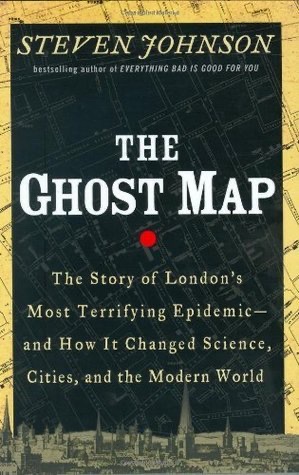 The Ghost Map: The Story of London's Most Terrifying Epidemic - and How It Changed Science, Cities, and the Modern World
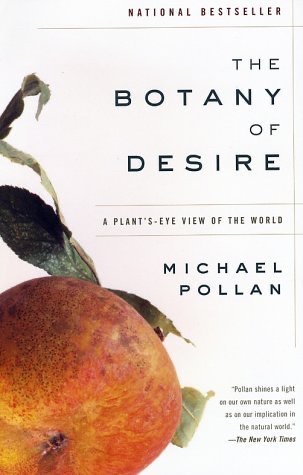 The Botany of Desire: A Plant's-Eye View of the World
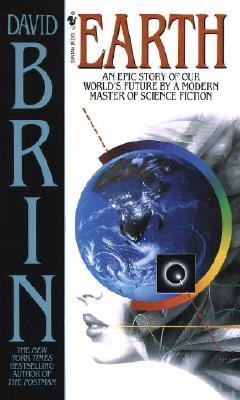 Earth
Earth
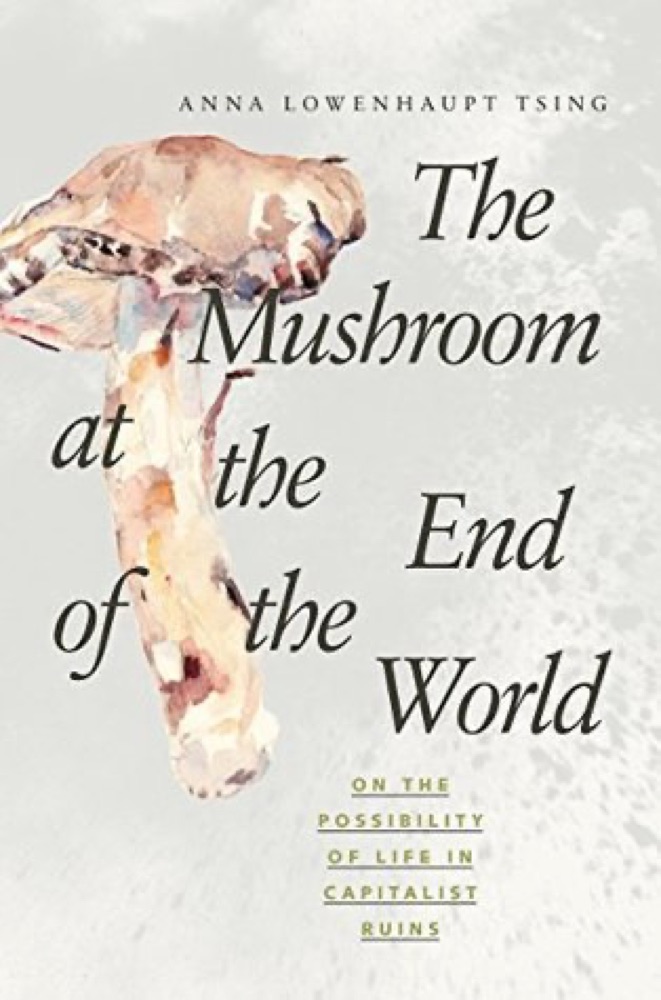 The Mushroom at the End of the World: On the Possibility of Life in Capitalist Ruins
 Sapiens: A Brief History of Humankind
 This is Vegan Propaganda
 Eaarth: Making a Life on a Tough New Planet
 The Future of Humanity: Terraforming Mars, Interstellar Travel, Immortality and Our Destiny Beyond Earth
 On Fire: The Case for the Green New Deal
 The World Without Us
 Soonish: Ten Emerging Technologies That'll Improve and/or Ruin Everything
 The Rational Optimist: How Prosperity Evolves
 Billions & Billions: Thoughts on Life and Death at the Brink of the Millennium
 Eating Animals
 The World-Ending Fire: The Essential Wendell Berry
 Entangled Life: How Fungi Make Our Worlds, Change Our Minds & Shape Our Futures
 Bad Science
 All We Can Save: Truth, Courage, and Solutions for the Climate Crisis
 The Art of the Commonplace: The Agrarian Essays
 The Lost World
 The Overstory
 A Language Older Than Words
 Clean: The New Science of Skin
 A Hunter-Gatherer's Guide to the 21st Century: Evolution and the Challenges of Modern Life
 Semiosis
 Vanishing Treasures: A Bestiary of Extraordinary Endangered Creatures
 The Nutmeg's Curse: Parables for a Planet in Crisis
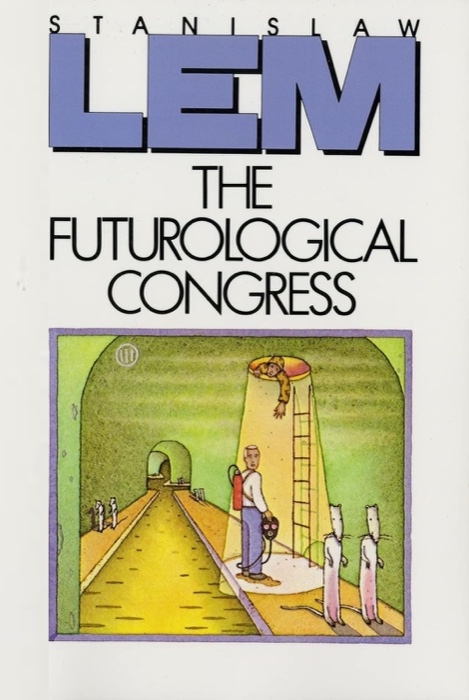 The Futurological Congress: From the Memoirs of Ijon Tichy
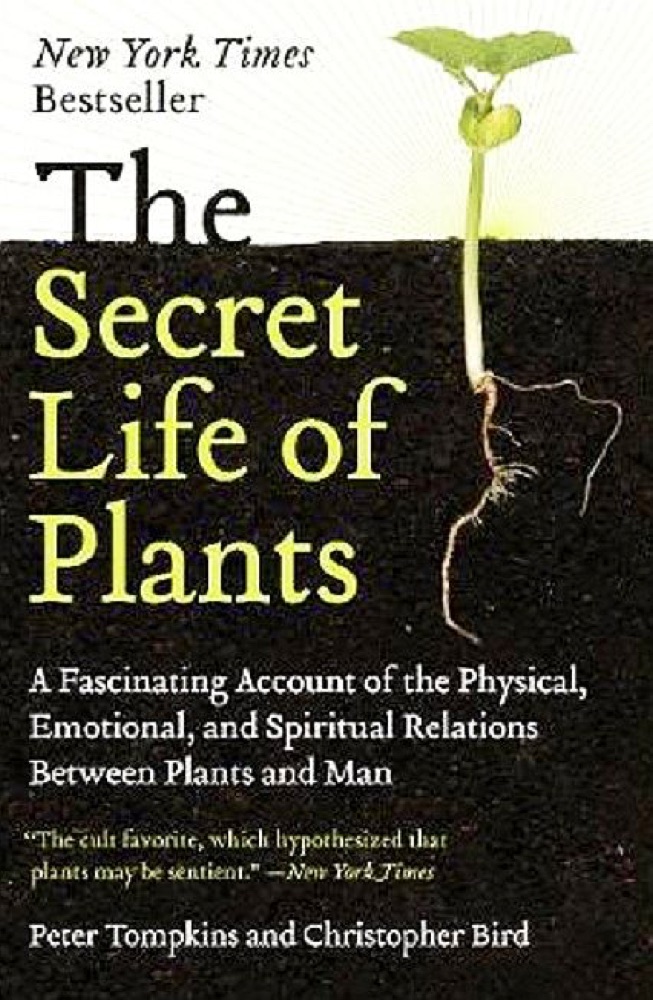 The Secret Life of Plants: A Fascinating Account of the Physical, Emotional and Spiritual Relations Between Plants and Man
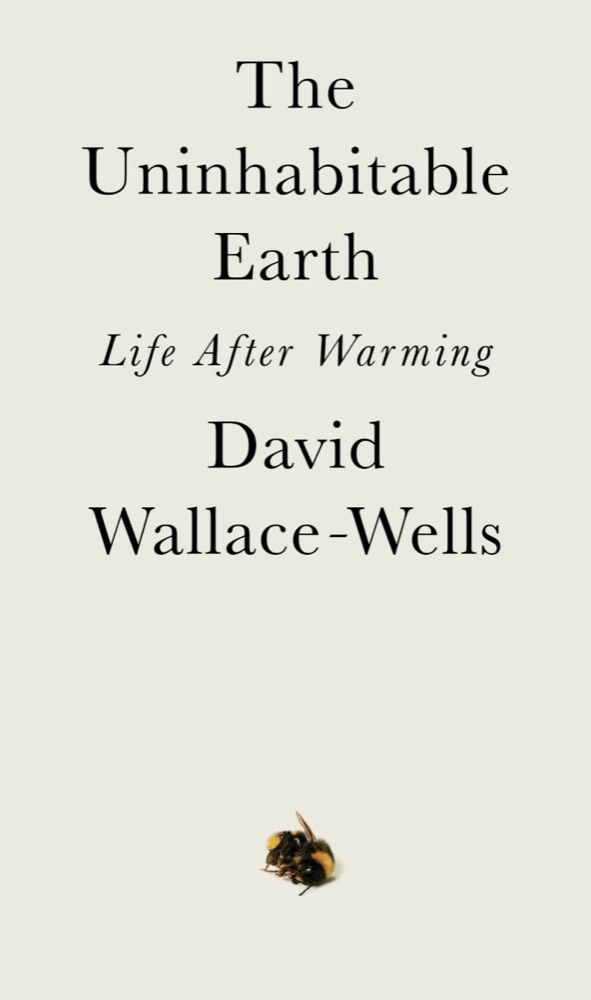 The Uninhabitable Earth: Life After Warming
 The Culture of Make Believe
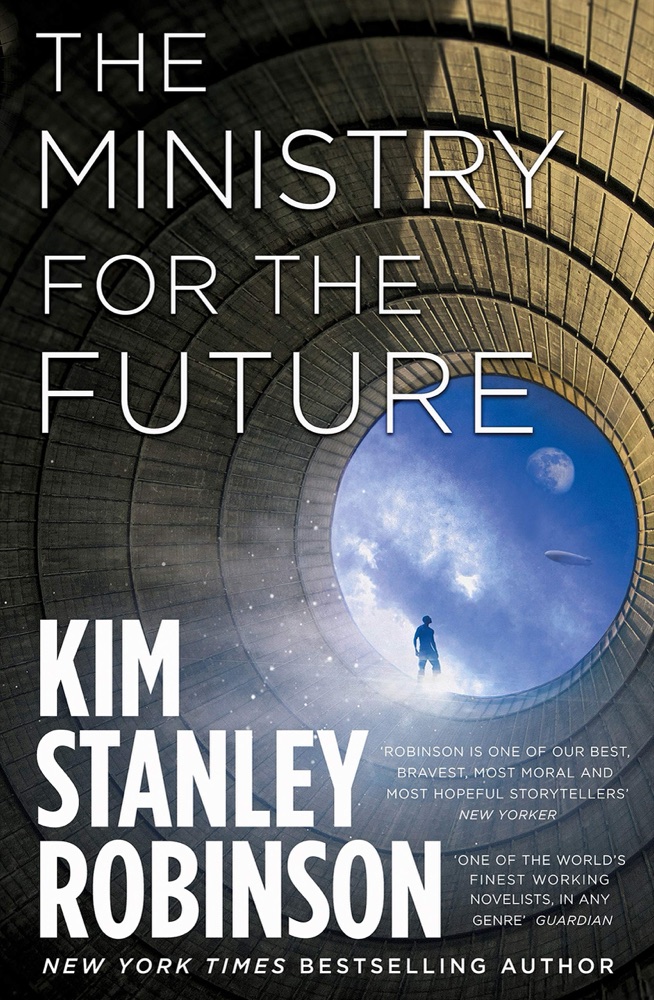 The Ministry for the Future
 Capitalism: A Ghost Story
 Everything I Want To Do Is Illegal: War Stories from the Local Food Front
 Practical Ethics
 The Lives of a Cell: Notes of a Biology Watcher