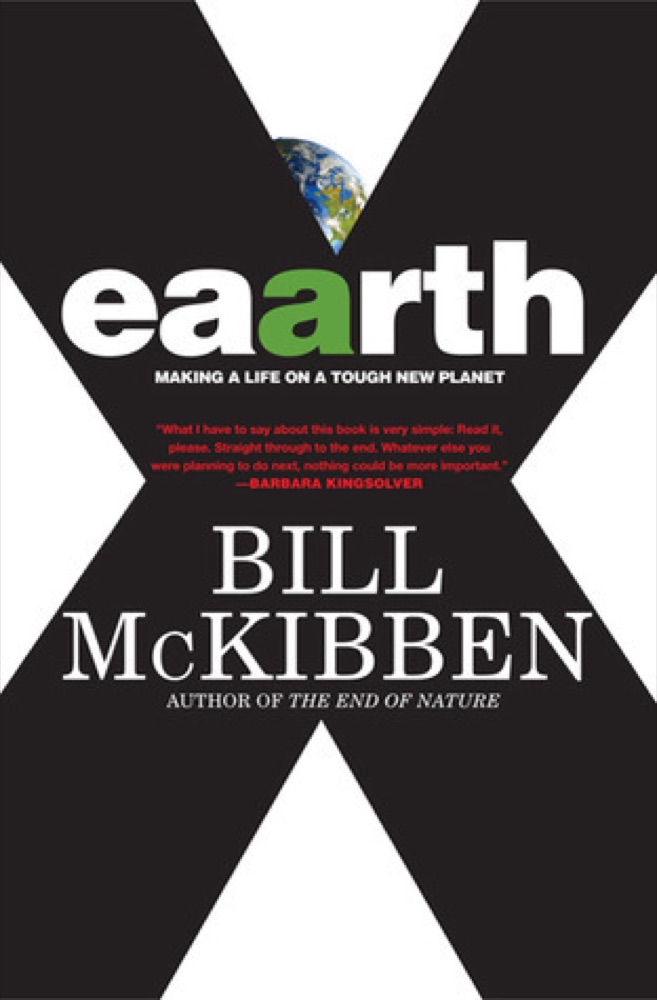
 Eaarth: Making a Life on a Tough New Planet
Quotes from the Book
For two hundred years, human economic activity has largely consisted of digging up fossil fuels and setting them alight
3
In fact, there are half as many wild animals on the planet as there were in 1970, an awesome and mostly unnoticed silencing.
3
A writer doesn’t owe a reader hope—the only obligation is honesty...
3
I am usually classed as a progressive, a liberal. But it seems to me that what I care most about is preserving a world that bears some resemblance to the past—a world with some ice at the top and bottom and the odd coral reef in between, a world where people are connected to the past and future (and to one another) instead of turned into obsolete software.
3
One of the great privileges of living in the affluent parts of the modern world is that we've been able to forget that the natural world even exists...a great city seems to produce wealth out of thin air. This is illusion, of course, but powerful illusion.
2
So: global warming is the ultimate problem of oil companies because oil causes it, and it's the ultimate problem for government haters because without government intervention, you can't solve it. Those twin existential threats, to cash and to worldview, meant that there was never any shortage of resources for the task of denying climate change.
2
Climate change has become such a familiar term that we tend to read past it- it's part of our mental furniture, like urban sprawl or gun violence.
2
when investigative reporters proved that Exxon had known all about global warming and had covered up that knowledge. Plenty of people on the professionally jaded left told me, in one form or another, “Of course they did,” or “All corporations lie,” or “Nothing will ever happen to them anyway.” This kind of knowing cynicism is no threat to the Exxons of the world—it’s a gift. Happily, far more people reacted with usefully naïve outrage: before too long, people were comparing the oil giants with the tobacco companies, and some of the biggest cities in the country were suing them for damages. We don’t know yet precisely how it will end, only that giving them a pass because of their power makes no sense.
2
And the third, of course, is climate change, perhaps the greatest of all these challenges, and certainly the one about which we’ve done the least. It may not be quite game-ending, but it seems set, at the very least, to utterly change the board on which the game is played, and in more profound ways than almost anyone now imagines. The habitable planet has literally begun to shrink, a novel development that will be the great story of our century.
2
A world without death is a world without time, and that in turn is a world without meaning, at least human meaning.
2
Put simply, between ecological destruction and technological hubris, the human experiment is now in question.
2
The human game is a team sport.
1
Let's be, for a while, true optimists, and operate on the assumption that human beings are not grossly defective. Let's assume we're capable of acting together to do remarkable things.
1
Privilege lies in obliviousness. (White privilege, for instance, involves being able to reliably forget that race matters.)
1
We have, in other words, changed the energy balance of our planet, the amount of the sun’s heat that is returned to space. Those of us who burn lots of fossil fuel have changed the way the world operates, fundamentally.
1
Actually, the worst possible plan would also include trying to squash action in every other country, too. And that’s what the entire government-hating network managed to achieve in 2017, when President Trump pulled the United States out of the Paris climate accords. It was as shameful a moment as any in our recent history: the country that produces more carbon than any other announcing that it was now the only country on earth not willing to make even a modest international commitment to solving climate change.
1
Day to day, we forget that if the billions of years of life on Earth were scaled to a twenty-four-hour day, our settled civilizations began about a fifth of a second ago.
1
Far worse were the cattle: At a ranch outside Ashland, “dozens of Angus cows lay dead on the blackened ground, hooves jutting in the air. Others staggered around like broken toys, unable to see or breathe, their black fur and dark eyes burned, plastic identification tags melted to their ears,” the New York Times reported. A sixty-nine-year-old rancher walked among them with a rifle. “They’re gentle,” he said. “They know us. We know them. You just thought, ‘Wow, I am sorry.’ You think you’re done and the next day you got to go shoot more.
in the spring of 2018.10 At about the same time, a team of economists reported that there was a 35 percent chance that the United Nations’ previous “worst-case scenario” for global warming was in fact too optimistic.11 In January 2019 scientists concluded the Earth’s oceans were warming 40 percent faster than previously believed.
As we will see, this extraordinary amount of heat is wreaking enormous changes, but for now, don’t worry about the effects; just marvel at the magnitude: the extra carbon released to date, if it could be amassed in one place, would form a solid graphite column twenty-five meters in diameter that would stretch from here to the moon.
So, let’s remember exactly what we’ve been up to, because it should fill us with awe; it’s by far the biggest thing humans have ever done. Those of us in the fossil fuel–consuming classes have, over the last two hundred years, dug up immense quantities of coal and gas and oil, and burned them: in car motors, basement furnaces, power plants, steel mills.
I’m neither optimistic nor pessimistic, just realistic—enough to know engagement is our only chance. I said before that the human game we’ve been playing has no rules and no end, but it does come with two logical imperatives. The first is to keep it going, and the second is to keep it human.
And the sheer size of our consumption means we have enormous leverage of a different sort—no Roman emperor could change the pH of the oceans, but we’ve managed that trick in short order.
Though we’ve taken the environmental idea semi-seriously, passing the laws that cleaned air and water, we’ve never taken it anywhere near as seriously as we’ve taken further growth. On his way to the theoretically groundbreaking Rio environmental summit in 1992, the first President Bush famously declared, “The American way of life is not up for negotiation,”16 and as it turns out, he was correct—and speaking for much of the world. And so far, we’ve gotten away with it: even as we keep accelerating, the game spins
earth’s terrestrial vertebrates, humans account for 30 percent of their total mass, and our farm animals for another 67 percent, meaning wild animals (all the moose and cheetahs and wombats combined) total just 3 percent.
Or consider what I’m going to have for dinner, or what you’re wearing on your back—everything comes with strings attached, and you can follow those strings into every corner of our past and present.
Think, again, of the sheer amount of human organization required for the American Society for Testing and Materials to produce directive D3462-87 (“Asphalt Shingles Made from Glass Felt and Surfaced with Mineral Granules”) and then to enforce its mandates. We could, clearly, repeat this exercise for everything you see around you, and everything you hear, and everything you smell—all the infinitely more interesting activities always under way beneath all those roofs. As I write, for instance, I’m listening to Orchestra Baobab on Spotify. It was the house band at a Dakar nightclub in the 1970s, where its music reflected the Cuban beats that came with sailors to West Africa in the 1940s; eventually the group recorded its best album at a Paris studio, and now it somehow resides on a computer server where 196,847 people from across the planet listen to it each month.
The earliest examples date to 1901, and the first manufacturer was the H.M. Reynolds Company of Grand Rapids, Michigan, which sold its product under the slogan “The Roof That Stays Is the Roof That Pays.” Asphalt occurs naturally in a few places on Earth—the tar sands of Alberta, for instance, are mostly bitumen, which is the geologist’s word for asphalt. But the asphalt used in shingles comes from the oil-refining process: it’s the stuff that still hasn’t boiled at five hundred degrees Fahrenheit. Vacuum distillation separates it from more valuable products such as gasoline, diesel, and naphtha; it then is stored and transported at high temperatures until it can be used, mostly for making roads.
Whether that entrenched power can actually be beaten in time I do not know. A writer doesn’t owe a reader hope—the only obligation is honesty—but I want those who pick up this volume to know that its author lives in a state of engagement, not despair.
Still, there is one sense in which I am less grim than in my younger days. This book ends with the conviction that resistance to these dangers is at least possible. Some of that conviction stems from human ingenuity—watching the rapid spread of a technology as world-changing as the solar panel cheers me daily. And much of that conviction rests on events in my own life over the past few decades. I’ve immersed myself in movements working for change, and I helped found a group, 350.org, that grew into the first planetwide climate campaign. Though we haven’t beaten the fossil fuel industry, we’ve organized demonstrations in every country on the globe save North Korea, and with our many colleagues around the world, we’ve won some battles.
Watch on YouTube
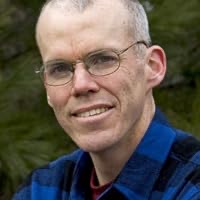
About Bill McKibben
We have collected 55 quotes from 2 books by Bill McKibben on BookQuoters.
More about the author →More by Bill McKibben
Eaarth: Making a Life on a Tough New Planet
About the book
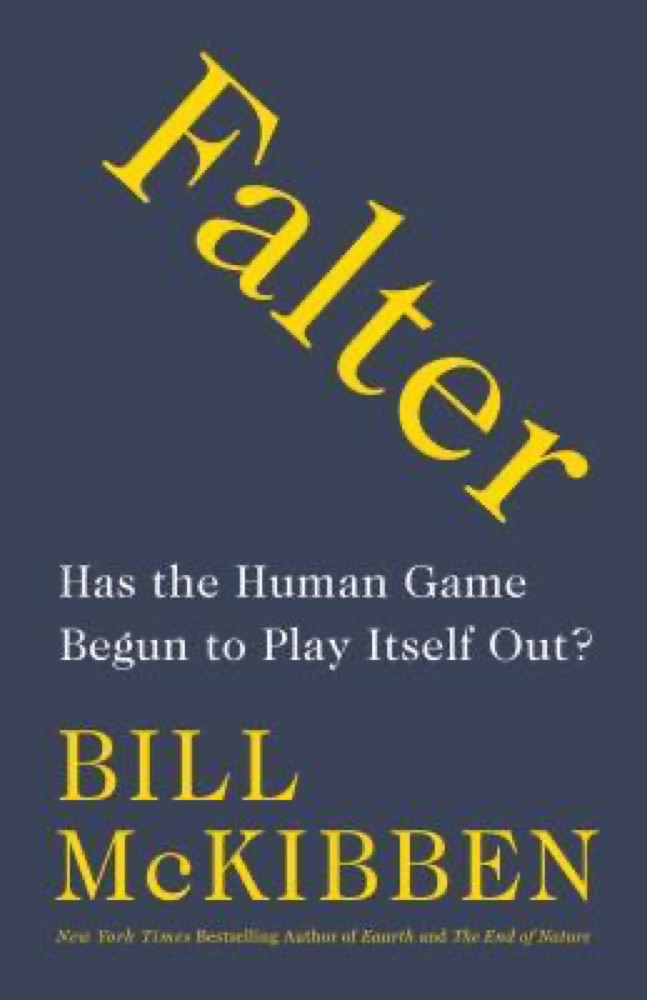
Thirty years ago Bill McKibben offered one of the earliest warnings about climate change. Now he broadens the warning: the entire human game, he suggests, has begun to play itself out.
Bill McKibben’s groundbreaking book The End of Nature -- issued in dozens of languages and long regarded as a classic -- was the first book to alert us to global warming. But the danger is broader than that: even as climate change shrinks the space where our civilization can exist, new technologies like artificial intelligence and robotics threaten to bleach away the variety of human experience.
Falter tells the story of these converging trends and of the ideological fervor that keeps us from bringing them under control. And then, drawing on McKibben’s experience in building 350.org, the first truly global citizens movement to combat climate change, it offers some possible ways out of the trap. We’re
Book details
- First published
- 2019
- Author
- Bill McKibben
- Genre
- Nonfiction
- Goodreads rating
- 4.00 (2k ratings)
The buzz
- The New York TimesReview in The New York Timesprofessional review (via Book Marks)
- The Washington PostReview in The Washington Postprofessional review (via Book Marks)
- Los Angeles TimesReview in Los Angeles Timesprofessional review (via Book Marks)
- The Times Literary SupplementReview in The Times Literary Supplementprofessional review (via Book Marks)
- Kirkus ReviewsReview in Kirkus Reviewsprofessional review (via Book Marks)
- LA Review of BooksReview in LA Review of Booksprofessional review (via Book Marks)
Keep reading
 Under a White Sky: The Nature of the Future
Eaarth: Making a Life on a Tough New Planet
Under a White Sky: The Nature of the Future
Eaarth: Making a Life on a Tough New Planet
 The Uninhabitable Earth: Life After Warming
 The Story of More: How We Got to Climate Change and Where to Go from Here
 A Life on Our Planet: My Witness Statement and a Vision for the Future
 A Short History of Progress
 On Fire: The Case for the Green New Deal
 The Ends of the World
 Billions & Billions: Thoughts on Life and Death at the Brink of the Millennium
 The Wizard and the Prophet: Two Remarkable Scientists and Their Dueling Visions to Shape Tomorrow's World
 The Ministry for the Future
 This Changes Everything: Capitalism vs. The Climate
 Endgame, Vol. 1: The Problem of Civilization
 The World Without Us
 All We Can Save: Truth, Courage, and Solutions for the Climate Crisis
 The Lost World
 Genome
 Earth
Earth
 The Climate Book: The Facts and the Solutions
 Jurassic Park
 Feral: Rewilding the Land, the Sea and Human Life
 The State of the Art
 New York 2140
 The Mushroom at the End of the World: On the Possibility of Life in Capitalist Ruins
 Shadows of Forgotten Ancestors
 The World-Ending Fire: The Essential Wendell Berry
 2312
2312
 Civilized to Death: What Was Lost on the Way to Modernity
 Small Is Beautiful: Economics as if People Mattered
 The Sixth Extinction: An Unnatural History
 On the Steel Breeze
 The Rational Optimist: How Prosperity Evolves
 The Nutmeg's Curse: Parables for a Planet in Crisis
 Silent Spring
 The Shockwave Rider
 Sapiens: A Brief History of Humankind
 Space Chronicles: Facing the Ultimate Frontier
 Vanishing Treasures: A Bestiary of Extraordinary Endangered Creatures
 Wild Ones: A Sometimes Dismaying, Weirdly Reassuring Story About Looking at People Looking at Animals in America
 Homo Deus: A History of Tomorrow
 A Short History of Nearly Everything
 The Overstory
 Enlightenment Now: The Case for Reason, Science, Humanism, and Progress
 The Fifth Science
 Devolution: A Firsthand Account of the Rainier Sasquatch Massacre
 Humankind: A Hopeful History
 Death's End
 No One Is Too Small to Make a Difference
 The World Is Flat: A Brief History of the Twenty-first Century
 The Future
 Delta-v
 To Be Taught, If Fortunate
 A Hunter-Gatherer's Guide to the 21st Century: Evolution and the Challenges of Modern Life
 The Evolution of Everything: How New Ideas Emerge
 The Anthropocene Reviewed: Essays on a Human-Centered Planet
 Collapse: How Societies Choose to Fail or Succeed
 Regenesis: Feeding the World Without Devouring the Planet
 The Futurological Congress: From the Memoirs of Ijon Tichy
 Ishmael: An Adventure of the Mind and Spirit
 What If?: Serious Scientific Answers to Absurd Hypothetical Questions