 The Story of More: How We Got to Climate Change and Where to Go from Here
Quotes from the Book
The climate crisis is the result of social, political, and economic systems that are wildly skewed to benefit those who already have so much.
8
We need to have a whole cultural shift, where it becomes our culture to take care of the Earth, and in order to make this shift, we need storytelling about how the Earth takes care of us and how we can take care of her.
8
It’s a constant question for me every time I’m entranced by the beauty of this world: what does it mean to love this place? What does it mean to love anyone or anything in a world whose vanishing is accelerating, perhaps beyond our capacity to save the things that we love most? We still have the chance to make the space for hope- to act in such a way that hope might exist for others who come after us. Not everyone can focus on this work- many people are too full up with the difficulties of their daily lives...But if you can, then the world needs you, and it needs you right now, because anything that we do this year or next is worth ten of the same thing ten years from now. LOVING A VANISHING WORLD by Emily N. Johnston
5
It’s too late to save all our stuff, but we can still save one another and a great many other species too. Let’s put out the flames and build something different in its place. Something a little less ornate, but with room for all those who need shelter and care.
4
building community is a requisite foundation for building a better world.
3
The plain truth is that capitalism needs to evolve if humanity is going to survive. Rose Marcario
2
If you’re not affected by climate change today, that itself is a privilege. ---Andrea Manning
2
the great pull of the universe is a desire to live in harmony with the Creator, which is expressed most effectively in our own lives by living harmoniously with the rest of creation.
2
Though Indigenous peoples comprise only about 5 percent of the global population, our lands hold approximately 80 percent of the world’s biodiversity and an estimated 40 to 50 percent of the remaining protected places in the world.
2
[The keepers of Indigenous knowledge carry thousands of years of data on things such as medicinal plant properties, biodiversity, migration patterns, climate changes, astronomical events, and quantum physics.
2
This makes us, however unintuitively, the most powerful people that have ever lived…Nothing has threatened our ecologies more than the extraction and burning of fossil fuels and the affluent consumer culture…But we have also been granted an astonishingly beautiful gift that has never before been given to humans: the chance to shepherd human and animal life into the coming centuries and millennia, when we know that much of it would otherwise disappear. That’s a power that should make us very humble and a privilege that can motivate us profoundly. In a way, our darkness- the knowledge that without our great effort, many or most of Earth’s creatures will vanish- is what reveals the light within, the seed of life and possibility that we share with all of Earth’s life, the one that we can carry forward. For better and for worse, we are the ones at the intersection of knowledge and agency. LOVING A VANISHING WORLD by Emily N. Johnston
1
Did It Ever Occur to You That Maybe You’re Falling in Love? BY AILISH HOPPER We buried the problem. We planted a tree over the problem. We regretted our actions toward the problem. We declined to comment on the problem. We carved a memorial to the problem, dedicated it. Forgot our handkerchief. We removed all “unnatural” ingredients, handcrafted a locally-grown tincture for the problem. But nobody bought it. We freshly-laundered, bleached, deodorized the problem. We built a wall around the problem, tagged it with pictures of children, birds in trees. We renamed the problem, and denounced those who used the old name. We wrote a law for the problem, but it died in committee. We drove the problem out with loud noises from homemade instruments. We marched, leafleted, sang hymns, linked arms with the problem, got dragged to jail, got spat on by the problem and let out. We elected an official who Finally Gets the problem. … We watched carefully for the problem, but our flashlight died. We had dreams of the problem. In which we could no longer recognize ourselves. We reformed. We transformed. Turned over a new leaf. Turned a corner, found ourselves near a scent that somehow reminded us of the problem, In ways we could never Put into words. That Little I-can’t-explain-it That makes it hard to think. That Rings like a siren inside.
1
SHE TOLD ME THE EARTH LOVES US by Anne Haven McDonnell She said it softly, without a need For conviction or romance. After everything? I asked, ashamed. That’s not the kind of love she meant. She walked through a field of gray Beetle-bored pine, snags branching Like polished bone. I forget sometimes How trees look at me with the generosity Of water. I forget all the other Breath I’m breathing in. Today I learned that trees can’t sleep With our lights on. That they knit A forest in their language, their feelings. This is not a metaphor. Like seeing faces across the crowd, We are learning al the old things, Newly shined and numbered. I’m always looking For a place to lie down And cry. Green, mossed, shaded. Or rock-quiet, empty. Somewhere To hush and start over I put on my antlers in the sun. I walk through the dark gates of the trees. Grief waters my footsteps, leaving A trail that glistens.
1
The sacred is all around us, always. The sacred is in each of our bodies, a miracle of life and water and earth. It is present in every object we touch, every wall and window we somehow believe separates us from our Mother. We each hold the beauty of creation in every fiber of our being. We are never far from the answer to the problem we have created- it is within each of us. SACRED RESISTANCE by Tara Houska, Zhaabowekwe, Couchiching First Nation
1
Our steady resistance forms cracks in the world of profit margins. It transitions us away from self-destruction. We are a thorn in the side of a world that believes it must extract to exist, a bone-deep reminder there are other ways of being…Some of us leave the land to bring our case to the financiers of the industry we oppose, to present the data and oppositional testimony the banks ostensibly have no knowledge of. In here, I feel like an exotic bird to be examined for potential danger. In here, alongside discussion of financial investments, I remind corporate heads that they drink water and breathe air. As awkward as it can be to remind a person of their own humanity, it has proven exceedingly effective to bring Indigenous rights and the voice of the land into these spaces. SACRED RESISTANCE by Tara Houska, Zhaabowekwe, Couchiching First Nation
1
Nature is cyclical. It curves and revolves, with little use for linear ways… Adrienne Rich’s 1977 poem “Natural Resources” unlocked the title of the book. “My heart is moved by all I cannot save,” she writes. Ours too- and by all that we can. The work at hand is hard and uncertain, yet we find our warrior spirits, charge ahead, and care for one another every step of the way. We will stumble as we chart this unmapped path; let’s forgive our fallibility, safeguard our empathy, and lead with kindness as we go. In more poignant words from Adrienne Rich: There must be those among whom we can sit down and weep, and still be counted as warriors.
1
To address our climate emergency, we must rapidly, radically reshape society. We need every solution and every solver. As the saying goes, to change everything, we need everyone. What this moment calls for is a mosaic of voices- the full spectrum of ideas and insights on how we can turn things around.
1
If there is one theme that runs through the collection, it is ferocious love- for one another, for Earth, for all beings, for justice, for a live-giving future. Let’s move forward with love, not conquest; humility, not righteousness; generous curiosity, not hardened assumptions. It is a magnificent thing to be alive in a moment that matters so much. Let’s proceed with broken-open hearts, seeking truth, summoning courage, and focused on solutions.
1
The function of art is to do more than tell it like it is- it’s to imagine what is possible. bell hooks
1
I love people who harness themselves, an ox to a heavy cart, who pull like water buffalo, with massive patience, who strain in the mud and the muck to move things forward, who do what has to be done, again and again.
1
But in my experience, there is always one essential ingredient: scrappy people who are willing to work backward from goals that seem impossibly ambitious at the start.] —
1
[what can “too expensive” mean when we are contemplating the inundation of the world’s most populous cities, dire food and water shortages, mass migrations, the sixth extinction?]
1
We must stop competing with each other. We need to start cooperating and sharing the remaining resources of this planet in a fair way.”]
1
[Every plant, tree, and animal carries its own unique wisdom and can teach us how to live harmoniously with one another and in relationship with Mother Earth.
1
To see beyond what despair sees—to move from the feeling toward the possibility—calls for things we have in abundance: love, imagination, and a willingness to simply tend the world as best we can, without guarantee of success.
1
[Just as ecosystems need biodiversity to thrive, society needs cultural diversity to grow new possibilities. Monoculture deadens our collective potential.]
1
Living in this time of crisis, for our democracy as well as the climate, is breaking my heart open and creating space for new understanding. The weight of history is on our shoulders, but this moment is alive with possibility.]
1
For many people who have been comfortable until now, it is seemingly impossible to accept that anything so disruptive as climate change is possible. Either it’s a hoax or things will somehow continue to be fine. [It’s a profound kind of entitlement to believe, despite all evidence to the contrary, that we can go on living as we are.]
1
Climate change is only one symptom of a larger problem. Human beings have fallen out of alignment with life. Their beliefs and ways of being have shifted dramatically from those of their ancestors, taking them further and further away from the sources of their survival. As a result, people have forgotten how to live in relationship with the rest of creation. They have lost their respect for their elders in the natural world, such as the trees, waters, soils, and millions of other species that thrived on Mother Earth long before human beings arrived.
The Indigenous ways of knowing and being that European colonists saw as primitive and uncivilized are now being actively sought out to save our environment and humankind from the brink of extinction.
Watch on YouTube
About Ayana Elizabeth Johnson
About the book
Provocative and illuminating essays from women at the forefront of the climate movement who are harnessing truth, courage, and solutions to lead humanity forward.
There is a renaissance blooming in the climate movement: leadership that is more characteristically feminine and more faithfully feminist, rooted in compassion, connection, creativity, and collaboration. While it's clear that women and girls are vital voices and agents of change for this planet, they are too often missing from the proverbial table. More than a problem of bias, it's a dynamic that sets us up for failure. To change everything, we need everyone.
All We Can Save illuminates the expertise and insights of dozens of diverse women leading on climate in the United States--scientists, journalists, farmers, lawyers, teachers, activists, innovators, wonks, and designers, across generations, geographies, and race--and
Book details
- First published
- 2020
- Author
- Ayana Elizabeth Johnson
- Genre
- Nonfiction
- Goodreads rating
- 4.41 (7k ratings)
Keep reading
The Story of More: How We Got to Climate Change and Where to Go from Here
 Emergent Strategy: Shaping Change, Changing Worlds
 A Life on Our Planet: My Witness Statement and a Vision for the Future
 On Fire: The Case for the Green New Deal
 The Book of Hope: A Survival Guide for Trying Times
 Falter: Has the Human Game Begun to Play Itself Out?
 The Mushroom at the End of the World: On the Possibility of Life in Capitalist Ruins
 Feral: Rewilding the Land, the Sea and Human Life
 The Anthropocene Reviewed: Essays on a Human-Centered Planet
 Laudato Si': On the Care of Our Common Home
 The Serviceberry: Abundance and Reciprocity in the Natural World
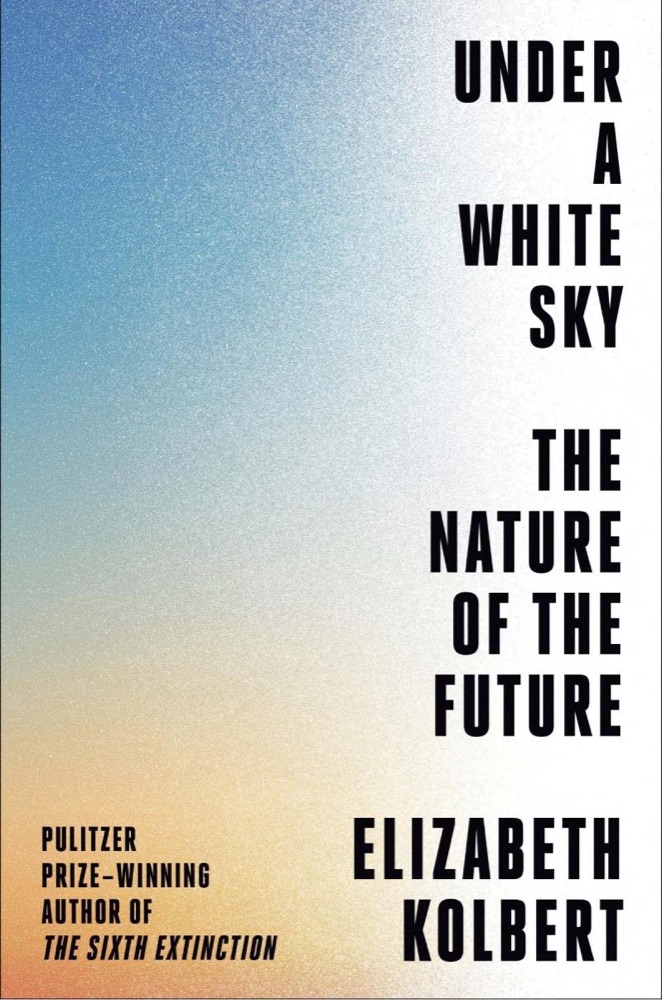 Under a White Sky: The Nature of the Future
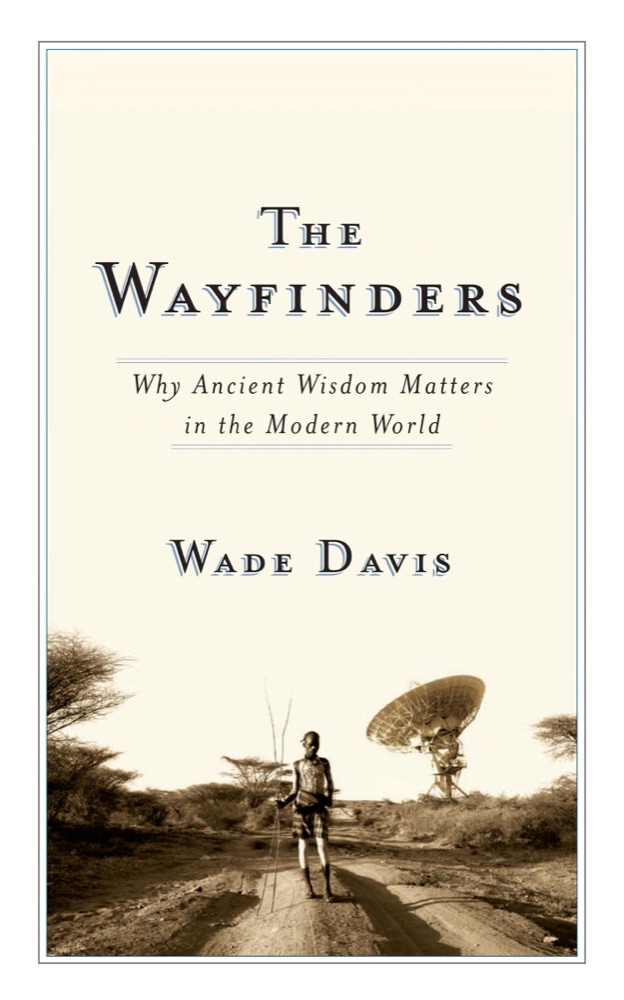 The Wayfinders: Why Ancient Wisdom Matters in the Modern World
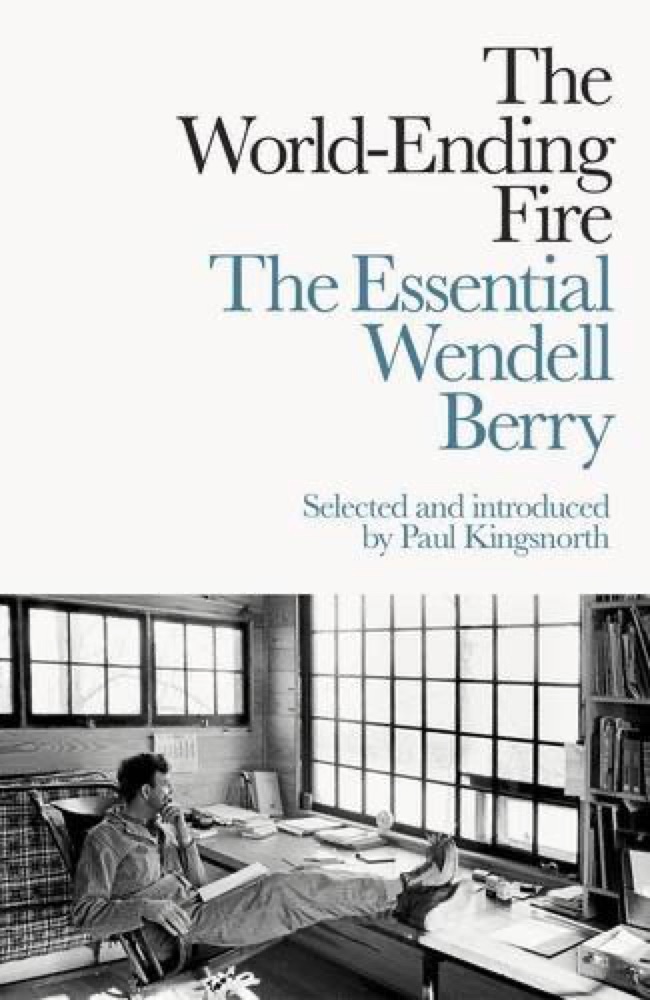 The World-Ending Fire: The Essential Wendell Berry
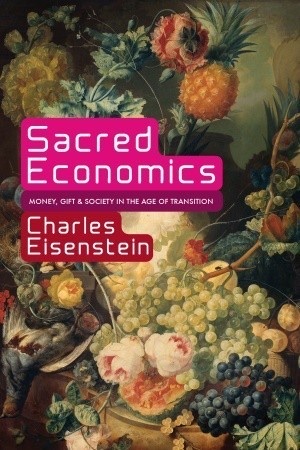 Sacred Economics: Money, Gift, and Society in the Age of Transition
 Deep Creek: Finding Hope in the High Country
 Endgame, Vol. 1: The Problem of Civilization
 The Art of the Commonplace: The Agrarian Essays
 Staying with the Trouble: Making Kin in the Chthulucene
 Becoming Wise: An Inquiry into the Mystery and Art of Living
 Vanishing Treasures: A Bestiary of Extraordinary Endangered Creatures
 The Nutmeg's Curse: Parables for a Planet in Crisis
 The Ministry for the Future
 Zen and the Art of Saving the Planet
 The Overstory
 The Culture of Make Believe
 Gathering Moss: A Natural and Cultural History of Mosses
 United: Thoughts on Finding Common Ground and Advancing the Common Good
 Billions & Billions: Thoughts on Life and Death at the Brink of the Millennium
 The Fifth Sacred Thing
 The World Without Us
 No One Is Too Small to Make a Difference
 The Blue Sweater: Bridging the Gap Between Rich and Poor in an Interconnected World
 Let Us Dream: The Path to a Better Future
 Small Wonder
 Across That Bridge: A Vision for Change and the Future of America
 Arctic Dreams
 To Be Taught, If Fortunate
 The Stone Gods
 No Impact Man
 Why Fish Don’t Exist: A Story of Loss, Love, and the Hidden Order of Life
 Wild Ones: A Sometimes Dismaying, Weirdly Reassuring Story About Looking at People Looking at Animals in America
 Humankind: A Hopeful History
 A Hunter-Gatherer's Guide to the 21st Century: Evolution and the Challenges of Modern Life
 This Changes Everything: Capitalism vs. The Climate
 The Future
 The Earth Path: Grounding Your Spirit in the Rhythms of Nature
 Semiosis
 Devolution: A Firsthand Account of the Rainier Sasquatch Massacre
 Vesper Flights
 Underland: A Deep Time Journey
 On Trails: An Exploration
 On the Steel Breeze
 The One-Straw Revolution
 Perhaps the Stars
 The Hour of Land: A Personal Topography of America's National Parks
 Enlightenment Now: The Case for Reason, Science, Humanism, and Progress
 A Sand County Almanac and Sketches Here and There
 The Forest Unseen: A Year’s Watch in Nature
 Split Tooth