
 The Sixth Extinction: An Unnatural History
Quotes from the Book
I was struck, and not for the first time, by how much easier it is to ruin an ecosystem than to run one.
10
If control is the problem, then, by the logic of the Anthropocene, still more control must be the solution.
7
Declining emissions and rising atmospheric concentrations point to a stubborn fact about carbon dioxide: once it’s in the air, it stays there. How long, exactly, is a complicated question; for all intents and purposes, though, CO2 emissions are cumulative. The comparison that’s often made is to a bathtub. So long as the tap is running, a stoppered tub will continue to fill. Turn the tap down, and the tub will still keep filling, just more slowly. To
5
The strongest argument for gene editing cane toads, house mice, and ship rats is also the simplest: what's the alternative? Rejecting such technologies as unnatural isn't going to bring nature back. The choice is not between what is and what was, but between what is and what will be, which, often enough, is nothing.
5
Humans are producing no-analog climates, no-analog ecosystems, a whole no-analog future. At this point it might be prudent to scale back our commitments and reduce our impacts. But there are so many of us — as of this writing nearly eight billion — and we are stepped in so far, return seems impractical. And so we face a no-analog predicament. If there is to be an answer to the problem of control, it's going to be more control. Only now what's go to be managed is not a nature that exists — or is imagined to exist — apart from the human. Instead, the new effort begins with a planet remade and spirals back on itself — not so much the control of nature as the control of the control of nature.
4
This has been a book about people trying to solve problems created by people trying to solve problems. In the course of reporting it, I spoke to engineers and genetic engineers, biologists and microbiologists, atmospheric scientists and atmospheric entrepreneurs. Without exception, they were enthusiastic about their work. But, as a rule, this enthusiasm was tempered by doubt. The electric fish barriers, the concrete crevasse, the fake cavern, the synthetic clouds- these were presented to me less in a spirit of techno-optimism than what might be called techno-fatalism. They weren't improvements on the originals; they were the best that anyone could come up with, given the circumstances... It's in this context that interventions like assisted evolution and gene drives and digging millions of trenches to bury billions of trees have to be assessed. Geoengineering may be 'entirely crazy and quite disconcerting', but if it could slow the melting of the Greenland ice sheet, or take some of 'the pain and suffering away', or help prevent no-longer-fully-natural ecosystems from collapsing, doesn't it have to be considered?
4
Pissing in your pants will only keep you warm for so long.
4
Every hour and a half, Louisiana sheds another football field’s worth of land.
3
Since the 1930s, Louisiana has shrunk by more than two thousand square miles.
2
The choice is not between what is and what was, but between what is and what will be, which, often enough, is nothing.
2
We live in a world,” he has said, “where deliberately dimming the fucking sun might be less risky than not doing it.
1
If we want everything to remain as it is, everything must change.
1
One way to make sense of the biodiversity crisis would simply be to accept it. The history of life has, after all, been punctuated by extinction events, both big and very big. The impact that brought an end to the Cretaceous wiped out something like seventy-five percent of all species on earth. No one wept for them, and eventually, new species evolved to take their place. But for whatever reason--call it biophilia, call it care for God's creation, call it heart stopping fear--people are reluctant to be the asteroid.
1
Wilson has observed, "We are not as gods. We're not yet sentient or intelligent enough to be much of anything." Paul Kingsnorth, a British writer and activist, has put it this way: "we are as gods, but we have failed to get good at it.. We are Loki, killing the beautiful for fun. We are Saturn, devouring our children... Sometimes doing nothing is better than doing something.
1
Atmospheric warming, ocean warming, ocean acidification, sea-level rise, deglaciation, desertification, eutrophication—these are just some of the by-products of our species’s success. Such is the pace of what is blandly labeled “global change” that there are only a handful of comparable examples in earth’s history, the most recent being the asteroid impact that ended the reign of the dinosaurs, sixty-six million years ago.
1
People have, by now, directly transformed more than half the ice-free land on earth- some twenty-seven million square miles- and indirectly half of what remains. We have dammed or diverted most of the world's major rivers. Our fertilizer plants and legume crops fix more nitrogen than all terrestrial ecosystems combined, and our planes, cars, and power stations emit about a hundred times more carbon dioxide than volcanoes do. We now routinely cause earthquakes. In terms of sheer biomass, the numbers are stark-staring: today people outweigh wild mammals by a ratio of more than eight to one. Add in the weight of our domesticated animals- mostly cows and pigs- and that ratio climbs to twenty-two to one... We have become the major driver of extinction and also, probably, of speciation. So pervasive is man's impact, it is said that we live in a new geological epoch- the Anthropocene.
1
The history of biological interventions designed to correct for previous biological interventions reads like Dr. Seuss’s The Cat in the Hat Comes Back, in which the Cat, after eating cake in the bathtub, is asked to clean up after himself: Do you know how he did it? WITH MOTHER’S WHITE DRESS! Now the tub was all clean, But her dress was a mess!
things, maybe the reef will come back to what it was. “Really what I am is a futurist,” she said at another point. “Our project is acknowledging that a future is coming where nature is no longer fully natural.” Gates was so charismatic that even though I’d come to Moku o Lo‘e with a notebook full of doubts, I felt inspired by her. A couple of times, after she had
philosophy, when it was supposed that nature exists for the convenience of man,” she wrote.15 Herbicides and pesticides represented the very worst kind of “cave man” thinking—a club “hurled against the fabric of life.” The indiscriminate application of chemicals was, Carson warned, harming people, killing birds, and turning the country’s waterways into “rivers of death.” Instead of promoting pesticides and herbicides, government agencies ought to be eliminating them; “a truly extraordinary variety of alternatives” were available. An alternative Carson particularly recommended was setting one biological agent against another. For instance, a parasite could be imported to feed on an unwanted insect. “In that book the problem—the villain—was the broad, almost unrestricted use of chemicals, particularly the chlorinated hydrocarbons, like DDT,” Andrew Mitchell, a
Such a moral stance makes virtually everyone a sinner and makes hypocrites out of many who are concerned about climate change but still partake in the benefits of modernity,
To stay under 2°C, global emissions would have to fall nearly to zero within the next several decades. To stave off 1.5°C, they’d have to drop most of the way toward zero within a single decade. This would entail, for starters: revamping agricultural systems, transforming manufacturing, scrapping gasoline- and diesel-powered vehicles, and replacing most of the world’s power plants.
To paraphrase J. R. McNeill paraphrasing Marx, “Men make their own climate, but they do not make it just as they please.
In New England, 1816 became known as the “year without a summer” or “eighteen-hundred-and-froze-to-death.
We got to talking about climate history and human history. In Steffensen's view, these amounted to more or less the same thing. "If you look at the output of ice cores, it has really changes the picture of the world, our view of past climates and of human evolution," he told me. "Why did human beings not make civilization fifty thousand years ago?" "You know that they had just as big brains as we have today," he went on. "When you put climate in a framework, you can say, well it was an ice age. And also this ice age was so climatically unstable that each time you had the beginnings of a culture, they had to move. Then comes the present interglacial--ten thousand years of very stable climate. The perfect conditions for agriculture. If you look at it, it's amazing. Civilizations in Persia, in China and in India start at the same time, maybe six thousand years ago. They all developed writing and they all developed religion and they all built cities, all at the same time, because the climate was stable. I think if the climate was stable fifty thousand years ago, it would have started then. But they had no chance.
Responding to Brand, Wilson has observed, "We are not as gods. We're not yet sentient or intelligent enough to be much of anything" Paul Kingsnorth, a British writer and activist, has put it this way: "We are as gods, but we have failed to get good at it... We are Loki, killing the beautiful for fun. We are Saturn, devouring our children.
Coral sex is a rare and amazing sight.
would be an unprecedented climate for an unprecedented world, where silver carp glisten under a white sky.
Watch on YouTube
About Elizabeth Kolbert
We have collected 57 quotes from 2 books by Elizabeth Kolbert on BookQuoters.
More about the author →More by Elizabeth Kolbert
The Sixth Extinction: An Unnatural History
About the book
The Pulitzer Prize–winning author of The Sixth Extinction returns to humanity’s transformative impact on the environment, now asking: After doing so much damage, can we change nature, this time to save it?That man should have dominion “over all the earth, and over every creeping thing that creepeth upon the earth” is a prophecy that has hardened into fact. So pervasive are human impacts on the planet that it’s said we live in a new geological epoch: the Anthropocene. In Under a White Sky, Elizabeth Kolbert takes a hard look at the new world we are creating. She meets scientists who are trying to preserve the world’s rarest fish, which lives in a single, tiny pool in the middle of the Mojave. She visits a lava field in Iceland, where engineers are turning carbon emissions to stone; an aquarium in Australia, where researchers are trying to develop “super coral” that can survive on a hotter
Book details
- First published
- 2021
- Author
- Elizabeth Kolbert
- Genre
- Nonfiction
- Goodreads rating
- 4.10 (13k ratings)
The buzz
- The New York TimesReview in The New York Timesprofessional review (via Book Marks)
- The Washington PostReview in The Washington Postprofessional review (via Book Marks)
- The GuardianReview in The Guardianprofessional review (via Book Marks)
- NPRReview in NPRprofessional review (via Book Marks)
- Kirkus ReviewsReview in Kirkus Reviewsprofessional review (via Book Marks)
- Publishers WeeklyReview in Publishers Weeklyprofessional review (via Book Marks)
Keep reading
 Falter: Has the Human Game Begun to Play Itself Out?
 The Ends of the World
 The Uninhabitable Earth: Life After Warming
 A Life on Our Planet: My Witness Statement and a Vision for the Future
 The Story of More: How We Got to Climate Change and Where to Go from Here
 Eaarth: Making a Life on a Tough New Planet
 Feral: Rewilding the Land, the Sea and Human Life
The Sixth Extinction: An Unnatural History
Feral: Rewilding the Land, the Sea and Human Life
The Sixth Extinction: An Unnatural History
 The Wizard and the Prophet: Two Remarkable Scientists and Their Dueling Visions to Shape Tomorrow's World
 The World Without Us
 On Fire: The Case for the Green New Deal
 A Short History of Progress
 All We Can Save: Truth, Courage, and Solutions for the Climate Crisis
 Earth
Earth
 The Climate Book: The Facts and the Solutions
 The Mushroom at the End of the World: On the Possibility of Life in Capitalist Ruins
 Wild Ones: A Sometimes Dismaying, Weirdly Reassuring Story About Looking at People Looking at Animals in America
 Endgame, Vol. 1: The Problem of Civilization
 Silent Spring
 The Ministry for the Future
 This Changes Everything: Capitalism vs. The Climate
 Billions & Billions: Thoughts on Life and Death at the Brink of the Millennium
 The Nutmeg's Curse: Parables for a Planet in Crisis
 The Lost World
 Wilding
 Regenesis: Feeding the World Without Devouring the Planet
 Jurassic Park
 Vanishing Treasures: A Bestiary of Extraordinary Endangered Creatures
 Underland: A Deep Time Journey
 Collapse: How Societies Choose to Fail or Succeed
 2312
2312
 The World-Ending Fire: The Essential Wendell Berry
 Venomous Lumpsucker
 The Overstory
 Sapiens: A Brief History of Humankind
 Space Chronicles: Facing the Ultimate Frontier
 Shadows of Forgotten Ancestors
 Green Mars
 Cradle to Cradle: Remaking the Way We Make Things
 The Log from the Sea of Cortez
 Bringing it to the Table: On Farming and Food
 The Futurological Congress: From the Memoirs of Ijon Tichy
 The Code Breaker: Jennifer Doudna, Gene Editing, and the Future of the Human Race
 Genome
 Civilized to Death: What Was Lost on the Way to Modernity
 The Third Chimpanzee: The Evolution and Future of the Human Animal
 To Be Taught, If Fortunate
 A Hunter-Gatherer's Guide to the 21st Century: Evolution and the Challenges of Modern Life
 The Fifth Science
 Semiosis
 Small Is Beautiful: Economics as if People Mattered
 The Forest Unseen: A Year’s Watch in Nature
 The One-Straw Revolution
 Death's End
 Maelstrom
 A Sand County Almanac and Sketches Here and There
 On the Steel Breeze
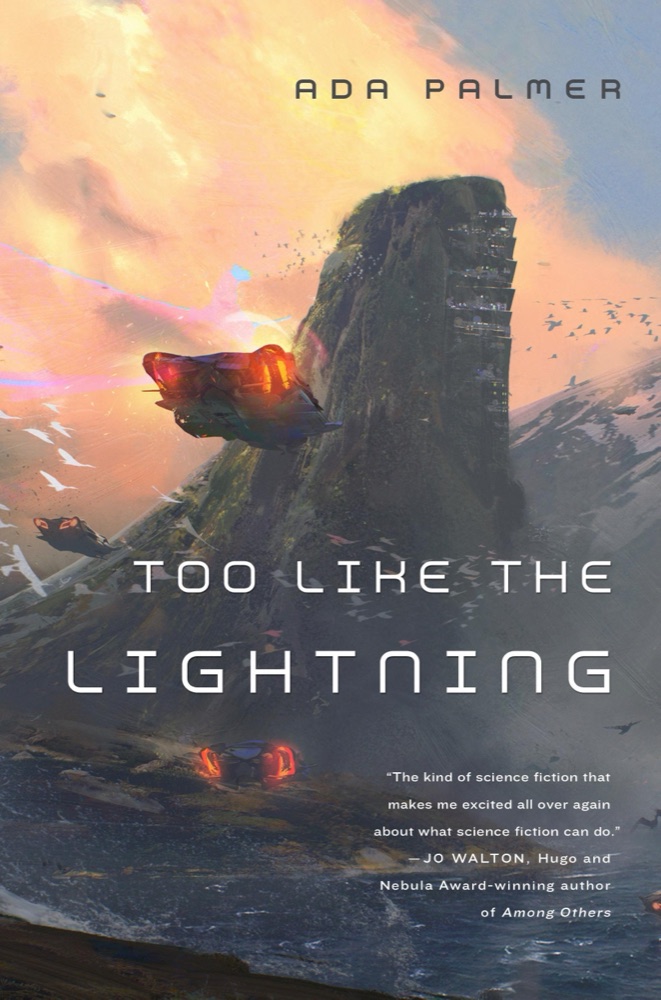 Too Like the Lightning
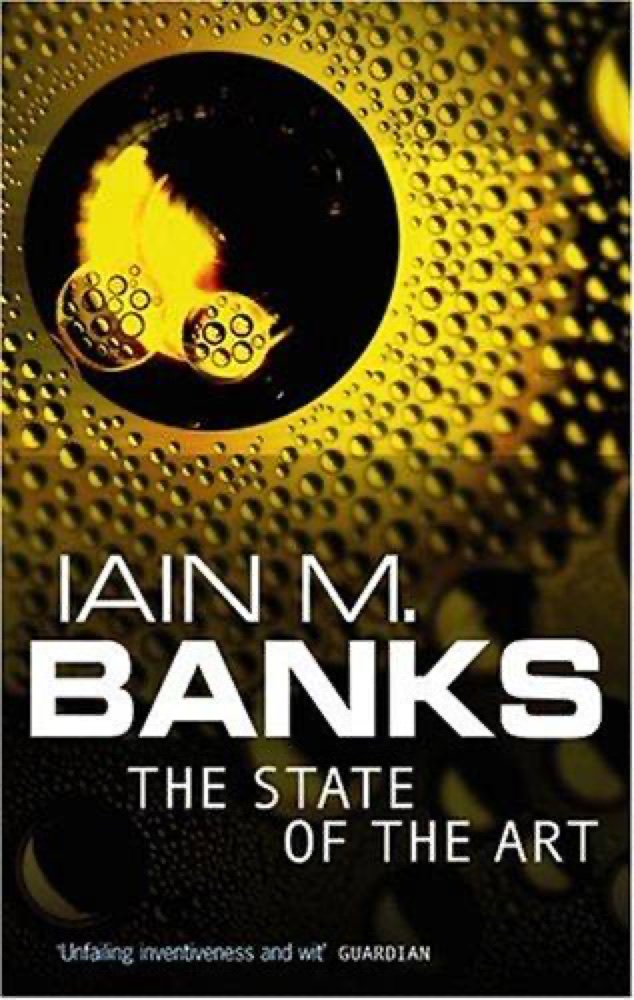 The State of the Art
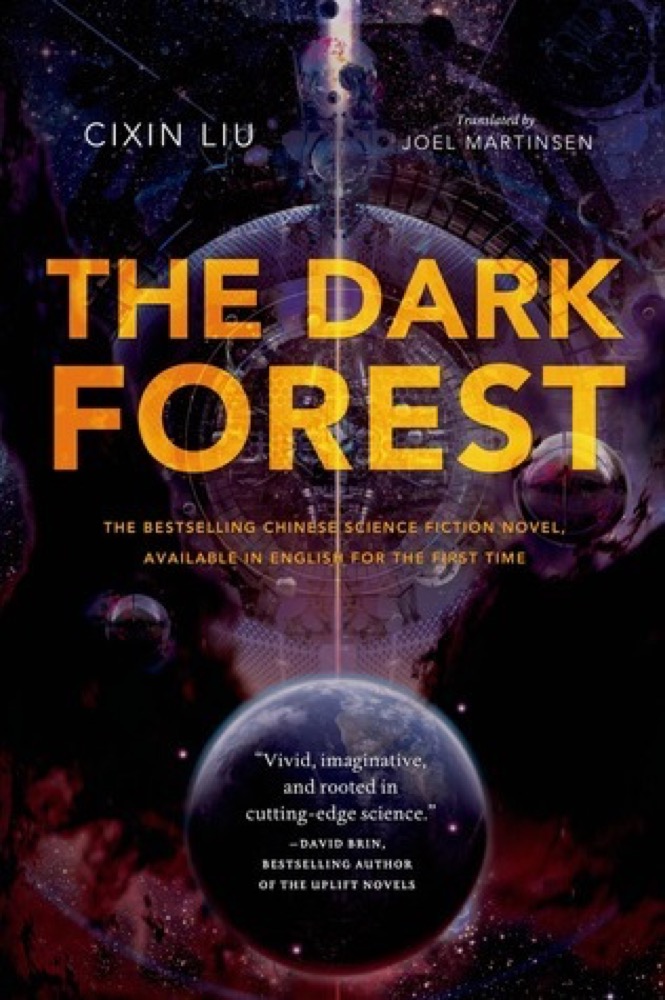 The Dark Forest