
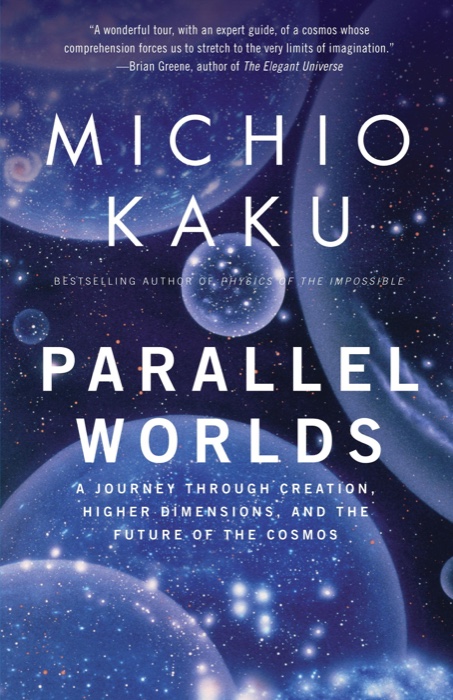
 Parallel Worlds: A Journey Through Creation, Higher Dimensions, and the Future of the Cosmos
Quotes from the Book
Claude Shannon, the father of information theory, once declared, “I visualize a time when we will be to robots what dogs are to humans, and I’m rooting for the machines.
8
I sometimes think about how easy it is for a nation to slip into complacency and ruin after decades of basking in the sun. Since science is the engine of prosperity, nations that turn their backs on science and technology eventually enter a downward spiral.
8
Why go to the stars? Because we are the descendants of those primates who chose to look over the next hill. Because we won’t survive here indefinitely. Because the stars are there, beckoning with fresh horizons. —JAMES AND GREGORY BENFORD
5
One reason why childhood lasts so long is because there is so much subtle information to absorb about human society and the natural world.
5
Do we have enough food to feed the people of the world as they become middle class consumers? The hundreds of millions of people in China and India who are now entering the middle class watch Western movies and want to emulate that lifestyle, with its wasteful use of resources, large consumption of meat, big houses, fixation on luxury goods, et cetera. He is concerned we may not have enough resources to feed the population as a whole, and certainly would have difficulty feeding those who want to consume a Western diet.
5
Astronomers suspect that the Oort Cloud could extend as far as three light-years from our solar system. That is more than halfway to the nearest stars, the Centauri triple star system, which is slightly more than four light-years from Earth. If we assume that the Centauri star system is also surrounded by a sphere of comets, then there might be a continuous trail of comets connecting it to Earth. It may be possible to establish a series of refueling stations, outposts, and relay locations on a grand interstellar highway. Instead of leaping to the next star in one jump, we might cultivate the more modest goal of "comet hopping" to the Centauri system. This thoroughfare could become a cosmic Route 66.
4
If our long-term survival is at stake, we have a basic responsibility to our species to venture to other worlds. —CARL SAGAN
3
It's easy to imagine that, in the future, telepathy and telekinesis will be the norm; we will interact with machines by sheer thought. Our mind will be able to turn on the lights, activate the internet, dictate letters, play video games, communicate with friends, call for a car, purchase merchandise, conjure any movie-all just by thinking. Astronauts of the future may use the power of their minds to pilot their spaceships or explore distant planets. Cities may rise from the desert of Mars, all due to master builders who mentally control the work of robots.
3
An even more advanced form of uploading your mind into a computer was envisioned by computer scientist Hans Moravec. When I interviewed him, he claimed that his method of uploading the human mind could even be done without losing consciousness. First you would be placed on a hospital gurney, next to a robot. Then a surgeon would take individual neurons from your brain and create a duplicate of these neurons (made of transistors) inside the robot. A cable would connect these transistorized neurons to your brain. As time goes by, more and more neurons are removed from your brain and duplicated in the robot. Because your brain is connected to the robot brain, you are fully conscious even as more and more neurons are replaced by transistors. Eventually, without losing consciousness, your entire brain and all its neurons are replaced by transistors. Once all one hundred billion neurons have been duplicated, the connection between you abd the artificial brain is finally cut. When you gaze back at the stretcher, you see your body, lacking its brain, while your consciousness now exists inside a robot.
3
Physicists believe that at the instant of the Big Bang, the universe was in perfect symmetry and there was an equal amount of matter and antimatter. If so, the annihilation between the two would have been perfect and complete, and the universe should be made of pure radiation. Yet here we are, made of matter, which should not be around anymore. Our very existence defies modern physics.
3
The dinosaurs became extinct because they didn’t have a space program. And if we become extinct because we don’t have a space program, it’ll serve us right. —LARRY NIVEN
2
The notion that we live in a quiet, ordinary suburb of the galaxy was simple and comforting. But boy, we were wrong.
2
Originally, you were clay. From being mineral, you became vegetable. From vegetable, you became animal, and from animal, man…And you have to go through a hundred different worlds yet. There are a thousand forms of mind. —RUMI
2
By the early twenty-second century, the technology for self-replicating robots should be perfected, and we may be able to entrust machines with the task of constructing solar arrays and laser batteries on the moon, Mars, and beyond. We would ship over an initial team of automatons, some of which would mine the regolith and others of which would build a factory. Another set of robots would oversee the sorting, milling, and smelting of raw materials in the factory to separate and obtain various metals. These purified metals could then be used to assemble laser launch stations—and a new batch of self-replicating robots. We might eventually have a bustling network of relay stations throughout the solar system, perhaps stretching from the moon all the way to the Oort Cloud. Because the comets in the Oort Cloud extend roughly halfway to Alpha Centauri and are largely stationary, they may be ideal locations for laser banks that could provide an extra boost to nanoships on their journey to our neighboring star system. As each nanoship passed by one of these relay stations, its lasers would fire automatically and give the ship an added push to the stars. Self-replicating robots could build these distant outposts by using fusion instead of sunlight as the basic source of energy.
2
If we scan all the life-forms that have ever existed on the Earth, from microscopic bacteria to towering forests, lumbering dinosaurs, and enterprising humans, we find that more than 99.9 percent of them eventually became extinct. This means that extinction is the norm, that the odds are already stacked heavily against us. When we dig beneath our feet into the soil to unearth the fossil record, we see evidence of many ancient life-forms. Yet only the smallest handful survive today. Millions of species have appeared before us; they had their day in the sun, and then they withered and died. That is the story of life.
2
the birthrate falls dramatically as a nation industrializes, urbanizes, and educates young girls.
2
surmised that pressure from sunlight creates these tails by blowing dust and ice crystals in comets away from the sun. The prescient Jules Verne anticipated light sails in From the Earth to the Moon when he wrote, “There will some day appear velocities far greater than these, of which light or electricity will probably be the mechanical agent … we shall one day travel to the moon, the planets, and the stars.
2
The most ancient part of our brain is at the very back, where balance, territoriality, and instincts are processed. The brain expanded in the forward direction and developed the limbic system, the monkey brain of emotions, located in the center of the brain. This progression from the back to the front is also the way a child’s brain matures.
2
With this exponential growth of robots, we could soon have a fleet large enough to do the work of altering the desert landscape. They would mine the soil, construct new factories, and make unlimited copies of themselves cheaply and efficiently. They could create a vast agricultural industry and propel the rise of modern civilization not just on Mars, but throughout space, conducting mining operations in the asteroid belt, building laser batteries on the moon, assembling gigantic starships in orbit, and laying the foundations for colonies on distant exoplanets. It would be a stunning achievement to successfully design and deploy self-replicating machines. But beyond that milestone remains
2
The 3-D printers of the future might be able to re-create the delicate tissues that constitute functioning organs or the machine parts necessary to make a self-replicating robot.
2
To create silicon chips, UV light is passed through a template that contains the blueprint for all the circuits on a chip. The UV light and a series of chemical reactions creates a pattern that is etched onto a silicon wafer, creating transistors on the chip.
2
Perhaps various branches of genetically enhanced humans will populate different parts of the solar system and eventually diverge into separate species. And one can imagine that rivalries and even warfare may break out between different branches of the human race.
2
In 2017, the Pentagon announced a $65 million grant to develop a tiny, advanced chip that can analyze a million human neurons as the brain communicates with a computer and forms memories.
2
A careful analysis of the DNA within the mitochondria indicates that errors are indeed concentrated here. The hope is that one day scientists might use the cells' own repair mechanisms to reverse the buildup of errors in the mitochondriaand therefore prolong the cells' useful life.
2
Nobel laureate Elizabeth Blackburn is more optimistic and says, "Every sign, including genetics, says there's some causality [between telomeres] and the nasty things that happen with aging." She notes that there is a direct link between the shortened telomeres and certain diseases. For example, if you have shortened telomeres- if your telomeres are in the bottom third of the population in terms of length-then your risk of cardiovascular disease is 40 percent greater. "Telomere shortening," she concludes, "seems to underlie the risks for the diseases that kill you...heart disease, diabetes, cancer, even Alzheimer's.
2
Another clue to the cause of aging might be telomerase, which helps to regulate our biological clock. Every time a cell divides, the tips of the chromosomes, called telomeres, get a bit shorter. Eventually, after approximately fifty to sixty divisions, the telomeres become so short that they disappear and the chromosome begins to fall apart, so the cell enters a state of senescence and no longer functions correctly. Thus there is a limit to how many times a cell can divide, called the Hayflick limit.
2
Recently a promising chemical called resveratrol has been isolated. Resveratrol, found in red wine, helps to activate the sirtuin molecule, which has been shown to slow down the oxidation process, a principle component in aging, and therefore it may help protect the body from age-related molecular damage.
2
On average, animals that eat 30 percent fewer calories live 30 percent longer. This has been amply demonstrated with yeast cells, worms, insects, mice and rats, dogs and cats, and now primates. In fact, it is the only method that is universally accepted by scientists to alter the life span of all animals that have been tested so far.
2
Of these, one and only one method has proven to extend the life span of animals, sometimes even doubling it. It is caloric restriction, or severely limiting the intake of calories in an animal's diet.
2
Watch on YouTube
About Michio Kaku
We have collected 166 quotes from 6 books by Michio Kaku on BookQuoters.
More about the author →More by Michio Kaku
Parallel Worlds: A Journey Through Creation, Higher Dimensions, and the Future of the Cosmos
 Physics of the Impossible: A Scientific Exploration Into the World of Phasers, Force Fields, Teleportation, and Time Travel
 The Future of the Mind: The Scientific Quest to Understand, Enhance, and Empower the Mind
 Hyperspace
About the book
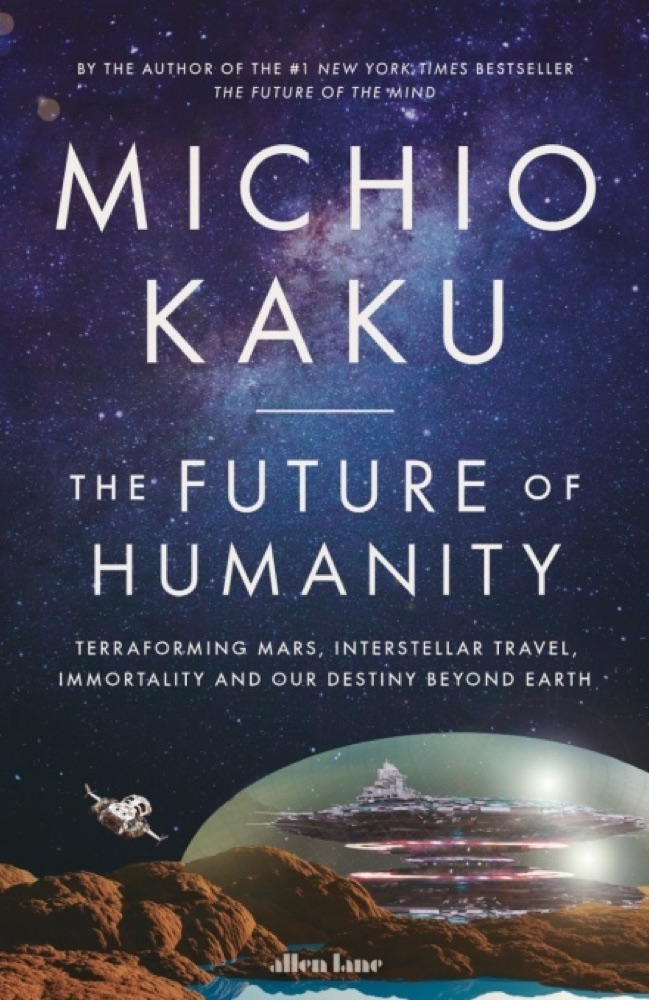
The #1 bestselling author of The Future of the Mind brings us a stunning new vision of our future in space.
Human civilization is on the verge of spreading beyond Earth. More than a possibility, it is becoming a necessity: whether our hand is forced by climate change and resource depletion or whether future catastrophes compel us to abandon Earth, one day we will make our homes among the stars.
World-renowned physicist and futurist Michio Kaku explores in rich, accessible detail how humanity might gradually develop a sustainable civilization in outer space. With his trademark storytelling verve, Kaku shows us how science fiction is becoming reality: mind-boggling developments in robotics, nanotechnology, and biotechnology could enable us to build habitable cities on Mars; nearby stars might be reached by microscopic spaceships sailing through space on laser beams; and technology mi
Book details
- First published
- 2018
- Author
- Michio Kaku
- Genre
- Nonfiction
- Goodreads rating
- 4.18 (12k ratings)
The buzz
- The New York TimesReview in The New York Timesprofessional review (via Book Marks)
- The Wall Street JournalReview in The Wall Street Journalprofessional review (via Book Marks)
- The TimesReview in The Timesprofessional review (via Book Marks)
- Kirkus ReviewsReview in Kirkus Reviewsprofessional review (via Book Marks)
- Publishers WeeklyReview in Publishers Weeklyprofessional review (via Book Marks)
- BooklistReview in Booklistprofessional review (via Book Marks)
Keep reading
 Space Chronicles: Facing the Ultimate Frontier
 Physics of the Future: How Science Will Shape Human Destiny and Our Daily Lives by the Year 2100
 What Technology Wants
 The Singularity is Near: When Humans Transcend Biology
 Pale Blue Dot: A Vision of the Human Future in Space
 Life 3.0: Being Human in the Age of Artificial Intelligence
 Dragons of Eden: Speculations on the Evolution of Human Intelligence
 Soonish: Ten Emerging Technologies That'll Improve and/or Ruin Everything
 The Code Breaker: Jennifer Doudna, Gene Editing, and the Future of the Human Race
The Future of the Mind: The Scientific Quest to Understand, Enhance, and Empower the Mind
The Code Breaker: Jennifer Doudna, Gene Editing, and the Future of the Human Race
The Future of the Mind: The Scientific Quest to Understand, Enhance, and Empower the Mind
 Billions & Billions: Thoughts on Life and Death at the Brink of the Millennium
 Until the End of Time: Mind, Matter, and Our Search for Meaning in an Evolving Universe
 A Short History of Nearly Everything
 Genome
 Brief Answers to the Big Questions
 2312
2312
 The Lives of a Cell: Notes of a Biology Watcher
 The Mountain in the Sea
 Superintelligence: Paths, Dangers, Strategies
 Death by Black Hole: And Other Cosmic Quandaries
 Death's End
 The Grand Design
 The Social Conquest of Earth
 Delta-v
 Homo Deus: A History of Tomorrow
 The Lost World
 What If?: Serious Scientific Answers to Absurd Hypothetical Questions
 The Blind Watchmaker: Why the Evidence of Evolution Reveals a Universe Without Design
 The Song of the Cell: An Exploration of Medicine and the New Human
 A Thousand Brains: A New Theory of Intelligence
 A Life on Our Planet: My Witness Statement and a Vision for the Future
 The Fifth Science
 Astrophysics for People in a Hurry
Physics of the Impossible: A Scientific Exploration Into the World of Phasers, Force Fields, Teleportation, and Time Travel
Astrophysics for People in a Hurry
Physics of the Impossible: A Scientific Exploration Into the World of Phasers, Force Fields, Teleportation, and Time Travel
 The Gene: An Intimate History
 The Big Picture: On the Origins of Life, Meaning, and the Universe Itself
 The Wizard and the Prophet: Two Remarkable Scientists and Their Dueling Visions to Shape Tomorrow's World
 The Tell-Tale Brain: A Neuroscientist's Quest for What Makes Us Human
 Earth
Earth
 The Third Chimpanzee: The Evolution and Future of the Human Animal
 The Accidental Universe: The World You Thought You Knew
 Exhalation
 A Brief History of Time
 Your Inner Fish: A Journey Into the 3.5-Billion-Year History of the Human Body
 Black Holes and Baby Universes and Other Essays
 Falter: Has the Human Game Begun to Play Itself Out?
 The Age of Spiritual Machines
 On the Steel Breeze
 The Story of More: How We Got to Climate Change and Where to Go from Here
 Orbital
 The Wandering Earth
 Wired
Wired
 Blue Remembered Earth
 Sapiens: A Brief History of Humankind
 Echopraxia
 Livewired: The Inside Story of the Ever-Changing Brain
 The Futurological Congress: From the Memoirs of Ijon Tichy
 A City on Mars: Can We Settle Space, Should We Settle Space, and Have We Really Thought This Through?
 A Short History of Progress
 Invisible Planets: Contemporary Chinese Science Fiction in Translation