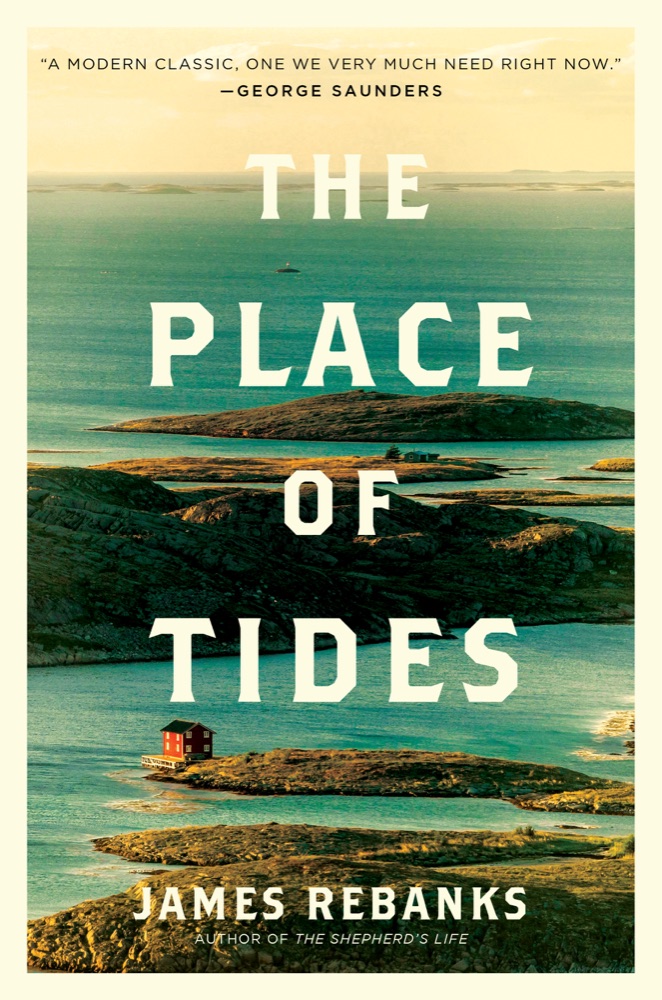
 The Place of Tides
Quotes from the Book
The modern world worships the idea of the self, the individual, but it is a gilded cage: there is another kind of freedom in becoming absorbed in a little life on the land. In a noisy age, I think perhaps trying to live quietly might be a virtue. *
8
There is something about planting trees that feels good. If you have done it well, it will outlast you and leave the world a little richer and more beautiful because of your efforts. Planting a tree means you believe in, and care about, a world that will be there after you are gone. It means you have thought about more than yourself, and that you can imagine a future beyond your own lifespan, and you care about that future.
6
In a noisy age, I think perhaps trying to live quietly might be a virtue.
3
The truth is, a farm swallows you up, takes everything you have, and then asks for more. It is also an exercise in humility: you can’t do it alone.
2
These people lived insular, often deeply private lives focused on their work. Their voices were rarely heard, because they sought no audience. Their identities were constructed from things that couldn’t be bought in shops. They wore old clothes and only went shopping occasionally for essentials. They held “shop-bought” things in great contempt. They preferred cash to credit, and would mend anything that broke, piling up old things to use again someday, rather than throwing them away. They had hobbies and interests that cost nothing, turning their necessary tasks, like catching rats or foxes, into sport. Their friendships were built around their work, and the breeds of cattle and sheep they kept. They rarely took holidays or bought new cars. And it wasn’t all work—a lot of time was spent on farm-related activities that were communal and more relaxed, or in the simple enjoyment of wild things. My grandfather called this way of life “living quietly.
2
My grandfather seemed to have found a way to endure it through enjoying the wild things around him, and in taking pride at doing things right. He seemed to be saying to me: learn to see the beauty in mowing thistles, learn to enjoy the skill of the scythe, learn to tell stories or make people laugh so that even the toughest working days won’t break you.
1
Our leading agricultural colleges still churn out "business-focused" young farmers, fired up with productive zeal. Students are taught to be at the cutting edge of the new farming, applying science and technology to control nature. They are taught to think about the land like economists. They are taught nothing about tradition, community, or ecological limits. Rachel Carson isn't on the curriculum. Different colleges and courses elsewhere churn out young ecologists who know nothing about farming or rural lives. Education is divided by specialism, and sorts the young people into two separate tribes who can barely understand each other.
1
Thankfully, my father never sent me to agricultural college. He was old-school and thought those places turned out people who knew the cost of everything and the value of nothing.
1
Our land is like a poem, in a patchwork landscape of other poems, written by hundreds of people, both those here now and the many hundreds that came before us, with each generation adding new layers of meaning and experience. And the poem, if you can read it, tells a complex truth. It has moments of great beauty and of heartbreak. It tells of human triumph and failings, of what is good in people and what is flawed; and what we need, and how in our greed we can destroy precious things. It tells f what stays the same, and what changes; and of honest hard-working folk, clinging on over countless generations, to avoid being swept away by the giant waves of a storm as the world changes. It is also the story of those who lost their grip and were swept away from the land, but who still care, and are now trying to find their way home.
As farmers we now have to reconcile the need to produce more food than any other generation in history with the necessity to do that sustainably and in ways that allow nature to survive alongside us. We need to bring the two clashing ideologies about farming together to make it as sustainable and as diverse as it can be.
And much of the diverse agriculture that remains is to be found at the margins - in the mountains, remote places, deserts, forests or jungles of the world; in places where isolation, poverty, lack of development, type of climate, altitude, latitude, soil type, disease risks or duration of the growing season mean that intensive agriculture doesn't dominate and hasn't swept away traditional farming practices. Such landscapes are full of special varieties of domesticated plants or heritage breeds of domestic animals. This is because for over 10,000 years human beings have had to try out different methods in all kinds of places through trial and error. In the global 'library' of farming there can be found a whole range of solutions to millions of different local challenges and problems.
there are no winners here. The farming businesses who rule these fields have got so big they are entirely reliant on one or two monopolistic buyers who screw them on prices and can bankrupt them at will. The money flows off the land to the banks that finance the debt on which it is all built, to the engineering companies selling the tractors and machinery, the synthetic fertilizer and pesticide corporations, the seed companies and the insurance agents. And yet, judged solely as productive businesses, focussing on efficiency and productivity (and ignoring fossil fuel input and ecological degradation), these new farmers are amazing - the best farmers that have ever lived. In the year 2000 the average American farmer produced twelve times as much per hour as his grandfather did in 1950. And this amazing efficiency means the end for most farmers. In the UK, the number of dairy farmers has more than halved from more than 30,000 in 1995 to about 12,000 today. In turn, the number of dairy cows in Britain has halved in the past twenty years. The amazing productivity of the remaining farmers and super-cows in demonstrated in the simple fact that milk production has remained more or less stable.
We drove down the highway, past shabby farmsteads with flaking paintwork and rotting wood, past tumbling-down tobacco barns cut through with shards of sunlight. Past abandoned cars and rusting farm machinery, and black cattle standing in paddocks next to farmhouses. Past towns that seemed half-abandoned, with boarded-up shops and houses with Confederate flags in their windows and 'VOTE TRUMP' signs on the front lawn. Shutters were closed and leaves gathered on the porch; churches with billboards promised redemption for drug addicts. Flakes of snow fell but didn't settle. Our friend drove us around the country in his white pick-up truch with his sheepdog in the back and hisred toolbox and wrenches in the footwell. He told us about his people, past and present, and introduced us to farmers who were holding on. They all told us the same thing: America had chosen industrial farming and abandoned its small family farms, and this was the result - a landscape and a community that was falling apart. They showed us fields of oilseed rape that were full of weeds because they were now resistant to the herbicides that had been overused. They spoke of mountains ripped open for minerals, and rivers polluted, the farming people leaving the land or holding on in hidden poverty. And the worse it got, the more people seemed to gravitate to charlatans with their grand promises and ready-made scapegoats to focus all their anger on.
The big modernizing farmers we knew sounded a lot like Earl Butz. They had often been educated in agricultural colleges and were true believers in the gospel of efficiency. They were 'businessmen', engaged in a desperate race to be survivors, as everyone else fell behind, gave up and stopped farming, Everything had to be big and fast. They were ruthless capitalists. Dad was a bit confused by them. He said they were 'shirt and tie' farmers; 'too flash' with their fancy Range-Rovers. They didn't get their hands dirty and they sounded as if they worked for a corporation - listing data about their milk yield average per cow, grain moisure content, or their costs of production. They often had dozens of people working for them. The big new farms had a high staff turnover because the work was now deskilled, boring and dirty - more like repetitive factory work than the skilled 'stockmanship' or 'field craft that had gone before.
They had, unbeknownst to me, been carrying flukes in their livers—a parasite that uses a tiny freshwater snail as its host for part of its life cycle and then is eaten
There were profoundly important questions about the potential effects of each new technology that it was nobody's job to ask or answer. There was no mechanism for farmers or ecologists to judge whether a technology or new farming practice was on balance a "good" thing or a "bad" thing, and we really didn't know when we had crossed the invisible threshold from one to the other.
Agricultural education is still overwhelmingly about change and innovation, and "disruption," not what is sustainable and what will work in the long run. From the modernizing perspective, the student in my hay meadow was right. The current economics of farming are such that almost no genuinely sustainable farming is profitable at present. Farming for nature is economic suicide. Produce meat at a greater cost than intensively produced chicken or pork and you are considered an anachronism on the supermarket shelf. I have to ignore my accounts in this bid for good husbandry and hope the rest of the world comes to its senses someday soon. Of course this is no basis for a sound system, but I decided years ago that if I had to work off the farm to top up our income, to enable me to look after our land properly, than I would. There is nothing new in having to adapt and earn a crust away from the farm. I know that if we are too proud, too stubborn, and too unbending, then we will be finished.
Watch on YouTube
About James Rebanks
We have collected 36 quotes from 2 books by James Rebanks on BookQuoters.
More about the author →More by James Rebanks
The Place of Tides
About the book
As a boy, James Rebanks's grandfather taught him to work the land the old way. Their family farm in the Lake District hills was part of an ancient agricultural landscape: a patchwork of crops and meadows, of pastures grazed with livestock, and hedgerows teeming with wildlife. And yet, by the time James inherited the farm, it was barely recognisable. The men and women had vanished from the fields; the old stone barns had crumbled; the skies had emptied of birds and their wind-blown song.
English Pastoral is the story of an inheritance: one that affects us all. It tells of how rural landscapes around the world were brought close to collapse, and the age-old rhythms of work, weather, community and wild things were lost. And yet this elegy from the northern fells is also a song of hope: of how, guided by the past, one farmer began to salvage a tiny corner of England that was now his, doin
Book details
- First published
- 2020
- Author
- James Rebanks
- Genre
- Nonfiction
- Goodreads rating
- 4.42 (8k ratings)
Keep reading
 Bringing it to the Table: On Farming and Food
 The Dirty Life: On Farming, Food, and Love
 Folks, This Ain't Normal: A Farmer's Advice for Happier Hens, Healthier People, and a Better World
 Feral: Rewilding the Land, the Sea and Human Life
 The World-Ending Fire: The Essential Wendell Berry
 The One-Straw Revolution
 The Art of the Commonplace: The Agrarian Essays
 Regenesis: Feeding the World Without Devouring the Planet
 A Sand County Almanac and Sketches Here and There
 The Third Plate: Field Notes on the Future of Food
 Second Nature: A Gardener's Education
 Animal, Vegetable, Miracle: A Year of Food Life
 Wild Ones: A Sometimes Dismaying, Weirdly Reassuring Story About Looking at People Looking at Animals in America
 The Last American Man
 Wilding
 The Seed Keeper
 O Pioneers!
 The Culture of Make Believe
 Arctic Dreams
 Where the Bluebird Sings to the Lemonade Springs: Living and Writing in the West
 Orwell's Roses
 The Log from the Sea of Cortez
 One Man's Meat
 A Language Older Than Words
 Endgame, Vol. 1: The Problem of Civilization
 The Grapes of Wrath
 Always Coming Home
 The Wizard and the Prophet: Two Remarkable Scientists and Their Dueling Visions to Shape Tomorrow's World
 A Short History of Progress
 Everything I Want To Do Is Illegal: War Stories from the Local Food Front
 The Mushroom at the End of the World: On the Possibility of Life in Capitalist Ruins
 Working: People Talk About What They Do All Day and How They Feel About What They Do
 On Trails: An Exploration
 Petals of Blood
 Martin Marten
 Deep Creek: Finding Hope in the High Country
 Greenwood
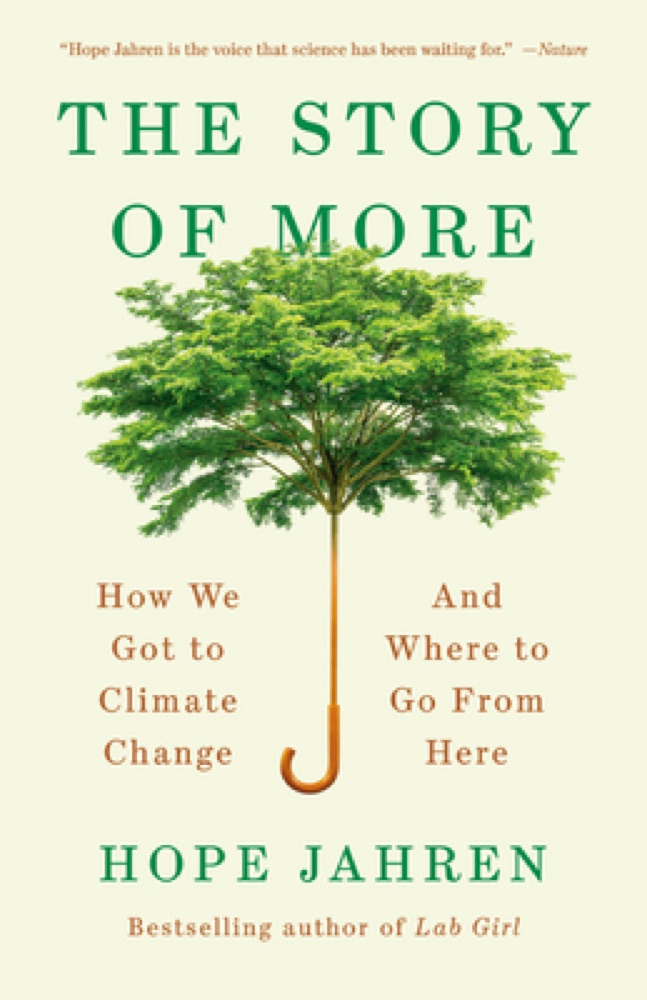 The Story of More: How We Got to Climate Change and Where to Go from Here
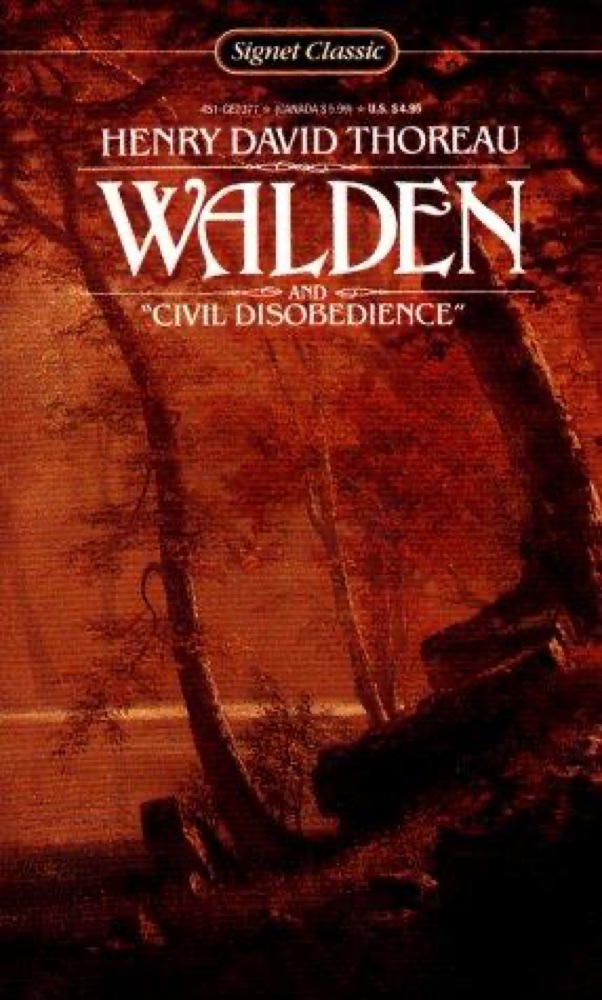 Walden & Civil Disobedience
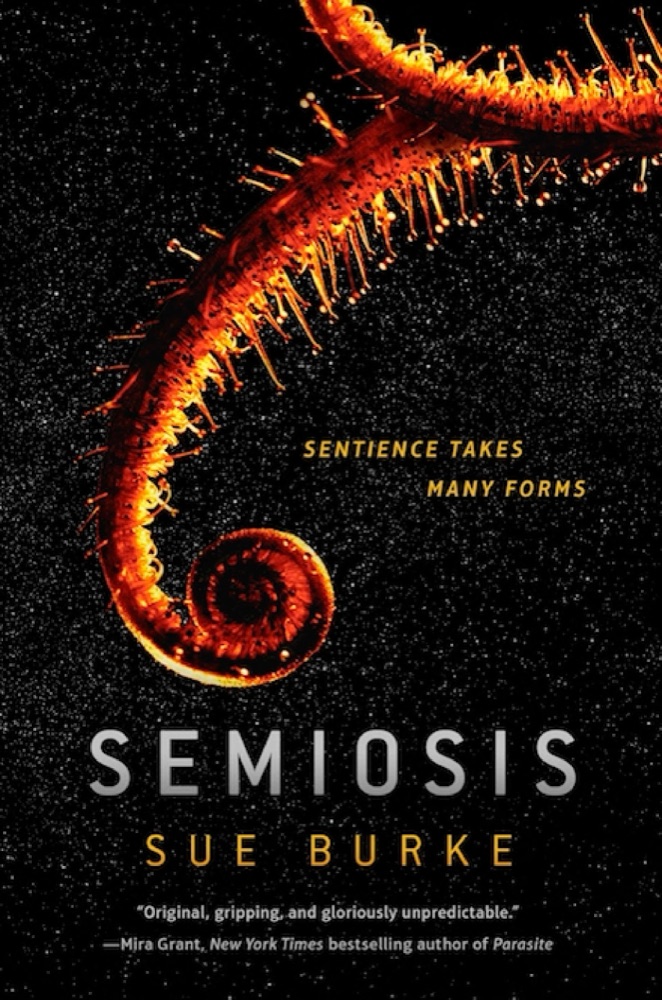 Semiosis
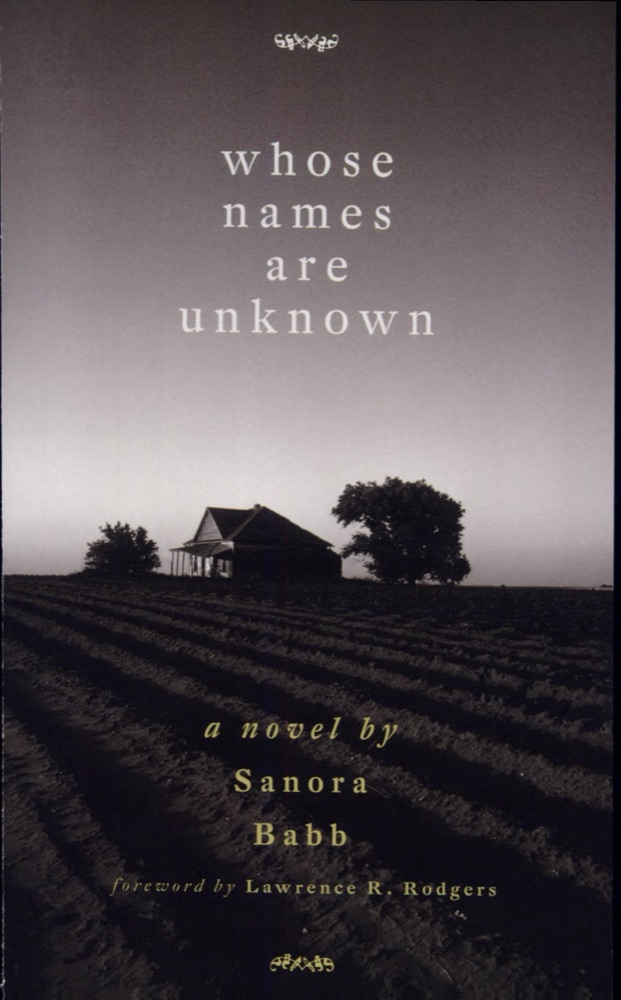 Whose Names Are Unknown
 Drive Your Plow Over the Bones of the Dead
 The Family Tree
 The Ministry for the Future
 The Vegetarian Myth: Food, Justice, and Sustainability
 A Life on Our Planet: My Witness Statement and a Vision for the Future
 Barkskins
 Last Chance to See
 West with the Night
 Gathering Moss: A Natural and Cultural History of Mosses
 Small Is Beautiful: Economics as if People Mattered
 Independent People
 All We Can Save: Truth, Courage, and Solutions for the Climate Crisis
 H is for Hawk
The Place of Tides
H is for Hawk
The Place of Tides
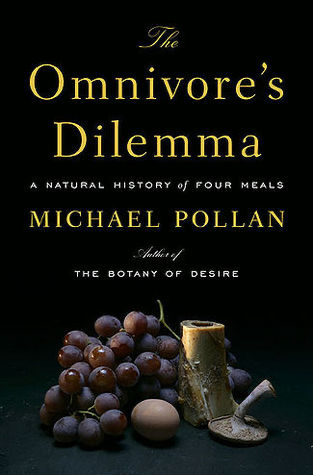 The Omnivore's Dilemma: A Natural History of Four Meals
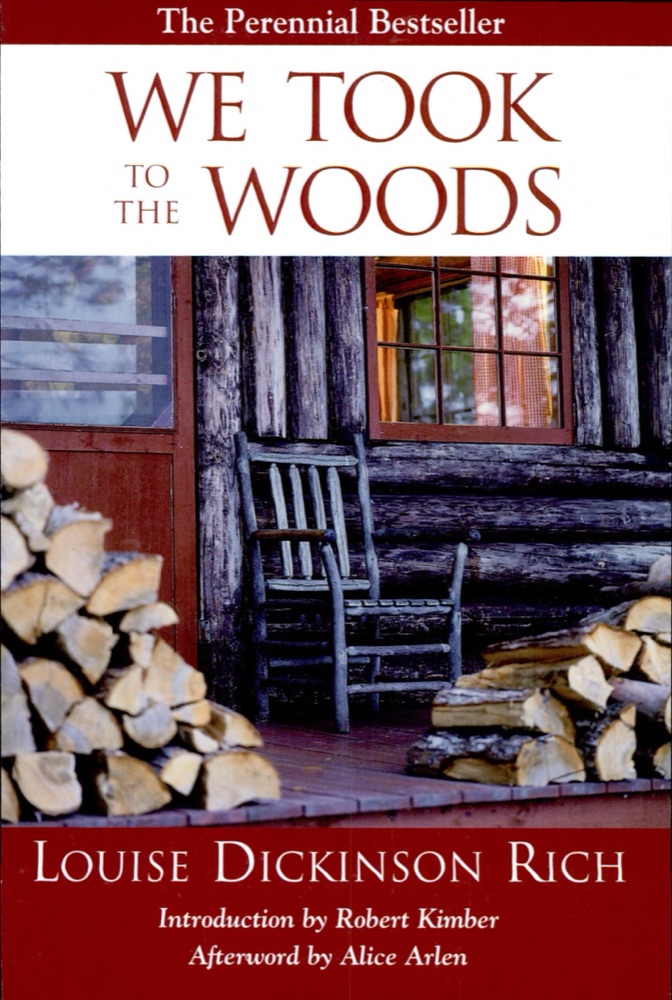 We Took to the Woods
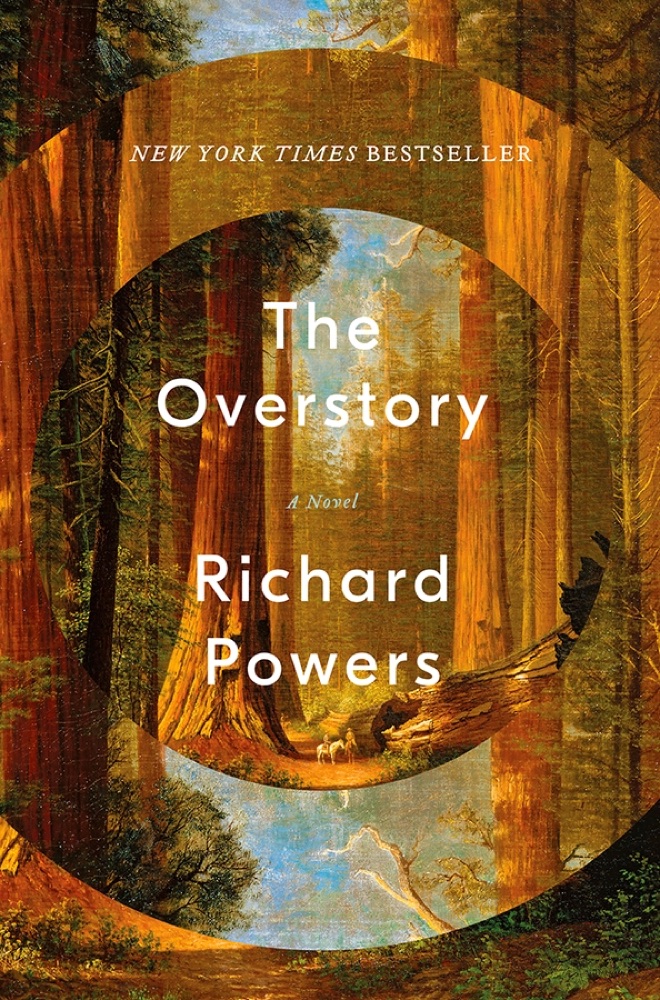 The Overstory
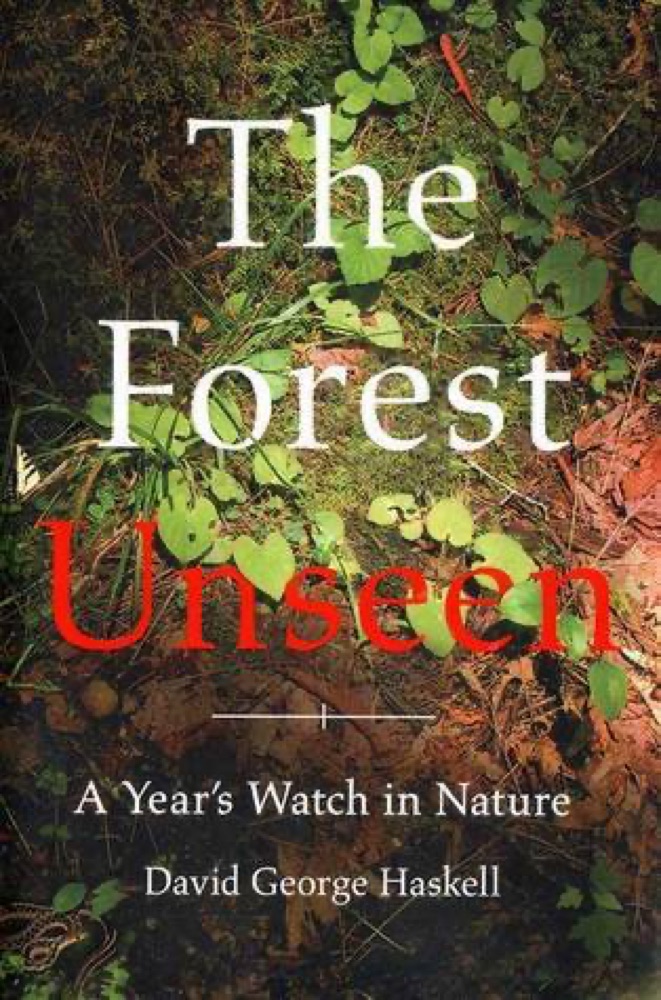 The Forest Unseen: A Year’s Watch in Nature
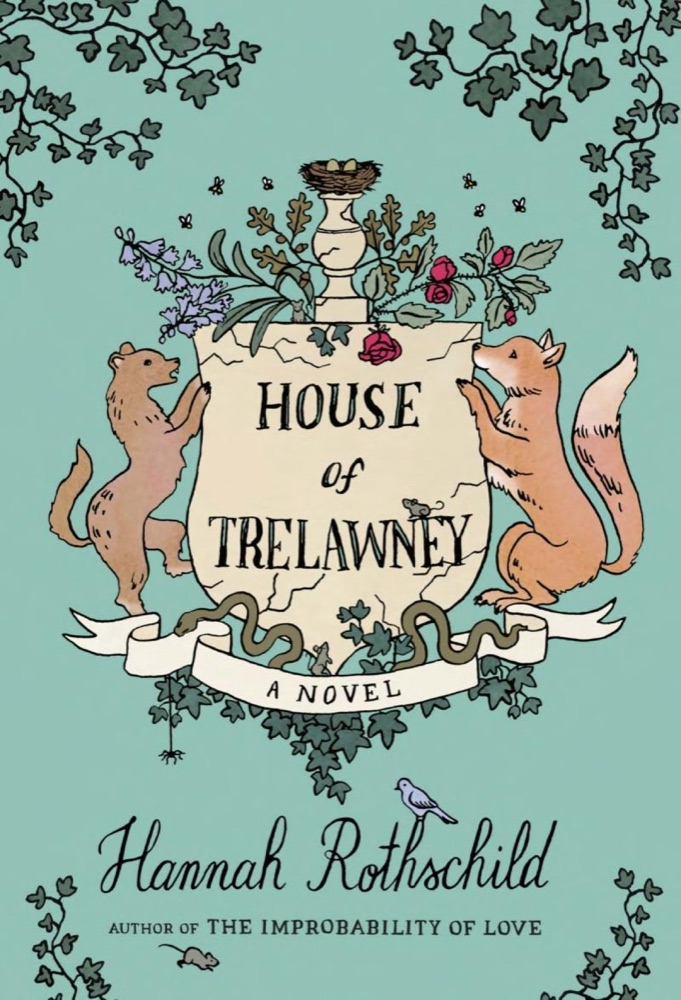 House of Trelawney