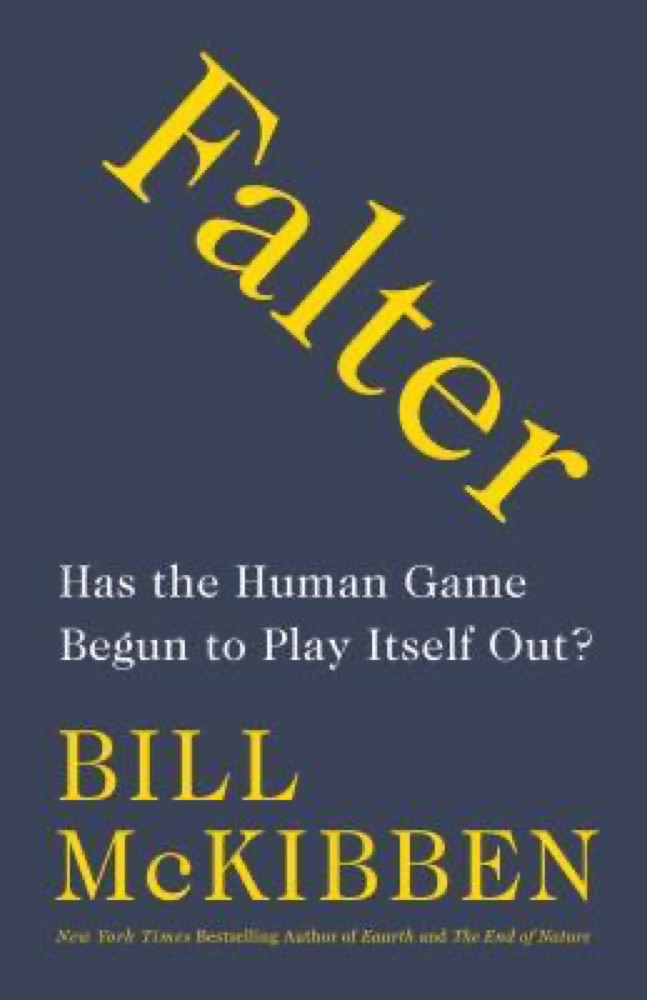
 Falter: Has the Human Game Begun to Play Itself Out?
Quotes from the Book
In the world we grew up in, our most ingrained economic and political habit was growth; it’s the reflex we’re going to have to temper, and it’s going to be tough.
5
Here’s all I’m trying to say: The planet on which our civilization evolved no longer exists. The stability that produced that civilization has vanished; epic changes have begun. (My favorite bleak headline, from USA Today in May 2009, describes a new study from the American Meteorological Society: “Global Warming May Be Twice as Bad as Previously Expected.”)69 We may, with commitment and luck, yet be able to maintain a planet that will sustain some kind of civilization, but it won’t be the same planet, and hence it can’t be the same civilization. The earth that we knew—the only earth that we ever knew—is gone.
2
It ensured that I'd never think that patriotism and dissent were opposites.
2
I am not describing what will happen if we don’t take action, or warning of some future threat. This is the current inventory: more thunder, more lightning, less ice.
1
If an alien landed in the United States on some voyage of exploration, he might well report back to headquarters that we were bipedal devices for combusting fossil fuel.
First, said the IEA, production in current oil fields is falling by about 7 percent a year, a figure that will rise steadily to 9 percent over the next few decades. In other words, the level of oil in these giant fields has dropped far enough that we can no longer get as much as we used to. Never mind fueling the growing Asian thirst for oil; simply running in place would mean finding four new Saudi Arabias by 2030.
more than a decade of human labor per barrel.
something else created modernity, the world that most of us reading this book inhabit. That something was the sudden availability, beginning in the early eighteenth century, of cheap fossil fuel. An exaggeration? One barrel of oil yields as much energy as twenty-five thousand hours of human manual labor
In the Sea of Japan, 500 million Nomurai jellyfish—each more than two meters in diameter—are clogging fishing nets; a region of the Bering Sea is so full of jellies that it’s been renamed “Slime Bank.” “Jellyfish grow faster and produce more young in warmer waters,” one researcher explained.
Here’s the Stanford University researcher Rosamond Naylor, who conducted some of the most recent calculations: “I think what startled me the most is that when we looked at our historic examples there were ways to address the problem within a given year. People could always turn somewhere else to find food. But in the future there’s not going to be any place to turn.”61 It doesn’t get any more basic than that.
The 2008 food crisis is the largest impact of climate change so far. It was caused partly by the poorly-thought-through switch to biofuels as a way of combating climate change, and partly by the drought in western Australia, which local scientists have identified as having been caused by climate change.
It’s as if we’d conjured up out of nowhere a second human population that’s capable of burning coal and oil and gas nearly as fast as we do.
the world in 2100 would have about 600 parts per million carbon dioxide. That is, we’d live if not in hell, then in some place with a very similar temperature.
in fact American carbon dioxide emissions were expected to fall nearly 5 percent in 2009.47 Which is good news. Just not good enough. To give you an idea of how aggressively the world’s governments are willing to move, in July 2009 the thirteen largest emitters met in Washington to agree on an “aspirational” goal of 50 percent cuts in carbon by 2050, which falls pretty close to the category of “don’t bother.
short of 650 parts per million, even if rich countries adopted “draconian emissions reductions within a decade.” That number, should it come to pass, would mean that global average temperatures would increase something like seven degrees Fahrenheit, compared to the degree and a half they’ve gone up already.
Britain’s Exeter University, a scientist named Kevin Anderson took the podium for a major address. He showed slide after slide, graph after graph, “representing the fumes that belch from chimneys, exhausts and jet engines, that should have bent in a rapid curve towards the ground, were heading for the ceiling instead.” His conclusion: it was “improbable” that we’d be able
changes in surface temperature, rainfall, and sea level are largely irreversible for more than a thousand years after carbon dioxide emissions are completely stopped.
In September 2009 the lead article in the journal Nature said that above 350 we “threaten the ecological life-support systems that have developed in the late Quaternary environment, and severely challenge the viability of contemporary human societies.”41 A month later, the journal Science offered new evidence of what the earth was like 20 million years ago, the last time we had carbon levels this high: sea levels rose one hundred feet or more, and temperatures rose as much as ten degrees.
The planet has nearly 390 parts per million carbon dioxide in the atmosphere. We’re too high. Forget the grandkids; it turns out this was a problem for our parents.
Taken together, he said, these two lines of inquiry made it clear that the safe number was, at most, 350 parts per million.
Arnold Schwarzenegger, signing new energy legislation: “I want to make California No. 1 in the fight against global warming. This is something we owe our children and grandchildren.” And Arnold at the United Nations: “We hold the future in our hands. Together we must ensure that our grandchildren will not have to ask why we failed to do the right thing, and let them suffer the consequences.
Barack Obama sounded a familiar note: “This is our generation’s moment to save future generations from global catastrophe.” Here’s his opponent, John McCain, a few months later: “We and the other nations of the world must get serious about substantially
Coral reefs will cease to exist as physical structures by 2100, perhaps 2050.”36 “We are overwhelming the system,” says Richard Zeebe, an assistant professor of oceanography at the University of Hawaii. “It’s pretty outrageous what we’ve done.”37 Which is as objective a scientific statement as you’re likely to hear. The idea that humans could fundamentally alter the planet is new.
In fact, total global rainfall is now increasing 1.5 percent a decade.
I think the system has met its match. We no longer possess the margin we’d require for another huge leap forward, certainly not fast enough to preserve the planet we used to live on.
Watch on YouTube
About Bill McKibben
We have collected 55 quotes from 2 books by Bill McKibben on BookQuoters.
More about the author →More by Bill McKibben
Falter: Has the Human Game Begun to Play Itself Out?
About the book
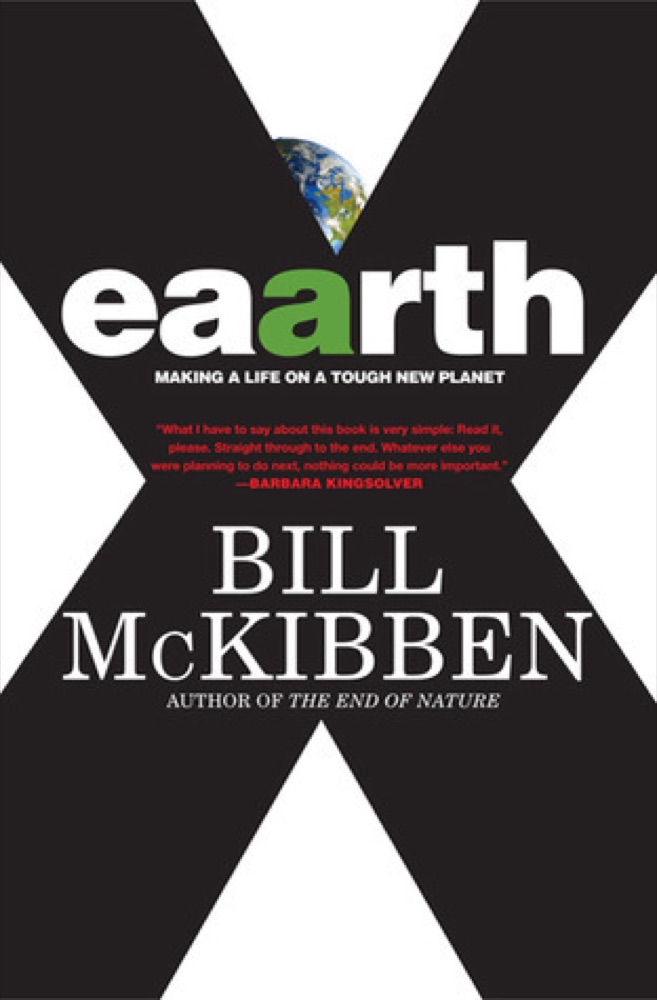
Our old familiar globe is suddenly melting, drying, acidifying, flooding, and burning in ways that no human has ever seen. We've created, in very short order, a new planet, still recognizable but fundamentally different. We may as well call it Eaarth.
That new planet is filled with new binds and traps. A changing world costs large sums to defend--think of the money that went to repair New Orleans, or the trillions it will take to transform our energy systems--but the endless economic growth that could underwrite such largesse depends on the stable planet we've managed to damage and degrade. We can't rely on old habits any longer.
Our hope depends, McKibben argues, on scaling back—on building the kind of societies and economies that can hunker down, concentrate on essentials, and create the type of community (in the neighborhood but also on the internet) that will allow us to weathe
Book details
- First published
- 2010
- Author
- Bill McKibben
- Genre
- Nonfiction
- Goodreads rating
- 3.95 (4k ratings)
Keep reading
 The Uninhabitable Earth: Life After Warming
Falter: Has the Human Game Begun to Play Itself Out?
The Uninhabitable Earth: Life After Warming
Falter: Has the Human Game Begun to Play Itself Out?
 Under a White Sky: The Nature of the Future
 The Story of More: How We Got to Climate Change and Where to Go from Here
 The Ends of the World
 The Climate Book: The Facts and the Solutions
 A Life on Our Planet: My Witness Statement and a Vision for the Future
 The Wizard and the Prophet: Two Remarkable Scientists and Their Dueling Visions to Shape Tomorrow's World
 On Fire: The Case for the Green New Deal
 This Changes Everything: Capitalism vs. The Climate
 A Short History of Progress
 Billions & Billions: Thoughts on Life and Death at the Brink of the Millennium
 Earth
Earth
 The World Without Us
 The Ministry for the Future
 What If?: Serious Scientific Answers to Absurd Hypothetical Questions
 The Sixth Extinction: An Unnatural History
 The Quest: Energy, Security, and the Remaking of the Modern World
 Regenesis: Feeding the World Without Devouring the Planet
 The Rational Optimist: How Prosperity Evolves
 All We Can Save: Truth, Courage, and Solutions for the Climate Crisis
 Soonish: Ten Emerging Technologies That'll Improve and/or Ruin Everything
 Physics of the Future: How Science Will Shape Human Destiny and Our Daily Lives by the Year 2100
 Delta-v
 The Nutmeg's Curse: Parables for a Planet in Crisis
 Ripple
 The Future of Humanity: Terraforming Mars, Interstellar Travel, Immortality and Our Destiny Beyond Earth
 Abundance: The Future Is Better Than You Think
 Space Chronicles: Facing the Ultimate Frontier
 The Ghost Map: The Story of London's Most Terrifying Epidemic - and How It Changed Science, Cities, and the Modern World
 The World Is Flat: A Brief History of the Twenty-first Century
 Genome
 America Alone: The End of the World As We Know It
 The Lost World
 No One Is Too Small to Make a Difference
 The Wandering Earth
 Collapse: How Societies Choose to Fail or Succeed
 Endgame, Vol. 1: The Problem of Civilization
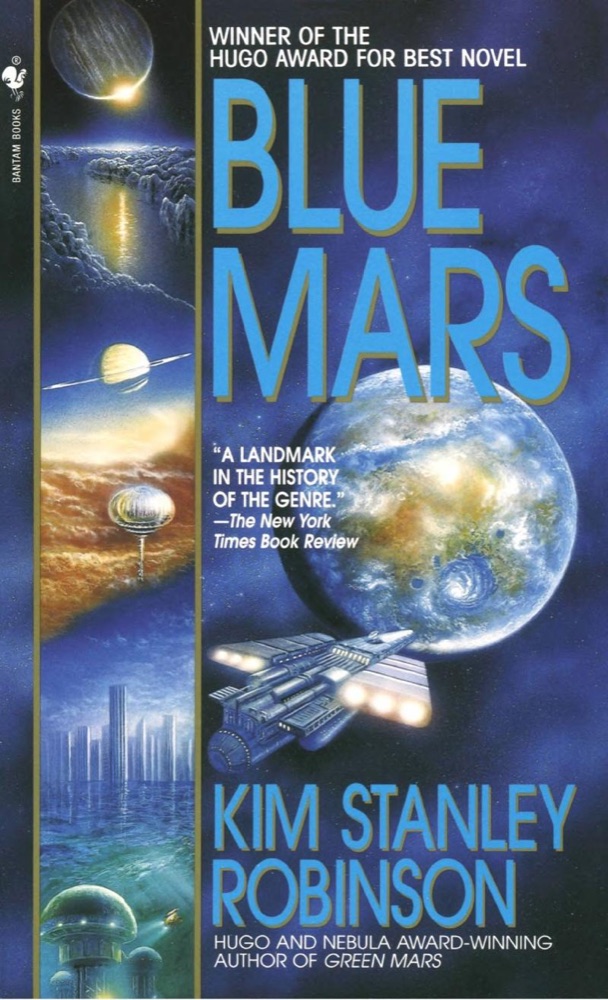 Blue Mars
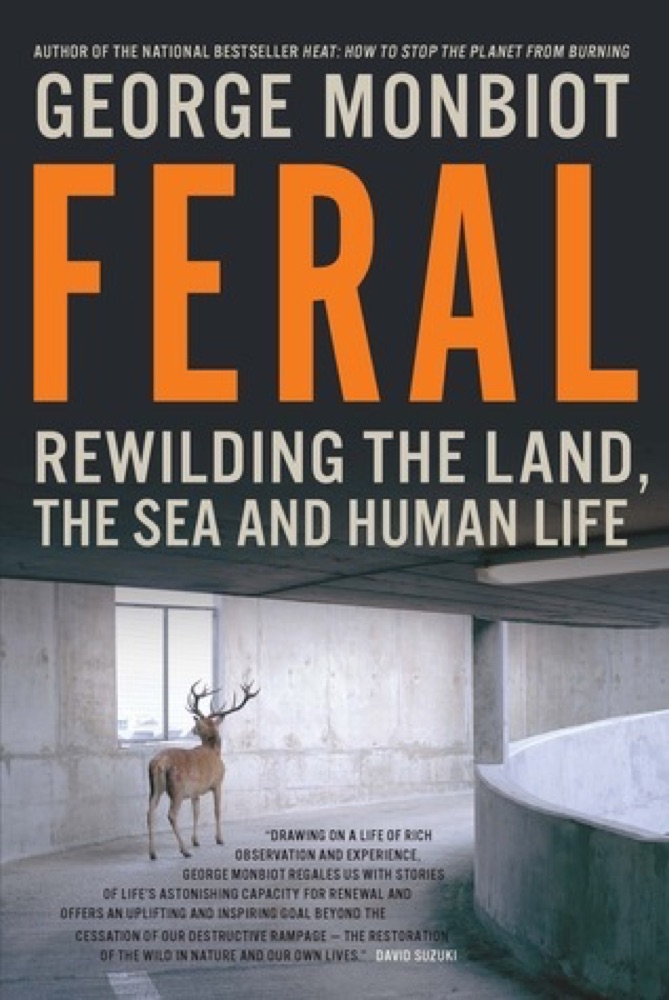 Feral: Rewilding the Land, the Sea and Human Life
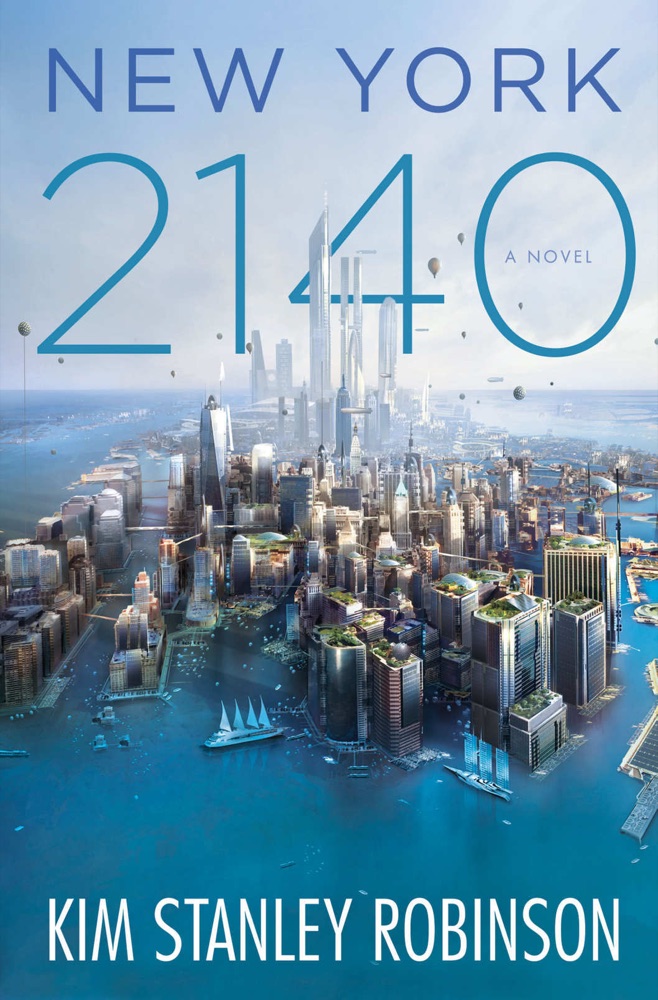 New York 2140
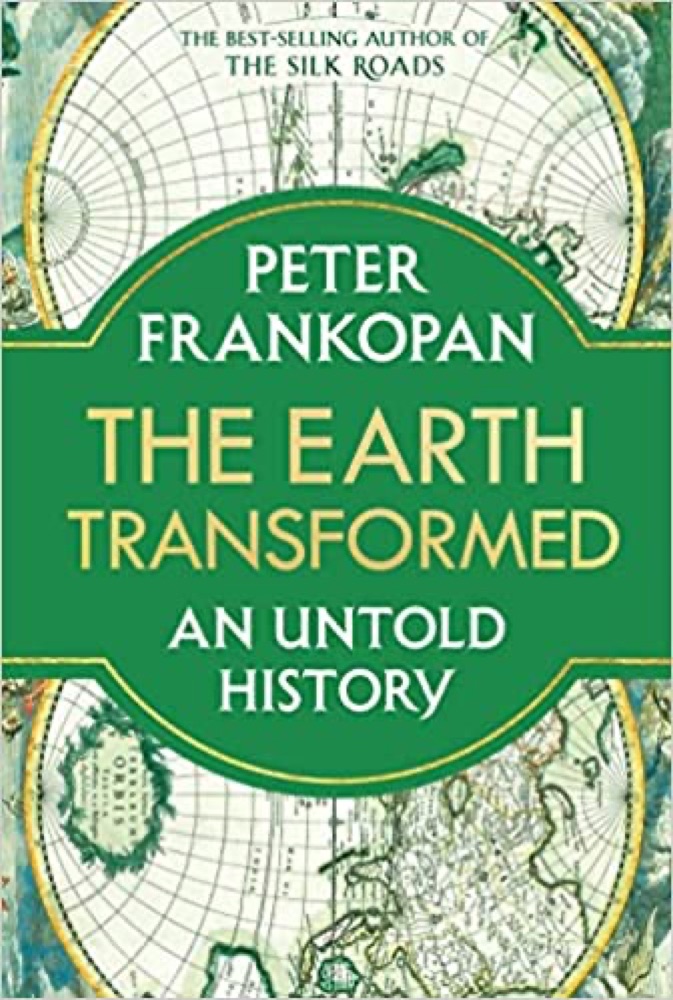 The Earth Transformed: An Untold History
 A Short History of Nearly Everything
 Wilding
 SuperFreakonomics: Global Cooling, Patriotic Prostitutes And Why Suicide Bombers Should Buy Life Insurance
 Small Is Beautiful: Economics as if People Mattered
 The Mushroom at the End of the World: On the Possibility of Life in Capitalist Ruins
 The Price of Tomorrow: Why Deflation is the Key to an Abundant Future
 Jurassic Park
 How To: Absurd Scientific Advice for Common Real-World Problems
 The State of the Art
 The Sheep Look Up
 On the Steel Breeze
 Cradle to Cradle: Remaking the Way We Make Things
 The Terranauts
 Emergency Skin
 Silent Spring
 The Evolution of Everything: How New Ideas Emerge
 Merchants of Doubt: How a Handful of Scientists Obscured the Truth on Issues from Tobacco Smoke to Global Warming
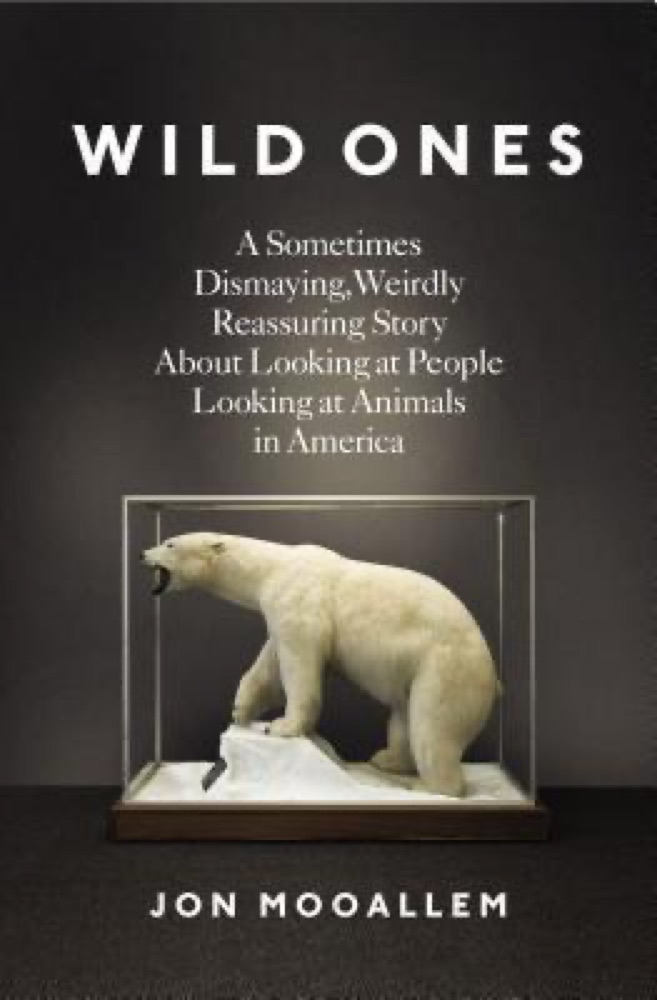 Wild Ones: A Sometimes Dismaying, Weirdly Reassuring Story About Looking at People Looking at Animals in America