
 Falter: Has the Human Game Begun to Play Itself Out?
Quotes from the Book
all of the want and suffering in the world-all of it-arises not from the earth's inability to produce but from our inability to share.
7
Even if you consider yourself on the right side of environmental issues and a true believer in climate change, chances are that you are actively degrading the earth as much as, or more than, the people you argue with. An effort tempered by humility will go much further than one armored with righteousness.
7
What is clear is that societies that feature a low gender gap are also populated by women who give birth, on average, half as often as women who live in societies with a high gender gap. The average number of births per woman living in the “high gap” countries is close to four, while the number in the “low gap” countries is just under two. It makes sense that the most effective and long-lasting mechanism for curbing global population growth revolves around an elimination of gender inequality. These data also imply that closing the gender gap around the world would likely result in something near replacement-level fertility: that is, a stable global population that neither increases nor decreases.
6
At the end of a mass extinction, the tree of life has lost several branches-and yet, afterward, life does go on. Plants regreen the earth and animals repopulate the oceans; different species relentless forward march. There will be life on planet Earth after the sixth mass extinction, but we are not able to imagine it any better than the dinosaurs could have imagined a world dominated by mammals walking on two legs, driving bulldozers, and flying airplanes.
5
We are strong and lucky. Our planet is home to many who struggle to survive on too little. The fact that we are of the group with food, shelter, and clean water obligates us not to give up on the world that we have compromised. Knowledge is responsibility.
4
Convincing people to examine their energy use is like trying to get them to quit smoking or eat more healthfully: they already know that they should do it, but there is a billion-dollar industry working round-the-clock, inventing new ways to make sure they don't.
3
All measures of conservation, as well as all technologies meant to wean us from fossil fuels, are worth pursuing in the same way that doing something is always more than doing nothing.
3
An effort tempered by humility will go much further than one armored with righteousness.
3
Americans are the world’s heaviest energy users, consuming a full 15 percent of the world’s energy production and almost 20 percent of the world’s electricity, despite making up only 4 percent of the world’s population.
3
Henry George was also right in that most of the want and suffering that we see in our world today originates not from Earth’s inability to provide but from our inability to share. It is because so many of us consume far beyond our needs that a great many more of us are left with almost nothing.
2
All human beings are a lot better at describing what is happening than at predicting what will happen. Somewhere along the way, however, we began to hope that scientists were different--that they could be right all the time. And because they're not, we kind of stopped listening. By now we're quite practiced at not listening to things scientists say over and over again.
2
At present, we are choosing ourselves over our own grandchildren three times a day when we ignore the problem, pick up our forks, and take another bite of meat.
1
Right now, I see the country of my birth moving backward. It has dumped the Paris Agreement, it’s close to dismantling the Environmental Protection Agency, and the United States Department of Agriculture is in very bad shape. The United States Department of Energy, which funded my lab for more than a decade to study greenhouse gases, has shut down most of its work on climate change, and NASA is under pressure to do the same. I left the United States in 2016 and moved to Norway because I believe that my laboratory will have more support here and because I am worried about the future of science in America.
1
is because so many of us consume far beyond our needs that a great many more of us are left with almost nothing.
1
All species will go extinct eventually, even our own: it is one of nature's few imperatives. As of today, however, that train has not quite left the station. We still have some control over our demise-namely, how long it will take and how much our children and grandchildren will suffer. If we want to take action, we should get started while it still maters what we do.
We risk our own paralysis with the message that we have poisoned the earth and so the earth rejects us. As far as I know, this is still our species' eternal home, and we must not alienate our children from it. We must go forward and live within the world that we have made, while understanding that its current state arises from a relentless Story of More. We can make this easier by being kind to one another along the way
I scan the landscape carefully as I drive, searching for the familiar signs of planting, growth, and harvest. I find comfort in the things that will never change, even as I spend my day cataloging the things that have.
I am the people—the mob—the crowd—the mass. Do you know that all the great work of the world is done through me? —Carl Sandburg (1916)
Every single scientist I know is freaked out by the steep increase in carbon dioxide of the last fifty years. But we are more freaked out by the fact that our governments are not freaked out about it as we are.
Not all experts abhor the population increase that gave rise to their own birth. An American economist named Henry George gravely opposed Malthusian doctrine on the grounds that it “shelters selfishness from question and from conscience.” The way he saw things, the true cause of poverty among the masses was “the rapacity of man” and not the inadequacy of nature.
...because only after we see where we are can we duly ask ourselves if this is where we want to be.
At present, three out of four of the food items that Americans purchase have had refined sugar added to them in order to make them more attractive to the consumer.
Somewhere along the way, however, we began to hope that scientists were different—that they could be right all the time. And because they’re not, we kind of stopped listening. By now we’re quite practiced at not listening to things scientists say over and over again.
The current rate of global species extinction is almost one thousand times higher than the background rate seen in the rock record of fossils.
There’s a pattern here that suggests the vocal disapprobation of overpopulation is not sufficient, in and of itself, to stanch population growth. One thing that these great thinkers never explored, however, is the correlation between the status of a woman within her society and the average number of children she bears within her lifetime.
Watch on YouTube
About Hope Jahren
We have collected 25 quotes from 1 book by Hope Jahren on BookQuoters.
More about the author →About the book
From the bestselling author of Lab Girl comes a slim, urgent missive on the defining issue of our time: here is Hope Jahren on climate change, our timeless pursuit of more, and how the same human ambition that got us here can also be our salvation. A Vintage Original.
Hope Jahren is an award-winning geobiologist, a brilliant writer, and one of the seven billion people with whom we share this earth. The Story of More is her impassioned open letter to humanity as we stand at the crossroads of survival and extinction. Jahren celebrates the long history of our enterprising spirit--which has tamed wild crops, cured diseases, and sent us to the moon--but also shows how that spirit has created excesses that are quickly warming our planet to dangerous levels. In short, highly readable chapters, she takes us through the science behind the key inventions--from electric power to large-scale farm
Book details
- First published
- 2020
- Author
- Hope Jahren
- Genre
- Nonfiction
- Goodreads rating
- 4.14 (7k ratings)
Keep reading
Falter: Has the Human Game Begun to Play Itself Out?
 A Life on Our Planet: My Witness Statement and a Vision for the Future
 All We Can Save: Truth, Courage, and Solutions for the Climate Crisis
 Under a White Sky: The Nature of the Future
 On Fire: The Case for the Green New Deal
 Billions & Billions: Thoughts on Life and Death at the Brink of the Millennium
 Eaarth: Making a Life on a Tough New Planet
 Endgame, Vol. 1: The Problem of Civilization
 The Lost World
 A Short History of Progress
 The Wizard and the Prophet: Two Remarkable Scientists and Their Dueling Visions to Shape Tomorrow's World
 The Uninhabitable Earth: Life After Warming
 No One Is Too Small to Make a Difference
 The Ministry for the Future
 The World-Ending Fire: The Essential Wendell Berry
 A Hunter-Gatherer's Guide to the 21st Century: Evolution and the Challenges of Modern Life
 Earth
Earth
 No Impact Man
 Feral: Rewilding the Land, the Sea and Human Life
 This Changes Everything: Capitalism vs. The Climate
 Genome
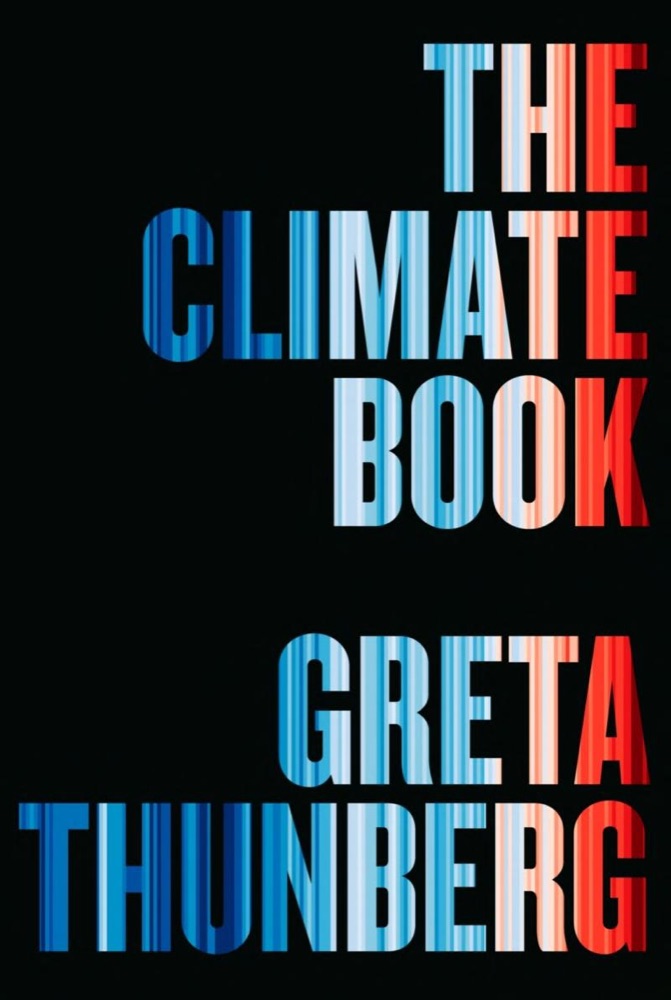 The Climate Book: The Facts and the Solutions
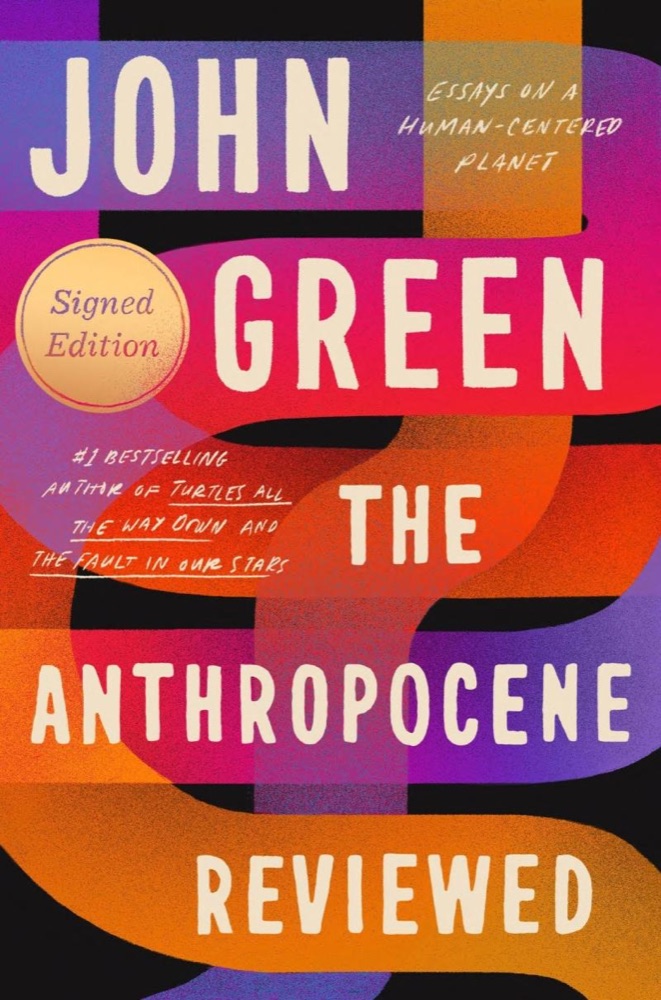 The Anthropocene Reviewed: Essays on a Human-Centered Planet
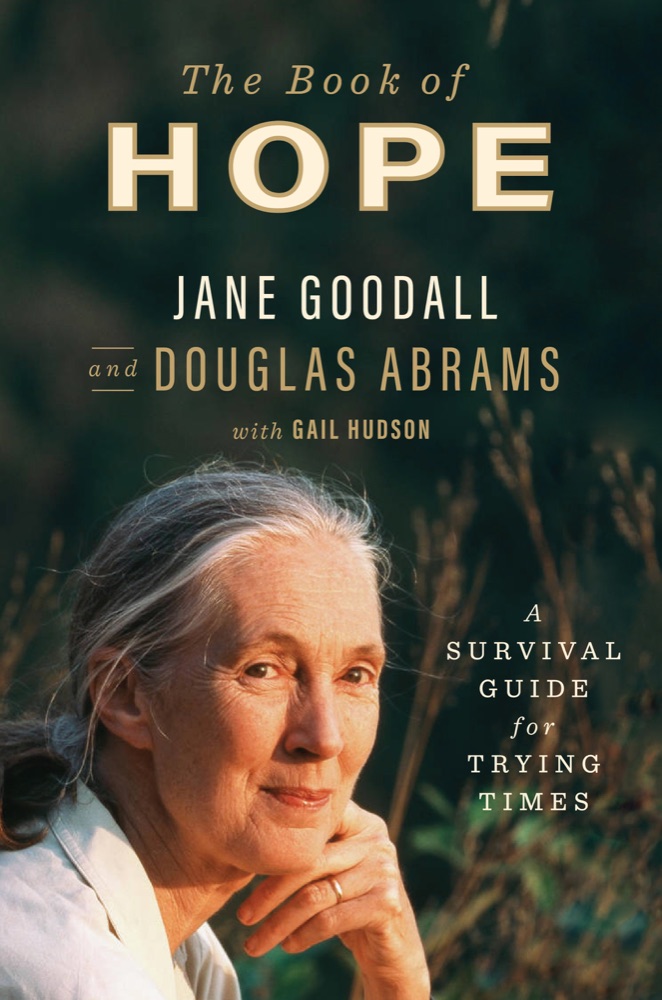 The Book of Hope: A Survival Guide for Trying Times
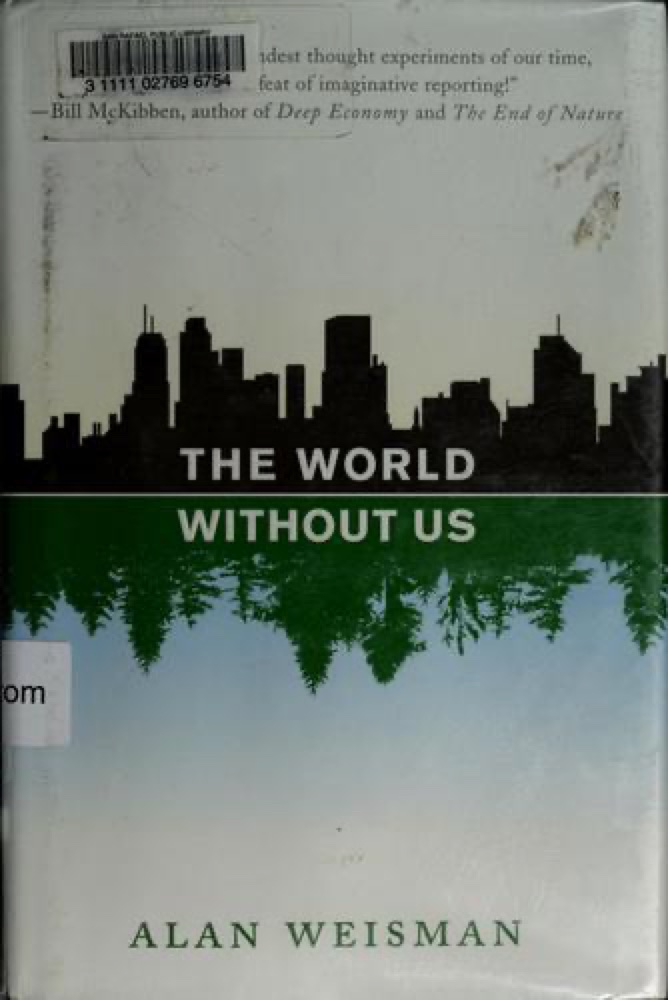 The World Without Us
 Civilized to Death: What Was Lost on the Way to Modernity
 Wild Ones: A Sometimes Dismaying, Weirdly Reassuring Story About Looking at People Looking at Animals in America
 Small Is Beautiful: Economics as if People Mattered
 Enlightenment Now: The Case for Reason, Science, Humanism, and Progress
 Regenesis: Feeding the World Without Devouring the Planet
 Why Fish Don’t Exist: A Story of Loss, Love, and the Hidden Order of Life
 Bringing it to the Table: On Farming and Food
 Delta-v
 Sapiens: A Brief History of Humankind
 To Be Taught, If Fortunate
 The Rational Optimist: How Prosperity Evolves
 Abundance: The Future Is Better Than You Think
 Space Chronicles: Facing the Ultimate Frontier
 The One-Straw Revolution
 The Ends of the World
 Humankind: A Hopeful History
 Jurassic Park
 Vanishing Treasures: A Bestiary of Extraordinary Endangered Creatures
 Homo Deus: A History of Tomorrow
 Ishmael: An Adventure of the Mind and Spirit
 Practical Ethics
 The World Is Flat: A Brief History of the Twenty-first Century
 Semiosis
 The Shockwave Rider
 Shadows of Forgotten Ancestors
 A Language Older Than Words
 The Mushroom at the End of the World: On the Possibility of Life in Capitalist Ruins
 The Future
 Collapse: How Societies Choose to Fail or Succeed
 The State of the Art
 The Code Breaker: Jennifer Doudna, Gene Editing, and the Future of the Human Race
 The Social Conquest of Earth
 Devolution: A Firsthand Account of the Rainier Sasquatch Massacre
 The Culture of Make Believe
 Undeniable: Evolution and the Science of Creation