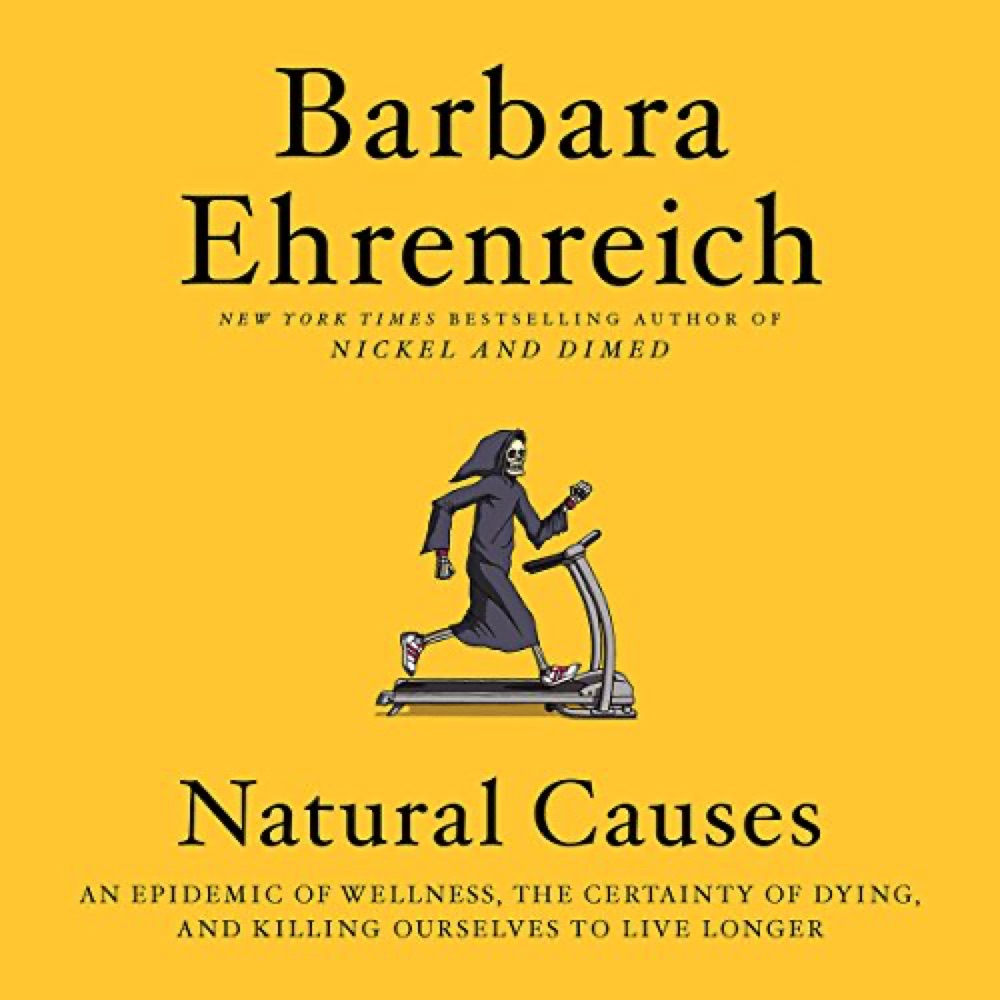
 Natural Causes: An Epidemic of Wellness, the Certainty of Dying, and Killing Ourselves to Live Longer
Quotes from the Book
[E]ven our most personal decisions about caring for our bodies have long been influenced and manipulated by larger power structures.
5
Capitalism sells nothing so effectively as status.
3
We all temporarily inhabit a planet of microbes, and we are guests here. Eventually they will have the planet to themselves again. They have been around before us and will persist long after us. The question is not how to fit them into our worlds, but how we can fit into theirs.
2
As we change our worlds, we change our bodies. The old duality between environmental health and human health is obsolete.
2
Self and other is less of a dichotomy than a continuum.
2
Finland does have some nature-oriented day cares—and they are not just about drawing trees and having the children read Emerson. “They spend their whole day outdoors,” says Lehtimäki. “Even when it’s winter—it can be minus twenty-five [Celsius] and so cold.” Parents are advised to dress their children in many layers, according to Finnish news coverage of one such day care. It also suggests that the three- to five-year-olds are made to run around if they complain: “If children feel cold, the adults activate them.” During fall and spring, they have “tent weeks” when they sleep outside in the forest.
1
The best advice right now is to think of hygiene as similar to medicine—extremely important in some scenarios, and also very possible to overdo.
1
Health means different things to different people, but it’s always associated with a certain level of freedom—especially financial and temporal—that allows people to live well, and to focus on relationships and meaningful work.
1
When we clean ourselves, we at least temporarily alter the microscopic populations—either by removing them or by altering the resources available to them. Even if we do not use cleaning products that specifically say they are “antimicrobial,” any chemistry applied to the skin will have some effect on the environment in which the microbes grow. Soaps and astringents meant to make us drier and less oily also remove the sebum on which microbes feed. Because scientists and doctors didn’t have the technology to fully understand the number or importance of these microbes until recently, very little is known about what exactly they’re doing there. But as this new research elucidates the interplay of microbes and skin, it is challenging long-held beliefs about what is good and bad.
1
He explains that if you really wanted to kill all the bacteria on your countertop, you’d have to leave a disinfectant (like Clorox) in contact with the surface for ten minutes. The product isn’t “killing 99.9% of germs” in the way that anyone actually uses it—a quick wipe-down. This was, both in concept and in practice, misguided. And the magnitude of its effects on our lives is now starting to become clear. •
1
Once you start hearing about all the things people do and don’t do, use and don’t use, couldn’t live with or without, standards of normalcy fade. Then you can focus on what actually matters to you.
1
There are more microbial cells in and on each of us than human cells. While
1
Many species are common to the vaginal and gut biomes, and the degree to which they each contribute to populating an infant is unclear. but both are known to change during pregnancy, and it is clear that they serve as a sort of inoculation right at birth. The presence of
Manhattan's middle and upper classes began to wash in their bedrooms. Even in impoverished tenements, families brought out a basin once a week filled it with water to bathe the children on the kitchen floor.
Every microbiologist I spoke with agreed that antibiotic overuse is likely a bigger contributor to messing up our microbiomes—gut and skin—than hygiene itself.
When the predators in the dinosaur park start killing one another, you’ve got a hit movie on your hands. When the immune system starts attacking the self, you get autoimmune diseases.
Public-health advocates are pressuring the FDA to ban parabens in products sold in the U.S. The European Union did this in 2012—but the economic influence of industry on regulation in American politics makes this unlikely.
At the time, the compound was already known to have links to allergies in children and to hormone-signaling disruption that appeared to play a role in breast cancer, thyroid functioning, and weight gain.
the provisions in the Federal Food, Drug, and Cosmetic Act . . . have not been updated since it was first enacted in 1938.
Watch on YouTube
About James Hamblin
About the book
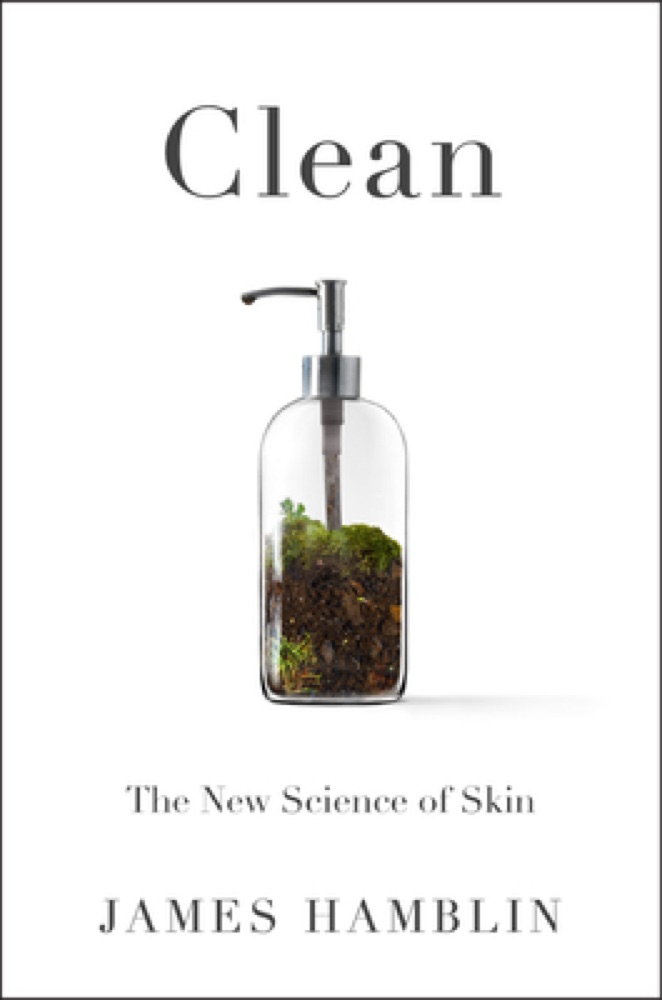
The author of the popular Atlantic articles "You're Likely to Get the Coronavirus" and "I Quit Showering, and Life Continued" explains the surprising and unintended effects of our hygiene practices in this informative and entertaining introduction to the new science of skin microbes and probiotics.
Keeping skin healthy is a booming industry, and yet it seems like almost no one agrees on what actually works. Confusing messages from health authorities and ineffective treatments have left many people desperate for reliable solutions. An enormous alternative industry is filling the void, selling products that are often of questionable safety and totally unknown effectiveness.
In Clean, doctor and journalist James Hamblin explores how we got here, examining the science and culture of how we care for our skin today. He talks to dermatologists, microbiologists, allergists, immunologists,
Book details
- First published
- 2020
- Author
- James Hamblin
- Genre
- Nonfiction
- Goodreads rating
- 3.88 (5k ratings)
The buzz
- The Wall Street JournalReview in The Wall Street Journalprofessional review (via Book Marks)
- Kirkus ReviewsReview in Kirkus Reviewsprofessional review (via Book Marks)
- New York Journal of BooksReview in New York Journal of Booksprofessional review (via Book Marks)
- LibraryjournalReview in Libraryjournalprofessional review (via Book Marks)
- BooklistReview in Booklistprofessional review (via Book Marks)
- BookPageReview in BookPageprofessional review (via Book Marks)
Keep reading
Natural Causes: An Epidemic of Wellness, the Certainty of Dying, and Killing Ourselves to Live Longer
 A Hunter-Gatherer's Guide to the 21st Century: Evolution and the Challenges of Modern Life
 The China Study: The Most Comprehensive Study of Nutrition Ever Conducted and the Startling Implications for Diet, Weight Loss, and Long-term Health
 Whole: Rethinking the Science of Nutrition
 Gut: The Inside Story of Our Body's Most Underrated Organ
 The Ghost Map: The Story of London's Most Terrifying Epidemic - and How It Changed Science, Cities, and the Modern World
 The Omnivore's Dilemma: A Natural History of Four Meals
 The Story of the Human Body: Evolution, Health, and Disease
 Why We Get Sick: The New Science of Darwinian Medicine
 What Doesn't Kill Us: How Freezing Water, Extreme Altitude, and Environmental Conditioning Will Renew Our Lost Evolutionary Strength
 The Code Breaker: Jennifer Doudna, Gene Editing, and the Future of the Human Race
 Elderhood: Redefining Aging, Transforming Medicine, Reimagining Life
 Regenesis: Feeding the World Without Devouring the Planet
 Everything Is Tuberculosis: The History and Persistence of Our Deadliest Infection
 The Rational Optimist: How Prosperity Evolves
 Silent Spring
 Get Well Soon: History's Worst Plagues and the Heroes Who Fought Them
 The Sleeping Beauties: And Other Stories of Mystery Illness
 Early Retirement Extreme: A Philosophical and Practical Guide to Financial Independence
 In Defense of Food: An Eater's Manifesto
 Folks, This Ain't Normal: A Farmer's Advice for Happier Hens, Healthier People, and a Better World
 Animal: The Autobiography of a Female Body
 The Story of More: How We Got to Climate Change and Where to Go from Here
 Falter: Has the Human Game Begun to Play Itself Out?
 Animal, Vegetable, Miracle: A Year of Food Life
 Bad Science
 The Great Influenza: The Story of the Deadliest Pandemic in History
 The 4-Hour Body: An Uncommon Guide to Rapid Fat-Loss, Incredible Sex, and Becoming Superhuman
 The One-Straw Revolution
 The 80/10/10 Diet: Balancing Your Health, Your Weight, and Your Life, One Luscious Bite at a Time
 Parasite
 The Song of the Cell: An Exploration of Medicine and the New Human
 Billions & Billions: Thoughts on Life and Death at the Brink of the Millennium
 Endgame, Vol. 1: The Problem of Civilization
 Soonish: Ten Emerging Technologies That'll Improve and/or Ruin Everything
 Survival of the Sickest: A Medical Maverick Discovers Why We Need Disease
 Gulp: Adventures on the Alimentary Canal
 On Call: A Doctor's Journey in Public Service
 Revenge of the Tipping Point
 Sapiens: A Brief History of Humankind
 Eating Animals
 SuperFreakonomics: Global Cooling, Patriotic Prostitutes And Why Suicide Bombers Should Buy Life Insurance
 Fast Food Nation: The Dark Side of the All-American Meal
 Under a White Sky: The Nature of the Future
 Ladyparts
 At Home: A Short History of Private Life
 Your Inner Fish: A Journey Into the 3.5-Billion-Year History of the Human Body
 It Starts with Food: Discover the Whole30 and Change Your Life in Unexpected Ways
 The Anxious Generation: How the Great Rewiring of Childhood Caused an Epidemic of Mental Illness
 The World Is Flat: A Brief History of the Twenty-first Century
 The Lost World
 The Tipping Point: How Little Things Can Make a Big Difference
 Outlive: The Science & Art of Longevity
 Illness as Metaphor and AIDS and Its Metaphors
 Good Reasons for Bad Feelings: Insights from the Frontier of Evolutionary Psychiatry
 The Biology of Belief: Unleashing the Power of Consciousness, Matter and Miracles
 The Wizard and the Prophet: Two Remarkable Scientists and Their Dueling Visions to Shape Tomorrow's World
 Better: A Surgeon's Notes on Performance
 The Nature Fix: Why Nature Makes Us Happier, Healthier, and More Creative
 The Gene: An Intimate History