
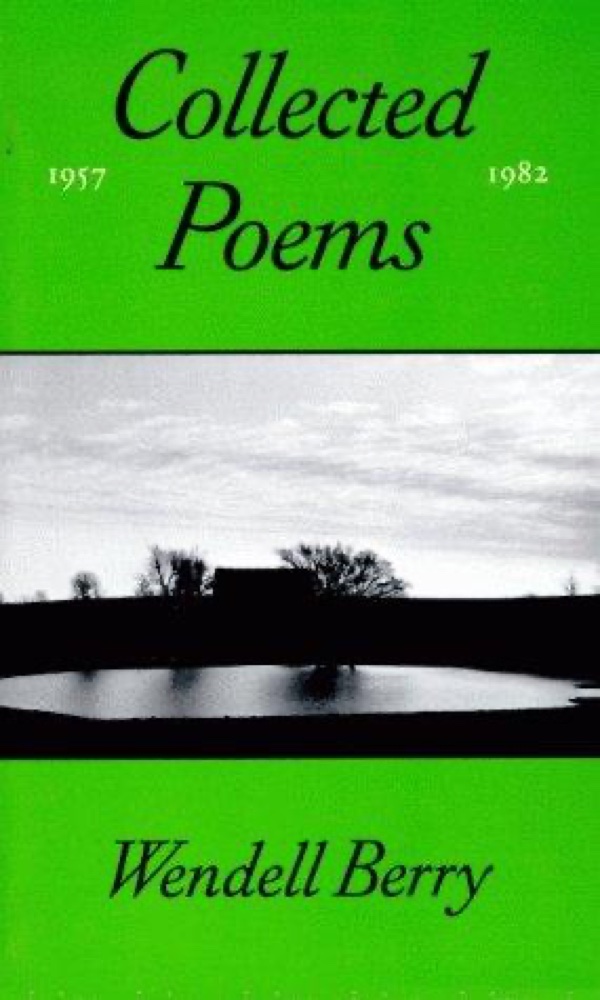
 The Collected Poems, 1957-1982
Quotes from the Book
For agrarians, the correct response is to stand confidently on our fundamental premise, which is both democratic and ecological: the land is a gift of immeasurable value. If it is a gift, then it is a gift to all the living in all time. To withhold it from some is finally to destroy it for all. For a few powerful people to own or control it all, or decide its fate, is wrong.
4
The idea was that when faced with abundance one should consume abundantly – an idea that has survived to become the basis of our present economy. It is neither natural nor civilized, and even from a ‘practical’ point of view it is to the last degree brutalizing and stupid.
3
Our understandable wish to preserve the planet must somehow be reduced to the scale of our competence - that is to wish to preserve all of its humble house - holds and neighbourhoods.
3
I came to see myself as growing out of the earth like the other native animals and plants. I saw my body and my daily motions as brief coherences and articulations of the energy of the place, which would fall back into it like leaves in the autumn.
2
Wendell Berry’s formula for a good life and a good community is simple and pleasingly unoriginal. Slow down. Pay attention. Do good work. Love your neighbours. Love your place. Stay in your place. Settle for less, enjoy it more.
2
They have instructed the world that it is better for people to buy food from the corporate global economy than to raise it for themselves. What is the proper solution to hunger? Not food from the local landscape, but industrial development. After decades of such innovative thought, hunger is still a worldwide calamity.
1
They are also, both in origin and effect, religious. I am uneasy with the term, for such religion as has been openly practiced in this part of the world has promoted and fed upon a destructive schism between body and soul, Heaven and earth. It has encouraged people to believe that the world is of no importance, and that their only obligation in it is to submit to certain churchly formulas in order to get to Heaven. And so the people who might have been expected to care most selflessly for the world have had their minds turned elsewhere – to a pursuit of ‘salvation’ that was really only another form of gluttony and self-love, the desire to perpetuate their lives beyond the life of the world. The Heaven-bent have abused the earth thoughtlessly, by inattention, and their negligence has permitted and encouraged others to abuse it deliberately. Once the creator was removed from the creation, divinity became only a remote abstraction, a social weapon in the hands of the religious institutions. This split in public values produced or was accompanied by, as it was bound to be, an equally artificial and ugly division in people’s lives, so that a man, while pursuing Heaven with the sublime appetite he thought of as his soul, could turn his heart against his neighbors and his hands against the world. For these reasons, though I know that my questions are religious, I dislike having to say that they are.
1
Therefore, be patient. Such pleasure as there is, is here, now. Take pleasure as it comes. Take work as it comes. The end may never come, or when it does it may be the wrong end.
1
We need to confront honestly the issue of scale. Bigness has a charm and a drama that are seductive, especially to politicians and financiers; but bigness promotes greed, indifference, and damage, and often bigness is not necessary. You may need a large corporation to run an airline or to manufacture cars, but you don’t need a large corporation to raise a chicken or a hog. You don’t need a large corporation to process local food or local timber and market it locally.
1
Without propriety of scale, and the acceptance of limits which that implies, there can be no form – and here we reunite science and art.
1
But the safe competence of human work extends no further, ever, than our ability to think and love at the same time.
1
And yet, if we are ever again to have a world fit and pleasant for little children, we are surely going to have to draw the line where it is not easily drawn. We are going to have to learn to give up things that we have learned (in only few years, after all) to ‘need.
1
Why should anybody wait to do what is right until everybody does it? It is not ‘significant’ to love your own children or to eat your own dinner, either. But normal humans will not wait to love or eat until it is mandated by an act of Congress.
1
And every day I am confronted by the question of what inheritance I will leave. What do I have that I am using up? For it has been our history that each generation in this place has been less welcome to it than the last. There has been less here for them. At each arrival there has been less fertility in the soil, and a larger inheritance of destructive precedent and shameful history.
1
Our human and earthly limits, properly understood, are not confinements but rather inducements to formal elaboration and elegance, to fullness of relationship and meaning.
1
And so the people who might have been expected to care most selflessly for the world have had their minds turned elsewhere – to a pursuit of ‘salvation’ that was really only another form of gluttony and self-love
we are dependent, for understanding, and for consolation and hope, upon what we learn of ourselves from songs and stories. This has always been so, and it will not change.
We have tried to escape the sweat and sorrow promised in Genesis – only to find that, in order to do so, we must forswear love and excellence, health and joy.
This tiny pool no doubt once furnished water for a considerable number of stock through the hot summers. And now it is only a lost souvenir, archaic and useless, except for the bitter intelligence there is in it. It is one of the monuments to what is lost.
To have everything but money is to have much.
Several decent family livelihoods are annually paid out of the county to insurance companies for a service that is only negative and provisional.
To be a consumer in the total economy, one must agree to be totally ignorant, totally passive, and totally dependent on distant supplies and self-interested suppliers.
The folly at the root of this foolish economy began with the idea that a corporation should be regarded, legally, as ‘a person.
I sat one summer evening and watched a great blue heron make his descent from the top of the hill into the valley. He came down at a measured deliberate pace, stately as always, like a dignitary going down a stair. And then, at a point I judged to be midway over the river, without at all varying his wingbeat he did a backward turn in the air, a loop-the-loop. It could only have been a gesture of pure exuberance, of joy – a speaking of his sense of the evening, the day’s fulfillment, his descent homeward. He made just the one slow turn, and then flew on out of sight in the direction of a slew farther down in the bottom. The movement was incredibly beautiful, at once exultant and stately, a benediction on the evening and on the river and on me. It seemed so perfectly to confirm the presence of a free nonhuman joy in the world – a joy I feel a great need to believe in – that I had the skeptic’s impulse to doubt that I had seen it. If I had, I thought, it would be a sign of the presence of something heavenly in the earth. And then, one evening a year later, I saw it again.
They wound their flight over the water like the graceful falling loops of a fine cord.
They are like farmers loafing in their own fields on Sunday. Though they have no Sundays, their days are full of sabbaths.
Too much that we do is done at the expense of something else, or somebody else.
And later in these same woods I experienced my first obscure dissatisfactions with hunting. Though I could not have put it into words then, the sense had come to me that hunting as I knew it – the eagerness to kill something I did not need to eat – was an artificial relation to the place, when what I was beginning to need, just as inarticulately then, was a relation that would be necessary and meaningful.
It was in the woods here along Camp Branch that Bill White, my grandfather’s Negro hired hand, taught me to hunt squirrels. Bill lived in a little tin-roofed house on up nearer the head of the hollow. And this was, I suppose more than any other place, his hunting ground. It was the place of his freedom, where he could move without subservience, without considering who he was or who anybody else was. On late summer mornings, when it was too wet to work, I would follow him into the woods. As soon as we stepped in under the trees he would become silent and absolutely attentive to the life of the place. He was a good teacher and an exacting one. The rule seemed to be that if I wanted to stay with him, I had to make it possible for him to forget I was there. I was to make no noise. If I did he would look back and make a downward emphatic gesture with his hand, as explicit as writing: Be quiet, or go home. He would see a squirrel crouched in a fork or lying along the top of a branch, and indicate with a grin and a small jerk of his head where I should look; and then wait, while I, conscious of being watched and demanded upon, searched it out for myself. He taught me to look and to listen and to be quiet. I wonder if he knew the value of such teaching or the rarity of such a teacher.
Watch on YouTube
About Wendell Berry
We have collected 189 quotes from 9 books by Wendell Berry on BookQuoters.
More about the author →More by Wendell Berry
All books by Wendell Berry →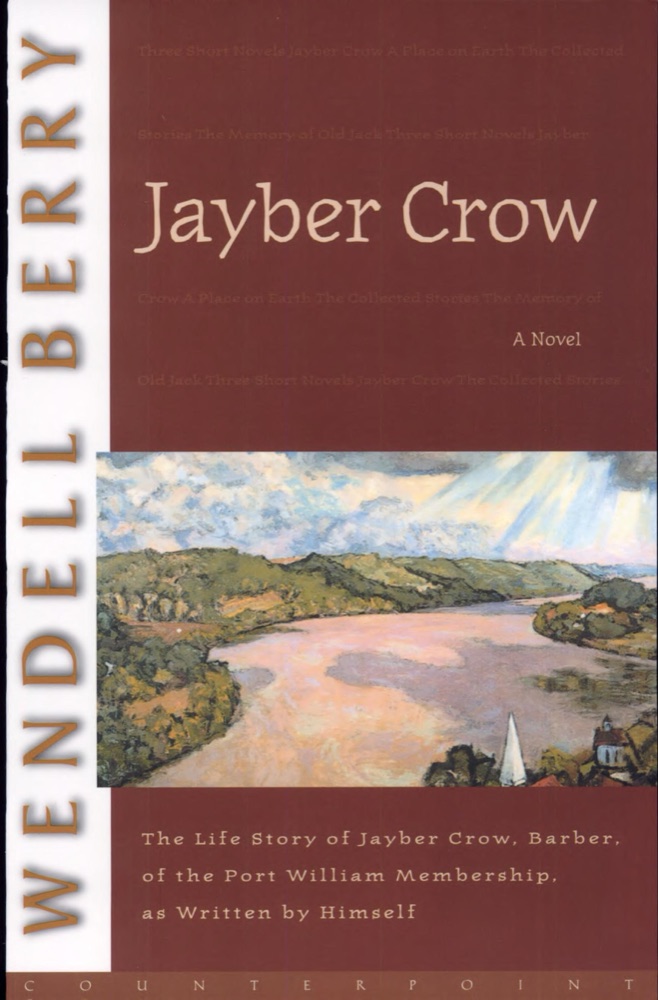
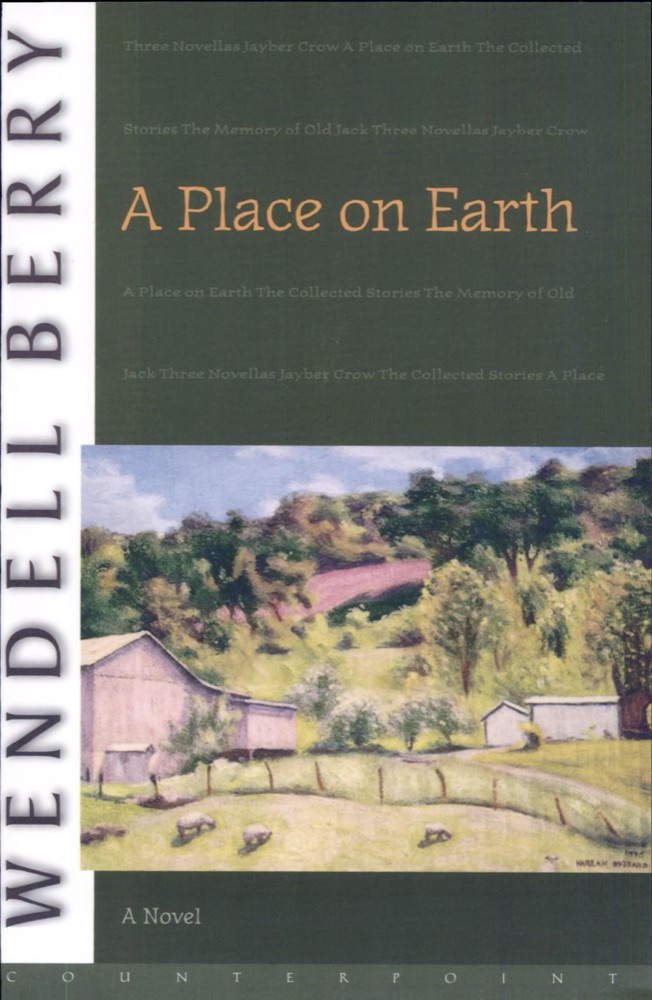
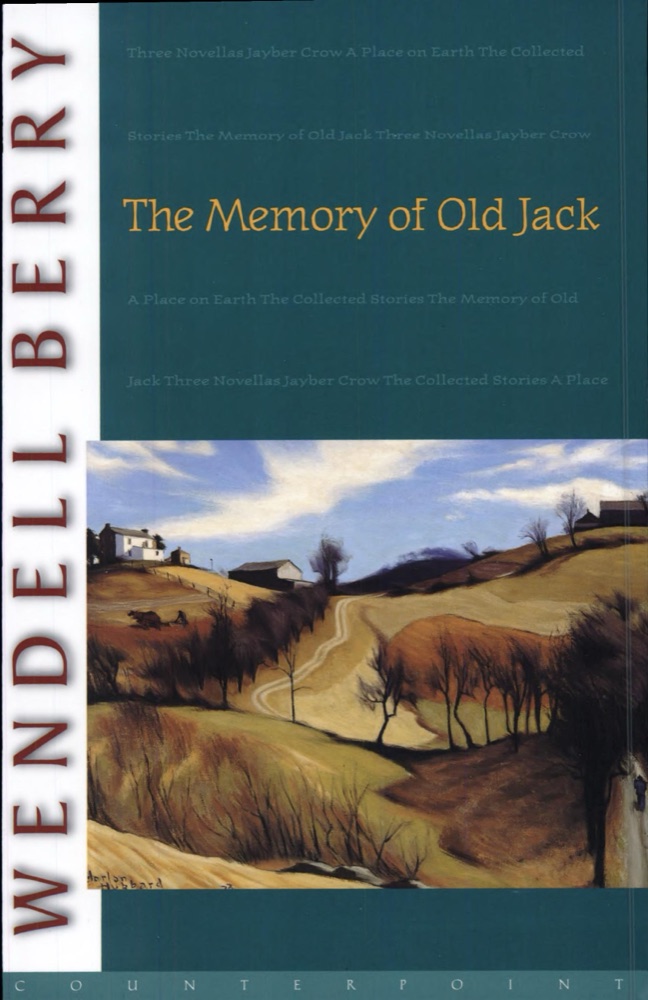
About the book
In a time when our relationship to the natural world is ruled by the violence and greed of unbridled consumerism, Wendell Berry speaks out in these prescient essays, drawn from his 50-year campaign on behalf of American lands and communities Wendell Berry began his life in post-war America as the old times and the last of the old-time people were dying out, and continues to this day in the old ways: a team of work horses and a pencil are his preferred working tools. The writings gathered in The World-Ending Fire are the unique product of a life spent farming the fields of rural Kentucky with mules and horses, and of the rich, intimate knowledge of the land cultivated by this work. These are essays written in defiance of the false call to progress and in defense of local landscapes, essays that celebrate our cultural heritage, our history, and our home. With grace and conviction, he show
Book details
- First published
- 2017
- Author
- Wendell Berry
- Genre
- Nonfiction
- Goodreads rating
- 4.41 (2k ratings)
The buzz
- The GuardianReview in The Guardianprofessional review (via Book Marks)
- Kirkus ReviewsReview in Kirkus Reviewsprofessional review (via Book Marks)
- Publishers WeeklyReview in Publishers Weeklyprofessional review (via Book Marks)
- BooklistReview in Booklistprofessional review (via Book Marks)
- CsmonitorReview in Csmonitorprofessional review (via Book Marks)
- NewrepublicReview in Newrepublicprofessional review (via Book Marks)
Keep reading
 Bringing it to the Table: On Farming and Food
 The Art of the Commonplace: The Agrarian Essays
 Walden & Civil Disobedience
 The One-Straw Revolution
 Walden and other writings
 A Sand County Almanac and Sketches Here and There
 Sacred Economics: Money, Gift, and Society in the Age of Transition
 Erewhon
 Small Is Beautiful: Economics as if People Mattered
 Small Wonder
 Anthills of the Savannah
 The Freedom Manifesto
 The Dispossessed
 In Praise of Idleness and Other Essays
 Endgame, Vol. 1: The Problem of Civilization
 Let Us Dream: The Path to a Better Future
 Big Sur and the Oranges of Hieronymus Bosch
 Walden
 The Home and the World
 Revolution
 The Journey Home: Some Words in Defense of the American West
 Cross Creek
 The State of the Art
 The Log from the Sea of Cortez
 The Grapes of Wrath
 The Discovery of India
 The Children of Men
 The Fall of Babel
 Villa Incognito
 Sea of Rust
 Hocus Pocus
 The Source of Self-Regard: Selected Essays, Speeches, and Meditations
 The Abundance
 Human, All Too Human
 One Man's Meat
 A Language Older Than Words
 The Midwich Cuckoos
 The Last American Man
 Parable of the Talents
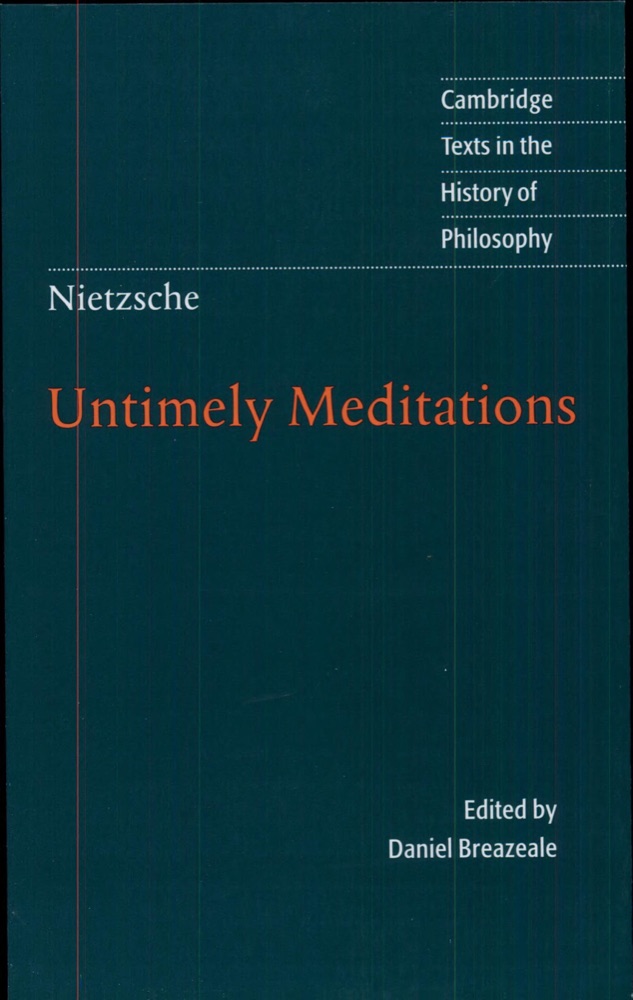 Untimely Meditations
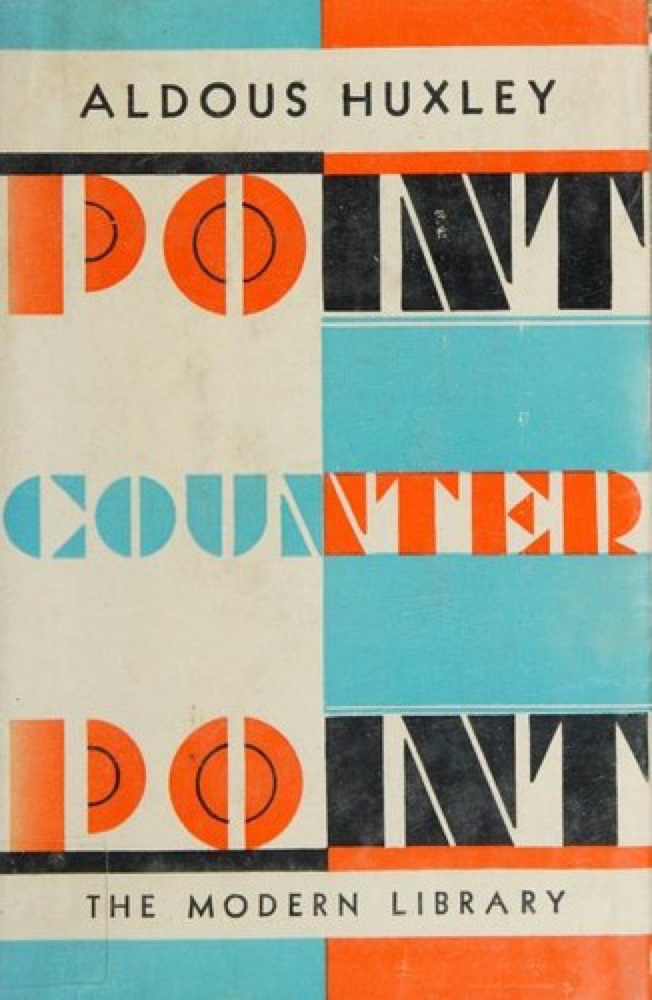 Point Counter Point
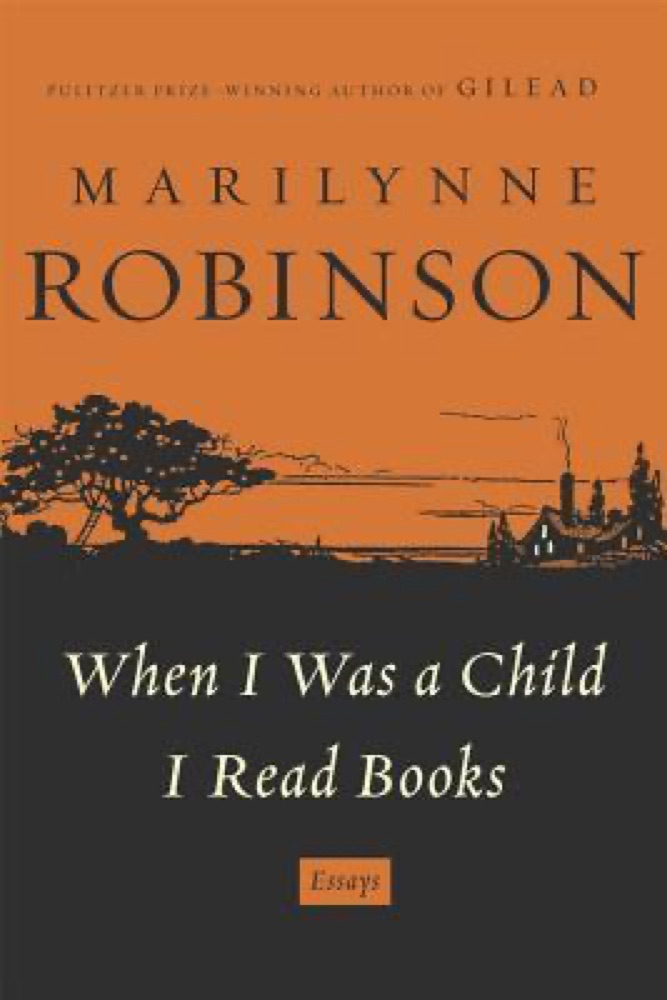 When I Was a Child I Read Books
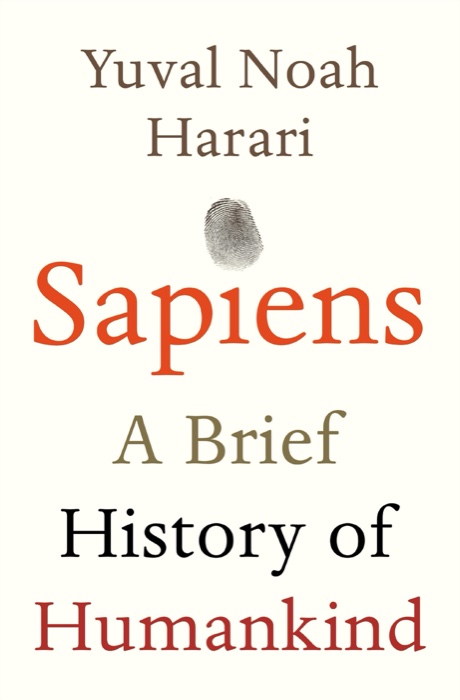 Sapiens: A Brief History of Humankind
 The Culture of Make Believe
 On Trails: An Exploration
 The Gay Science
 The Way of All Flesh
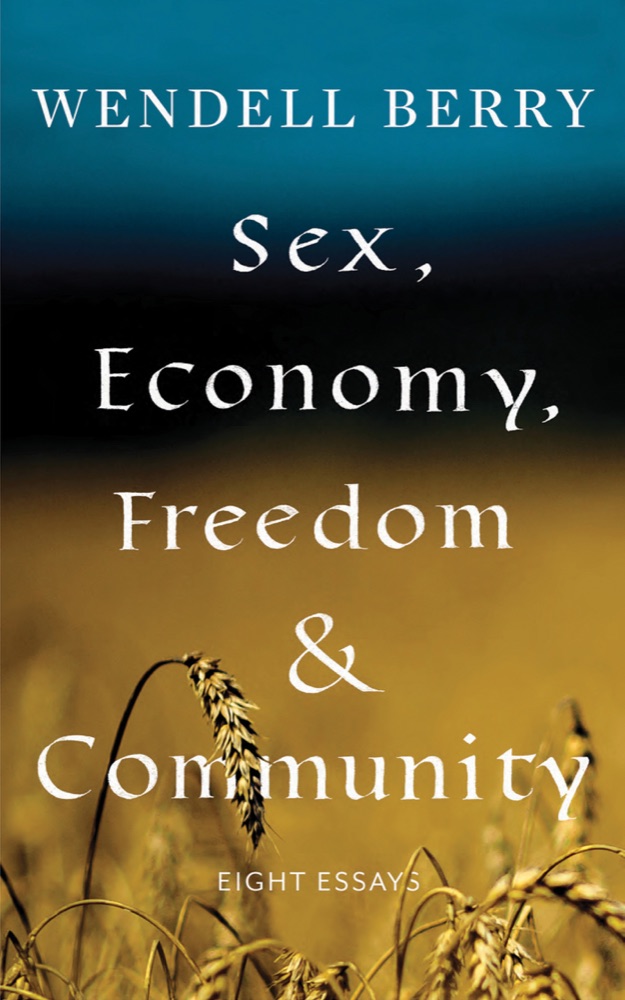 Sex, Economy, Freedom, and Community: Eight Essays
 Too Like the Lightning
 The Fifth Science
 The Magic Mountain
 High Tide in Tucson
 Sacred Hunger
 Walden Two
 Thirteen Moons
 The Autobiography of Eleanor Roosevelt
 Where the Bluebird Sings to the Lemonade Springs: Living and Writing in the West
 The Lincoln Highway
 The Pleasures and Sorrows of Work
 Even Cowgirls Get the Blues