
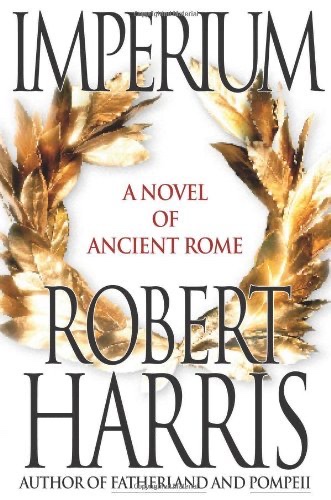
 Imperium: A Novel of Ancient Rome
Quotes from the Book
And then to my surprise in one of them I discovered the original manuscript of On Friendship. Puzzled, I unrolled it, thinking I must have brought it with me by mistake. But when I saw that Cicero had copied out at the top of the roll in his shaking hand a quotation from the text, on the importance of having friends, I realised it was a parting gift: If a man ascended into heaven and gazed upon the whole workings of the universe and the beauty of the stars, the marvellous sight would give him no joy if he had to keep it to himself. And yet, if only there had been someone to describe the spectacle to, it would have filled him with delight. Nature abhors solitude.
7
And so we drifted towards calamity. At times, Cicero was shrewd enough to see it. “Can a constitution devised centuries ago to replace a monarchy, and based upon a citizens’ militia, possibly hope to run an empire whose scope is beyond anything ever dreamed of by its framers? Or must the existence of standing armies and the influx of inconceivable wealth inevitably destroy our democratic system?
7
There is a wonderful line in one of Cicero’s letters to Atticus in which he describes moving into a property and says: I have put out my books and now my house has a soul.
6
What starts as gratitude quickly becomes dependency and ends as entitlement
6
The essential point was that Cicero for the first time laid out his political credo in black and white, and I can summarise it in a sentence: that politics is the most noble of all callings (“there is really no other occupation in which human virtue approaches more closely the august function of the gods”); that there is “no nobler motive for entering public life than the resolution not to be ruled by wicked men”; that no individual, or combination of individuals, should be allowed to become too powerful; that politics is a profession, not a pastime for dilettantes (nothing is worse than rule by “clever poets”); that a statesman should devote his life to studying “the science of politics, in order to acquire in advance all the knowledge that it may be necessary for him to use at some future time”; that authority in a state must always be divided; and that of the three known forms of government—monarchy, aristocracy and people—the best is a mixture of all three, for each one taken on its own can lead to disaster: kings can be capricious, aristocrats self-interested, and “an unbridled multitude enjoying unwonted power more terrifying than a conflagration or a raging sea.
4
But popularity and power, as he well knew, are separate entities. Often the most powerful men in a state can pass down a street unrecognised, while the most famous bask in feted impotence.
3
that a statesman should devote his life to studying “the science of politics, in order to acquire in advance all the knowledge that it may be necessary for him to use at some future time”; that authority in a state must always be divided; and that of the three known forms of government—monarchy, aristocracy and people—the best is a mixture of all three, for each one taken on its own can lead to disaster: kings can be capricious, aristocrats self-interested, and “an unbridled multitude enjoying unwonted power more terrifying than a conflagration or a raging sea.” Often today I reread On the Republic, and always I am moved, especially by the passage at the end of book six, when Scipio describes how his grandfather appears to him in a dream and takes him up into the heavens to show him the smallness of the earth in comparison to the grandeur of the Milky Way, where the spirits of dead statesmen dwell as stars. The description was inspired by the vast, clear night skies above the Bay of Naples: I gazed in every direction and all appeared wonderfully beautiful. There were stars which we never see from earth, and they were all larger than we have ever imagined. The starry spheres were much greater than the earth; indeed the earth itself seemed to me so small that I was scornful of our empire, which covers only a single point, as it were, upon its surface. “If only you will look on high,” the old man tells Scipio, “and contemplate this eternal home and resting place, you will no longer bother with the gossip of the common herd or put your trust in human reward for your exploits. Nor will any man’s reputation endure very long, for what men say dies with them and is blotted out with the forgetfulness of posterity.
3
I have put out my books and now my house has a soul.
3
but we must be careful not to do our enemies’ work for them. To argue that to preserve our freedoms we must suspend our freedoms, that to safeguard elections we must cancel elections, that to defend ourselves from dictatorship we must appoint a dictator—what logic is this? We
3
The Spartan statesman Lycurgus, seven hundred years ago, is said to have observed: When falls on man the anger of the gods, First from his mind they banish understanding. Such was to be the fate of Caesar. I am sure Cicero was correct: he had gone mad. His success had made him vain, and his vanity had devoured his reason.
3
I feel like a ghost revisiting the scenes of my life.
2
I told you this would happen. I am Cassandra—doomed to see the future yet destined never to be believed.
2
I did not have long to enjoy my freedom in tranquillity. My modest plans, like everyone else’s, were about to be mocked by the immensity of events. As Plautus has it: Whatever the mind may hope for The future is in the hands of the gods.
2
it is human nature that what starts as gratitude quickly becomes dependency and ends as entitlement.
2
…we must be careful not to do our enemies’ work for them. To argue that to preserve our freedoms we must suspend our freedoms, that to safeguard elections we must cancel elections, that to defend ourselves from dictatorship we must appoint a dictator – what logic is this?
2
To be ignorant of what occurred before you were born is to remain always a child. For what is the worth of human life, unless it is woven into the life of our ancestors by the records of history? Cicero, Orator, 46 BC
2
A human being can only train for death by leading a life that is morally good; that is—to desire nothing too much; to be content with what one has; to be entirely self-sufficient within oneself, so that whatever one loses, one will still be able to carry on regardless; to do none harm; to realise that it is better to suffer an injury than to inflict one; to accept that life is a loan given by Nature without a due date and that repayment may be demanded at any time; that the most tragic character in the world is a tyrant who has broken all these precepts.
2
Can a constitution devised centuries ago to replace a monarchy, and based upon a citizens’ militia, possibly hope to run an empire whose scope is beyond anything ever dreamed of by its framers? Or must the existence of standing armies and the influx of inconceivable wealth inevitably destroy our democratic system?
2
To celebrate his victories Pompey summoned a meeting of the Senate to vote his father-in-law a further twenty days of public supplication, whereupon a scene ensued that I have never forgotten. One after another the senators rose to praise Caesar, Cicero dutifully among them, until at last there was no one left for Pompey to call except Cato. “Gentlemen,” said Cato, “yet again you have all taken leave of your senses. By Caesar’s own account he has slaughtered four hundred thousand men, women and children—people with whom we had no quarrel, with whom we were not at war, in a campaign not authorised by a vote either of this Senate or of the Roman people. I wish to lay two counter-proposals for you to consider: first, that far from holding celebrations, we should sacrifice to the gods that they do not turn their wrath for Caesar’s folly and madness upon Rome and the army; and second, that Caesar, having shown himself a war criminal, should be handed over to the tribes of Germany for them to determine his fate.” The shouts of rage that greeted this speech were like howls of pain: “Traitor!” “Gaul-lover!” “German!” Several senators jumped up and started shoving Cato this way and that, causing him to stumble backwards. But he was a strong and wiry man. He regained his balance and stood his ground, glaring at them like an eagle. A motion was proposed that he be taken directly by the lictors to the Carcer and imprisoned until such time as he apologised. Pompey, however, was too shrewd to permit his martyrdom. “Cato by his words has done himself more harm than any punishment we can inflict,” he declared. “Let him go free. It does not matter. He will stand forever condemned in the eyes of the Roman people for such treacherous sentiments.” I too felt that Cato had done himself great damage
2
At first I thought I would never recover from Cicero’s death. But time wipes out everything, even grief. Indeed, I would go so far as to say that grief is almost entirely a question of perspective. For the first few years I used to sigh and think, ‘Well, he would still be in his sixties now,’ and then a decade later, with surprise, ‘My goodness, he would be seventy-five,’ but nowadays I think, ‘Well, he would be long since dead in any case, so what does it matter how he died in comparison with how he lived?
2
I make no claim to be a philosopher, but this much I have observed: that whenever a thing seems at its zenith, you may be sure its destruction has already started.
2
To argue that to preserve our freedoms we must suspend our freedoms, that to safeguard elections we must cancel elections, that to defend ourselves from dictatorship we must appoint a dictator – what logic is this?
2
How easy it is for those who play no part in public affairs to sneer at the compromises required of those who do.
1
El ser humano solo puede prepararse para la muerte si lleva una vida acorde con la moral; es decir, cuando no desea nada en exceso; cuando se conforma con lo que tiene; cuando le basta consigo mismo para hallar su independencia, de tal forma que cuando pierda algo, seguirá siendo capaz de llevar su vida adelante; cuando no perjudica al prójimo; cuando comprende que es preferible sufrir un daño a infligirlo; cuando acepta que la vida es un préstamo que la diosa Naturaleza nos concede sin fecha de vencimiento, y que el pago se puede cobrar en cualquier momento; cuando asume que el personaje más trágico del mundo es un tirano que se ha saltado todos estos preceptos.
1
All his depths were on the surface.
1
I doubt they’d kill me. And if they did—well, what does it matter? I’m old, and there could be no better death than in defence of freedom.
1
shall never forget as long as I live the sensation of unrolling each of the eight books of Aristotle’s Politics: tiny cylinders of minute Greek characters, the edges slightly damaged by damp from the caves in Asia Minor where they had been hidden for many years. It was like reaching back through time and touching the face of a god.
1
He sought refuge in his books,
1
Aunque un hombre ascendiera a los cielos y contemplase las maravillas del universo y la belleza de las estrellas, el hermoso paisaje no le produciría regocijo alguno si hubiera de guardárselo para sí. Y si, por el contrario, tuviera a su lado a alguien a quien describirle semejante espectáculo, se colmaría de dicha. La naturaleza aborrece la soledad.
1
Watch on YouTube
About Robert Harris
We have collected 163 quotes from 8 books by Robert Harris on BookQuoters.
More about the author →More by Robert Harris
All books by Robert Harris →
About the book
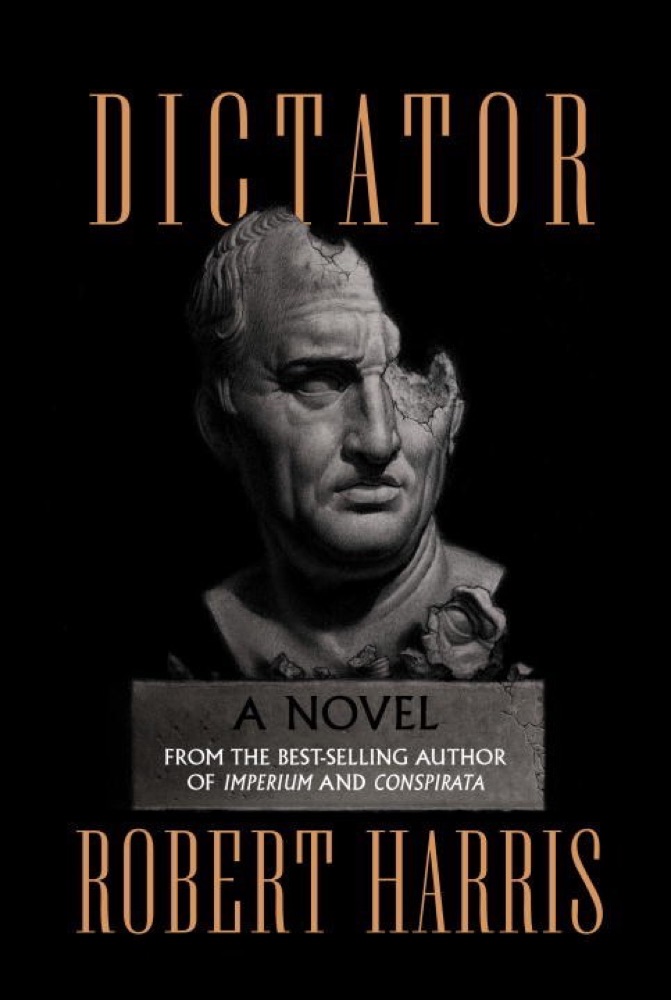
Imperium...Conspirata...and now, Dictator—the long-awaited final volume of Robert Harris’s magnificent Ancient Rome Trilogy
At the age of forty-eight, Cicero—the greatest orator of his time—is in exile, separated from his wife and children, tormented by his sense of failure, his great power sacrificed on the altar of his principles. And yet, in the words of one of his most famous aphorisms, “While there is life, there is hope.”
By promising to support Caesar—his political enemy—he is granted return to Rome. There, he fights his way back to prominence: first in the law courts, then in the Senate, and finally by the power of his pen, until at last, for one brief and glorious period, he is again the preeminent statesman in the city. Even so, no public figure, however brilliant and cunning, is completely safeguarded against the unscrupulous ambition and corruption of others.
Riveti
Book details
- First published
- 2015
- Author
- Robert Harris
- Genre
- Historical
- Goodreads rating
- 4.42 (19k ratings)
The buzz
- The New York TimesReview in The New York Timesprofessional review (via Book Marks)
- The Washington PostReview in The Washington Postprofessional review (via Book Marks)
- The Wall Street JournalReview in The Wall Street Journalprofessional review (via Book Marks)
- The GuardianReview in The Guardianprofessional review (via Book Marks)
- CsmonitorReview in Csmonitorprofessional review (via Book Marks)
Keep reading
 Augustus
 The Ides of March
Imperium: A Novel of Ancient Rome
The Ides of March
Imperium: A Novel of Ancient Rome
 The Will to Battle
 The Dream of Scipio
 Gorgias
 The Memoirs of Cleopatra
 The Fall of Babel
 Arm of the Sphinx
 The Fall
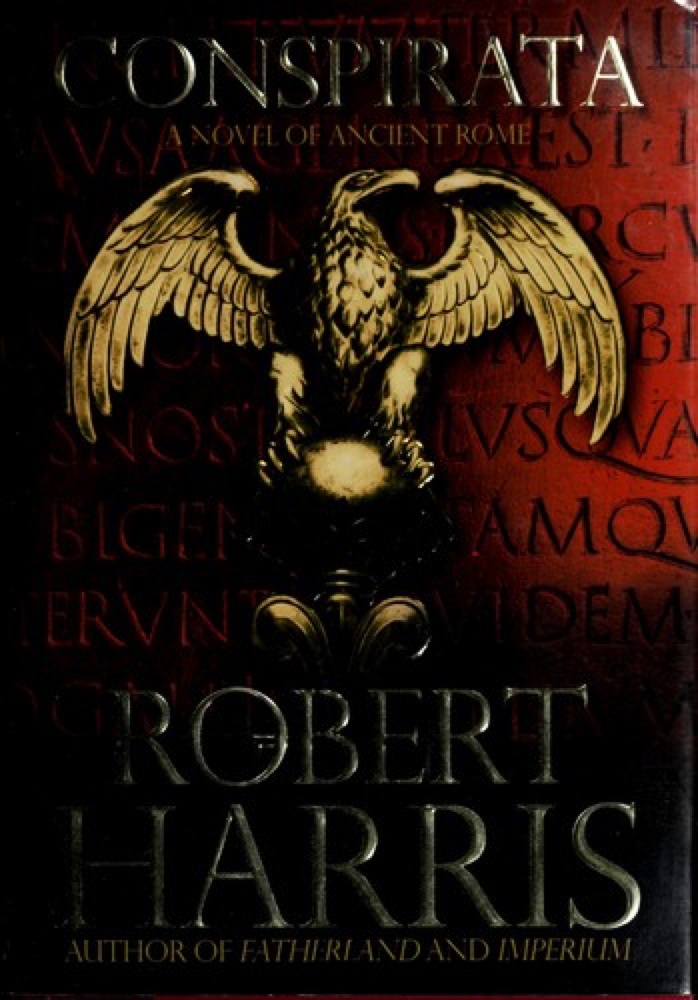 Conspirata
 The Fencing Master
 Joseph Anton: A Memoir
 The Mirror & the Light
 Darkness at Noon
 Persian Letters
 Untimely Meditations
 Flight To Arras
 When the Sleeper Wakes
 Resistance, Rebellion and Death: Essays
 The Republic
 The Kingdom on the Waves
 Reflections on the Revolution in France
 The Enchantress of Florence
 Too Like the Lightning
 First Lord's Fury
 Shadow & Claw
 Walden & Civil Disobedience
 God Emperor of Dune
 The Once and Future King
 Radio Free Albemuth
 The Schopenhauer Cure
 The Autobiography of Benjamin Franklin
 Maldoror and the Complete Works
 Sword & Citadel
 Democracy in America
 Basic Writings of Nietzsche
 If This Is a Man / The Truce
 Caesar and Christ
 The Claw of the Conciliator
 The Story of My Experiments With Truth
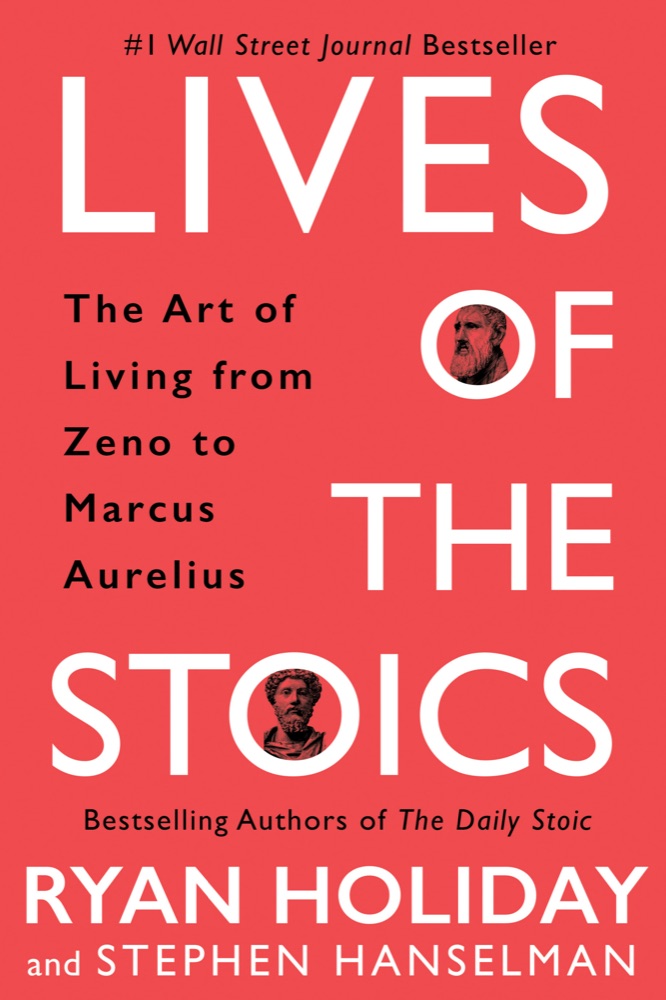 Lives of the Stoics: The Art of Living from Zeno to Marcus Aurelius
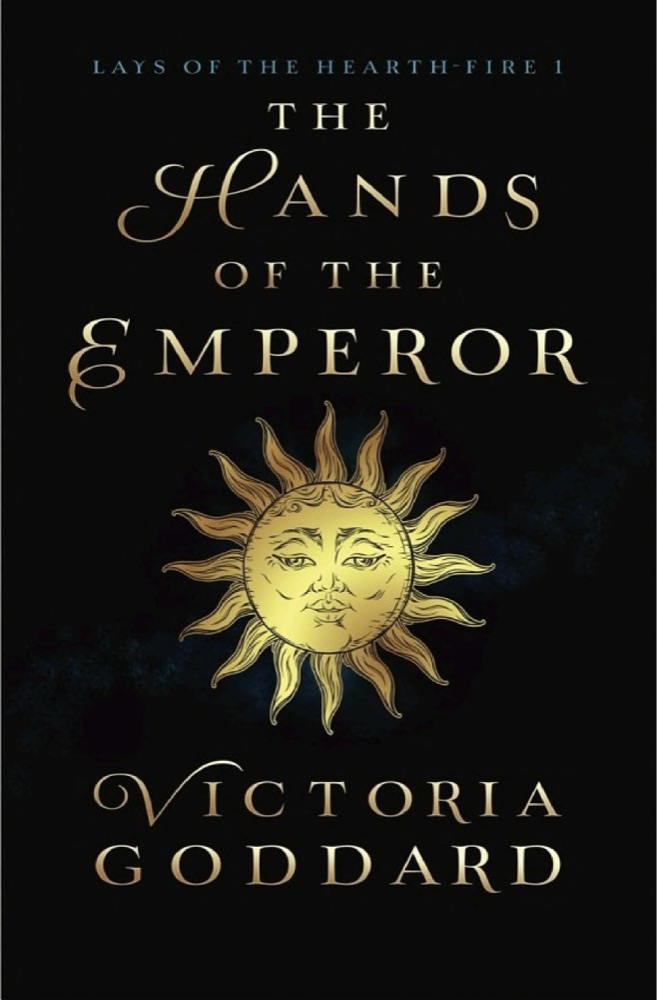 The Hands of the Emperor
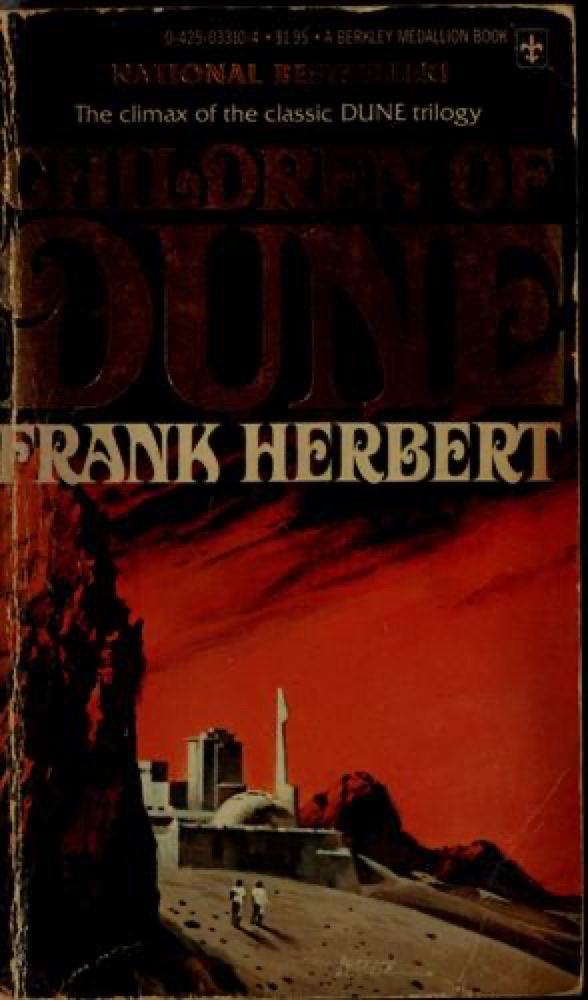 Children of Dune
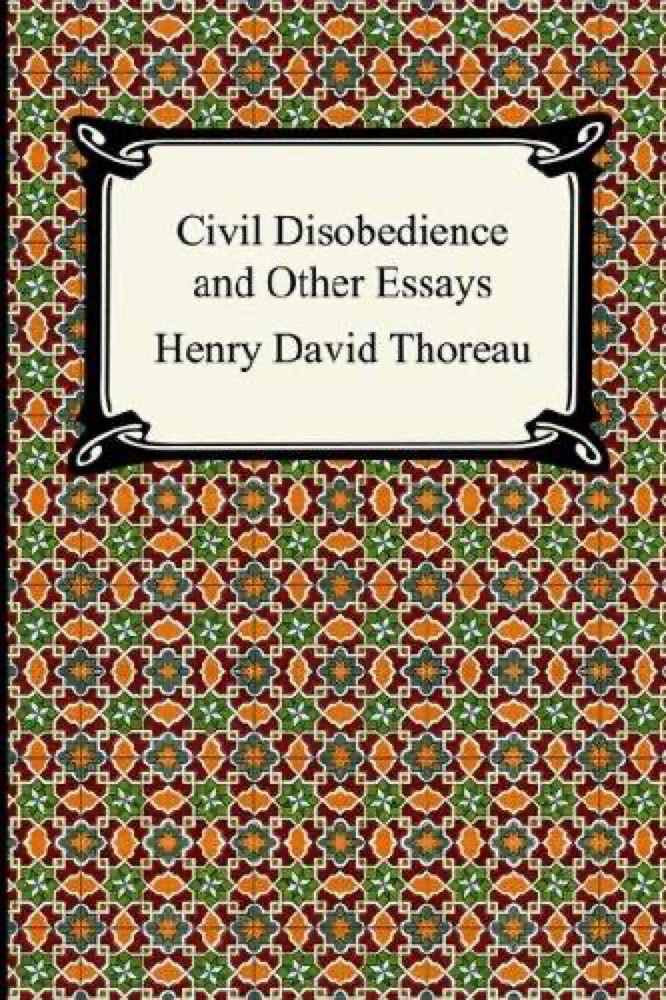 Civil Disobedience and Other Essays
 My Friends
 The Fall of Hyperion
 Gardens of the Moon
 The First Circle
 The Will to Power
 The Discourses
 The Autobiography of Eleanor Roosevelt
 Eyeless in Gaza
 You Can't Go Home Again
 Fall of Light
 How to Live: A Life of Montaigne in One Question and Twenty Attempts at an Answer
 Toll the Hounds
 Seven Surrenders
 A Connecticut Yankee in King Arthur's Court