 The Soul of America: The Battle for Our Better Angels
Quotes from the Book
If by a "Liberal" they mean someone who looks ahead and not behind, someone who welcomes new ideas without rigid reactions, someone who cares about the welfare of the people-their health, their housing, their schools, their jobs, their civil rights and their civil liberties-someone who believes we can break through the stalemate and suspicions that grip us in our policies abroad, if that is what they mean by a "Liberal", then I'm proud to say I'm a "Liberal.
1.3k
A man does what he must — in spite of personal consequences, in spite of obstacles and dangers, and pressures — and that is the basis of all human morality.
68
To be courageous, these stories make clear, requires no exceptional qualifications, no magic formula, no special combination of time, place and circumstance. It is an opportunity that sooner or later is presented to us all. Politics merely furnishes one arena which imposes special tests of courage. In whatever arena of life one may meet the challenge of courage, whatever may be the sacrifices he faces if he follow his conscience - the loss of his friends, his fortune, his contentment, even the esteem of his fellow men - each man must decide for himself the course he will follow. The stories of past courage can define that ingredient - they can teach, they can offer hope, they provide inspiration. But they cannot supply courage itself. For this each man must look into his own soul.
16
It is compromise that prevents each set of reformers from crushing the group at the other end of the political spectrum.
11
You don't have to have a college degree to serve. You don't have to make your subject and your verb agree to serve. You don't have to know about Plato and Aristotle to serve. You don't have to know Einstein's theory of relativity to serve. You only need a heart full of grace. A soul generated by love. And you can be that servant.
9
Of course, it would be much easier if we could all continue to think in traditional political patterns—of liberalism and conservatism, as Republicans and Democrats, from the viewpoint of North and South, management and labor, business and consumer or some equally narrow framework. It would be more comfortable to continue to move and vote in platoons, joining whomever of our colleagues are equally enslaved by some current fashion, raging prejudice or popular movement. But today this nation cannot tolerate the luxury of such lazy political habits. Only the strength and progress and peaceful change that come from independent judgment and individual ideas—and even from the unorthodox and the eccentric—can enable us to surpass that foreign ideology that fears free thought more than it fears hydrogen bombs. We shall need compromises in the days ahead, to be sure. But these will be, or should be, compromises of issues, not of principles. We can compromise our political positions, but not ourselves.
9
It is when the politician loves neither the public good nor himself, or when his love for himself is limited and is satisfied by the trappings of office, that the public interest is badly served.
6
Perhaps the twentieth-century Senator is not called upon to risk his entire future on one basic issue in the manner of Edmund Ross or Thomas Hart Benton. Perhaps our modern acts of political courage do not arouse the public in the manner that crushed the career of Sam Houston and John Quincy Adams. Still, when we realize that a newspaper that chooses to denounce a Senator today can reach many thousand times as many voters as could be reached by all of Daniel Webster’s famous and articulate detractors put together, these stories of twentieth-century political courage have a drama, an excitement—and an inspiration—all their own.
4
... there are few if any issues where all the truth and all the right and all the angels are on one side.
3
All of us in the Congress are made fully aware of the importance of party unity (what sins have been committed in that name!)
2
In a lonely grave, forgotten and unknown, lies “the man who saved a President,” and who as a result may well have preserved for ourselves and posterity Constitutional government in the United States—the man who performed in 1868 what one historian has called “the most heroic act in American history, incomparably more difficult than any deed of valor upon the field of battle”—but a United States Senator whose name no one recalls: Edmund G. Ross of Kansas. The
2
We dare not forget today that we are the heirs of that first revolution. Let the word go forth from this time and place, to friend and foe alike, that the torch has been passed to a new generation of Americans—born in this century, tempered by war, disciplined by a hard and bitter peace, proud of our ancient heritage—and unwilling to witness or permit the slow undoing of those human rights to which this nation has always been committed, and to which we are committed today at home and around the world.
1
Woodrow Wilson, for example, shortly before his death, buffeted by the Senate in his efforts on behalf of the League of Nations and the Versailles Treaty, rejected the suggestion that he seek a seat in the Senate from New Jersey, stating: “Outside of the United States, the Senate does not amount to a damn. And inside the United States the Senate is mostly despised; they haven’t had a thought down there in fifty years.” There are many who agreed with Wilson in 1920, and some who might agree with those sentiments today. But
1
And finally, at age seventy, having distinguished himself as a brilliant Secretary of State, an independent President and an eloquent member of Congress, he was to record somberly that his “whole life has been a succession of disappointments. I can scarcely recollect a single instance of success in anything that I ever undertook.” Yet
1
the necessity for compromise and the importance of remaining in office.
Today the challenge of political courage looms larger than ever before. For our everyday life is becoming so saturated with the tremendous power of mass communications that any unpopular or unorthodox course arouses a storm of protests such as John Quincy Adams—under attack in 1807—could never have envisioned. Our political life is becoming so expensive, so mechanized and so dominated by professional politicians and public relations men that the idealist who dreams of independent statesmanship is rudely awakened by the necessities of election and accomplishment. And our public life is becoming so increasingly centered upon that seemingly unending war to which we have given the curious epithet “cold” that we tend to encourage rigid ideological unity and orthodox patterns of thought. And thus, in the days ahead, only the very courageous will be able to take the hard and unpopular decisions necessary for our survival in the struggle with a powerful enemy—an enemy with leaders who need give little thought to the popularity of their course, who need pay little tribute to the public opinion they themselves manipulate, and who may force, without fear of retaliation
If there is a lesson from the lives of the men John Kennedy depicts in this book, if there is a lesson from his life and from his death, it is that in this world of ours none of us can afford to be lookers-on, the critics standing on the sidelines.
Thomas Hart Benton, el primer senador en servir treinta años consecutivos, alcanzó una prominencia que ningún otro senador de un nuevo estado podría reclamar, y defendió al Oeste con una energía ilimitada que ningún candidato opositor podía igualar.
En tiempos de tanta exaltación es mucho más fácil avivar y alimentar las llamas de la discordia que sofocarlas, y el que aconseja moderación se arriesga a ser considerado que no cumple su deber con su partido.
Señor presidente, comenzó, quiero hablar hoy, no como un hombre de Massachusetts, ni como un hombre del Norte, sino como un estadounidense y un miembro del Senado de Estados Unidos... Hablo hoy por la preservación de la Unión. Escuchen mis razones.
le imploro al Espíritu, del que proviene todo don bueno y perfecto, que me permita prestarle un servicio esencial a mi país, y que nunca pueda regirme en mi conducta pública por cualquier otra consideración distinta a la de mi deber.
Pero, como sucede con todos los órganos legislativos, la política llegó al Senado de los Estados Unidos. A medida que el Partido Federalista se dividió en lo referente a la política exterior y Thomas Jefferson renunció al Gabinete para organizar a sus seguidores, el Senado se convirtió en un foro para la crítica de la rama ejecutiva, y el papel del consejo ejecutivo fue asumido por un gabinete al que podría recurrir el presidente para compartir sus puntos de vista y rendirle cuentas.
Watch on YouTube
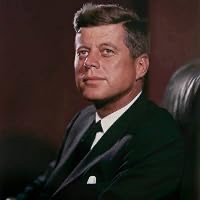
About John F. Kennedy
We have collected 22 quotes from 1 book by John F. Kennedy on BookQuoters.
More about the author →About the book
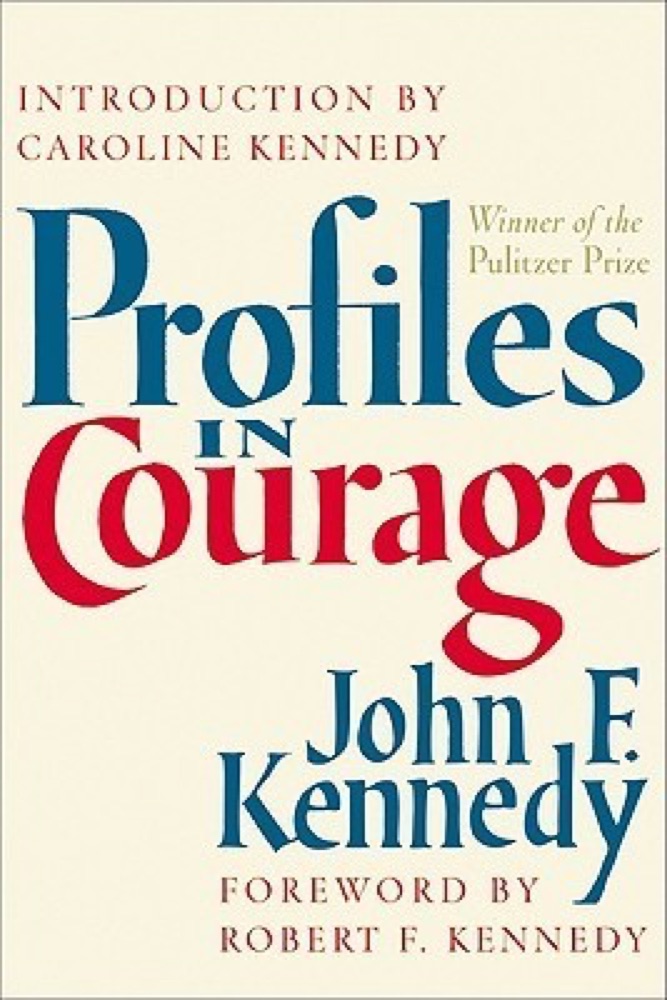
The Pulitzer Prize winning classic by President John F. Kennedy, with an introduction by Caroline Kennedy and a foreword by Robert F. Kennedy.
Written in 1955 by the then junior senator from the state of Massachusetts, John F. Kennedy's Profiles in Courage serves as a clarion call to every American.
In this book Kennedy chose eight of his historical colleagues to profile for their acts of astounding integrity in the face of overwhelming opposition. These heroes, coming from different junctures in our nation’s history, include John Quincy Adams, Daniel Webster, Thomas Hart Benton, and Robert A. Taft.
Now, a half-century later, the book remains a moving, powerful, and relevant testament to the indomitable national spirit and an unparalleled celebration of that most noble of human virtues. It resounds with timeless lessons on the most cherished of virtues and is a powerful reminder
Book details
- First published
- 1955
- Author
- John F. Kennedy
- Genre
- History
- Goodreads rating
- 3.92 (15k ratings)
Keep reading
The Soul of America: The Battle for Our Better Angels
 Promises to Keep: On Life and Politics
 The American Spirit: Who We Are and What We Stand For
 The Autobiography of Eleanor Roosevelt
 Civil Disobedience and Other Essays
 Civil Disobedience
 The Best and the Brightest
 The Small and the Mighty: Twelve Unsung Americans Who Changed the Course of History, from the Founding to the Civil Rights Movement
 The Rise of Theodore Roosevelt
 Truman
 Democracy in America
 Leadership : Six Studies in World Strategy
 One Nation: What We Can All Do to Save America's Future
 These Truths: A History of the United States
 Reflections on the Revolution in France
 A Full Life: Reflections at Ninety
 Becoming Madam Secretary
 The Machiavellians: Defenders of Freedom
 The Invisible Bridge: The Fall of Nixon and the Rise of Reagan
 American Lion: Andrew Jackson in the White House
 John Adams
 Burr
Burr
 Team of Rivals: The Political Genius of Abraham Lincoln
 Dictator
 The Path to Power
 Killing Kennedy: The End of Camelot
 Glenn Beck's Common Sense: The Case Against an Out-of-Control Government, Inspired by Thomas Paine
 A Promised Land
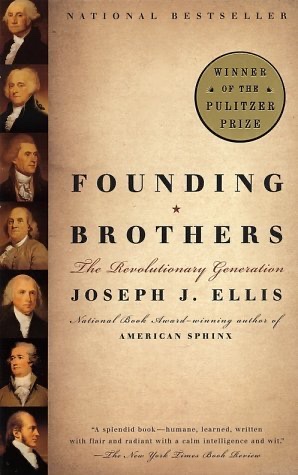 Founding Brothers: The Revolutionary Generation
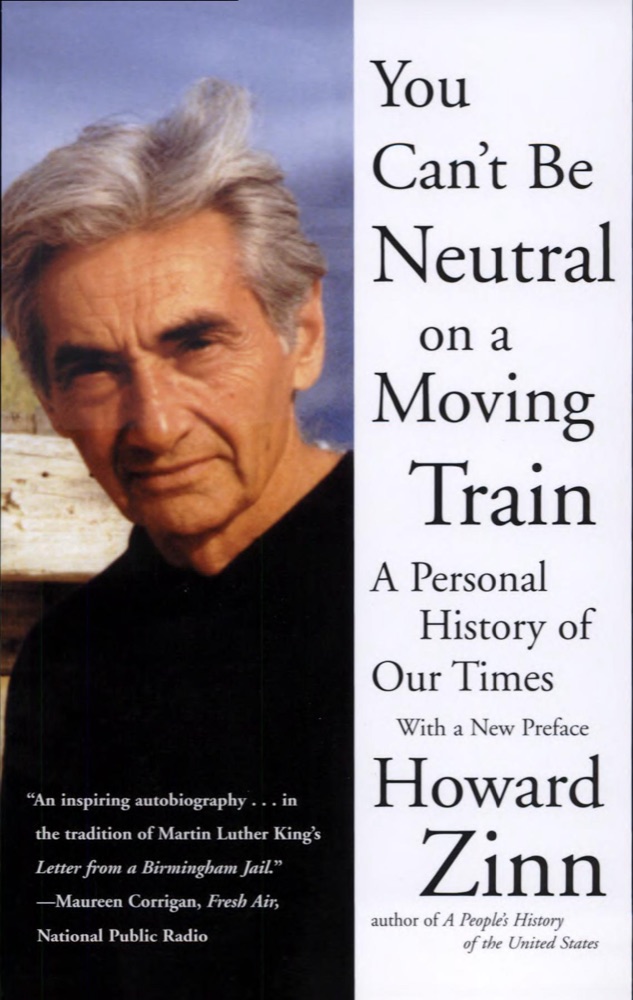 You Can't Be Neutral on a Moving Train: A Personal History of Our Times
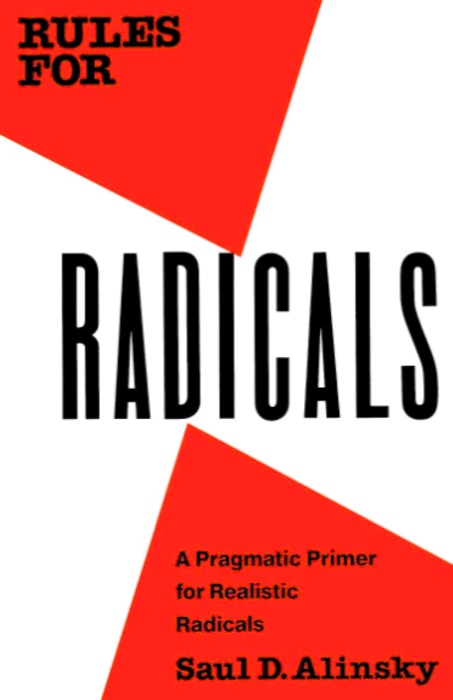 Rules for Radicals: A Pragmatic Primer for Realistic Radicals
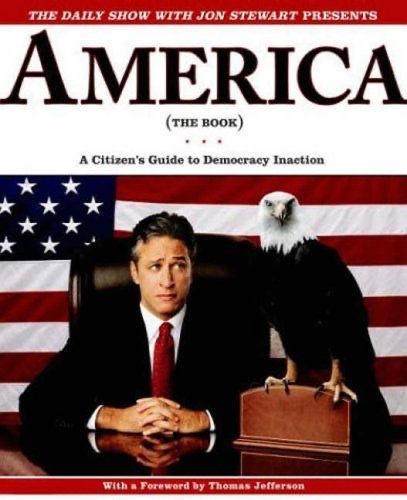 America (The Book): A Citizen's Guide to Democracy Inaction
 What Unites Us: Reflections on Patriotism
 The Passage of Power
 Destiny of the Republic: A Tale of Madness, Medicine and the Murder of a President
 The Truths We Hold: An American Journey
 Across That Bridge: A Vision for Change and the Future of America
 Shortest Way Home: One Mayor's Challenge and a Model for America's Future
 The Federalist Papers
 The Spirit of the Laws
 On the Republic / On the Laws
 The Next Decade: Where We've Been . . . and Where We're Going
 The Greatest Sentence Ever Written
 The Audacity of Hope: Thoughts on Reclaiming the American Dream
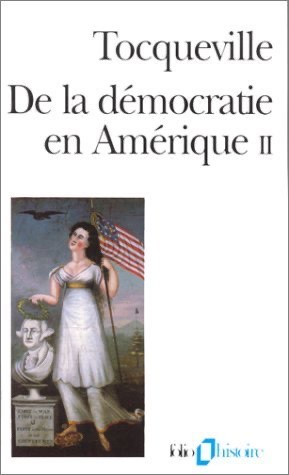 De la Démocratie en Amérique, tome II
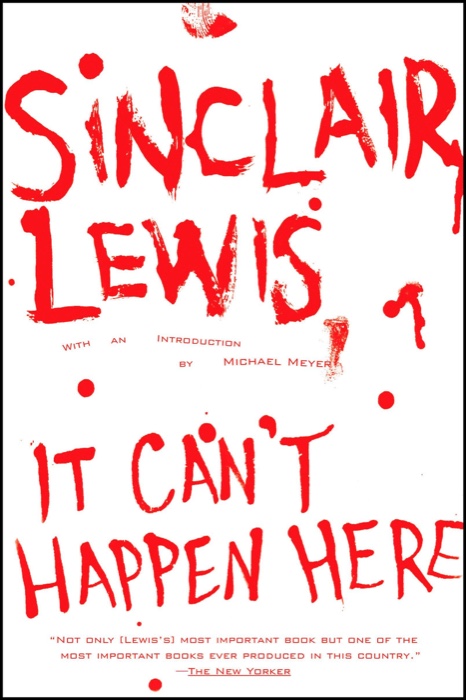 It Can't Happen Here
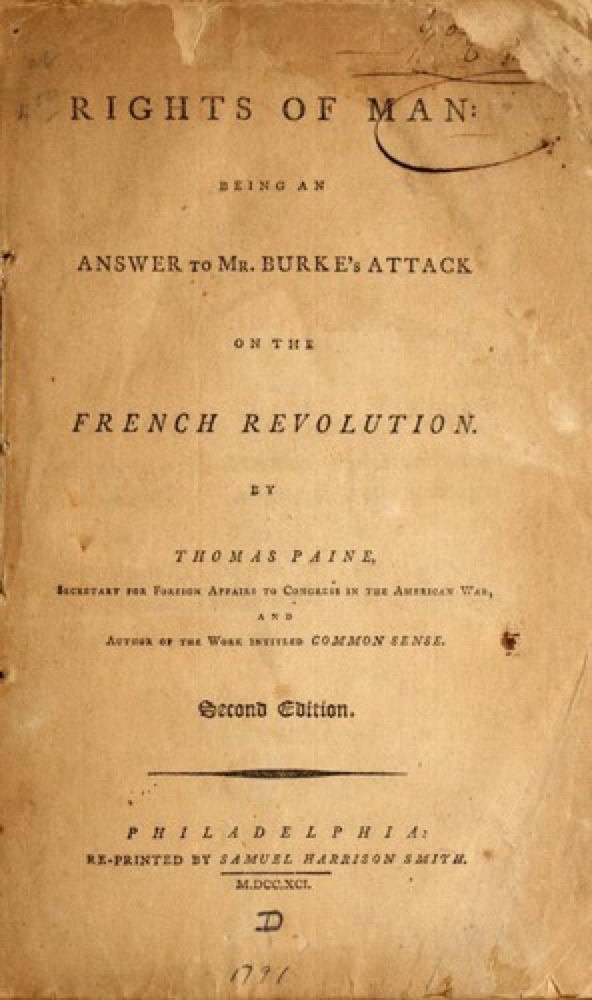 Rights of Man
 The Proud Tower: A Portrait of the World Before the War, 1890-1914
 A People's History of the United States
 Conversations With Myself
 Hell and Other Destinations: A 21st-Century Memoir
 Imperium: A Novel of Ancient Rome
 The Reactionary Mind: Conservatism from Edmund Burke to Sarah Palin
 United: Thoughts on Finding Common Ground and Advancing the Common Good
 Fascism: A Warning
 Clear and Present Danger
 Where Do We Go from Here: Chaos or Community?
 American Colossus: The Triumph of Capitalism, 1865-1900
 Witness
 Unthinkable: Trauma, Truth, and the Trials of American Democracy