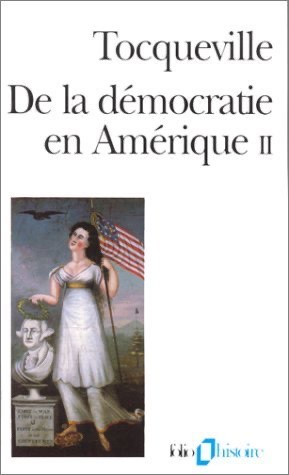

 Democracy in America
Quotes from the Book
When the taste for physical gratifications among them has grown more rapidly than their education . . . the time will come when men are carried away and lose all self-restraint . . . . It is not necessary to do violence to such a people in order to strip them of the rights they enjoy; they themselves willingly loosen their hold. . . . they neglect their chief business which is to remain their own masters.
It would seem as if the rulers of our time sought only to use men in order to make things great; I wish that they would try a little more to make great men; that they would set less value on the work and more upon the workman; that they would never forget that a nation cannot long remain strong when every man belonging to it is individually weak; and that no form or combination of social polity has yet been devised to make an energetic people out of a community of pusillanimous and enfeebled citizens.
You may be sure that if you succeed in bringing your audience into the presence of something that affects them, they will not care by what road you brought them there; and they will never reproach you for having excited their emotions in spite of dramatic rules.
It was not man who implanted in himself what is infinite and the love of what is immortal: those lofty instincts are not the offspring of his capricious will; their steadfast foundation is fixed in human nature, and they exist in spite of his efforts. He may cross and distort them – destroy them he cannot. The soul wants which must be satisfied; and whatever pains be taken to divert it from itself, it soon grows weary, restless, and disquieted amidst the enjoyments of sense.
They will not struggle energetically against him, sometimes they will even applaud him; but they do not follow him. To his vehemence they secretly oppose their inertia, to his revolutionary tendencies their conservative interests, their homely tastes to his adventurous passions, their good sense to the flights of his genius, to his poetry their prose. With immense exertion he raises them for an instant, but they speedily escape from him and fall back, as it were, by their own weight. He strains himself to rouse the indifferent and distracted multitude and finds at last that he is reduced to impotence, not because he is conquered, but because he is alone.
The practice which obtains amongst the Americans of fixing the standard of their judgment in themselves alone, leads them to other habits of mind. As they perceive that they succeed in resolving without assistance all the little difficulties which their practical life presents, they readily conclude that everything in the world may be explained, and that nothing in it transcends the limits of the understanding. Thus they fall to denying what they cannot comprehend; which leaves them but little faith for whatever is extraordinary, and an almost insurmountable distaste for whatever is supernatural.
As the past has ceased to throw its light upon the future, the mind of man wanders in obscurity.
The Americans live in a democratic state of society, which has naturally suggested to them certain laws and a certain political character. This
I am of opinion, that, in the democratic ages which are opening upon us, individual independence and local liberties will ever be the produce of artificial contrivance; that centralization will be the natural form of government.
In no country has such constant care been taken as in America to trace two clearly distinct lines of action for the two sexes, and to make them keep pace one with the other, but in two pathways which are always different. American women never manage the outward concerns of the family, or conduct a business, or take a part in political life; nor are they, on the other hand, ever compelled to perform the rough labor of the fields, or to make any of those laborious exertions which demand the exertion of physical strength. No families are so poor as to form an exception to this rule. If on the one hand an American woman cannot escape from the quiet circle of domestic employments, on the other hand she is never forced to go beyond it. Hence it is that the women of America, who often exhibit a masculine strength of understanding and a manly energy, generally preserve great delicacy of personal appearance and always retain the manners of women, although they sometimes show that they have the hearts and minds of men. Nor have the Americans ever supposed that one consequence of democratic principles is the subversion of marital power, of the confusion of the natural authorities in families. They hold that every association must have a head in order to accomplish its object, and that the natural head of the conjugal association is man. They do not therefore deny him the right of directing his partner; and they maintain, that in the smaller association of husband and wife, as well as in the great social community, the object of democracy is to regulate and legalize the powers which are necessary, not to subvert all power.
Watch on YouTube
About Alexis de Tocqueville
We have collected 65 quotes from 3 books by Alexis de Tocqueville on BookQuoters.
More about the author →More by Alexis de Tocqueville
Democracy in America
 The Old Regime and the French Revolution
Book details
- Author
- Alexis de Tocqueville
- Genre
- Classics
- Goodreads rating
- 4.15 (1k ratings) →
Keep reading
Democracy in America
 Reflections on the Revolution in France
 Civil Disobedience and Other Essays
 Rights of Man
 The Road to Serfdom
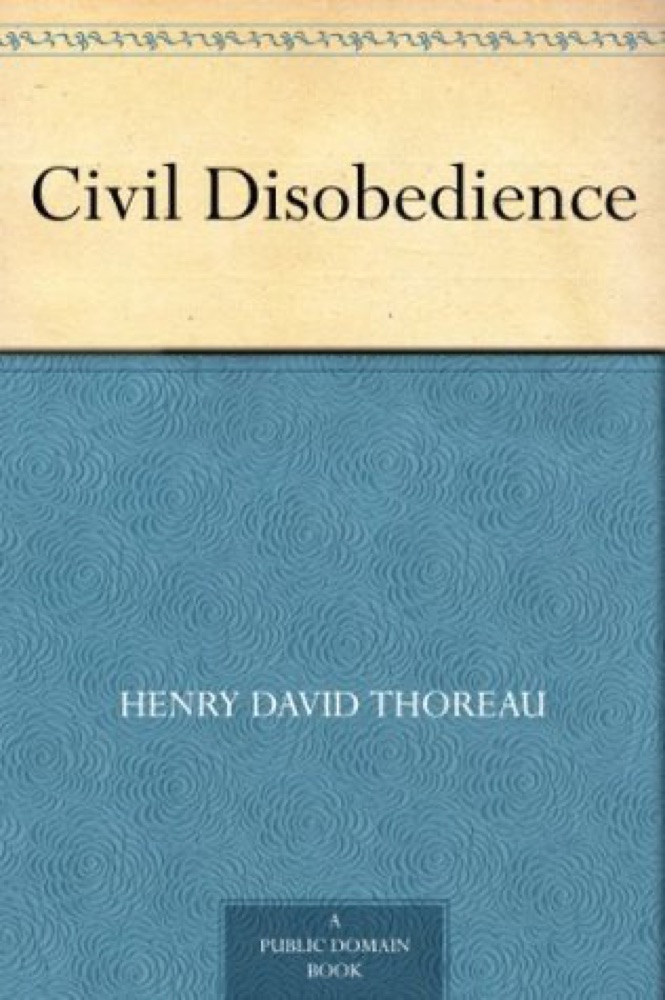 Civil Disobedience
 On Liberty
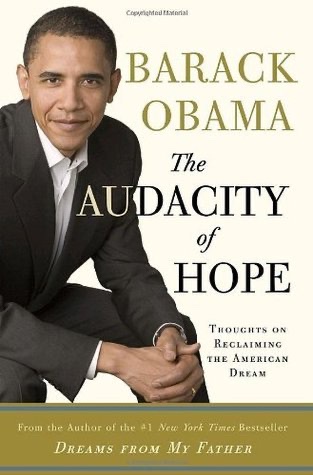 The Audacity of Hope: Thoughts on Reclaiming the American Dream
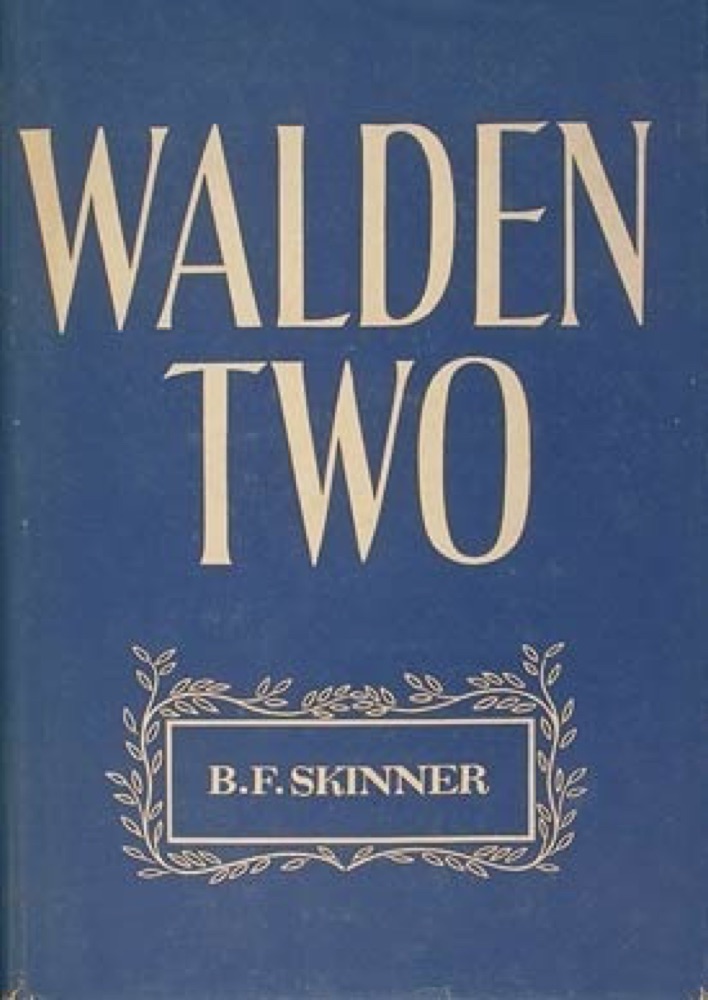 Walden Two
 Anti-Intellectualism in American Life
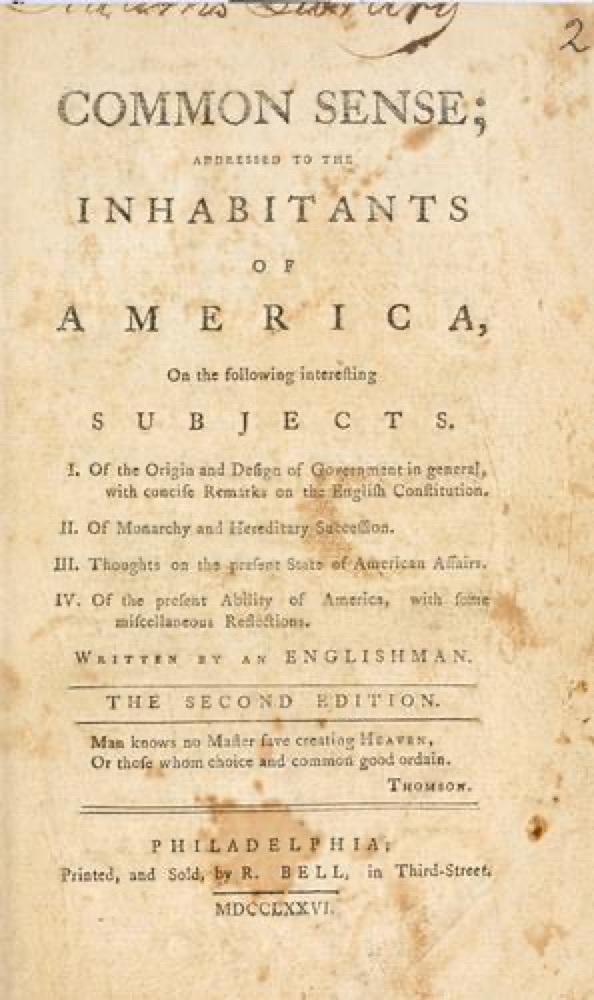 Common Sense
 From Dawn to Decadence: 500 Years of Western Cultural Life, 1500 to the Present
 Discourse on the Origin of Inequality
 The Closing of the American Mind
 Nobody Knows My Name
 Persian Letters
 Walden & Civil Disobedience
 Liberalism: The Classical Tradition
 A People's History of the United States
 Brave New World Revisited
 Escape from Freedom
 Behold a Pale Horse
 The Republic
 The Machiavellians: Defenders of Freedom
 The Ides of March
 These Truths: A History of the United States
 The Discovery of India
 What's Wrong with the World
 The Federalist Papers
 Erewhon
 Ill Fares the Land
 How Should We Then Live? The Rise and Decline of Western Thought and Culture
 Human Action: A Treatise on Economics
 No Name in the Street
 The Constitution of Liberty
 The Lessons of History
 The Future of an Illusion
 The Autobiography of Eleanor Roosevelt
 Heretics
 In Praise of Idleness and Other Essays
 Children of Dune
 The Will to Power
 The Secret Agent
 The Iron Heel
 You Can't Be Neutral on a Moving Train: A Personal History of Our Times
 History of the Peloponnesian War
 Politics
 When I Was a Child I Read Books
 Untimely Meditations
 Dictator
 The Golden House
 The Spirit of the Laws
 One Man's Meat
 The Subjection of Women
 Empire of Illusion: The End of Literacy and the Triumph of Spectacle
 The Home and the World
 Civilization and Its Discontents
 Emile or On Education
 The Education of Henry Adams
 The Proud Tower: A Portrait of the World Before the War, 1890-1914