
 The Parallax View
Quotes from the Book
On the information sheet in a New York hotel, I recently read: 'Dear guest! To guarantee that you will fully enjoy your stay with us, this hotel is totally smoke-free. For any infringement of this regulation, you will be charged $200.' The beauty of this formulation, taken literally, is that you are to be punished for refusing to fully enjoy your stay.
74
Populism is ultimately sustained by the frustrated exasperation of ordinary people, by the cry "I don't know what's going on, but I've just had enough of it! It cannot go on! It must stop!
37
Like love, ideology is blind, even if people caught up in it are not
8
...surprised at seeing a horse-shoe above the door of Bohr’s country house, a fellow scientist exclaimed that he did not share the superstitious belief that horse-shoes kept evil spirits away, to which Bohr snapped back, ‘I don’t believe in it either. I have it there because I was told that it works even when one doesn’t believe in it’. This is indeed how ideology functions today: nobody takes democracy or justice seriously, we are all aware of their corrupted nature, but we participate in them, we display our belief in them, because we assume that they work even if we do not believe in them”.
7
The primary immediate effect of the crisis will not be the rise of a radical emancipatory politics, but rather the rise of racist populism, further wars, increased poverty in the poorest Third World countries, and greater divisions between the rich and the poor within all societies.
1
sometimes, the repetition in the guise of a farce can be more terrifying than the original tragedy.
1
Over the last several months, public figures from the Pope downwards have bombarded us with the injunctions to fight against the culture of excessive greed and consumption. This disgusting spectacle of cheap moralization is an ideological operation if there ever was one: the compulsion (to expand) inscribed into the system itself is translated into a matter of personal sin, a private psychological propensity. The self-propelling circulation of Capital thus remains more than ever the ultimate Real of our lives, a beast that by definition cannot be controlled, since it itself controls our activity, blinding us to even the most obvious dangers we are courting.
1
The last statement reveals more than may appear at first glance: it indicates that Greenspan's mistake was to expect that the lending institutions' enlightened self-interest would make them act more responsibly, more ethically, in order to avoid short-term self-propelling cycles of wild speculation which, sooner or later, burst like a bubble. In other words, his mistake concerned not the facts, the objective economic data or mechanisms; it concerned rather the ethical attitudes generated by market speculation—in particular the premise that market processes will spontaneously generate responsibility and trust, since it is in the long-term self-interest of the participants themselves to act thusly. Clearly, Greenspan's error was not only and not simply one of overestimating the rationality of market agents—that is, their ability to resist the temptation of making wild speculative gains. What he forgot to include in the equation was the financial speculators' quite rational expectation that the risks would be worth taking, since, in the event of a financial collapse, they could count on the state to cover their losses.
1
itself as the “natural” advocate of democracy and human rights against the threat of totalitarianism—as if it were not the case that the Church accepted democracy only at the end of the nineteenth century, and even then with clenched teeth, as a desperate compromise, making it clear that it preferred monarchy,
1
The neoliberal system, which appeared as the only viable alternative to communism, is disintegrating, and with it the traditional left-right divide. We are witnessing a return of feudal structures, although they take new forms—a neofeudal order based on networks of clients and patrons.
for it is not capitalism as such which is bankrupt, only its distorted realization.
What all this clearly indicates is that there is no such thing as a neutral market: in every particular situation, market configurations are always regulated by political decisions.
In a supreme irony, “socializing” the banking system is acceptable when it serves to save capitalism. Socialism is bad— except when it serves to stabilize capitalism. (Note the symmetry with China today: in the same way, the Chinese Communists use capitalism to enforce their “Socialist” regime.)
is indeed true that we live in a society of risky choices, but it is one in which only some do the choosing, while others do the risking . .
True, we often talk about something instead of doing it; but sometimes we also do things in order to avoid talking and thinking about them. Such as throwing $700 billion at a problem instead of reflecting on how it arose in the first place.
We are forced to live as if we were free.
The task is not to conduct the castration in a direct climactic confrontation, but to undermine those in power with patient ideologico-critical work, so that although they are still in power, one all of a sudden notices that the powers-that-be are afflicted with unnaturally high-pitched voices.
The contemporary era constantly proclaims itself as post-ideological, but this denial of ideology only provides the ultimate proof that we are more than ever embedded in ideology. Ideology is always a field of struggle - among other things, the struggle for appropriating past traditions.
there is nothing new with regard to strong state intervention in the banking system or in the economy in general. The recent meltdown itself is a result of such intervention: when, in 2001, the dotcom bubble (which expressed the very essence of the problem of “intellectual property”) burst, it was decided to make credit easier in order to redirect growth into housing. (The ultimate cause of the 2008 meltdown was thus, from this point of view, the deadlock of intellectual property.)
The populist slogan “Save Main Street, not Wall Street!” is thus totally misleading, a form of ideology at its purest: it overlooks the fact that what keeps Main Street going under capitalism is Wall Street!
Populism is ultimately always sustained by the frustrated exasperation of ordinary people, by the cry "I don’t know what is going on, but I’ve just had enough of it! It cannot go on! It must stop!" Such impatient outbursts betray a refusal to understand or engage with the complexity of the situation, and give rise to the conviction that there must be somebody responsible for the mess—which is why some agent lurking behind the scenes is invariably required. Therein, in this refusal-to-know, resides the properly fetishistic dimension of populism. That is to say, although at a purely formal level fetishism involves a gesture of transference (onto the object-fetish), it functions as an exact inversion of the standard formula of transference (with the "subject supposed to know"): what fetishism gives body to is precisely my disavowal of knowledge, my refusal to subjectively assume what I know. That is why, to put it in Nietzschean terms which are here highly appropriate, the ultimate difference between a truly radical emancipatory politics and a populist politics is that the former is active, it imposes and enforces its vision, while populism is fundamentally re-active, the result of a reaction to a disturbing intruder. In other words, populism remains a version of the politics of fear: it mobilizes the crowd by stoking up fear of the corrupt external agent.
Portanto, uma nova classe global vem surgindo, “com, digamos, passaporte indiano, castelo na Escócia, apartamento em Manhattan e ilha particular no Caribe”. O paradoxo é que os membros dessa classe global “jantam privativamente, compram privativamente, veem obras de arte privativamente, tudo é privativo, privativo, privativo”. Criam assim um mundo-vida só seu para resolver um problema hermenêutico angustiante; como explica Todd Millay, “as famílias ricas não podem apenas ‘convidar os outros e esperar que entendam o que é ter 300 milhões de dólares’”. Então, quais são seus contatos com o mundo em geral? São de dois tipos: negócios e filantropia (proteger o meio ambiente, combater doenças, apoiar as artes etc.). Esses cidadãos globais vivem em geral na natureza mais pura, seja caminhando na Patagônia, seja nadando nas águas translúcidas de ilhas particulares.
What makes Berlusconi so interesting as a political phenomenon is the fact that he, as the most powerful politician in his country, acts more and more shamelessly: he not only ignores or neutralizes any legal investigation into the criminal activity that has allegedly supported his private business interests, he also systematically undermines the basic dignity associated with being the head of state. The dignity of classical politics is grounded in its elevation above the
«Nosotros somos aquellos a quienes hemos estado esperando» no significa que hayamos descubierto que somos el agente predestinado por la suerte (la necesidad histórica) para desempeñar la tarea; significa totalmente lo opuesto, que no hay ningún gran Otro en quien apoyarse.
la tarea es «simplemente» detener el tren de la historia, que, abandonado a su propio recorrido, conduce a un precipicio. (Así, el comunismo no es la luz al final del túnel, el feliz resultado de una larga y ardorosa lucha; en todo caso, la luz al final del túnel es, por el contrario, la de otro tren que se nos aproxima a toda velocidad.)
Watch on YouTube
About Slavoj Žižek
We have collected 42 quotes from 4 books by Slavoj Žižek on BookQuoters.
More about the author →More by Slavoj Žižek
About the book
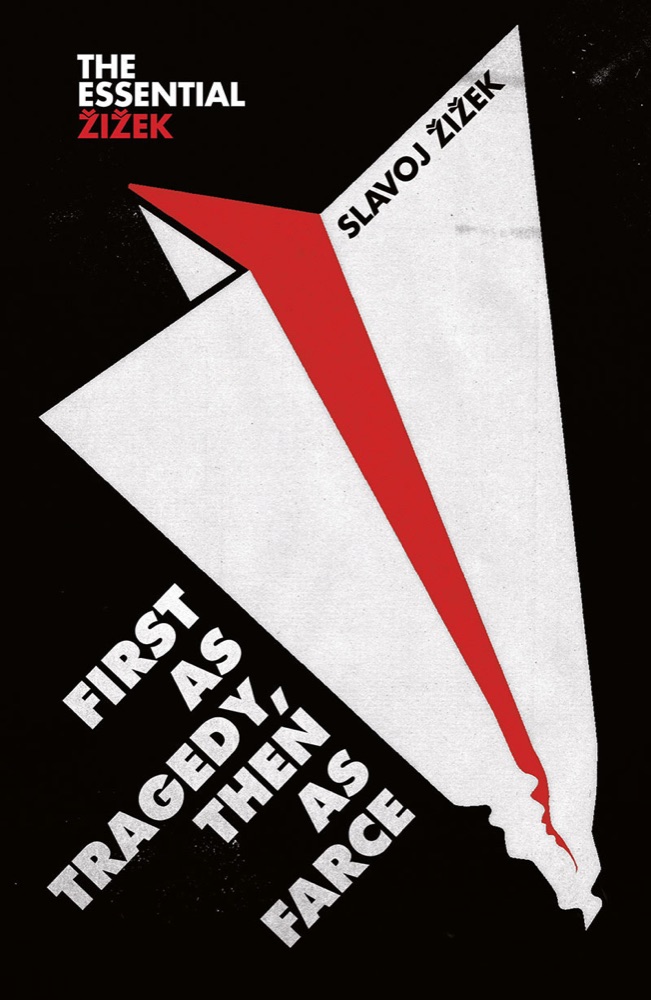
Billions of dollars have been hastily poured into the global banking system in a frantic attempt at financial stabilization. So why has it not been possible to bring the same forces to bear in addressing world poverty and environmental crisis?In this take-no-prisoners analysis, Slavoj Žižek frames the moral failures of the modern world in terms of the epoch-making events of the first decade of this century. What he finds is the old one-two punch of history: the jab of tragedy, the right hook of farce. In the attacks of 9/11 and the global credit crunch, liberalism dies twice: as a political doctrine and as an economic theory.First as Tragedy, Then as Farce is a call for the Left to reinvent itself in the light of our desperate historical situation. The time for liberal, moralistic blackmail is over.
Book details
- First published
- 2009
- Author
- Slavoj Žižek
- Genre
- Philosophy
- Goodreads rating
- 3.78 (5k ratings)
Keep reading
 Ill Fares the Land
 The Coming Insurrection
 The View From Flyover Country: Essays by Sarah Kendzior
 The Shock Doctrine: The Rise of Disaster Capitalism
 Why Marx Was Right
 The Road to Serfdom
 Capitalism, Socialism and Democracy
 Human Action: A Treatise on Economics
 Talking to My Daughter About the Economy: or, How Capitalism Works—and How It Fails
 Capitalist Realism: Is There No Alternative?
 Occupy
 Endgame, Vol. 1: The Problem of Civilization
 The Utopia of Rules: On Technology, Stupidity, and the Secret Joys of Bureaucracy
 Chomsky On Anarchism
 Death of the Liberal Class
 America: The Farewell Tour
 Empire of Illusion: The End of Literacy and the Triumph of Spectacle
 Life at the Bottom: The Worldview That Makes the Underclass
 Behold a Pale Horse
 Brave New World Revisited
 The Strange Death of Europe: Immigration, Identity, Islam
 Walden Two
 Brave New World / Brave New World Revisited
 The Machiavellians: Defenders of Freedom
 The Evolution of Everything: How New Ideas Emerge
 Power Systems: Conversations on Global Democratic Uprisings and the New Challenges to U.S. Empire
 What's Wrong with the World
 Twilight of Democracy: The Seductive Lure of Authoritarianism
 Liberalism: The Classical Tradition
 The Great Transformation: The Political and Economic Origins of Our Time
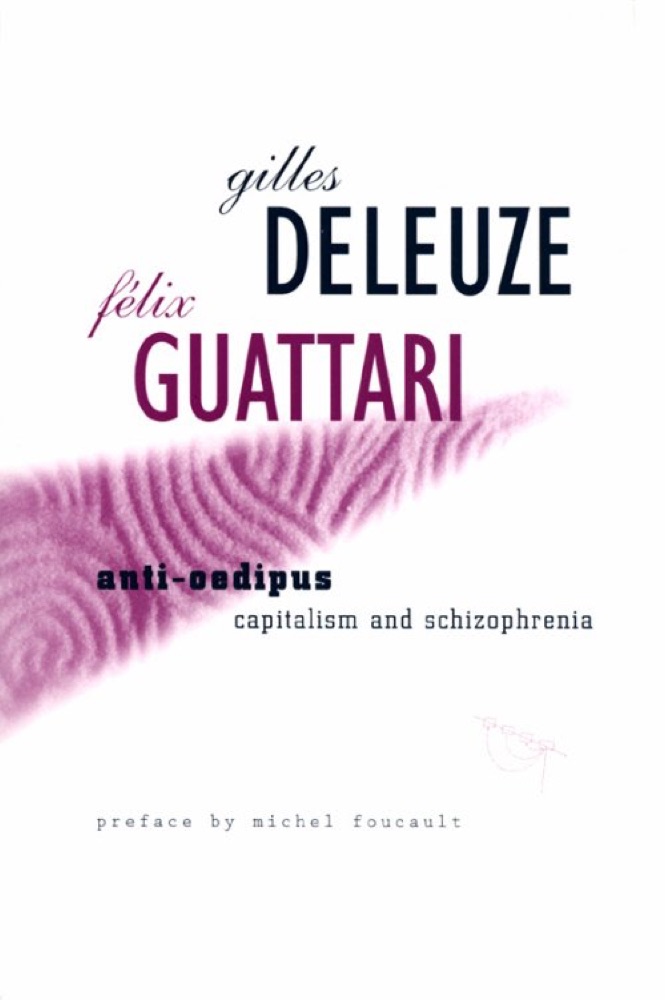 Anti-Oedipus: Capitalism and Schizophrenia
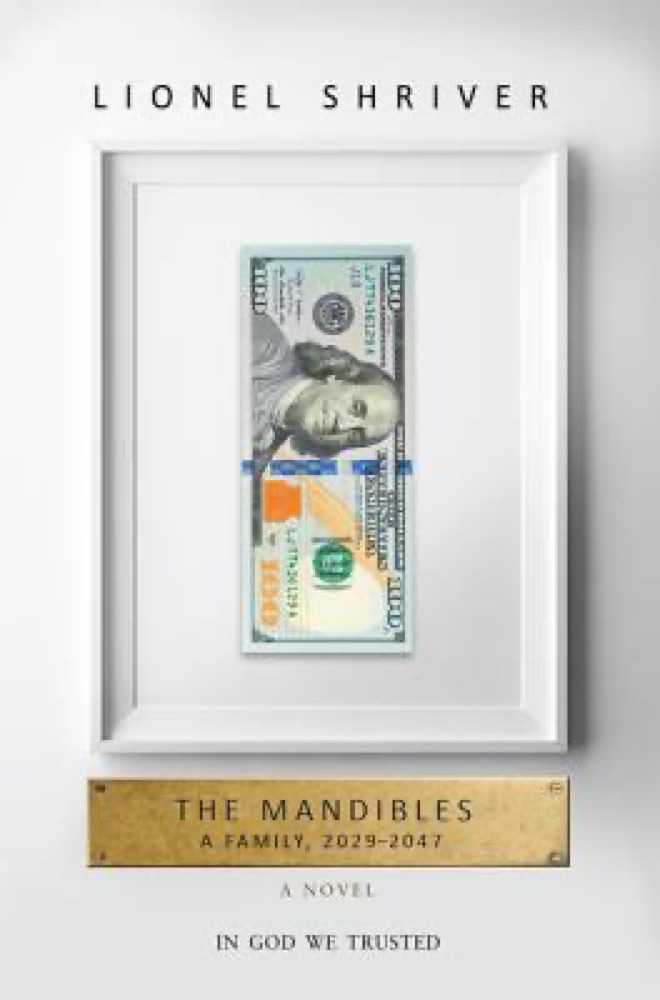 The Mandibles: A Family, 2029–2047
 In Praise of Idleness and Other Essays
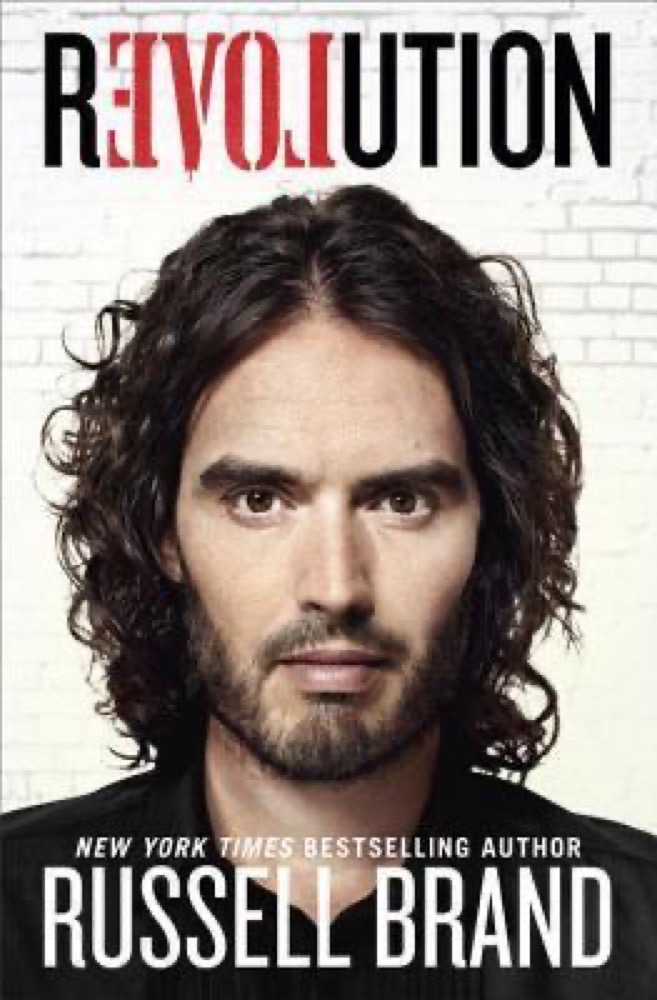 Revolution
 Reflections on the Revolution in France
 You Can't Be Neutral on a Moving Train: A Personal History of Our Times
 What's Our Problem?: A Self-Help Book for Societies
 Conspirators' Hierarchy: The Story of the Committee of 300
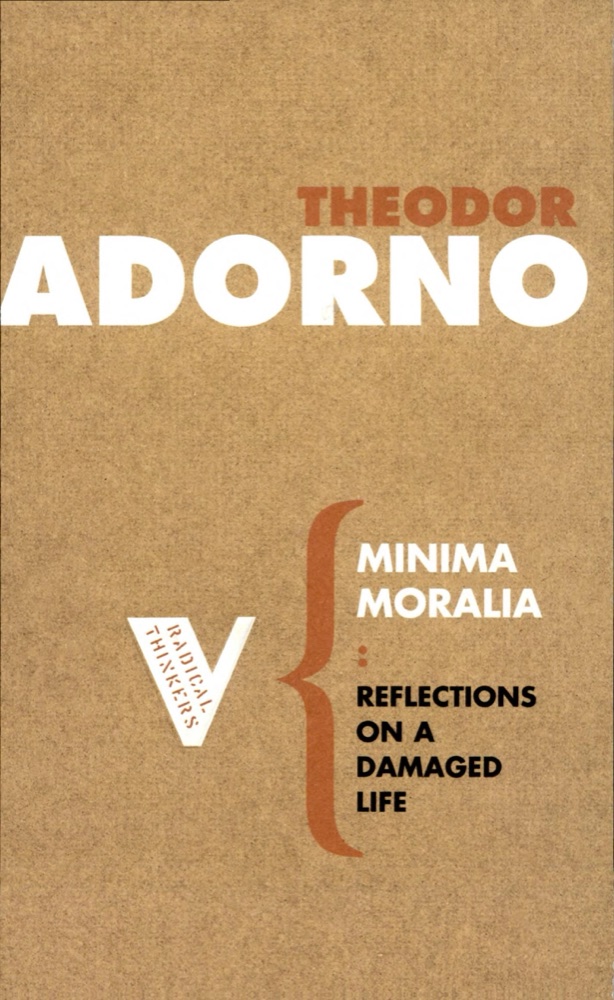 Minima Moralia: Reflections on a Damaged Life
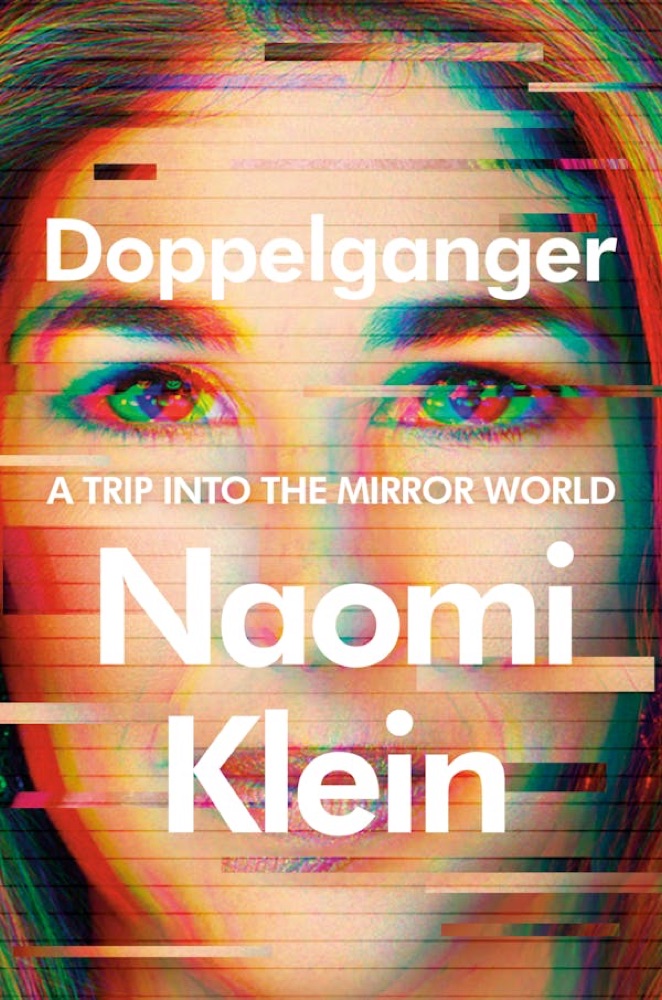 Doppelganger: A Trip into the Mirror World
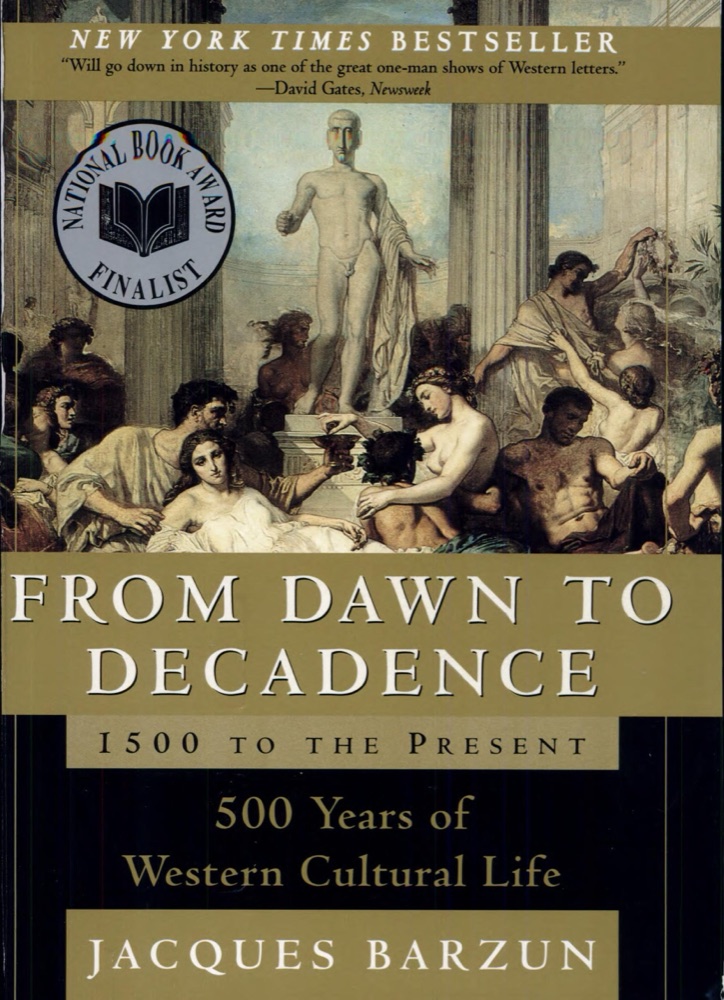 From Dawn to Decadence: 500 Years of Western Cultural Life, 1500 to the Present
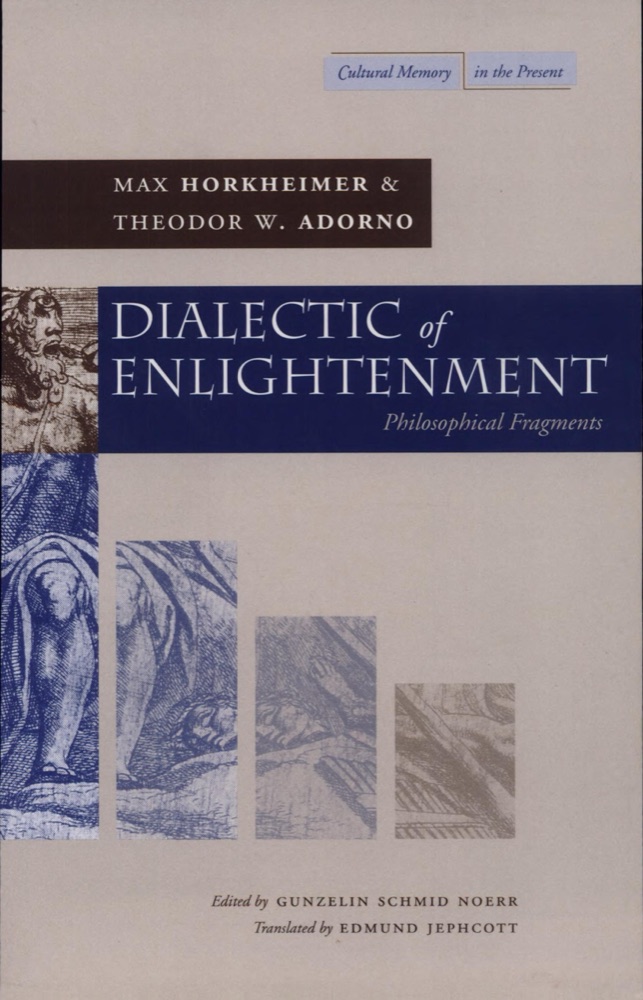 Dialectic of Enlightenment: Philosophical Fragments
 Rules for Radicals: A Pragmatic Primer for Realistic Radicals
 The Audacity of Hope: Thoughts on Reclaiming the American Dream
 Civil Disobedience and Other Essays
 The Dosadi Experiment
 On Tyranny: Twenty Lessons from the Twentieth Century
 The Ministry for the Future
 Debt: The First 5,000 Years
 The Iron Heel
 New York 2140
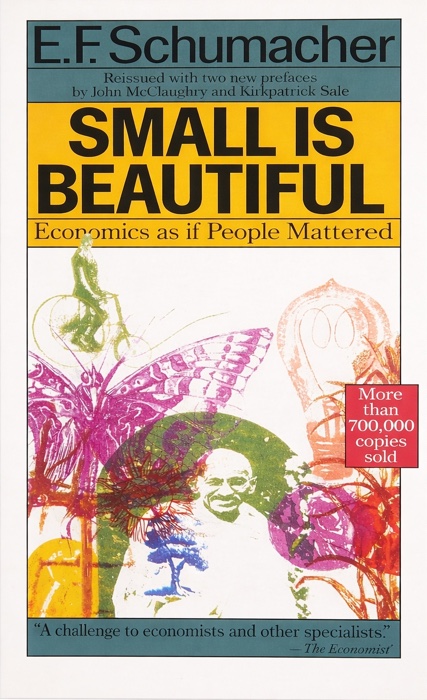 Small Is Beautiful: Economics as if People Mattered
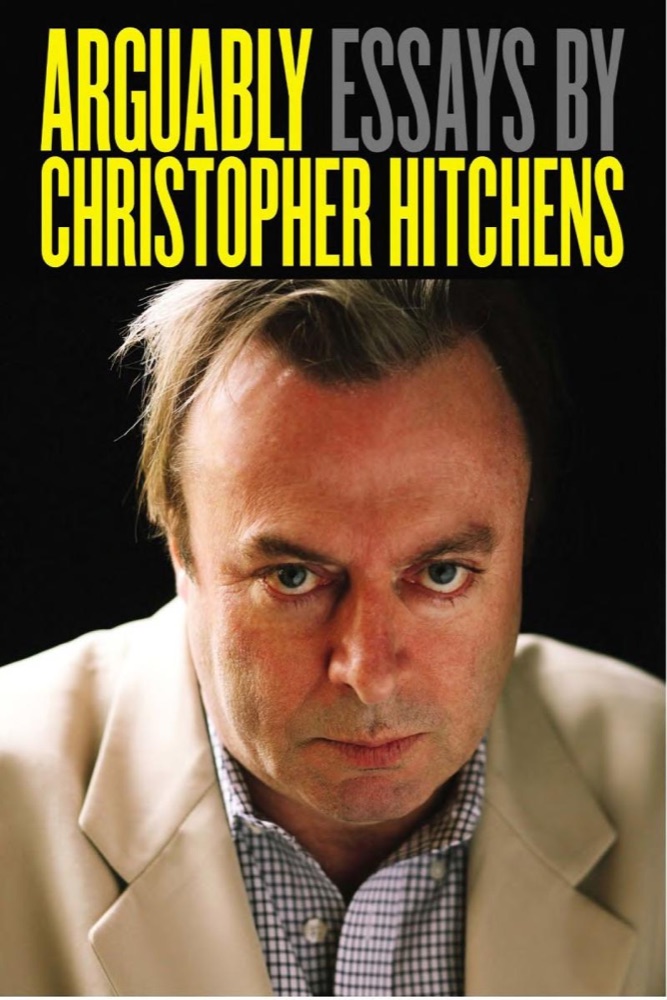 Arguably: Selected Essays
 The Accursed Share: An Essay on General Economy, Volume I: Consumption
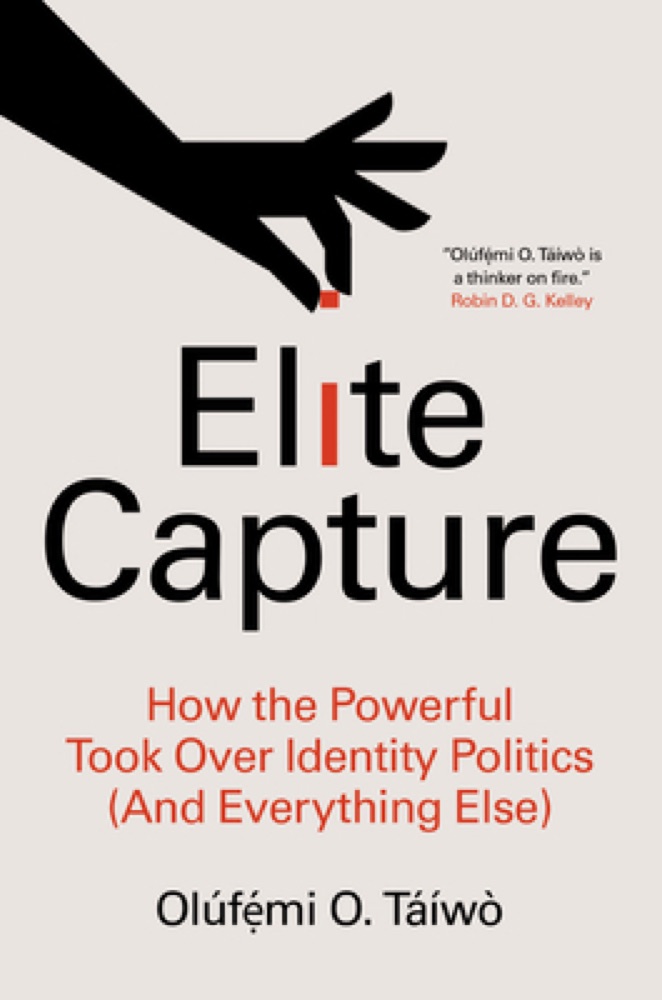 Elite Capture: How the Powerful Took Over Identity Politics
 Collapse: How Societies Choose to Fail or Succeed
 One-Dimensional Man: Studies in the Ideology of Advanced Industrial Society
 Let Us Dream: The Path to a Better Future
 Vulture Capitalism: Corporate Crimes, Backdoor Bailouts, and the Death of Freedom
 The Soul of Man Under Socialism