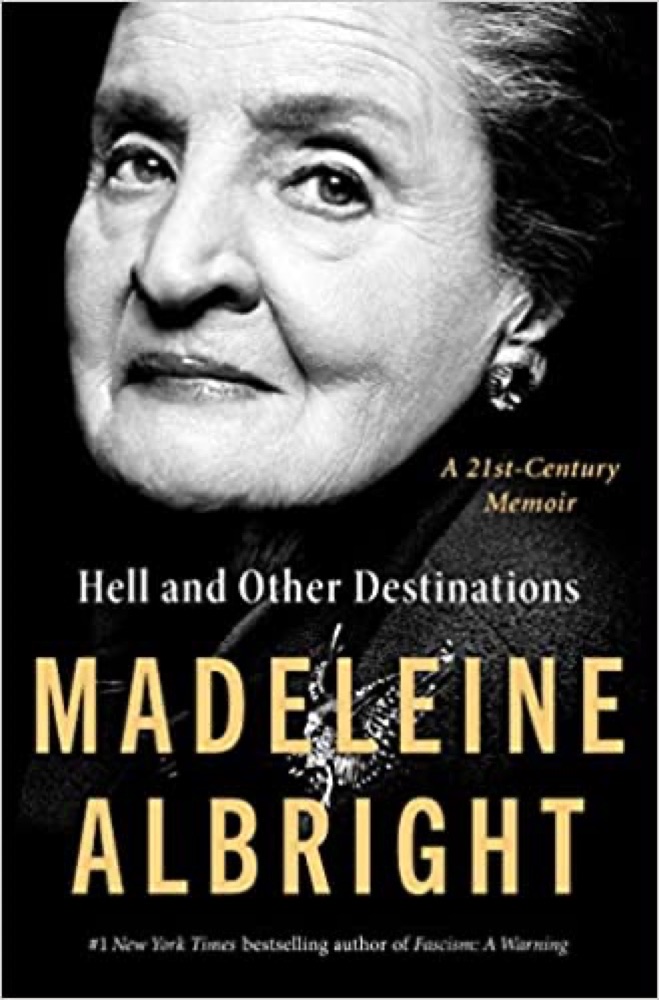
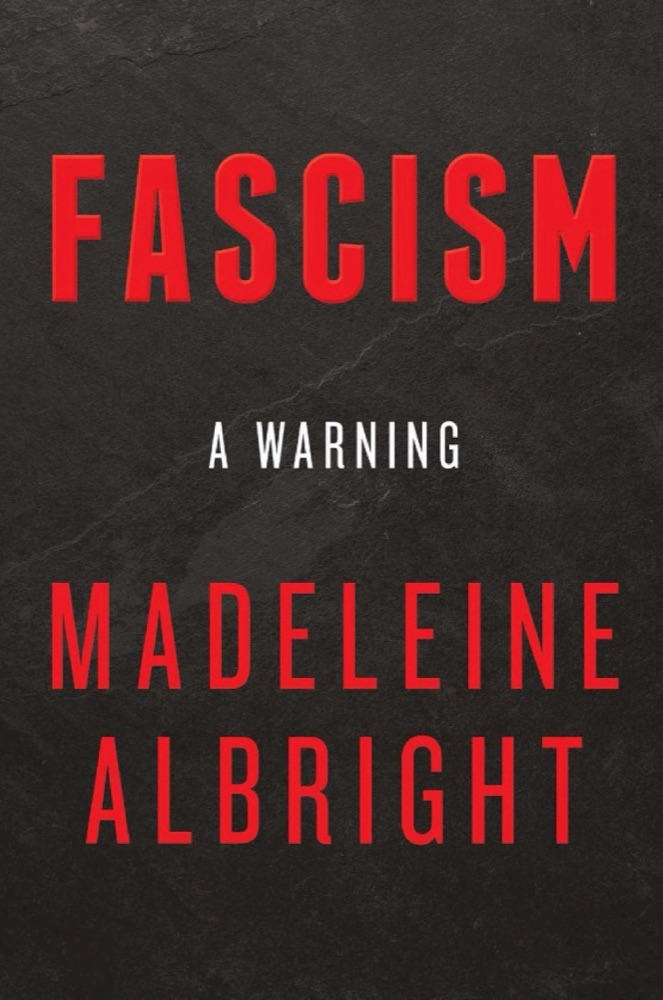
 Fascism: A Warning
Quotes from the Book
EVERYONE WHO CAN should write a memoir, whether for publication or just to deposit in a drawer or beam to the cloud. There is drama in every life. Fame is irrelevant to one’s worth and can sometimes be an obstacle to an appropriate appreciation of others. Further, the effort to reflect on our opportunities and choices is, for all of us, a challenge worth attempting.
6
Because I have no interest in death, I feel that death should have no interest in me.
4
Until I am carried out, I will carry on.
3
Though I had never written a memoir, I was confident that given enough time, I could do a serviceable job. Not elegant, but blunt, informative and funnier than most readers would expect.
3
How can one be bored in a world where a billion examples of human ingenuity, peculiarity, pigheadedness, and compassion are on regular view?
3
Loved ones who depart leave holes that cannot be patched up. Their absence does not stop us, when something dramatic happens, from wanting to get in touch with them to compare impressions. When a new idea pops into our heads, we would like to share it and see what they think. For a time, the urge to contact lingers, like a reflex awaiting the stimulus to respond.
2
Silence may be golden,” I said, “but it won’t win many arguments. If you have something to say, don’t keep your ideas locked up; unclench your jaws and set those thoughts free. And don’t be afraid to interrupt, because that may be the only way you are going to be heard.
2
When, at a party, a woman (half socialite, half journalist) told me how “brave” she thought I had been for not getting a facelift, I was tempted to comment on the courage she had shown in dealing with the results of hers.
2
I once experimented with meditation, cleared my mind, and immediately remembered a phone call I had to make; that was that.
2
... in any group, someone has to lead, and it might as well be a woman - provided she has done the work necessary to prepare.
1
A commander in chief who tries to circumvent the Constitution should be restrained by the legislature and judiciary.
1
instill enough confidence in the value of collaborative problem solving that participants are eager to nourish that same attribute in others.
1
Good people do good things and bad people do bad things,” I was told, “but for good people to do bad things, that takes religion.
1
Robert Frost: “Now when I am old my teachers are the young.
1
What are a country’s strengths, and where is it vulnerable? Is its political system controlled from the top or driven by pressures from below? Are neighbors friendly or hostile? What is the nation’s self-image? Are the people in charge decisive and visionary, or insecure and unable to see beyond the present?
1
Instead, we prepare for the next jump, then the one after, until after a lifetime of motion is past, we are startled, at least a little, by where we are and by what we have become.
1
Promoters of free institutions, myself included, love to say that liberty is a universal yearning, but so is the wish to eat.
1
A speechmaker’s gravest sin is to leave the listener indifferent. I was determined not to be dull.
1
the description of myself that I like best is that of problem-solver, or doer.
1
While disease is a mugger, age is a cat burglar who steals but a single day each night; and the thief has learned patience.
1
To highlight this point, many months ago I began running around the country proclaiming, “It’s Article One time!” to people who have no clue what I mean. I explain that Article I is where the U.S. Constitution spells out the privileges and obligations of the legislative branch. I argue that—lest it be steamrollered by whoever is in the White House—Congress must reassert itself as a coequal partner in government. How? Lawmakers have the right to hear testimony from executive branch officials, demand information from agencies, investigate cases of wrongdoing for referral to the courts, and evaluate the integrity and competence of persons nominated for positions of trust. They have a duty, as well, to help set the nation’s agenda so that urgent economic, social, and security needs are not lost amid political posturing. Internationally, they have a chance to reassure allies that America will stand with them in moments of stress; they can also set an example for democracies worldwide by collaborating with one another for the common good.
1
The institute is but one program, of modest size, at a single college. It isn’t going to transform civilization or save it. However, by preparing young women for central roles in unraveling the mysteries of tomorrow, it is a contributor of value. That is all we can claim, and it is enough.
1
in my name to train young women for global leadership. Wellesley’s twelfth and thirteenth presidents, Diana Chapman Walsh and Kim Bottomly, embraced the idea and, over several years, helped put the pieces together. In January 2010, I traveled to Massachusetts for the inaugural session. The Albright Institute was founded on the belief that a student doesn’t have to major in international relations to have a global mind-set. By giving young women the chance to work in partnership with peers from a variety of disciplines and countries, we encourage them to see differences of perspective as a strength and even as a tool to help solve complex problems. To that end, we provide an intense course of study over a three-week period between the fall and spring semesters, complemented by summer internships. Of the hundreds of Wellesley juniors and seniors who apply annually, forty are selected. In the first two weeks of each session, we offer classes run by professors, former government officials, nonprofit leaders, and businesspeople. During the final seven days, the fellows work in teams to analyze and make recommendations regarding a thorny international problem. At the end, they present their findings, which we pick apart and discuss.
1
On June 7, after months of wins slightly outweighed by losses, Clinton conceded, arguing that her opponent had proven by his strength and grit that the United States was ready for an African American president. As for women, she told supporters, “Although we weren’t able to shatter that hardest, highest glass ceiling this time, thanks to you, it’s got about eighteen million cracks in it. And the light is shining through like never before, filling us all with the hope and the sure knowledge that the path will be a little easier the next time.” She was right that there would be a next time, wrong that it would be easier.
1
Over the decades, I have given speeches of many types, but commencement addresses (along with remarks at funerals) are the hardest to prepare. At my own graduation, the principal speaker was the secretary of defense, who advised the young ladies of Wellesley to find suitable husbands and raise smart children.
1
For students, the highlight of the term is role-play weekend, when they are asked to assume the identities of ambassadors, cabinet ministers, and White House officials while I am privileged to impersonate the president. Since 2017, however, I have been in denial about the presidency and so, for the purpose of role-play, insist that the chief executive’s name is “Pence.” To provide the proper setting and adequate sustenance for our drama, the classrooms are divided into a combination UN Security Council, White House Situation Room, and food court.
1
Powell, alone among senior officials, raised questions about the wisdom of what was being planned. Interviewed later, he recalled telling Bush: It isn’t just a simple matter of going to Baghdad. I know how to do that. What happens after? You need to understand, if you take out a government, take out a regime, guess who becomes the government and regime responsible for the country? You are. So if you break it, you own it. You need to understand that 28 million Iraqis will be standing there looking at us, and I haven’t heard enough of the planning for that eventuality.
1
Who am I kidding? It’s a wonderful feeling to walk into a shop and see your life story on display, even when customers are striding past it in search of the latest Grisham. My mood lightened further when, just about this time, I was summoned to jury duty. Walking into the cavernous room at the DC courthouse where prospective jurors are made to cool their heels, I sat down next to a young woman. After a moment, she gave me a sidelong glance, as strangers in such a situation will do. I peered at the volume she was holding in her lap—Madam Secretary. The young woman did a double take, our eyes met, we bumped fists, and I yearned on the spot to adopt her.
1
Much has been made of the so-called imposter syndrome. This refers to the feeling that one is not qualified for the position one occupies and is, therefore, essentially a fraud whose inadequacies may be exposed at any moment. The syndrome was originally thought to be a characteristic of stressed-out females, but is now considered more a feeling than a condition and something that many people of both genders experience. I call it “being nervous.” Whatever the label, I had always felt well cast as a professor and a diplomat; I had, however, never performed in the role of consultant. Thirty years after graduate school, I was back to being a student.
1
An exciting position replenishes the energy it consumes.
1
Watch on YouTube
About Madeleine K. Albright
We have collected 60 quotes from 2 books by Madeleine K. Albright on BookQuoters.
More about the author →More by Madeleine K. Albright
Fascism: A Warning
About the book
In this revealing, funny, and inspiring memoir, seven-time New York Times bestselling author and former Secretary of State Madeleine Albright—among the world’s most admired and tireless public servants—reflects on the challenge of continuing one’s career far beyond the normal age of retirement.
In 2001, when Madeleine Albright was leaving office as America’s first female secretary of state, interviewers asked her how she wished to be remembered. “I don’t want to be remembered,” she answered. “I am still here and have much more I intend to do. As difficult as it might seem, I want every stage of my life to be more exciting than the last.”
In that time of transition, the former Secretary considered the possibilities: she could write, teach, travel, give speeches, start a business, fight for democracy, help to empower women, campaign for favored political candidates, spend more time w
Book details
- First published
- 2020
- Author
- Madeleine K. Albright
- Genre
- Nonfiction
- Goodreads rating
- 4.03 (4k ratings)
The buzz
- NPRReview in NPRprofessional review (via Book Marks)
- NytiReview in Nytiprofessional review (via Book Marks)
- Kirkus ReviewsReview in Kirkus Reviewsprofessional review (via Book Marks)
- Publishers WeeklyReview in Publishers Weeklyprofessional review (via Book Marks)
- LibraryjournalReview in Libraryjournalprofessional review (via Book Marks)
- BooklistReview in Booklistprofessional review (via Book Marks)
Keep reading
 A Promised Land
 The Autobiography of Eleanor Roosevelt
 Shortest Way Home: One Mayor's Challenge and a Model for America's Future
 Table for Two
 My Own Words
 Becoming
 My Beloved World
 Decision Points
 Who Thought This Was a Good Idea?: And Other Questions You Should Have Answers to When You Work in the White House
 My Name Is Barbra
 Make Trouble: Standing Up, Speaking Out, and Finding the Courage to Lead
 Independent Study
 My Life on the Road
 Crossing to Safety
 What Happened
 The Tropic of Serpents
 No Time To Spare: Thinking About What Matters
 A Song Flung Up to Heaven
 Becoming Madam Secretary
 A Higher Loyalty: Truth, Lies, and Leadership
 The Blue Sweater: Bridging the Gap Between Rich and Poor in an Interconnected World
 Elizabeth Finch
 Rules of Civility
 Save Me the Plums: My Gourmet Memoir
 Riding the Elephant: A Memoir of Altercations, Humiliations, Hallucinations, and Observations
 Promises to Keep: On Life and Politics
 Asymmetry
 In the Light of What We Know
 The Woman Who Died a Lot
 It Worked for Me: In Life and Leadership
 Open City
 Essays of E.B. White
 Fifth Business
 Varina
 The Bourne Identity
 Lead from the Outside: How to Build Your Future and Make Real Change
 Life Itself
 The Downstairs Girl
 The Fall of Babel
 Out of Oz
 The Truths We Hold: An American Journey
 The Rebel Angels
 Knife: Meditations After an Attempted Murder
 Joan Is Okay
 An Absolutely Remarkable Thing
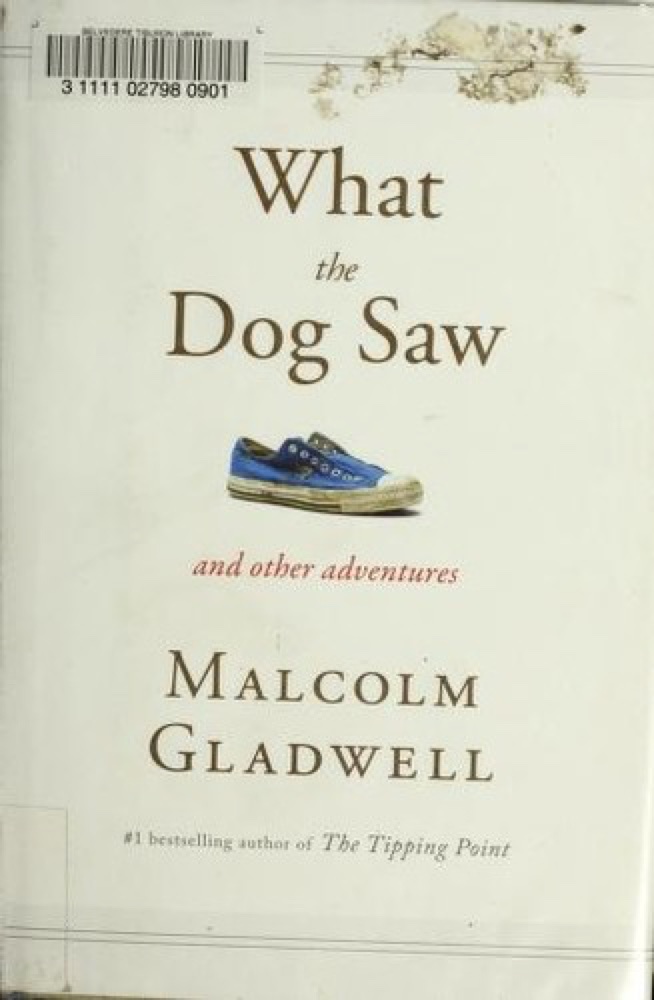 What the Dog Saw and Other Adventures
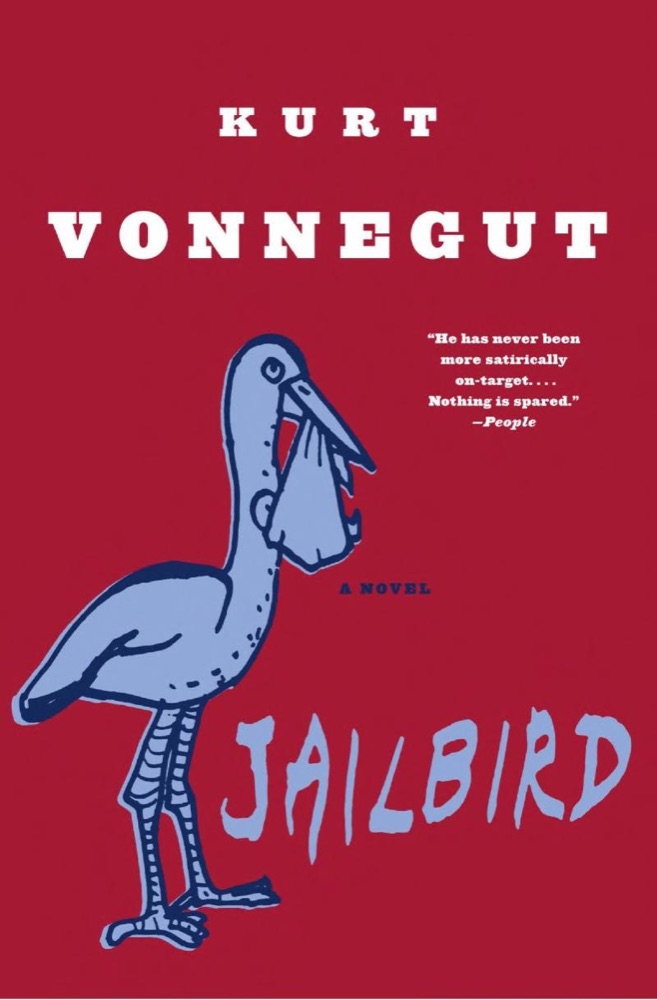 Jailbird
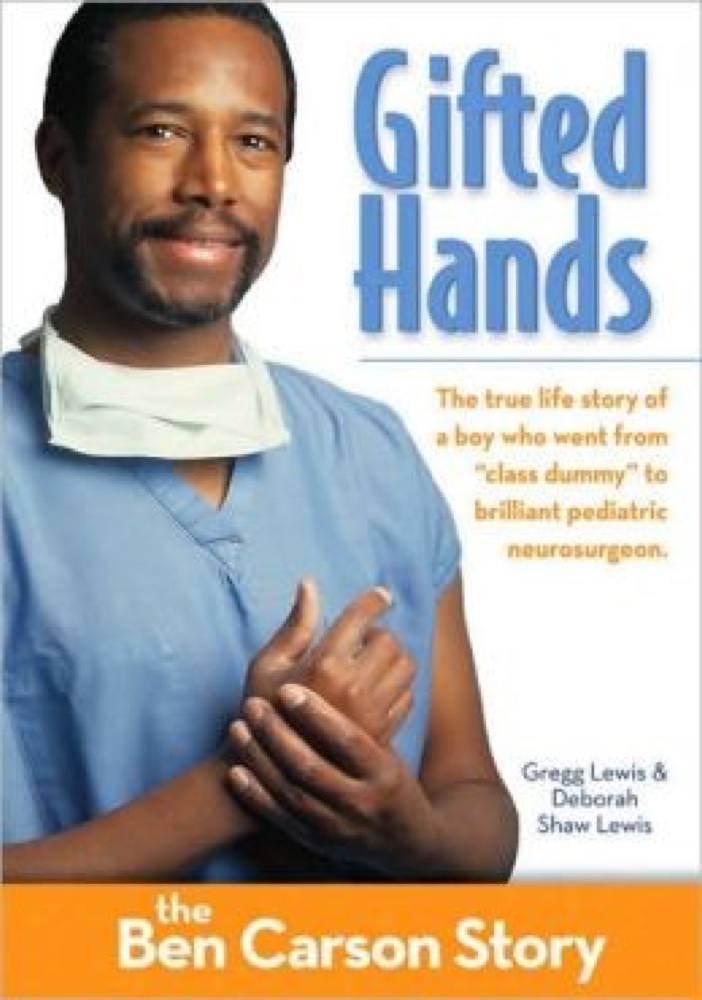 Gifted Hands: The Ben Carson Story
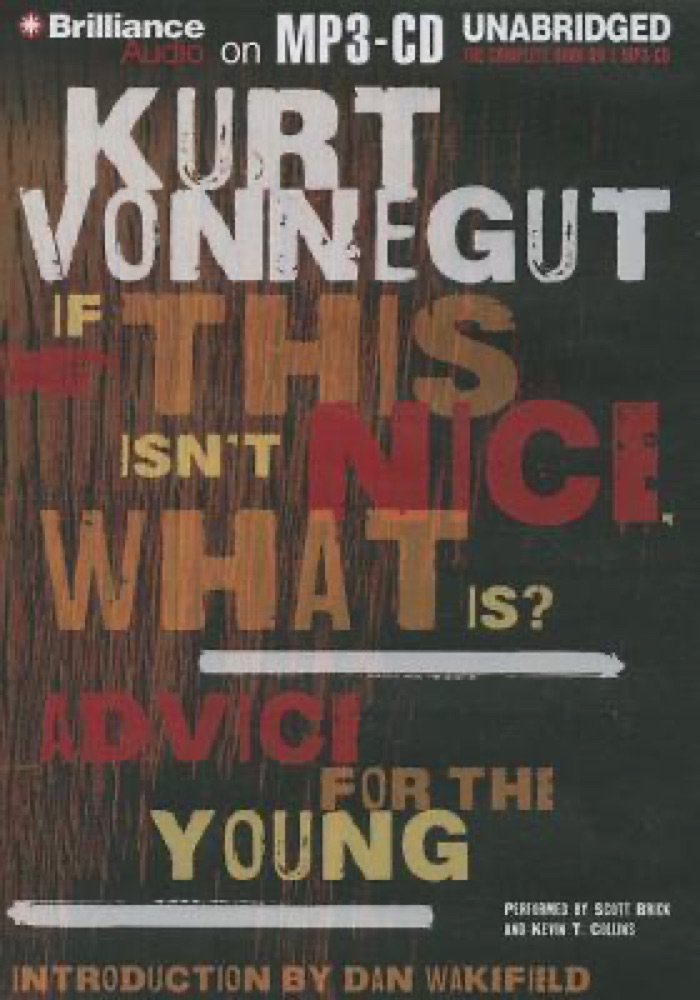 If This Isn't Nice, What Is?: Advice for the Young
 The Folded Clock: A Diary
 You Learn by Living: Eleven Keys for a More Fulfilling Life
 The Testaments
 Familiaris
 The Hour I First Believed
 Prelude to Foundation
 What the Dead Know: Learning About Life as a New York City Death Investigator
 Wide Awake
 Old Babes in the Wood: Stories
 Slouching Towards Bethlehem