
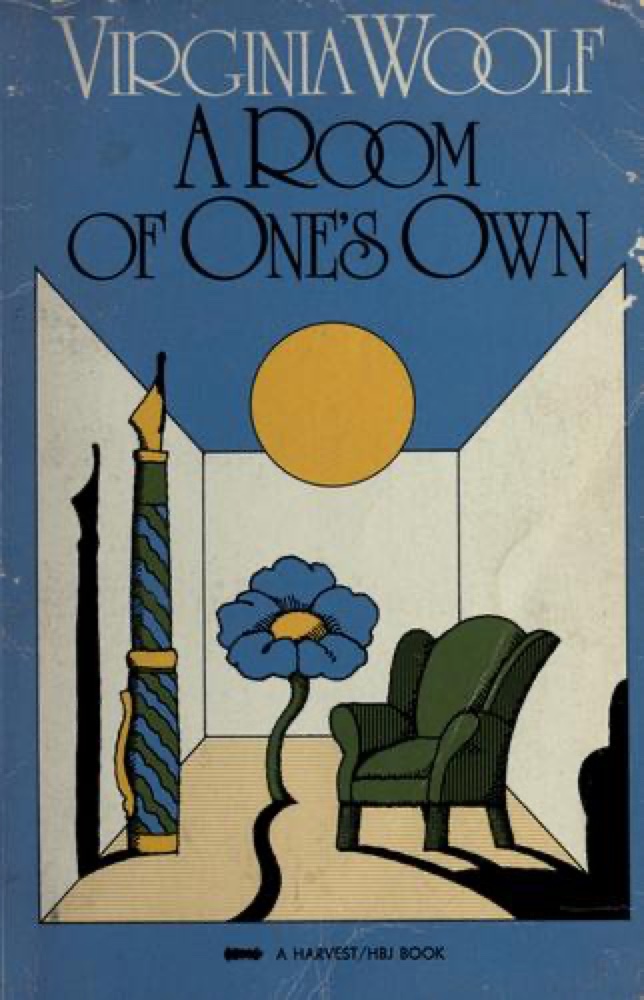
 A Room of One's Own
Quotes from the Book
Wait for the dust of reading to settle; for the conflict and the questioning to die down; walk, talk, pull the dead petals from a rose, or fall asleep. Then suddenly without our willing it, for it is thus that Nature undertakes these transitions, the book will return, but differently. It will float to the top of the mind as a whole.
8
The only advise, indeed, that one person can give another about reading is to take no advice, to follow your own instincts, to use your own reason, to come to your own conclusions. If this is agreed between us, then I fell at liberty to put forward a few ideas and suggestions because you will not allow them to fatter that independence which is the most important quality that a reader can posses.
6
And that is the time to read poetry . . . when we are almost able to write it.
6
Are they not criminals, books that have wasted our time and sympathy; are they not the most insidious enemies of society, corrupters, defilers, the writers of false books, faked books, books that fill the air with decay and disease?
6
Yet few people ask from books what books can give us. Most commonly we come to books with blurred and divided minds, asking of fiction that it shall be true, of poetry that it shall be false, of biography that it shall be flattering, of history that it shall enforce our own prejudices. If we could banish all such preconceptions when we read, that would be an admirable beginning.
4
I have sometimes dreamt that when the Day of Judgment dawns and the great conquerors and lawyers and statesmen come to receive their rewards- their crowns, their laurels , their names carved indelibly upon imperishable marble-the Almighty will turn to Peter and will say , not without a certain envy when He sees us coming with our books under our arms, ' Look, these need no reward. We have nothing to give them here. They have loved reading.
3
To read a novel is a difficult and complex art. You must be capable not only of great fineness of perception, but of great boldness of imagination if you are going to make use of all that the novelist - the great artist - gives you.
1
Our relations are not towards people, but towards Nature and destiny. Yet different as these worlds are, each is consistent with itself.
1
There they hang in the mind the shapes of the books we have read solidified by the judgments we have passed on them — Robinson Crusoe, Emma, The Return of the Native. Compare the novels with these – even the latest and least of novels has a right to be judged with the best.
1
Ama ne kadar çekici olursa olsun kim bir sona ulaşmak için okur ki? Kendi içlerinde iyi oldukları için sahip olduğumuz meşgaleler, nihai bazı zevkler yok mudur? Ve bu da onlardan biri değil midir? En azından ben Kıyamet Günü ağardığında ve büyük fatihler ve avukatlar ve devlet adamları ödüllerini almaya geldiğinde - taçları, defne taçları, bozulmaz mermer üzerine kalıcı biçimde işlenmiş isimleri - Her Şeye Kadir Olan'ın Petrus'a döneceğini ve bizim kolumuzun altında kitaplarımızla geldiğimizi gördüğünde birazcık imrenerek "Bak, bunların ödüle ihtiyacı yok. Onlara verecek bir şeyimiz yok. Okumayı sevmişler," diyeceğini hayal etmişliğim var.
1
And we have to remind ourselves that it is necessary to approach each writer differently in order to get from him all he can give us. We have to remember that it is one of the qualities of greatness that it brings heaven and earth and human nature into conformity with its own vision. It is by reason of this masterliness of theirs, this uncompromising idiosyncrasy, that great writers often require us to make heroic efforts in order to read them rightly.
The only advice, indeed, that one can give another about reading is to take no advice, to follow your own instincts, to use your own reason, to come to your own conclusions. If this is agreed between us, then I feel at liberty to put forward a few ideas and suggestions because you will not allow them to fetter that independence which is the most important quality that a reader can possess. After all, what laws can be laid down about books? The battle of Waterloo was certainly fought on a certain day; but is Hamlet a better play than Lear? Nobody can say. Each must decide that question for himself. To admit authorities, however heavily furrowed and gowned, into our libraries and let them tell us how and what to read, what value to place upon what we read, is to destroy the spirit of freedom which is the breath of those sanctuaries.
Watch on YouTube
About Virginia Woolf
We have collected 485 quotes from 20 books by Virginia Woolf on BookQuoters.
More about the author →More by Virginia Woolf
All books by Virginia Woolf →
About the book
In 1926 Virginia Woolf wrote an essay entitled, "How Should One Read a Book?" to deliver as a lecture at a private girls' school in Kent, England. In revised form it appears to have been first published in The Yale Review, October, 1926. Along with other essays, it first appeared in book form in Woolf's The Common Reader: Second Series in 1932.
Book details
- First published
- 1926
- Author
- Virginia Woolf
- Genre
- Nonfiction
- Goodreads rating
- 4.03 (2k ratings)
Keep reading
 Lectures on Literature
 An Experiment in Criticism
 How to Read a Book: The Classic Guide to Intelligent Reading
 The City of Dreaming Books
 The View from the Cheap Seats: Selected Nonfiction
 How to Talk About Books You Haven't Read
 How to Read Literature
 The Wave in the Mind: Talks and Essays on the Writer, the Reader and the Imagination
 Reading Like a Writer: A Guide for People Who Love Books and for Those Who Want to Write Them
 What We See When We Read
 The Year of Reading Dangerously
 Housekeeping vs. the Dirt
 Why We Read: On Bookworms, Libraries, and Just One More Page Before Lights Out
 If on a Winter's Night a Traveler
 The Door-to-Door Bookstore
 A Novel Bookstore
 The Uncommon Reader
 Lit!: A Christian Guide to Reading Books
 Why Read the Classics?
 How Reading Changed My Life
 Aspects of the Novel
 The Book That Wouldn’t Burn
 The Writing Life
 The Haunted Bookshop
 The Common Reader
 My Life in Middlemarch
 Education of a Wandering Man: A Memoir
 Dæmon Voices
 The Language of the Night: Essays on Writing, Science Fiction, and Fantasy
 The Cat Who Saved Books
 How to Read Literature Like a Professor
 Selected Non-Fictions
 Books for Living
 The Book of Form and Emptiness
 How to Read Now
 Mystery and Manners: Occasional Prose
 Howards End Is on the Landing: A Year of Reading from Home
 Reader, Come Home: The Reading Brain in a Digital World
 The Rabbit Back Literature Society
 On Reading Well: Finding the Good Life through Great Books
 I'd Rather Be Reading: The Delights and Dilemmas of the Reading Life
 The Book That Held Her Heart
 Madness, Rack, and Honey: Collected Lectures
 The Last Bookaneer
 Days of Reading
 Monday or Tuesday
 Parnassus on Wheels
 Ex Libris: Confessions of a Common Reader
 Wild Girls
 The Secret, Book & Scone Society
 The Art of the Novel
 In Other Worlds: SF and the Human Imagination
 Negotiating with the Dead: A Writer on Writing
 Poison for Breakfast
 The Abundance
 Becoming a Writer
 Sixpence House: Lost in a Town of Books
 The Thirteenth Tale
 The Archive of the Forgotten
 Novelist as a Vocation