
 Origins: Fourteen Billion Years of Cosmic Evolution
Quotes from the Book
True science literacy is less about what you know and more about how your brain is wired for asking questions.
11
School is not only a place to learn, but a place to learn how to learn.
4
The theory of evolution is not something to “believe in.” Science follows evidence. And when strong evidence supports an idea, the concept of belief, when invoked the way religious people use the word, is unnecessary. In other words, established science is not an ensemble of beliefs, it’s a system of ideas supported by verifiable evidence. You did not ask if I believe in the sunrise. Or if I believe the sky is blue. Or if I believe Earth has a Moon. These are non-controversial truths about the physical world for which the word “believe” has no place. Evolution by natural selection is a non-controversial tenet of modern biology. It’s not controversial among biologists, that is. Among religious fundamentalists, biological evolution does not square with their faith-based belief system, in which they invoke the Bible as an inerrant understanding of the physical world.
2
The greatest casualty may be our growing inability to find words that precisely communicate our feelings and emotions. Why else the need for that burgeoning catalog of emoticons to supplement our written correspondence? A smiley face. A snarky face. A heart. A thumbs-up.
2
At $7.5 million, this represents ten minutes of military spending, out of their $400§ billion annual budget.
2
My life is what I make of it.
2
How about if (...) pious people all lived longer than non-pious people? How about when a plane crashes, only the pious people survive? How about Jesus comes when people say he will come? How about people pray for peace, and then all wars in the world stop permanently? How about good things happen excluesively to good people and bad things happen exclusively to bad people? How about an earthquake strikes Lisbon on All Saints Day, while everyone is in Church, as it did in 175, and it kills only people who are not in Church, rather than the tens of thousands of people who were, as what actually happened that fateful morning. These events would trigger serious (scientific) conversation about the existence of God and how he treats people who worship him versus those who do not.
2
Now think of a professor who faces you from the front of the room; who makes eye contact with the audience; who has invested time and energy thinking about how you think; who pays attention to your attention span; who is aware of what words you know and what words or concepts confuse you; who knows the demographics of the audience—age, gender, nationality, ethnicity, political leanings, cultural leanings, propensity to laugh, to cry; who carries some pop-culture fluency, for easy reference and analogy, but only when teaching the subject can be assisted by such references. That person is not lecturing to you. That person has opened conduits tailored to that audience in that moment, and at that time. That’s communicating.
2
Hope is the challenge of learning about the real world and using our intelligence to change things for the better.
1
As the saying goes, we spend the first years of children’s lives teaching them to talk and walk, and the rest of their lives telling them to shut up and sit down.
1
The Cosmic Perspective reminds us that in space, where there is no air, a flag will not wave. An indication that perhaps flag-waving and space exploration do not mix.
1
There’s nothing like the right telescope in the right hands of the right person at the right time for the right price.
1
2.Of course religion is not the sole source of dogma in the world. There’s political dogma, as well as cultural & ethnic dogma. There’s even, on occasion, scientific dogma. But science contains the methods and tools within itself to ferret it out, so dogma in science doesn’t last long when it arises. Consider also that scientists hardly ever wield power. So when science becomes dogma in a country, it’s usually because a political system that is itself dogma has adopted it. Nazi Germany and communist Lysenko Russia are, perhaps, the best example of this.
1
It’s all you have when you realize you are not entirely in control of outcomes. But without it, how else do we cope with the challenges of life?
1
One objective reality is that our government doesn’t work, not because we have dysfunctional politicians, but because we have dysfunctional voters.
Watch on YouTube
About Neil deGrasse Tyson
We have collected 183 quotes from 7 books by Neil deGrasse Tyson on BookQuoters.
More about the author →More by Neil deGrasse Tyson
Origins: Fourteen Billion Years of Cosmic Evolution
 Astrophysics for People in a Hurry
 Starry Messenger: Cosmic Perspectives on Civilization
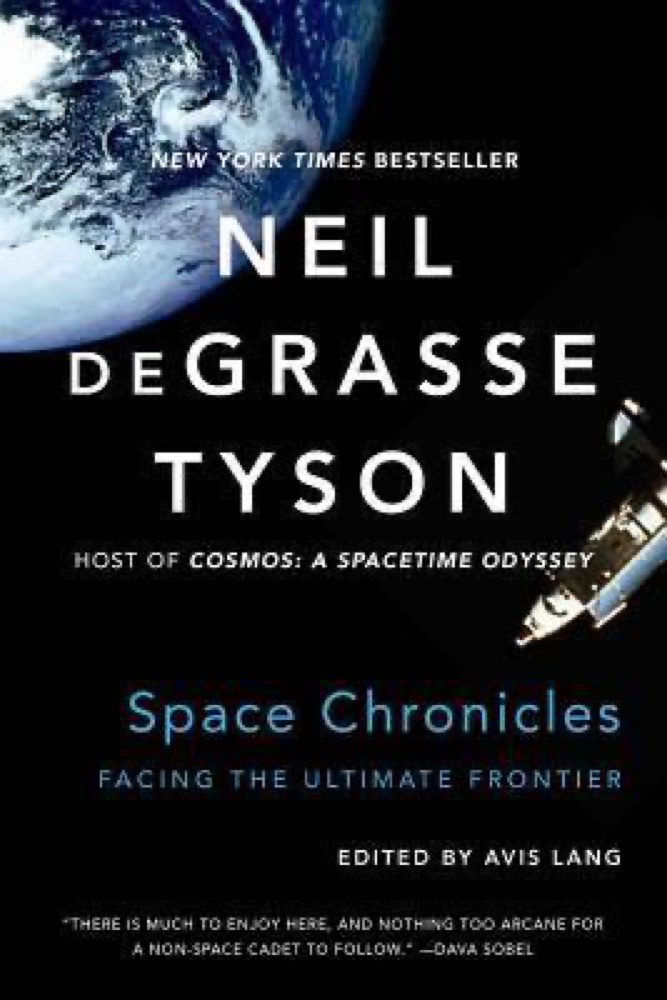 Space Chronicles: Facing the Ultimate Frontier
About the book
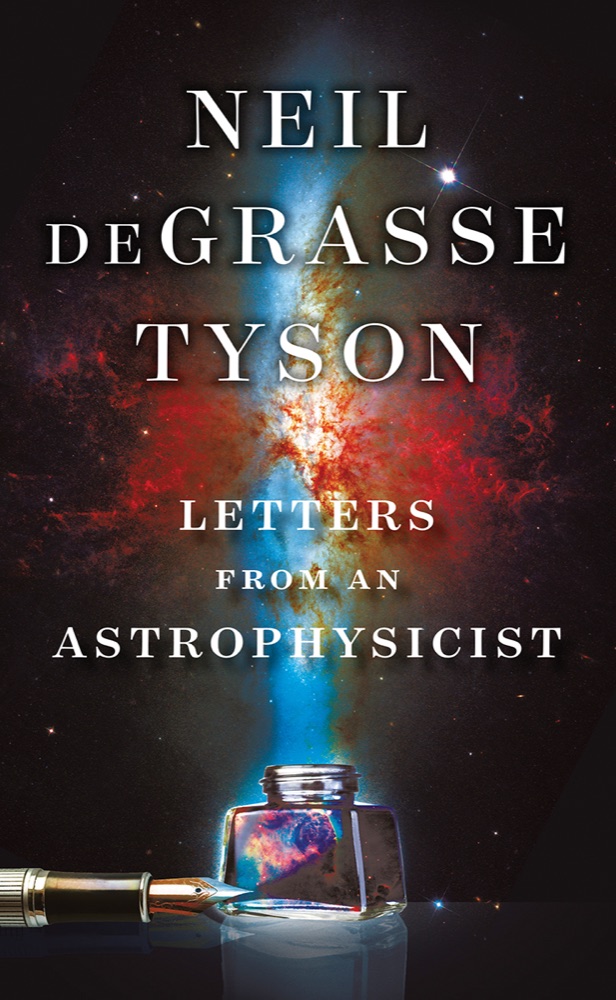
A luminous companion to the phenomenal bestseller Astrophysics for People in a Hurry.
Astrophysicist Neil deGrasse Tyson has attracted one of the world’s largest online followings with his fascinating, widely accessible insights into science and our universe. Now, Tyson invites us to go behind the scenes of his public fame by revealing his correspondence with people across the globe who have sought him out in search of answers. In this hand-picked collection of 101 letters, Tyson draws upon cosmic perspectives to address a vast array of questions about science, faith, philosophy, life, and of course, Pluto. His succinct, opinionated, passionate, and often funny responses reflect his popularity and standing as a leading educator.
Tyson’s 2017 bestseller Astrophysics for People in a Hurry offered more than one million readers an insightful and accessible understanding of the universe
Book details
- First published
- 2019
- Author
- Neil deGrasse Tyson
- Genre
- Nonfiction
- Goodreads rating
- 4.06 (9k ratings)
Keep reading
 A Devil's Chaplain: Reflections on Hope, Lies, Science, and Love
 The Meaning of It All: Thoughts of a Citizen-Scientist
 The Social Animal: The Hidden Sources of Love, Character, and Achievement
Starry Messenger: Cosmic Perspectives on Civilization
The Social Animal: The Hidden Sources of Love, Character, and Achievement
Starry Messenger: Cosmic Perspectives on Civilization
 The Element: How Finding Your Passion Changes Everything
 What Do You Care What Other People Think?
Space Chronicles: Facing the Ultimate Frontier
What Do You Care What Other People Think?
Space Chronicles: Facing the Ultimate Frontier
 The Demon-Haunted World: Science as a Candle in the Dark
 Brief Answers to the Big Questions
 Black Holes and Baby Universes and Other Essays
 The Pleasure of Finding Things Out: The Best Short Works of Richard P. Feynman
 Genome
 What the Dog Saw and Other Adventures
 The Big Picture: On the Origins of Life, Meaning, and the Universe Itself
 Why Fish Don’t Exist: A Story of Loss, Love, and the Hidden Order of Life
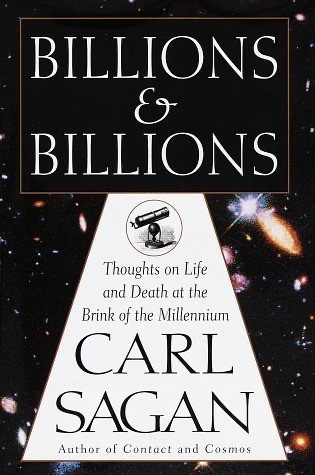 Billions & Billions: Thoughts on Life and Death at the Brink of the Millennium
 Small Wonder
 The Lost World
 The Art of Thinking Clearly
 The Book of Hope: A Survival Guide for Trying Times
 Genesis
 The Fifth Science
 Living with a Wild God: A Nonbeliever's Search for the Truth about Everything
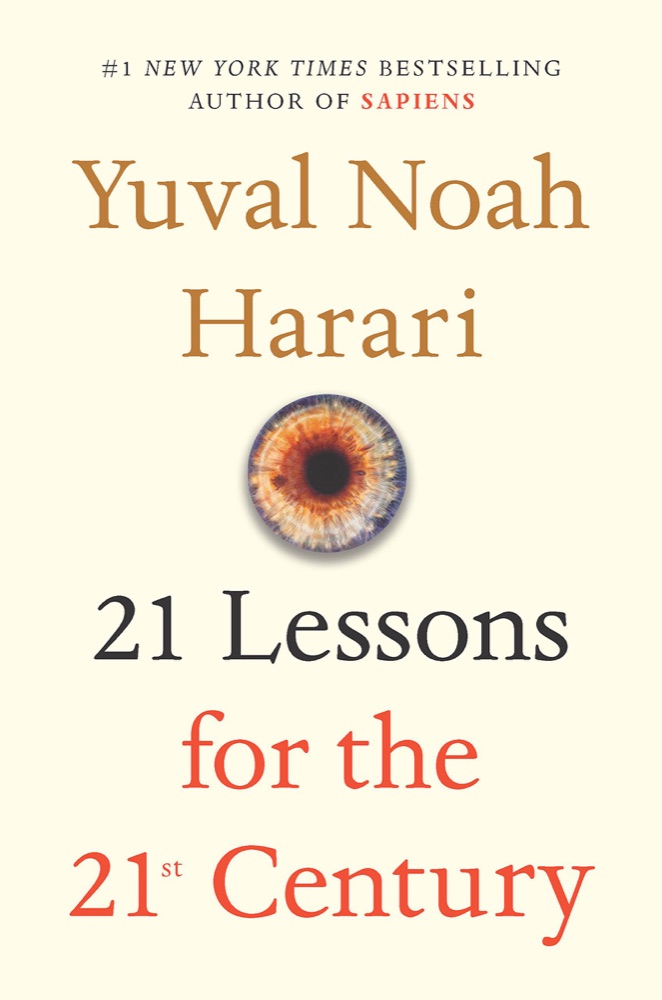 21 Lessons for the 21st Century
 Hocus Pocus
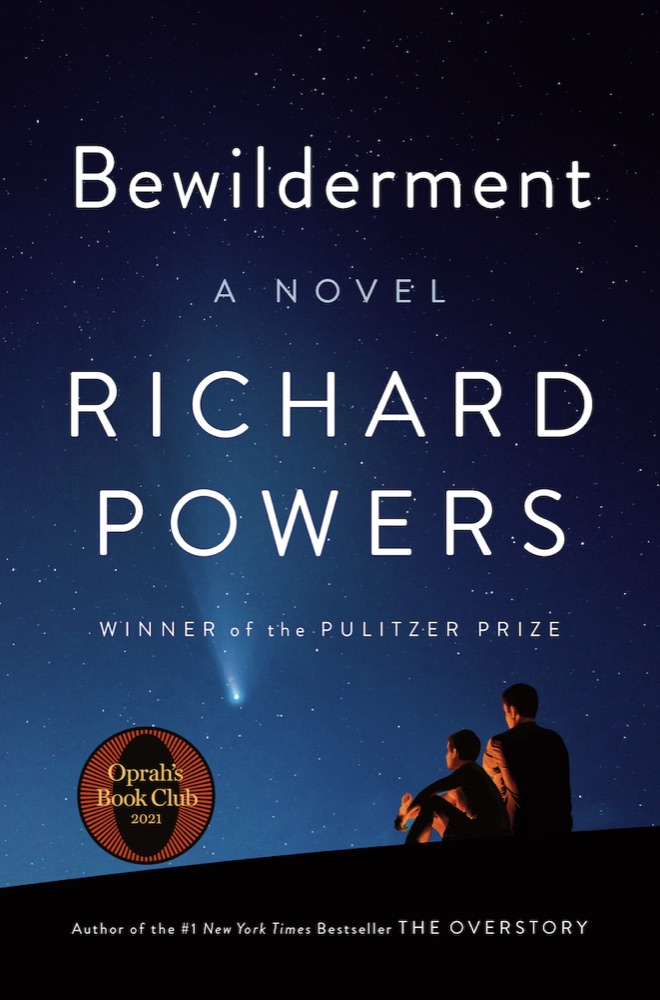 Bewilderment
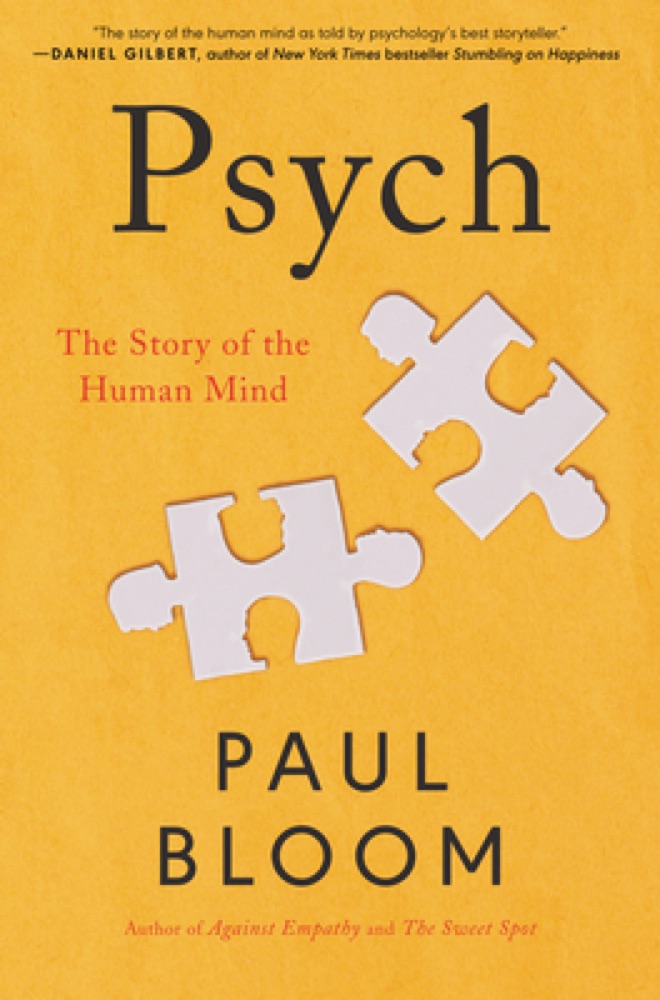 Psych: The Story of the Human Mind
 The Black Swan: The Impact of the Highly Improbable
 The Vanishing American Adult: Our Coming-of-Age Crisis—and How to Rebuild a Culture of Self-Reliance
 Breaking the Spell: Religion as a Natural Phenomenon
 Contact
 The Pythagorean
 No Time To Spare: Thinking About What Matters
 Origin
 In the Light of What We Know
 Even Cowgirls Get the Blues
 Echopraxia
 God's Debris: A Thought Experiment
 Enlightenment Now: The Case for Reason, Science, Humanism, and Progress
 Sophie's World
 My Ishmael
 The Game
 A Circle of Quiet
 When Women Were Dragons
 Independent Study
 Curious: The Desire to Know and Why Your Future Depends On It
 The Salmon of Doubt
 Walden Two
 Think Like a Freak
 To Be Taught, If Fortunate
 Zen and the Art of Motorcycle Maintenance
 A Language Older Than Words
 Death by Black Hole: And Other Cosmic Quandaries
 The 7 Habits of Highly Effective People: Personal Workbook
 Surrender: 40 Songs, One Story
 Rationality: From AI to Zombies
 A Hunter-Gatherer's Guide to the 21st Century: Evolution and the Challenges of Modern Life
 Wampeters, Foma and Granfalloons
 Children of Dune
 Stories of Your Life and Others