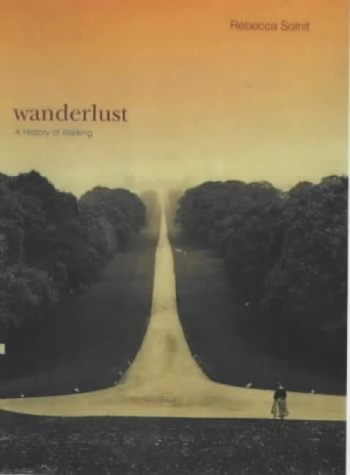

 Hope in the Dark: The Untold History of People Power
Quotes from the Book
Walkers are 'practitioners of the city,' for the city is made to be walked. A city is a language, a repository of possibilities, and walking is the act of speaking that language, of selecting from those possibilities. Just as language limits what can be said, architecture limits where one can walk, but the walker invents other ways to go.
172
For [Jane Austen and the readers of Pride and Prejudice], as for Mr. Darcy, [Elizabeth Bennett's] solitary walks express the independence that literally takes the heroine out of the social sphere of the houses and their inhabitants, into a larger, lonelier world where she is free to think: walking articulates both physical and mental freedom.
124
Walking . . . is how the body measures itself against the earth.
94
The magic of the street is the mingling of the errand and the epiphany.
93
A lone walker is both present and detached, more than an audience but less than a participant. Walking assuages or legitimizes this alienation.
75
A path is a prior interpretation of the best way to traverse a landscape.
64
A labyrinth is a symbolic journey . . . but it is a map we can really walk on, blurring the difference between map and world.
57
Cities have always offered anonymity, variety, and conjunction, qualities best basked in by walking: one does not have to go into the bakery or the fortune-teller's, only to know that one might. A city always contains more than any inhabitant can know, and a great city always makes the unknown and the possible spurs to the imagination.
48
Italian cities have long been held up as ideals, not least by New Yorkers and Londoners enthralled by the ways their architecture gives beauty and meaning to everyday acts.
47
Language is like a road, it cannot be perceived all at once because it unfolds in time, whether heard or read. This narrative or temporal element has made writing and walking resemble each other.
41
Many people nowadays live in a series of interiors...disconnected from each other. On foot everything stays connected, for while walking one occupies the spaces between those interiors in the same way one occupies those interiors. One lives in the whole world rather than in interiors built up against it.
38
Roads are a record of those who have gone before.
37
The multiplication of technologies in the name of efficiency is actually eradicating free time by making it possible to maximize the time and place for production and minimize the unstructured travel time in between…Too, the rhetoric of efficiency around these technologies suggests that what cannot be quantified cannot be valued-that that vast array of pleasures which fall into the category of doing nothing in particular, of woolgathering, cloud-gazing, wandering, window-shopping, are nothing but voids to be filled by something more definite, more production, or faster-paced…I like walking because it is slow, and I suspect that the mind, like the feet, works at about three miles an hour. If this is so, then modern life is moving faster than the speed of thought or thoughtfulness.
31
Perhaps walking is best imagined as an 'indicator species,' to use an ecologist's term. An indicator species signifies the health of an ecosystem, and its endangerment or diminishment can be an early warning sign of systemic trouble. Walking is an indicator species for various kinds of freedom and pleasures: free time, free and alluring space, and unhindered bodies.
29
All gardening is landscape painting,' said Alexander Pope.
28
Thinking is generally thought of as doing nothing in a production-oriented society, and doing nothing is hard to do. It's best done by disguising it as doing something, and the something closest to doing nothing is walking.
27
Musing takes place in a kind of meadowlands of the imagination, a part of the imagination that has not yet been plowed, developed, or put to any immediately practical use. [--] [T]ime spent there is not work time, yet without that time the mind becomes sterile, dull, domesticated. The fight for free space—for wilderness and for public space—must be accompanied by a fight for free time to spend wandering in that space.
27
Suddenly I came out of my thoughts to notice everything around me again-the catkins on the willows, the lapping of the water, the leafy patterns of the shadows across the path. And then myself, walking with the alignment that only comes after miles, the loose diagonal rhythm of arms swinging in synchronization with legs in a body that felt long and stretched out, almost as sinuous as a snake…when you give yourself to places, they give you yourself back; the more one comes to know them, the more one seeds them with the invisible crop of memories and associations that will be waiting for when you come back, while new places offer up new thoughts, new possibilities. Exploring the world is one the best ways of exploring the mind, and walking travels both terrains.
24
The new architecture and urban design of segregation could be called Calvinist: they reflect a desire to live in a world of predestination rather than chance, to strip the world of its wide-open possibilities and replace them with freedom of choice in the marketplace.
24
[In mountaineering, if] we look for private experience rather than public history, even getting to the top becomes an optional narrative rather than the main point, and those who only wander in high places become part of the story.
23
The famous Zen parable about the master for whom, before his studies, mountains were only mountains, but during his studies mountains were no longer mountains, and afterward mountains were again mountains could be interpreted as an allegory about [the perpetual paradox that when one is closest to a destination one is also the farthest).
21
I like walking because it is slow, and I suspect that the mind, like the feet, works at about three miles an hour. If this is so, then modern life is moving faster than the speed of thought or thoughtfulness.
20
To write is to carve a new path through the terrain of the imagination, or to point out new features on a familiar route. To read is to travel through that terrain with the author as a guide-- a guide one might not always agree with or trust, but who can at least be counted on to take one somewhere.
20
Walking shares with making and working that crucial element of engagement of the body and the mind with the world, of knowing the world through the body and the body through the world.
19
Every walker is a guard on patrol to protect the ineffable.
18
...the gym is a kind of wildlife preserve for bodily exertion. A preserve protects species whose habitat is vanishing elsewhere, and the gym (and home gym) accommodates the survival of bodies after the abandonment of the original sites of bodily exertion.
18
...when you give yourself to places, they give you yourself back; the more one comes to know them, the more one seeds them with the invisible crop of memories and associations that will be waiting for you when you come back, while new places offer up new thoughts, new possibilities. Exploring the world is one of the best ways of exploring the mind and walking travels both terrains.
17
In a sense the car has become a prosthetic, and though prosthetics are usually for injured or missing limbs, the auto-prosthetic is for a conceptually impaired body or a body impaired by the creation of a world that is no longer human in scale.
16
A lone peak of high point is a natural focal point in the landscape, something by which both travelers and local orient themselves. In the continuum of landscape, mountains are discontinuity -- culminating in high points, natural barriers, unearthly earth.
16
In great cities, spaces as well as places are designed and built: walking, witnessing, being in public, are as much part of the design and purpose as is being inside to eat, sleep, make shoes or love or music. The word citizen has to do with cities, and the ideal city is organized around citizenship -- around participation in public life.
15
Watch on YouTube
About Rebecca Solnit
We have collected 285 quotes from 10 books by Rebecca Solnit on BookQuoters.
More about the author →More by Rebecca Solnit
Hope in the Dark: The Untold History of People Power
 A Field Guide to Getting Lost
 Men Explain Things to Me
 The Mother of All Questions
About the book
This volume provides a history of walking, exploring the relationship between thinking and walking and between walking and culture. The author argues for the preservation of the time and space in which to walk in an ever more car-dependent and accelerated world.
Book details
- First published
- 2014
- Author
- Rebecca Solnit
- Genre
- Nonfiction
- Goodreads rating
- 3.89 (7k ratings)
Keep reading
 The Old Ways: A Journey on Foot
 Flâneuse: Women Walk the City in Paris, New York, Tokyo, Venice and London
 On Trails: An Exploration
 The Practice of Everyday Life
 Walking
 Flights
 Alone Time: Four Seasons, Four Cities, and the Pleasures of Solitude
A Field Guide to Getting Lost
Alone Time: Four Seasons, Four Cities, and the Pleasures of Solitude
A Field Guide to Getting Lost
 The Journey Home: Some Words in Defense of the American West
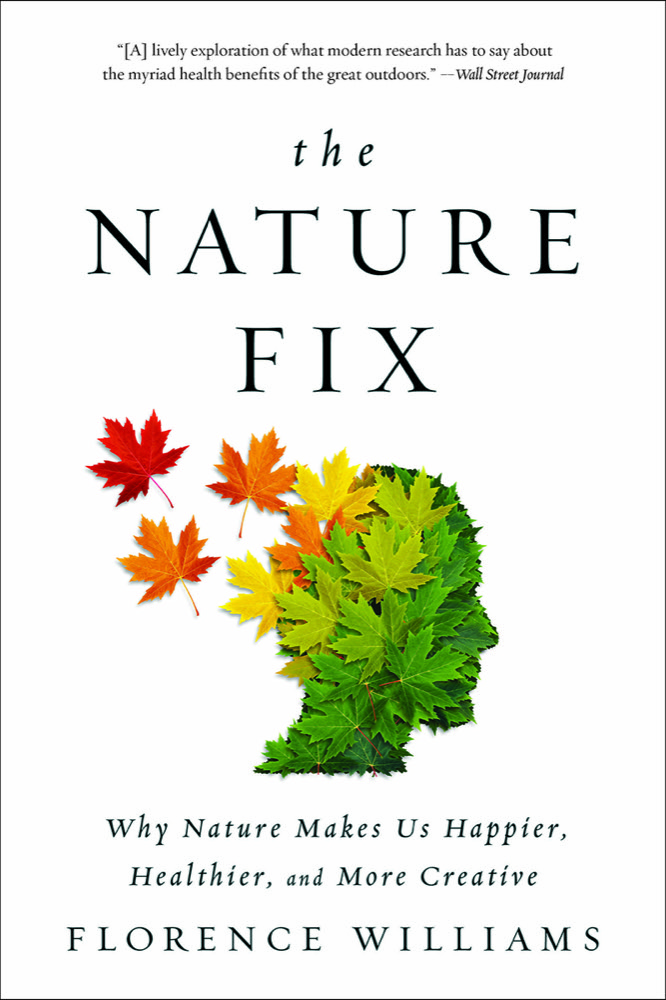 The Nature Fix: Why Nature Makes Us Happier, Healthier, and More Creative
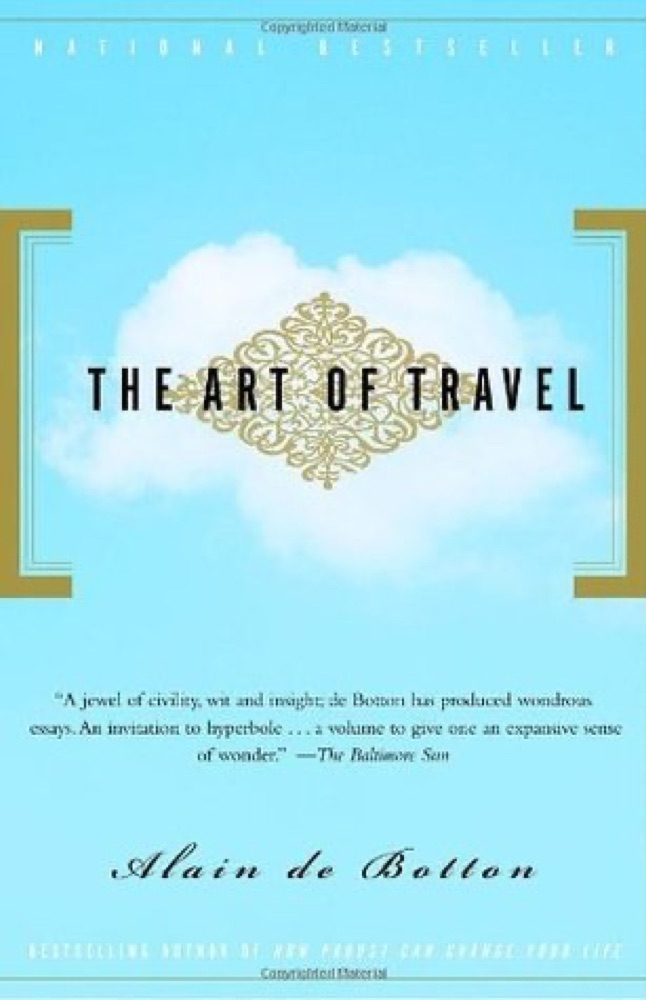 The Art of Travel
 Bicycle Diaries
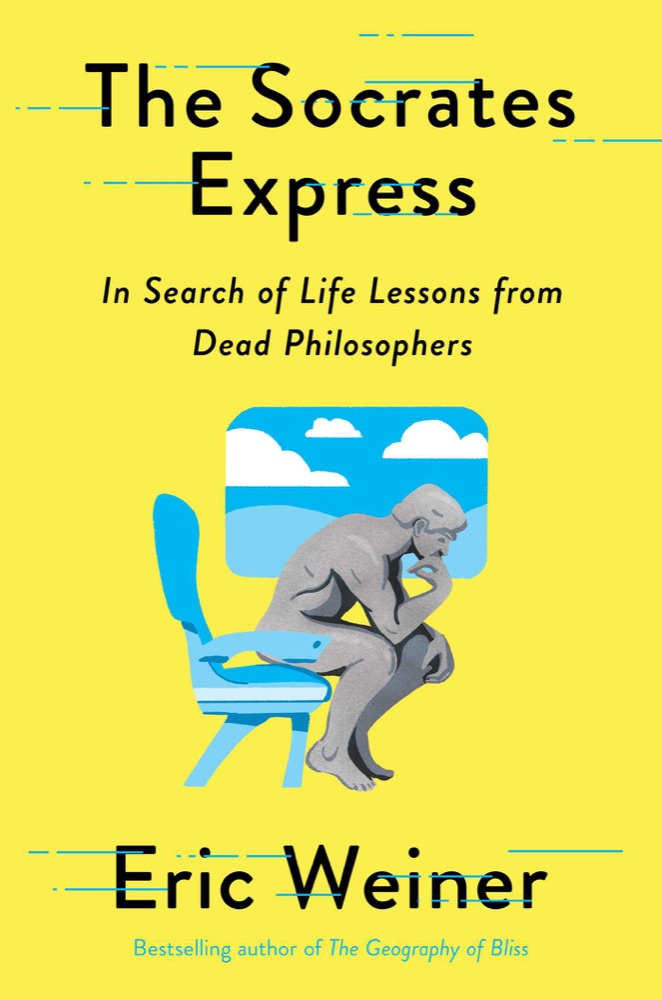 The Socrates Express: In Search of Life Lessons from Dead Philosophers
 Landmarks
 The Wild Places
 The Poetics of Space
 The Philosopher and the Wolf
 The Medium is the Massage
 The Wayfinders: Why Ancient Wisdom Matters in the Modern World
 One Way Street And Other Writings
 Blue Highways
 Invisible Cities
 Silence: In the Age of Noise
 The Songlines
 Illuminations: Essays and Reflections
 Walking: One Step at a Time
 Zen and the Art of Motorcycle Maintenance
 Arctic Dreams
 Destination Truth: Memoirs of a Monster Hunter
 Where the Bluebird Sings to the Lemonade Springs: Living and Writing in the West
 A Joseph Campbell Companion: Reflections on the Art of Living
 The Way of the World
 Understanding Media: The Extensions of Man
 Autumn
 The Abundance
 Drive Your Plow Over the Bones of the Dead
 The Spell of the Sensuous: Perception and Language in a More-Than-Human World
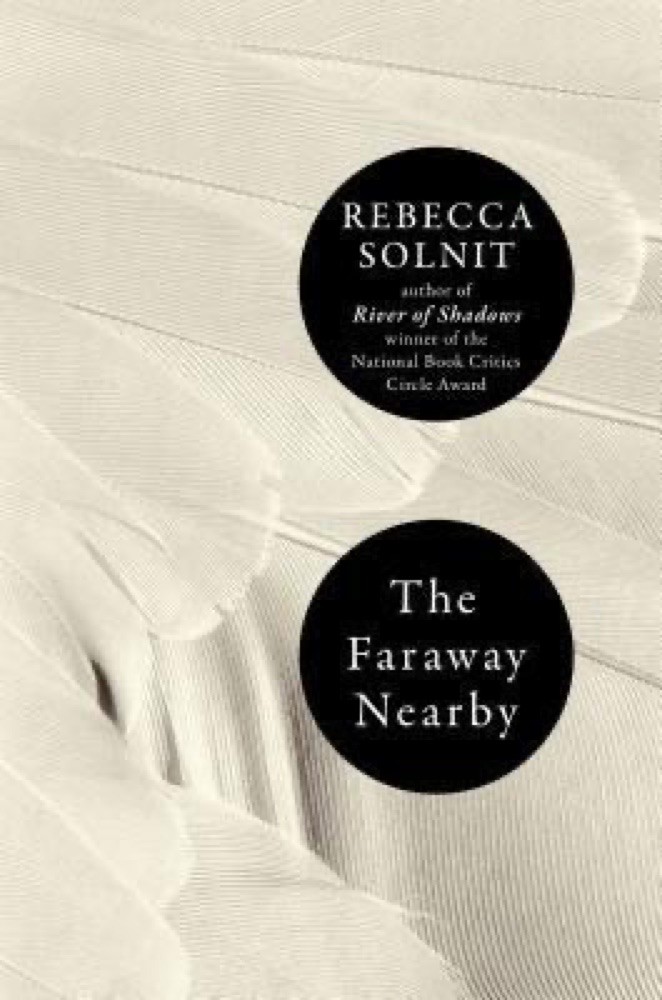 The Faraway Nearby
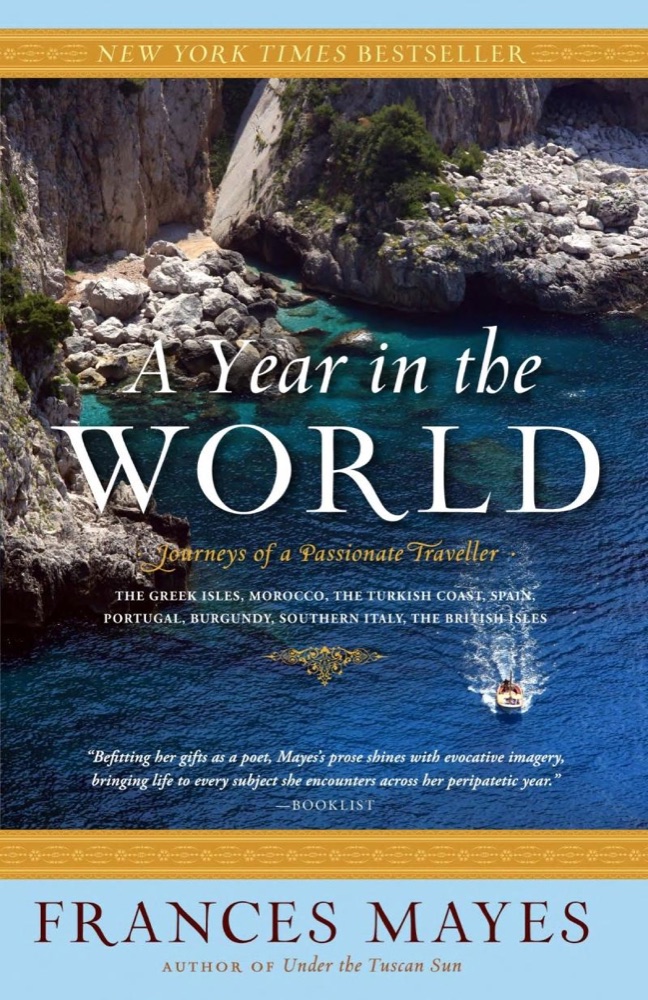 A Year in the World: Journeys of a Passionate Traveller
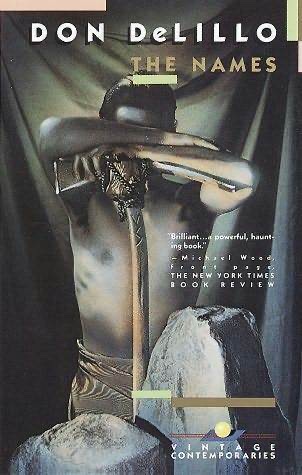 The Names
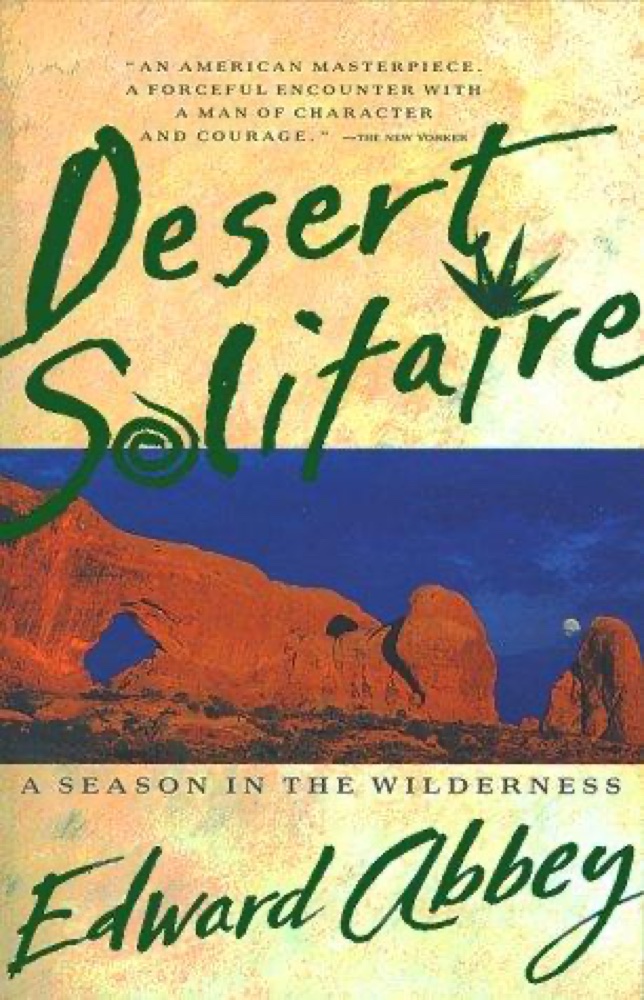 Desert Solitaire
 A Natural History of the Senses
 The Hero's Journey: Joseph Campbell on His Life & Work
 Open City
 By the Sea
 The Arcades Project
 Fugitive Pieces
 Lands of Lost Borders: Out of Bounds on the Silk Road
 The Doors of Perception & Heaven and Hell
 Figuring
 A Sand County Almanac and Sketches Here and There
 Vagabonding: An Uncommon Guide to the Art of Long-Term World Travel
 Always Coming Home
 Happy City: Transforming Our Lives Through Urban Design
 Winter Hours: Prose, Prose Poems, and Poems
 Another Roadside Attraction
 Winter
 Ghost Train to the Eastern Star
 The Way of Zen