
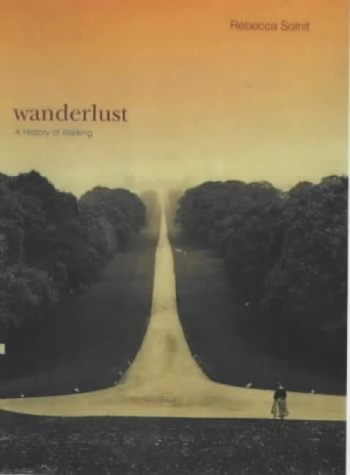
 Wanderlust: A History of Walking
Quotes from the Book
I walk because it confers- or restores- a feeling of placeness...I walk because, somehow, it's like reading. You're privy to these lives and conversations that have nothing to do with yours, but you can eavesdrop on them. Sometimes it's overcrowded; sometimes the voices are too loud. But there is always companionship. You are not alone. You walk in the city side by side with the living and the dead.
10
We all have our own signals we're listening for, or trying not to hear.
9
Walking is mapping with your feet. It helps you piece a city together, connecting up neighborhoods that might otherwise have remained discrete entities, different planets bound to each other, sustained yet remote. I like seeing how in fact they blend into one another, I like noticing the boundaries between them. Walking helps me feel at home.
8
And sometimes we hold on with both hands to things we really want to release. This is a hard thing to admit. How do we know what to keep, and what is just an old idea we had about ourselves?
4
Environments inhabit us,' Varda said. These places that we take into ourselves and make part of us, so that we made of all the places we've loved, or of all the places where we've changed. We pick up bits and pieces from each of them, and hold them all in ourselves.
4
We want to make choices, and have some agency in getting lost, and getting found. We want to challenge the city, and decipher it, and flourish within its parameters.
4
Walking it mapping with your feet. It helps you piece a city together, connecting up neighborhoods that might otherwise have remained discrete entities, different planets bound to each other, sustained yet remote. I like seeing how in fact they blend into one another, I like noticing the boundaries between them. Walking helps me feel at home.
3
We get to know our cities on hoot, and when we leave, the topography shifts. We're no longer as surefooted. But maybe that's a good thing. It's just a question of looking, and of not hoping to see something else when we do. Maybe it's good to keep some distance from the things we know well, to always be slightly out of sync with them, not to pretend mastery. Beneath the cities we don't recognize are stacked all the cities we do.
2
What does our neighborhood say about us? What is the value of a neighborhood? Mine is a mirror of my past choices. Pick your path and see where it goes. Pick a subject and see where it leads. Most assuredly you won't be able to predict anything along the way.
2
We need the mass movements, we need people to get together and march, or even just stand in one place, not only for those in power to see what the people want, but for people who are decidedly not empowered to see you out there, and to shift, just a little bit, the pebbles of thought in their minds. The protest is not only to show the government that you disagree, but to show your fellow citizens- even the smallest ones- that official policies can and should be disagreed with. To provoke a change. To disrupt easy assumptions. You show yourself. You toss in your chips. You walk.
2
I walk because, somehow, it’s like reading. You’re privy to these lives and conversations that have nothing to do with yours, but you can eavesdrop on them. Sometimes it’s overcrowded; sometimes the voices are too loud. But there is always companionship. You are not alone. You walk in the city side by side with the living and the dead.
1
From Teheran to New York, from Melbourne to Mumbai, a woman still can't walk in the city the way a man can.
1
Slow down: it’s the only way to guarantee your immortality.
1
I walk because it confers — or restores — a feeling of placeness. The geographer Yi-Fu Tuan says a space becomes a place when through movement we invest it with meaning, when we see it as something to be perceived, apprehended, experienced.
1
The streets of Paris had a way of making me stop in my tracks, my heart suspended. They seemed saturated with presence, even if there was no one there but me. These were places where something could happen, or had happened, or both; a feeling I could never have had at home in New York, where life is inflected with the future tense.
1
Living between cities, we are abandoned by them as much as they are by us, because if they gave us all we needed, we wouldn't have to leave.
1
We get to know our cities on foot, and when we leave, the topography shifts. We're no longer as surefooted. But maybe that's a good thing. It's just a question of looking, and of not hoping to see something else when we do. Maybe it's good to keep some distance from the things we know well, to always be slightly out of sync with them, not to pretend mastery. Beneath the cities we don't recognize are stacked all the cities we do.
1
Let me walk. Let me go at my own pace. Let me feel life as it moves through me and around me. Give me drama. Give me unexpected curvilinear corners. Give me unsettling churches and beautiful storefronts and parks I can lie down in. The city turns you on, gets you going, moving, thinking, wanting, engaging. The city is life itself.
Space is not neutral. Space is a feminist issue.
What am I doing here, in this grey morning, with this person who doesn’t want me, but doesn’t want me to go?
He made not being Jewish – or not Jewish enough – feel like a class inequality, like he was some kind of swell, destined for a society marriage, and I was his youthful indiscretion.
The past feels as distant as another planet, even when I'm standing on its terrain.
It is the condition of the historian to be constantly picturing the past, thrilled and obsessed by it, without for one moment wanting to be a part of it.
No hubo manifestación de protesta. Pero nos buscamos y nos abrazamos en la plaza. Algún día todo eso será un recuerdo. Algún día, más allá de eso, abra una placa. Y algún día todos pasarán por delante, con algo más por lo que protestar o que demostrar, y tal vez pensarán en nosotros.
Walking is mapping with your feet
Why do I walk? I walk because I like it. I like the rhythm of it, my shadow always a little ahead of me on the pavement. I like being able to stop when I like, to lean against a building and make a note in my journal, or read an email, or send a text message, and for the world to stop while I do it. Walking, paradoxically, allows for the possibility of stillness.
These buildings exist to house the small businesses inside them, but just barely, like bomb shelters. You get in, you do what you need to do, you get out. They are life-draining for the people who work in them, and a daily misery for the people who visit them, though they may not realise it. Marc Augé calls them ‘non-places’, and they are unfortunately the defining spaces of the late twentieth – and by all appearances, the twenty-first – century in America. What we build not only reflects but determines who we are and who we’ll be. ‘A city is an attempt at a kind of collective immortality,’ wrote Marshall Berman in an essay on urban ruin: ‘we die, but we hope our city’s forms and structures will live on’. The opposite is true in the suburbs. They have no history and don’t think about the future; very little there is built to last. Posterity is irrelevant to a civilisation living in an ongoing, never-ending present...
[Marie Bashkirtseff] did spend days walking the slums of Paris with her notebook in hand, sketching everything she saw, research which would produce numerous paintings, including 1884’s A Meeting, which now hangs in the Musée d’Orsay in Paris, and depicts a group of young street urchins gathered on a street corner.
Watch on YouTube
About Lauren Elkin
We have collected 28 quotes from 1 book by Lauren Elkin on BookQuoters.
More about the author →About the book
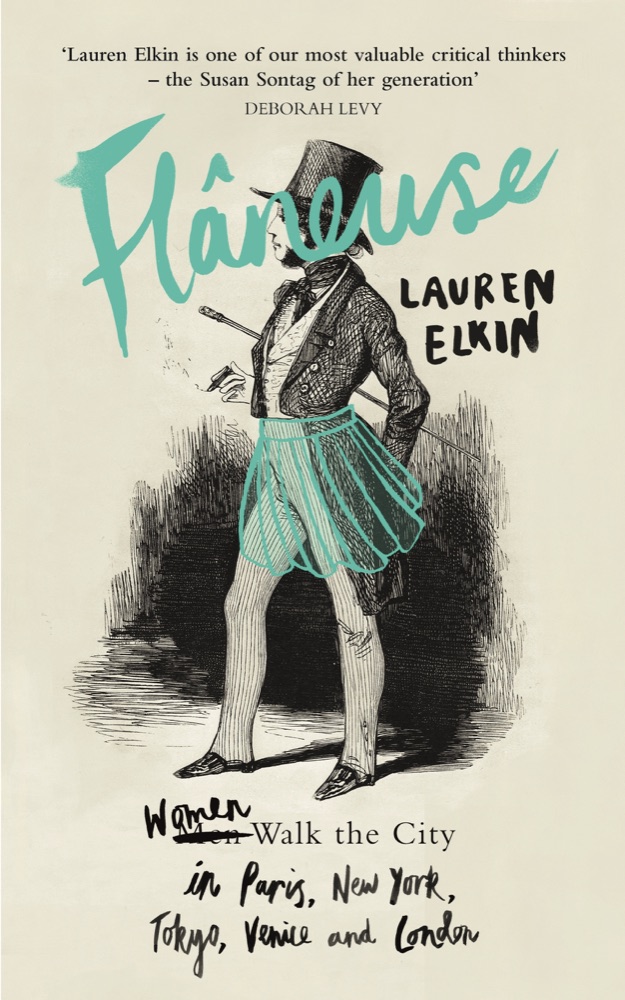
'Flâneuse [flanne-euhze], noun, from the French. Feminine form of flâneur [flanne-euhr], an idler, a dawdling observer, usually found in cities.
That is an imaginary definition.'
If the word flâneur conjures up visions of Baudelaire, boulevards and bohemia – then what exactly is a flâneuse?
In this gloriously provocative and celebratory book, Lauren Elkin defines her as ‘a determined resourceful woman keenly attuned to the creative potential of the city, and the liberating possibilities of a good walk’. Part cultural meander, part memoir, Flâneuse traces the relationship between the city and creativity through a journey that begins in New York and moves us to Paris, via Venice, Tokyo and London, exploring along the way the paths taken by the flâneuses who have lived and walked in those cities.
From nineteenth-century novelist George Sand to artist Sophie Calle, from war corre
Book details
- First published
- 2017
- Author
- Lauren Elkin
- Genre
- Nonfiction
- Goodreads rating
- 3.58 (4k ratings)
Keep reading
Wanderlust: A History of Walking
 Flights
 Whereabouts
 Alone Time: Four Seasons, Four Cities, and the Pleasures of Solitude
 Open City
 Night Train to Lisbon
 The Practice of Everyday Life
 Goodbye to All That: Writers on Loving and Leaving New York
 At Home in the World: Reflections on Belonging While Wandering the Globe
 The Names
 To Shake the Sleeping Self: A Journey from Oregon to Patagonia, and a Quest for a Life with No Regret
 Invisible Cities
 Bicycle Diaries
 Travels with Charley: In Search of America
 Rough Magic: Riding the World's Loneliest Horse Race
 On Connection
 A Field Guide to Getting Lost
 On Trails: An Exploration
 Lillian Boxfish Takes a Walk
 Severance
 The Good Girl's Guide to Getting Lost: A Memoir of Three Continents, Two Friends, and One Unexpected Adventure
 Blue Highways
 Wanderlust
 The World and Other Places: Stories
 Paris to the Moon
 Walking
 What We All Long For
 M Train
 Daytripper
 An Unnecessary Woman
 A Room Called Earth
 The Old Ways: A Journey on Foot
 Fugitive Pieces
 North of Beautiful
 No One Writes Back
 Traveler of the Century
 Wanderlove
 A Year in the World: Journeys of a Passionate Traveller
 Without Reservations: The Travels of an Independent Woman
 They're Going to Love You
 Underworld
 Close to the Knives: A Memoir of Disintegration
 This Is Where You Belong: The Art and Science of Loving the Place You Live
 Hourglass: Time, Memory, Marriage
 Bright Lights, Big City
 Lost in Translation: A Life in a New Language
 The Journey Home: Some Words in Defense of the American West
 The Ground Beneath Her Feet
 Neither Here nor There: Travels in Europe
 Mao II
 Goodbye, Again: Essays, Reflections, and Illustrations
 Anthropology of an American Girl
 Encyclopedia of an Ordinary Life
 One Italian Summer
 The Colossus of New York
 Kafka on the Shore
 Charlotte Street
 Drive Your Plow Over the Bones of the Dead
 Divisadero
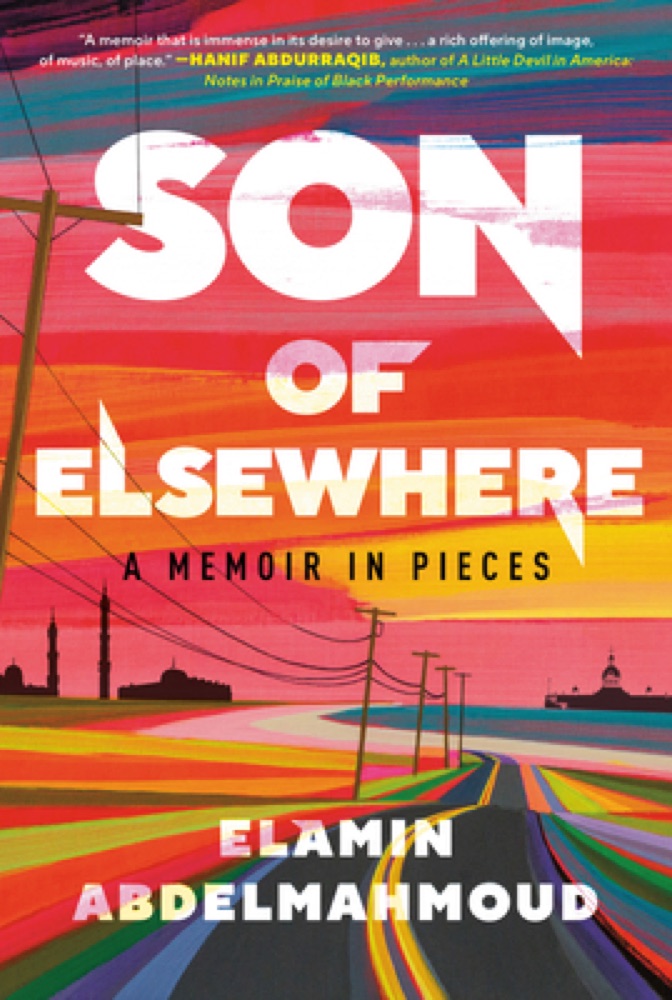 Son of Elsewhere: A Memoir in Pieces