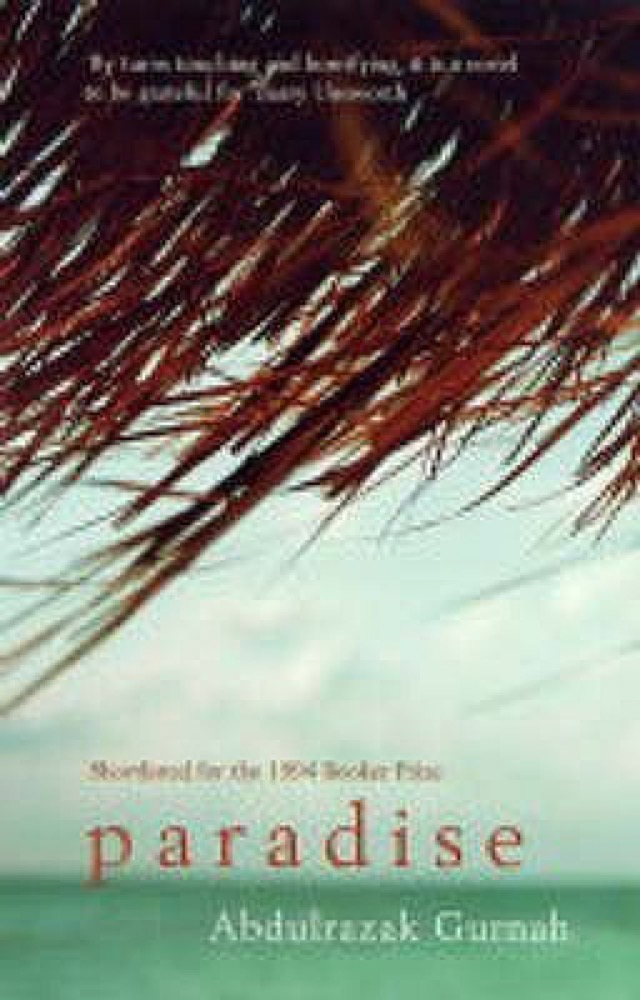
 Paradise
Quotes from the Book
I speak to maps. And sometimes they something back to me. This is not as strange as it sounds, nor is it an unheard of thing. Before maps, the world was limitless. It was maps that gave it shape and made it seem like territory, like something that could be possessed, not just laid waste and plundered. Maps made places on the edges of the imagination seem graspable and placable.
41
Sometimes I think it is my fate to live in the wreckage and confusion of crumbling houses.
18
In their books I read unflattering accounts of my history, and because they were unflattering, they seemed truer than the stories we told ourselves. I read about the diseases that tormented us, about the future that lay before us, about the world we lived in and our place in it. It was as if they had remade us, and in ways that we no longer had any recourse but to accept, so complete and well-fitting was the story they told about us. I don’t suppose the story was told cynically, because I think they believed it too.
7
I am a refugee, an asylum-seeker. These are not simple words, even if habit of hearing them makes them seem so.
7
That's the way life takes us,' Elleke once said. 'It takes us like this, then it turns us over and takes us like that.' What she didn't say was that through it all we manage to cling to something that makes sense.
5
Before maps the world was limitless. It was maps that gave it shape and made it seem like territory, like something that could be possessed, not just laid waste and plundered. Maps made places on the edges of the imagination seem graspable and placable. And later when it became necessary, geography became biology in order to construct a hierarchy in which to place the people who lived in their inaccessibility and
2
And at school there was little or no time for those other stories, just an orderly accumulation of the real knowledge they brought to us, in books they made available to us, in a language they taught us.
2
I have time on my hands, I am in the hands of time, so I might as well account for myself.
1
I have always had an interest in furniture. At the very least, it weighs us down and keeps us on the ground, and prevents us from clambering up trees and howling naked as the terror of our useless lives overcomes us. It keeps us from wandering aimlessly in pathless wildernesses, plotting cannibalism in forest clearings and dripping caves.
1
New maps were made, complete maps, so that every inch was accounted for, and everyone now knew who they were, or at least who they belonged to. Those maps, how they transformed everything.
1
Maps made places on the edges of the imagination seem graspable and placable. And later when it became necessary, geography became biology in order to construct a hierarchy in which to place the people who lived in their inaccessibility and primitiveness in other places on the map.
aps made places on the edges of the imagination seem graspable and placable. And later when it became necessary, geography became biology in order to construct a hierarchy in which to place the people who lived in their inaccessibility and primitiveness in other places on the map.
Suelo hablarles a los mapas, y a veces hasta contestan. Es menos extraño de lo que parece, y tampoco soy el primer en hacerlo. Antes de que hubiera mapas el mundo no tenía límites, fueron ellos los que lo moldearon y le dieron el aspecto de un territorio, de algo que se podía no sólo arrasar y saquear, sino también poseer. Los mapas volvieron alcanzables, y hasta domesticables, lugares que se hallaban en el límite de lo imaginable, y luego, cuando se hizo necesario, la geografía se transformó en biología para construir un orden jerárquico en el que situar a quienes vivían, aislados y primitivos, en otros lugares del mapa.
About Abdulrazak Gurnah
We have collected 29 quotes from 3 books by Abdulrazak Gurnah on BookQuoters.
More about the author →More by Abdulrazak Gurnah
Paradise
 Theft
Theft
About the book
On a late November afternoon Saleh Omar arrives at Gatwick Airport from Zanzibar, a far away island in the Indian Ocean. With him he has a small bag in which there lies his most precious possession - a mahogany box containing incense. He used to own a furniture shop, have a house and be a husband and father, but now he is an asylum seeker from paradise; silence his only protection.
Meanwhile, Latif Mahmud, someone intimately connected with Saleh's past, lives quietly alone in his London flat. When Saleh and Latif meet in an English seaside town, a story is unravelled. It is a story of love, betrayal, of seduction and of possession, and of a people desperately trying to find stability amidst the maelstrom of their times.
Book details
- First published
- 2001
- Author
- Abdulrazak Gurnah
- Genre
- Fiction
- Goodreads rating
- 3.89 (6k ratings)
Keep reading
 Flights
 The Selected Works of T.S. Spivet
 Arctic Dreams
 The Names
 The Empusium
 Thrust
 Open City
 The Notebooks of Malte Laurids Brigge
 State of Paradise
 The Girl Who Smiled Beads: A Story of War and What Comes After
 In Ascension
 Winter
 Middlesex
 The Cat's Table
 Diaspora
 The Stone Gods
 A Bend in the River
 Out of Oz
 On Trails: An Exploration
 The Book That Broke the World
 Point Omega
 A Field Guide to Getting Lost
 Stories of Your Life and Others
 Lost Children Archive
 Drive Your Plow Over the Bones of the Dead
 Where the Bluebird Sings to the Lemonade Springs: Living and Writing in the West
 Underworld
 2312
2312
 Acceptance
 The Years of Rice and Salt
 The Aosawa Murders
 Gun Island
 The Dark Forest
 Checkout 19
 The Enchanted
 Kafka on the Shore
 I Am, I Am, I Am: Seventeen Brushes with Death
 The Adventures of China Iron
 Blue Remembered Earth
 The Faraway Nearby
 H is for Hawk
 The Atopia Chronicles
 Out of Africa
 Vesper Flights
 The Island of Missing Trees
 The Hungry Tide
 Close to the Knives: A Memoir of Disintegration
 The Paper Menagerie and Other Stories
 The Way of the World
 Aftershocks
 Always Coming Home
 Devil House
 The Book of Form and Emptiness
 The Last Continent
 Sea of Tranquility
 Autumn
 Borderliners
 The Place of Tides
 Playground
 The Postcard