 Is a River Alive?
Quotes from the Book
Before you become a writer you must first become a reader. Every hour spent reading is an hour spent learning to write;
30
Books , like landscapes, leave their marks in us. (...) Certain books, though, like certain landscapes, stay with us even when we left them, changing not just our weathers but our climates.
27
Words act as compass; place-speech serves literally to en-chant the land – to sing it back into being, and to sing one’s being back into it.
13
To enter water is, of course, to cross a border. You pass the lake’s edge, the sea’s shore, the river’s brink – and in so doing you arrive at a different realm, in which you are differently minded because differently bodied.
11
Without a name made in our mouths, an animal or a place struggles to find purchase in our minds or our hearts.
5
these words: migrant birds, arriving from distant places with story and metaphor caught in their feathers;
5
I relish the etymology of our word thing – that sturdy term of designation, that robust everyday indicator of the empirical – whereby in Old English thynge does not only designate a material object, but can also denote ‘a narrative not fully known’, or indicate ‘the unknowability of larger chains of events’.
5
Language is fossil poetry,’ wrote Ralph Waldo Emerson in 1844, ‘[a]s the limestone of the continent consists of infinite masses of the shells of animalcules, so language is made up of images, or tropes, which now, in their secondary use, have long ceased to remind us of their poetic origin.
4
What we bloodlessy call 'place' is to young children a wild compound of dream, spell and substance: place is somewhere they are always 'in', never 'on'.
4
Kimmeridge (n.): The light breeze which blows through your armpit hair when you are stretched out sunbathing’;
3
The deletions included acorn, adder, ash, beech, bluebell, buttercup, catkin, conker, cowslip, cygnet, dandelion, fern, hazel, heather, heron, ivy, kingfisher, lark, mistletoe, nectar, newt, otter, pasture and willow. The words introduced to the new edition included attachment, block-graph, blog, broadband, bullet-point, celebrity, chatroom, committee, cut-and-paste, MP3 player and voice-mail.
2
Once they go unnamed they go to some degree unseen. Language deficit leads to attention deficit.
2
In Northamptonshire dialect 'to thaw' is 'to ungive.' The beauty of this variant I find hard to articulate, but it surely has to do with the paradox of thaw figured as restraint or retention, and the wintry notion that cold, frost and snow might themselves be a form of gift -- an addition to the landscape that will in time be subtracted by warmth.
2
The word "landmark" is from the old English "landmearc", meaning 'an object in the landscape which, by its conspicuousness, serves as a guide in the direction of one's course.
2
I have learnt that magnitude of scale is no metric by which to judge natural spectacle, and that wonder is now, more than ever, an essential survival skill.
1
We have become experts in analysing what nature can do for us, but lack a language to evoke what it can do to us.
1
Looking from afar - from present to past, from exile to homeland, from island back to mainland, mountain-top at lowland - results notin vision's diffusion but in its sharpening; not in memory's dispersal but in it's plenishment.
1
Before you become a writer you must first become a reader.
1
perceive no opposition between precision and mystery, or between naming and not-knowing.
1
although we have our compendia of flora, fauna, birds, reptiles and insects, we lack a Terra Britannica, as it were: a gathering of terms for the land and its specificities
1
Nature does not name itself. Granite does not self-identify as igneous. Light has no grammar. Language is always late for its subject. Sometimes on top of a mountain I just say, "Wow.
I am Hansje, born and bred in the north Netherlands where I bathed from age one in lakes, river and cold-water outdoor pools. Here in Warwickshire, where I have lived for some thirty-three years, I am among other things a swimmer, and if you ever wish to swim in the beautiful Avon, then do tell me and I will show you to the best and secret places. I have never experienced the profound sense of loss of someone I have never met as when I learnt that Roger had died. Many sentences in each of his books are as if engraved in me, find a resting place, a recognition, they are magnifying glass, lens and microscope to the natural world, a watery surface through which I look to see the earth clarified.
walking sunwards through snow late on a midwinter day, with the wind shifting spindrift into the air such that the ice-dust acts as a prismatic mist, refracting sunshine into its pale and separate colours; or out on a crisp November night in a city garden, with the lit windows of houses and the orange glow of street light around, while the stars blinter above in the cold high air.
Yes, melancholy steeps Davidson's language, and melancholy differs from grief in its chronic nature: it is an ache not a wound, it lies deeper down, is longer lasting, is lived with rather than died of.
meaning indifferent to the distinction between things. It is not, on the whole, that natural phenomena and entities themselves are disappearing; rather that there are fewer people able to name them, and that once they go unnamed they go to some degree unseen. Language deficit leads to attention deficit. As
A life lived as variously as Roger’s, and evoked in writing as powerful as his, means that even after death his influence continues to flow outwards. Green Man-like, he appears in unexpected places, speaking in leaves.
his sculptural work with dry-stone walls, that looped across hillsides and fields with such cursive elegance that they appeared a natural landform – as spontaneous in their rhythms as rivers.
A slow capillary creep of knowledge has occurred on Lewis, up out of landscape’s details and into language’s.
Watch on YouTube
About Robert Macfarlane
We have collected 134 quotes from 5 books by Robert Macfarlane on BookQuoters.
More about the author →More by Robert Macfarlane
About the book
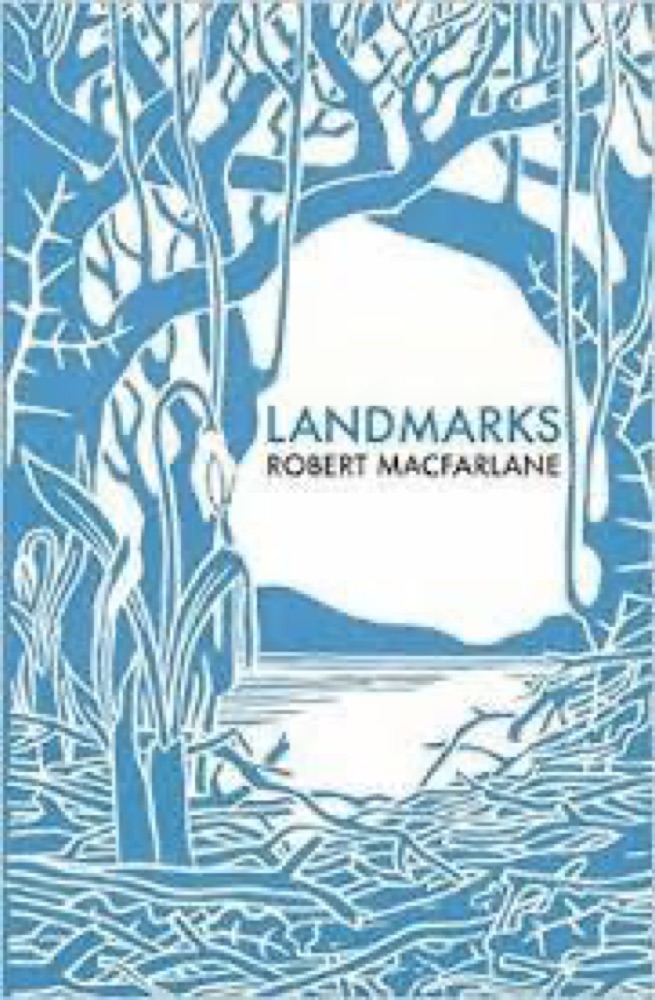
Landmarks is Robert Macfarlane's joyous meditation on words, landscape and the relationship between the two.
Words are grained into our landscapes, and landscapes are grained into our words. Landmarks is about the power of language to shape our sense of place. It is a field guide to the literature of nature, and a glossary containing thousands of remarkable words used in England, Scotland, Ireland and Wales to describe land, nature and weather. Travelling from Cumbria to the Cairngorms, and exploring the landscapes of Roger Deakin, J. A. Baker, Nan Shepherd and others, Robert Macfarlane shows that language, well used, is a keen way of knowing landscape, and a vital means of coming to love it.
Book details
- First published
- 2015
- Author
- Robert Macfarlane
- Genre
- Nonfiction
- Goodreads rating
- 4.23 (5k ratings)
The buzz
- The New York TimesReview in The New York Timesprofessional review (via Book Marks)
- The GuardianReview in The Guardianprofessional review (via Book Marks)
- The TimesReview in The Timesprofessional review (via Book Marks)
- Kirkus ReviewsReview in Kirkus Reviewsprofessional review (via Book Marks)
- Publishers WeeklyReview in Publishers Weeklyprofessional review (via Book Marks)
- IrishtimesReview in Irishtimesprofessional review (via Book Marks)
Keep reading
 The Old Ways: A Journey on Foot
 The Wild Places
 Selected Non-Fictions
 Gathering Moss: A Natural and Cultural History of Mosses
 The Spell of the Sensuous: Perception and Language in a More-Than-Human World
 The Names
 Illuminations: Essays and Reflections
 Winter Hours: Prose, Prose Poems, and Poems
 Vesper Flights
 Where the Bluebird Sings to the Lemonade Springs: Living and Writing in the West
 The Abundance
 A Field Guide to Getting Lost
 Flights
 One Way Street And Other Writings
 Arctic Dreams
 On Trails: An Exploration
 Winter
 The Paper Menagerie and Other Stories
 Always Coming Home
 The Collected Poems
 The Selected Works of T.S. Spivet
 Autumn
 There Are Rivers in the Sky
 H is for Hawk
 The Hungry Tide
 The Poetics of Space
 Plainwater: Essays and Poetry
 West with the Night
 Fugitive Pieces
 Madness, Rack, and Honey: Collected Lectures
 The Common Reader
 The Medium is the Massage
 The Unfolding of Language: An Evolutionary Tour of Mankind's Greatest Invention
 Spring and All
 The Outermost House: A Year of Life on the Great Beach of Cape Cod
 Speak, Memory
 The Faraway Nearby
 A Sand County Almanac and Sketches Here and There
 A Natural History of the Senses
 The Telling
 The Practice of Everyday Life
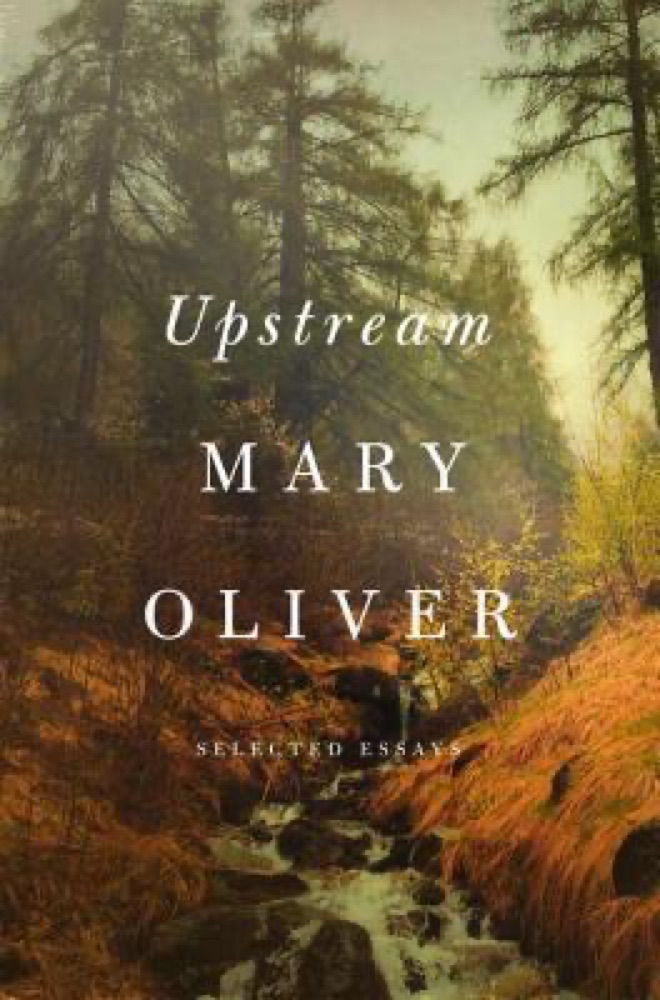 Upstream: Selected Essays
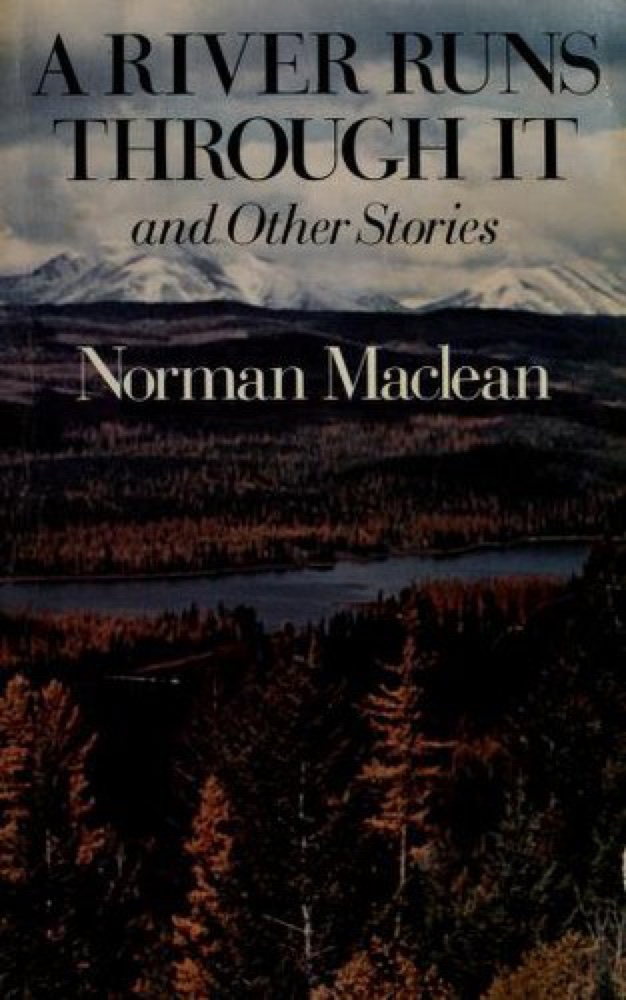 A River Runs Through It and Other Stories
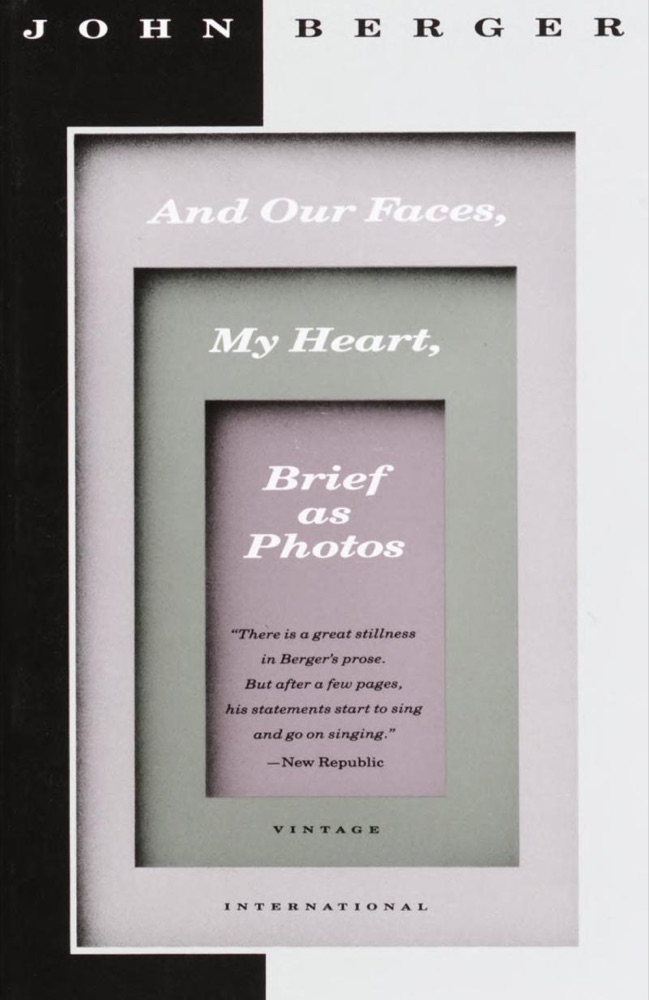 And Our Faces, My Heart, Brief as Photos
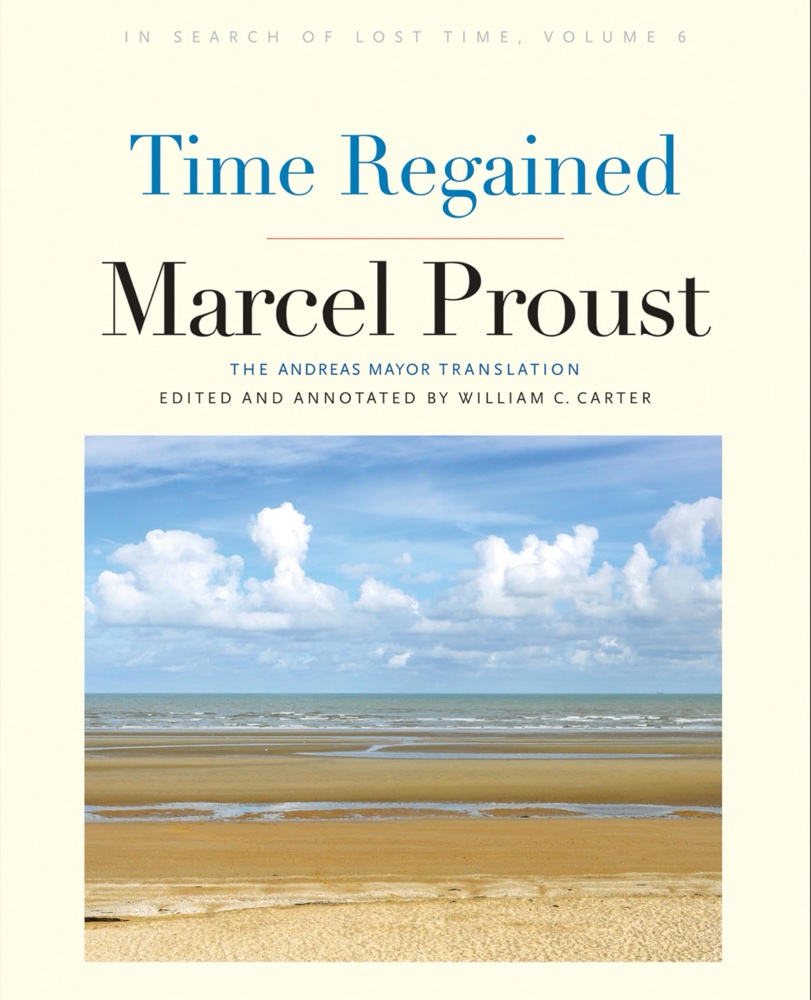 Time Regained
 Teaching a Stone to Talk: Expeditions and Encounters
 The Stuff of Thought: Language as a Window into Human Nature
 Underland: A Deep Time Journey
 Figuring
 The Word Exchange
 Opened Ground
 The Lost Garden
 The Sorrows of an American
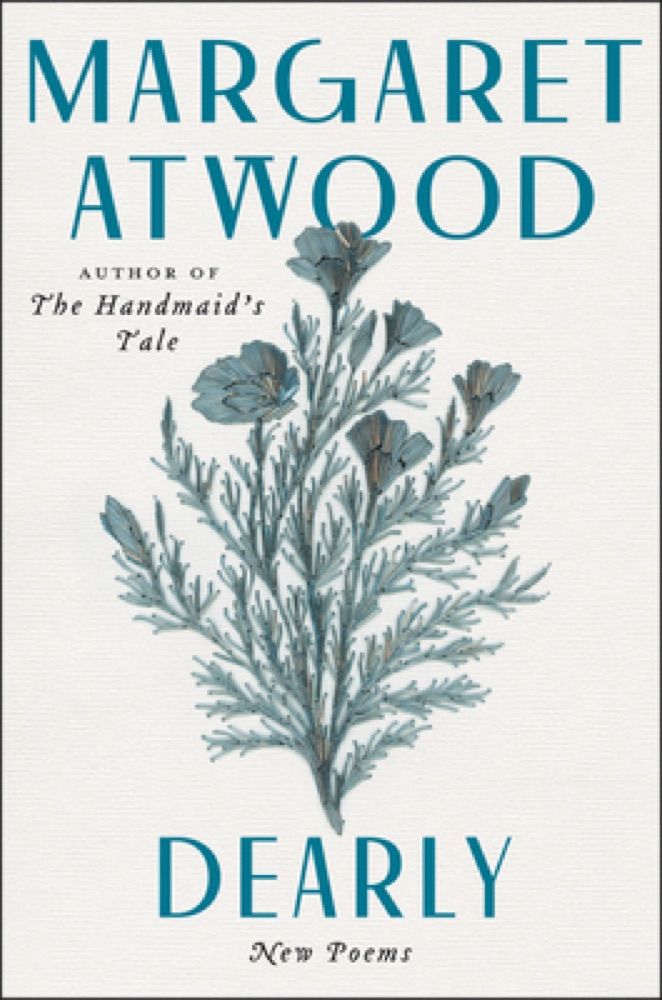 Dearly
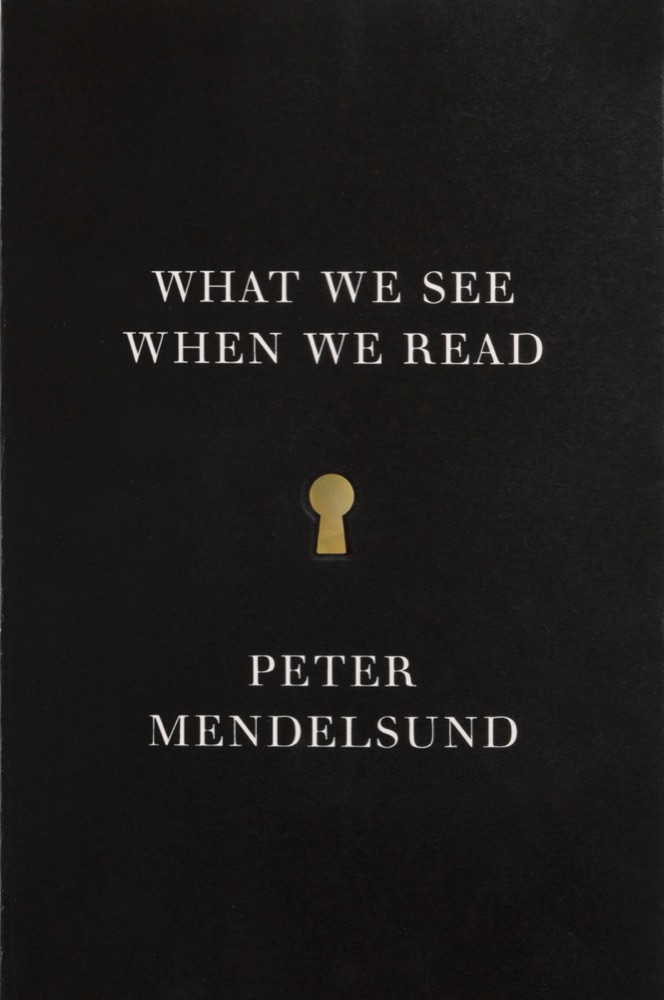 What We See When We Read
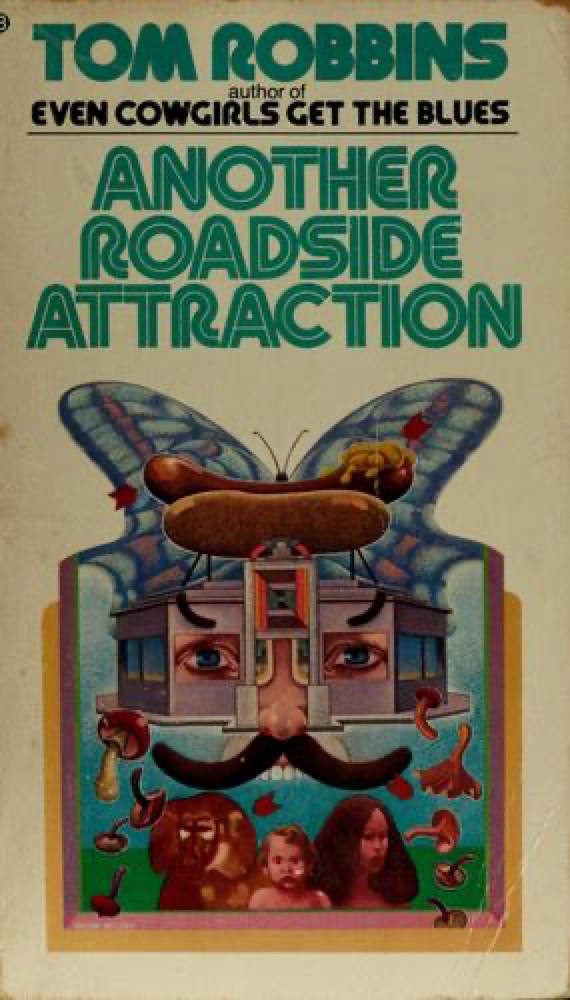 Another Roadside Attraction
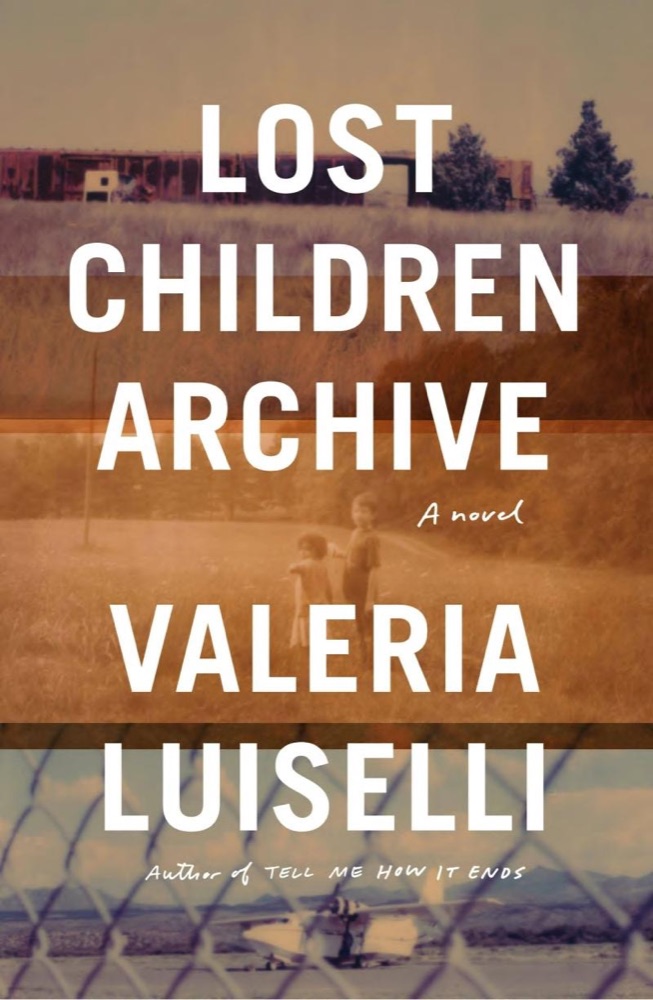 Lost Children Archive
 The Songlines
 Utopia Avenue