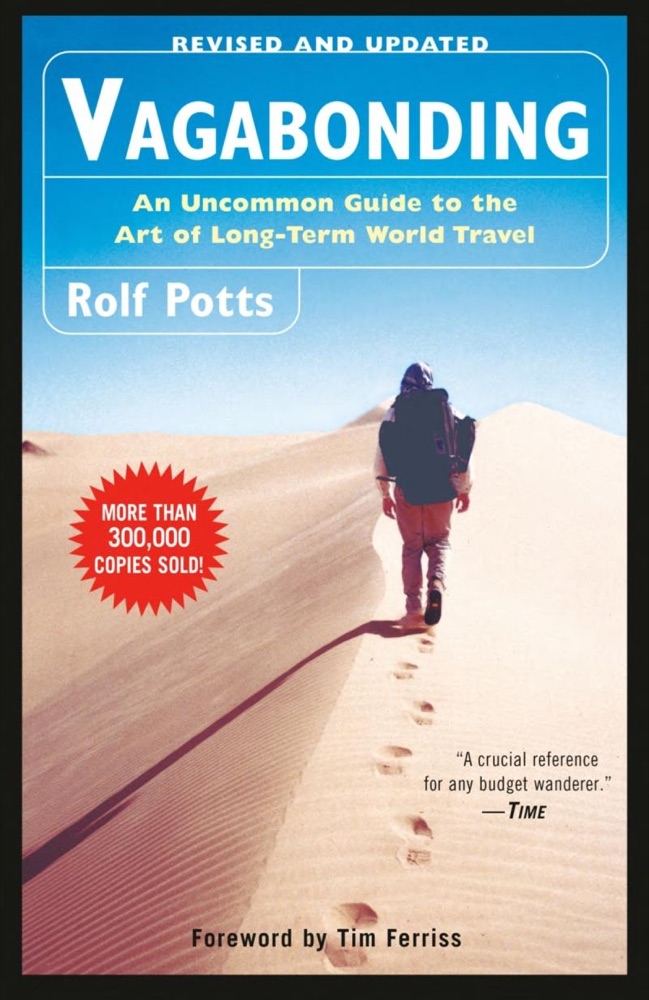

 Destination Truth: Memoirs of a Monster Hunter
Quotes from the Book
The value of your travels does not hinge on how many stamps you have in your passport when you get home -- and the slow nuanced experience of a single country is always better than the hurried, superficial experience of forty countries.
76
Work is when you confront the problems you might otherwise be tempted to run away from
40
In this way, we end up spending (as Thoreau put it) “the best part of one’s life earning money in order to enjoy a questionable liberty during the least valuable part of it.” We’d love to drop all and explore the world outside, we tell ourselves, but the time never seems right. Thus, given an unlimited amount of choices, we make none. Settling into our lives, we get so obsessed with holding on to our domestic certainties that we forget why we desired them in the first place.
21
Money, of course, is still needed to survive, but time is what you need to live. So, save what little money you possess to meet basic survival requirements, but spend your time lavishly in order to create the life values that make the fire worth the candle. Dig?
14
Thus, the question of how and when to start vagabonding is not really a question at all. Vagabonding starts now. Even if the practical reality of travel is still months or years away, vagabonding begins the moment you stop making excuses, start saving money, and begin to look at maps with the narcotic tingle of possibility. From here, the reality of vagabonding comes into sharper focus as you adjust your worldview and begin to embrace the exhilarating uncertainty that true travel promises.
14
The simple willingness to improvise is more vital, in the long run, than research.
12
People travel to faraway places to watch, in fascination, the kind of people they ignore at home.
10
Vagabonding is an attitude—a friendly interest in people, places, and things that makes a person an explorer in the truest, most vivid sense of the word. Vagabonding is not a lifestyle, nor is it a trend. It’s just an uncommon way of looking at life—a value adjustment from which action naturally follows. And, as much as anything, vagabonding is about time—our only real commodity—and how we choose to use it.
9
having an adventure is sometimes just a matter of going out and allowing things to happen in a strange and amazing new environment—not so much a physical challenge as a psychic one.
8
For first-time vagabonders, this can be one of the hardest travel lessons to grasp, since it will seem that there are so many amazing sights and experiences to squeeze in. You must keep in mind, however, that the whole point of long-term travel is having the time to move deliberately through the world. Vagabonding is about not merely reallotting a portion of your life for travel but rediscovering the entire concept of time. At home, you’re conditioned to get to the point and get things done, to favor goals and efficiency over moment-by-moment distinction. On the road, you learn to improvise your days, take a second look at everything you see, and not obsess over your schedule.
7
those who travel the world hoping to get “blinded by the light” are often blind to the light that’s all around them.
6
The more we associate experience with cash value, the more we think that money is what we need to live. And the more we associate money with life, the more we convince ourselves that we’re too poor to buy our freedom.
5
My greatest skill has been to want little. —HENRY DAVID THOREAU, WALDEN A
5
And let me tell you something. That first morning, when you are in your country of choice, away from all of the conventions of atypical, everyday lifestyle, looking around at your totally new surroundings, hearing strange languages, smelling strange, new smells, you’ll know exactly what I’m talking about. You’ll feel like the luckiest person in the world.
5
you should view each new travel frustration—sickness, fear, loneliness, boredom, conflict—as just another curious facet in the vagabonding adventure.
5
Work is not just an activity that generates funds and creates desire; it’s the vagabonding gestation period, wherein you earn your integrity, start making plans, and get your proverbial act together. Work is a time to dream about travel and write notes to yourself, but it’s also the time to tie up your loose ends. Work is when you confront the problems you might otherwise be tempted to run away from. Work is how you settle your financial and emotional debts—so that your travels are not an escape from your real life but a discovery of your real life.
4
If you view the world as a predominately hostile place, it will be,” wrote Ed Buryn.
3
antisabbatical”—a job approached “with the sole intention of staying for a limited period of time (often one year)…to raise enough funds to partake in another, more personally meaningful activity.
3
We need the possibility of escape as surely as we need hope;
3
There’s a story that comes from the tradition of the Desert Fathers, an order of Christian monks who lived in the wastelands of Egypt about seventeen hundred years ago. In the tale, a couple of monks named Theodore and Lucius shared the acute desire to go out and see the world. Since they’d made vows of contemplation, however, this was not something they were allowed to do. So, to satiate their wanderlust, Theodore and Lucius learned to “mock their temptations” by relegating their travels to the future. When the summertime came, they said to each other, “We will leave in the winter.” When the winter came, they said, “We will leave in the summer.” They went on like this for over fifty years, never once leaving the monastery or breaking their vows. Most of us, of course, have never taken such vows—but we choose to live like monks anyway, rooting ourselves to a home or a career and using the future as a kind of phony ritual that justifies the present. In this way, we end up spending (as Thoreau put it) “the best part of one’s life earning money in order to enjoy a questionable liberty during the least valuable part of it.” We’d love to drop all and explore the world outside, we tell ourselves, but the time never seems right. Thus, given an unlimited amount of choices, we make none. Settling into our lives, we get so obsessed with holding on to our domestic certainties that we forget why we desired them in the first place. Vagabonding is about gaining the courage to loosen your grip on the so-called certainties of this world. Vagabonding is about refusing to exile travel to some other, seemingly more appropriate, time of your life. Vagabonding is about taking control of your circumstances instead of passively waiting for them to decide your fate. Thus, the question of how and when to start vagabonding is not really a question at all. Vagabonding starts now. Even if the practical reality of travel is still months or years away, vagabonding begins the moment you stop making excuses, start saving money, and begin to look at maps with the narcotic tingle of possibility. From here, the reality of vagabonding comes into sharper focus as you adjust your worldview and begin to embrace the exhilarating uncertainty that true travel promises. In this way, vagabonding is not a merely a ritual of getting immunizations and packing suitcases. Rather, it’s the ongoing practice of looking and learning, of facing fears and altering habits, of cultivating a new fascination with people and places. This attitude is not something you can pick up at the airport counter with your boarding pass; it’s a process that starts at home. It’s a process by which you first test the waters that will pull you to wonderful new places.
3
The secret of adventure, then, is not to carefully seek it out but to travel in such a way that it finds you. To do this, you first need to overcome the protective habits of home and open yourself up to unpredictability. As you begin to practice this openness, you’ll quickly discover adventure in the simple reality of a world that defies your expectations. More often than not, you’ll discover that “adventure” is a decision after the fact—a way of deciphering an event or an experience that you can’t quite explain.
3
People say that what we are all seeking is a meaning for life. I don’t think this is what we’re really seeking. I think what we’re seeking is an experience of being alive. —JOSEPH CAMPBELL, THE
2
Someday” (“someday I’ll do this, someday I’ll do that”) is a disease that will take your dreams to the grave with you.
2
After all, vagabonding involves sacrifices, and its particular sacrifices are not for everyone.
2
Vagabonding is about looking for adventure in normal life, and normal life within adventure. Vagabonding is an attitude—a friendly interest in people, places, and things that makes a person an explorer in the truest, most vivid sense of the word.
2
Sadly, the traffic lights of life will never all be green at the same time. Conditions are never perfect. “Someday” (“someday I’ll do this, someday I’ll do that”) is a disease that will take your dreams to the grave with you. Pro
2
It is easy in the world to live after the world’s opinion; it is easy in solitude to live after your own; but the great man is he who in the midst of the crowd keeps with perfect sweetness the independence of solitude. —RALPH WALDO EMERSON, “SELF-RELIANCE
2
People say you have to travel to see the world. Sometimes I think that if you just stay in one place and keep your eyes open, you’re going to see just about all that you can handle. —PAUL AUSTER, SMOKE
2
Vagabonding is about using the prosperity and possibility of the information age to increase your personal options instead of your personal possessions.
2
If you have built castles in the air, your work need not be lost; that is where they should be. Now put the foundations under them. —HENRY DAVID THOREAU, WALDEN
2
Watch on YouTube
About Rolf Potts
We have collected 30 quotes from 1 book by Rolf Potts on BookQuoters.
More about the author →About the book
Vagabonding is about taking time off from your normal life--from six weeks to four months to two years--to discover and experience the world on your own terms. Veteran shoestring traveler Rolf Potts shows how anyone with an independent spirit can achieve the dream of extended overseas travel.
Visit the vagabonding community's hub at www dot vagabonding dot net.
Book details
- First published
- 2002
- Author
- Rolf Potts
- Genre
- Nonfiction
- Goodreads rating
- 3.94 (29k ratings)
Keep reading
Destination Truth: Memoirs of a Monster Hunter
 To Shake the Sleeping Self: A Journey from Oregon to Patagonia, and a Quest for a Life with No Regret
 AWOL on the Appalachian Trail
 The Happiness of Pursuit: Finding the Quest That Will Bring Purpose to Your Life
 The Last Englishman
 Alone Time: Four Seasons, Four Cities, and the Pleasures of Solitude
 Wanderlove
 At Home in the World: Reflections on Belonging While Wandering the Globe
 The Good Girl's Guide to Getting Lost: A Memoir of Three Continents, Two Friends, and One Unexpected Adventure
 The Way of the World
 Travels with Charley: In Search of America
 Into the Wild
 On Trails: An Exploration
 Ghost Train to the Eastern Star
 A Field Guide to Getting Lost
 Notes on a Nervous Planet
 No One Writes Back
 Finding Flow: The Psychology of Engagement with Everyday Life
 The Art of Travel
 Without Reservations: The Travels of an Independent Woman
 The Promise of a Pencil: How an Ordinary Person Can Create Extraordinary Change
 Flights
 The Cafe on the Edge of the World: A Story About the Meaning of Life
 A Book of Simple Living
 Blue Highways
 Wanderlust
 Adrift: Seventy-Six Days Lost at Sea
 No Baggage: A Minimalist Tale of Love and Wandering
 Walking
 How to Be Here: A Guide to Creating a Life Worth Living
 The Last American Man
 The Socrates Express: In Search of Life Lessons from Dead Philosophers
 The Art of Work
 You Are a Badass at Making Money: Master the Mindset of Wealth
 The Geography of Bliss: One Grump's Search for the Happiest Places in the World
 The Freedom Manifesto
 The Happiness Project
 Wouldn't Take Nothing for My Journey Now
 Tribe Of Mentors: Transformative Wisdom From Icons and Innovators to Help You Navigate Life's Challenges
 Silence: In the Age of Noise
 Miles to Go
 Like Streams to the Ocean: Notes on Ego, Love, and the Things That Make Us Who We Are
 The Vacation
 The Ride of Her Life: The True Story of a Woman, Her Horse, and Their Last-Chance Journey Across America
 Uh-oh: Some Observations from Both Sides of the Refrigerator Door
 Life Without Limits
 Between a Rock and a Hard Place
 Be Useful: Seven Tools for Life
 I'm a Stranger Here Myself: Notes on Returning to America after Twenty Years Away
 Happier at Home: Kiss More, Jump More, Abandon a Project, Read Samuel Johnson, and My Other Experiments in the Practice of Everyday Life
 The Comfort Book
 Sully: My Search for What Really Matters
 A Joseph Campbell Companion: Reflections on the Art of Living
 Night Train to Lisbon
 The Leisure Seeker
 Walden
 Running from Safety: An Adventure of the Spirit
 The Defining Decade: Why Your Twenties Matter—And How to Make the Most of Them Now
 The Motorcycle Diaries: Notes on a Latin American Journey