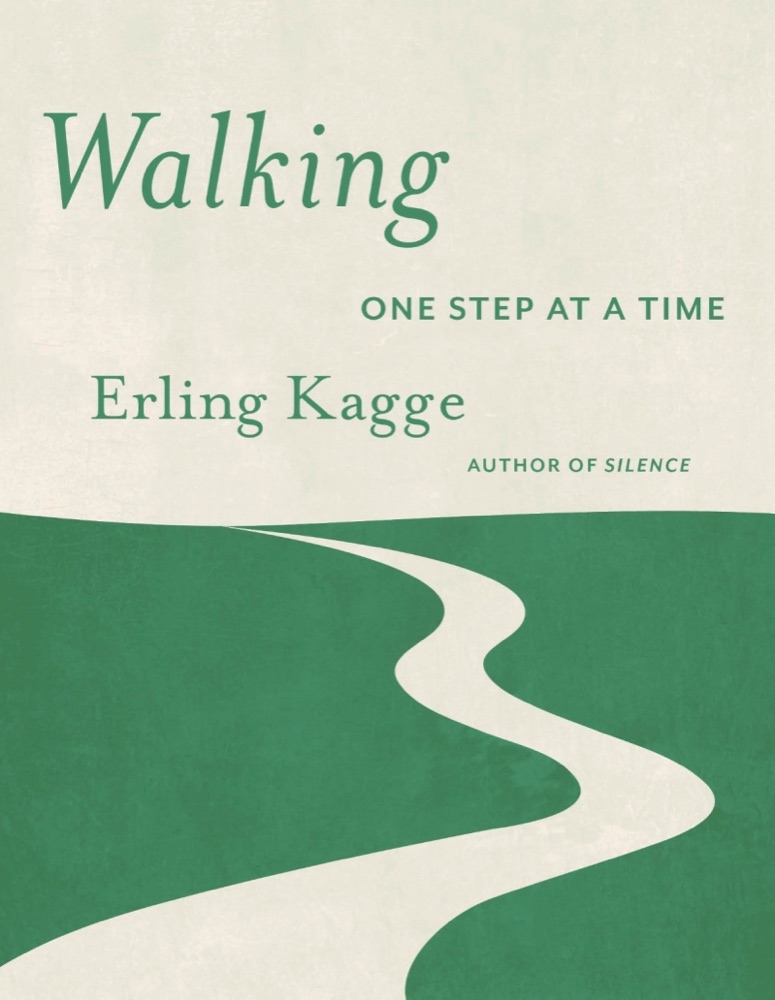
 Walking: One Step at a Time
Quotes from the Book
The starry sky is the truest friend in life, when you've first become acquainted; it is ever there, it gives ever peace, ever reminds you that your restlessness, your doubt, your pains are passing trivialities.
25
Shutting out the world is not about turning your back on your surroundings, but rather the opposite: it is seeing the world a bit more clearly, staying a course and trying to love your life. Silence in itself is rich. It is exclusive and luxurious. A key to unlock new ways of thinking. I don’t regard it as a renunciation or something spiritual, but rather as a practical resource for living a richer life.
15
we fear death to varying degrees, but the fear of not having lived is even stronger. That fear increases towards the end of life, when you understand that it will soon be too late.
8
Allow the world to vanish when you go into it. To listen is to search for new opportunities, to seek fresh challenges. The most important book you can read is the one about yourself. It is open.
6
What we are experiencing is experiential poverty. Such poverty may not only be about a lack of experiences, where nothing is happening. An abundance of activities can also create a feeling of experiential poverty. And this last point is interesting. Things just get to be too much. the problem, according to Lars Fr. H. Svendsen, is that we carry on seeking "increasingly more powerful experiences" instead of pausing to breathe deeply, shut out the world and use the time to experience ourselves. The idea that boredom can be avoided by constantly pursuing something new, being available around the clock, sending messages and clicking further, watching something you haven't yet seen, is naive. The more you try to avoid boredom, the more bored you become. Routine is like that too... Busying oneself becomes a goal in and of itself, instead of allowing that same restlessness to lead you somewhere further.
6
When you’ve invested a lot of time in being accessible and keeping up with what’s happening, it’s easy to conclude that it all has a certain value, even if what you have done might not be important. This is called rationalization. The New York Review of Books labeled the battle between producers of apps “the new opium wars,” and the paper claims that “marketers have adopted addiction as an explicit commercial strategy.” The only difference is that the pushers aren’t peddling a product that can be smoked in a pipe, but rather is ingested via sugar-coated apps. In a way, silence is the opposition to all of this. It’s about getting inside what you are doing. Experiencing rather than overthinking. Allowing each moment to be big enough. Not living through other people and other things. Shutting out the world and fashioning your own silence whenever you run, cook food, have sex, study, chat, work, think of a new idea, read or dance.
3
Words can destroy the atmosphere. They are unsatisfactory. Yes, it is incredible to share grand experiences with others, but talking about it may distance us from what is happening.
3
I don't knit, but when I watch someone who does, I think that they must have found some of the same inner peace that I discovered during my expeditions, even if their surroundings are not as quiet.
2
Wonder is the very engine of life.
2
Where fear is ever present you will never tire of pleasure in the relationship. It sounds brutal, but Stendhal is right. Life is brutal. I am living dangerously when I take a relationship for granted. Most people think climbing Everest is very risky, but things usually work out. However, taking reciprocal love for granted – I would never dare do that.
2
Silence in itself is rich. It is exclusive and luxurious. A key to unlock new ways of thinking. I don’t regard it as a renunciation or something spiritual, but rather as a practical resource for living a richer life. Or, to put it in more ordinary terms, as a deeper form of experiencing life than just turning on the TV to watch the news, again.
2
Boredom can be described as a lack of purpose....boredom always gives the feeling of being held captive.
2
Their heads are now filled with more ambitions than questions.
2
According to a much-referenced study, we humans are worse at concentrating than a goldfish. Humans today lose their concentration after eight seconds, while the goldfish averaged nine.
2
Just before he died, the neurologist Oliver Sacks focused on starry nights.
1
You cannot wait for it to get quiet. Not in New York, nor anywhere else. You must create your own silence.
1
Another form of luxury is to be unavailable. To turn your back on the daily din is a privilege. Letting others take over tasks in your absence. The decision not to reply to text messages or pick up when the phone rings.
1
Which paths lead to silence? Certainly trips into the wild. Leave your electronics at home, take off in one direction until there’s nothing around you. Be alone for three days. Don’t talk to anyone. Gradually you will rediscover other sides of yourself.
1
The composer John Cage, in his ‘Lecture on Nothing’,
1
Helberg understood the way that words create boundaries for our experiences. He wanted to avoid a situation in which members of his group were continuously remarking to each other throughout the day on just how ‘amazing’ everything was, instead of actually concentrating on it being amazing.
1
By ethics, Wittgenstein means the very meaning of life. Not even science is able to find words for something like that. ‘Ethics so far as it springs from the desire to say something about the ultimate meaning of the life, the absolute good, the absolute valuable, can be no science.’ It must be shown, thought and felt.
1
I am over fifty years old and have attended my fair share of sixtieth, seventieth and eightieth birthday parties. In case you are younger than me and have not yet celebrated so many birthdays of high, round figures, I can tell you that the most common remark heard at these parties is: ‘All of those days that came and went – I didn’t realize those were life.’ It is cunningly formulated. The guests nod knowingly, smacking their lips. Yes, we fear death to varying degrees, but the fear of not having lived is even stronger. That fear increases towards the end of life, when you understand that it will soon be too late.
1
Whenever I am unable to walk, climb or sail away from the world, I have learned to shut it out. Learning this took time. Only when I understood that I had a primal need for silence was I able to begin my search for it – and there, deep beneath a cacophony of traffic noise and thoughts, music and machinery, iPhones and snow ploughs, it lay in wait for me. Silence.
1
For many people, it’s about FOMO, the “fear of missing out,” or “the fear of losing a special moment.” Eyal describes this as the brilliant driver for Instagram. And this last part is true: the app at the very least is nearly brilliant. But that moment which he is referring to is not necessarily something special. On the contrary. There aren’t enough special moments, so we end up making do—repetitive and mundane moments are documented instead.
1
The secret to walking to the South Pole is to put one foot in front of the other, and to do this enough times. On a purely technical scale this is quite simple. Even a mouse can eat an elephant if it takes small enough bites. The challenge lies in the desire.
1
Antartica has a mission as a unknown land. I belive that we need places that have not been fully explored (...)
1
Livet er langt, hvis du ved, hvordan du skal bruge det Men livet er meget kort og hektisk for dem, som glemmer fortiden, forsømmer nutiden og frygter fremtiden. Først for sent indser staklerne, at de hele tiden var hektisk optaget af at gøre ingenting.
1
A volte mi sono trovato a riflettere sul fatto che le gioie più semplici, come per esempio osservare il muschio sopra un sasso, sono quelle più difficili da descrivere.
Watch on YouTube
About Erling Kagge
We have collected 34 quotes from 2 books by Erling Kagge on BookQuoters.
More about the author →More by Erling Kagge
Walking: One Step at a Time
About the book
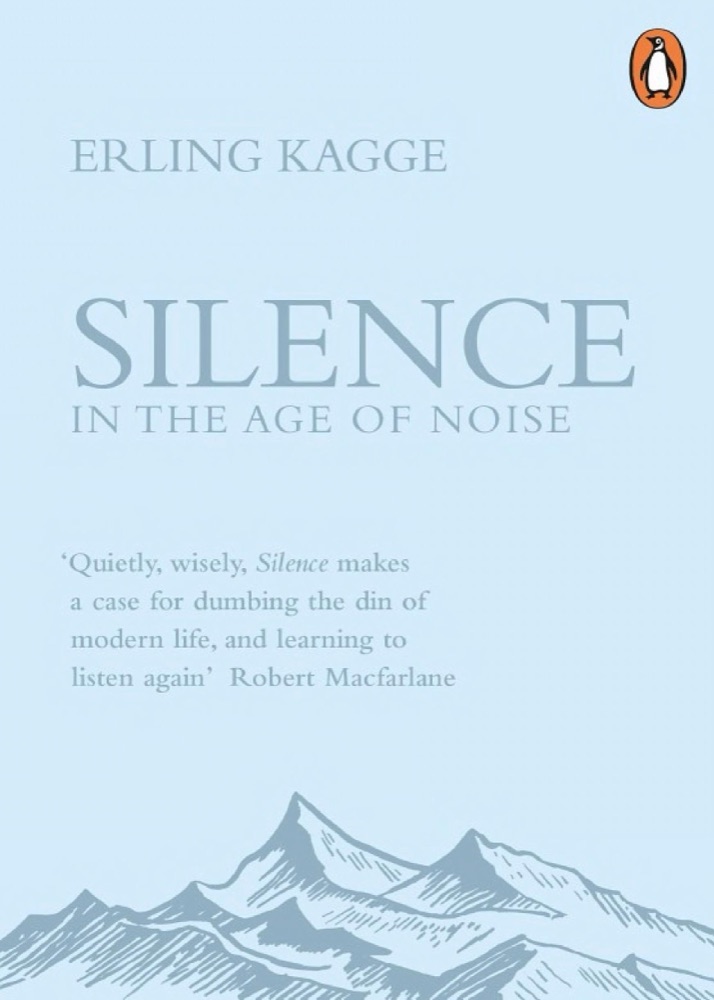
Behind a cacophony of traffic noise, iPhone alerts and our ever-spinning thoughts, an elusive notion - silence - lies in wait. But what really is silence? Where can it be found? And why is it more important now than ever?Erling Kagge, the Norwegian adventurer and polymath, once spent fifty days walking solo in Antarctica with a broken radio. In this meditative, charming and surprisingly powerful book, he explores the power of silence and the importance of shutting out the world. Whether you're in deep wilderness, taking a shower or on the dance floor, you can experience perfect stillness if you know where to look. And from it grows self-knowledge, gratitude, wonder and much more.Take a deep breath, and prepare to submerge yourself in Silence. Your own South Pole is out there, somewhere.
Book details
- First published
- 2016
- Author
- Erling Kagge
- Genre
- Nonfiction
- Goodreads rating
- 3.76 (14k ratings)
Keep reading
 Silence: The Power of Quiet in a World Full of Noise
 Night Train to Lisbon
 Drive Your Plow Over the Bones of the Dead
 Teaching a Stone to Talk: Expeditions and Encounters
 The Stranger in the Woods: The Extraordinary Story of the Last True Hermit
 No One Writes Back
 The Abundance
 On Connection
 Stillness Is the Key
 The Wisdom of Insecurity: A Message for an Age of Anxiety
 Journal of a Solitude
 Embers: One Ojibway's Meditations
 A Room Called Earth
 Enchantment: Awakening Wonder in an Anxious Age
 Silence: Lectures and Writings
 Flights
 Notes on a Nervous Planet
 Freedom from the Known
 Autumn
 Smilla's Sense of Snow
 Kafka on the Shore
 The Wind-Up Bird Chronicle
 White Noise
 The Elegance of the Hedgehog
 The Anthropocene Reviewed: Essays on a Human-Centered Planet
 Travels with Epicurus: A Journey to a Greek Island in Search of a Fulfilled Life
 The Things You Can See Only When You Slow Down: How to Be Calm in a Busy World
 A Circle of Quiet
 Running from Safety: An Adventure of the Spirit
 The Notebooks of Malte Laurids Brigge
 What If This Were Enough?: Essays
 To Shake the Sleeping Self: A Journey from Oregon to Patagonia, and a Quest for a Life with No Regret
 The Invention of Solitude
 The Book of Form and Emptiness
 The Socrates Express: In Search of Life Lessons from Dead Philosophers
 West with the Night
 Identity
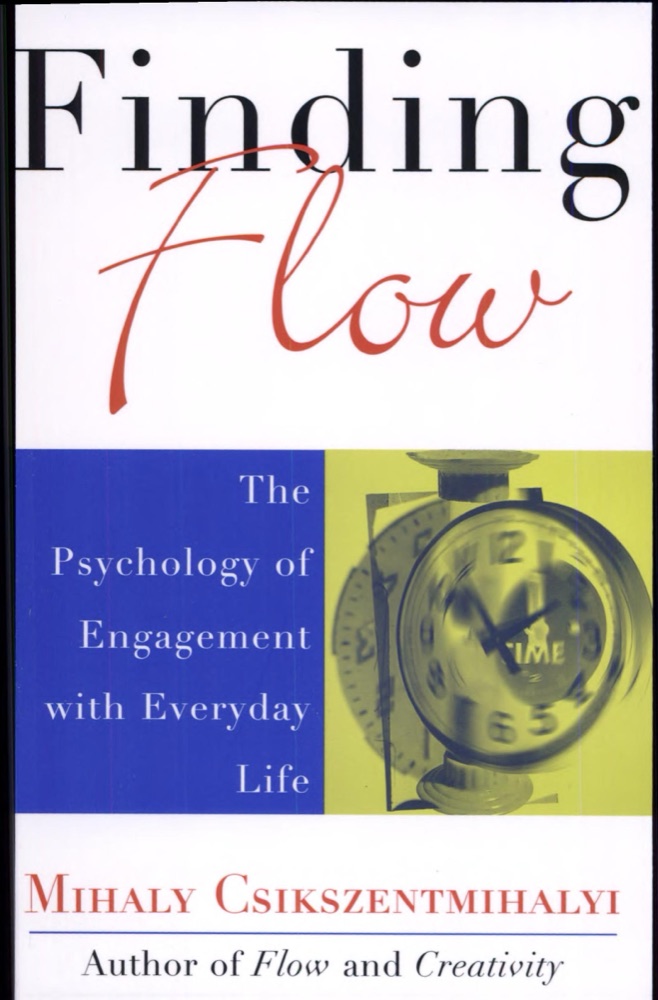 Finding Flow: The Psychology of Engagement with Everyday Life
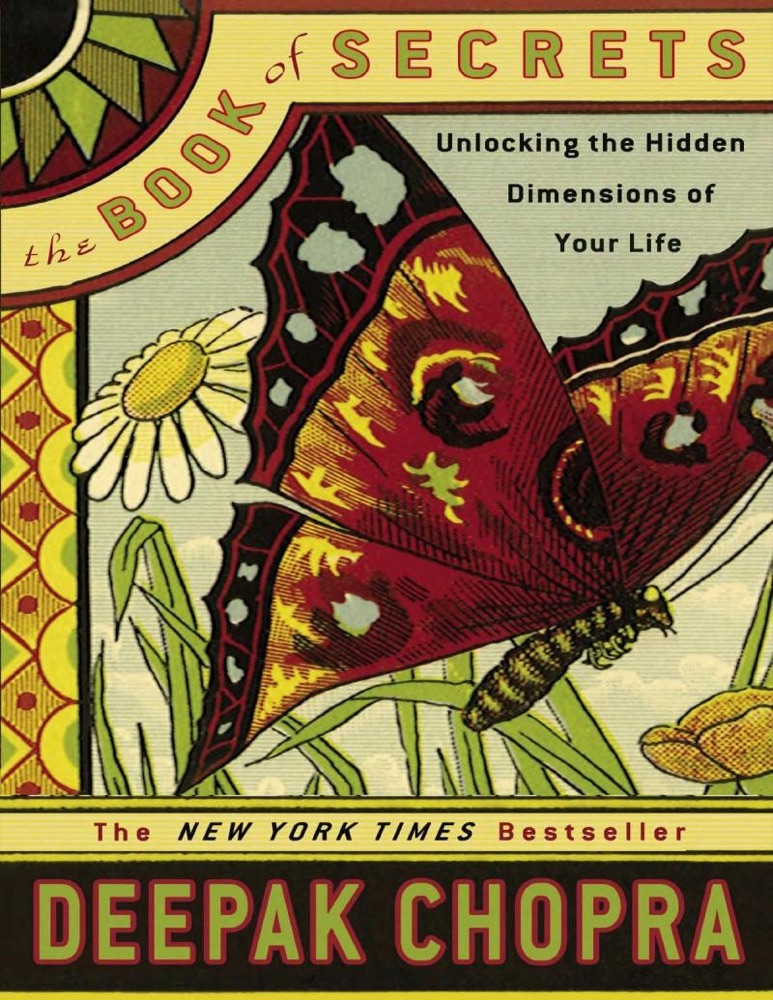 The Book of Secrets: Unlocking the Hidden Dimensions of Your Life
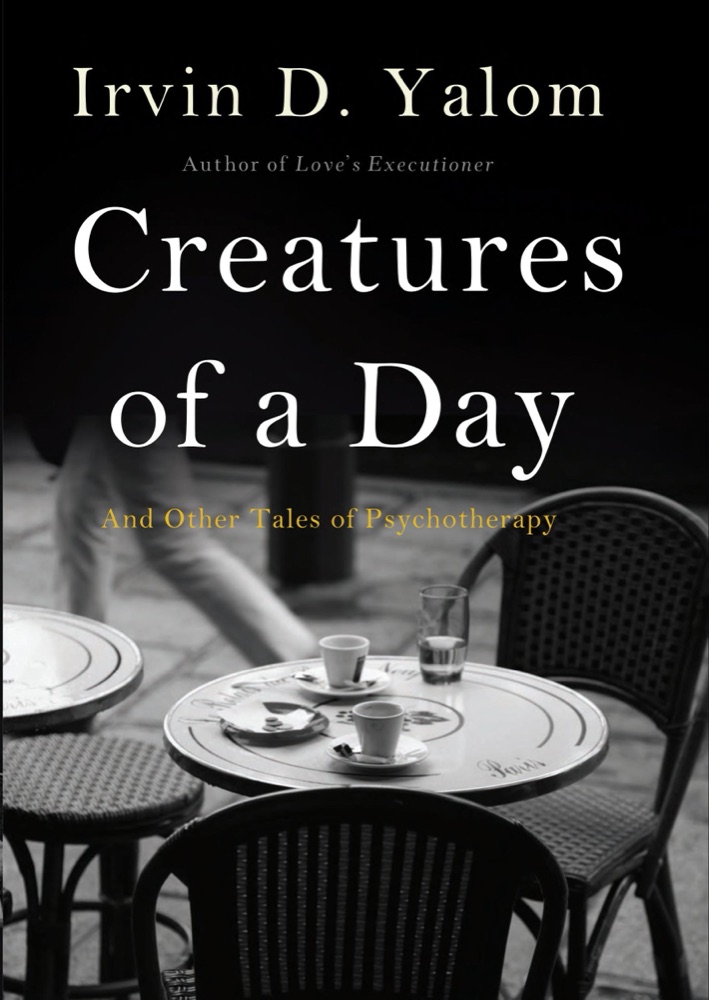 Creatures of a Day: And Other Tales of Psychotherapy
 Hard-Boiled Wonderland and the End of the World
 Creativity: Flow and the Psychology of Discovery and Invention
 The Fifth Science
 Under the Net
 I Am, I Am, I Am: Seventeen Brushes with Death
 The Pale King
 Stillness Speaks
 Reasons to Stay Alive
 Buffering: Unshared Tales of a Life Fully Loaded
 Gift from the Sea
 How to Stop Time
 Exhalation
 Living Beautifully with Uncertainty and Change
 Point Omega
 The Color of Everything: A Journey to Quiet the Chaos Within
 The Stone Gods
 Alone Time: Four Seasons, Four Cities, and the Pleasures of Solitude
 The Book of Dreams
 No Time To Spare: Thinking About What Matters